


Nail Health: What Your Nails Say
Nails show health in a limited, useful way: sudden color changes, dents across all nails, or nails lifting from the bed can point to a problem worth checking, while most ridges, white spots, and slow growth come from age, injury, or dryness. The pattern across all ten nails matters more than a single nail.
What Do Healthy Nails Look Like?
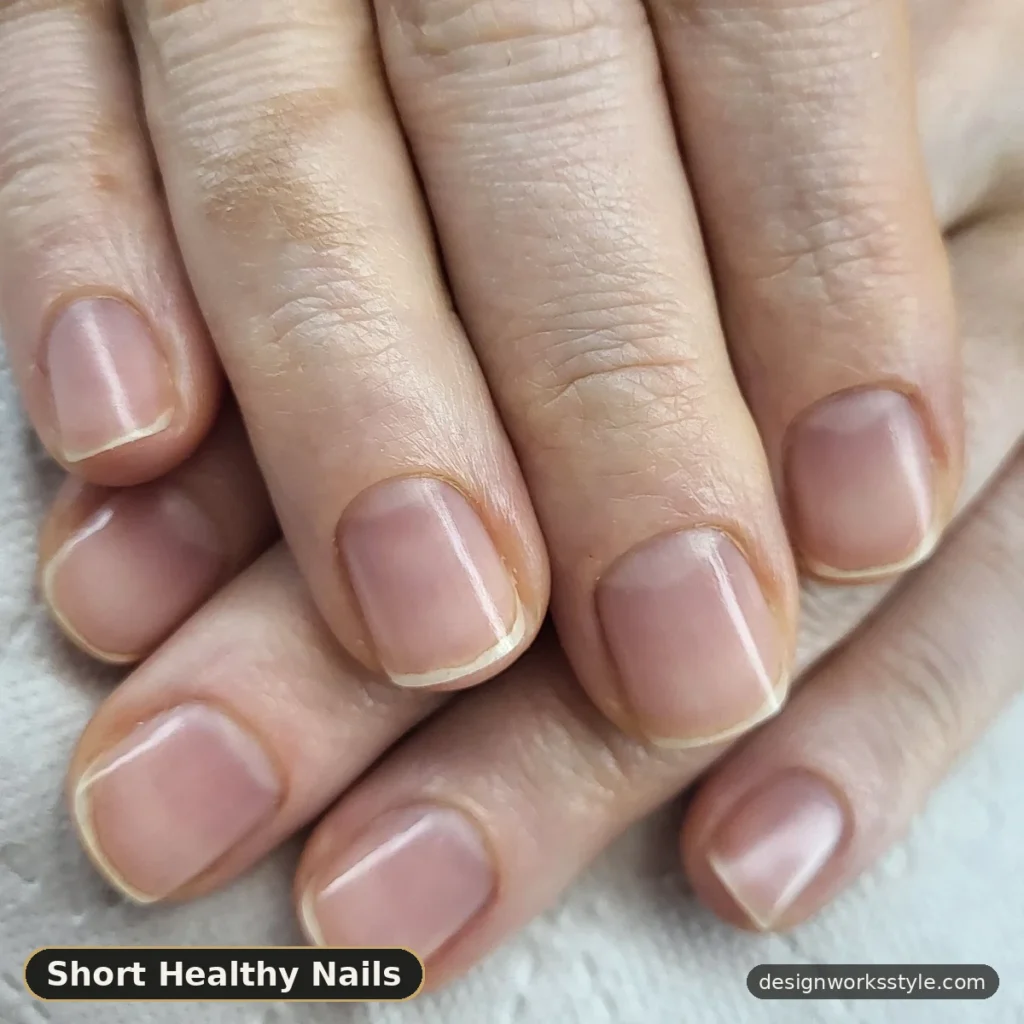
Healthy nails are smooth, even in color, firm but slightly flexible, and attached firmly to the nail bed from cuticle to tip. The nail plate is usually pink from the blood under it, with a pale half-moon at the base that may be visible on some fingers and not others.
Small differences between fingers are normal. Thumbnails grow fastest and show changes first, while little finger nails grow slowest. The half-moon, called the lunula, is often clearest on thumbs and may not show on little fingers at all. Its absence on one finger means nothing on its own.
Nails grow about 3 millimeters a month on fingers and about 1 millimeter a month on toes, though growth slows with age and in winter. That slow growth is why a damaged nail takes months to grow out. A dent from an injury at the cuticle shows up in the middle of the nail weeks later, and reaches the tip after several months.
Color also varies with skin tone and temperature. Cold hands make nails look pale or bluish for a short time, and that color returns to normal once hands warm up. A color change that stays after warming, or that affects all nails the same way, is the kind worth noting.
What Do White Spots and Lines Mean?
White spots and lines on nails are usually marks from minor injury to the nail matrix, the area under the cuticle where the nail forms. They are common, harmless, and grow out with the nail over weeks or months. A single spot means little, while matching lines on all nails at once are the pattern that deserves a closer look.
A white spot appears after a knock to the cuticle that you may not remember. The matrix is soft, and even pressure from typing, a tight shoe, or pushing a cuticle back too hard can leave a mark. The spot moves toward the tip as the nail grows, which confirms it was an injury rather than an ongoing problem.
White lines across the whole nail, called Beau lines when they are dents and Mees lines when they are flat white bands, are different. When they appear on all nails at the same time, they can follow a serious illness, a high fever, or a period of poor nutrition, since nail growth paused while the body dealt with the illness. One line on one nail is usually injury. Lines on all nails at the same level deserve a doctor’s look.
White spots are not a sign of low calcium, despite the old belief. Calcium levels do not show up as spots on nails. A diet low in protein can affect nail strength over time, but it does not draw white spots on the nail plate. If spots appear often and you cannot link them to knocks, check how you handle your cuticles and whether your nails take regular knocks at work.
What Do Ridges Mean?
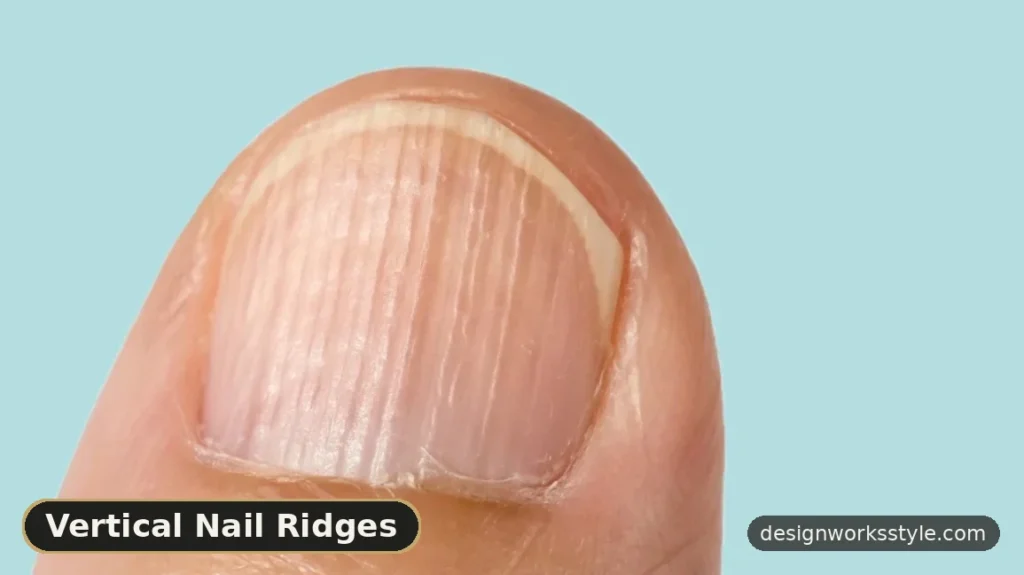
Vertical ridges, running from cuticle to tip, are normal and become more common with age. Horizontal ridges, running across the nail, usually follow an injury, an illness, or a period when nail growth stopped for a while. Knowing which direction a ridge runs is the fastest way to tell a normal age change from a sign worth checking.
Vertical ridges feel like fine lines on the nail surface. They appear as the nail matrix ages and produces nail less evenly, much like skin wrinkles. They are not a sign of a vitamin problem on their own, and they do not need treatment. A ridge filler or a base coat smooths them for polish, and daily oil keeps the nail flexible around them.
Horizontal dents, called Beau lines, are deeper and more noticeable. A single Beau line on one nail follows an injury to that nail’s matrix. Beau lines on all nails at the same level follow an event that affected the whole body, such as a high fever, surgery, or a severe infection. The line marks the point where growth paused, and it grows out over months.
If horizontal ridges keep appearing without an illness or injury you can point to, show them to a doctor. Repeated Beau lines can follow ongoing problems that affect growth, and a doctor can check whether anything needs treatment. A steady nail care basics routine of gentle filing and daily oil does not remove Beau lines, but it stops them from splitting at the ridge while they grow out.
What Do Color Changes Mean?
Nail color changes have many causes, and the pattern tells you more than the color alone. A single discolored nail usually means injury or infection in that nail, while the same change on all nails points to something affecting the whole body.
Yellow nails most often come from polish staining, smoking, or a fungal infection. Polish staining sits on the surface and fades as the nail grows out, especially if you use a base coat next time. Fungal infection thickens the nail, makes it crumbly at the edge, and spreads slowly from one nail to others. A nail that stays yellow, thick, and crumbly for months needs treatment, not just a new polish color.
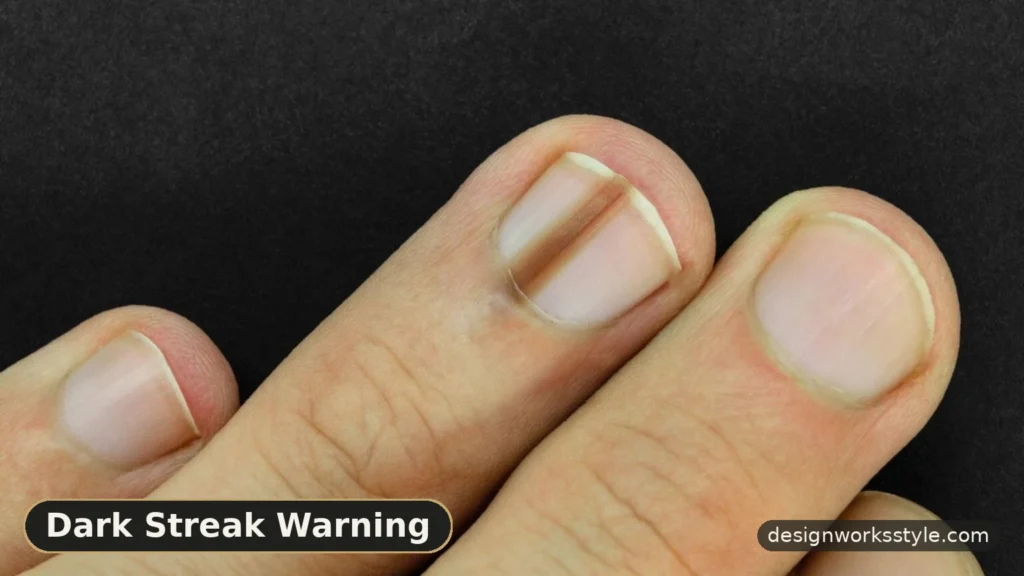
Dark streaks need more care. A dark brown or black line running from cuticle to tip on a single nail, especially on an adult, should be checked by a dermatologist promptly. Most dark lines are harmless pigment, but a melanoma under the nail, though rare, looks the same at first. A doctor can tell the difference with an exam, and early checking matters here more than with any other nail sign.
Blue or purple nails that stay that way after warming up can point to low oxygen in the blood, and very pale nails can follow anemia, though both signs have many other causes. A single pale or blue nail after an injury is just bruising under the nail. The pattern to watch is a lasting change on all nails, with other symptoms, which is when a doctor should look at the whole picture.
Redness and swelling around the nail, rather than on the nail plate, usually mean infection of the skin around the nail. Soak the finger in warm water, keep it clean, and see a doctor if the redness spreads, the finger throbs, or a fever starts. Do not cut the cuticle to drain it, since that opens a path for deeper infection.
When Do Nails Lift, Split, or Break?
Nails lift from the bed, split at the tip, or break easily for reasons that range from simple to serious, and the first step is to separate damage you can see a cause for from changes with no clear cause. Most splitting and breaking comes from water, chemicals, and rough handling.
Splitting at the tip, where the nail peels in layers, usually follows repeated wetting and drying. Dishwashing without gloves, long baths, and frequent hand washing all swell and shrink the nail plate, which separates its layers over time. Gloves for wet work and daily oil cut splitting down fast, often within a few weeks.
Nails lifting from the bed, called onycholysis, start at the tip and move back toward the cuticle, leaving a white or yellow gap under the nail. Common causes are injury, long nails catching on things, gel polish removed by peeling, and skin conditions such as psoriasis. Keep a lifted nail short and clean, since the gap traps moisture and can invite fungal infection. If several nails lift without injury, a doctor should check for thyroid or skin problems.
Brittle nails that snap rather than bend often follow age, dry air, and harsh removers. Acetone remover dries the nail plate, and daily use weakens it. Switch to a gentler remover for regular polish, and save acetone soaks for gel removal only. The habits that make a manicure last longer, gentle prep and regular top coat, also protect the nail edge from the small catches that start splits.
Thick, crumbly toenails are usually fungal infection, especially when they start on one toe and spread slowly. Treatment takes months because the nail grows slowly, and the infected part must grow out fully. Keep feet dry, change socks after sweating, and do not share nail tools between infected and healthy nails.
When Should You See a Doctor About Nails?
See a doctor when a nail change affects all nails at once, lasts for months without a clear cause, or comes with pain, swelling, or other symptoms. A single nail with a clear injury behind it rarely needs a doctor, but a pattern across many nails does.
Book an appointment for a dark streak under a single nail, nails lifting on several fingers without injury, persistent swelling or redness around a nail, or a nail that stays discolored and thick despite treatment. A dermatologist is the right first stop for nail problems, since nails are skin appendages and dermatologists see nail disease daily.
Bring a timeline to the appointment. Note when the change started, whether it affects one nail or all of them, any illness or injury before it appeared, and any medicines you take. That timeline helps the doctor separate a one-time event from an ongoing problem, and it often points to the cause faster than the nail alone.
Do not cover a worrying nail with polish and wait. Polish hides color changes and delays a diagnosis, and acrylic or gel over a lifting or infected nail traps moisture and makes infection worse. Leave the nail bare until a doctor has seen it, especially for dark streaks or lifting nails.
For everyday nail health, the same routine that keeps nails looking good also keeps problems visible: short, smooth nails, clean tools, daily oil, and gloves for wet work. When nails are kept simple, a real change stands out early, and early is when most nail problems are easiest to treat. A regular nail care routine for beginners gives that baseline, since you notice a change when you handle your nails every week.
Frequently Asked Questions
Do white spots on nails mean a vitamin deficiency?
No, in almost all cases. White spots are marks from minor knocks to the nail matrix under the cuticle, and they grow out with the nail. A true deficiency affects nail strength and growth across all nails, not single white spots.
Are vertical ridges a sign of illness?
Usually not. Vertical ridges become more common with age and are a normal change in how the nail matrix produces nail. Horizontal ridges across all nails are the pattern that can follow illness, and those deserve a doctor’s look if they keep appearing.
Can nail polish hide a health problem?
Yes, which is why a worrying change should be left bare until a doctor sees it. Polish hides color changes, and gel or acrylic over a lifting nail traps moisture. For routine wear, polish is fine, but take it off and look at the bare nail every few weeks.
How long does a damaged nail take to grow out?
Fingernails take about three to six months to grow out fully, and toenails take nine to twelve months. A dent or spot at the cuticle moves toward the tip as the nail grows, so its position tells you roughly when the damage happened.