
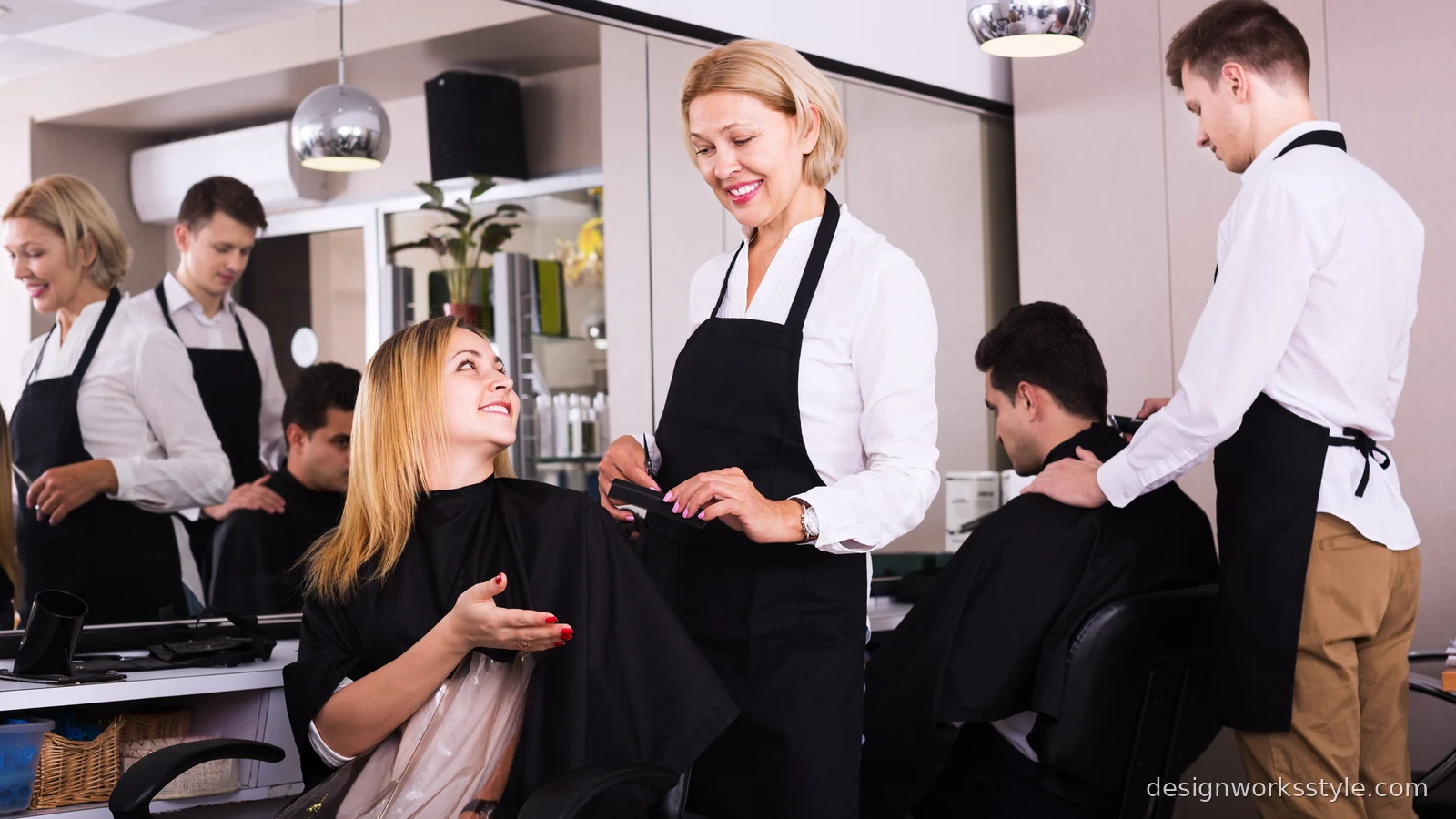
Salon etiquette means showing up on time, speaking clearly about what you want, and treating the staff with the same respect you expect back. Book ahead, arrive with clean hair or bare nails, keep phone calls short, and tip for good service. Small habits like these make the appointment smoother for you and for the person doing the work.
What Should You Do Before Your Appointment?
Before your appointment, book the right service, arrive on time, and show up ready for the work. Check the salon’s booking rules, note the cancellation window, and bring photos of the cut or nail shape you want. Arrive with clean, dry hair for a cut and bare nails for a manicure, unless the salon tells you otherwise.
When you book, name the exact service. A manicure can mean regular polish, gel, or extensions, and each takes a different amount of time. Say whether you want gel or regular polish, whether you need removal of an old set, and whether you want nail art. For a cut, say whether it is a trim or a restyle, and whether you want color too. Clear booking prevents a rushed job or a second visit.
Arrive five to ten minutes early. That gives you time to check in, wash your hands, and talk through the service without eating into your appointment time. If you arrive late, the stylist may need to shorten the service, and a color appointment may need to move to another day. Call if you are delayed. A short message lets the salon adjust instead of waiting blind.
Come ready. For a haircut, arrive with clean, dry hair unless the salon asks otherwise, since product buildup and wet hair change how a cut falls. For a manicure, arrive with bare nails or tell the salon you need removal. Bring photos of the result you want, and one photo of what you do not want. A photo plus a short sentence beats a long description alone. If you have not picked a salon yet, our guide to choosing a nail salon covers hygiene checks and red flags, and our guide to choosing a hair salon covers consultations and pricing.

How Should You Act During the Service?
During the service, speak up early, keep your phone quiet, and let the stylist work. Say what you like and what you do not like while it can still be changed, not after you leave. Put the phone away during a cut or a manicure, sit still when asked, and ask questions instead of guessing about the result.
Talk early and plainly. If the length looks wrong, the color looks darker than you expected, or the nail shape is not what you asked for, say so while it can still be changed. Stylists expect this. Waiting until the end, when the polish is set or the hair is cut, leaves little room to fix it. Use plain words: shorter, longer, warmer, cooler, rounder, squarer.
Keep calls short and quiet, or step outside if a call cannot wait. A phone pressed to your ear moves your head during a cut and your hand during a manicure. Texting is fine when your hands are free, but put the phone down when the technician needs your hand still. If you want to listen to music or a podcast, earbuds work, but keep one ear free so you can hear questions.
Sit still when asked, and ask before moving. A cut needs your head level, and a manicure needs your hand flat and relaxed. If you need the bathroom or a drink of water, say so and the technician will pause at a safe point. Small talk is welcome in most salons, but a quiet appointment is fine too. You do not owe conversation, and a good stylist reads that without fuss.

What About Tipping?
Tipping at a salon follows a simple pattern: tip the person who did the work, tip more for long or detailed work, and tip in cash when you can. In many places, 15 to 20 percent of the service price is normal, with more for color, extensions, or hand-painted nail art.
Tip more for long appointments, like full color, extensions, or detailed nail art, since those take more time and skill. Tip the person who did the work. If an assistant washed your hair or prepped your nails, a small separate tip for them is a kind touch where that is the custom.
Cash is often preferred, since card tips can take days to reach the stylist. If you pay by card, ask whether you can add the tip to the card. Some salons add a service charge to the bill. When that happens, ask whether it goes to the staff or to the salon, since a service charge is not always a tip.
You are not obliged to tip well for poor work. If the service was rushed, the result was wrong, and the salon did not try to fix it, a smaller tip with a calm explanation is fair. Tipping is a thank-you, not a fee, and a salon that demands a set percentage has it backwards.

What Should You Do After the Appointment?
After the appointment, check the result in daylight, say what you think before you leave, and rebook while you are there if you want the same stylist. If something is wrong, call within a few days and describe the problem plainly, since most salons fix a cut or a manicure free when you raise it early.
Check the result before you leave, in the mirror and, if you can, in daylight by the door. Look at the back of a cut with a hand mirror, and check nail edges and polish lines up close. If something looks off, say so now. A fix on the spot takes minutes, while a return visit takes another trip.
If a problem shows up later, like a cut that falls wrong once washed or polish that chips in two days, call within a few days and describe it plainly. Most salons fix a cut or a manicure free when you raise it early. Stay calm and specific: what is wrong, where it is, and when it started. Anger slows a fix down.
Rebook before you leave if you want the same stylist, since good stylists fill up fast. Ask what aftercare the result needs: when to wash colored hair, how to keep a manicure intact, and when to come back for a fill. Our guide to making a manicure last longer covers daily habits that protect the polish between visits, and our hair styling guide covers styles that hold up between appointments.
How Do Cancellations and Rescheduling Work?
Cancel or reschedule as early as you can, and always follow the salon’s stated window, which is often 24 to 48 hours. A late cancellation leaves an empty chair the salon cannot fill, and repeat no-shows can mean losing the booking privilege or paying a fee.
Cancel as early as you can, and use the method the salon asks for, usually a call or an online booking link. Do not fail to show up without calling. A no-show leaves an empty chair and a stylist with no pay for that hour. If you wake up sick or an emergency comes up, call even if it is late. A late call is still better than silence.
Learn the salon’s window before you book. Many salons ask for 24 to 48 hours’ notice, and some take a deposit for long appointments like color or extensions. If you cancel inside the window more than once, expect a fee or a deposit requirement next time. That is not rudeness. It is how the salon covers lost bookings.
Rescheduling beats cancelling when you still want the service. Ask for the next open slot with the same stylist, and keep the new time. Repeated rescheduling has the same effect as repeated cancellation, so move a booking only when you must.
Frequently Asked Questions
Should I wash my hair before a salon appointment?
For most cuts, arrive with clean, dry hair unless the salon tells you otherwise, since product and oil change how hair falls. For color, follow the salon’s advice: some color services work better on hair that has not been washed that day. When unsure, ask when you book.
Is it rude to talk on the phone during my appointment?
A short, quiet call is usually fine, but a long call is not. It moves your head during a cut and your hand during a manicure, and it makes conversation with the stylist hard. If a call cannot wait, step outside or keep it under a minute.
How much should I tip at a salon?
In many places, 15 to 20 percent of the service price is normal for good work, with more for long or detailed services like color or extensions. Tip the person who did the work, and tip in cash when you can. If a service charge is already on the bill, ask whether it goes to the staff before adding more.
What should I do if I am running late?
Call the salon as soon as you know, and give a realistic arrival time. A delay of five minutes is easy to absorb. A delay of twenty minutes may mean a shorter service or a new booking, especially for color. Never assume the salon will wait without a call.
Good salon manners are simple: book clearly, arrive ready, speak early, tip fairly, and cancel with notice. The salon keeps your chair, and you keep a stylist who is glad to see you back.