
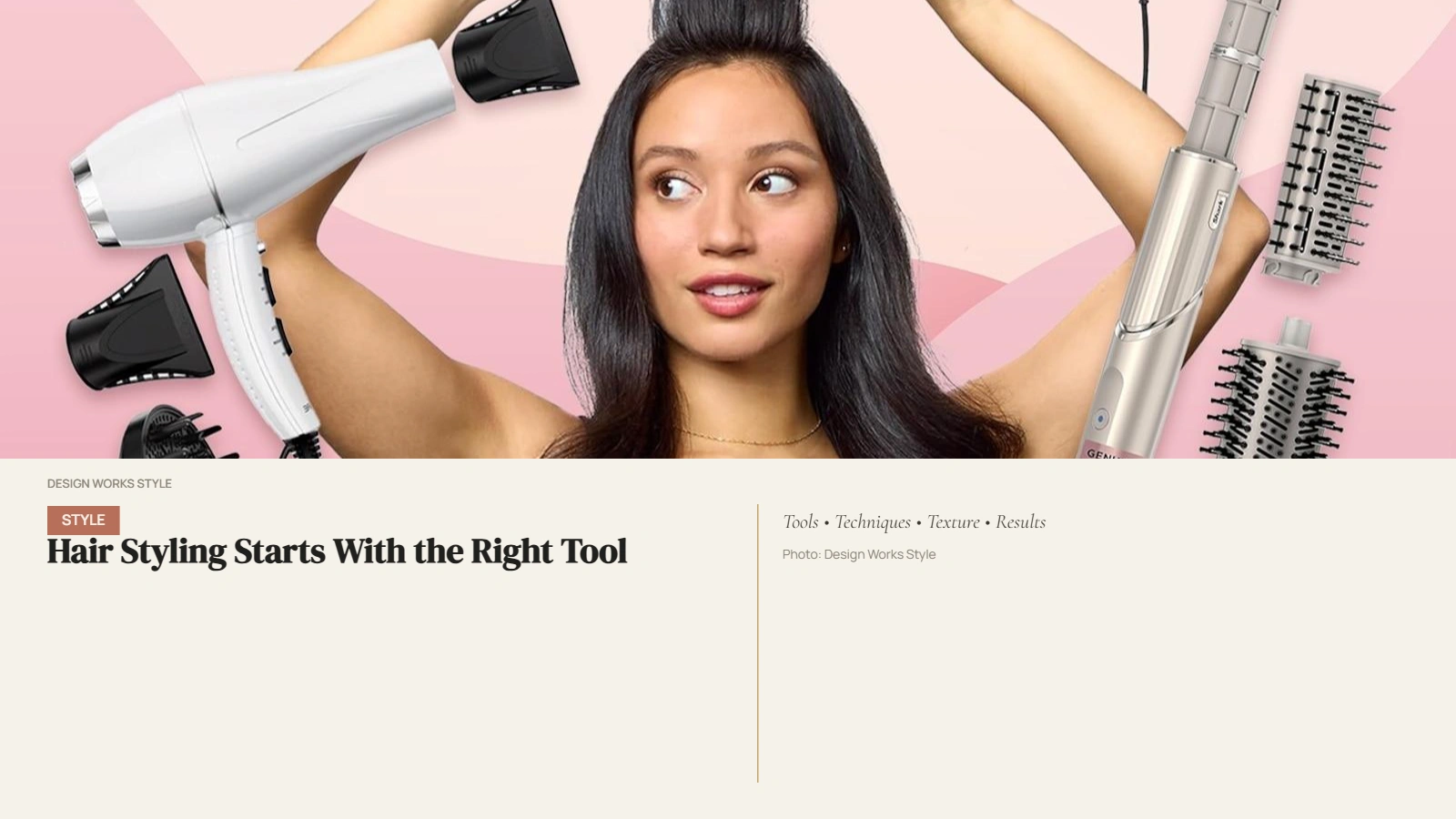
Hair styling is less about owning every tool and more about matching the right tool and technique to the result you want. Hair length, texture, density, condition, section size, heat, and finishing all affect how a style comes together.
If you want more volume, you may reach for rollers or a round brush. For smoothness, a blow dryer, brush, or flat iron may make more sense. For curls and waves, the options include curling irons, wands, rollers, and heatless methods.
The useful starting point is simple: choose the result first, then choose the tool and technique that can create it.
How to Choose the Right Hair Styling Tool
Before buying or using a styling tool, consider five things: your desired result, hair texture, length, strand thickness and density, and how comfortable you are with the technique.
Start with the desired result
| Styling goal | Tools or approaches to consider |
|---|---|
| Smooth and straighten | Flat iron or directional blow-drying |
| Create curls | Curling iron, wand, rollers, or heatless setting |
| Add volume | Round brush, rollers, blow dryer, or hot-air brush |
| Create soft waves | Large rollers, curling tools, or heatless methods |
| Define natural curls | Diffuser and curl-focused styling technique |
| Dry and shape | Hair dryer with a suitable brush or attachment |
| Reduce heat use | Rollers, braids, wrapping, or other heatless methods |
These are starting points rather than fixed rules. The same tool can produce different results depending on the hair, section size, temperature, direction, and technique.
Consider your hair texture
Straight, wavy, curly, and coily hair can respond differently to the same styling method.
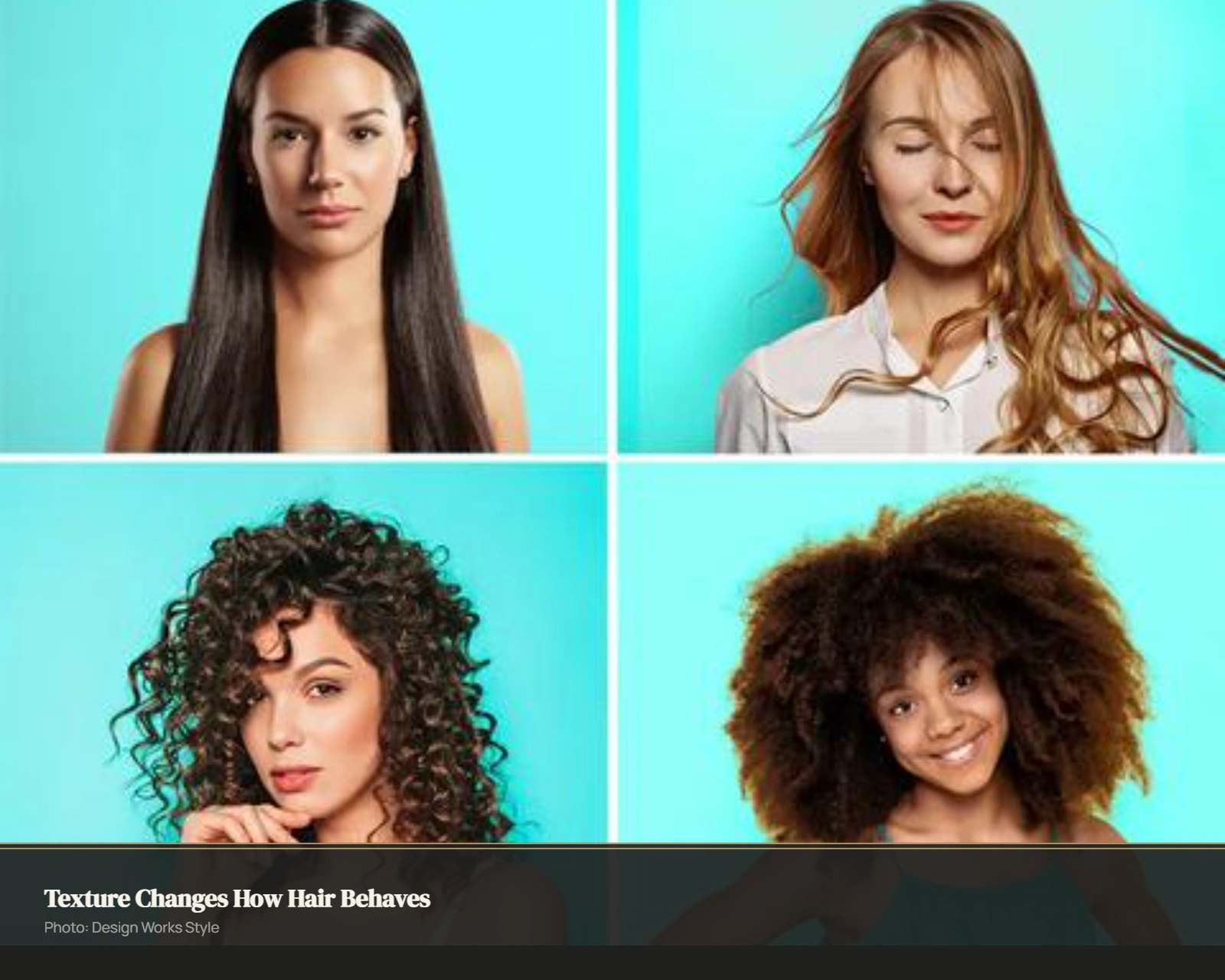
Texture affects how easily hair changes shape, how much tension may be needed, how a tool moves through the hair, and how the finished style behaves.
Your natural pattern also matters when deciding whether you want to enhance it, smooth it, stretch it, or create a different shape.
Think about hair length
Length affects the practical size of the tool, the size of each section, drying time, and how easily you can maneuver around your head.
A large round brush or roller may be difficult to use on very short sections, while a small tool can require much more time on long, dense hair.
If you’re still deciding what kind of finished style suits your length, our guide to short hairstyles can provide ideas before you choose a styling technique.
Separate strand thickness from density
Fine and coarse hair describe strand thickness. Density describes how
much hair you have.
That distinction matters. Fine, dense hair can require a different approach from fine, low-density hair. Likewise, coarse hair may need different section sizes and preparation from finer strands.
Rather than choosing a tool simply because it is marketed for a particular hair type, consider how your actual hair behaves during styling.
Be realistic about technique
Some tools have a relatively short learning curve. Others require
careful sectioning, coordination, and practice.
A multi-styler may offer several functions in one device, but that does not necessarily make every styling technique equally easy to perform.
If you are learning, start with the result you want and choose a tool you can comfortably control.
Hair Styling Tools Explained
Hair Dryers
A hair dryer can do much more than remove moisture.
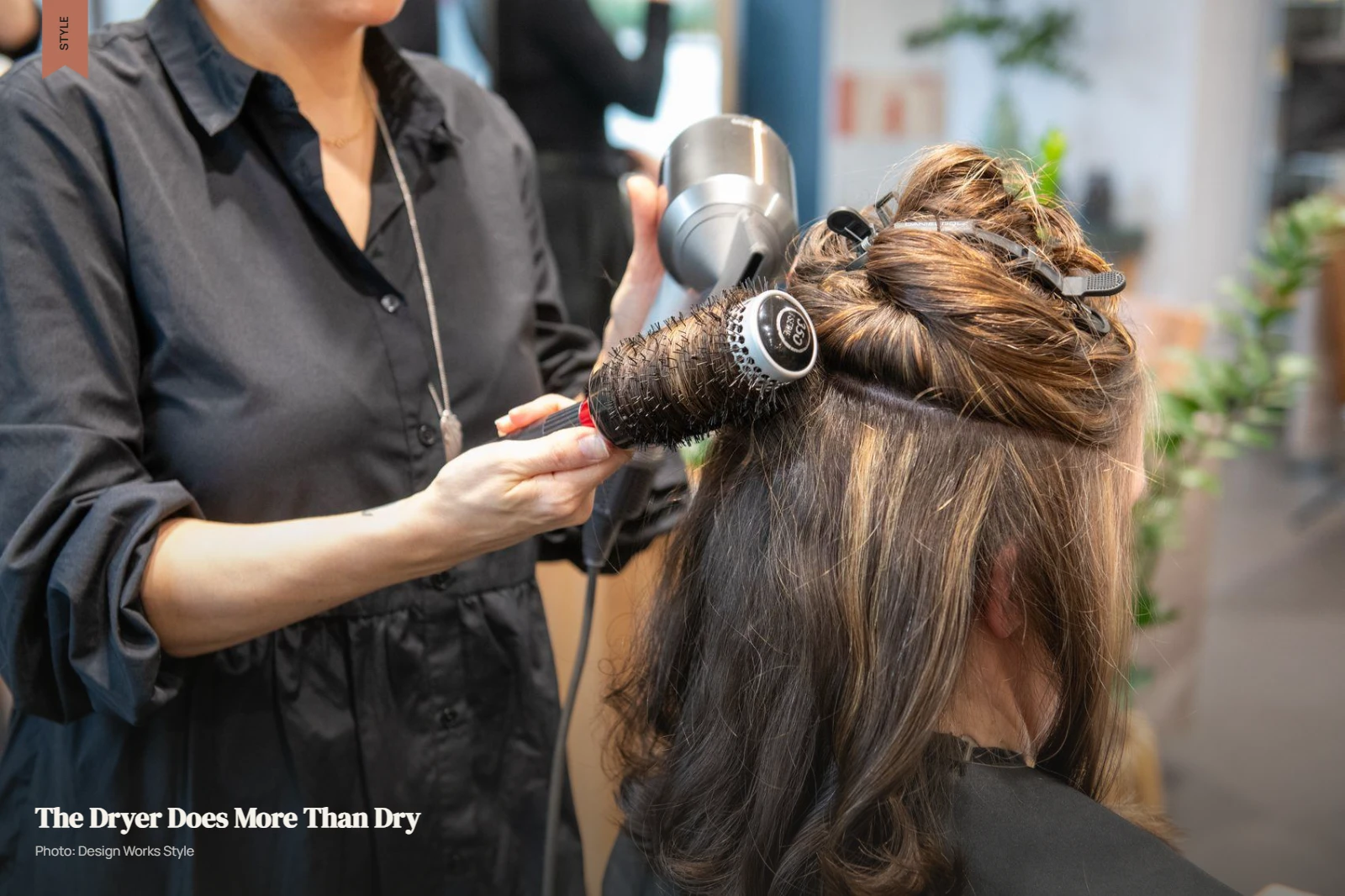
With the right attachment and technique, it can help smooth hair, create volume, direct movement, and prepare hair for another styling step.
Airflow direction matters. Working with controlled sections can also make the result more consistent than simply moving the dryer randomly around the head.
A diffuser serves a different purpose, particularly when working with natural curls and waves. Match the attachment and airflow approach to the result you want rather than forcing one technique onto every texture.
Round Brushes
Round brushes are commonly used for blowouts, volume, smoothing, shaping, and creating bend at the ends.
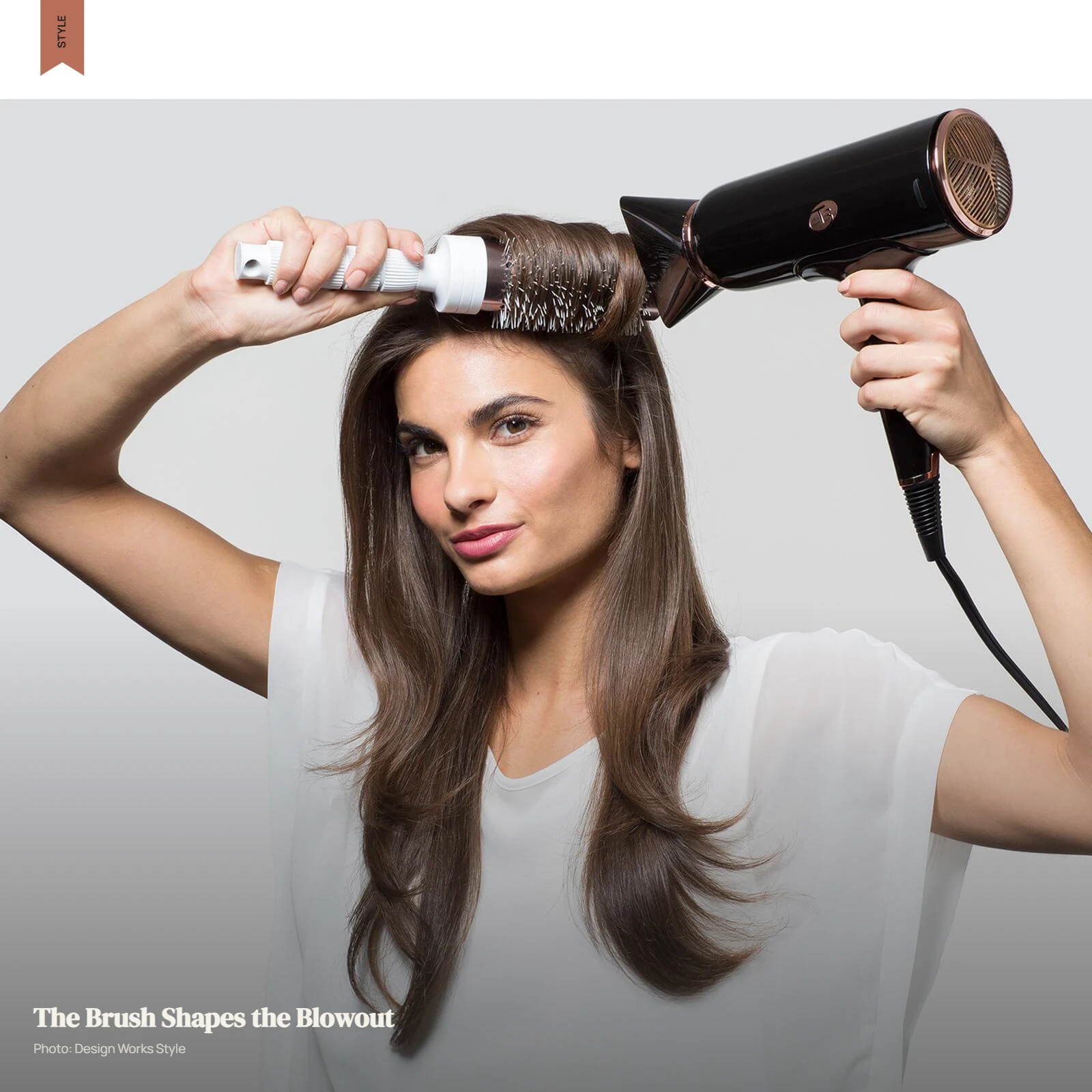
Brush diameter affects the result. Larger brushes generally make more sense when you want a broader bend or smoother shape, while smaller brushes can offer more control around shorter sections.
The brush does not work independently of the dryer. Section size, hair length, airflow direction, tension, and brush diameter all interact.
Flat Irons
Flat irons are primarily used for straightening and smoothing, but they can also create bends and certain types of waves.
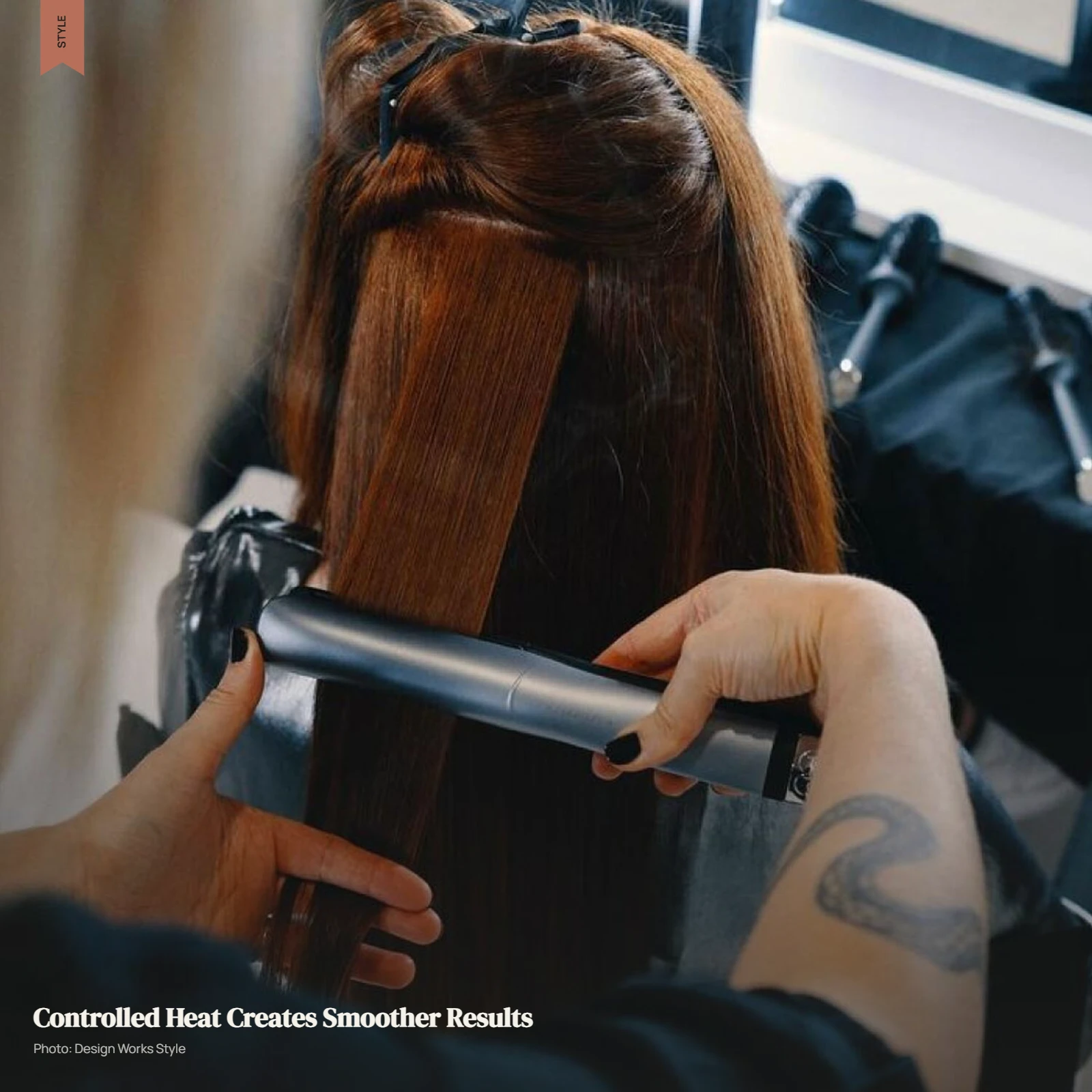
Temperature should be appropriate for the hair and the tool manufacturer’s instructions. Taking smaller, controlled sections can help avoid repeatedly passing the iron over the same area.
Heat protectant can be part of a heat-styling routine, but it should not be treated as a guarantee that hair cannot be damaged.
Curling Irons and Wands
Curling tools shape hair around a heated barrel.
Barrel diameter influences the size and character of the curl, while section size and direction also affect the finished result.
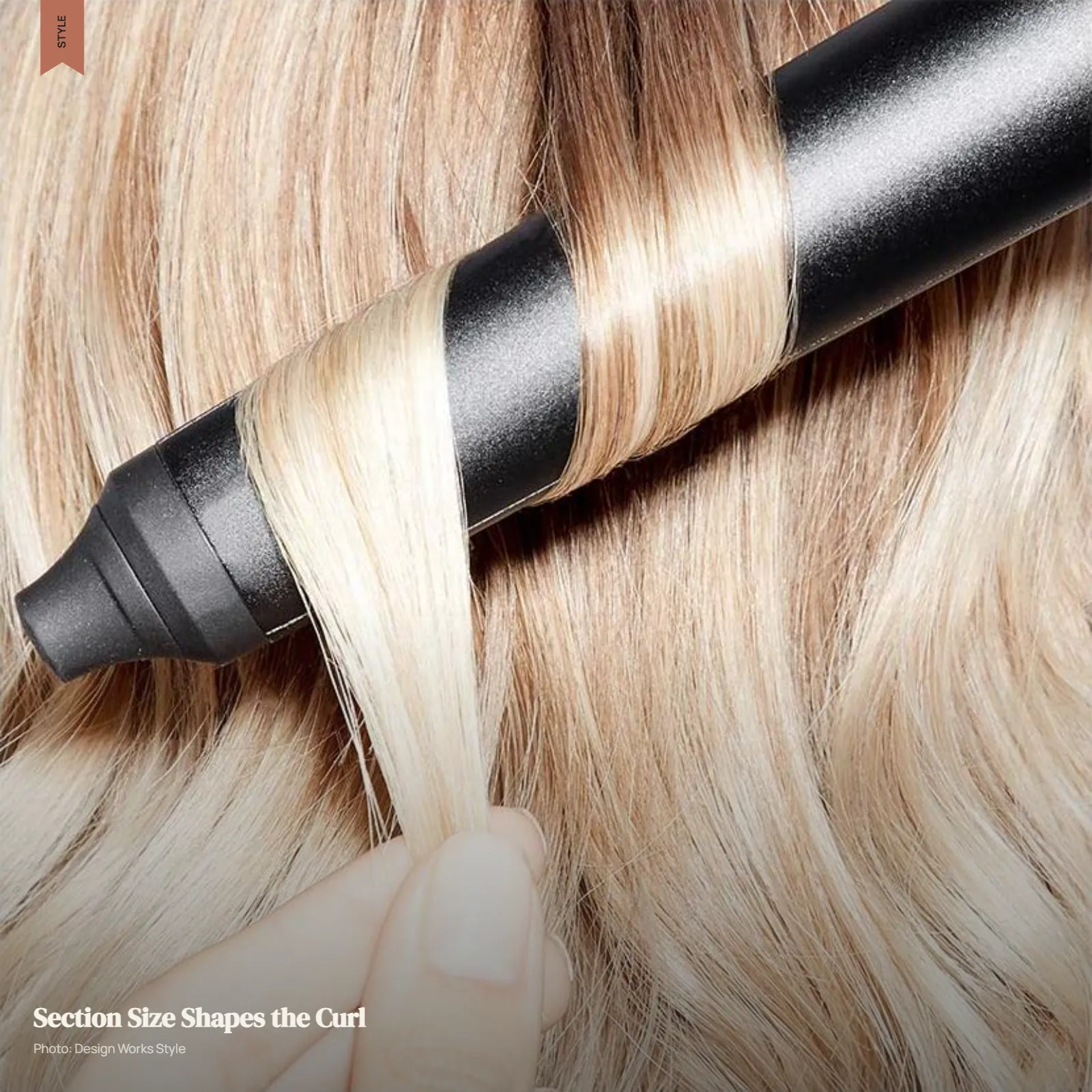
Smaller sections generally create a more defined result. Larger sections can create a looser effect, although the exact outcome depends on the hair and tool.
A curling iron with a clamp and a wand also require slightly different handling. Choose based on the type of control you find comfortable rather than assuming one design is universally better.
Hair Rollers
Rollers can create volume, curls, waves, and set styles without requiring the same continuous heat exposure as a curling iron.
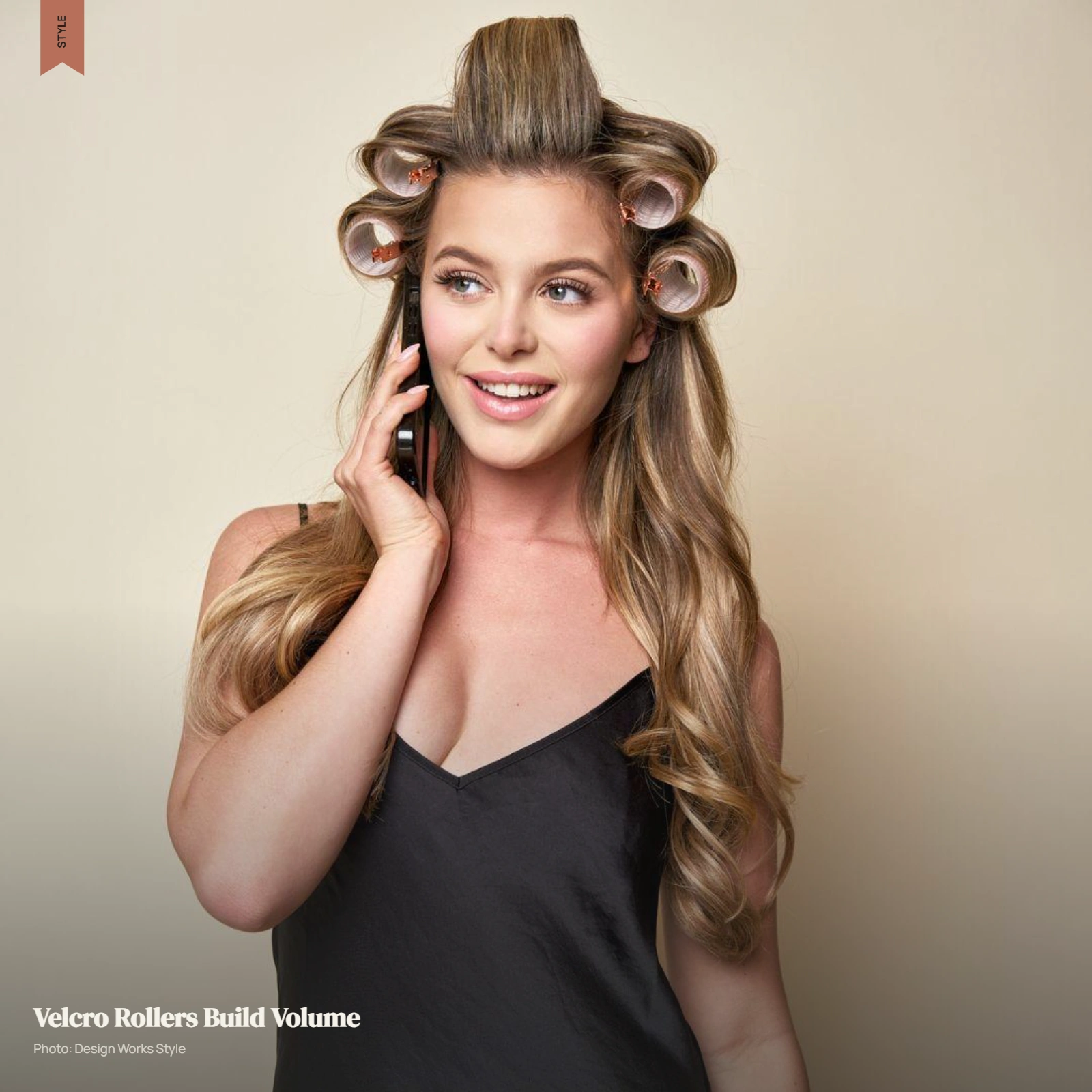
Common categories include hot rollers, Velcro or self-grip rollers, foam rollers, and other soft rollers.
The important variables are roller size, section size, placement, setting time, and the amount of volume or curl you want.
If you’re deciding which roller type fits your hair and styling routine, see our guide to the best hair rollers for a deeper look at roller types, sizes, and styling goals.
For fine hair, roller weight, size, grip, and sectioning can change the way the style sets. Our guide to the best hair rollers for fine hair covers that narrower decision.
Hot-Air Brushes and Multi-Stylers
Hot-air brushes combine airflow and styling in a single workflow. They can be useful for drying, smoothing, shaping, and creating volume.
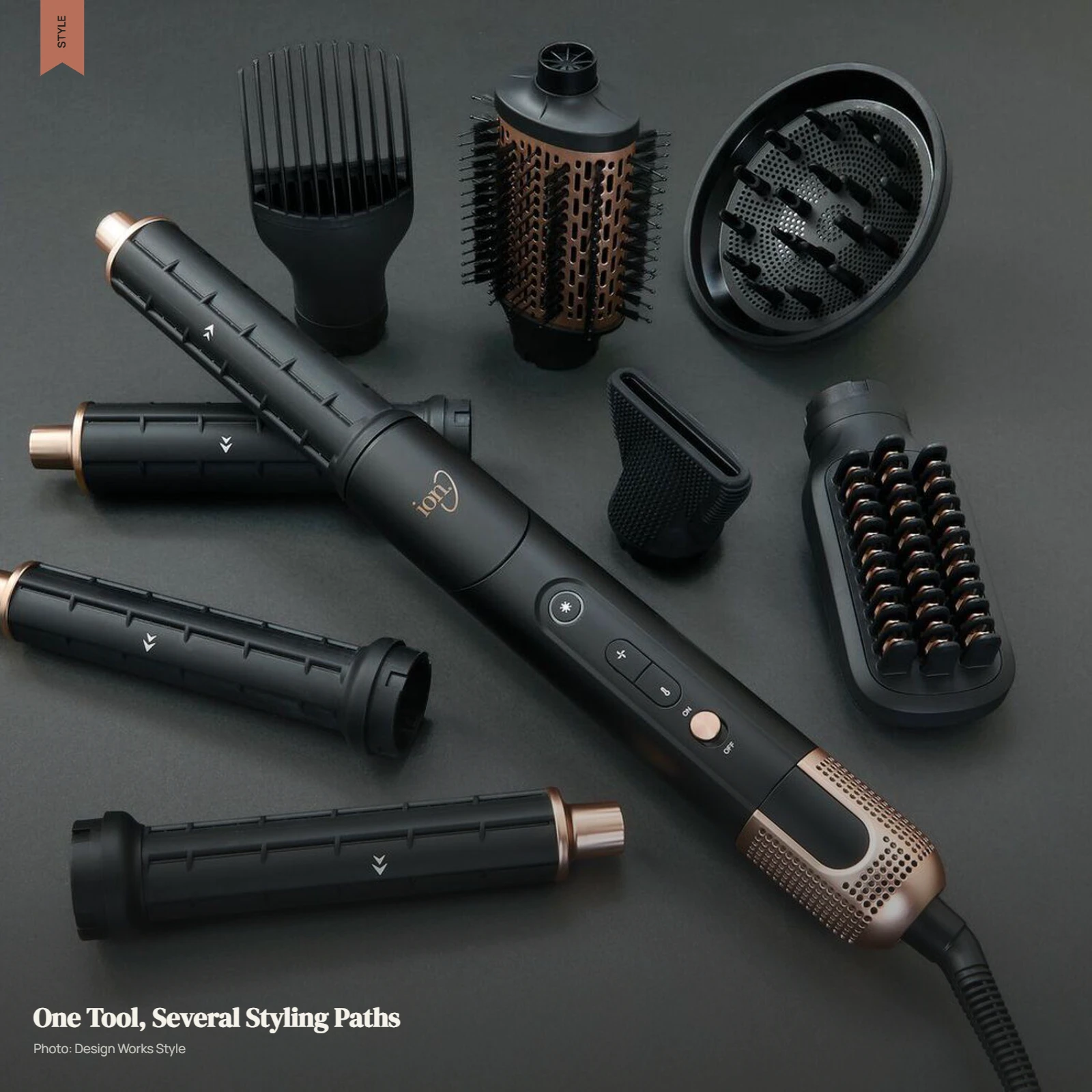
Multi-stylers take the concept further by combining several attachments or functions.
The tradeoff is usually between versatility and specialization. A multi-purpose tool can reduce the number of separate tools you need, but a specialized tool may offer more direct control for a particular styling task.
Heatless Hair Styling Options
Heatless styling can include foam rollers, soft rollers, braiding, wrapping, and overnight setting methods.
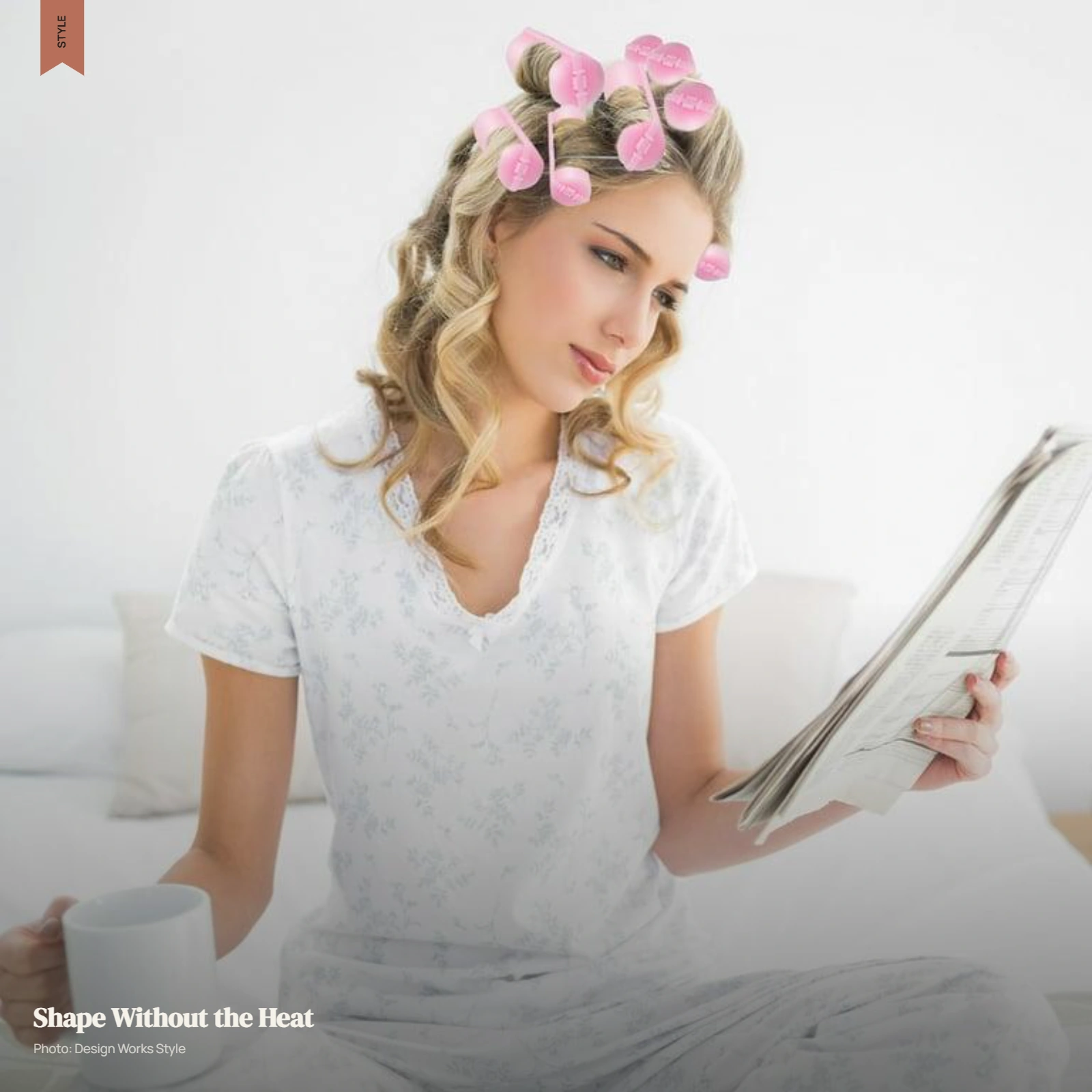
The appeal is straightforward: these techniques can create shape without relying on a heated styling surface or barrel.
But “heatless” does not automatically mean “damage-free.” Hair can still experience friction, pulling, tension, or breakage if a style is installed too tightly or removed roughly.
Comfort matters too. If a technique causes persistent pulling or discomfort, loosen the style or choose another method.
What to Know Before Using Heat on Your Hair
Heat styling works best when preparation and technique are treated as part of the process rather than afterthoughts.
Before using a heated tool:
- Start with hair in the condition recommended for that tool.
- Use heat protectant where appropriate.
- Follow the tool manufacturer’s temperature and usage guidance.
- Avoid unnecessarily high temperatures.
- Work in manageable sections.
- Avoid repeated passes over the same area.
- Allow curls or waves to cool and set when the technique requires it.
- Do not use heated tools in ways that conflict with their safety
instructions.
The goal is controlled styling, not maximum heat.
If your hair has significant damage or another condition that makes heat
styling difficult, individualized advice from a qualified professional
is more appropriate than applying a generic temperature rule.
Why Sectioning Matters When Styling Hair
Sectioning is one of the least glamorous parts of styling, but it has a major effect on consistency.
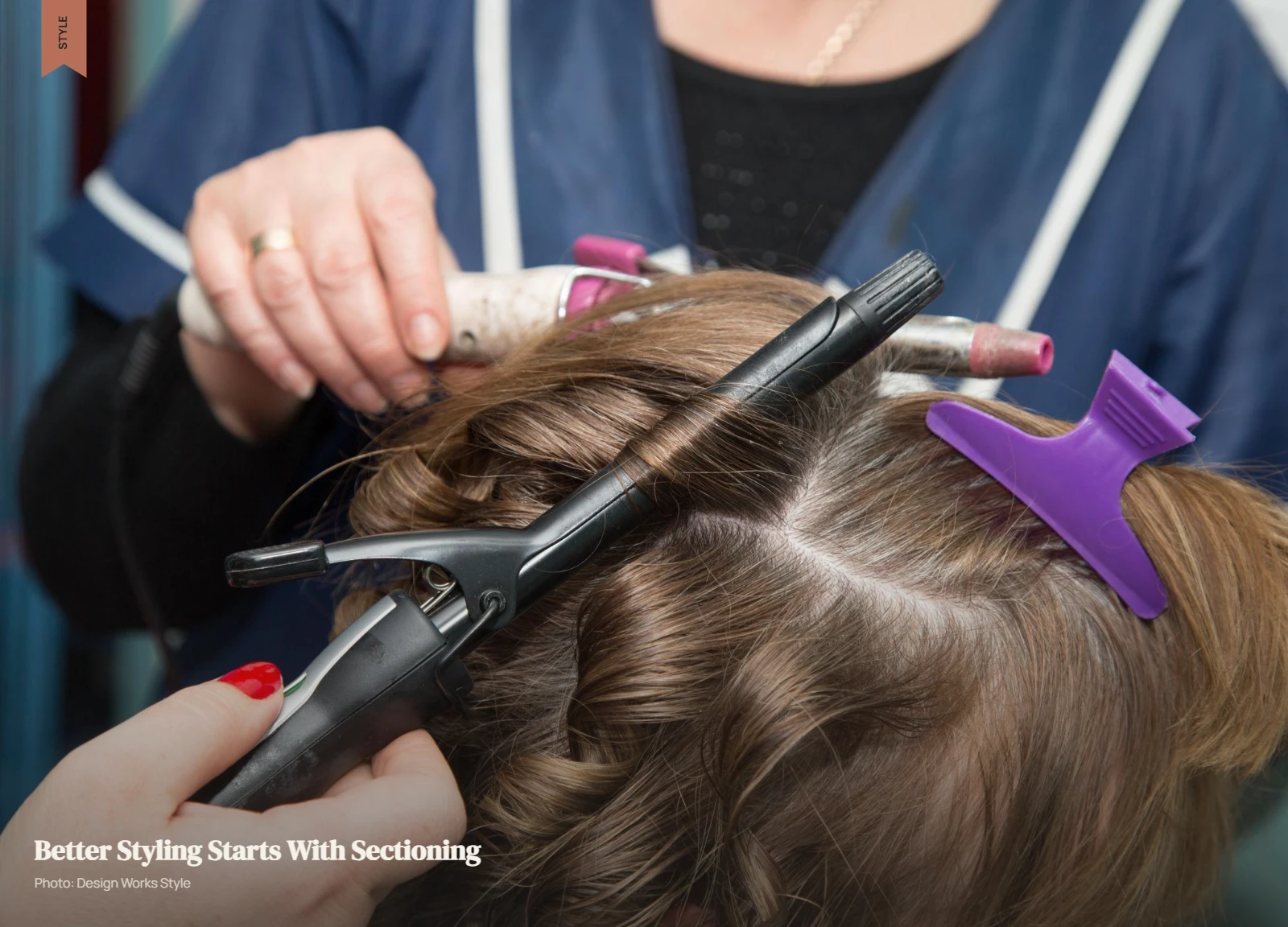
Dividing hair into manageable areas gives you more control over drying, heat distribution, tension, curl formation, and volume.
A simple framework is:
- Divide the hair into manageable areas.
- Start where shape or volume matters most.
- Keep sections reasonably consistent.
- Avoid taking a section that is too large for the tool.
- Maintain a consistent direction when you want a uniform result.
The relationship between section size and tool size matters particularly when using rollers, brushes, and curling tools. A section that overwhelms the tool may not receive consistent heat or tension.
For a more detailed walkthrough, see our guide on how to section hair.
Simple Hair Styling Workflows
Instead of thinking about styling as one complicated process, break it into a sequence.
For volume
Preparation → blow-dry → brush or roller placement → cool/set → finish
The important decisions are section size, direction, and where you want the lift.
For curls
Preparation → section → choose barrel or roller → curl/set → cool → release → finish
The tool creates the shape, but section size and setting time influence how defined that shape becomes.
For smooth hair
Preparation → section → directional drying or flat iron → finish
Controlled sections generally make it easier to work consistently without repeatedly returning to the same area.
For natural curls
Preparation → styling product → section if needed → diffuse or air-dry → finish
The goal is usually to support the existing curl pattern rather than treating textured hair like straight hair.
Choosing a Tool Based on Your Styling Goal
| Goal | Tools to consider | Main consideration |
|---|---|---|
| Root volume | Round brush, rollers, hot-air brush | Section size and lift |
| Smooth finish | Dryer, brush, flat iron | Heat and tension |
| Loose waves | Large rollers, curling tool | Tool size and setting |
| Defined curls | Curling iron, smaller rollers, flexi rods | Section size and direction |
| Natural curl definition | Diffuser and suitable styling products | Texture and technique |
| Heatless curls | Foam or soft rollers, wrapping methods | Setting time |
| Quick styling | Hot-air brush or heated tool | Convenience versus heat exposure |
| Goal Tools to consider Main consideration |
Root volume Round brush, rollers, Section size and lift hot-air brush
Smooth finish Dryer, brush, flat iron Heat and tension
Loose waves Large rollers, curling Tool size and setting tool
Defined curls Curling iron, smaller Section size and rollers, flexi rods direction
Natural curl definition Diffuser and suitable Texture and technique styling products
Heatless curls Foam or soft rollers, Setting time wrapping methods
Quick styling Hot-air brush or heated Convenience versus heat tool exposure
Use the table as an orientation point, not a rulebook. Hair length, texture, density, and condition can change which option makes sense.
Common Hair Styling Mistakes
Choosing a tool because it is popular
A popular tool may still be the wrong tool for your intended result.
Instead: start with the hairstyle you want and work backward to the appropriate tool category.
Using the wrong tool size
A barrel, brush, or roller that is too large or too small can make the desired result difficult to achieve.
Instead: match tool size to hair length, section size, and the shape you want.
Taking sections that are too large
Large sections can make heat and tension less consistent.
Instead: divide the hair into manageable sections that the tool can work through properly.
Using excessive heat
More heat does not automatically mean a better or faster result.
Instead: follow the tool’s instructions and use the lowest practical temperature that works for your hair and technique.
Repeatedly passing over the same section
Repeated passes increase heat exposure without necessarily improving the result.
Instead: improve preparation, sectioning, and technique before increasing heat or repetitions.
Removing rollers too early
Hair generally needs time to cool or dry sufficiently for a set to form.
Instead: allow the style to set according to the method you are using.
Pulling during removal
Rushing a roller or heated tool out of the hair can create unnecessary mechanical stress.
Instead: remove tools carefully and work in the direction that releases the hair rather than forcing it.
Ignoring your natural texture
A technique designed for straight hair may not translate directly to curly or coily hair.
Instead: adapt the preparation, tool, and technique to your starting texture.
Taking Care of Your Hair Styling Tools
Tool maintenance is part of a practical styling routine.
Clean away product buildup according to the manufacturer’s instructions,
keep dryer vents clear, inspect cords and plugs, and store tools safely
after they have cooled.
For the broader relationship between styling and maintaining your hair,
see our hair care guide.
If a tool becomes damaged or develops an electrical problem, follow the
manufacturer’s guidance rather than attempting an improvised repair.
Frequently Asked Questions
What are the most useful hair styling tools?
The most useful tool depends on what you style most often. A hair dryer, round brush, flat iron, curling tool, rollers, diffuser, or hot-air brush can each serve different purposes. Start with your regular styling goal rather than trying to build a complete collection
How do I choose a hair styling tool?
Start with the result you want, then consider your hair texture, length, strand thickness, density, and styling experience. Tool size and section size also matter.
What tool is useful for adding volume?
Round brushes, rollers, blow dryers, and hot-air brushes can all be useful for volume. The best choice depends on where you want the volume and how much heat or technique you want to use.
What tool should I use for curls?
Curling irons, wands, rollers, and heatless methods can all create curls. Choose based on the curl size, setting method, heat preference, hair length, and level of control you want.
How should I section my hair for styling?
Divide your hair into manageable sections and keep them reasonably consistent. Avoid sections that are too large for the tool. For a dedicated explanation, see our guide to how to section hair.
Should I use heat protectant before heat styling?
Heat protectant can be part of a sensible heat-styling routine, but it should not be treated as a guarantee against damage. Follow the product and tool instructions and avoid unnecessary heat exposure.
Is heatless styling better for hair?
Heatless styling reduces the need for heated tools, but it is not automatically risk-free. Tight wrapping, friction, pulling, and rough removal can still stress hair.
How do I choose the right roller size?
Think about the result first. Larger rollers can be useful for broader bends and volume, while smaller rollers generally create more defined shapes. Hair length and section size also affect the result. For a broader roller comparison, see our guide to the best hair rollers.
How often can I use heat styling tools?
There is no single frequency that works for every person or hair type. Consider your hair’s condition, the temperature and duration of styling, and whether repeated heat exposure is causing dryness or breakage.
The Practical Way to Approach Hair Styling
Good hair styling is a series of small decisions: what result you want, what your hair is like before styling, which tool can create the shape, how you section it, how much heat or tension you use, and how you finish the style.
You do not need every styling tool.
Start with the result you want, choose the simplest tool that can reasonably achieve it, and learn the technique behind that tool. From there, move into the focused guides that match your specific styling problem rather than trying to learn everything at once.