
Nail Care Routine for Beginners
A beginner nail care routine is a short weekly habit plus a minute of daily care: clean, trim, file, push cuticles back, and moisturize. Done this way, nails stay smooth, stop splitting, and hold polish longer, even if you have never done more than clip them before.
What Does a Beginner Nail Care Routine Actually Include?
A beginner routine covers five jobs: cleaning under and around the nails, trimming to a practical length, filing the edge smooth, caring for the cuticles, and moisturizing nails and skin. Polish is optional, and it sits on top of this routine rather than replacing any part of it.
Start by thinking of nail care as maintenance, like brushing teeth. You do a little often, and the payoff is nails that rarely break, snag, or peel. A routine that takes twenty minutes once a week, plus a minute a day, is enough for most people. If a step feels like a chore you will skip, simplify it. A routine you actually do beats a long one you abandon after two weeks.
The order matters less than doing each step gently. Rough handling is what damages nails most at the start: sawing with a coarse file, cutting cuticles, peeling polish, or forcing nails to a shape they cannot hold. Gentle, steady care lets nails grow out past their weak points, and after a few weeks you will notice fewer breaks and smoother tips.
What Tools Do You Need to Start?
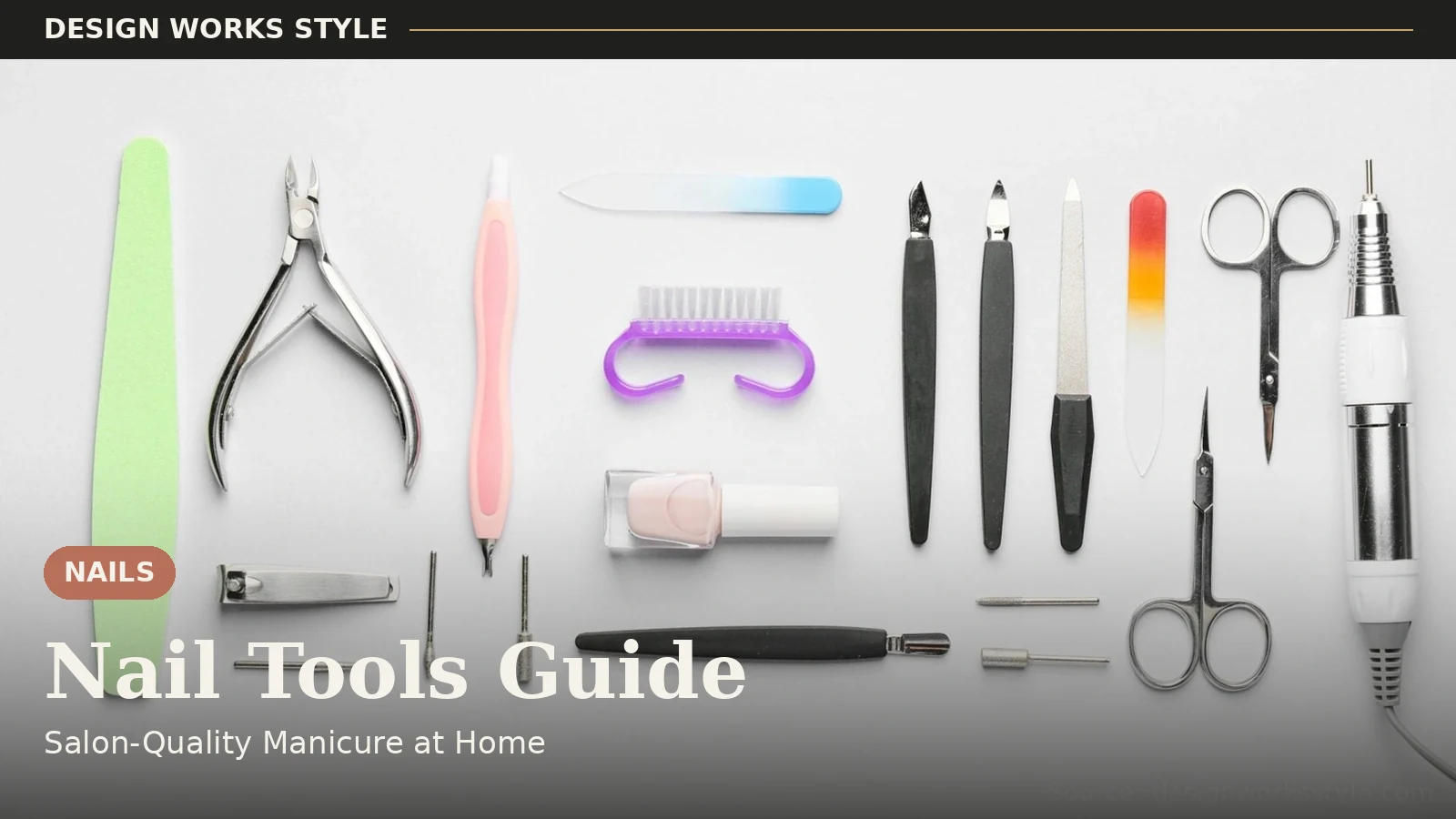
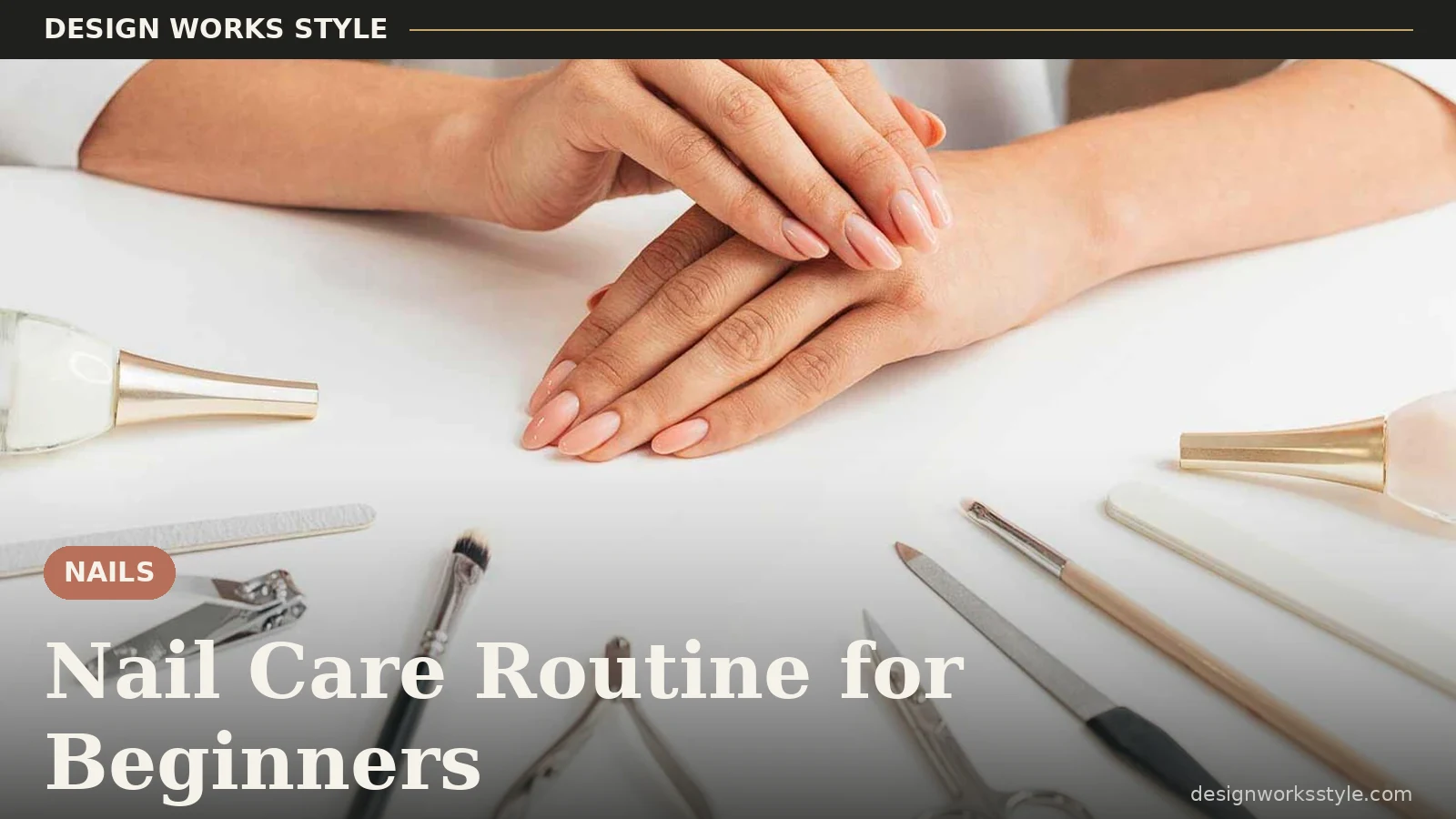
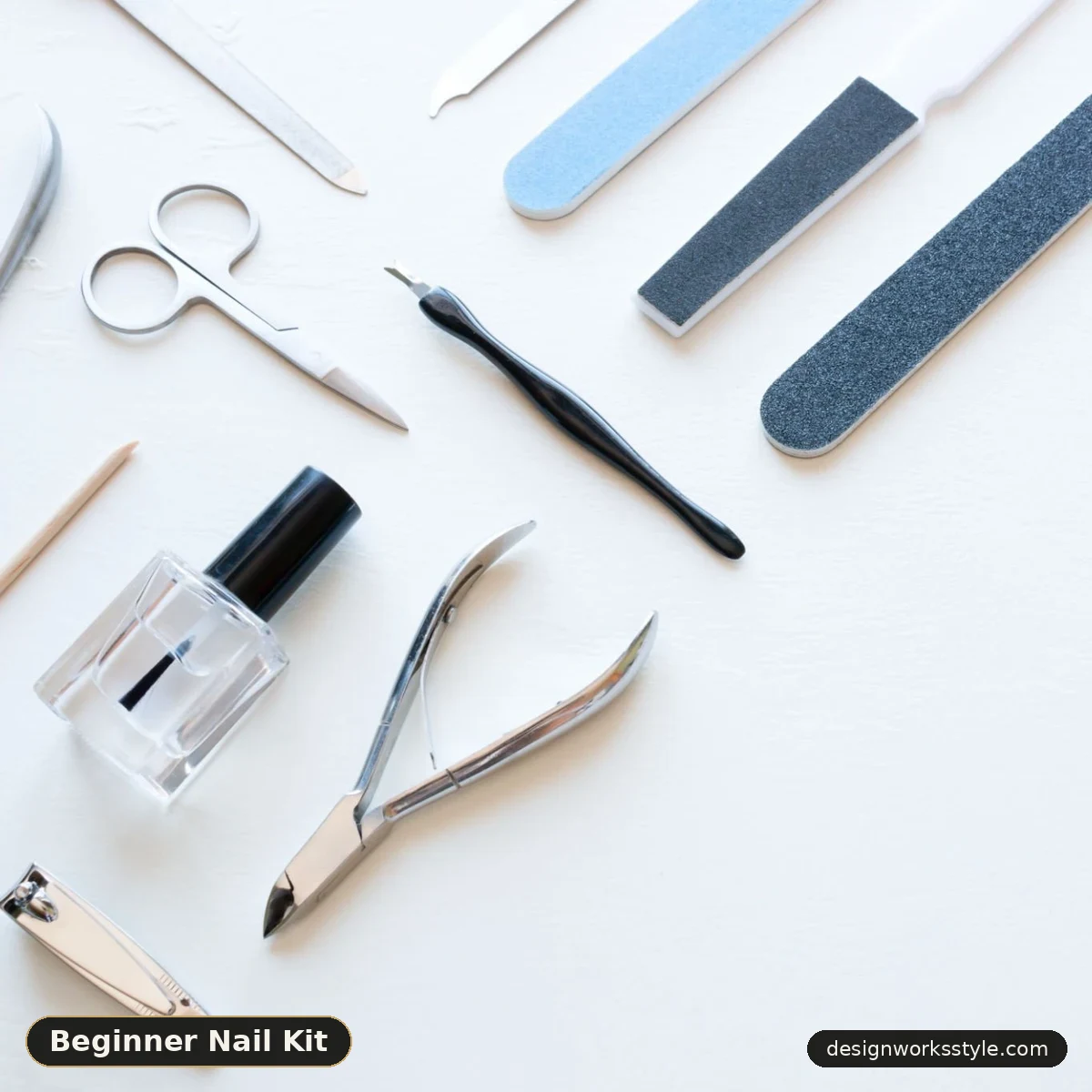
You need six basic tools to start: a nail clipper, a fine-grit file, a cuticle pusher, a soft nail brush, cuticle oil, and a hand cream. That small kit handles the whole routine, and you can add polish and a base coat later if you want color.
Buy a clipper that cuts cleanly without crushing the nail edge. A dull clipper leaves a ragged edge that splits, so replace it when it starts to tear instead of cut. A fine-grit file, around 180 grit or higher, smooths without thinning the nail. Coarse files work fast, but they take off too much nail and leave a rough edge that catches on fabric.
A wooden orange stick or a soft rubber-tipped pusher moves cuticles back without cutting skin. Cuticle oil can be a plain bottle from a drugstore; it does not need to be expensive to work. Hand cream matters because dry hands mean dry nails, and dry nails peel. The right nail tools make each step easier, and a clean, sharp kit is worth more than a large one full of gadgets you never reach for.
Keep your tools clean and dry between uses. Wipe the file and pusher after each session, and store them in a pouch or small bag so grit and dust do not build up on them. Shared tools spread infection, so keep your kit personal, and wash your hands before you start.
What Is the Weekly Routine, Step by Step?
The weekly routine takes about twenty minutes and follows a set order: remove old polish, soak briefly, trim, file, care for cuticles, and moisturize. Working in that order keeps each step simple, since trimming comes before filing and cuticle care comes after the nails are clean and soft.
First, remove any old polish with a gentle remover, and wash your hands. Soak your fingertips in warm water for two or three minutes, or just do your routine after a shower, when nails are already soft. Do not soak for long. Nails swell in water and shrink as they dry, and long soaks weaken them over time.
Trim nails straight across, then round the corners slightly with the file if you want a softer shape. Clip a little at a time rather than cutting deep in one go, and leave a small amount of white tip. Cutting nails very short leaves the nail bed exposed and sore, and it invites ingrown edges on toes in particular. For shape ideas that suit short nails, the guide to nail shapes covers which shapes hold up best on different hand types.
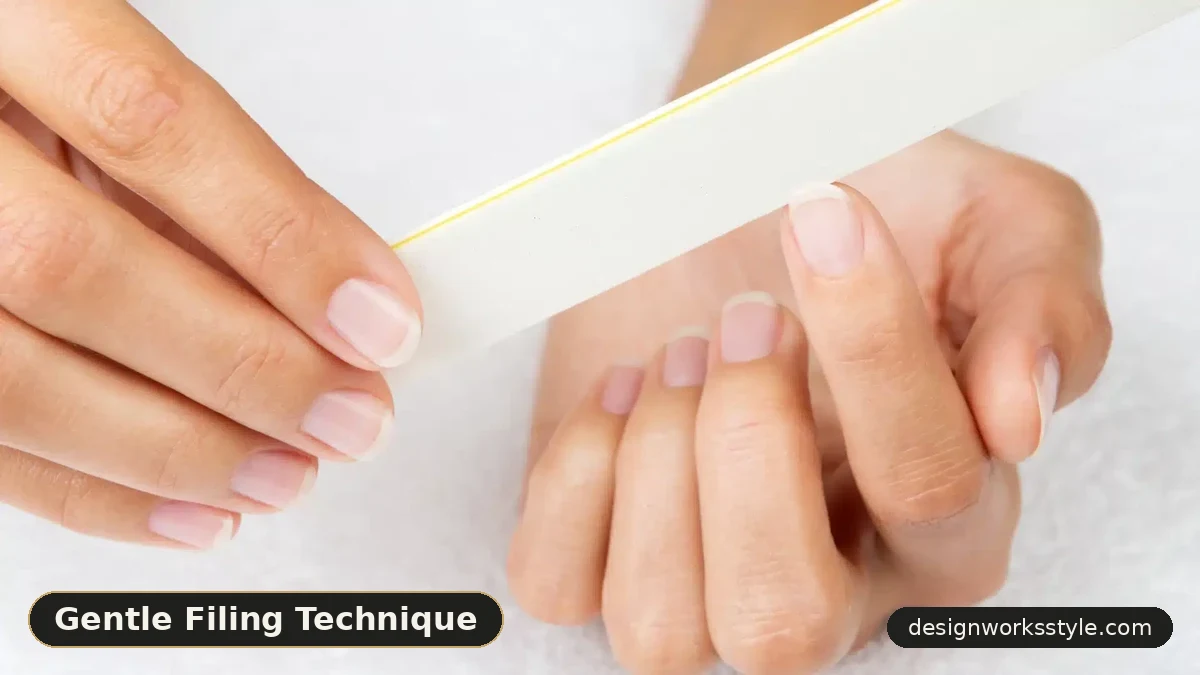
File in one direction, from the side toward the center, and stop when the edge feels smooth. Sawing back and forth frays the tip and starts splits that travel down the nail. Check the edge by running a fingertip lightly across it; if it catches, file a little more in the same direction.
Push cuticles back gently with the pusher, after they have softened in water. Do not cut them. Cuticles seal the nail against infection, and cutting them leaves small breaks that sting and can get infected. If a hangnail appears, trim only the loose skin tag with clean clippers, and apply oil to the area. Gentle cuticle care, pushing back rather than cutting, is one of the habits that makes the biggest difference over time.
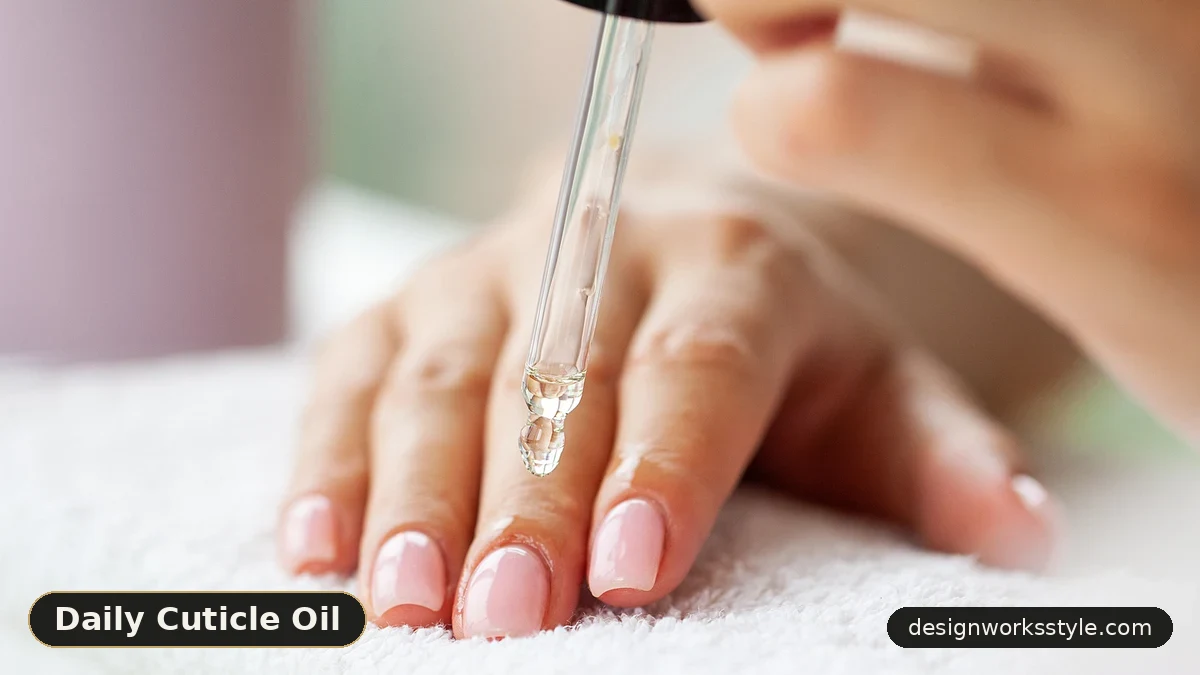
Finish by washing your hands, drying them fully, and massaging oil into each nail and cuticle, then hand cream over the whole hand. If you paint your nails, do it after the oil has soaked in, or wipe the nail surface with remover first so polish grips. A base coat under polish protects the nail from staining and helps color last.
What Should You Do Every Day?
Daily nail care is one minute: apply oil or cream to nails and cuticles, and protect your hands during wet or dirty work. That small habit keeps nails flexible, and flexible nails bend instead of breaking when they catch on something.
Wear gloves for washing dishes, cleaning, and gardening. Detergents strip oil from nails, and repeated wetting and drying weakens the nail plate. Keep a bottle of cuticle oil or hand cream by the sink and one in your bag, so the habit is easy to keep. Apply it once in the morning and once before bed if your hands are dry, or once a day if they are not.
Stop using nails as tools. Opening cans, scraping stickers, and prying at packaging put force on the tip, where the nail is thinnest. Keep a key, a coin, or a small tool handy for those jobs. This one change alone cuts down on breaks for many beginners, because nails finally grow past the point where they used to snap.
Watch for rough edges during the day and file them at once. A small snag tears further if you leave it, and a torn nail is harder to repair than a filed one. Keep a small file in your bag for this. It takes ten seconds and saves a nail that might otherwise split down to the quick.
What Mistakes Do Beginners Make Most Often?
Beginners most often file back and forth, cut their cuticles, peel polish off, and keep nails too long for their daily life. Each of these feels harmless in the moment, but each one weakens nails in a way that shows up weeks later as peeling or breaking.
Peeling polish is the worst of the group. When gel or regular polish is peeled off, it lifts layers of the natural nail with it, leaving a thin, rough surface that breaks easily. Always soak polish off instead. The same applies to press-on nails: remove them with warm water and oil, or with remover, rather than pulling them free.
Over-buffing is another common mistake. Buffing smooths ridges, but doing it every week thins the nail plate, and a thin plate bends and breaks. Buff lightly, no more than once a month, and skip it entirely if your nails are already thin or peeling. A ridge filler or a base coat hides ridges without taking nail away.
Keeping nails long before they are strong enough is a trap. Long nails catch on everything, and each catch is a chance to break. Start short, let nails grow out healthy for a month or two, and then add length slowly. Short, smooth nails look neat, and they last long enough to grow strong. Once the routine is steady, the habits that make a manicure last longer build directly on it, since prep and daily care are what hold polish in place.
How Do You Adjust the Routine Through the Year?
Adjust the routine with the weather: moisturize more in winter, protect nails from sun and water in summer, and watch for dryness when indoor heating or air conditioning runs. Nails react to the same dry air and water exposure that affect skin, so the routine shifts a little rather than staying fixed.
Winter is the hardest season for nails. Cold air and indoor heating dry out nails and cuticles, so apply oil twice a day and wear gloves outdoors as well as for chores. Cracks at the corners of nails often start in winter, and they heal faster when the nail stays moisturized and the edge stays filed smooth.
Summer brings the opposite problem: more water, from swimming, showers, and sweat, and more sun on hands. Rinse chlorine or salt water off after swimming, dry hands fully, and reapply cream. Polish also fades faster in sun and water, so a top coat refresh midweek helps color hold. Seasonal nail care covers these shifts in more detail, including how to handle the change between seasons without shocking dry nails.
If your nails stay weak, peeling, or discolored despite a steady routine for two or three months, show them to a doctor or dermatologist. Most nail problems are care problems, but persistent changes in color, thickness, or shape can point to a health issue worth checking. Do not keep layering treatments on a nail that is not improving; get a professional look first.
Frequently Asked Questions
How often should a beginner do a full nail care routine?
Once a week is enough for most people. Trim and file weekly, push cuticles back during that session, and moisturize daily between sessions. If your nails grow fast or you work with your hands, you may need a quick file midweek, but a full routine more than once a week usually takes off nail that does not need removing.
Do I need to cut my cuticles?
No. Cuticles protect the nail from infection, and cutting them leaves breaks that sting and can get infected. Push them back gently after a shower or a short soak, and apply oil to keep them soft. If a hangnail appears, trim only the loose tag, and leave the rest of the cuticle alone.
Can I do a nail care routine without polish?
Yes, and many people prefer it. The routine itself is cleaning, trimming, filing, cuticle care, and moisturizing, and none of it needs polish. A clear base coat or a nail strengthener can add shine and a little protection if you want a finished look without color, but bare, well-kept nails look neat on their own.
How long before I see stronger nails?
Most people notice fewer breaks within four to six weeks, and a full improvement takes about three months, which is roughly how long a nail takes to grow out from cuticle to tip. The new nail growing in under a steady routine is stronger than the old damaged nail it replaces, so patience matters more than any single product.