


Quick Hair Care Routine for Busy Mornings
A quick hair routine covers three things in ten minutes: a fast wash or refresh, a dry that sets the shape, and one simple style that holds. Wash only what needs washing, dry the roots first, and skip any step that does not change how the hair looks by the time you leave.
What Does a Quick Routine Actually Cover?
A quick routine covers clean roots, smooth lengths, and a style that stays put, and nothing else earns a place in ten minutes. If a step only makes hair smell nice or feel soft for an hour, it can wait for a slower day.
Start by deciding whether today is a wash day. If the roots look clean and the style from yesterday still holds, a refresh beats a full wash. If the roots are oily or flat, wash. Guessing wrong costs time either way, since a full wash on a refresh day adds drying time, and a refresh on a wash day means restyling later.
Keep the tools in one place. A brush, a dryer, a heat protectant, and one styling product should sit together, ready to grab. Hunting through drawers for a round brush while the hair dries is how a ten minute routine turns into twenty.
Pick one style in advance. A low bun, a smooth ponytail, or hair worn down with the ends smoothed all work. What does not work is starting with wet hair and no plan, then trying three styles before settling on one.
How Do You Wash and Condition in Less Time?

Wash and condition in under three minutes by shampooing the scalp only, conditioning the mid lengths and ends only, and rinsing with lukewarm water. The scalp carries the oil, the ends carry the dryness, and treating each part separately gets both jobs done faster.
Wet the hair fully first, then work a small amount of shampoo into the scalp with your fingertips. Two minutes of scrubbing does not clean better than thirty seconds of firm, even scrubbing. Let the suds run down the lengths as you rinse, since that is enough to clean them.
Apply conditioner from the ears down, not at the roots. Conditioner on the roots weighs hair flat and adds a second rinse, since you end up washing it out again to get lift back. Leave it on while you wash your face or brush your teeth, then rinse well.
On a truly rushed day, skip the full wash and wash the front hairline and part only. Those are the areas people see, and they are the first to look oily. A quick rinse of the front section, dried and smoothed, can pass for a full wash when the rest of the hair still looks clean.
A how to wash your hair properly routine, with shampoo on the scalp and conditioner on the lengths, is the same logic at full length, and it is worth reading once so the fast version makes sense.
How Do You Dry and Style in Ten Minutes?

Dry and style in ten minutes by drying the roots first, smoothing the lengths with a brush, and finishing with a cool shot to set the shape. Roots set the volume, lengths set the finish, and the cool shot locks both in place.
Start with a towel press, not rubbing. Press the towel around sections of hair to take out water, then leave the hair wrapped for a minute while you get dressed. Rubbing roughs up the cuticle and creates frizz that takes extra time to smooth out.
Apply heat protectant and one styling product, then dry the roots with your fingers, lifting at the crown. Once the roots are dry, switch to a brush for the lengths. Drying the lengths first and the roots last leaves the roots damp, and damp roots fall flat within an hour.
For straight or wavy hair, a round brush or a paddle brush gives a smooth finish in one pass per section. Work in four sections: front left, front right, back left, back right. Smaller sections dry faster and smoother than one large section dried over and over.
Finish with the dryer on cool for thirty seconds, aimed down the shaft. Cool air closes the cuticle and sets the shape, which means less flyaway hair later. A light mist of hairspray at the crown, sprayed from a distance, holds the style without stiffness.
If heat styling eats your mornings, braids left in overnight or foam rollers on damp hair give shape without a dryer at all, and heatless hairstyles that hold through the day suit most hair types with a little practice.
What Do You Do on No-Wash Days?
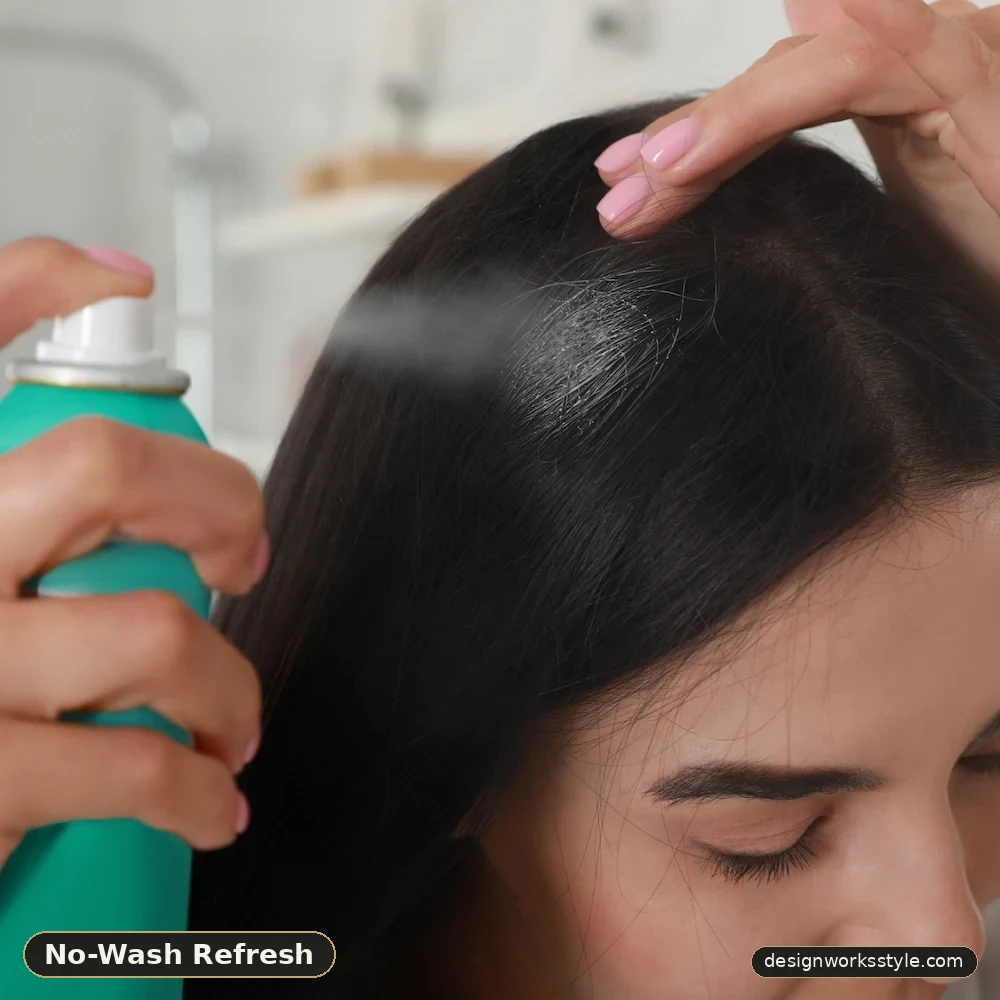
On no-wash days, refresh the roots with dry shampoo, smooth the lengths with a brush, and restyle only the front sections. The back of the hair rarely needs attention on day two, and touching it adds frizz for no gain.
Spray dry shampoo at the roots from eight to ten inches away, wait a minute, then massage it in with your fingertips and brush through. Spraying too close leaves white patches, and brushing too soon moves the product before it has absorbed the oil.
Smooth the lengths with a boar bristle brush or a paddle brush, working from the mid lengths down. If the ends look dry, rub a drop of oil between your palms and smooth it over the last two inches only. Oil at the roots on a no-wash day makes the hair look dirtier, not fresher.
Restyle the front if it has gone flat or kinked overnight. Dampen the front sections lightly, blow dry them with a brush, and leave the rest alone. Five minutes on the front sections changes the whole look, since the front is what you see in the mirror and what other people see first.
A low bun or a braid hides a no-wash day well. Both styles pull the roots back, which hides oil at the part, and both look deliberate rather than rushed. Keep a few bobby pins and a soft scrunchie in your bag for days when the refresh does not hold.
How Do You Prep the Night Before?
Night prep saves more morning time than any product, because dry, shaped hair needs only a refresh, while wet, tangled hair needs a full routine. Braid damp hair, wrap it in a silk scarf, or set it in loose rollers before bed.
Braid hair loosely before bed for waves in the morning. Two loose braids give soft waves, one braid gives a looser wave, and the waves hold better if the hair was slightly damp when braided. Undo the braids in the morning, shake the hair out gently, and smooth the ends.
Sleep on a silk or satin pillowcase. Cotton catches on hair and flattens it overnight, which means extra smoothing in the morning. A silk scarf or bonnet does the same job for hair that tangles easily, and it keeps curls or waves from breaking apart while you sleep.
Set out the morning tools the night before. Put the brush, dryer, and styling product in one spot, and decide the style. A decision made at night is one less decision at 7 a.m., and rushed mornings go wrong mostly on decisions, not on technique.
Wash at night if mornings are always tight. Hair washed and dried the night before needs only a brush and a quick smooth in the morning. The trade off is that night washed hair can go flat overnight, so sleep with it loosely tied on top of the head to keep some lift at the roots.
What Mistakes Slow a Morning Routine Down?
The mistakes that slow a morning routine down are washing when a refresh would do, using too much product, and restyling the whole head when only the front needs work. Each one adds minutes without improving the result, and the fix is usually simpler than the habit that caused the delay.
Too much product is the most common time waster. Heavy cream, oil, and serum on fine or flat hair weigh it down, and then you spend extra minutes trying to lift roots that the product flattened. Use a small amount, add more only if needed, and keep heavy products on the ends.
Brushing wet hair roughly costs time twice: it snaps strands, and it creates frizz that needs smoothing. Detangle wet hair gently from the ends up, with a wide tooth comb or a flexible brush, and hold each section above the tangle so the pull does not reach the scalp.
Rough handling also thins the ends over time, which makes every morning harder, since thin ends tangle and frizz more. Gentle handling, regular trims, and less heat keep the ends thick, and how to prevent hair breakage with those habits keeps a quick routine quick for months at a stretch.
Skipping trims slows mornings too. Split ends tangle, catch on the brush, and refuse to lie smooth, so a five minute style takes ten. A trim every eight to twelve weeks keeps the ends blunt and easy to smooth, and blunt ends look tidier with less work.
Finally, keep the routine the same for two weeks before changing it. A routine you know by heart runs faster than a new routine with better products, because you stop thinking about each step. Change one thing at a time, and only if the current step clearly fails.
Frequently Asked Questions
How long should a quick hair routine take?
Ten to fifteen minutes covers washing, drying, and styling for most hair lengths. Short hair can run under ten minutes, while long or thick hair may need fifteen. If the routine regularly takes twenty minutes or more, one step is doing too much work, and it is usually the drying step.
Can I skip conditioner on busy mornings?
You can skip it on a refresh day, but not on a wash day if your hair tangles or frizzes easily. Conditioner smooths the cuticle, which makes drying and brushing faster. Skipping it to save a minute often costs two minutes of detangling, so keep it on wash days and skip it only when you are not washing.
Is dry shampoo safe to use every day?
Dry shampoo works as a bridge between washes, but daily use builds up at the roots and can irritate the scalp. Use it on one or two no-wash days, then wash properly. If the scalp itches or the roots feel gritty, wash and skip dry shampoo for a few days.
What is the fastest style for busy mornings?
A low bun or a smooth ponytail is fastest, since both hide unwashed roots and need only a brush and a band. Hair worn down needs smooth, dry lengths, which takes longer. On the busiest days, pull the hair back, smooth the front with a brush, and leave it there.