
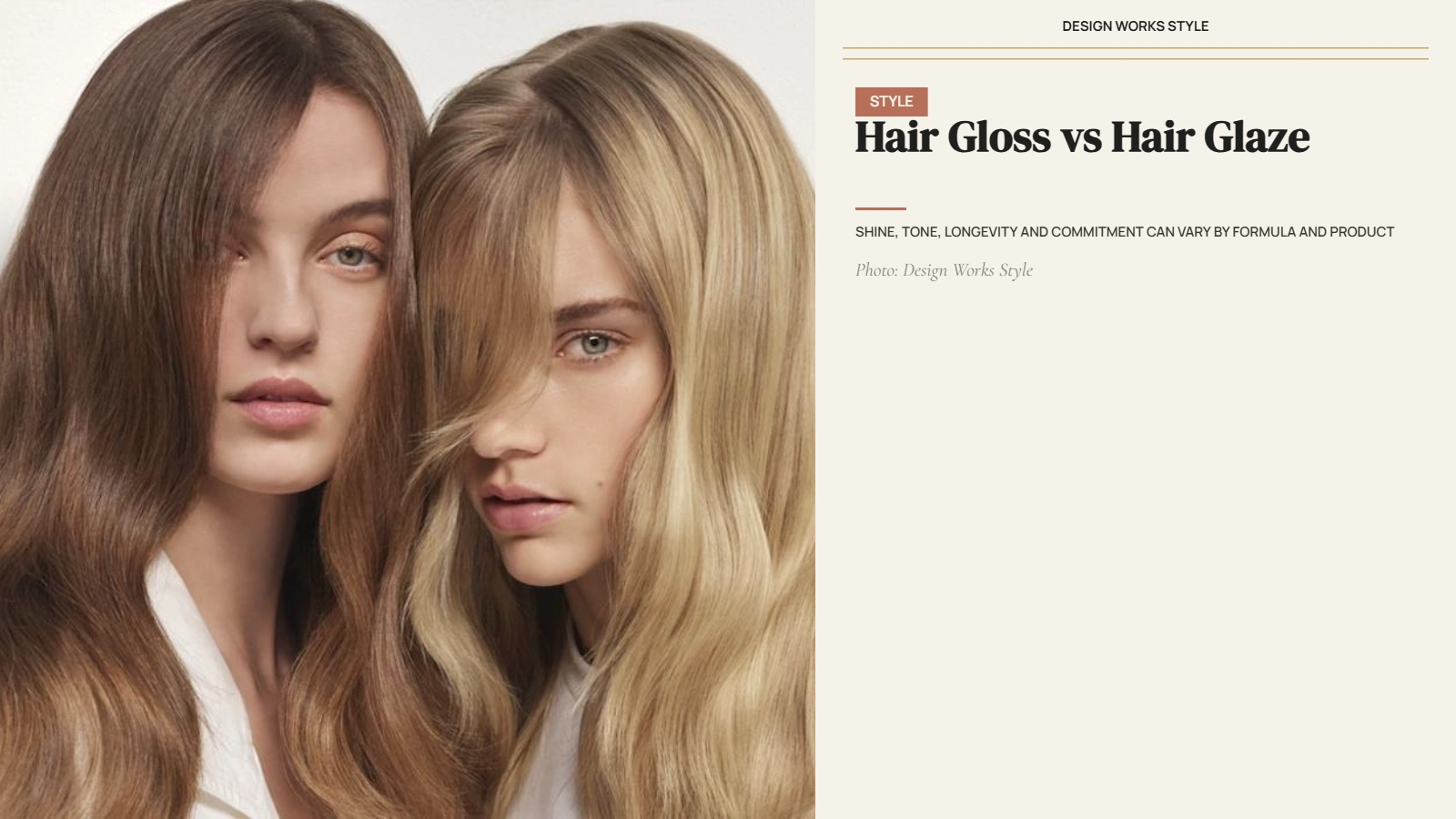
Hair gloss and hair glaze can both make hair look shinier and can subtly refresh its color, but the terms do not have one standardized meaning across every brand, salon, or product line.
In common usage, hair gloss is often positioned as a longer-lasting tone-and-shine treatment, while hair glaze is commonly used for a shorter-term shine or sheer-color treatment. However, the actual formula, pigment, application instructions, and expected longevity matter more than the name on the bottle.
If you are deciding between a hair gloss and hair glaze, focus on four things: shine, tone, longevity, and how much commitment you want from the result.
What Is Hair Gloss?
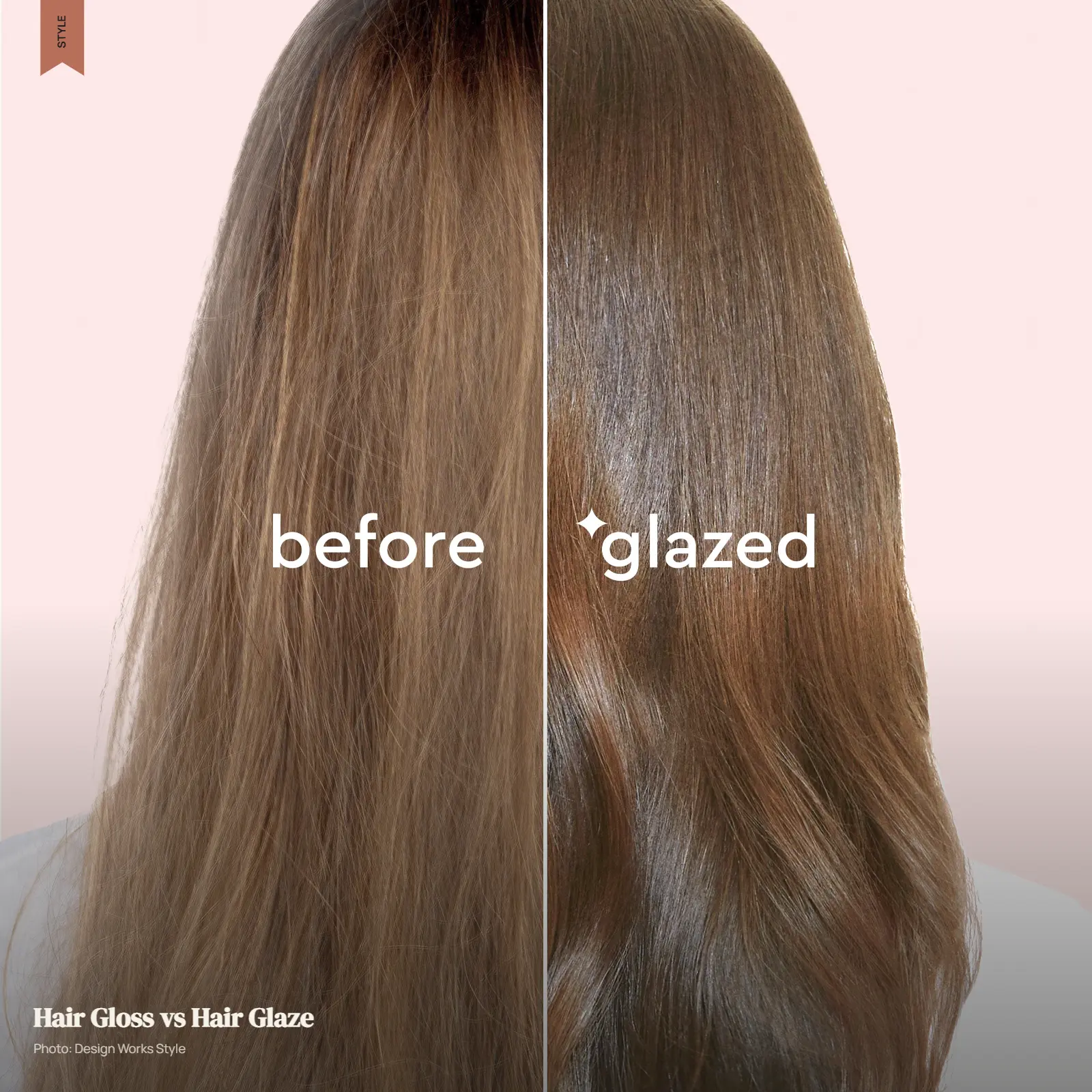
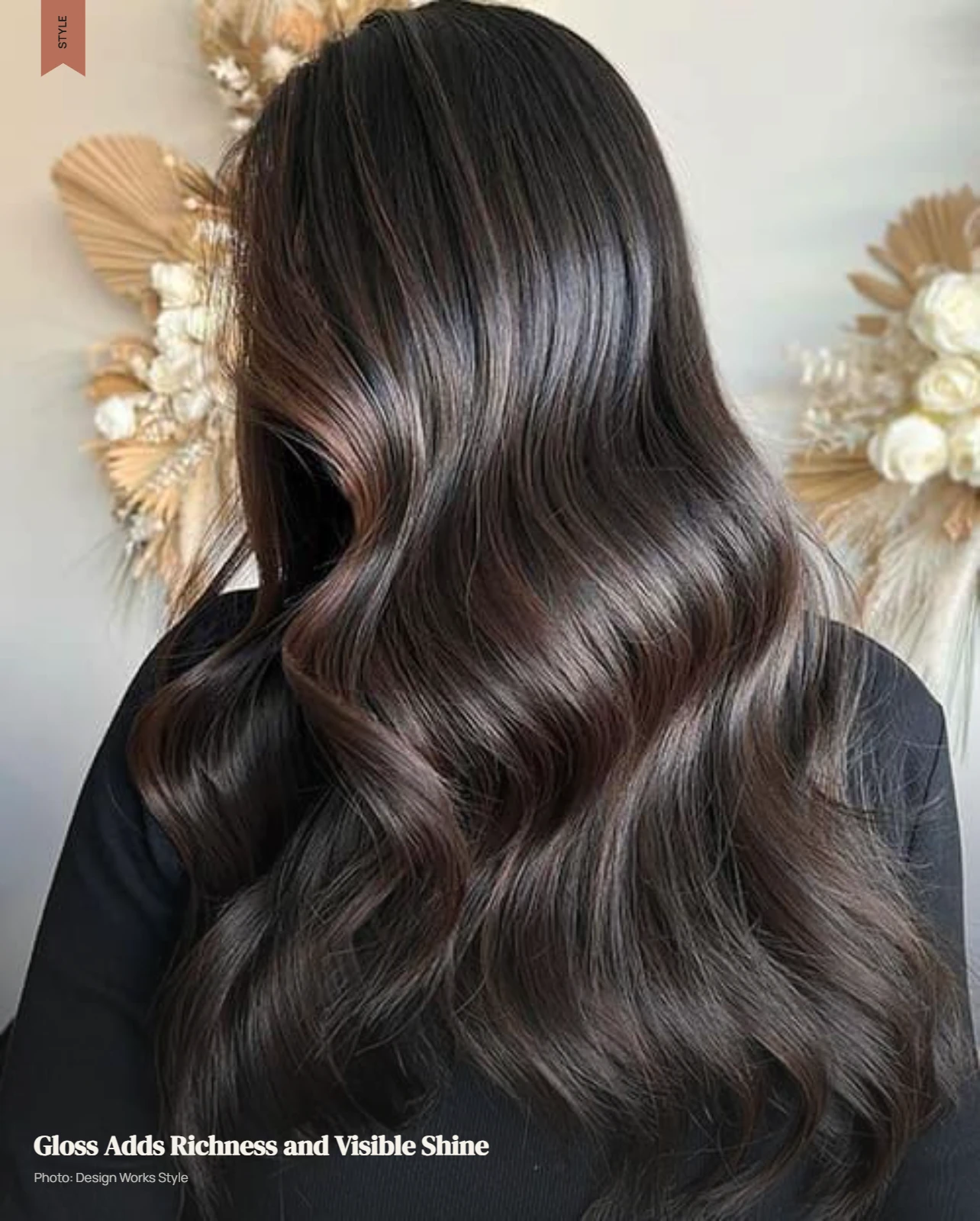
Hair gloss is a temporary color or shine treatment designed to improve the appearance of the hair without creating the permanent color change associated with traditional permanent dye.
A gloss may be:
- Clear or tinted
- Used mainly to increase visible shine
- Used to refresh faded color
- Used to refine an existing tone
- Used to add subtle depth or richness
- Formulated as a demi-permanent color service in some salon settings
- Available as an at-home treatment in other product lines
The exact chemistry varies. Not every hair gloss requires developer, and not every gloss is demi-permanent.
For a broader explanation of how gloss works, see our guide to hair gloss.
What Is Hair Glaze?
Hair glaze is commonly used to describe a more temporary shine or sheer-color treatment.
Depending on the product, a glaze may be:
- Clear or tinted
- Direct-deposit
- Conditioning
- Designed for use in the shower
- Intended to process for a relatively short period
- Designed to fade after a relatively small number of washes
A glaze does not necessarily mean a clear, pigment-free product. Some glazes contain color that can subtly change how the existing shade looks.
The same applies in reverse: a product called a gloss is not automatically heavily pigmented.
This is why reading the product instructions and understanding its intended result is more useful than relying on the product name alone.
Hair Gloss vs Hair Glaze: Main Differences
The distinction between hair gloss and hair glaze is useful as a general guide, but it should not be treated as a universal technical rule.
| Decision factor | Hair gloss | Hair glaze | What to check |
|---|---|---|---|
| Typical purpose | Shine, tone refinement, subtle color refresh | Short-term shine, smoothness, and sometimes subtle color refresh | Intended result |
| Color effect | May be clear or tinted and can deposit tone | May also be clear or tinted | Whether pigment is present |
| Formula | Often associated with demi-permanent color in salon settings | Often associated with temporary or semi-permanent treatments | Actual formula and activation method |
| Longevity | Often around 3–6 weeks, depending on formula | Often around 1–2 weeks, though products vary | Brand-stated wear time |
| Application | Often salon-applied, but at-home glosses exist | Often sold as an at-home or in-shower treatment | Product directions |
| Commitment | Low compared with permanent color, but generally longer-lasting | Lower commitment because it usually fades more quickly | Desired maintenance level |
| Best suited to | Longer-lasting tone refresh and shine | Quick shine boost or short-term refresh | Your actual goal |
| Limitations | Not a substitute for major correction or lightening | Not a substitute for major correction or lightening | Whether professional color work is needed |
These are practical tendencies rather than strict definitions. Individual products can fall outside them.
Why the Names Can Be Confusing
Hair color terminology is not always consistent between brands.
You may see products described as:
- Gloss
- Glaze
- Toner
- Color mask
- Shine treatment
Some of these products can perform similar functions even though they use different names.
For example, one brand may use the word “gloss” for a direct-deposit conditioning treatment, while another may use “gloss” to describe a salon color service. A product called a glaze may also contain enough pigment to create a noticeable tonal effect.
Do not choose a product based on the name alone. Check whether it deposits pigment, requires mixing, uses an activator, recommends a strand test, and states how long the result is expected to last.
The label can tell you what the manufacturer wants to call the product. The instructions tell you more about how it is actually designed to work.
Which Lasts Longer: Gloss or Glaze?
Gloss generally lasts longer than glaze, but there is no universal lifespan.
As a general planning range, many salon gloss treatments may remain visible for roughly 3–6 weeks, while many temporary glaze formulas may last around 1–2 weeks or several washes.
Actual longevity can vary considerably based on:
- The formula
- Hair porosity
- Starting hair condition
- How frequently you wash
- The shampoo you use
- Heat styling
- Sun and environmental exposure
- Aftercare
A porous, chemically processed section may behave differently from relatively untreated hair. Frequent washing can also make a temporary treatment fade sooner.
Treat any stated timeframe as an estimate rather than a guarantee.
Which Is Better for Shine?
Both glosses and glazes can improve the cosmetic appearance of dull hair. The better fit depends on your goal, desired longevity, and whether you want a tonal change.
| Your Goal | Glaze | Gloss |
|---|---|---|
| Primary goal | May make sense when Shine is your main goal. | May make more sense when You want shine and tone refinement together. |
| Color shift | You do not want a noticeable color shift. | Your color has faded and you want a richer-looking refresh. |
| Longevity | You want a short-term treatment. | You want a longer-lasting refresh. |
| Commitment | You prefer a lower-commitment option. | You are comfortable maintaining color between salon appointments. |
| Occasion | You have an event or occasion coming up. | You want to maintain an existing color between appointments. |
Which Is Better for Tone?
If your main goal is tone refinement, a tinted gloss is often a relevant option, particularly in salon color services.
Depending on the formula and starting shade, a tinted treatment may be used to:
- Soften mild yellow warmth in blonde hair
- Refresh brunette depth
- Refresh red or copper tones
- Refine the appearance of highlights
- Add subtle tonal richness
However, a gloss or glaze should not be treated as a universal color-correction tool.
When a Gloss or Glaze May Not Be Enough
Professional color assessment may be more appropriate when you are dealing with:
- Strong orange bands
- Green or muddy color
- Patchy highlights
- Severely uneven balayage
- Significant gray-coverage requirements
- Major chemical damage
- A dramatic color change
Repeatedly applying tinted products to an uneven result can sometimes make the color harder to correct. A professional can assess the existing color, previous treatments, porosity, and underlying tones before deciding what type of correction is appropriate.
Which Should You Choose?
Start with your actual goal rather than the label.
| Your goal | Starting point | Why |
|---|---|---|
| “My hair looks dull, but I like the color.” | Clear gloss or clear glaze | Both can improve visible shine without intentionally changing the shade |
| “My color has faded and I want a richer result.” | Tinted gloss | Often designed for a more substantial, longer-lasting refresh |
| “I need a quick shine boost.” | Glaze | Usually lower commitment and shorter-lived |
| “My blonde balayage has mild yellow warmth.” | Correctly selected gloss or toning treatment | The target tone matters more than the label |
| “My highlights are orange or patchy.” | Professional consultation | The underlying color problem may need correction |
| “I want strong gray coverage.” | Permanent color or professional color service | Gloss or glaze is not designed for major lasting coverage |
| “I want a dramatic shade change.” | Appropriate color or lightening service | Gloss and glaze are not substitutes for major color transformation |
| “I’ve never used a tinted treatment.” | Clear product or carefully strand-tested treatment | Lower commitment can reduce the chance of an unwanted tonal shift |
Decision Guide
Think About Shine, Tone, and Commitment
A simple way to compare hair gloss and hair glaze is to separate the decision into three questions.
Shine
Ask:
Do I mainly want my existing color to look more reflective?
If yes, either a clear gloss or glaze may be relevant.
Tone
Ask:
Am I trying to change the way my existing color reads?
If yes, find out whether the product is tinted and what type of pigment it deposits.
A product intended for blonde toning, for example, should be evaluated based on the specific unwanted warmth and the tone the product is designed to deposit.
Commitment
Ask:
How long do I want the result to remain visible?
A shorter-lived glaze may suit someone who wants a temporary change, while a longer-lasting gloss may suit someone maintaining color between appointments.
Salon vs. At-Home Treatments
Salon gloss services can be customized around your existing color, hair porosity, previous chemical treatments, and desired tone.
At-home glosses and glazes provide convenience and can offer a lower-commitment way to refresh the appearance of the hair. The tradeoff is that they generally provide less opportunity for customization.
Product directions can also vary significantly. Some treatments are applied to damp hair, while others have different preparation, mixing, processing, or rinsing requirements.
If you decide an at-home gloss is appropriate, see our guide to using hair gloss at home for the application process.
Hair Gloss and Balayage
Both glosses and glazes may be used as part of balayage maintenance, but the name of the treatment should not determine whether it is appropriate for your hair.
Consider:
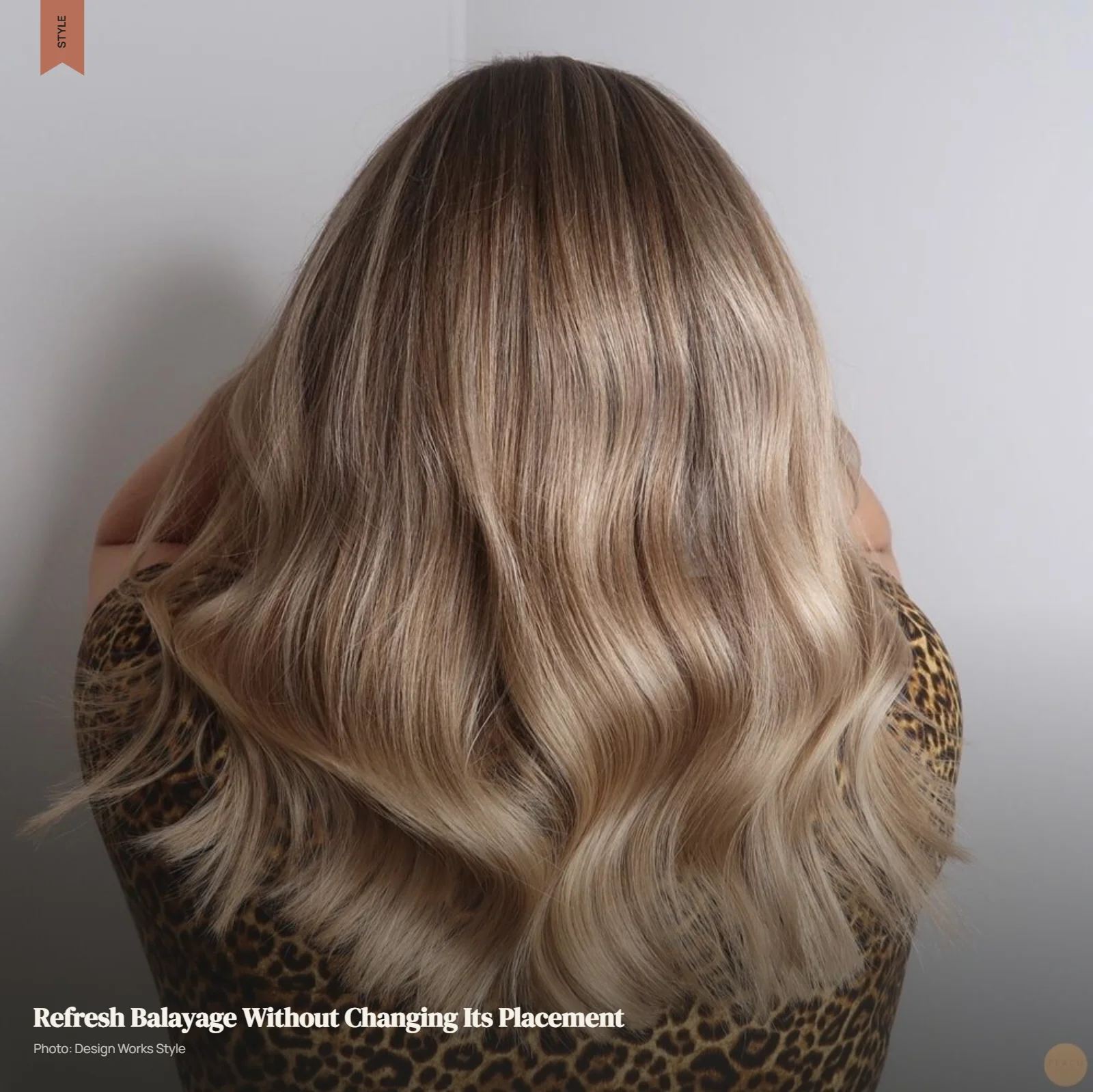
- What tone is currently present
- Whether the lightened sections are porous
- Whether your goal is shine or tone correction
- How much pigment the product deposits
- How long the intended result should last
For broader maintenance advice, see our guide to balayage hair care.
If your concern is primarily cleansing and color maintenance, you can also review our guide to shampoo for balayage hair.
Common Hair Gloss and Glaze Misconceptions
The names can be confusing. What matters more is the formula, pigment, instructions, processing method, and stated longevity.
“Glaze means clear.”
Not necessarily. Some glazes are tinted and can deposit color.
“Gloss always contains developer.”
Not necessarily. Formulas vary between products and services.
“Gloss is always permanent.”
No. Gloss is generally lower commitment than permanent color and gradually fades.
“Glaze cannot change tone.”
Not necessarily. A tinted glaze can affect the appearance of the existing color.
“The product name tells me exactly what it does.”
No. The formula, instructions, pigment, processing method, and stated longevity provide more useful information.
The Bottom Line
Hair gloss and hair glaze overlap considerably, and their names are not standardized across the industry.
In common usage, gloss is often the longer-lasting tone-and-shine option, while glaze is commonly a shorter-term shine or sheer-color treatment. But those descriptions are tendencies, not universal rules.
When comparing a hair gloss vs. hair glaze, look beyond the label. Consider what the product deposits, how it is activated, how long the manufacturer says it should last, and what result you actually want.
Choose a clear gloss or glaze when:
You like your existing color and primarily want more visible shine.
Consider a tinted gloss when:
Your color has faded or you want a controlled tonal refresh that lasts longer than a few washes.
Consider a glaze when:
You want a temporary, lower-commitment shine or subtle color effect.
Look beyond the label when:
The product uses “gloss,” “glaze,” “toner,” or “color mask” in its marketing. Check the actual instructions and formula.
Seek professional color advice when:
The problem involves major unevenness, strong orange or green tones, significant damage, substantial gray coverage, or a dramatic color change.
Frequently Asked Questions
What is the difference between hair gloss and hair glaze?
Gloss is usually a demi-permanent color that penetrates slightly and lasts weeks; glaze is a surface coating that adds shine and tone but washes out faster.
Which lasts longer, gloss or glaze?
Gloss, typically four to six weeks versus one to two for a glaze. The trade-off is commitment: glaze is gone quickly if you do not like it.
Which should I choose?
Gloss for tone correction and longer wear; glaze for a quick shine boost before an event. For balayage or color-treated hair, gloss is usually the better investment.
Can I do either at home?
At-home gloss kits exist and work well for refreshing tone. Glazes are simpler but so short-lived that a salon visit rarely makes sense for them.