

Pick an acrylic nail salon by the acrylic work itself. Look for a portfolio of sets in your shape and length, reviews that mention lifting and how the salon fixed it, clean air and dust extraction while filing, a technician who can name the liquid system, and a build with a smooth apex, thin free edge, and clean cuticle line.
What should you look for before you book?
Start with three things: photos of acrylic work in the shape and length you want, reviews that talk about how sets held up after two weeks, and a price list that names the full set, the fill, and removal separately. A salon that passes all three is worth a closer look.
Photos matter more than a star rating for acrylics. A salon can earn five stars for friendly service and still turn out thick, lumpy sets. Read the reviews that mention lifting, cracking, or a nail popping off, and pay attention to what happened next. A salon that fixed a lifted nail free of charge within a week tells you more than ten reviews that only praise the look on day one.
Call ahead with two questions: what liquid system they use for acrylics, and how long a full set takes. A clear answer to both is a good sign. The general checks still count too, and choosing a nail salon starts with clean tools, clear pricing, and a station wiped down between clients.
How do you judge an acrylic portfolio?
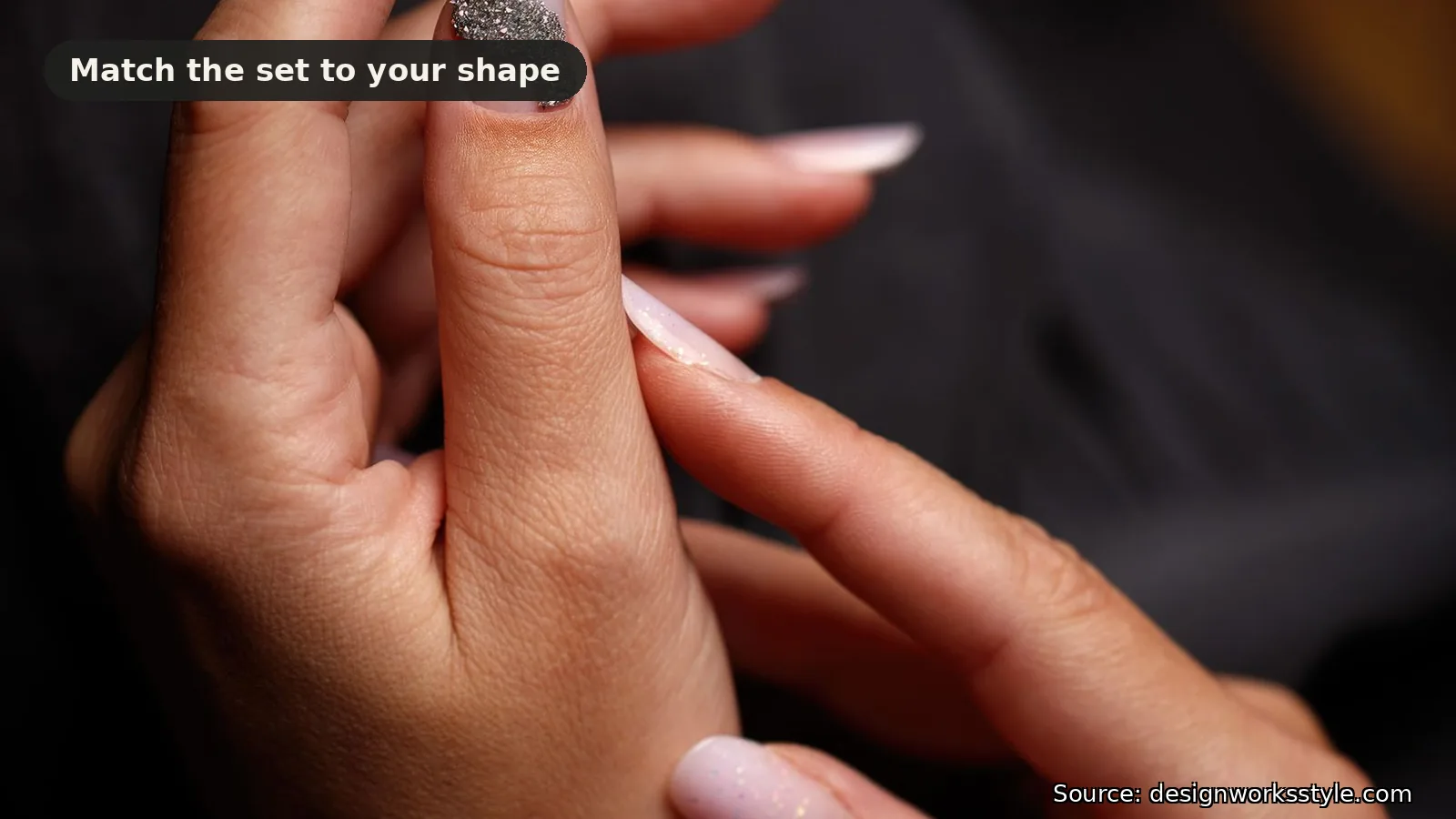
Judge an acrylic nail salon by whether its portfolio shows your exact request. If you want short natural almond nails, photos of long coffin sets do not prove the technician can do yours. Look for several sets in your shape, your length, and a finish close to the one you want.
Look at the details in the photos, not the polish colour. The cuticle line should sit even, with no product touching skin. The sidewalls should run straight from the cuticle to the tip. The free edge should look thin from the side, not thick like a block.
Ask whether the sets in the photos were sculpted on a form or built over tips. Sculpted nails are formed on a form placed under the free edge, then the form is removed. Tip sets use a plastic tip glued to the natural nail, then acrylic over the top. Both methods can give a good result. Sculpted sets usually suit long lengths and sharp shapes, while tips suit a faster, shorter set. When you want a technician who works with acrylics every day, the questions used to find a nail technician help you separate a general manicurist from someone who builds acrylic sets all week.
What should the air in the salon tell you?
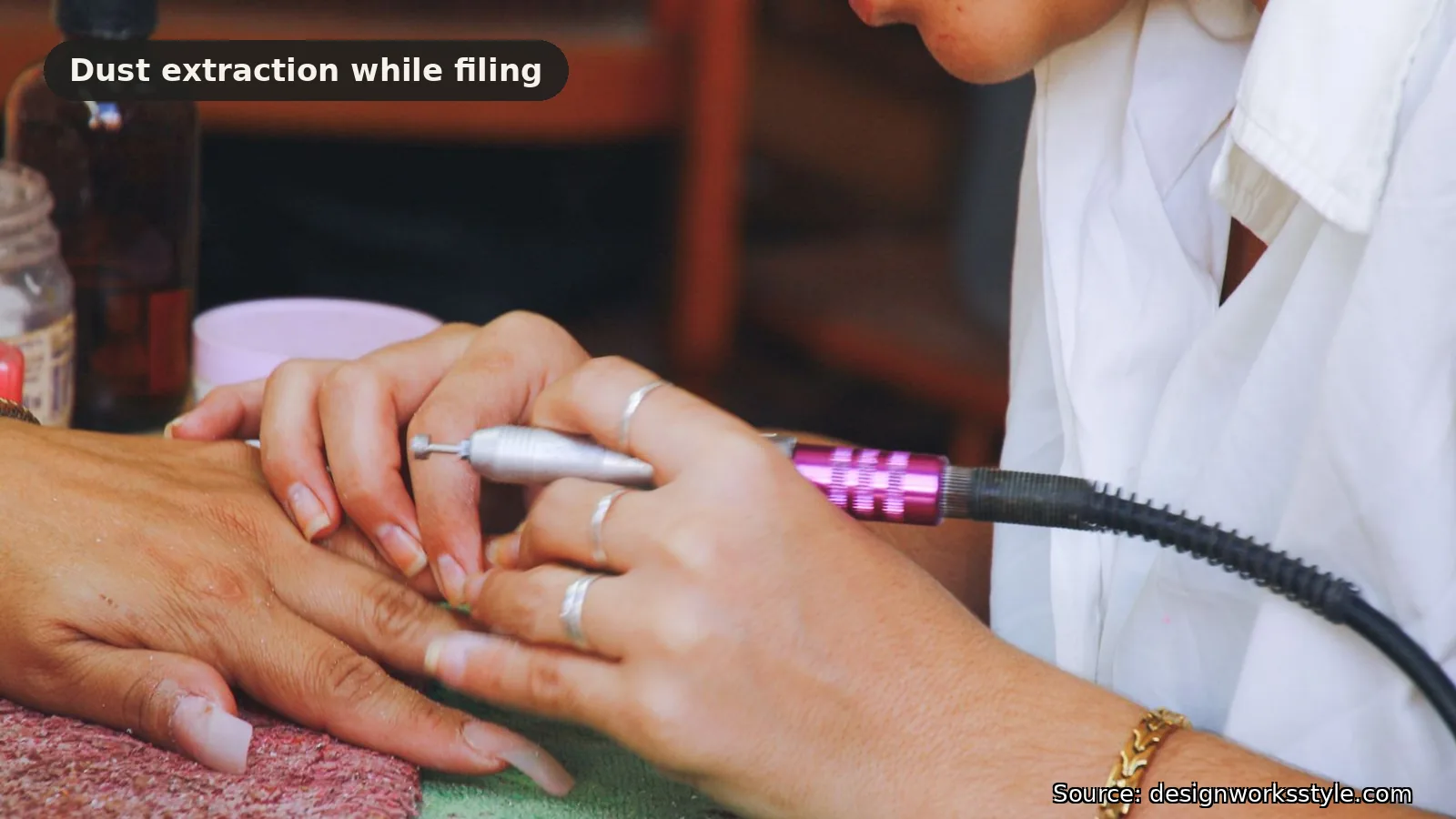
The air tells you how seriously a salon takes acrylic work. Acrylic filing creates fine dust, and the liquid monomer gives off vapour. A good salon runs ventilation you can hear or feel, and uses tables with built-in extraction or a portable dust collector.
Watch what happens during filing. The technician should file with a dust collector running, or with a vacuum hose near the hand. If a thick cloud of dust hangs in the air, or dust coats the table and the lamp, the extraction is not doing its job.
Smell is a clue, but it is not a test on its own. Acrylic monomer has a sharp chemical smell, so some odour is normal. A smell so strong it burns your eyes or throat points to poor ventilation or a product problem. Dust and vapour control is part of the wider picture, and salon hygiene covers the cleaning and tool routines that sit beside it.
What should you ask about the liquid they use?
Ask what liquid monomer the salon uses, and ask how the set comes off. A good technician names the brand and system without hedging, and says the set soaks off in acetone in about 20 to 30 minutes. That answer tells you the salon uses EMA, ethyl methacrylate, the professional standard liquid for acrylic nails.
The other liquid to know about is MMA, methyl methacrylate. MMA makes a very hard, rigid nail that resists filing and will not soak off in acetone in a normal appointment. It can take hours to remove, or it has to be filed off, which thins the natural nail. The FDA removed products containing pure MMA from the market in the early 1970s after reports of nail damage, deformity, and contact dermatitis, while its current page notes that no regulation specifically prohibits MMA monomer in cosmetics. Many state boards restrict it.
You do not need to quiz the technician like an inspector. One plain question is enough: “What monomer do you use, EMA or MMA?” A technician who answers “EMA” and can name the product line is giving you a straight answer. A technician who does not know, or who says the liquid comes in an unlabeled bottle, is giving you a reason to book elsewhere.
How can you tell a good acrylic build from a weak one?
A good build has structure you can see and feel. The apex, the highest point of the nail, sits near the middle and slopes down smoothly toward the cuticle and the tip. The free edge is thin, the cuticle line is clean, and the sidewalls run straight.
Bead placement is where the build starts. The technician picks up a bead of liquid and powder, places it on the nail, and presses it into shape before it sets. A bead that is too wet floods toward the cuticle and skin. A bead that is too dry turns lumpy and will not smooth out.
Length and shape should fit your hands and your week. Long stiletto nails look striking in photos and catch on everything if you type all day. Acrylic is the right pick when you want length, strength, and a shape that holds for two to three weeks, and the choice between systems is settled in the comparison of gel vs acrylic nails, which weighs wear time and upkeep for each one.
What warning signs mean you should leave?
Leave if the liquid comes from an unlabeled bottle, if the smell burns your eyes, or if the technician cannot say how the set comes off. Those three signs point to a product problem, and no discount is worth a set that damages your nails or will not soak off.
Other signs are easier to spot once work starts. The technician files your natural nail plate down to a thin, sore surface. Product is painted onto your skin at the cuticle and left there. The same file is used on client after client without a fresh disposable file.
Trust the early signs over the finished look. A set can look neat in the salon and lift in three days if the prep was skipped or the cuticle line was flooded. If something feels wrong during prep, say so before the acrylic goes on.
How long should a full set take, and what should it cost?
Plan on 90 to 120 minutes for a full acrylic set, and budget $50 to $90 for a standard set in the United States in 2026, with fills at $35 to $60 every two to three weeks. Short tip sets can run closer to 75 to 90 minutes, while long sculpted sets sit at the top of the range.
Price moves with length, shape, and finish. A short set in one solid colour sits at the low end. Long coffin or stiletto, sculpted on forms, costs more, and nail art, chrome, or crystals add to the bill. Ask for the full price before work starts, including length charges and art.
Time is part of the price. Prep takes time: the natural nail is cleaned, the cuticle is pushed back, and the surface is lightly buffed. Then each nail is built bead by bead, filed to shape, and finished. A fill takes less time, usually 45 to 75 minutes, since only the grown-out area near the cuticle is filled and rebalanced.
What should you check before you leave the chair?
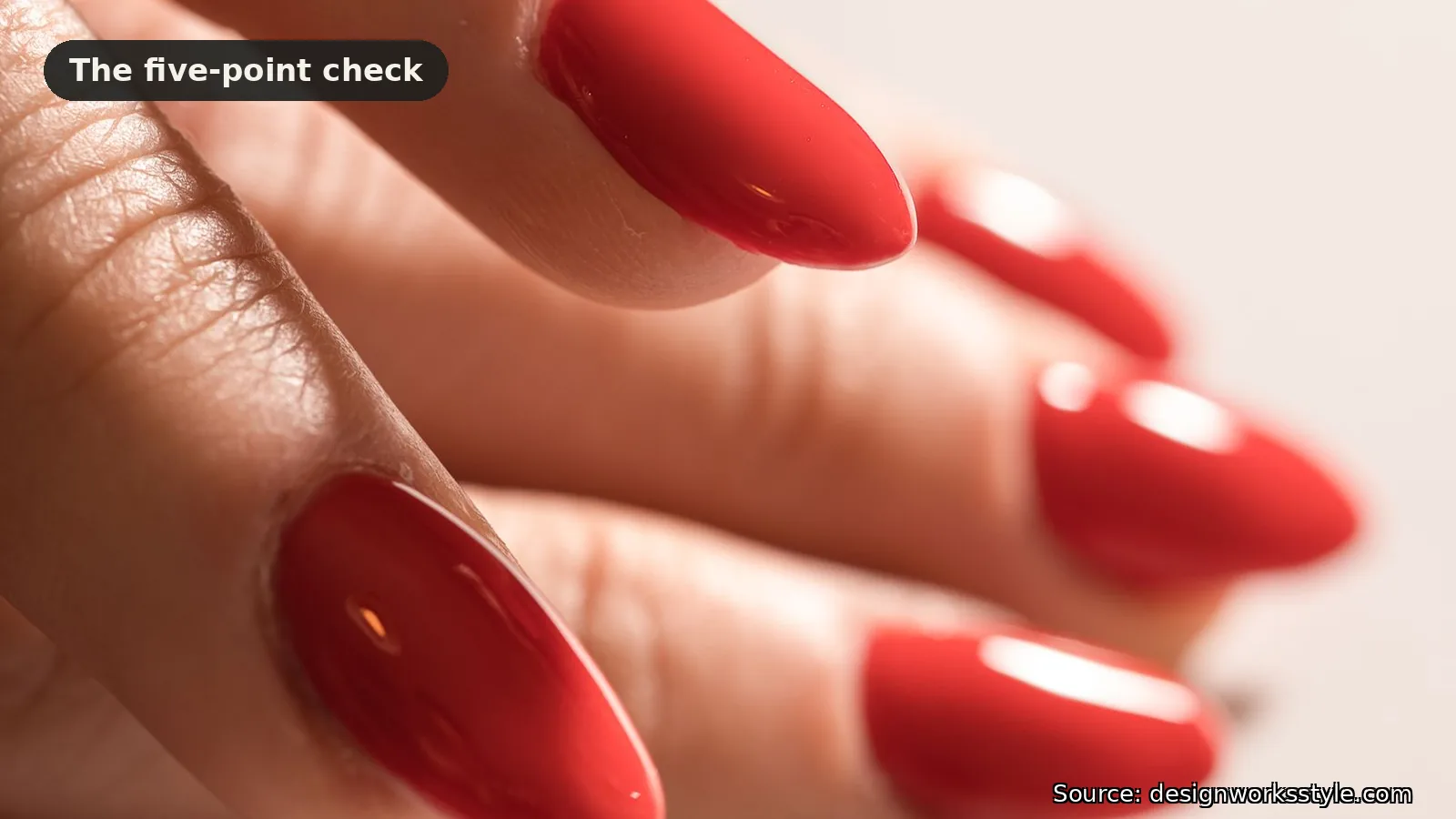
Check five points before you pay: the apex is smooth with its high point near the middle, the free edge is thin and not blocky, the cuticle line is even with no product on skin, the sidewalls run straight, and both hands match in length and shape.
Look at each nail from the side as well as from above. From the side you can see whether the apex sits in the right place and whether the tip is too thick. From above you can see whether the sidewalls are straight and the shape is even across all ten nails.
Check the skin around the nails too. There should be no acrylic on the skin, no redness from over-filing, and no soreness when you press the nail bed lightly. If a nail feels thick, uneven, or sore, ask for it to be filed and reshaped now.
What should happen if a nail lifts in the first week?
An acrylic nail salon should fix a lift in the first week free of charge, or for a small repair fee, and it should say so before you book. Lifting in the first few days usually means the prep or the cuticle seal was off, and that is the salon’s work to correct.
Ask about the fix policy when you book, not when a nail is already lifting. Ask how many days the fix covers and whether it covers one nail or the full set. A salon with a clear answer, such as a free fix within seven days, has a policy it uses often.
Do not pick at a lifted nail or glue it down yourself while you wait for the appointment. Lifting lets water and dirt sit under the enhancement, and picking can tear the natural nail plate. Keep the nail dry where you can and book the repair soon. If it is your first time in a salon at all, a first nail salon visit runs through what to expect at the desk, in the chair, and at the till.
Frequently Asked Questions
How do I know if a nail salon is good for acrylics?
Look for photos of acrylic sets in your shape and length, reviews that mention how sets lasted after two weeks, and a technician who can name the liquid system. Check the air and dust extraction while filing, and look at the cuticle line and free edge on finished sets in the portfolio.
How much does a full set of acrylic nails cost?
A standard full set costs about $50 to $90 in the United States in 2026, with fills at $35 to $60 every two to three weeks. Length, shape, and art move the price. Long sculpted sets, French finishes, and detailed art sit above the standard range, and city salons charge more than small-town salons.
How long does a full set of acrylic nails take?
Plan on 90 to 120 minutes for a full set. Short tip sets can take 75 to 90 minutes, while long sculpted sets need the full two hours. Prep, building, filing, and finishing all take time, and a set finished in 45 minutes has had prep or structure cut short.
What is the difference between EMA and MMA acrylic?
EMA, ethyl methacrylate, is the professional standard liquid for acrylic nails, and a set made with it soaks off in acetone in about 20 to 30 minutes. MMA, methyl methacrylate, makes a very rigid nail that will not soak off in a normal appointment and has to be filed off. The FDA removed pure MMA products in the early 1970s after reports of nail damage and dermatitis, while noting that no regulation specifically prohibits MMA monomer in cosmetics.
Image sources for this article are listed on the Image sources page, under this article’s title.