
A clean salon sterilizes metal tools between clients, opens single-use items fresh in front of you, wipes stations down between appointments, and keeps the air moving. You can check most of this in the first few minutes, before any service starts.
How Are Salon Tools Cleaned and Sterilized?
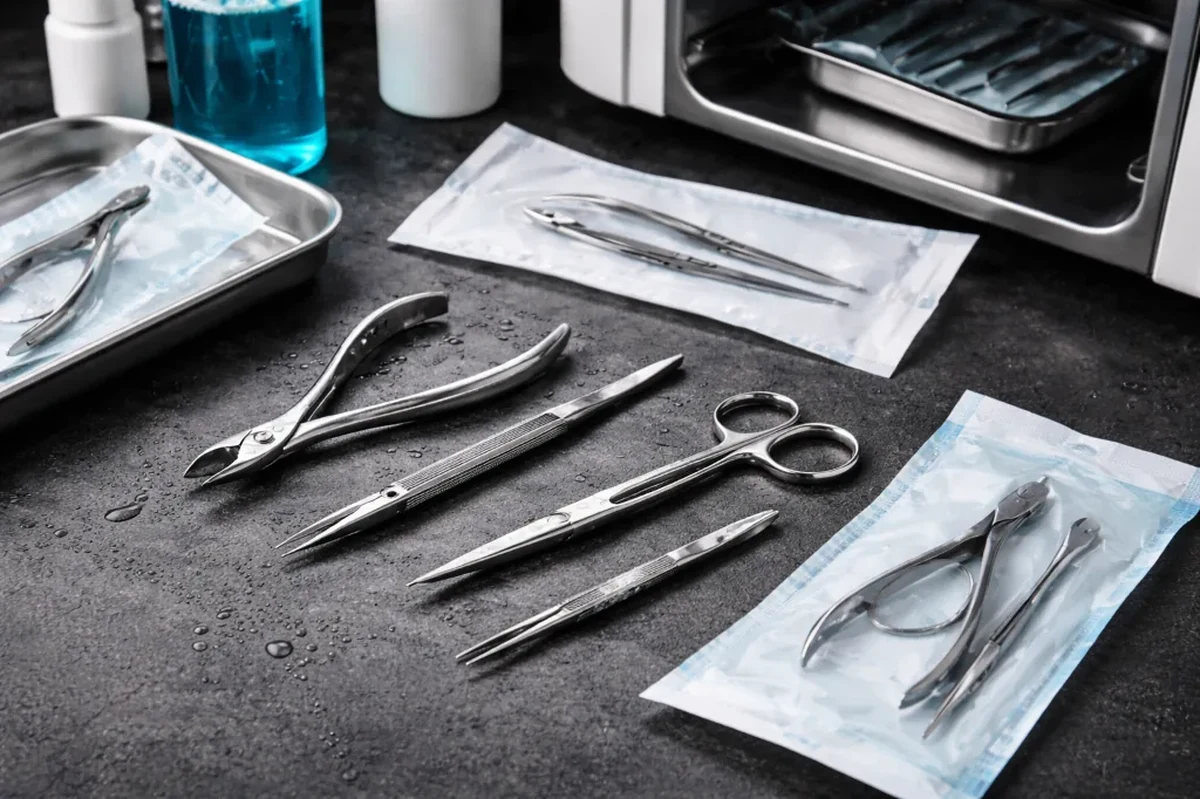
Metal tools should be washed, soaked in a hospital-grade disinfectant for the time on the label, and then sterilized in an autoclave, which uses heat and pressure to kill what disinfectant leaves behind. Tools that pass through this process arrive sealed in pouches, and the pouch should be opened in front of you.
The full process has three steps, and skipping any of them leaves a gap. First, tools are washed to remove visible debris, since disinfectant cannot work through dried product or skin. Second, they soak in a disinfectant solution, often a blue liquid in a covered jar on the station. Third, heat-stable tools go into an autoclave. A pouch with a color-change strip shows whether the cycle ran: the strip changes color when the pouch has been through proper heat.
Not every tool goes through all three steps. Files, buffers, wooden sticks, and foam toe separators are single-use, which means they get thrown away after one client. If you see a technician pull a used file from a drawer for your nails, that is a problem, and it is worth raising before the service starts. Metal pushers, nippers, scissors, and combs should be reusable and sterilized, not wiped and reused.
Ask how tools are cleaned if you cannot see the process. A clear answer names the steps: wash, disinfectant soak, autoclave, sealed pouch. A vague answer, or annoyance at the question, tells you something too. If you have not picked a salon yet, our guide to choosing a nail salon covers hygiene checks in more detail, and our guide to choosing a hair salon covers what to ask about tools and stations.
What Should a Clean Station and Chair Look Like?
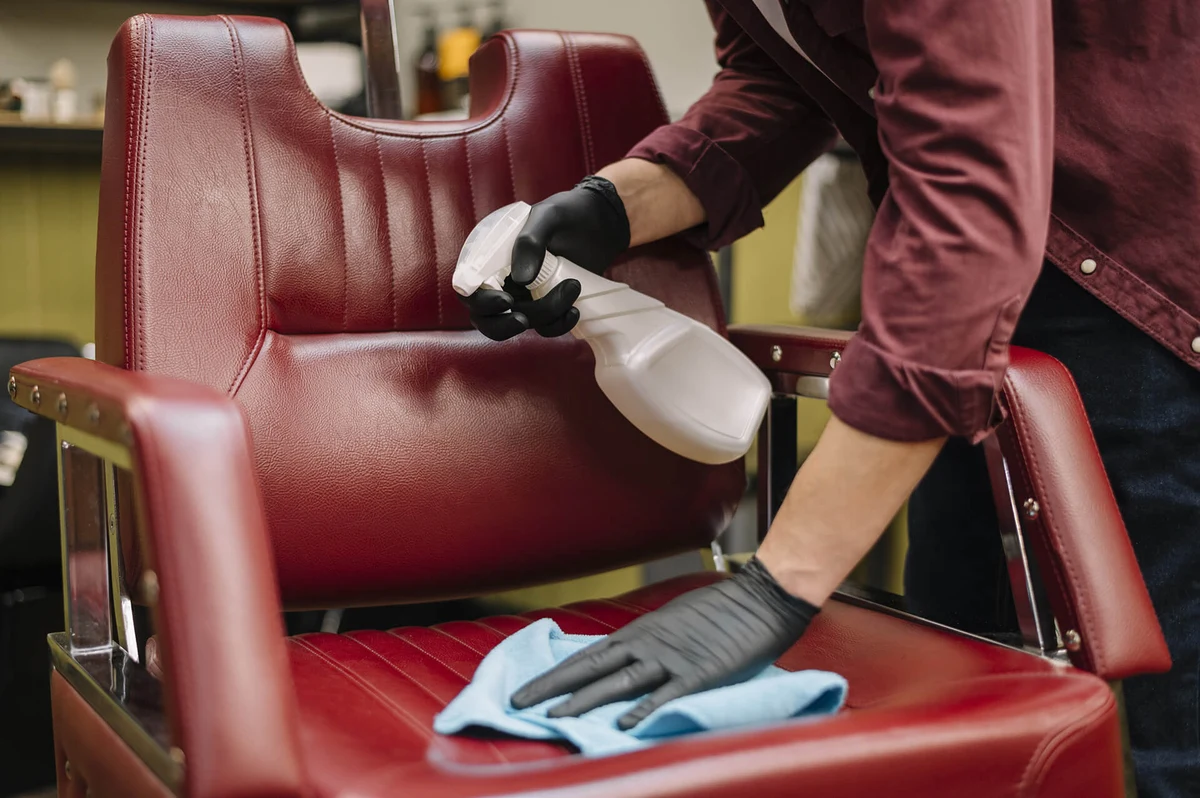
A clean station looks wiped down, dry, and clear of the last client’s hair, dust, and product before you sit down. The chair should be free of hair and residue, the counter should hold only the tools for your service, and the floor around the chair should be swept.
Look at the station before you sit. A technician who wipes the counter, changes the towel or paper cover, and lays out fresh tools while you watch is doing the job right. A station still holding the last client’s hair, used cotton, or open product bottles is not ready, and you are entitled to ask for it to be cleaned first.
Chairs need attention too. Hair chairs collect hair in seams and under cushions, and nail stations collect dust from filing. A quick wipe between clients handles most of it. Pedicure chairs need more care: the basin should be cleaned and disinfected between clients, and piped tubs need their jets flushed, since still water and old residue collect inside them. Many salons now use pipeless tubs or disposable liners, which make cleaning simpler.
Watch the gap between clients. A salon that books back-to-back with no time to clean leaves no room for disinfection. That gap matters, and a salon that protects it is one that takes hygiene seriously.
How Should Technicians Keep Themselves Clean?
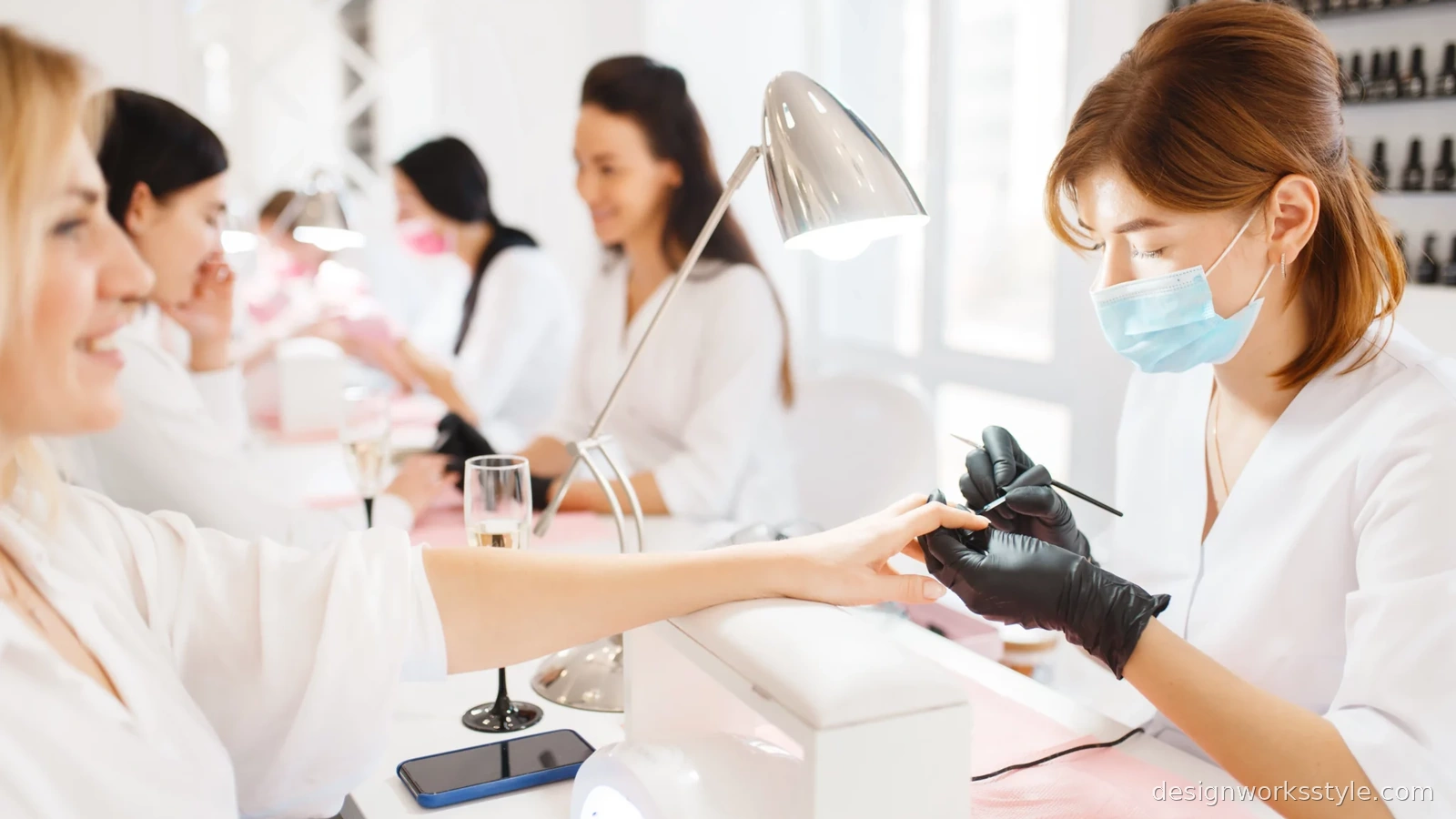
Technicians should wash their hands before starting, wear fresh gloves for services that involve skin contact, and change gloves between clients. Gloves that go on before the service and stay on through it are normal. Gloves worn through a phone call, a payment, and your service are not.
Hand washing comes first, gloves second. Gloves do not replace clean hands, and a technician who puts gloves on without washing first has missed a step. For hair services, gloves matter most during color and chemical work, where products touch skin. For nail services, gloves should be fresh for every client, since nails, cuticles, and skin all carry a small risk of nicks.
Watch what happens to gloves during the service. A technician who answers a phone, handles money, or touches a door handle and then returns to your nails without changing gloves has broken the chain. The same goes for tools: a tool dropped on the floor should be set aside and replaced, not picked up and used again.
Personal habits count too. Hair tied back, short clean nails on the technician, and no strong perfume near a client with sensitivities all show care. These details do not prove a salon is clean on their own, but they tend to travel with salons that take the bigger hygiene steps seriously.
What About Towels, Capes, and Single-Use Items?
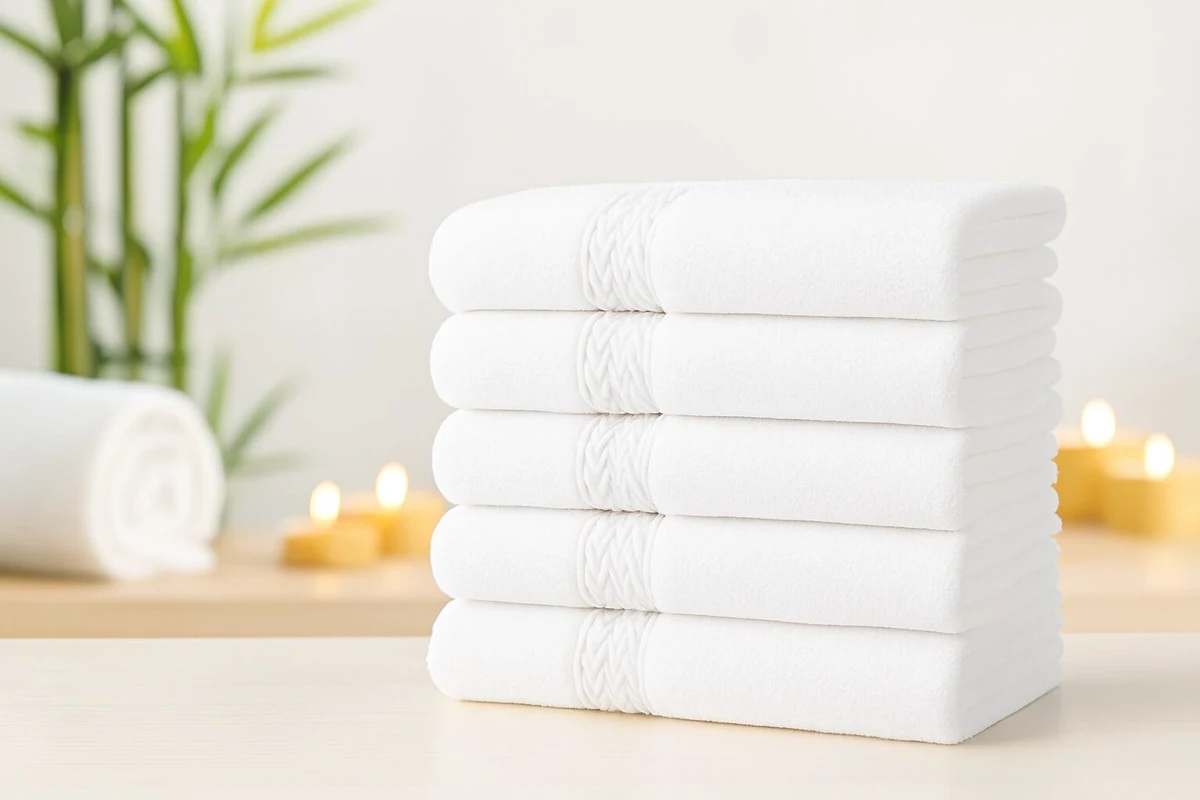
Towels and capes should be freshly laundered for each client, and single-use items like files, buffers, neck strips, and cotton should be opened new and thrown away after one use. A towel that smells damp or shows stains from a previous client has not been laundered properly.
Fresh laundry is easy to spot. A towel should smell clean and feel dry, and a cape should be free of hair and product from the last client. Many salons use paper neck strips under capes for hair services, which keep the cape from touching your neck directly. If a cape still carries hair from the last client, ask for a fresh one.
Single-use items have a clear rule: one client, then the bin. Files, buffers, wooden orange sticks, foam toe separators, and waxing spatulas all belong in this group. Some salons cut costs by reusing them, and that is one of the most common hygiene failures in the industry. The items cost little, so reusing them saves the salon almost nothing and risks your health.
Cotton, gauze, and pads follow the same rule. A cotton pad used to wipe one client’s polish should not appear on the next client’s nails. If you see a jar of loose, used-looking cotton or a pile of files waiting for the next client, say something or leave. Our nail tools guide explains which tools are single-use and which are sterilized, so you know what to expect at the station.
How Do You Spot Unsafe Products and Poor Air?
Unsafe products show up as unlabeled bottles, products past their expiry date, and containers refilled from unknown stock, while poor air shows up as strong chemical smells, stinging eyes, and no visible airflow. Both problems are easy to spot if you look before the service starts.
Products should carry labels. A bottle with no label, a handwritten label you cannot read, or a product decanted into a food container is a warning sign. You have a right to know what is going on your hair and nails, especially if you have allergies or sensitive skin. A technician who cannot name the product or the brand is not someone to trust with your hands or hair.
Expiry dates matter for color, perm solution, and nail products. Old products can react unpredictably, and old polish thickens and chips fast. You are unlikely to read every label in the salon, but a salon that keeps products in original, labeled containers with visible dates is showing care.
Ventilation matters as much as product safety. Nail products, color, and perm solution all give off fumes, and a salon with no airflow leaves everyone breathing them in for hours. Open doors, fans, or a proper ventilation system all help. If your eyes sting within a few minutes of sitting down, the air is not moving well enough. Our salon etiquette guide covers how to raise a concern like this politely during your visit.
What Should You Do If You See Unsanitary Practices?
If you see unsanitary practices, you can ask for the problem to be fixed, ask for a different technician, or leave before the service starts. You do not owe a salon your business, and a polite refusal is enough. If a service already happened, tell the salon and watch for signs of infection.
Start with a direct request. “Could you open a fresh file for me?” or “Could you wipe the station first?” are fair asks, and a good salon handles them without fuss. Most hygiene problems are fixed this way, since many are oversights, not policy. If the response is defensive or dismissive, that reaction is information in itself.
Leaving is always an option, and it costs nothing but the trip. You can leave before the service starts with a simple “I changed my mind, thank you.” No explanation is required, and no salon should pressure you to stay. If you already paid a deposit, ask for it back, but do not let a small deposit keep you in a chair you do not trust.
After a service, watch for redness, swelling, pain, or soreness around nails, cuticles, or the scalp in the days that follow. Mild irritation can come from a product reaction, but spreading redness, warmth, or pus needs prompt medical attention. Tell the salon what happened, plainly and in writing if possible, so the problem is on record. If you are heading to a salon for the first time, our first nail salon visit guide walks through what to expect step by step, including the hygiene checks to make on arrival.
Frequently Asked Questions
What is an autoclave, and why does it matter?
An autoclave is a machine that uses pressurized steam to sterilize tools, killing bacteria, fungi, and viruses that disinfectant soaks alone may miss. It matters because metal tools touch skin and sometimes draw blood, and only heat sterilization gives full protection between clients. Sealed pouches with color-change strips show the cycle ran.
Are single-use files really thrown away after one client?
Yes, in a salon that follows hygiene standards. Files, buffers, wooden sticks, and foam separators cost little, and reusing them spreads bacteria and fungi between clients. A fresh file should be opened in front of you. If a technician reaches for a used file, ask for a new one or leave.
How can I tell if a salon disinfects its pedicure tubs?
Look for a clean, dry basin before you put your feet in, and ask how tubs are cleaned between clients. A clear answer names the disinfectant and the cleaning steps. Pipeless tubs and disposable liners make cleaning simpler and are a good sign. A tub with residue, odor, or standing water from a previous client is a reason to leave.
Is it rude to ask a salon about its hygiene practices?
No. A good salon expects these questions and answers them plainly, since hygiene is part of the service you are paying for. Asking about tool sterilization, single-use items, or ventilation is no different from asking about price or timing. A salon that treats the question as rude is telling you something about how it handles feedback.
Check the tools, the station, and the air before you sit down. A salon that passes those three checks is usually one you can trust with the rest.