

How to Find a Good Nail Technician
A good nail technician keeps tools clean, listens to what you want, works neatly, and charges a fair price for lasting work. Start with recommendations and recent photos of real work, book a simple service first, and judge the visit on hygiene, listening, and how the nails look after two weeks.
Where Should You Start Looking?
Start with recommendations from people whose nails you like, since a recommendation from a real client tells you more than an advert. Ask where they go, how long they have gone there, and whether the work lasts, since a technician with regular clients over months is doing something right.
Check online reviews next, but read them for patterns, not for single complaints. One bad review among many good ones may be a one off, while repeated mentions of dirty tools, rushed work, or nails lifting within days point to a real problem. Look at the dates too, since a salon that was good two years ago may have changed staff since.
Look at photos of real work, not stock photos. A technician who posts photos of their own clients, with different nail shapes, lengths, and skin tones, shows range. Photos that all show the same hand, the same angle, or the same design may be borrowed, and borrowed photos tell you nothing about the actual work.
Check the salon itself as well as the technician. A clean salon with fresh tools, a tidy work area, and staff who wash their hands is a good sign, and choose a nail salon checks, with what to look for on a first visit, cover the same ground for the salon as a whole.
What Should You Check on a First Visit?
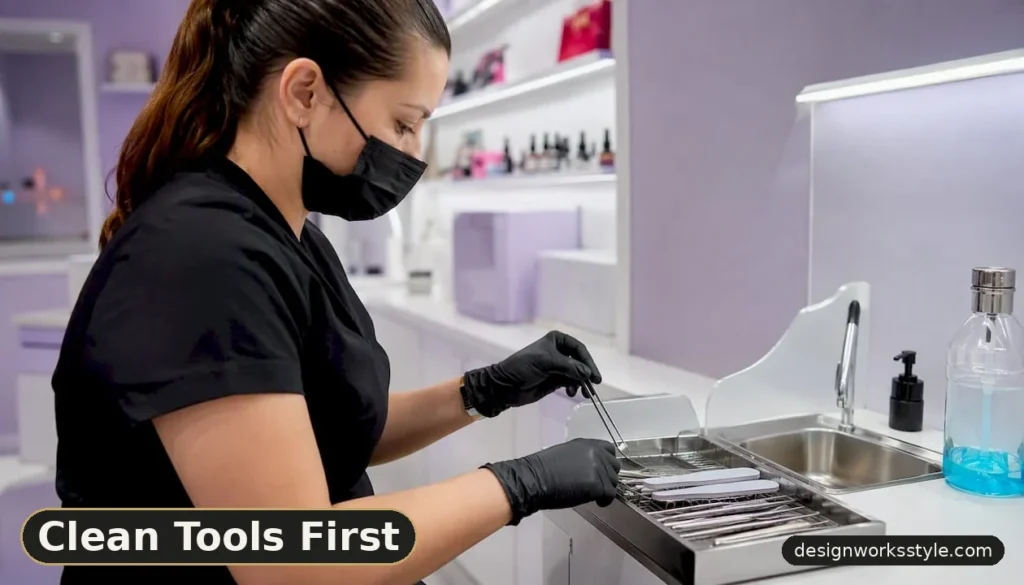
On a first visit, check hygiene first, then listening, then work quality, in that order, since hygiene protects your health and listening decides whether you get the nails you asked for. A technician who skips hygiene or rushes past your requests will not improve on a second visit.
Watch the tools. Files, buffers, and cuticle tools should be single use or taken from a sealed pouch, and metal tools should come from a sterilizer, not from a drawer. If tools are reused without cleaning, or if the work area is dirty, leave. Nails are close to skin, and dirty tools can pass on infections.
Watch how the technician listens. A good technician asks about your nail history, what you like, what you do with your hands, and how long you want the nails to last, then suggests a service that fits. A technician who starts filing before asking anything is guessing, and guessing shows up in the result.
Watch the prep work. Good prep means pushing back cuticles gently, shaping the nail evenly, and cleaning the nail plate before product goes on. Rushed prep is the main reason gel lifts within days, since product does not stick well to a nail that was not cleaned properly.
What Questions Should You Ask?
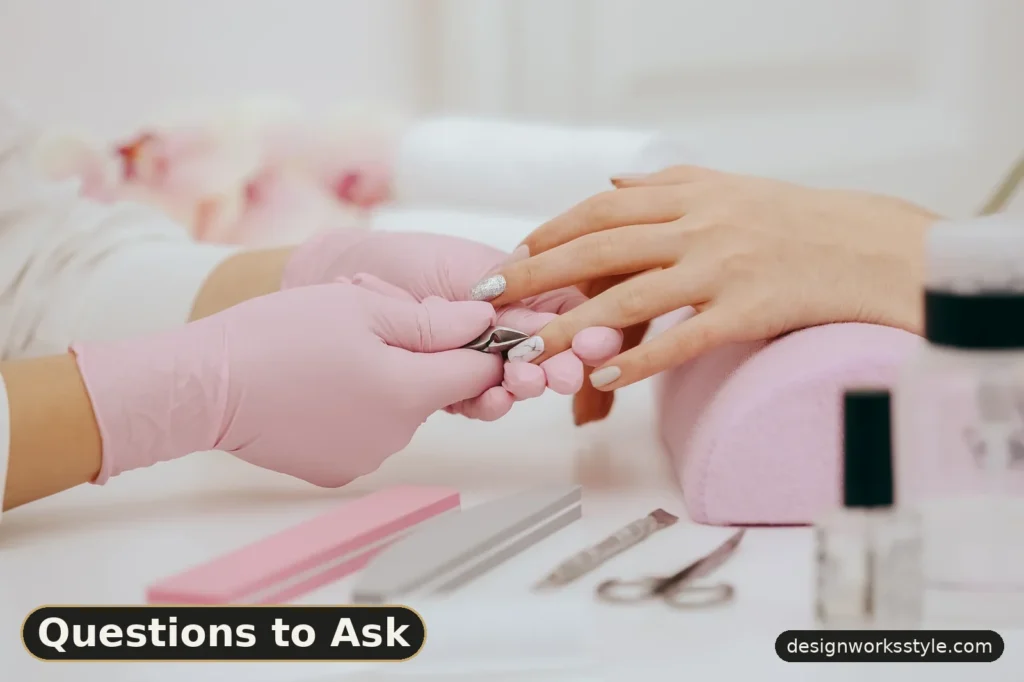
Ask about the service, the products, the price, and the aftercare before the work starts, since those four answers prevent most surprises. Ask them before any product touches your nails, while changes are still easy. A good technician answers plainly, while vague answers or pressure to add services are warning signs.
Ask what service suits your nails. Gel, regular polish, and extensions suit different nails and different lives, and a technician who asks about your work, your hobbies, and how you use your hands can match the service to you. A technician who pushes the most expensive service without asking is selling, not advising.
Ask what products are used, and whether they are professional salon products. Product names matter less than honesty: a technician who names the products and explains why they use them is more trustworthy than one who dodges the question. If you have allergies, say so before any product touches your nails.
Ask the full price before work starts, including removal, repairs, and extras like nail art. A price that doubles at the till because of add ons you did not agree to is a bad sign. A clear price list, given before work starts, is a good sign.
Ask about aftercare. A good technician tells you how to look after the nails, when to come back, and what to do if a nail lifts or breaks. Nail care basics habits, with gentle handling and regular moisturizing, cover the daily side, and a technician who explains aftercare is thinking past the appointment.
What Are the Warning Signs?
Walk away from dirty tools, rushed prep, pain during the service, pressure to add services, and prices that change at the till, since each one points to a problem that will not improve with time. One warning sign may be a bad day, but two or more mean the salon is not worth a second visit.
Pain is a clear warning sign. Filing, cuticle work, and product application should not hurt. If filing burns, if cuticles are cut until they bleed, or if the nail bed hurts under product, tell the technician to stop. Pain during a nail service is not normal, and it is not a sign of thorough work.
Rushed work is another warning sign. A full gel manicure takes forty five minutes to an hour, and a set of extensions takes longer. A technician who finishes a full set in twenty minutes has skipped prep, and skipped prep shows up as lifting within days.
Pressure to add services is a warning sign too. A technician who insists on extras you did not ask for, or who makes you feel awkward for saying no, is not putting your nails first. A good technician suggests, explains the benefit, and accepts a no without a fuss.
How Do You Judge the Work After the Visit?
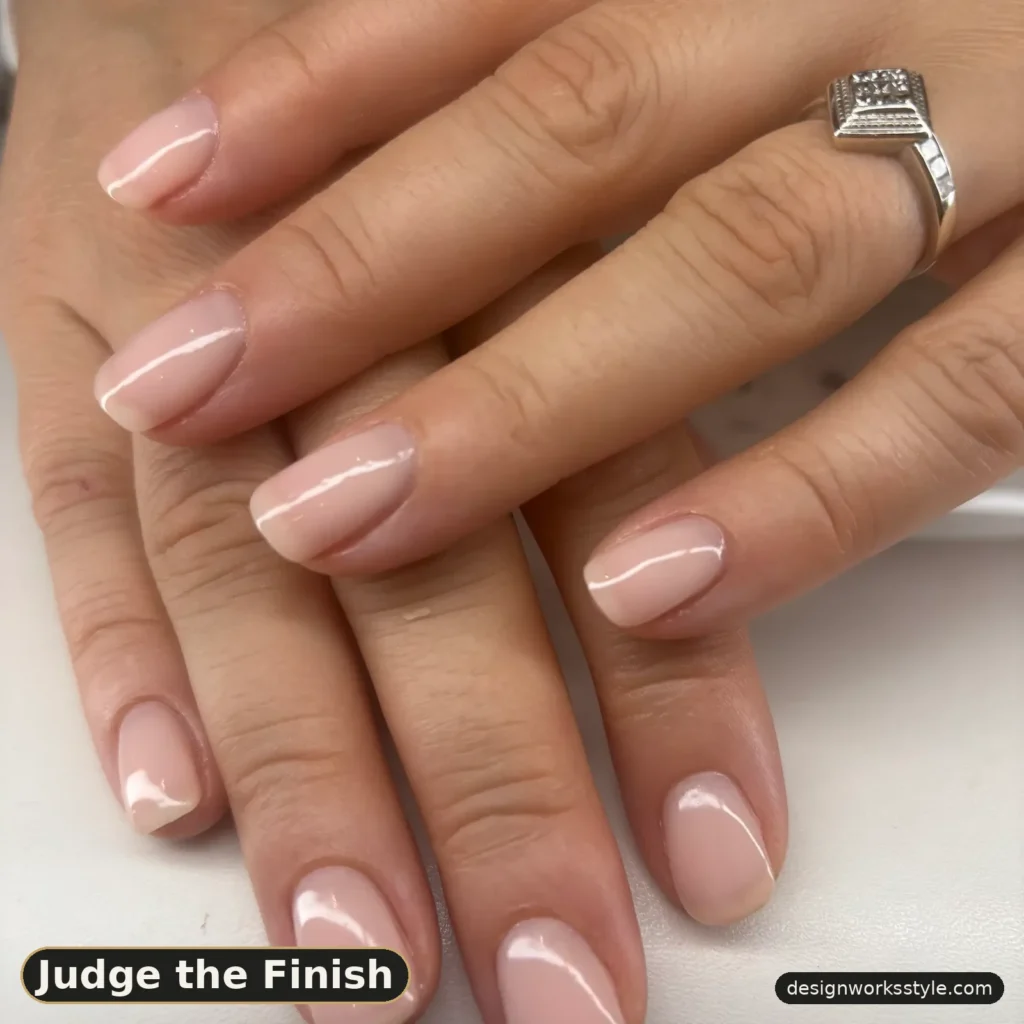
Judge the work after two weeks, since neat work on the day can still lift, chip, or break within days if the prep was poor. Check the edges, the cuticle area, and the length, and note how the nails hold up to your normal routine.
Check the cuticle area first. Product should sit close to the cuticle without touching the skin, since product on skin can cause lifting and irritation. A neat line near the cuticle, with no flooding onto the skin, shows careful work.
Check the shape and length. All ten nails should match in shape and length, with smooth edges and no rough spots. Uneven nails show up more as they grow, so check them in daylight a few days after the visit.
Check how the nails last. Gel should last two weeks without major lifting or chipping under normal use, and regular polish should last several days. If nails lift within a few days, tell the salon, since most good salons will fix a genuine application problem quickly.
Keep notes on what worked. A technician who does good work on a first visit, with clean tools and a result that lasts, is worth booking again, and a regular technician learns your nails over time. First nail salon visit advice, with what to expect and what to bring, helps if this is your first time in any salon, and the same checks apply to every visit after.
How Do You Build a Long Term Relationship?
Build a long term relationship by booking the same technician, keeping appointments, and saying plainly what you liked and what you want changed. A technician who sees your nails every few weeks learns how they grow, what products suit them, and what shapes last on your hands.
Book ahead, especially if the technician is popular. Good technicians fill up, and booking ahead saves the scramble of finding someone new at short notice. A regular slot also keeps the nails on a steady cycle, which helps them stay healthy.
Say what you want changed, kindly and plainly. A technician cannot fix a shape you did not mention, and most would rather hear it than lose a client silently. If you liked the last set, say so too, since that tells the technician what to repeat.
Look after the nails between visits. Gentle handling, gloves for cleaning, and regular cuticle oil keep nails in good shape, and nail care routine for beginners habits, with a simple daily routine, cover the basics without much effort. Nails that arrive in good shape get better results at every visit.
Frequently Asked Questions
How much should a good manicure cost?
Prices vary by area and service, but a basic gel manicure usually costs more than a regular polish manicure, and extensions cost more again. Ask the full price before work starts, including removal and repairs, and judge value by how long the work lasts.
Should I tip my nail technician?
Tipping is normal in many salons, and a tip of around a fifth of the price is common where tipping is expected. Check local custom and the salon policy, since some salons include a service charge. A tip is a thank you, not a requirement, and it should never feel forced.
What if my nails lift within a few days?
Call the salon within a few days, since most good salons will fix a genuine application problem quickly. Do not try to fix lifting gel at home by peeling it off, since peeling can damage the nail underneath. Bring the nails in as they are, so the technician can see what went wrong.
How often should I see a nail technician?
Most people visit every two to three weeks for gel, and every one to two weeks for regular polish, depending on how fast the nails grow and how the work holds up. A regular cycle keeps the nails tidy and lets the technician spot problems early, like weakness or damage from picking at product.