

Split Ends: What Works and What Wastes Money
Only a trim removes a split end for good. No serum, oil, or mask can glue the two strands back into one. A few products can hold a split closed until the next wash, and a few habits stop new ones forming. The rest buys a smoother look, not a fix.
What Is a Split End, Physically?
A split end is a hair fiber that has frayed apart at the tip. The outer cuticle wears away, the inner cortex comes apart, and the end divides into two or more strands. The part past the follicle is dead tissue with no cells and no blood supply, so nothing in the body can rebuild it.
The technical name is trichoptilosis. A healthy shaft has overlapping cuticle scales guarding the cortex inside. Heat, brushing, chemicals, and friction wear them down, and the bare cortex frays like the end of a rope. This sets the limit on every product claim: no cream or oil can rebuild covalent bonds across a fracture in dead fiber. Split ends are one form of hair damage, and hair damage repair starts with knowing which damage a trim can fix and which damage a product can only soften.

What Do the Four Split Types Tell You?
Split ends come in four shapes, and the shape says something about the cause. A plain Y split usually comes from everyday wear. The branched or knotted shapes point to heat and chemical treatments, which strip the cuticle faster and weaken the cortex deeper in.
The basic Y split
The tip divides cleanly into two strands, like a forked twig, on hair old at the ends after years of washing, brushing, and sun. A few Y splits are normal wear.
The feather or tree split
The feather split branches again and again along the shaft, where the cuticle has worn away over a longer stretch. It points to repeated heat styling or chemical treatments.
White dots
White dots are tiny pale spots where the hair has thinned and the cortex shows through, and the hair often snaps at one. They follow heavy bleaching, high heat, or aggressive brushing.
Single-strand knots
Single-strand knots are tiny knots in one curly or coily hair, usually near the end. The curl loops back on itself and ties a knot, which catches and snaps. Gentle detangling plus moisture cuts down on new knots.
What Actually Fixes Split Ends?
A trim is the only permanent fix for a split end. Cutting above the split removes the frayed fiber completely, and the hair below the cut is whole again. Every other option manages the look of a split for a while. Nothing else removes it.
Cut above the highest point of the split, not at it. Snipping at the fork leaves a frayed edge that splits again fast. Take off about half a centimetre above the split, and the remaining end is solid fiber. A Y split costs a tiny cut; a feather split costs more length.
Feel for roughness down a strand: rough, dry, pale ends mark the damaged stretch. Cut above where the hair feels smooth again. Most hair needs a trim every 8 to 12 weeks.
How Do You Dust Split Ends at Home?
Dusting means snipping only the split ends, strand by strand, without taking length off the hair. Work on dry, clean hair, twist a half-inch section, and snip only the splits poking out, about half a centimetre above each split. Sharp hair shears are required. Kitchen scissors crush the fiber and start a new split where they cut.
Work on dry hair with no product in it: oils and leave-in creams make splits lie flat and hide them. Twist a half-inch section from the middle to the ends, and the splits will stick out. Snip each one with the shears at a slight angle. Or slide two fingers down a thin section and snip each split as it pokes out.
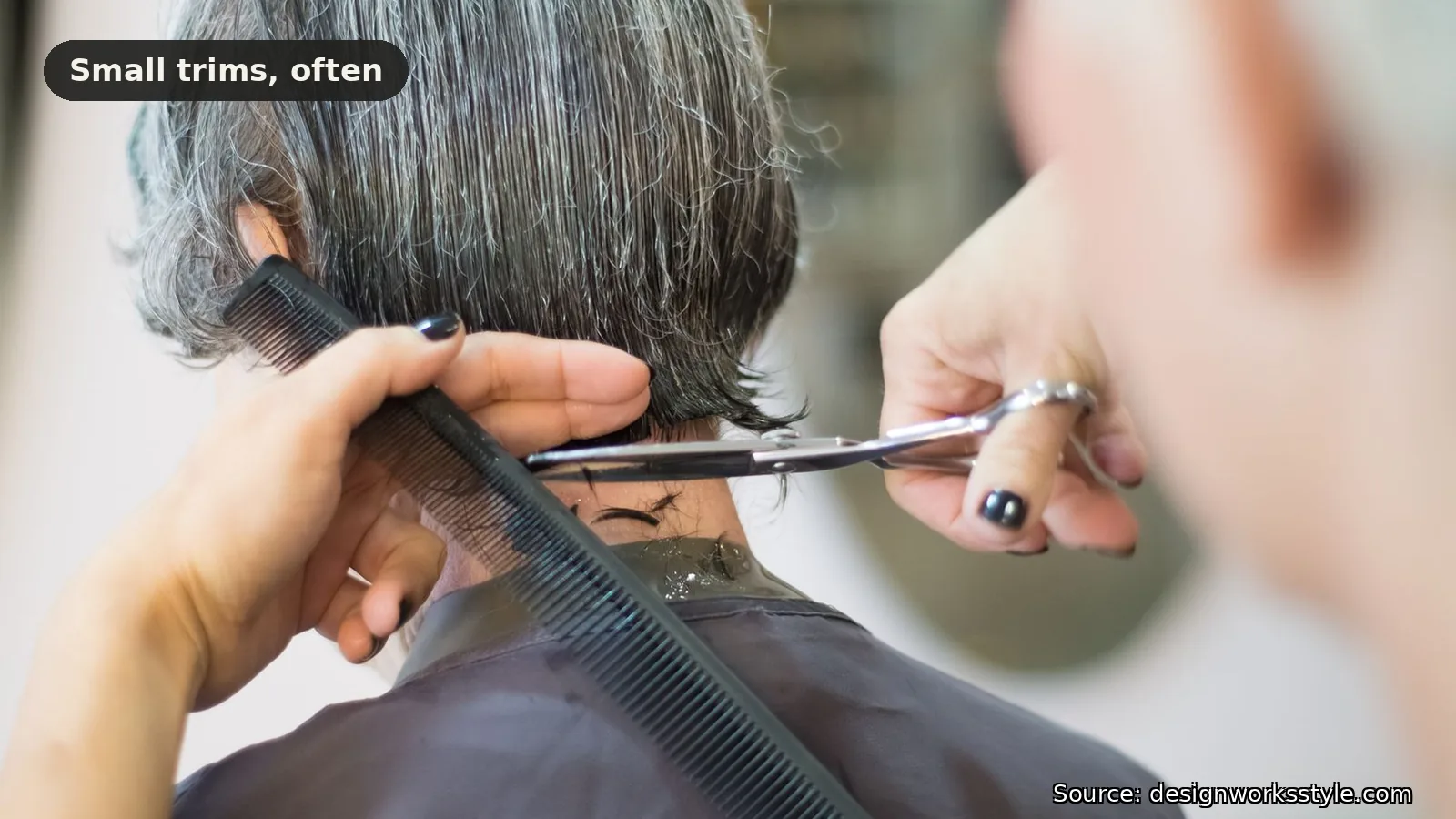
Cut only strands that are clearly split, above the split, never through it. Dusting the whole head takes 20 to 30 minutes. For damage running centimetres up the shaft, comb smooth and cut horizontally across the tips first, then dust what remains. Or hold the shears pointing up and make small vertical snips.
When Should You Book a Salon Trim Instead?
Book a salon trim when the splits run high up the shaft, when your cut has layers that are hard to reach at home, or when your hair is curly and needs cutting curl by curl while dry. A stylist can see the back of your head and judge the shape of the cut.
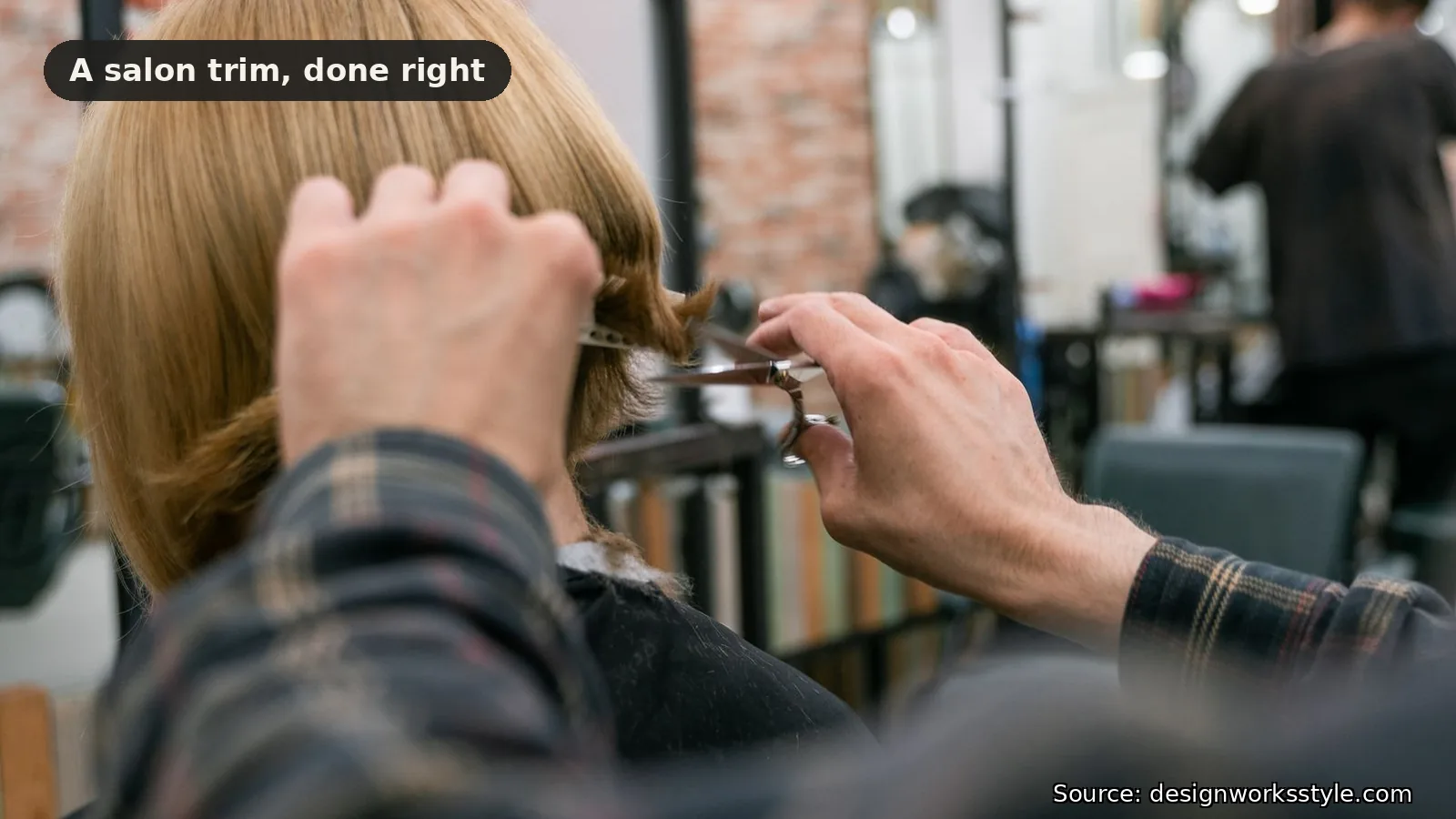
High splits are the clearest case for a salon visit. If splits sit several centimetres up from the ends, dusting them one by one takes too long. A stylist can cut a clean line above the damage and reshape the ends in one pass.
Layers are the second case: a layered cut has ends at different lengths, and trimming one layer at home can throw the shape off. Curly hair is the third: curls shrink and sit differently when wet, so a curl-by-curl dry cut trims splits without taking too much length.
What Helps a Little, and Only for a While?
A few products help a little, and honesty about the limit is the point. Protein conditioners, silicones, oils, and bond builders can hold a split closed until the next wash. None of them rejoin the fiber, and the split comes back when the product washes out.
Protein conditioners coat the hair with hydrolyzed protein fragments that bind to keratin on the shaft and hold the cortex together, so the split lies flat and looks sealed until the next wash strips the protein away.
Silicones and oils do a simpler job. They coat the shaft, cut friction between hairs, and smooth the cuticle that is left, so the split does not catch and the ends look shinier. The effect is cosmetic and washes out, but less friction means the split travels up the shaft more slowly.
Bond builders reform some disulfide bonds inside a fiber still in one piece, which helps hair weakened by bleach or heat. A split end is a fiber in two pieces, and a bond builder cannot reach across the fracture. It can strengthen the hair above the split, but the split stays split.
One lab test shows the limit: a polymer complex joined tagged splits on controlled tresses and kept some mending after combing, described as semi-permanent, not permanent. A mask can soften dry lengths, and hair masks that repair winter damage help the hair around a split feel smoother, but they do not rejoin the split itself. The American Academy of Dermatology recommends conditioner after every shampoo, and a leave-in conditioner or detangler can help reduce breakage, split ends, and frizz in fragile hair.
What Wastes Money on Split Ends?
Any product that promises to permanently repair or seal split ends wastes money, because no product can do that. Split-end repair serums sold as a cure, natural-remedy claims, and hot scissors sold as a sealing treatment all charge a premium for a result that does not exist.
Split-end repair serums are the biggest spend. A serum claiming to seal splits permanently costs more than a plain silicone serum and does the same job. The promise usually softens into words like “helps reduce the appearance of split ends.” The appearance is all it can change. A cheap silicone serum gives the same smoothing for less, and the money saved pays for the trim.
Natural remedies get the same verdict. Castor oil, argan oil, coconut oil, egg yolk, and aloe all add moisture, and moisturized hair looks better and feels softer. None has reliable scientific evidence that it repairs a split. Oil coats the fiber and cuts friction, which is useful, but it is a coating job, not a repair job.
Hot scissors are the most expensive version of the same promise. The claim is that heated blades seal the cut end as they trim, so the hair cannot split again. A cut end is a cut end: the fiber is open at the cut whether the blade was hot or cold. Hot scissors cost far more than a normal trim and give no lasting protection.
Do Small Frequent Trims Really Save Length?
Yes, small frequent trims save length over a year. A split left alone travels up the shaft and breaks higher, so the hair you lose to breakage is longer than the small trim you skipped. Cutting a little, often, costs less length than cutting a lot, rarely.
A dusting takes millimetres off the tip, and the rest of the strand stays whole. A split left for six months can travel centimetres up the shaft, and the hair snaps at that higher point. Over a year of skipped trims, the losses add up to more than the trims would have cost.
Long hair needs trims most: its ends are the oldest part of the hair. Hair grows about half an inch a month from the scalp. The trim does not slow growth. It stops the ends from breaking off as fast as the roots grow, which is the only way length accumulates.
How Do You Stop New Split Ends Forming?
New split ends form when the cuticle wears away, so prevention is about keeping it intact. Conditioner at every wash, a leave-in for fragile hair, heat under 160 C (320 F) with a protectant, gentle detangling, and trims on schedule cover the main causes.
Conditioner is the daily step. It smooths the cuticle after shampoo lifts it and cuts the friction that wears it down. Use it on the lengths and ends at every wash. A leave-in or detangler adds slip for tangly hair and cuts breakage during brushing, when many splits start.
Heat strips the cuticle fastest. Keep hot tools under 160 C (320 F) and use a heat protectant every time. A protectant does not make high heat safe, but it slows the damage.
Detangling needs the same care. Start at the ends and work up in short strokes, with a wide-tooth comb on wet hair instead of a brush. Wet hair stretches and snaps more easily, so pulling a brush through a tangle from the roots down is one of the quickest ways to create new splits. Breakage and splits feed each other, so preventing hair breakage matters as much as trimming what already split.
Frequently Asked Questions
Can split ends be repaired without cutting them?
No. A split end is a fracture in dead fiber, and no product can rebuild the bonds across it. Protein conditioners, silicones, and oils can hold the strands together until the next wash. The split is still there, and it returns when the product washes out. A trim is the only repair that lasts.
How often should I trim to keep split ends away?
Most hair needs a trim every 8 to 12 weeks. Heat, bleach, or chemical treatments need the shorter end of that range. If splits return within weeks of a trim, the styling routine needs to change too.
Do split-end repair serums do anything at all?
They do one thing: they coat the split and hold it closed so it looks smoother. What they do not do is repair the fiber. A serum sold as a permanent cure is selling the same temporary coating at a higher price. Buy a plain silicone serum for the smoothing effect, and spend the rest on the trim.
Why do my ends keep splitting even though I rarely use heat?
Heat is only one cause. Friction from brushing, tight hair ties, rough towels, and pillowcases wears the cuticle down too, and old ends split from plain age. If the splits keep coming back fast, check detangling first: brush from the ends up, use a wide-tooth comb on wet hair, and condition the lengths at every wash.
Image sources: Photos here come from real photographers and stock photo libraries. For the full list of image sources, visit our sources page.