
Healthy cuticles need daily oil, gentle pushing after a shower or soak, and no cutting. The cuticle seals the gap between skin and nail, so when it tears or dries out, nails look ragged and manicures chip faster. This guide covers what cuticles do, a simple daily routine, safe pushing, how to fix damage, and which products actually help.
What Do Cuticles Do and Why Do They Matter?
Cuticles are the thin strip of skin at the base of each nail, and they seal the space between the nail plate and the surrounding skin. That seal blocks bacteria, fungus, and dirt from reaching the nail matrix underneath, where new nail cells form. When the seal breaks, germs get in, and the nail grows out weaker or with ridges.
The true cuticle is the clear, thin layer that sits directly on the nail plate near the base. The thicker skin that frames the nail is the proximal nail fold. When you push cuticles back, you move the fold gently to reveal more nail plate. The cuticle itself is not something you remove, it is something you protect.
Healthy cuticles make a visible difference. A manicure applied over ragged, dry cuticles looks unfinished no matter how neat the polish is, because polish catches on torn skin and chips at the edges. Smooth, moisturized cuticles give polish a clean line to follow, and the manicure lasts longer because the seal at the base stays intact.
Cuticles also tell you about nail health in general. Dry, peeling cuticles usually mean the hands need more moisture overall, which also means the nails are dry and prone to splitting. When cuticles improve with daily oil, nails often improve too, since both get the same care. For the full routine that keeps nails healthy alongside cuticles, see our nail care basics guide.
What Should You Do for Your Cuticles Every Day?
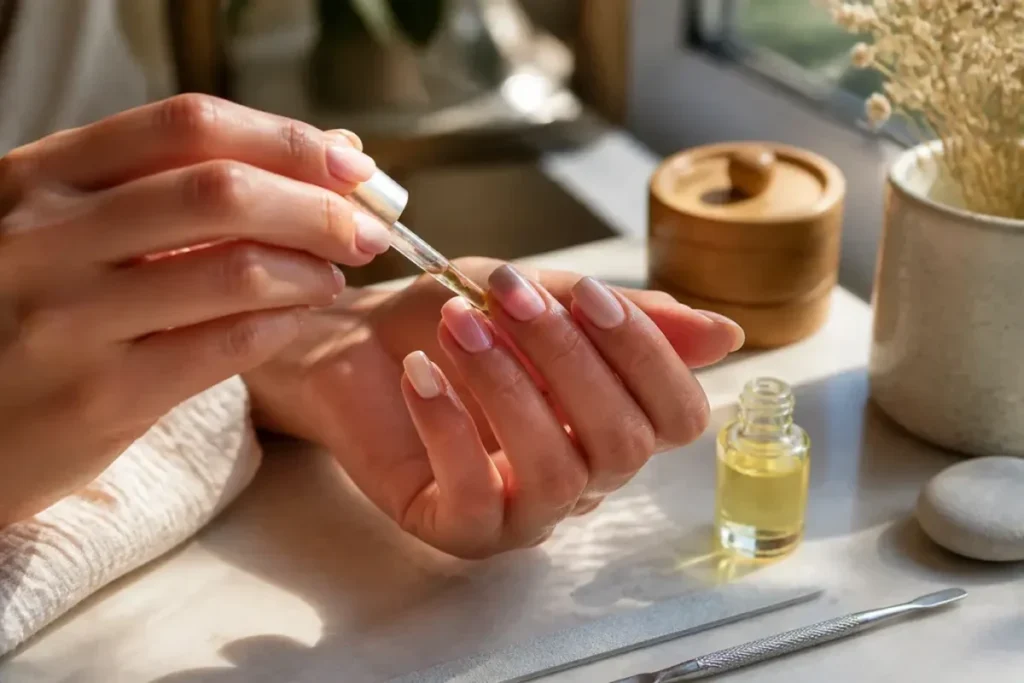
Daily cuticle care takes less than a minute: apply cuticle oil once or twice a day, rub it into each nail base and the surrounding skin, and keep hands moisturized after washing. Night is the best time, since oil soaks in while you sleep instead of washing off during the day.
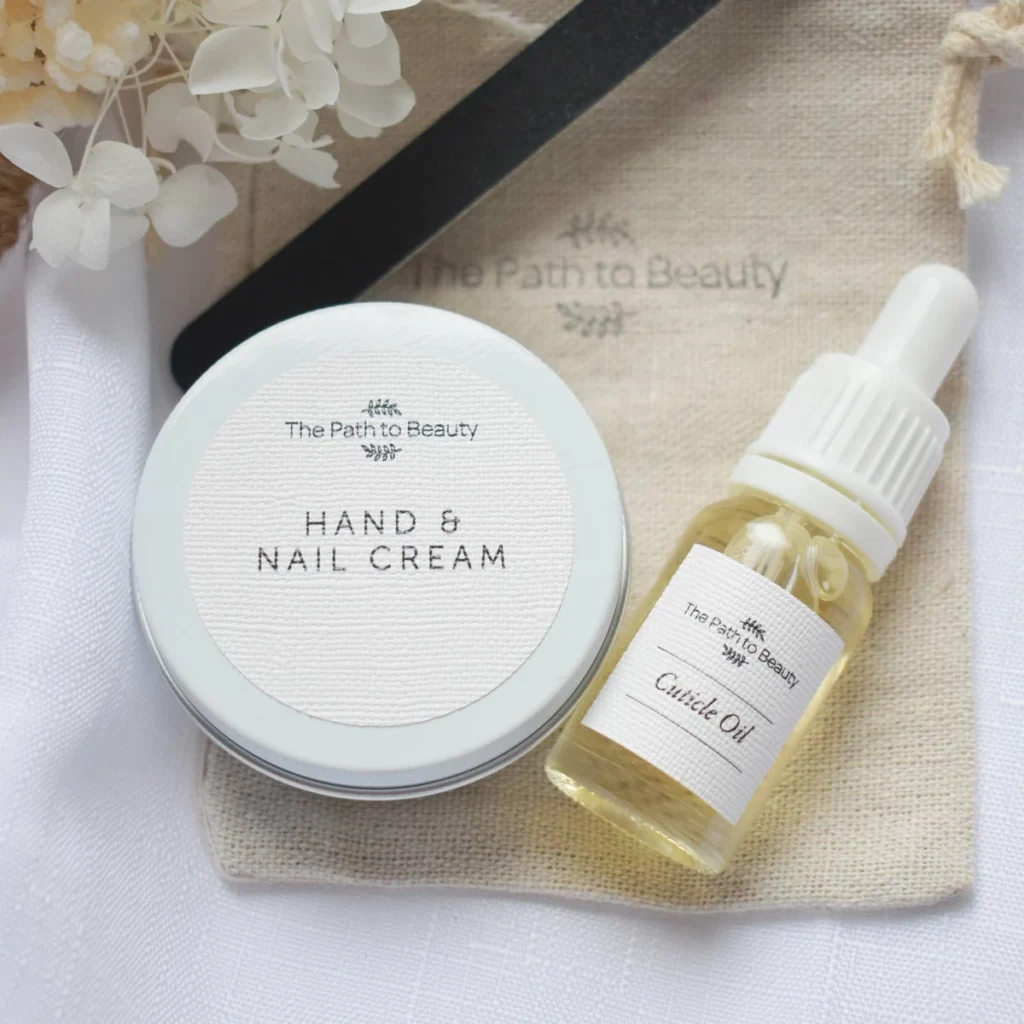
Cuticle oil is the main product. Put one small drop on each nail base, then rub it in with your thumb in small circles. Cover the cuticle and the skin just around it, plus the nail plate itself, since oil on the nail keeps it flexible. Jojoba oil absorbs well and closely matches the skin’s own oils, but almond oil, vitamin E oil, and plain olive oil all work. The best oil is the one you will actually use every day.
Hand cream helps too, but it works differently. Cream sits on the skin surface and protects against water loss, while oil sinks deeper into the cuticle and nail. Use both if your hands are very dry: oil first, then cream over it to lock the oil in. After washing dishes, cleaning, or washing hands many times in a day, reapply. Each wash strips oil away, so hands that see a lot of water need oil more often.
Pushing cuticles back belongs in the weekly routine, not the daily one. Daily care is just oil and moisture. If you notice a hangnail during the day, do not pull it. Trim only the loose flap with clean nippers, and apply oil after. Pulling a hangnail tears deeper skin and can start an infection that takes days to settle.
Gloves matter for cuticle health as much as for nails. Rubber gloves for dishes and cleaning keep soap and hot water away from cuticles, which dry out fast without protection. In cold weather, warm gloves outside prevent the cracking that winter brings. These two habits, oil and gloves, prevent most cuticle problems before they start.
Should You Push Cuticles Back or Cut Them?
Push cuticles back gently after a shower or soak, and never cut them. Pushing moves the nail fold back to reveal a clean nail plate for polish, while cutting breaks the seal and invites infection plus ragged regrowth that looks worse than what you started with.
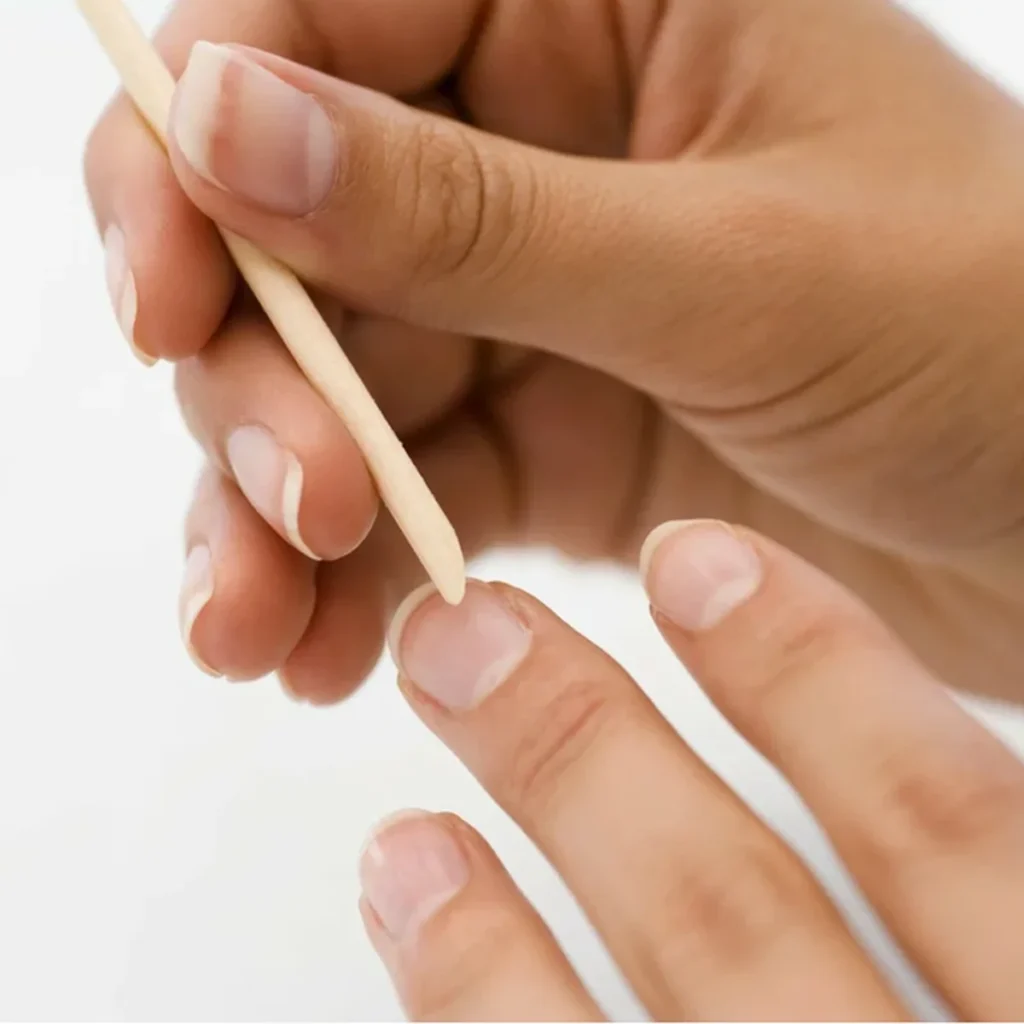
Pushing is safe when done right. After a warm shower or a three to five minute soak, cuticles are soft. Use a wooden orange stick or a soft rubber pusher, hold it at a low angle, and press gently toward the base of the nail. Work in small strokes, not one hard push. Stop if you feel pain or see redness, since that means you pressed too far. Once a week is enough for most people.
Cutting is where trouble starts. Salons that cut cuticles with nippers or scissors remove the seal entirely. The skin grows back thicker and more ragged within days, which makes people want it cut again, and the cycle repeats. Worse, a small nick during cutting lets bacteria in, and the area around the nail can swell, redden, and hurt for days. That infection is called paronychia, and it needs warm soaks and sometimes medical treatment.
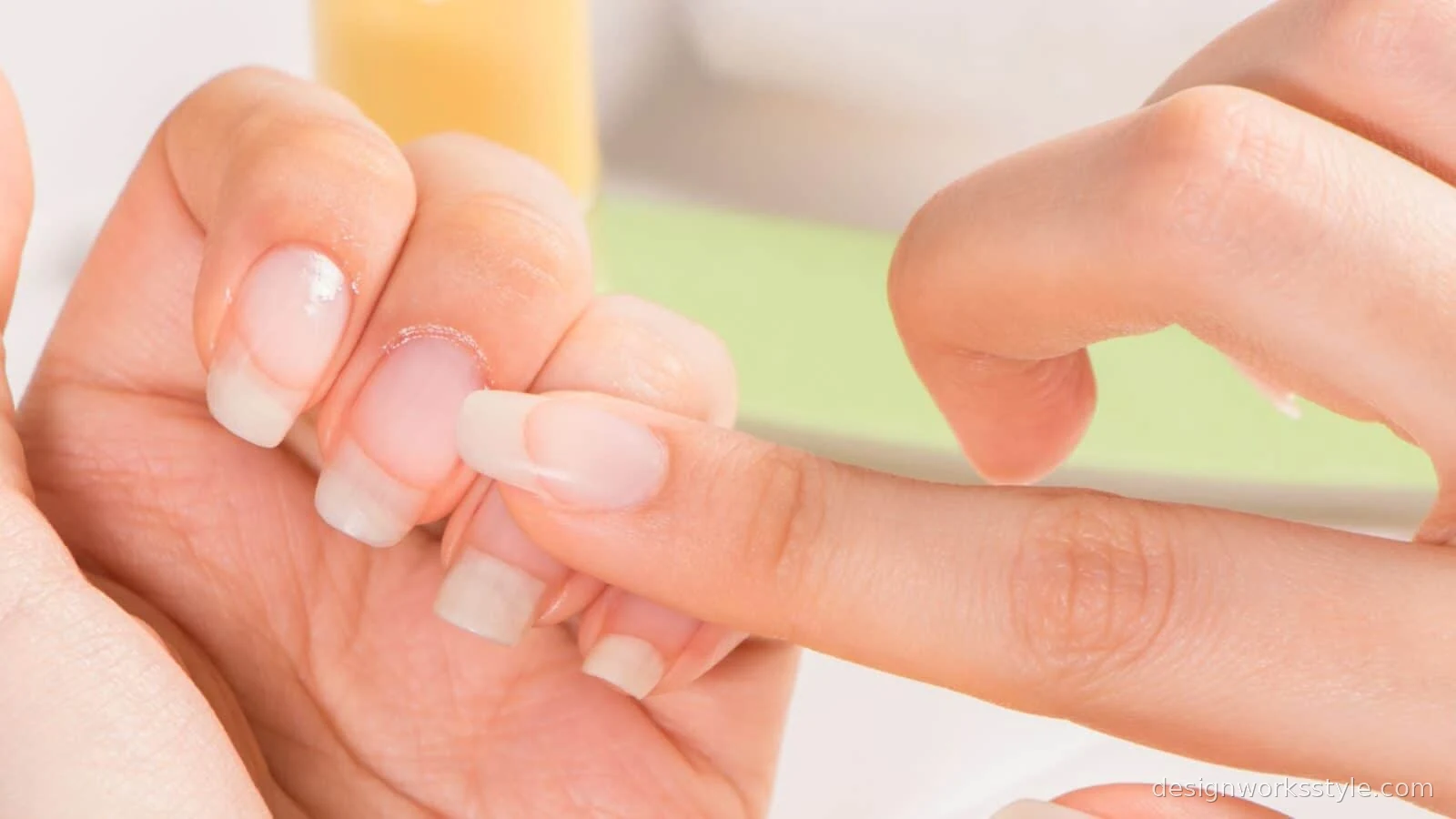
Some people have cuticles that look overgrown even with regular pushing. That usually means the cuticles are dry, not truly overgrown. Dry cuticles stick to the nail plate and look thick, but oil for a week or two softens them, and gentle pushing then moves them back easily. If pushing after two weeks of oil still leaves a thick band, that band is often the proximal nail fold itself, which is normal skin, not excess cuticle to remove.
For the tools that make pushing safe, including wooden sticks and soft pushers, our nail tools guide covers what to buy and how to clean each tool after use.
How Do You Fix Damaged or Overgrown Cuticles?
Damaged cuticles recover with a week or two of daily oil, no cutting, gentle pushing only after soaking, and protection from water and harsh soaps. Overgrown cuticles usually need the same treatment, since dryness makes them stick and look thicker than they are.
Start by stopping the damage. No picking, no biting, no cutting, and no peeling loose skin. Each of these tears the seal further and delays healing. If you bite your cuticles, a bitter tasting polish made for nail biting can break the habit while the skin heals. Keep nails short during recovery so there is less edge to catch and pick at.
Oil twice a day during recovery, morning and night, and add hand cream after every hand wash. At night, apply a thicker layer of oil and wear thin cotton gloves to bed if your cuticles are very cracked. The gloves hold the oil against the skin overnight instead of rubbing off on sheets. Within three to four days, most cracking softens. Within two weeks, the cuticle line usually looks smooth again.
Hangnails need specific care. A hangnail is a small flap of torn skin beside the nail, not the cuticle itself. Trim only the flap with clean, sharp nippers, cutting at the base of the flap without pulling. Apply oil right after, and cover with a bandage if the spot is sore or if you work with your hands in water. Do not bite hangnails off, since that tears deeper and risks infection.
Redness, warmth, swelling, or pus around a cuticle means infection, not just dryness. Soak the finger in warm salt water for 10 to 15 minutes, three times a day, and keep the area clean and dry between soaks. If redness spreads, pain increases, or the swelling does not improve in two days, see a doctor. Infections around nails can worsen fast, and early treatment prevents a bigger problem.
Overgrown cuticles that stay thick after two weeks of oil and gentle pushing may need a professional look. A nail technician can push them back more thoroughly after a proper soak, or a dermatologist can check whether the thickness comes from something else, like eczema or a fungal issue. Do not try to cut thick cuticles yourself at home.
Which Cuticle Care Products Actually Help?
Three products cover cuticle care well: a simple cuticle oil for daily use, a thick hand cream for protection after washing, and a wooden stick or soft pusher for weekly pushing. Everything beyond those three is optional, and expensive products rarely beat simple ones.
Cuticle oils vary mainly by base ingredient. Jojoba oil absorbs fast and does not feel greasy, which makes it easy to use during the day. Sweet almond oil is light and affordable. Vitamin E oil is thicker and suits very dry cuticles at night. Some oils add fragrance or other plant oils, which is fine as long as the product does not irritate your skin. A plain oil with one or two ingredients works as well as a complex blend.
Hand creams with shea butter, glycerin, or ceramides protect the skin barrier and lock in moisture after oil. Avoid creams with strong fragrance if your cuticles crack often, since fragrance can sting open skin. For very dry hands, an ointment style product at night, thicker than cream, seals moisture better than a light lotion.
Cuticle removers are gels or liquids that soften cuticles chemically before pushing. They help when cuticles stick stubbornly to the nail plate, but they are not needed for most people. If you use one, apply it only to the cuticle area, leave it for the time on the label, usually one to two minutes, then push gently and wash hands well. Overuse dries the skin, so limit removers to once a week at most.
Skip cuticle nippers and scissors for home use. They tempt people to cut, and cutting causes the problems this guide aims to prevent. A wooden stick, a soft pusher, and a nail file cover home cuticle care.
Once cuticles are healthy, manicures last noticeably longer, since polish grips a clean nail plate and the seal at the base stays smooth. Our guide on how to make your manicure last longer builds on this routine with prep and application steps for two week wear.
Frequently Asked Questions
How often should you apply cuticle oil?
Once a day is enough for healthy cuticles, and twice a day suits dry or damaged cuticles. Night is the best single time, since oil soaks in undisturbed. If you wash hands often, cook, or clean without gloves, apply again after heavy washing. Consistency matters more than quantity, a small drop daily beats a large amount once a week.
Is it safe to push cuticles back every day?
No need, and daily pushing can irritate the skin. Once a week after a shower or soak is enough. Daily care is just oil and moisturizer. If cuticles look overgrown between weekly sessions, oil is the fix, not more pushing. Pushing dry cuticles tears them, while pushing soft cuticles after soaking moves them easily.
What causes hangnails and how do you prevent them?
Hangnails come from dry skin tearing beside the nail, often after picking, biting, or exposure to water and soap without gloves. Prevention is oil daily, gloves for wet work, and trimming loose flaps promptly instead of pulling them. When a hangnail appears, trim only the flap with clean nippers and apply oil right after.
Can damaged cuticles be repaired or do they need to grow out?
Cuticle skin repairs itself within one to two weeks of steady oil, no cutting, and protection from water and soap. The skin itself heals, it does not need to grow out like a nail does. If redness, swelling, or pus appears, that signals infection, not simple dryness, and it needs warm soaks and possibly medical care rather than more oil alone.
Healthy cuticles are a small habit with a visible payoff. Oil daily, push gently once a week, never cut, and protect hands from water and cold. For designs that look best on well kept nails, browse our simple nail designs and French tip ideas galleries.