
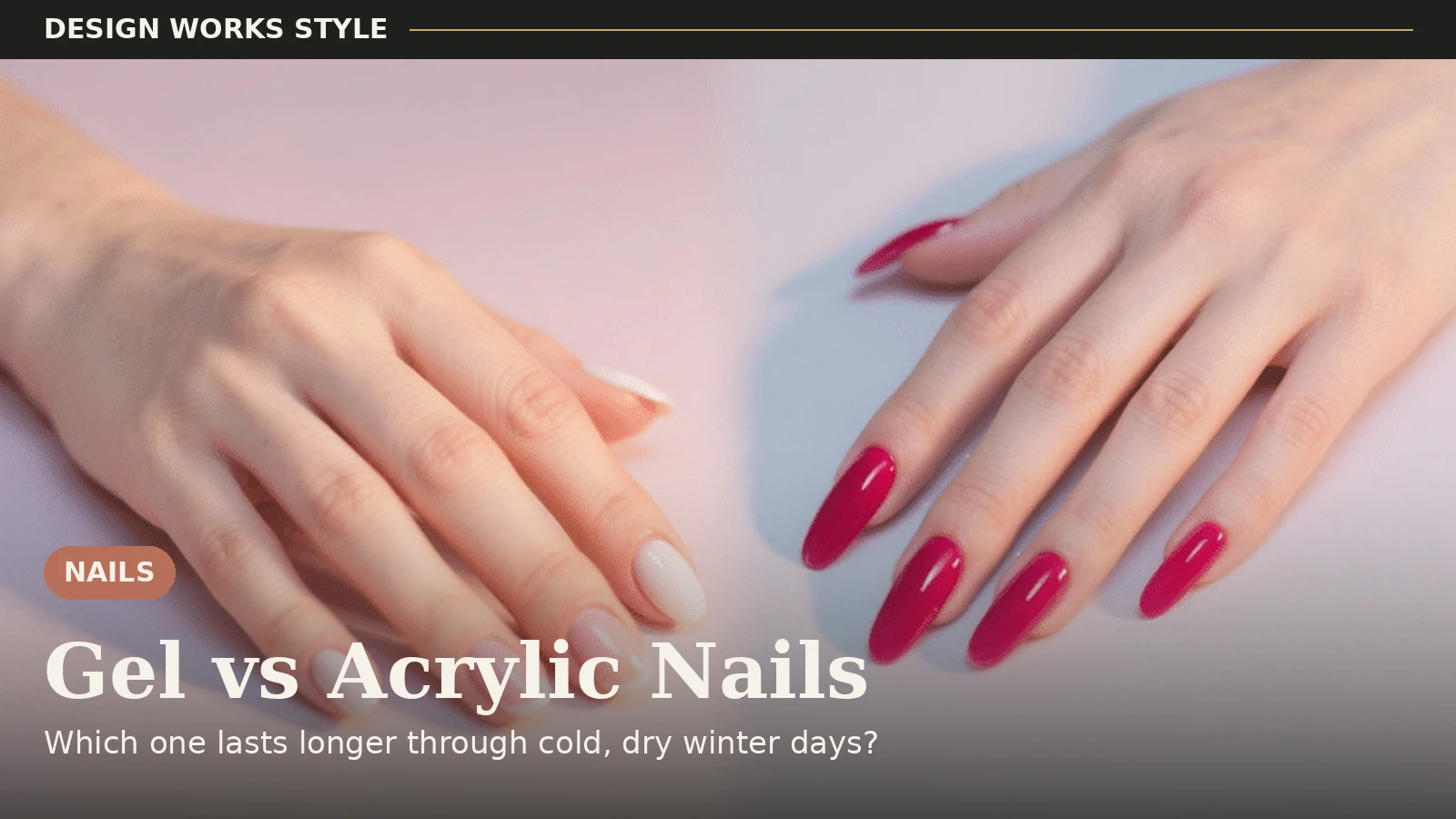
Acrylic nails last longer in winter. Acrylic sets hold for three to four weeks with fills every two to three weeks, while gel polish needs a new set after two to three weeks. Cold, dry air and gloves test both, and acrylic wins on wear time. Gel wins for short nails, since it bends with the nail instead of cracking.
What Is the Difference Between Gel and Acrylic Nails?
Gel and acrylic nails start from different materials and harden in different ways. Gel is a thick liquid that stays wet until it cures under a UV or LED lamp, usually in 30 to 60 seconds per layer. Acrylic is a powder mixed with a liquid monomer at the salon table, shaped with a brush, and left to harden in the air in about two minutes. That difference in how they set explains most of what follows: how they feel, how they wear, and how they come off. Gel feels light and bends a little with the nail, while acrylic feels harder and more solid, and it carries a strong chemical smell while the monomer is wet.
Gel polish, the kind used in a gel manicure, is color painted over your own nails. It adds shine and a little strength, but almost no length. Builder gel and hard gel are thicker versions of the same idea, and they can add some length and structure. Acrylic is built for structure from the start. A tech sculpts it over your nail or over a tip, so it can add real length and hold shapes that gel struggles with, like long coffin and stiletto points.
Which Lasts Longer in Winter?
Acrylic lasts longer in winter, as long as the nails are not very long. A full acrylic set holds its shape for three to four weeks, with a fill every two to three weeks. Gel polish gives two to three weeks of clean wear before the regrowth line shows and the edges start to lift. Builder gel sits between the two and can reach three to four weeks with a fill. Both types still need the salon again at about the same time.
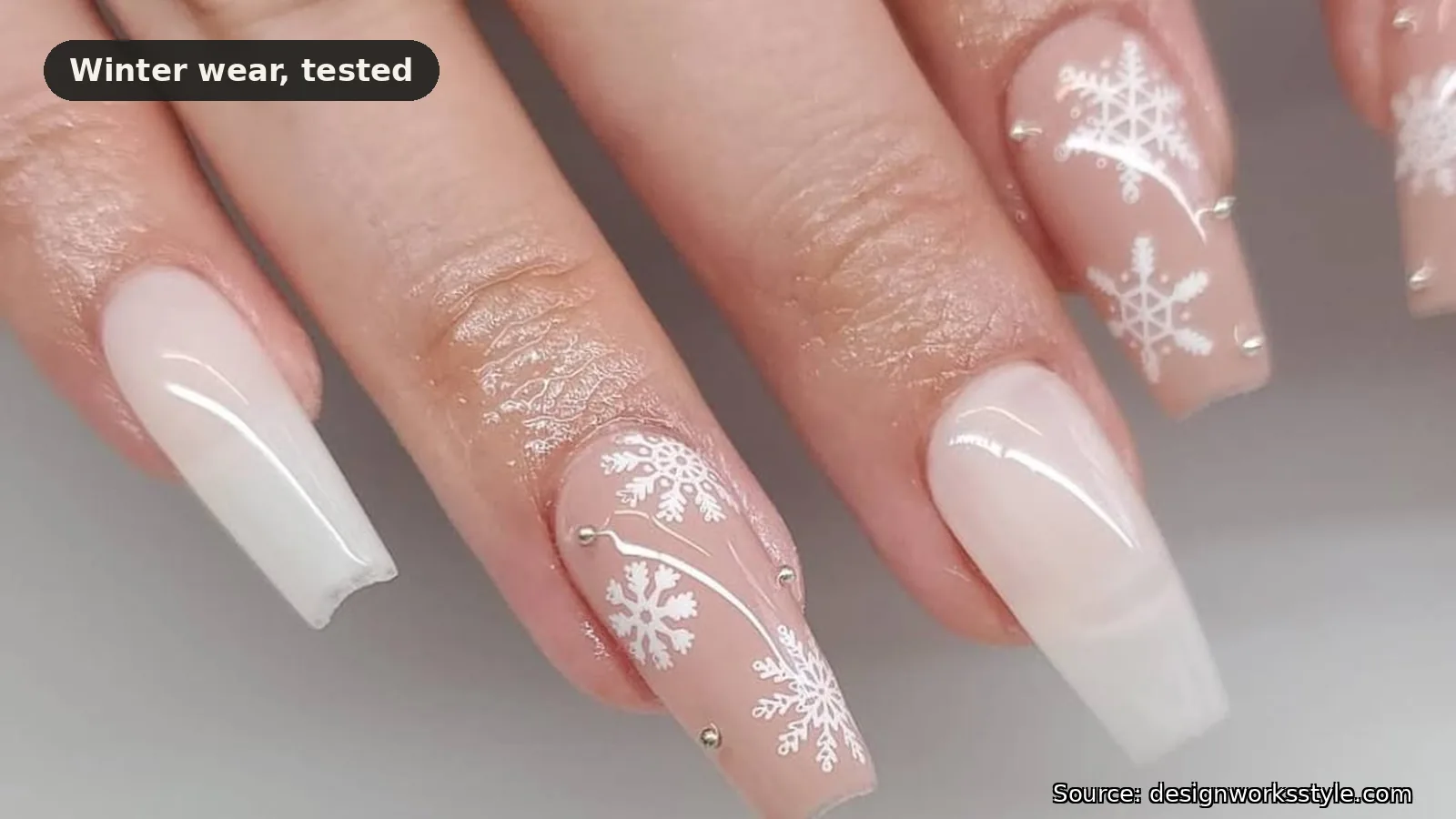
Winter changes the wear in two ways, and they pull in opposite directions. Cold, dry air dries the nail plate and the skin around it, which loosens the bond at the cuticle and lets both products lift sooner. At the same time, acrylic turns more brittle in the cold, so a long acrylic tip that catches on a coat zipper or a car door is more likely to crack than it would be in summer. Gel bends instead of cracking, so on short or medium nails it can outlast acrylic through a cold month.
Length decides more than the product name does. Short acrylic nails in winter are hard to beat: the set is rigid, the tips do not catch, and the wear time stretches to the full three or four weeks. Long acrylic nails face the opposite problem, since every tip acts as a lever when it snags on gloves or a pocket. Short gel nails wear well too, because the gel flexes with the nail and the free edge stays sealed.
How Does Cold Weather Change the Wear?
Cold weather wears on a manicure through dryness first and knocks second. Indoor heating and cold air outside pull moisture from the nail plate, the cuticle, and the skin around the nail. A dry nail plate shrinks a little and pulls away from the product, which is why lifting often starts at the cuticle in January. Cuticle oil helps here more than any top coat does, because it keeps the nail plate and the skin around it from drying out.
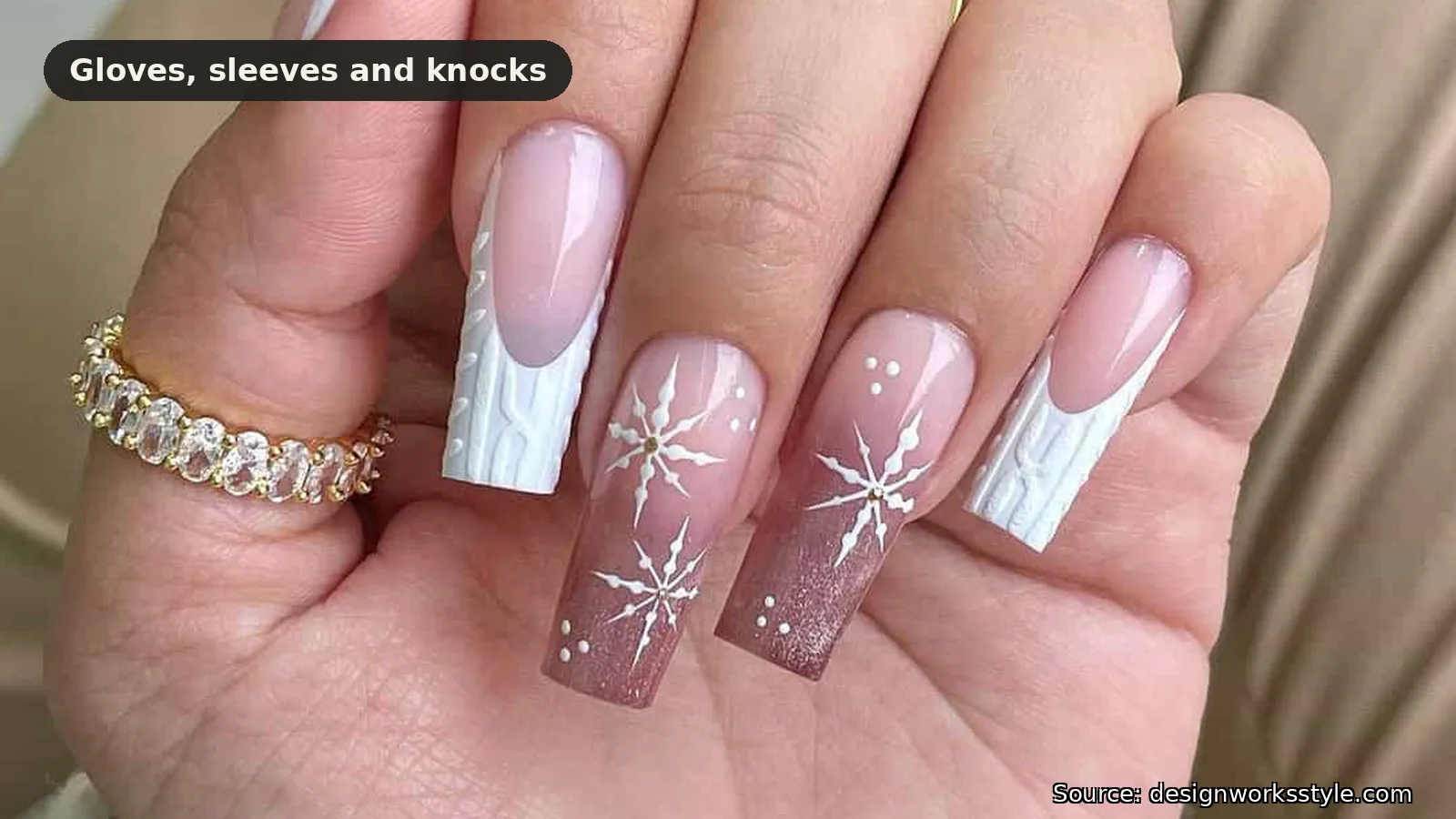
Gloves cause the second kind of wear. Pulling tight gloves on and off drags across the free edge of each nail, and long tips catch on the glove lining. Short nails slide in and out of gloves without catching, which is one more reason to keep the length down in winter. Wool and knit cuffs do the same thing on a smaller scale, catching on a lifted edge and peeling it back a little more each day. A lifted edge will not reseal itself, so the fix is a salon visit.
Hot water is the third winter problem. Hands go from cold air to hot water, and the nail plate swells and shrinks with each change. Gel is more sensitive to this, because water can work its way under a lifted gel edge. Rubber gloves for dishes protect both types, and they cost less than a single fill.
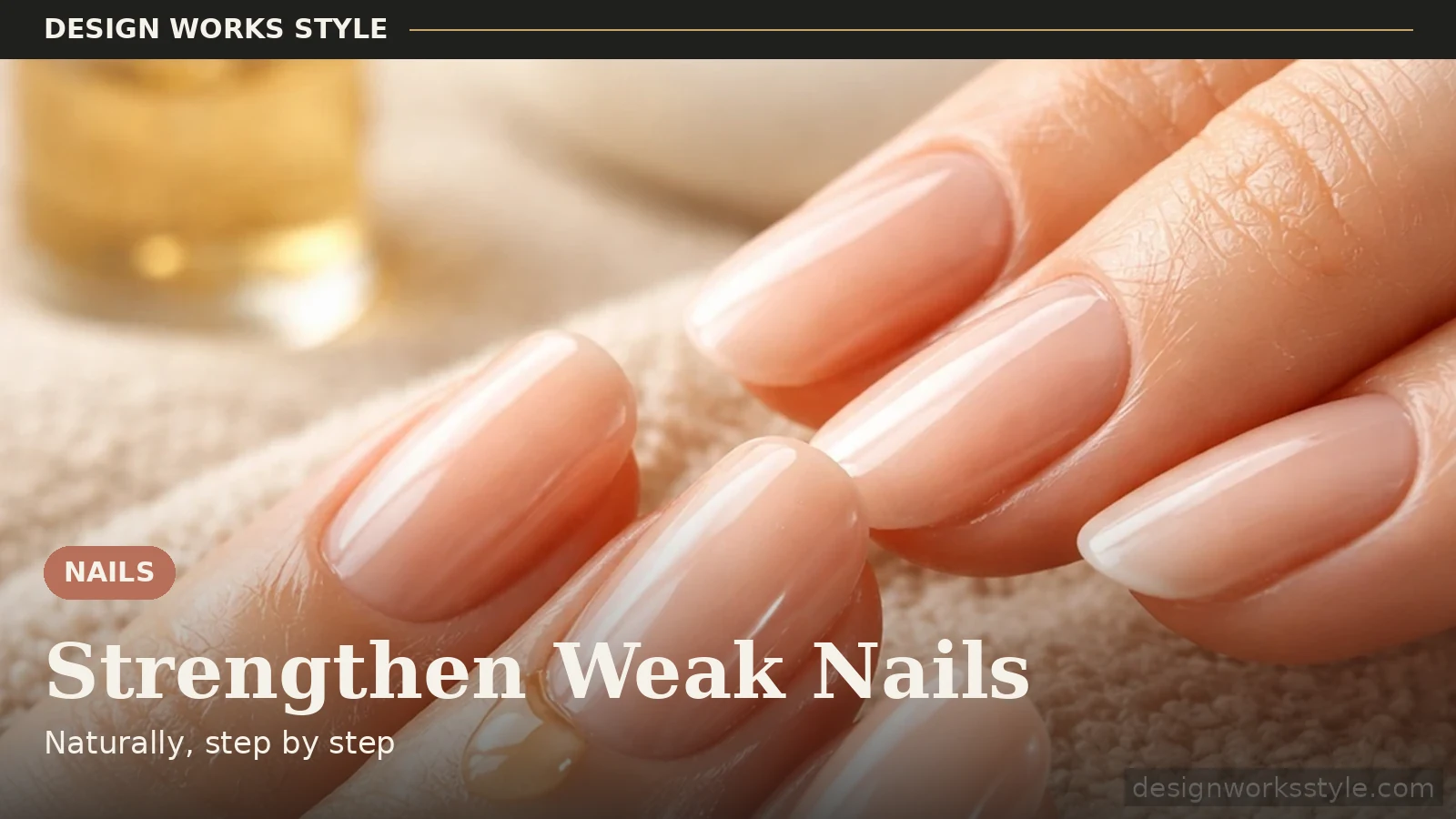
Cold, dry air is hard on bare nails too, and the winter nail care habits that protect a natural nail, like oil, gloves, and short filing, matter even more once an enhancement sits on top of it.
What About Length and Shape in Winter?
Winter favors shorter nails, whatever the product. A short square or short almond shape tucks inside a glove, does not catch on a zipper, and puts less stress on the nail bed when it knocks against something hard. Long nails are not impossible in winter, but they ask for more care: gloves go on slowly, and the fill schedule tightens, since a long tip with grown-out balance is the one that snaps.
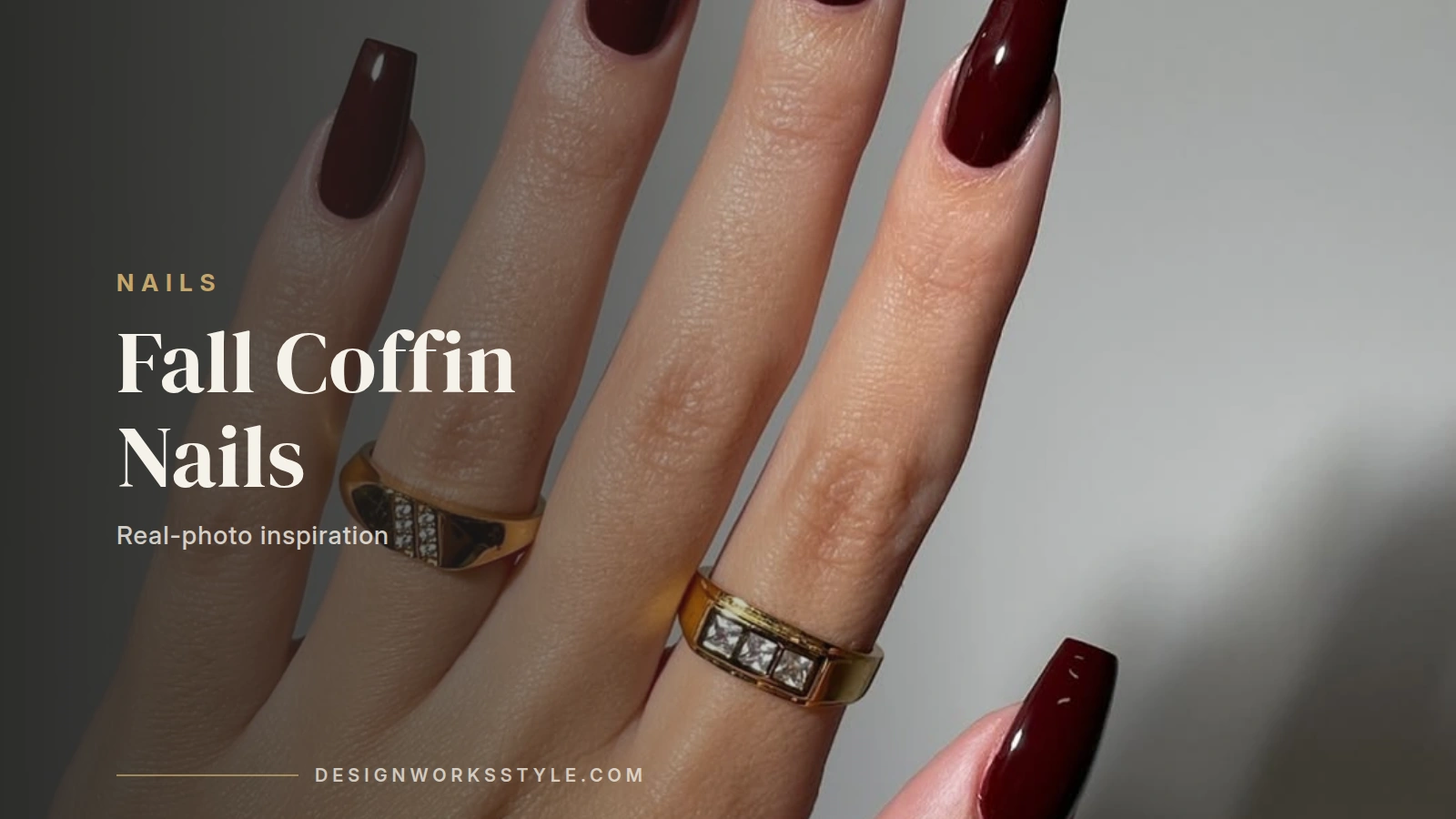
Acrylic holds long shapes better than gel does. A long coffin or stiletto shape needs a rigid structure to keep its point, and acrylic gives that. Builder gel can hold a medium length, but very long gel extensions need a firm builder and a tech who knows the product well. Gel polish on its own adds no length at all, so it is a choice for people who are happy with the length they already grow. Long coffin and stiletto shapes hold their point in acrylic, and nail shapes for your hand matter as much as the product you pick.
Shape also decides how the wear shows. A square tip shows a chip at the corner first, while a rounded or almond tip hides small wear longer, since there is no sharp corner to catch. If you are unsure, a short almond in either product is the safest winter shape: it looks neat, it fits in a glove, and it forgives a knock.
How Much Does Each Cost in Winter?
A gel manicure on your own nails usually costs 35 to 60 dollars, and a full acrylic set usually costs 45 to 80 dollars. Builder gel with a little length added runs 55 to 90 dollars. Fills every two to three weeks cost 30 to 50 dollars for acrylic and a similar amount for builder gel. Prices change a lot by city and by salon.
Over a full winter, the totals come out close. Acrylic costs more at the first visit, then less per visit, since a fill keeps the same set going for six to eight weeks. Gel polish costs less per visit but needs a fresh set every two to three weeks, so the visits add up. Nail art adds 10 to 25 dollars on either one, and more for hand-painted designs or charms. Removal runs 10 to 20 dollars on its own at many salons, and is often free when you rebook a fresh set.
The cost that people forget is the repair. A cracked acrylic tip can often be fixed at a fill, while a broken gel extension usually has to come off and be rebuilt. Ask the salon for the fill price and the removal price before the first set, not after, so the winter total holds no surprises.
Which Is Easier on Your Natural Nails?
Neither product damages a healthy nail on its own. The damage comes from prep and removal. Acrylic needs more buffing before application so the product can grip, and that filing thins the nail plate a little each time. Gel needs less buffing to stick, and it flexes with the nail, so it puts less stress on the nail bed day to day.
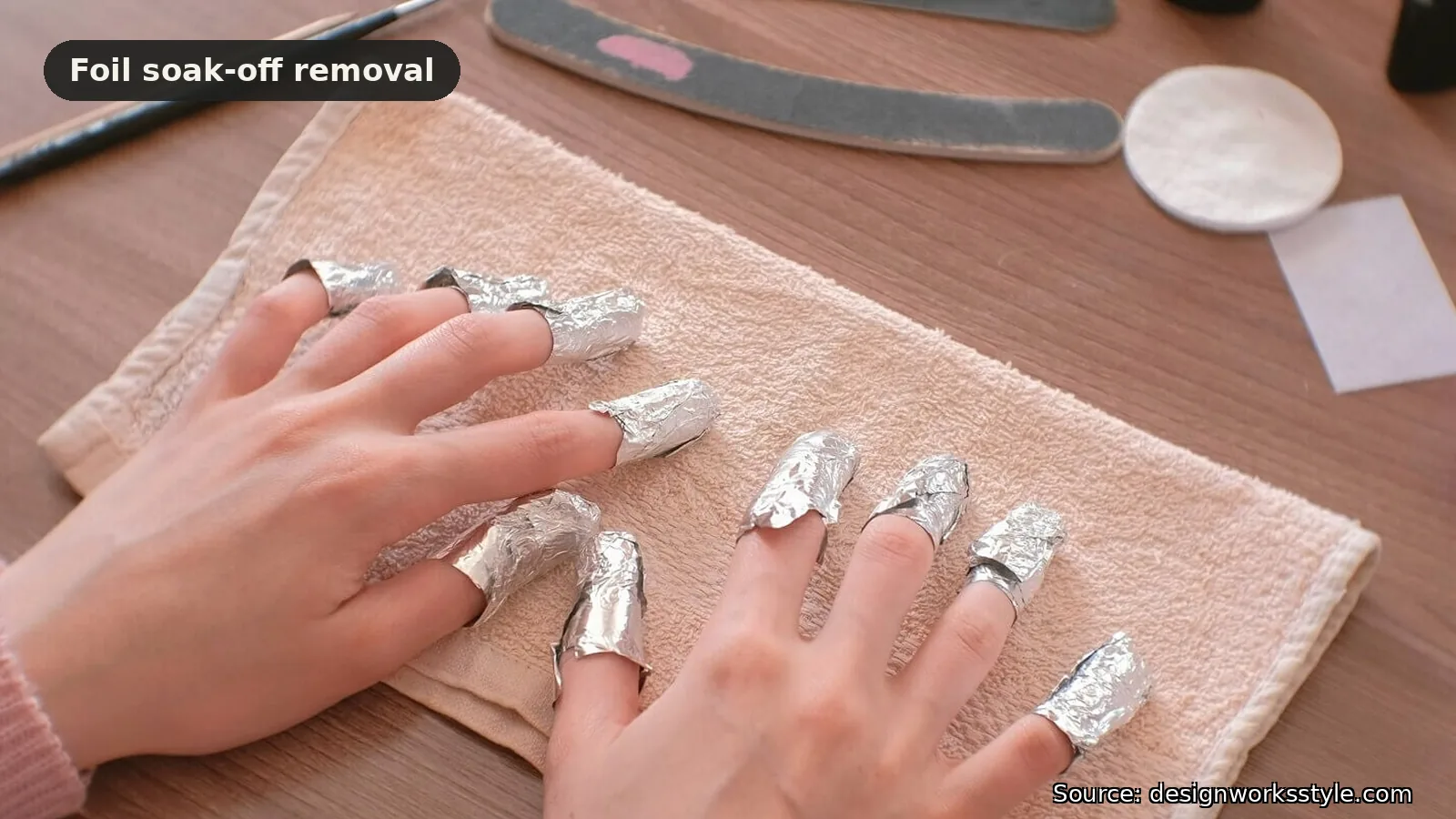
Removal is where the two part ways most clearly. Gel soaks off in acetone in about 10 to 15 minutes after the top coat is broken with a file. Acrylic has to be filed down first, then soaked for 20 to 30 minutes. Both use acetone, which dries the nail and the skin, so oil after removal matters for both. If you take gel off at home, follow the same foil-wrap soak used to remove gel nails safely, and never peel a set off, since peeling pulls layers of the natural nail plate away with it.
How Do You Make Either One Last Through Winter?
Five habits carry most of the wear, and they work for gel and acrylic alike. First, cuticle oil every night, rubbed into the nail and the skin around it. Second, rubber gloves for dishes and cleaning, since hot water and detergents loosen the bond at the free edge. Third, a fill before lifting starts, not after, since a lifted edge lets water in and the lift spreads. Fourth, file a snag smooth the day it happens instead of picking at it. Fifth, keep the length short enough for your gloves, and put gloves on slowly.
Daily care is simple, and the nail care basics of keeping nails dry, filed smooth, and oiled do more for wear time than any top coat. Hand cream helps the skin, but it is not a substitute for cuticle oil, since cream sits on the skin while oil soaks into the nail plate and the cuticle.
Which Should You Pick?
Pick acrylic if you want the longest wear, the most length, or a long coffin or stiletto shape, and you are willing to sit through a longer removal and a stronger smell at the salon. Acrylic suits hands that take hard daily use, since the rigid set resists chips and holds its shape between fills. Keep it short in winter and the wear time stretches to its best.
Pick gel if you want a light, natural feel, a glossy finish on your own nails, and the gentlest removal. Gel suits short to medium nails and thin or peeling natural nails. Builder gel is the middle choice: more strength than gel polish, more flex than acrylic, and a good fit for medium length in winter.
Frequently Asked Questions
Do gel or acrylic nails last longer in cold weather?
Acrylic nails last longer in cold weather for most people, holding three to four weeks against two to three weeks for gel polish. The gap narrows on short nails, where gel bends with the nail and resists cracking. Very long acrylic nails can crack in the cold, so length matters too.
Does winter make acrylic nails crack?
Yes, cold, dry air can make acrylic more brittle, and a long tip that catches on a glove or a zipper is more likely to crack than in warm weather. Short acrylic nails rarely crack, since the tip does not act as a lever. Keeping the length down and getting fills on time are the best guards against a winter crack.
Can you wear gel nails with gloves all winter?
Yes, gel nails work well with gloves, and short gel nails are one of the easiest winter choices. The gel flexes with the nail, so it does not crack when a glove pulls across it. Get a fill as soon as lifting starts, and put gloves on slowly.
Which is cheaper over a whole winter, gel or acrylic?
The totals come out close over a full winter. Acrylic costs more for the first set, usually 45 to 80 dollars, then less per fill. Gel polish costs less per visit, usually 35 to 60 dollars, but needs a fresh set every two to three weeks.
Image sources: Photos here come from real photographers and stock photo libraries. For the full list of image sources, visit our sources page.