
Winter Nail Care: Protecting Nails in Cold Weather
Cold air and indoor heat dry out nails fast. Nails get brittle, peel at the edges, and snap more easily in winter. Winter nail care comes down to three habits: keep moisture in with oil and hand cream, file gently, and protect your hands from cold wind and hot water. The routine takes about five minutes a day.
Why Do Nails Break More in Winter?
Nails break more in winter because cold air holds less moisture, and heated rooms pull more water out of the nail plate. A dry nail plate loses flexibility, so it bends less and cracks more. Hands go through more hot water in winter, and each soak and dry cycle swells the nail and shrinks it again, which weakens the layers.
A nail is made of thin layers of keratin pressed together. When those layers stay moist, they bend a little under pressure and spring back. When they dry out, they turn stiff, and a stiff nail snaps or peels instead of bending. That is why nails that held up in summer start breaking in January.
The water cycle makes it worse. Every wash swells the nail plate as it absorbs water, and drying shrinks it back down. In summer, damp air means the nail never dries out fully between washes. In winter, heated indoor air dries it fast, so the swing is bigger each time. Over weeks, those swings loosen the layers at the free edge, and peeling starts.
Cold wind adds another hit. Bare hands in freezing air lose moisture from the skin and the nails within minutes. Gloves fix most of that, but many people skip them for short trips outside, and those short trips add up. Nails need different care as the seasons change, and seasonal nail care means matching the routine to the weather instead of using the same steps all year.
How Should You Moisturize Nails and Cuticles in Winter?
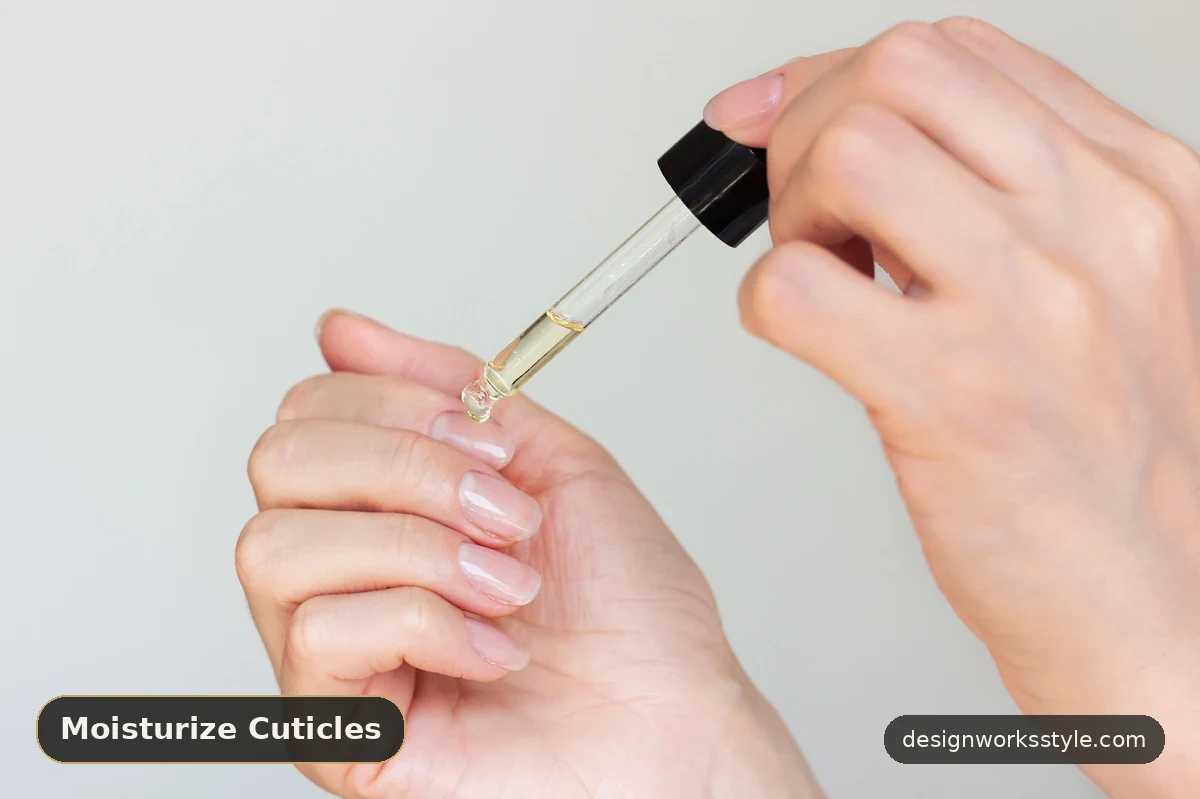
Moisturize nails and cuticles twice a day in winter, once in the morning and once before bed, using cuticle oil on the nail and the skin around it, then hand cream over the top. Oil soaks into the nail plate and the cuticle, while cream seals the surface. One without the other does half the job.
Cuticle oil is the part most people skip, and it is the part that matters most. The cuticle is the thin strip of skin that seals the base of the nail, and when it dries out it cracks and lets moisture escape. A drop of oil on each nail, rubbed in for a few seconds, keeps that seal soft. Jojoba oil, sweet almond oil, and vitamin E oil all work well. Cuticle oil keeps the skin around the nail soft, and soft cuticles seal in moisture instead of letting it escape.
Apply it after washing your hands, not before. Wet skin absorbs oil better than dry skin, and the oil traps that water in. Put one small drop on each nail, rub it in, and let it sink in for a minute. At night, add hand cream after the oil and wear thin cotton gloves to bed.
Hand cream matters too, but it cannot replace oil. Cream sits mostly on the surface of the skin, while oil sinks into the nail plate itself. Use both, oil first and cream second. Keep a small bottle of oil and a tube of cream where you will actually reach for them: one set by the bathroom sink, one by the bed, and one in your bag. A basic nail care routine that covers cleaning, filing, and moisturizing gives winter care something solid to build on.
What Should a Winter Nail Care Routine Look Like?
A winter nail care routine has five steps: wash hands with lukewarm water and mild soap, pat dry, file the free edge smooth, rub cuticle oil into each nail, and finish with hand cream. Do the full routine once a day, usually at night, and repeat just the oil and cream in the morning.
Start with the water. Lukewarm water cleans hands without stripping as much natural oil as hot water does. Pat your hands dry instead of rubbing them, because rubbing frays the free edge of the nail. If your hands feel tight after washing, the water was too hot or the soap too harsh. Switch to a mild, fragrance-free soap and turn the tap down.
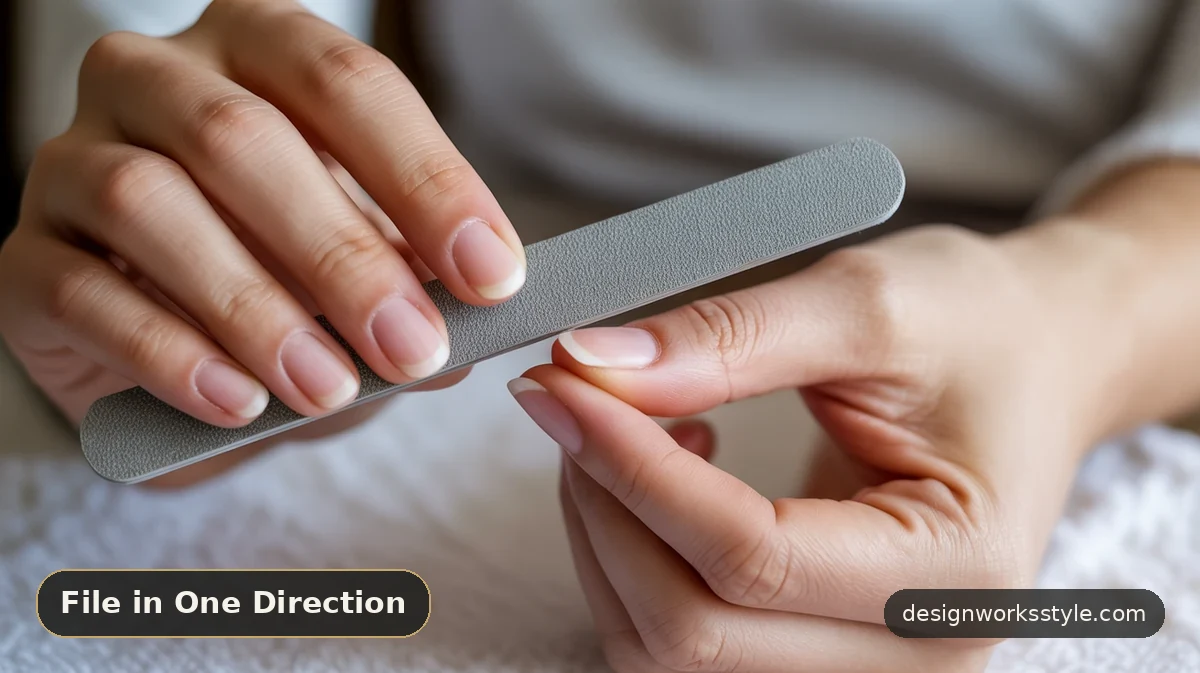
Filing comes next, and direction matters. File in one direction, from the outer edge toward the center, using a fine-grit file. Sawing back and forth frays the layers of the nail plate and starts peeling at the corners. Keep nails a practical length in winter, short enough that they do not catch on gloves and scarves. A rounded or soft square shape holds up better than sharp corners.
Do not cut your cuticles. Cuticles seal the nail bed against water and germs, and cutting them opens a gap that dries the nail out faster. Push them back gently after a shower, when they are soft, and leave them alone otherwise. Trim hangnails with clean nippers instead of tearing them, because tearing pulls a strip of skin and leaves a sore spot.
If you are starting from scratch, a nail care routine for beginners covers the order of steps so nothing gets skipped. The winter version is the same routine with more oil and cream, plus gloves whenever you go outside or wash dishes.
Should You Change Your Polish Routine in Winter?
Yes, winter is a good time to give nails a break from gel and acrylics, or leave two or three bare days between sets. Gel removal and acrylic fills stress the nail plate, and dry winter nails show that stress faster as peeling and white spots. Regular polish with a base coat is gentler and protects the nail from water.
A base coat does real work in winter. It seals the nail plate, so water cannot soak in as easily during washing, and it gives the color something to grip. Without a base coat, dark polish can stain a dry nail, and the color chips sooner. Use a base coat every time you paint your nails, even under a sheer shade, and reapply top coat every two or three days to keep the color sealed.
Gel polish is the tricky one in winter. The polish itself is fine, but removal is harsh: soaking in acetone dries the nail plate out, and peeling gel off by hand strips layers with it. If you wear gel through the winter, never peel it off. Soak it off properly, then give your nails a few bare days with oil twice a day before the next set. Removing gel nails safely at home takes acetone wraps and patience.
Acrylics need the same thinking. Fills every two to three weeks are normal, but long acrylics catch on winter gloves and scarves, and a catch can lift the acrylic and tear the natural nail underneath. Shorter acrylics hold up better in cold months. A gel manicure lasts longer than regular polish, but removal is harsher, so winter is when that trade-off matters most.
When you do paint your nails, choose an acetone-free remover for regular polish. It works a little slower, but it does not strip the nail plate the same way.
How Do You Protect Nails Outdoors in Cold Weather?
Wear gloves every time you go outside in cold weather, and wear rubber gloves for washing dishes and cleaning. Gloves stop the wind from drying the nail plate, and rubber gloves stop hot water and detergents from stripping natural oils. It is the simplest step in winter nail care, and it is also the one people skip most.
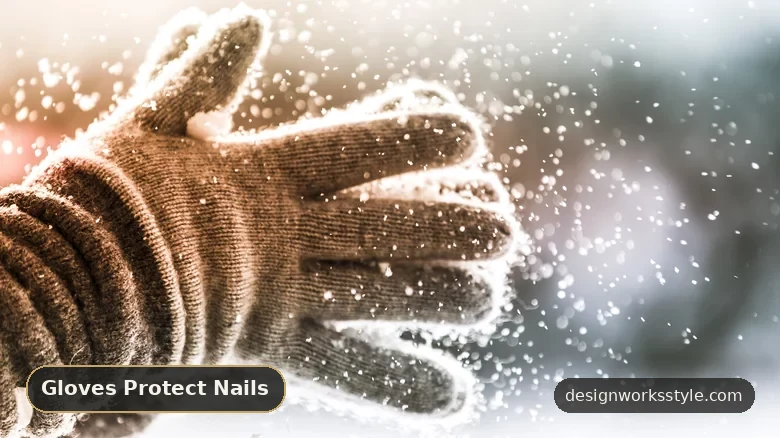
Leather gloves block wind better than knit gloves, but any gloves beat bare hands. Keep a pair by the door so you reach for them without thinking, and keep a spare pair in your coat pocket. If your hands sweat inside the gloves, that is still better than wind drying them out.
Dishwashing is the indoor version of the same problem. Hot water and dish soap strip oils from the skin and the nails in minutes. Rubber gloves fix it completely. The same goes for cleaning products, which are harsher than dish soap. If you clean without gloves, your nails pay for it within a day or two, usually as peeling at the tips.
What Should You Do About Peeling and Splitting?
Trim a peeling nail back to where the layers hold together, file the edge smooth in one direction, and keep oil on it twice a day until it grows out. Do not peel the layer further, because that strips more layers off and makes the nail thinner. A split that reaches the skin needs a bandage and time, not polish.
Peeling usually starts at the free edge, where the layers are thinnest and take the most hits. When you see a layer lifting, cut the nail just past the peeling spot with clean clippers, then file the edge smooth. A rough edge catches on fabric and peels further, so smoothing it matters as much as trimming it. Keep the nail short while it grows out.
Splitting down the middle is different from peeling at the edge. A vertical split often starts at a small nick or a weak spot in the nail plate. File the split smooth, keep the nail short, and seal it with a clear base coat or a small piece of a tea bag glued over the split and painted over. That patch holds the nail together while it grows out.
If several nails peel at once, look at the routine before you buy a new product. Thin nails that peel at the corners need a gentler approach, and ways to strengthen weak nails naturally start with gentler filing and regular oil, not with a hardener. Nail hardeners can help a soft nail, but on a dry winter nail they can make it more brittle, so oil and shorter length come first.
A nail that stays painful, swollen, or discolored for more than a few days is worth showing to a doctor. Most winter nail problems are dryness, though, and dryness responds to oil, cream, gloves, and time.
Frequently Asked Questions
Do nails really grow slower in winter?
Nails often grow a little slower in cold weather, and the change is small enough that most people only notice it when a break takes longer to grow out. Cold hands get less blood flow than warm hands, and nails grow from the matrix under the cuticle, so anything that slows circulation slows growth a little.
How often should I use cuticle oil in winter?
Twice a day is the baseline in winter: once in the morning and once before bed. Add an extra drop after washing your hands if they feel tight or dry. One drop per nail is enough. More oil does not help more, it just sits on the skin and rubs off on whatever you touch next.
Can I still get gel nails in winter?
Yes, you can keep wearing gel through the winter. The polish itself does not harm the nail. What harms the nail is peeling the gel off and soaking in acetone too often. Leave two or three bare days between sets, soak the gel off instead of peeling it, and use cuticle oil twice a day while your nails are bare. If your nails start peeling, take a longer break.
Why do my nails peel at the corners in winter?
The corners take the most stress. They catch on gloves, scarves, and pockets, and they are the thinnest part of the free edge. Dry winter air makes the nail plate stiff, so the corners crack instead of bending. Filing in one direction, keeping nails a practical length, and rounding the corners slightly all cut down on corner peeling.