

The Best Winter Coats for Every Budget
The best winter coat for most women is a knee-length wool coat in the $100 to $300 range: warm enough for real cold, neat enough for work, and built to last several winters. A good puffer costs less and handles snow better, while a parka covers the coldest days. The right pick depends on your climate and your commute.
What Kind of Winter Coat Do You Actually Need?
Start with your coldest regular day, not the coldest day of the year. A wool coat covers most winter days down to freezing, a puffer or parka covers snow and wind, and a trench with a warm layer underneath covers mild winters where the temperature rarely drops below freezing.
Four types cover nearly every winter. A wool coat is the neat one, for work, evenings, and any day you want to look put together. A puffer is the warm one: light, easy to wash, and the best choice for snow, school runs, and long walks. A parka is the cold one: longer, hooded, and built for wind and deep cold. A trench with a warm layer underneath suits mild winters and wet days.
Your commute decides more than the forecast does. If you drive most days, a wool coat is enough. If you walk or wait outside, a puffer or a parka earns its place, which is why many women end up with two: a wool coat and a puffer. A knee-length wool coat is one of the three outer layers in a winter capsule wardrobe of 15 pieces, and that list shows how one coat can serve work, weekends, and evenings.
The Best Winter Coats Under $100
Under $100, a synthetic puffer is the best buy: it is warm, light, and easy to wash, and the price leaves room for a second coat later. Faux-wool coats look smart but trap less heat, so save them for mild days.

A good budget puffer has a few things to check before you buy it. The shell should feel smooth and a little stiff, not papery, and water should bead on it instead of soaking straight in. The fill should feel even when you squeeze the baffles, with no flat spots or clumps.
Secondhand shops are the other good source under $100. Wool coats turn up there often. Check the lining for tears, the buttons for loose threads, and the hem for wear. A coat that needs one button sewn back on is a bargain; one with a torn lining is a repair bill.
End-of-season sales work the same way: a puffer bought in February costs far less than the same one bought in November. Buy your size, not a size up because it is cheap. A coat that swallows you will sit in the closet.
The Best Winter Coats Between $100 and $300
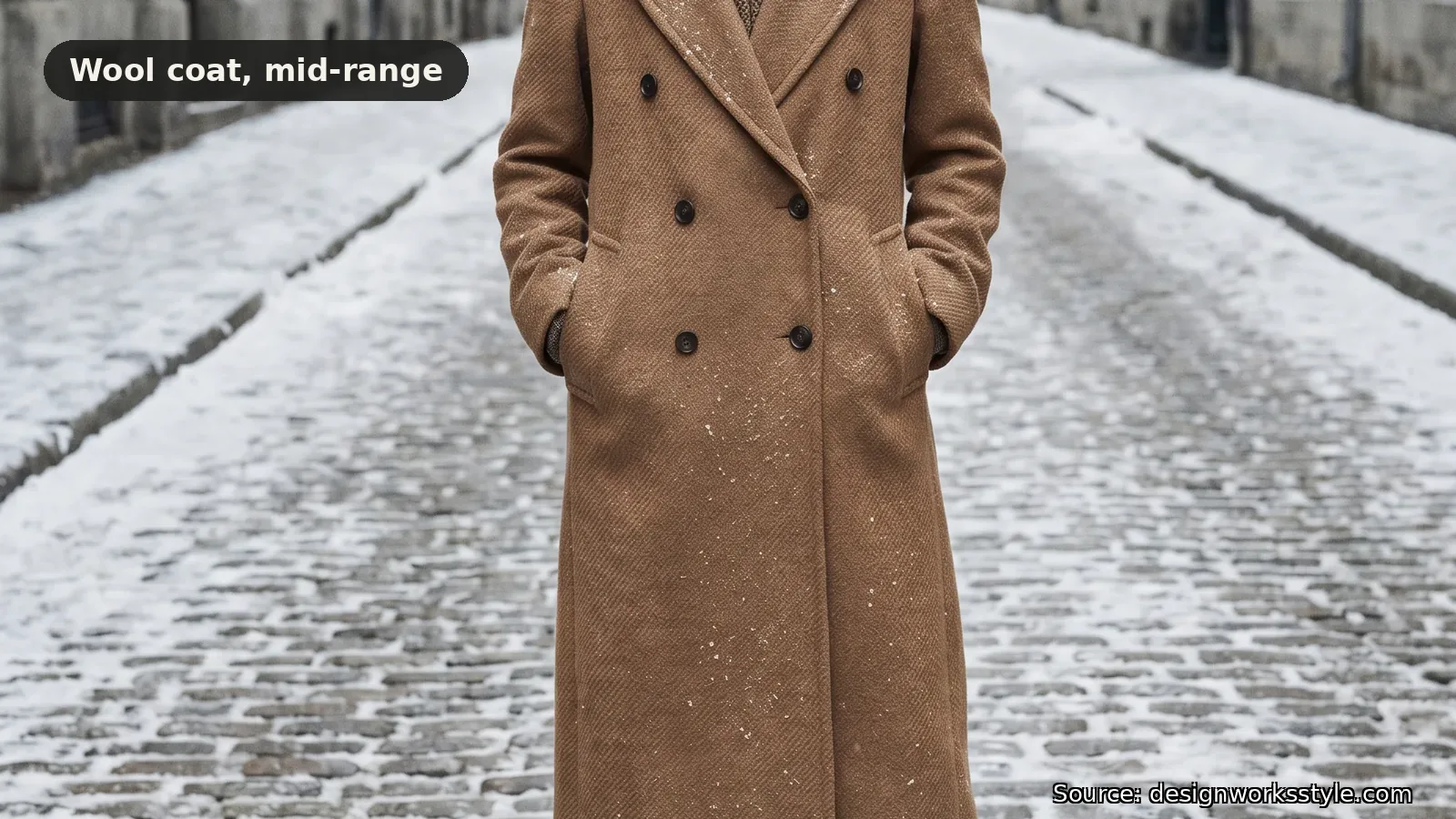
This is the range where a wool coat earns its price: blended wool with a lined body, a clean cut, and hardware that lasts. It is also where puffers get better fill and longer cuts, so this range suits a single coat that has to do everything.
Wool content is the first thing to read on the label. A coat labeled 60 to 80 percent wool holds heat well and keeps its shape. Below 50 percent wool, the coat looks like wool but does not warm like it. Pure wool costs more and pills faster, so a blend is often the better buy for daily wear.
Check the inside as carefully as the outside. A lined body and sleeve, a stitched hem, and buttons sewn through the lining all point to a coat that will last.
Parkas in this range get longer cuts, better hoods, and real down or a good synthetic fill instead of thin padding. A knee-length parka with an insulated hood covers the coldest commute days and pairs with jeans and boots on weekends. The same spend-first rule runs through a work wardrobe on a budget: put the money into the pieces you wear daily, like the coat and the boots, and save on the pieces you wear weekly.
The Best Winter Coats Over $300
Over $300, you pay for better materials and better construction: high wool content, real down, taped seams, and a cut that holds its shape for years. The coat costs more up front and less per wear if you keep it for five winters or more.
A down parka in this range uses higher fill power, the number on the label that rates how much space an ounce of down fills. More trapped air means more warmth for less weight, so a high-fill parka feels light and still blocks deep cold.
Pure wool coats in this range use denser cloth, a full lining, and hand-finished seams. The cloth resists wind better and the shape stays true after seasons of wear. Cashmere blends feel softer but pill and need more care, so they suit the office more than a rainy dog walk. The price is not always worth it: a trendy cut at a high price dates fast, and a logo on the sleeve adds nothing to warmth.
What Is Worth Paying More For?
Pay more for the parts that decide warmth and wear: fill, fabric, lining, and construction. Spend less on the label, the trend details, and the color of the season.
Fill decides warmth. Down warms best for its weight, and higher fill power warms more with less bulk. Synthetic fill warms well when wet, dries faster, and costs less. Thin, flat padding is the sign of a coat that will feel cold by January, whatever the price tag says.
Fabric decides how the coat handles weather. Wool blocks wind and stays warm when damp, and a water-resistant shell keeps a puffer dry in wet snow. A lining decides how the coat feels: a quilted body lining adds warmth and a smooth sleeve lining slides over a sweater.
Construction decides how long the coat lasts. Taped seams keep wind out, a storm placket over the zip stops drafts, and horn or metal buttons outlast plastic ones. None of these show in a photo, so a coat bought online deserves a close look at the label and the lining when it arrives.
How Should a Winter Coat Fit?
A winter coat should close over a sweater and a blazer without pulling, with sleeves that reach the wrist and room to lift your arms. If it only fits over a thin top, it is a size too small for winter.
Try the coat on over the thickest sweater you will wear under it. Button it up, sit down, and lift both arms. The coat should close without a gap at the buttons, the shoulders should sit on your shoulder line, and the sleeves should still reach your wrist when your arms are up. If it pulls at the chest when you sit, it is too tight. Length is a fit question as much as a style question, and dressing for your body type decides which coat lengths suit your frame.

The coat has to close over a sweater and a blazer, and the thin-to-thick order in how to layer winter outfits without looking bulky keeps the stack neat. A coat that cannot button over the blazer is a coat for mild days, not for January.
How Do You Pick a Coat Color That Works With Your Closet?
Pick the coat color from the colors already in your closet: charcoal or navy if your clothes run cool and dark, camel or black if they run warm or mixed. One coat in a neutral that matches three outfits beats two coats that each match one.
Camel lifts a dark outfit and suits warm closets. Charcoal suits almost everything and hides winter grime better than black. Navy pairs with brown boots and black boots alike, which makes it the easiest coat color to live with.
Camel, charcoal, and navy sit well together, and color matching outfits by undertone keeps a new coat from clashing with the rest of the closet. A color coat, in burgundy or forest green, works when the rest of the outfit is quiet, but it limits what the coat pairs with. Buy one coat in a neutral; buy the second one in color.
How Do You Make a Coat Last Longer?
A coat lasts longer when it is cleaned once a season, brushed after wear, and stored on a wide hanger with room to breathe. Most winter coats wear out from damp storage and over-washing, not from daily use.
Brush a wool coat after wearing it: a soft clothes brush takes off dust and lint before they work into the fibers. Dry clean a wool coat once at the end of the season, not every month: each cleaning strips a little of the natural oil from the fibers.
Store the coat dry on a wide wooden hanger, with space around it so air can move. Store a puffer uncompressed, not stuffed in a bag, so the fill keeps its loft. Wash a synthetic puffer at home on a gentle cycle, and dry it on low heat until the fill is fully dry and fluffy again.
Frequently Asked Questions
How many winter coats do you need?
One good coat covers most people: a knee-length wool coat or a warm puffer that suits work and weekends. Two make sense if you walk far in snow or need a separate coat for the office and the outdoors. More than two usually means one sits unworn.
Is a wool coat warm enough for very cold weather?
Yes, with layers underneath. A wool coat over a sweater and a thermal top handles freezing days well, and a scarf and gloves close the gaps at the neck and hands. In wind below freezing, a parka or a hooded puffer warms better than wool.
Can you wash a puffer jacket at home?
Most synthetic puffers can be washed at home on a gentle cycle with mild detergent. Dry on low heat until the fill is fully dry, since damp fill clumps and loses warmth. Down puffers need more care: use a down-safe detergent, dry on low heat, and check the label first.
When is the best time to buy a winter coat?
Late winter, when shops clear stock for spring, is the cheapest time to buy, but sizes and colors run out fast. Early fall has the full range and the full price. The best time to buy a coat you will wear for years is when you find the right cut in the right size, whatever the month.
Image sources: Photos here come from real photographers and stock photo libraries. For the full list of image sources, visit our sources page.