
Capsule Wardrobe Guide: Build a Versatile Closet with Fewer Pieces
A capsule wardrobe is a small set of clothes that all work together, so getting dressed takes minutes and every piece earns its place. Most capsules hold a few dozen pieces per season, built around neutrals with a few accent colors. This guide covers the core pieces, the palette, and how to build one step by step.
What Is a Capsule Wardrobe, Exactly?
A capsule wardrobe is a limited collection of clothes chosen to mix and match, so each top pairs with several bottoms and each outfit needs no extra shopping. The point is fewer, better pieces that fit well and suit your daily life. It is a system for getting dressed, not a fixed list of items.
Three principles drive a capsule. First, fit comes before everything: a piece that fits well beats three that almost fit. Second, every piece must pair with several others, or it does not belong. Third, the capsule reflects your actual life, not an imagined one. A wardrobe built for office days fails someone who works from home, and a wardrobe built for weekends fails someone in client meetings all week.
A capsule is not a uniform, and it is not about owning as little as possible. Some people hold 25 pieces, others hold 40, and both counts work if the pieces mix well. The test is simple: can you make a week of outfits without repeating one, and without buying anything new? If yes, the capsule works.
Which Core Pieces Belong in a Capsule?
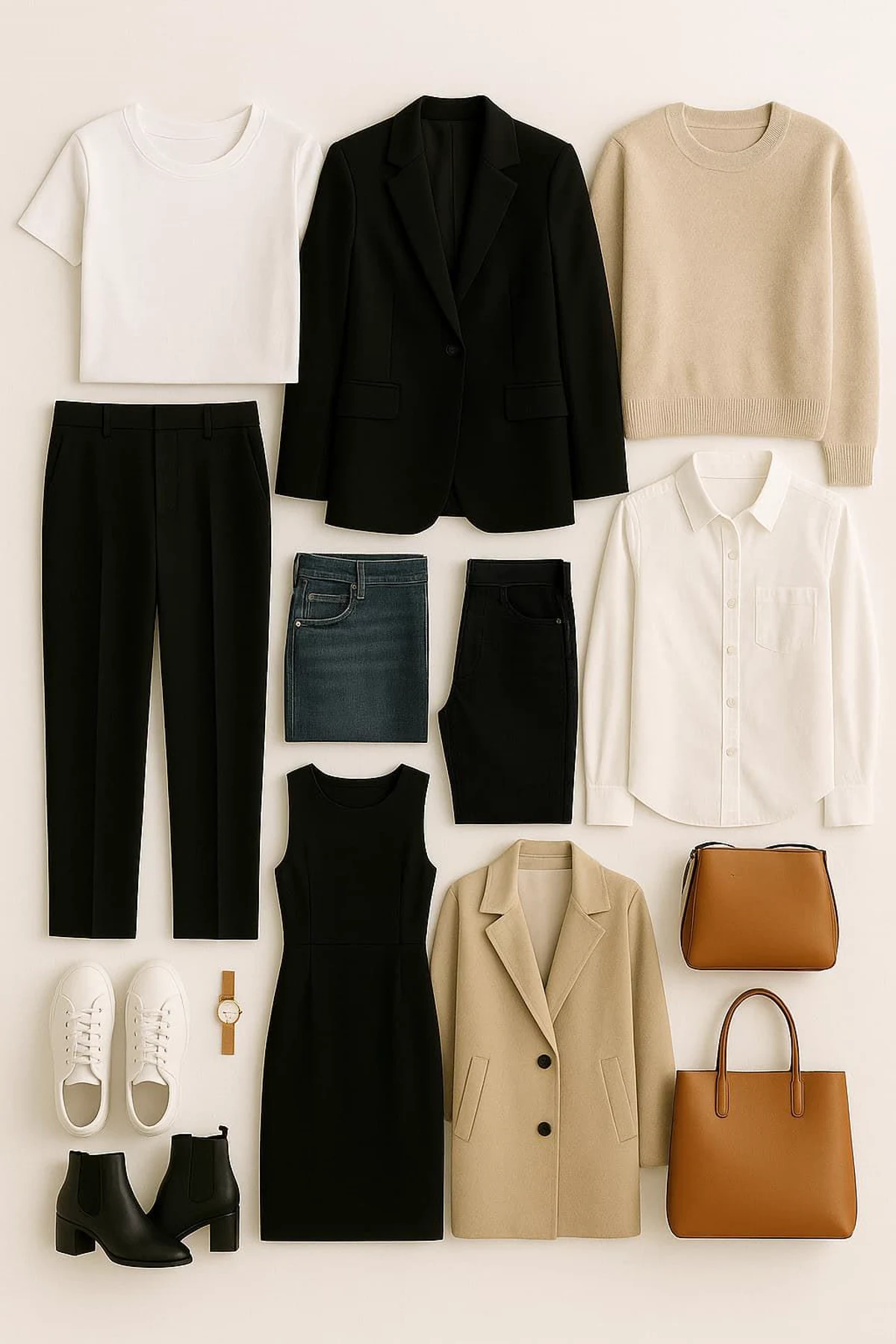
Core pieces are the items you reach for most: a few tops, two or three bottoms, one or two outer layers, and shoes that cover daily life. Start with what you already wear weekly, then fill gaps. The list below suits most wardrobes, and you adjust it to your climate and job.
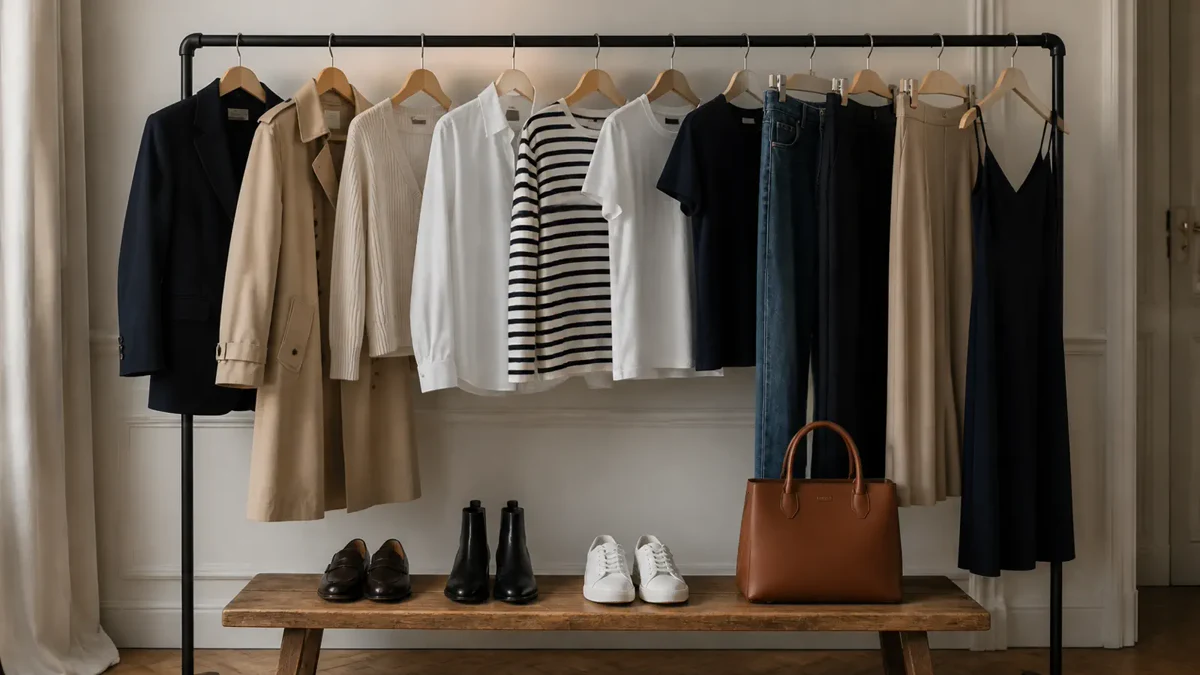
Tops form the base. A white button-up shirt, two plain tees in neutral colors, a blouse or smart shirt, and a knit sweater cover most days. Bottoms come next: dark jeans that fit well, tailored trousers in a neutral color, and a skirt or second pair of trousers if your life calls for them. Outerwear means one blazer and one coat or trench that suits your climate.
Shoes finish the core: white sneakers for casual days, loafers or ballet flats for smart days, and boots for cold or wet weather. Accessories stay light: one everyday bag, one scarf, and simple jewelry you wear daily. Each accessory should work with at least three outfits, or it earns its place only if it serves a specific event, like a formal clutch.
How Do You Pick a Color Palette That Mixes Well?
Pick two or three neutrals as the base, then add one or two accent colors you enjoy wearing. Neutrals like black, white, navy, beige, and gray pair with almost everything, which is why they anchor a capsule. Accents add variety without breaking the mix-and-match rule.
Start with neutrals you already wear. If your closet leans black and gray, build on those. If it leans beige and white, build on those instead. Forcing a palette you dislike guarantees the capsule sits unworn. Then add accents in colors that suit your skin tone and that you reach for often: burgundy, olive, dusty blue, or rust are common choices that still pair with neutrals.
Patterns need a rule too: one pattern per outfit. A striped top pairs with plain trousers, and a checked blazer pairs with a plain shirt. Two patterns in one outfit can work, but it needs care, and a capsule works best when patterns stay simple. When you shop, hold a new piece against three items you own. If it pairs with all three, it fits the palette. If it pairs with one, leave it.
How Do You Build Your Capsule Step by Step?
Build a capsule by auditing your closet first, keeping what fits and suits you, then listing the gaps before you buy anything. Shop the list, not the sale rack, and try each new piece with three items you already own. Stop when every piece pairs with at least three others.
Step one is the audit. Take everything out, try it on, and sort it into keep, donate, and repair. Keep only pieces that fit well, suit your current life, and pair with other keepers. Donate pieces that no longer fit or that you have not worn in a year. Repair pieces you love that need a button, a hem, or a stitch.
Step two is the gap list. Look at your keepers and note what is missing: no dark trousers, no smart shoes, no coat that fits. Write the list down. Step three is shopping the list slowly, one or two pieces at a time, trying each with items you own before buying the next. Step four is the one-in, one-out rule: when a new piece enters, an old one leaves, so the capsule stays the same size.
How Do You Swap Pieces Between Seasons?
Seasonal swaps keep the capsule working year-round without doubling its size. Store out-of-season pieces out of sight, and rotate in weather-appropriate layers, fabrics, and shoes. Most base pieces stay put, and only the outer layers and fabrics change with the weather.
Spring and summer call for lighter fabrics: linen, cotton, and light knits, plus sandals and white sneakers. Keep the same neutral base, and swap heavy knits for tees and blouses. Fall and winter call for wool, heavier denim, coats, and boots. The trousers, the white shirt, and the blazer often stay through all four seasons.
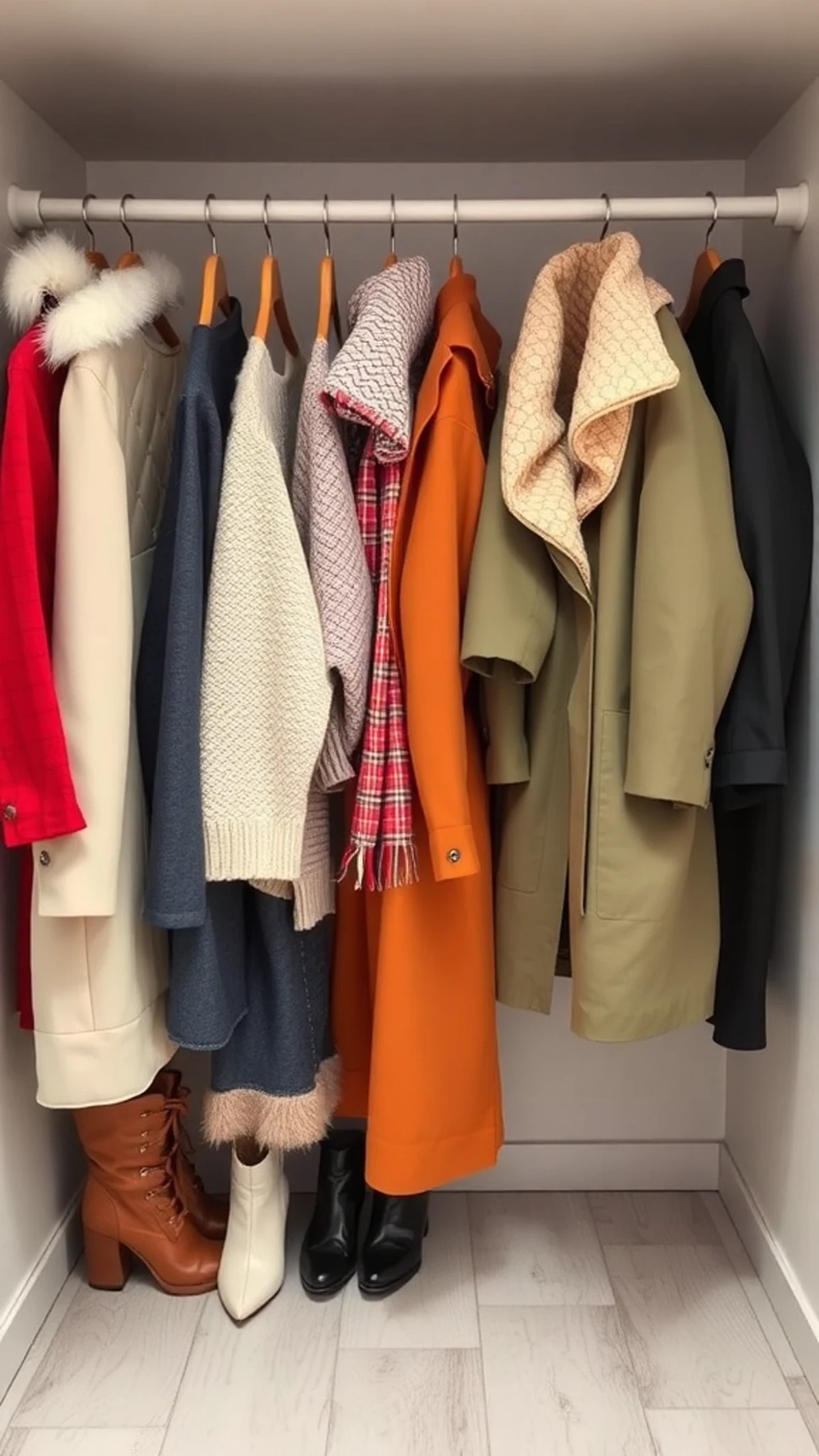
Transition pieces bridge the gaps: a trench coat, a cardigan, and ankle boots work in spring and fall alike. Store out-of-season clothes in boxes or a separate closet section, so the current capsule stays visible and easy to use. At each swap, audit again: donate pieces you skipped all season, and note gaps for the next shopping trip.
How Do You Build a Capsule on a Budget?
A capsule saves money over time because you buy fewer pieces and wear each one more, but the first build can still cost real money. Spend the most on items you wear daily, like shoes and a coat, and save on trend-led pieces. Secondhand shops and sales fill gaps without breaking the plan.
Invest in the pieces that take daily wear: a coat, shoes, and a bag. These items show wear fast when they are cheap, and a well-made version lasts years. Save on tees, basic tops, and trend-led accents, which change with fashion and cost little to replace. A good rule is to spend more per piece on items you wear weekly, and less on items you wear monthly.
Secondhand shops, thrift stores, and resale apps suit capsules well, since classic pieces like blazers, trench coats, and leather bags age well. End-of-season sales suit outerwear and boots. Avoid the trap of buying a cheap version of a gap piece just to fill the list: a coat that fits badly saves money once and costs an outfit every time you wear it.
How Does a Capsule Change for Work, Casual, and Formal Days?
One capsule can cover work, weekends, and formal events when the base pieces are neutral and the styling changes. A blazer and tailored trousers read as work, the same trousers with sneakers read as casual, and a dress with simple jewelry reads as formal. Accessories and shoes do most of the shifting.
For work, lean on the blazer, the button-up shirt, tailored trousers, and loafers. Keep colors neutral and patterns quiet. For casual days, swap the blazer for a cardigan or denim jacket, the trousers for jeans, and the loafers for white sneakers. The same tops work in both settings, which is the point of the capsule.
For formal events, one simple dress in a neutral color covers most invitations. Change the shoes to heels, add simple jewelry and a clutch, and the same dress reads as evening wear. Hair and nails finish the look: a polished hairstyle and a neat manicure lift a simple outfit without new clothes. For hairstyles that suit different occasions, see our hair styling guide, and for nail colors that pair with neutral outfits, see our simple nail designs gallery. For hair color that suits your palette, see our hair colors that make you look younger guide, and for daily nail care, our nail care basics guide.
Frequently Asked Questions
How many pieces should a capsule wardrobe have?
There is no fixed number. Most capsules hold somewhere between 25 and 40 pieces per season, not counting underwear, workout clothes, and sleepwear. The right number is the one that covers your week without repeats and without stress. Start with what you own, audit it, and let the gaps decide the count.
Do I have to buy everything new to start a capsule?
No. Most people already own half a capsule without knowing it. Audit your closet first, keep what fits and pairs well, and buy only the gaps. Shopping the gap list slowly, one or two pieces at a time, beats a single big haul, since each new piece gets tested against items you already own.
Can a capsule wardrobe work for all seasons?
Yes, with seasonal swaps. The neutral base stays put year-round, and only the outer layers, fabrics, and shoes rotate. Store out-of-season pieces out of sight, and audit at each swap. Transition pieces like a trench coat and ankle boots bridge spring and fall without extra purchases.
What if I get bored wearing the same pieces?
Change the styling, not the clothes. A new parting, a different tuck, a scarf, or a belt changes an outfit without a new purchase. Swap one accent color per season for freshness, and keep a small rotation of accessories. If boredom persists, the capsule may need pieces that suit your taste better, not more pieces.
Start with the audit this weekend, keep what fits and pairs well, and buy only the gaps. A capsule built this way takes a few weeks to settle, and then getting dressed becomes the easiest part of the day.