
Spring dressing means lighter layers, softer colors, and shoes you can walk in without socks that soak through. A trench coat over a tee, white sneakers with a midi dress, and one floral piece per outfit cover most spring days. This guide covers the palette, the pieces, the prints, and office looks that work from March through May.
What Colors Work Best in Spring?
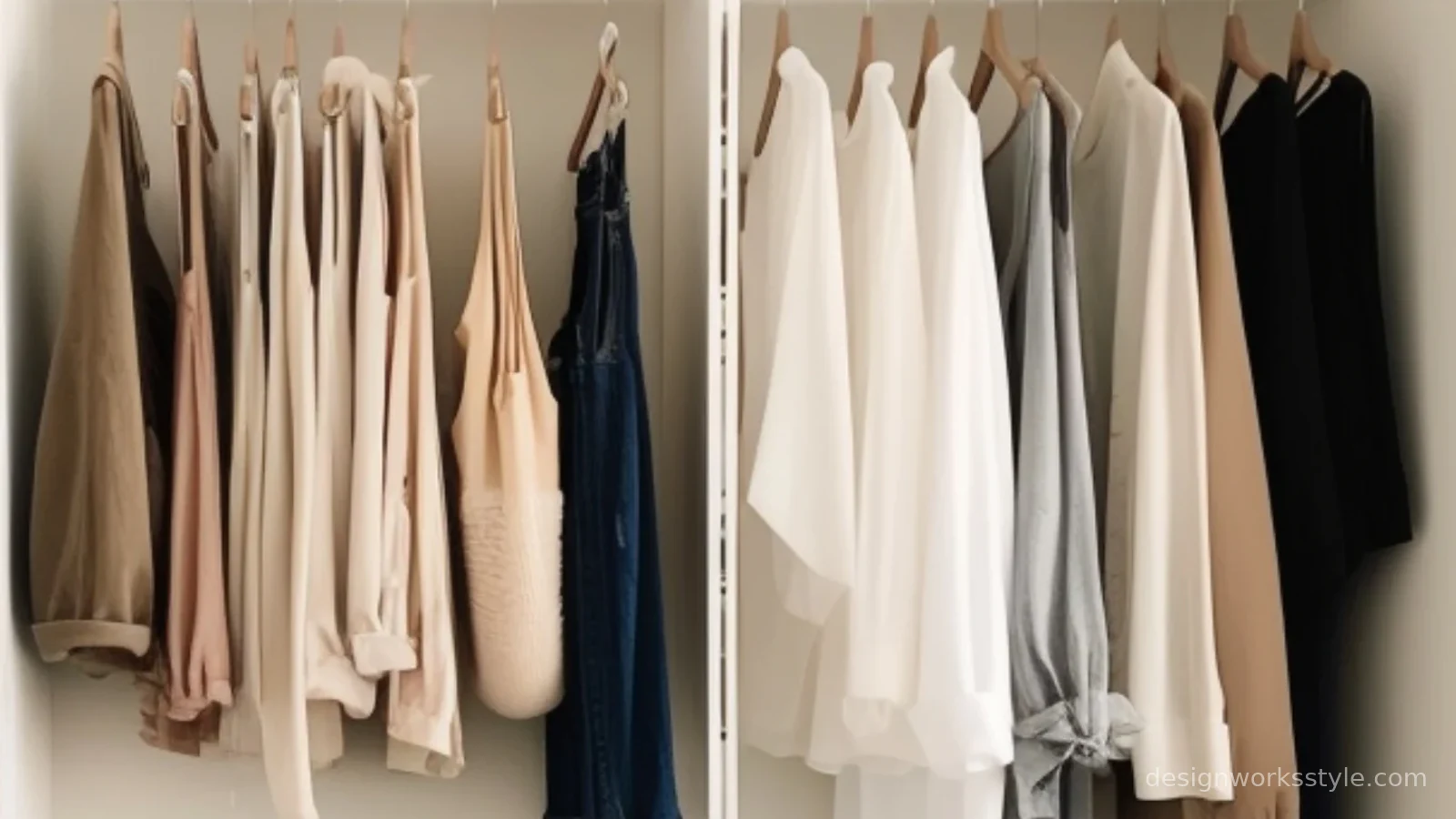
Spring colors lean light: pastels like blush, mint, sky blue, and lilac, plus white, cream, and light gray as the base. These shades suit the brighter light and pair easily with each other. Start with two light neutrals, add one pastel as the main color, and keep darker shades for shoes and bags.
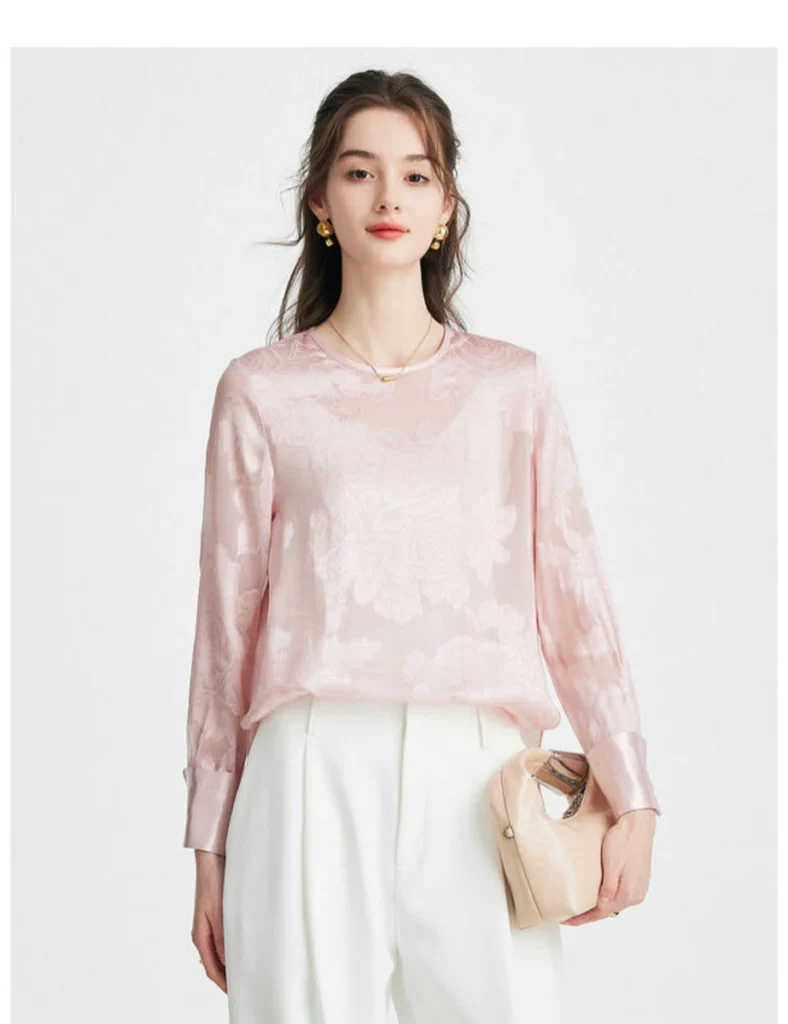
Pastels work best when they sit beside a neutral. A blush blouse with white trousers reads fresh, while blush head to toe can wash out paler skin. Mint pairs well with navy and gray, sky blue pairs with white and beige, and lilac pairs with gray and cream. If pastels feel too soft for you, add one stronger accent, like a coral scarf or a tan bag, to ground the outfit.
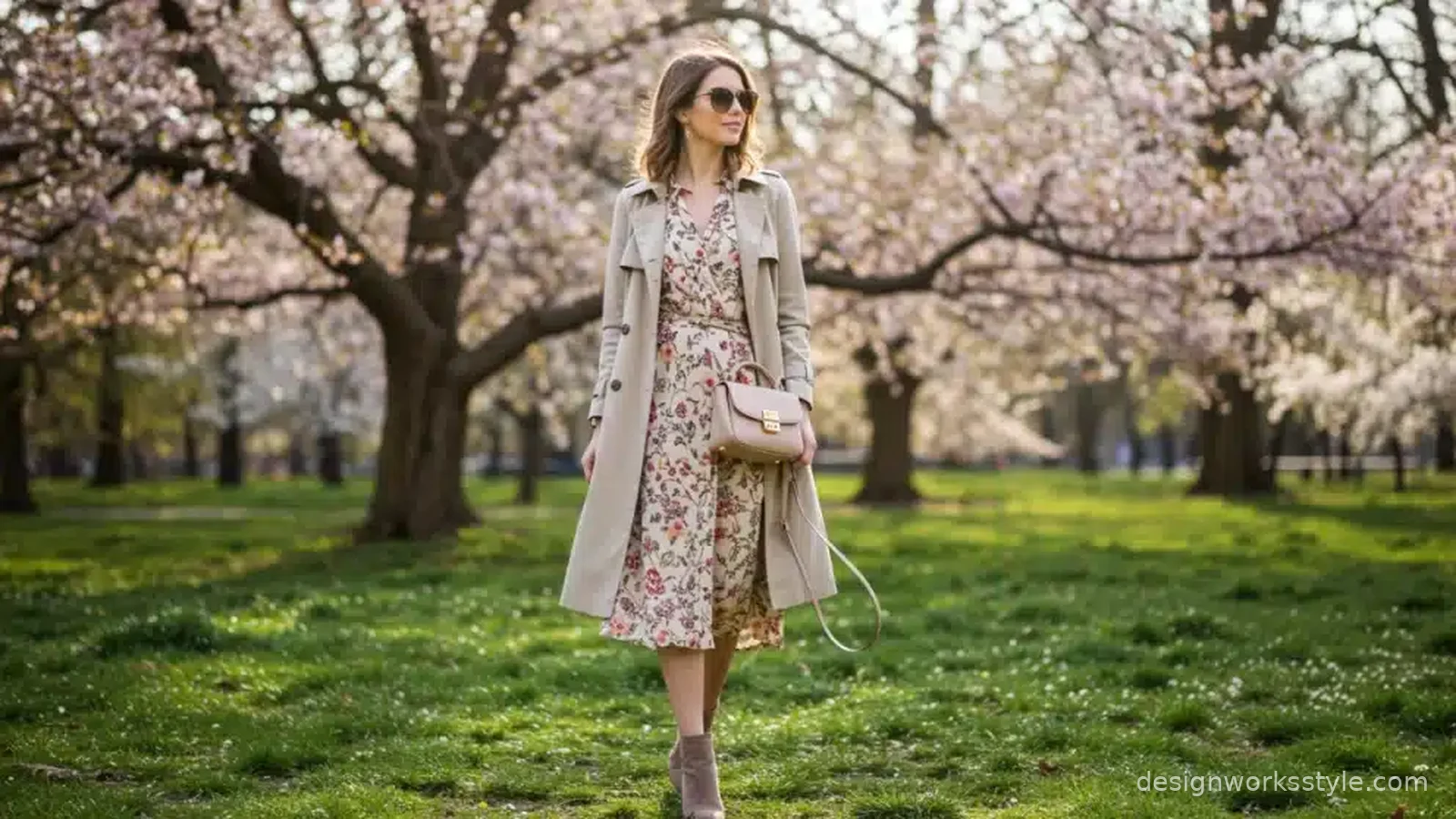
Florals bring color in a different way, since a floral print mixes several spring shades at once. A dress with a small floral print on a white or navy base works as the color piece of an outfit, with plain shoes and a plain bag beside it. For the full system behind pairing these shades, see our color matching outfits guide, which covers neutrals, accent ratios, and skin tone.
How Do You Layer in Spring Without Overheating?
Spring layering uses two light layers instead of three heavy ones: a tee or blouse under a light jacket or cardigan, with a scarf you can remove by midday. Mornings stay cool well into April in most places, while afternoons warm up fast. Layers you can carry, not layers you have to wear all day, are the point.
The base layer should be thin: a cotton tee, a linen blouse, or a light knit top. The outer layer should be light too: a trench coat, a denim jacket, or an open cardigan. A trench coat is the most useful spring outer layer, since it handles rain, layers over dresses and trousers alike, and suits both casual and smart outfits. Beige is the classic choice because it pairs with pastels, white, and navy.
Transitioning from winter to spring means swapping pieces gradually, not all at once. Keep the boots for rainy weeks, then move to loafers and sneakers as the ground dries. Swap heavy knitwear for cardigans, then for bare arms under a jacket. A capsule approach keeps this transition simple, and our capsule wardrobe guide shows how a small set of pieces covers the change of season. For the heavier layers you are leaving behind, see our winter fashion guide.
Which Spring Pieces Are Worth Owning?
Five pieces carry most spring outfits: a trench coat, white sneakers, a midi dress, light-wash jeans, and a cardigan that pairs with dresses and trousers alike. Buy these first, and the rest of the closet fills in around them. Each piece works for weekends and for work when the styling shifts.
A midi dress is the hardest working spring piece. It suits work with loafers and a blazer, weekends with white sneakers, and evenings with sandals. Pick a length that ends below the knee and above the ankle, in a fabric with some weight so it does not blow up in wind. Light-wash jeans suit spring better than dark denim, since the lighter color reads as warm weather and pairs with pastels.
White sneakers deserve care in spring, since rain and mud mark them fast. A leather pair wipes clean more easily than canvas, and a quick wipe after a wet day keeps them looking fresh. The cardigan should be fine knit, not chunky: a chunky knit belongs to winter, while a fine cardigan layers over dresses without adding bulk. For fits that suit your shape, see our dress for your body type guide before you buy.
How Do You Wear Floral Prints Without Looking Costume-y?
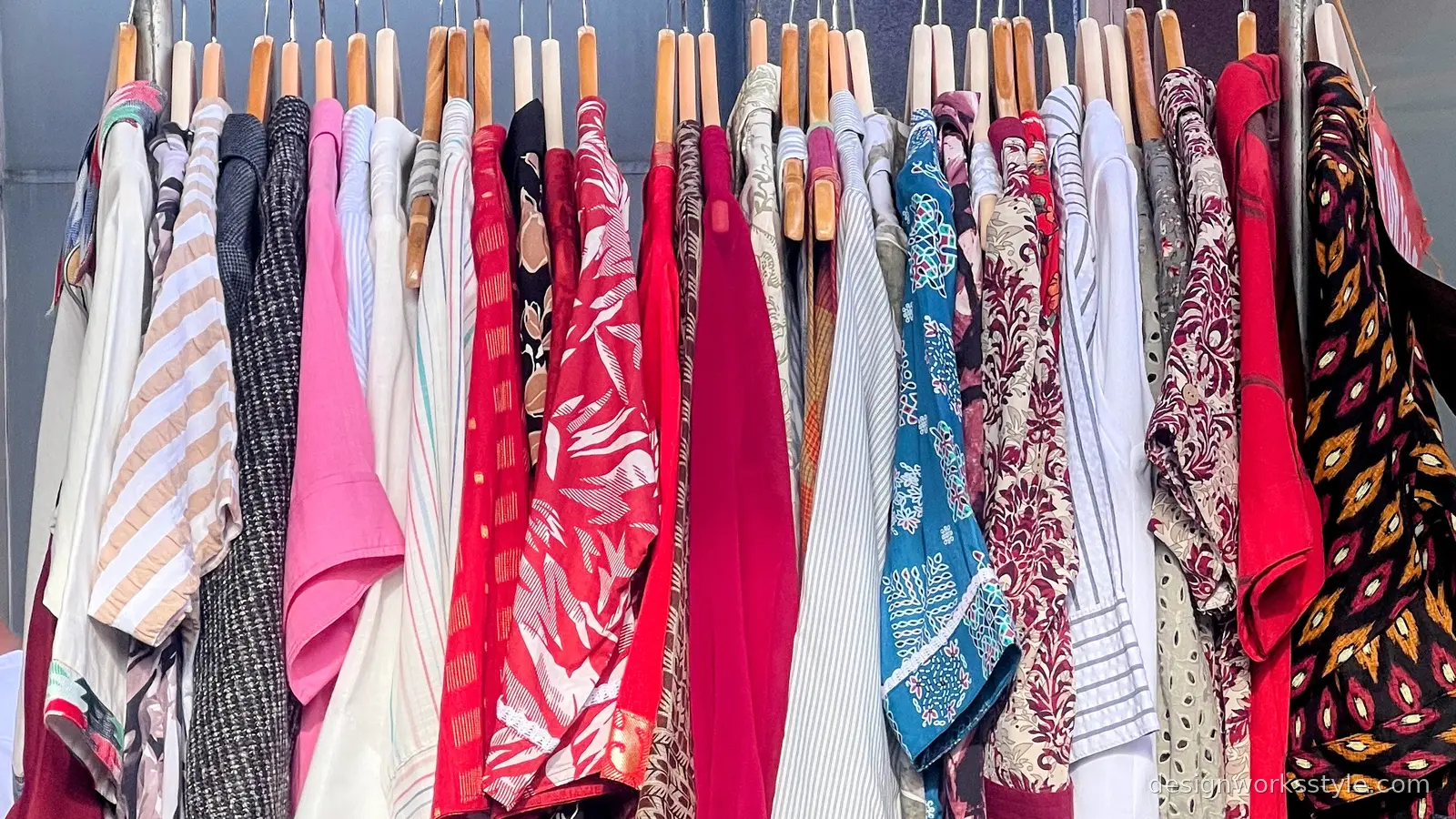
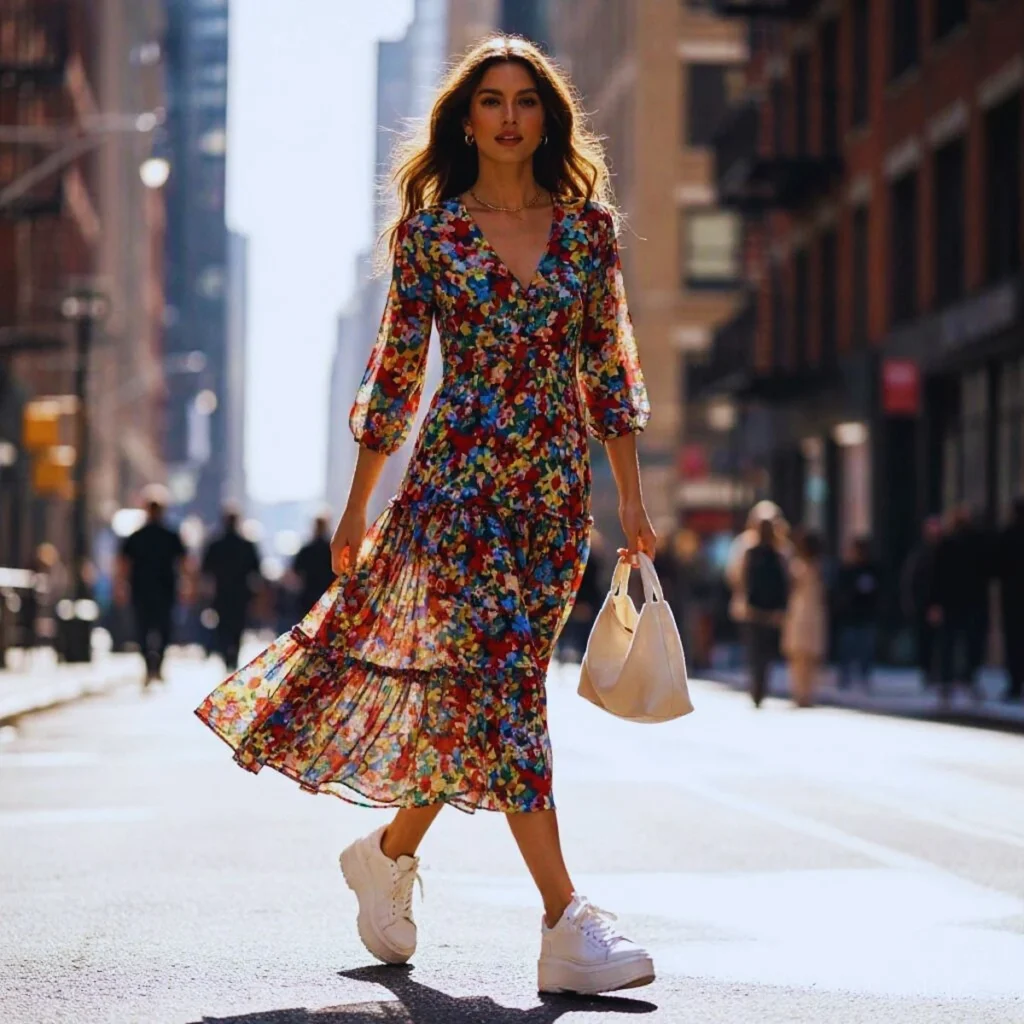
One floral piece per outfit keeps the print fresh instead of costume-like: a floral dress with plain shoes, or a floral blouse with solid trousers. Scale matters too, since small prints read as texture from a distance and large prints draw the eye. Pick the scale that suits your frame and the occasion.
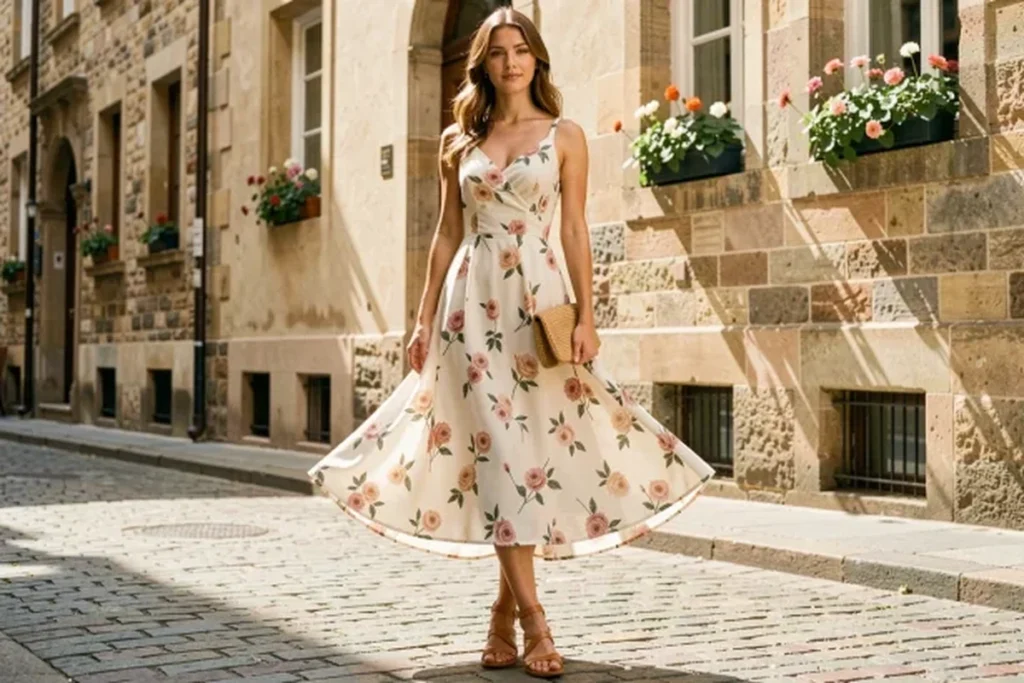
Small prints suit work and everyday wear, since they read as pattern from a distance. Large prints suit weekends and occasions, where a bold dress can carry the whole outfit. Dark floral prints on a navy or black base suit cooler spring days and evenings, while light florals on white or cream suit warm days. Mix a floral with a solid in one of the print’s own colors, and the outfit holds together without effort.
Avoid pairing two florals in one outfit unless they share a color and one print is clearly smaller than the other. Floral shoes with a floral dress compete, and the result looks busy. One floral, worn with plain pieces, always reads as a choice. Nails follow the same rule in spring: a pastel polish echoes a floral dress without competing with it, and our short nail ideas gallery shows pastel shades that suit the season.
What Shoes Suit Spring Best?
Spring shoes need to handle rain, cool mornings, and long walks: white sneakers, loafers, and low-heeled sandals cover nearly every spring day. Boots stay in the closet once the rain eases, and heavy winter shoes feel wrong beside a light dress. Pick shoes that pair with both trousers and dresses.
Loafers are the smart spring shoe. Leather loafers in black, tan, or white pair with trousers for work and with dresses for weekends. They handle rain better than suede, and they walk well on city streets. White sneakers suit casual days and long walks, and they pair with midi dresses, jeans, and skirts alike. Low-heeled sandals suit warm days, but keep a closed-toe pair for rainy weeks.
Break in new spring shoes before a long day out. Loafers pinch at the heel on the first wear, and sandals rub until the straps soften. Wear them around the house for a few evenings first. Socks matter too: no-show socks with loafers and sneakers keep feet comfortable without showing above the shoe line.
What Do Spring Office Outfits Look Like?
Spring office outfits swap heavy wool for lighter fabrics while keeping the same structure: a blazer over a blouse, tailored trousers, and loafers instead of boots. Color enters through a pastel blouse or a light scarf, while the base stays neutral. The outfit should still read as work, just in a lighter fabric.
A good spring work formula is tailored trousers in navy or gray, a blouse in white or pastel, and a blazer in a matching neutral. The blazer can come off at the desk, and the blouse carries the outfit on its own. A midi skirt with a tucked blouse and loafers works the same way, with tights on cool mornings and bare legs once the weather warms. Keep hemlines and necklines the same as in winter: spring changes the fabric, not the dress code.
For casual Fridays, swap the blazer for a cardigan and the trousers for light-wash jeans, keeping the blouse and loafers. The outfit stays polished without feeling formal. As the season warms further, the same pieces carry into summer with lighter fabrics, and our fall fashion essentials guide covers the return to layers when autumn comes back around.
Frequently Asked Questions
When should I switch from winter to spring clothes?
Switch when daytime highs stay above 60 degrees and mornings no longer need a heavy coat, which in most places means late March or April. Start with light layers, a trench coat over a sweater and boots, then drop the sweater and swap boots for loafers as the weeks warm. Watch the morning temperature, not the calendar, since a cold snap in April still calls for a coat.
Can I wear white jeans in spring?
Yes. White jeans suit spring well, especially with pastel tops and tan shoes. Pick a pair with some stretch so they keep their shape through the day, and a weight that is not see-through. White jeans stain easily, so keep them for dry days and carry a stain pen if you eat out. They pair with nearly every spring color, from blush to navy.
Are floral prints only for spring?
No, but spring is when they look most natural. Dark florals work in fall and winter too, on heavier fabrics and darker bases. Light florals on white or cream read as spring and summer. The rule that matters in any season is one floral piece per outfit, with plain pieces beside it, so the print stays a clear choice.
What jacket should I buy first for spring?
Buy a trench coat first. It handles rain, layers over dresses and trousers, and suits casual and smart outfits alike. Beige pairs with the most spring colors. A denim jacket is the second purchase, for casual days when the trench feels too formal. Between the two, most spring days are covered.
Start with the trench coat and the white sneakers, add one pastel and one floral, and let the rest of the closet follow. Spring dressing stays simple when each piece pairs with several others.