

How to Stop Winter Static in Your Hair
Winter static makes hair fly up, cling to your face, and crackle when you take off a hat. It happens because cold, dry air lets electric charge build up on hair instead of draining away. You can stop most of it with moisture, the right brush, and a few quick fixes that take seconds.
Why Does Hair Get Static in Winter?
Hair gets static in winter because cold air holds very little moisture, and dry air lets electric charge collect on the hair shaft. Every time you brush, pull off a hat, or rub hair against a wool scarf, the charge builds. Moist air would carry that charge away, but winter air cannot, so the hair stands up and clings.
The charge itself is simple. When two surfaces rub together, one picks up extra electrons and the other loses them. Hair and wool are a classic pair for this: the wool takes electrons from the hair, the hair ends up positively charged, and hairs with the same charge push each other apart. That is why flyaways stand straight up instead of lying flat.
Humidity is the missing piece. In summer, the air holds enough water that charge drains off hair almost as fast as it builds. In winter, indoor heating dries the air further, so the charge has nowhere to go. The same brushing that did nothing in July makes hair fly in January. Fine hair shows it worst, because fine strands are light enough for a small charge to lift them.
Dry hair also holds more charge than moisturized hair. The outer layer of a hair strand, the cuticle, lies flat when it has enough moisture and lifts when it dries out. A lifted cuticle gives charge more edges to cling to, and it makes hair rougher, which creates more friction with every brush stroke.
How Do You Stop Static Hair Right Now?
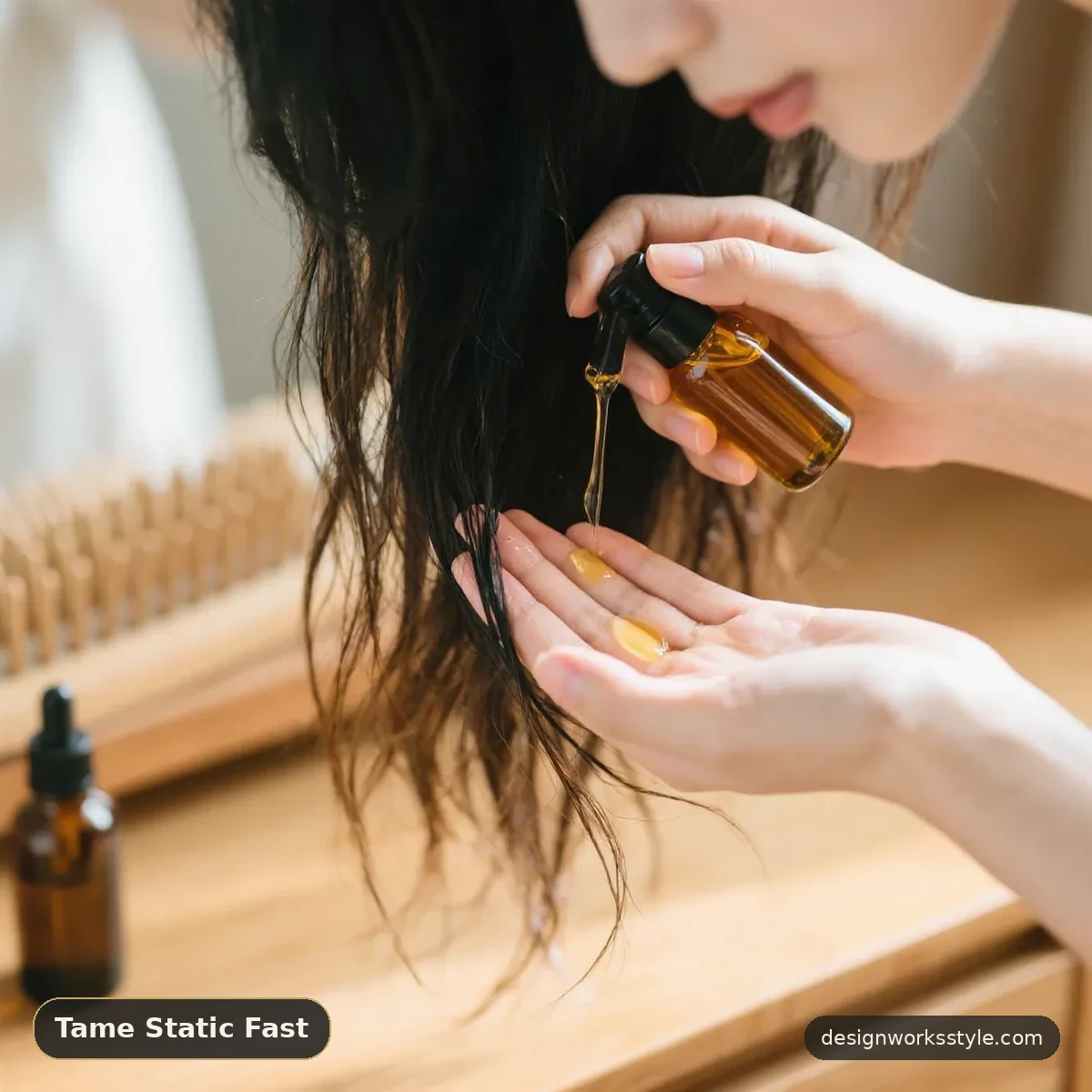
Rub a single drop of hair oil or a pea-sized amount of leave-in conditioner between your palms and smooth it over the flyaway hairs. That is the fastest fix. A used dryer sheet wiped lightly over the hair also works, and a quick mist of water from a spray bottle settles static for an hour or two.
Hair oil works because it adds weight and moisture at the same time. Warm one drop between your palms first, then smooth your hands over the top layer of hair, not through it. Going through the hair spreads too much oil and leaves it looking flat. Argan oil and jojoba oil are light enough for fine hair. Coconut oil works too, but it is heavier, so use half as much and keep it off the roots.
Leave-in conditioner does the same job with less risk of grease. Spray it or smooth it over the mid-lengths and ends, where static shows most. It adds water to the hair shaft, and water is what lets charge drain away.
A used dryer sheet is the quickest fix of all, and it works because the sheet leaves a thin coating that stops charge from building. Wipe it lightly over the top layer of hair once, and stop. A fresh sheet leaves more residue than a used one, so use one from the laundry if you can. Water mist is the simplest option: a few sprays from a bottle, then smooth the hair down with your hands.
What Should You Change in Your Wash Routine?
Wash less often in winter, use lukewarm water instead of hot, and always finish with conditioner from the mid-lengths to the ends. Hot water strips the natural oils that keep hair smooth, and skipping conditioner leaves the cuticle rough, which is where charge builds. Two or three washes a week is enough for most hair types in winter.

Water temperature matters more than most people think. Hot water opens the cuticle and washes away the oils that protect it. Lukewarm water cleans just as well and leaves the hair smoother. Finish with a cool rinse if you can stand it.
The way you wash matters as much as what you wash with, and washing your hair the right way keeps the cuticle smooth instead of roughing it up. Use a small amount of shampoo and work it into the scalp with your fingertips, not your nails. Rinse fully, then apply conditioner to the mid-lengths and ends and leave it for two or three minutes before rinsing. Shampoo cleans the scalp. Conditioner protects the lengths.
Drying matters too. Rubbing wet hair with a towel roughs the cuticle and builds charge before the hair is even dry. Press the water out with a towel or a soft cotton shirt instead, then let the hair air dry when you have time. If you use a dryer, use low heat and a nozzle, and stop when the hair is almost dry. Over-drying is one of the fastest ways to guarantee static.
Which Products Actually Help With Static?
Leave-in conditioner, hair oil, and anti-static spray are the three products that help with winter static, and you only need one of them. Leave-in conditioner adds moisture that lets charge drain away. Hair oil smooths the cuticle and adds weight. Anti-static spray works fastest but wears off first. Pick the one that suits your hair type.
Leave-in conditioner is the safest pick for most people. It works on fine hair and thick hair, it does not leave residue when used in small amounts, and it doubles as a detangler. Apply it to damp hair after washing, from the mid-lengths to the ends, and comb it through with your fingers. A plain breakdown of common hair products helps you tell a leave-in conditioner from a serum before you buy.
Hair oil suits thick or coarse hair best, because thick hair can take the weight without looking flat. Fine hair needs a lighter touch: one drop, warmed between the palms, smoothed over the top layer only. If oil makes your hair look greasy by midday, you used too much or put it too close to the roots. Switch to a leave-in conditioner instead.
Anti-static spray is the fastest fix and the shortest lived. Spray it lightly over the top layer of hair from about 20 centimeters away, then smooth the hair down. It works well before going out, but the effect fades within a few hours. Dry shampoo does not help with static, and hairspray can make it worse, because the hold stiffens the hair and adds friction.
What Brush or Comb Should You Use?
Use a brush with natural bristles or a wide-tooth comb, and avoid plastic brushes in winter. Plastic builds charge every time it moves through dry hair, while natural bristles and wood or metal combs build far less. Brush slowly, and stop once the hair is smooth, because extra brushing just adds more charge.
A metal comb is one of the best tools for static hair. Metal conducts charge away from the hair instead of letting it build, so a quick pass with a metal comb can settle flyaways on the spot. A wooden comb works well too, and it does not snag the way cheap plastic combs do. A wide-tooth comb is the gentlest option for detangling, because it pulls less and creates less friction.

Boar bristle brushes are the classic fix for static. The bristles spread natural oils from the scalp down the hair shaft, which smooths the cuticle and adds moisture where the hair needs it. They work best on straight or slightly wavy hair. Curly hair does better with a wide-tooth comb, because a brush breaks up the curl pattern and creates frizz.
Brushes and combs differ more than people think, and a hair tools guide that compares bristle types makes it easier to choose one that does not add charge. Whatever you use, clean it once a week. Product buildup on the bristles makes the brush drag, and dragging creates friction, which creates static.
One more habit: do not brush your hair more than it needs. Every extra pass adds charge. Brush once in the morning to smooth and shape, and use your fingers or a wide-tooth comb to fix stray hairs between brushes.
How Do Hats and Scarves Make Static Worse?
Hats and scarves make static worse because wool and synthetic fabrics rub against hair and build charge, and pulling the hat off releases it all at once as flyaways. Smooth a drop of oil over your hair before you put a hat on, and take the hat off slowly. A silk or satin lining inside a hat helps too.
Wool is the worst fabric for static. It rubs against hair with every step, and the friction builds charge all day. Synthetic fleece is not much better. Cotton is calmer, and silk is calmest of all, because silk creates very little friction. If your favorite winter hat is wool, a silk scarf or a satin-lined cap worn underneath breaks the contact between the wool and your hair.
Taking a hat off is the moment static shows. Pull it straight up and the hair lifts with it. Take it off slowly, from front to back, and smooth the hair down with your hands as you go.
Scarves cause the same problem at the back of the head and the nape, where the scarf rubs against the ends. Tuck the ends of your hair inside your coat instead of letting them sit under the scarf, or tie longer hair loosely before you wrap up. Dry winter hair also snaps more easily, and preventing hair breakage in winter starts with the same habits: less heat, more moisture, gentler brushing. If winter has already left your ends rough and split, hair damage repair starts with a trim and a steady moisture routine, not a new product.
Frequently Asked Questions
Why is my hair static after washing?
Washing strips the natural oils that keep hair smooth, and hot water makes it worse by opening the cuticle. Towel drying roughly adds friction on top of that. Use lukewarm water, conditioner on the mid-lengths and ends, and press the water out with a towel instead of rubbing. Let the hair air dry when you can.
Do dryer sheets really work on static hair?
Yes, for a quick fix. A used dryer sheet wiped lightly over the top layer of hair stops charge from building for a few hours. Use a used sheet, not a fresh one, because a fresh sheet leaves more residue. It is a short-term fix, not a routine. If you need a dryer sheet every day, the real problem is dryness, and a leave-in conditioner or hair oil will fix it better.
Does static hair mean my hair is damaged?
No. Static is about dry air and electric charge, and healthy hair gets static in winter too. Damage makes it worse, because a rough, lifted cuticle holds more charge and creates more friction. But static on its own does not mean your hair is damaged. If your hair also feels rough, splits easily, and breaks when you brush it, that points to damage, and moisture and a trim are the fixes.
How do I stop static without buying new products?
Mist your hair lightly with water from a spray bottle and smooth it down with your hands. Wash less often, use lukewarm water, and stop using a plastic brush. Take your hat off slowly. All four cost nothing and cut static down a lot. If you own hand cream, a tiny amount rubbed between your palms and smoothed over flyaways works like a light hair oil.