

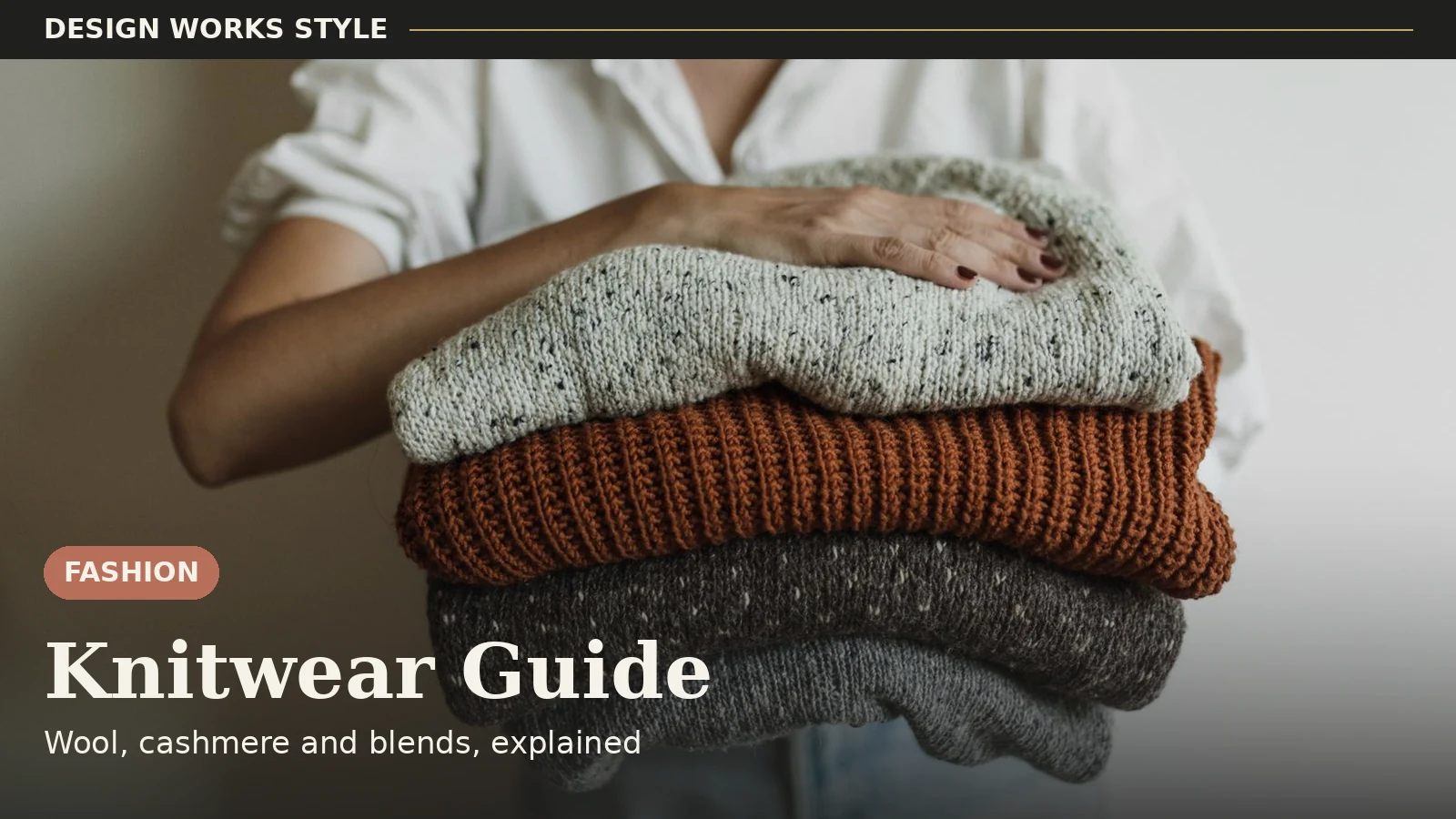
Wool vs cashmere comes down to what you want the knit to do. Cashmere gives more warmth for its weight and feels softer against skin, while wool, above all merino, lasts longer, handles washing better, and costs less. Read the label before you buy, and pick the fibre that fits how you will wear the jumper.
Why does the fibre decide how warm a jumper feels?
A jumper warms you by holding still air close to your body, and the fibre decides how well it does that. Wool fibres are crimped, with a natural wave that traps air in small pockets, and wool can take in around a third of its weight in moisture vapour before it feels wet.
Two jumpers that look the same can feel different. One holds its loft after a day of wear, and the other goes flat at the elbows and lets the cold in.
Microns measure fibre diameter. A human hair runs about 40 to 120 microns wide, so a 15-micron merino fibre is far finer, and it bends when it touches skin instead of poking it. It is the fastest way to judge how a knit will feel.
Wool vs cashmere: which is warmer, softer, and tougher?
Cashmere is warmer gram for gram, softer to touch, and weaker in daily wear, while wool is tougher, cheaper, and easier to care for. Cashmere is often described as about three times as warm as wool for the same weight, a figure brands quote widely, though no single standard test sits behind that number.
Merino wool runs 15 to 24 microns in diameter, with the finer grades under 18.5 microns feeling soft enough to wear next to skin. It resists odour, holds its shape, and stands up to repeated wear.
Cashmere runs 14 to 19 microns, and it comes from the soft undercoat of cashmere goats, combed once a year during the spring moult, mainly in Mongolia and China. The fibres are fine and short, so the ends work their way out of the yarn and rub together, which is why cashmere pills.
Durability is where wool pulls ahead. Merino yarn is longer and springier, so it recovers after stretching and resists friction at cuffs and under bag straps. Cashmere needs gentler handling, and it will thin at pressure points if you wear it every day.
| Fibre | Diameter | Warmth | Softness | Durability |
|---|---|---|---|---|
| Merino wool | 15 to 24 microns | Warm, regulates well | Soft, finer grades very soft | Good, holds shape |
| Cashmere | 14 to 19 microns | Warmest for its weight | Softest of the common fibres | Low, pills and thins |
| Lambswool | About 22 to 28 microns | Warm | Soft with a little texture | Good |
| Shetland wool | About 23 to 28 microns | Very warm | Coarse, not for bare skin | Very good |
| Alpaca | About 18 to 30 microns | Warm without weight | Soft, smooth drape | Good |
| Cotton | Not measured in microns | Least warm in cold weather | Soft, flat feel | Good, easy to wash |
| Acrylic | Man-made fibre | Warm for its weight | Soft at first | Poor, pills badly |
What about lambswool, Shetland, and alpaca?
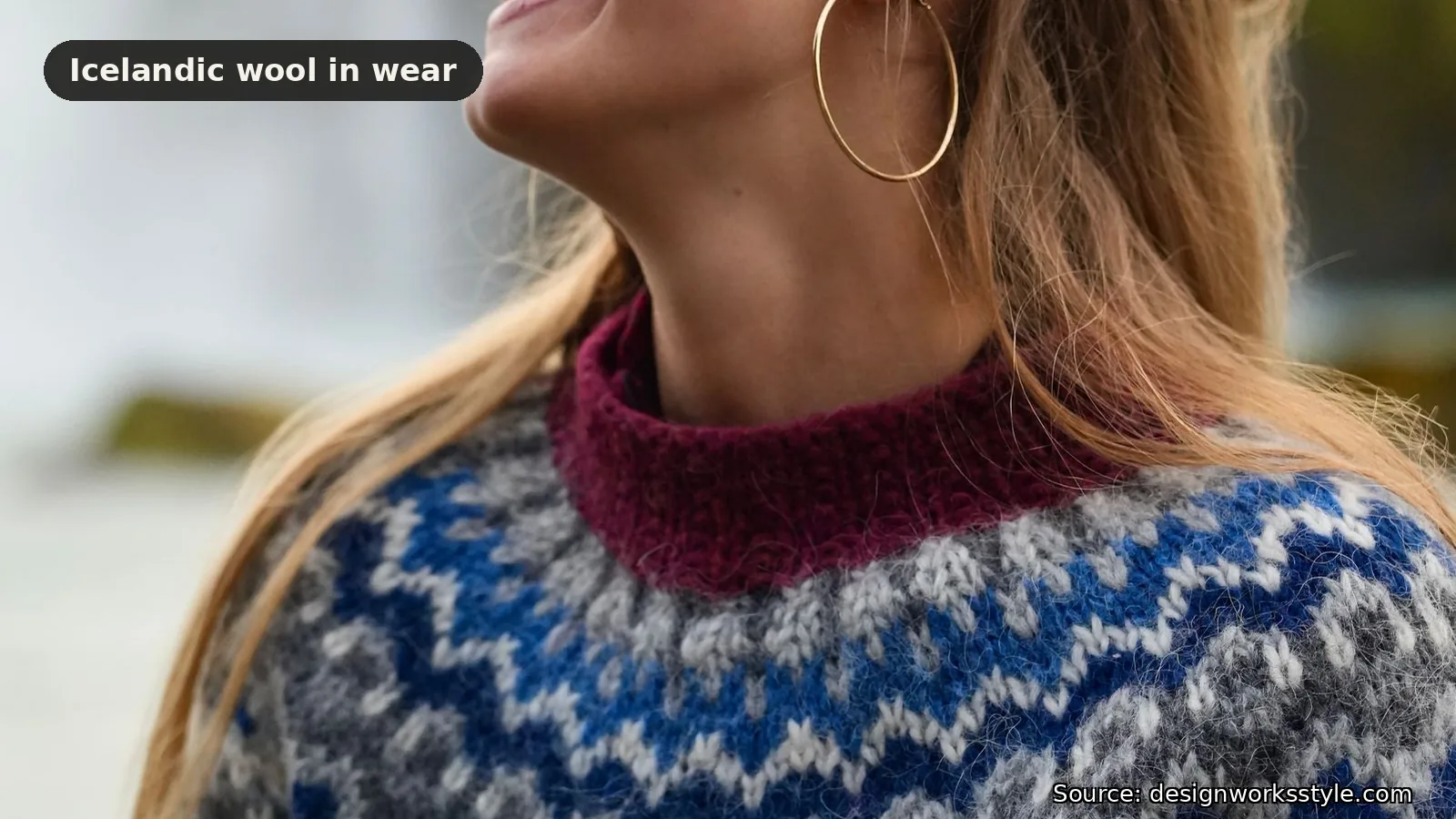
Lambswool, Shetland, and alpaca each suit a different kind of winter knit. Lambswool is the first shearing of a young sheep, softer than adult wool. Shetland is coarse and very warm, and it suits outer layers worn over a shirt. Alpaca has a hollow fibre that traps air, so it gives warmth without much weight, and it has no lanolin.
Lambswool is the easy middle choice. It costs less than cashmere, lasts longer, and has more body than merino, so it holds a chunky cable or a patterned yoke well.
Shetland comes from sheep on the Shetland Islands, and it has a rough, honest feel. Wear it over a shirt. Alpaca drapes smoothly and feels lighter than wool at the same warmth, though a heavy alpaca knit can stretch, so check for a firm rib at the hem and store it folded.
When do cotton and acrylic make sense?
Cotton and acrylic make sense for mild days and low prices, but neither is a cold-weather fibre. Cotton is the least warm of the fibres here, since it holds moisture against the skin and loses its insulation when damp. Acrylic is cheap and soft when new, but it does not breathe, it holds odour, and it pills badly.
Acrylic still has a place. A child’s jumper, a novelty knit you wear twice a season, or a travel knit you need to machine wash and dry fast are all fair uses. The problem starts when acrylic is sold as if it were wool. A label that says “wool blend” with 5 percent wool is an acrylic jumper.
How much wool does a blend need?
A blend needs at least 50 percent wool to behave much like wool, and below about 20 percent wool the warmth drops noticeably. The exact point where warmth falls away is a matter of judgement, not a lab cut-off, and buying guides put it near 20 percent.
Blends exist for good reasons. Wool plus nylon adds strength at elbows and cuffs, which is why hiking and work knits use it. Wool plus cotton softens the hand and suits transitional weather. Cashmere plus merino gives some of the softness of cashmere at a lower price.
Read the percentages in order. The fibre listed first is the largest share, and the label lists them in descending order. A “cashmere blend” can mean 5 percent cashmere and 95 percent acrylic, so read the back, not the front.
Does gauge matter as much as fibre?
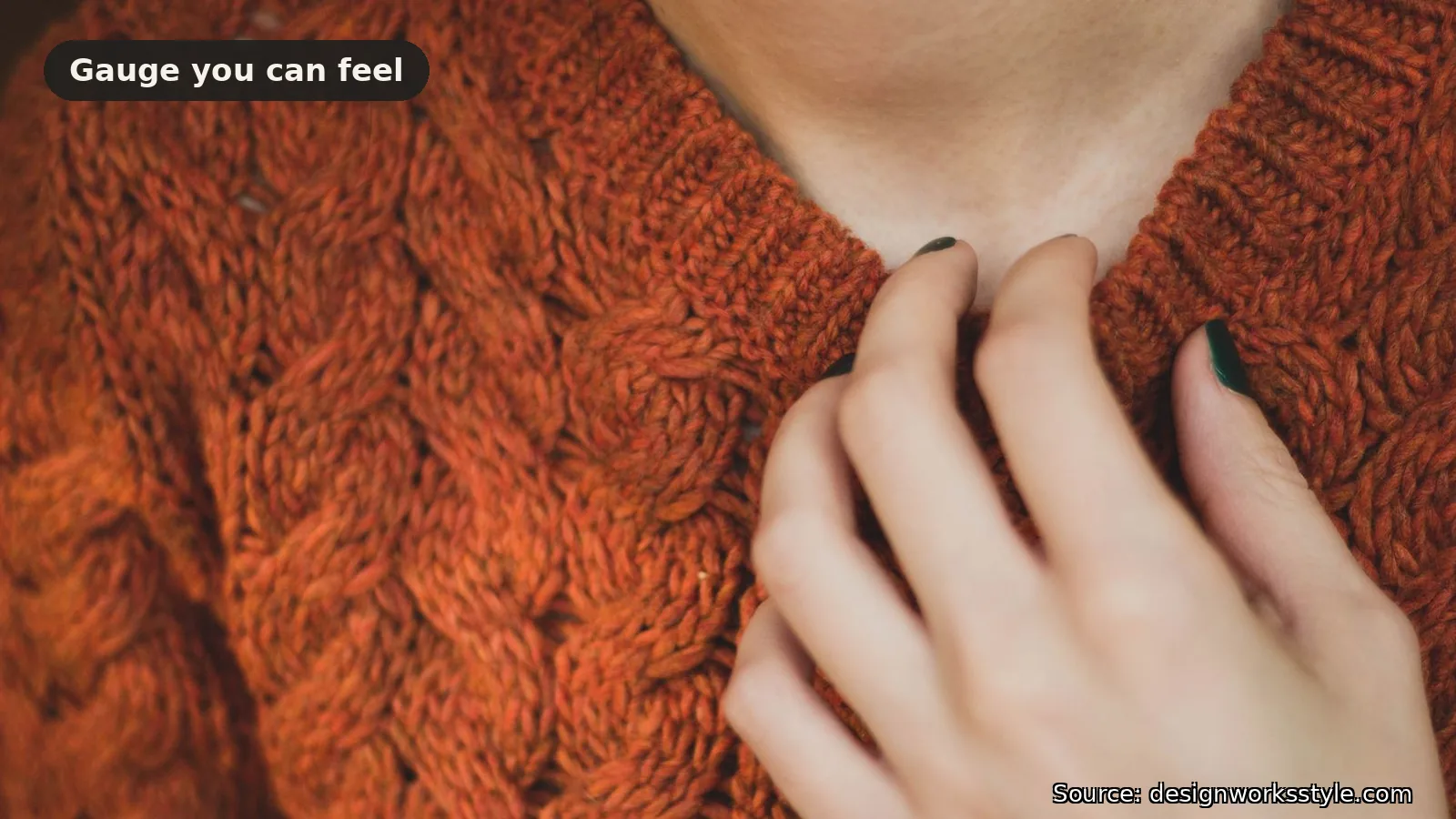
Gauge matters almost as much as fibre, because it decides how a knit drapes, layers, and wears. Gauge is the number of needles per inch on the knitting machine, and higher numbers mean finer yarn and smaller stitches. A 12-gauge knit packs 12 needles per inch and gives a fine, smooth fabric, while 3-gauge gives big, visible stitches.
Fine-gauge knits, around 12 to 18 gauge, drape close to the body and slide under a jacket without bunching. They suit office wear and layering, and a fine-gauge merino crew adds warmth without bulk, which is the same thinking behind how to layer winter outfits without looking bulky.
Chunky knits, around 3 to 7 gauge, stand away from the body and read as casual and warm. Gauge alone does not make a knit warm. A chunky acrylic jumper can feel colder than a fine-gauge wool one, because the fibre still decides the warmth.
How do you check a knit in the shop?
Check a knit in the shop by reading the label first, then feeling the fabric, checking the ply and the seams, and stretching it to see if it springs back. The label tells you the fibre and the percentages. Trust the label over the sales pitch.
Feel for softness, not itch. Hold the knit against the inside of your wrist or your neck, where skin is thin. A good merino or cashmere feels smooth, while a coarse wool prickles within seconds.
Check the ply, the number of yarn strands twisted together. Two-ply or more is the mark to look for in cashmere, since single-ply cashmere is thin and fragile. Seams should lie flat with no puckering, and the ribbing should snap back when you stretch it.
What should knitwear cost?
Knitwear costs what its fibre, length, and construction demand, and price follows fibre more than brand. A plain acrylic jumper sits at the bottom, a wool blend in the middle, pure merino above that, and pure cashmere at the top. A price far below its tier usually means short fibres, a low wool share, or a loose knit.
Cheap cashmere fails in a pattern you can spot. The fibres are short, so the yarn sheds and pills within weeks, and the knit is loose, so it stretches out of shape and thins at the elbows. A good cashmere jumper uses longer fibres, a tighter knit, and at least two plies. Merino is the value tier in real terms: a mid-priced merino crew costs a fraction of a cashmere one and lasts longer.
How do you wash and care for knitwear?
Wash knitwear less than you think, in cold water, and dry it flat, since most damage comes from heat, agitation, and hanging. Wool needs less washing than cotton, because the fibres resist odour, so air a jumper overnight and spot-clean marks before you reach for the wash.
Hand wash in cool water with wool wash, or use the cold gentle cycle if the label allows it. Keep the water cool, since heat plus agitation is what felts wool, shrinking it into a dense mat that will not stretch back. Rinse at the same temperature, press the water out without wringing, and roll the knit in a towel.
De-pill with a comb, not a razor. A cashmere comb lifts pills off the surface without cutting fibres, while a razor cuts the yarn and thins the knit over time. Dry flat on a towel, reshaping the knit, since hanging a wet knit stretches it. Fold knits for storage, and keep moths out with cedar or lavender in the drawer.
What should you buy for each need?
Buy merino for daily wear, one good cashmere for softness, lambswool for a substantial winter jumper, and a blend when value matters most. A wardrobe of three knits covers most winter days. Each one should earn its place by fibre, ply, and gauge.
The daily workhorse is a fine-gauge merino crew in a dark neutral, 12 gauge or finer, two-ply, with firm ribbing. Wear it under a jacket, over a shirt, or on its own indoors. It washes easily, resists odour, and holds its shape, so it can take three wears a week. A knit is only one part of a cold-weather outfit, and the winter fashion guide lays out how coats, knits, and base layers share the work on a cold day.
One good cashmere crew is enough for most people. Pick a classic colour, a 12-gauge knit, two-ply or more, and a fit that layers under a coat without bunching. Lambswool is the pick for a substantial winter jumper, and a blend with at least 50 percent wool is the value buy for a second jumper or a travel knit. Those three pieces slot straight into a winter capsule wardrobe built from pieces that work together, and a chunky knit needs room under a coat, so check the fit against your winter coats before you buy both in the same trip.
Frequently Asked Questions
Is cashmere really warmer than wool?
Gram for gram, yes. Cashmere fibres are finer than wool fibres, so they trap more air for the same weight, and brands often quote a figure near three times the warmth of wool. That number has no single standard test behind it. A thick wool jumper still beats a thin cashmere one.
Why does my cashmere jumper pill?
Cashmere pills because its fibres are fine and short, so the ends work out of the yarn and tangle where fabric rubs, at the cuffs, under bag straps, and at the sides. Short fibres pill more than long ones, and a loose knit pills more than a tight one.
Can I machine wash wool and cashmere?
Some wool knits can take a cold gentle cycle if the label says so, and many cashmere knits need hand washing. Read the care label first, since it is the maker’s instruction for that yarn and knit. Wash in cool water, dry flat, and never tumble dry a wool or cashmere knit.
How much wool should a blend contain to be worth buying?
Look for at least 50 percent wool for a blend that behaves much like wool, and treat anything below about 20 percent wool as mostly the other fibre. A 50 percent wool blend is a fair value buy for daily wear.
Image sources for this article are listed on the Image sources page, under the title of this article.