
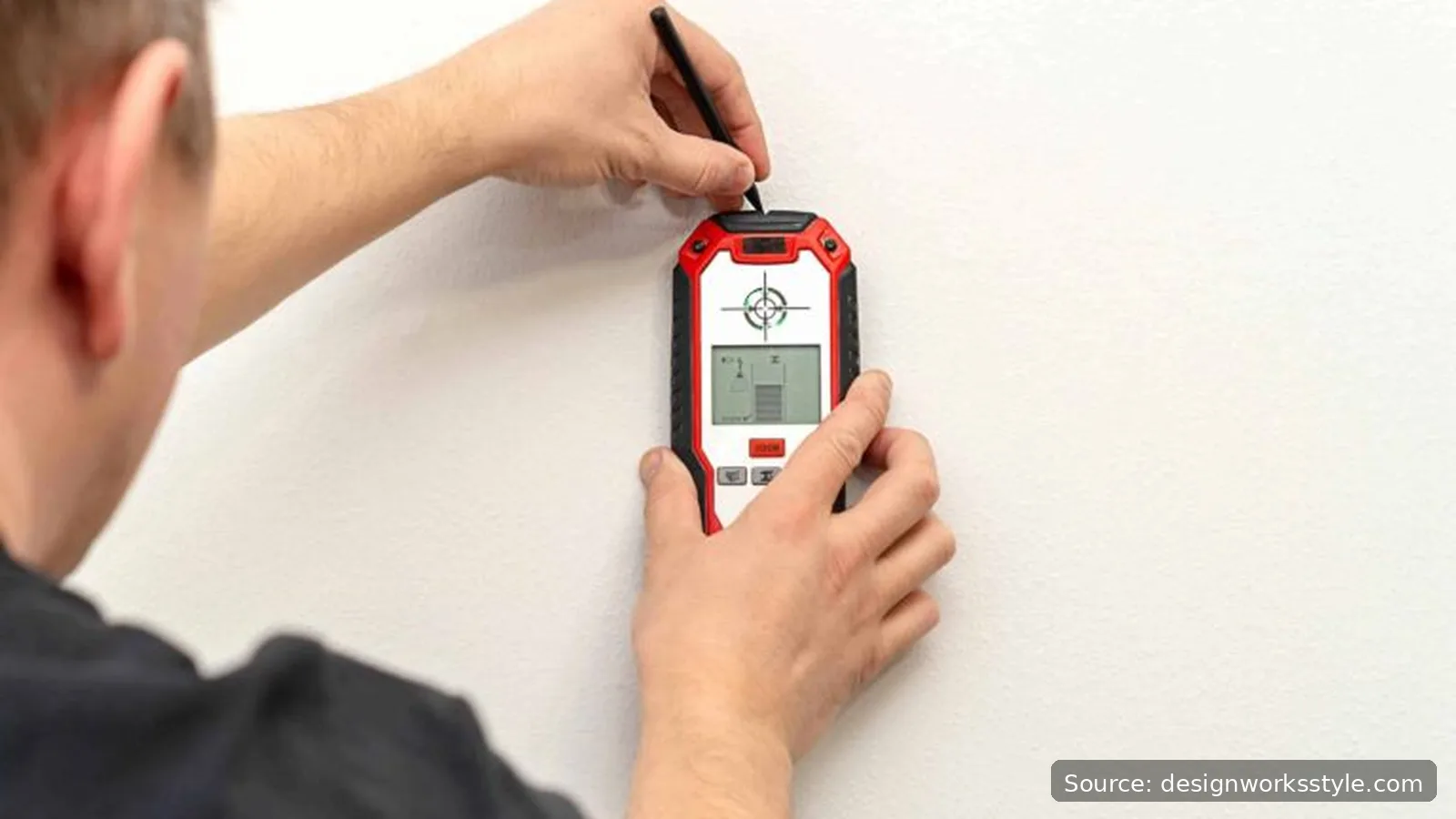
Wall studs are the vertical wood or metal framing members behind your drywall, usually spaced 16 inches apart. The fastest way to find one is an electronic stud finder: calibrate it on a stud-free section, then slide it slowly until it signals. No stud finder? Knock for the solid sound, check beside electrical outlets (they mount to studs), or use a strong magnet to find the drywall screws.
Finding a stud is the difference between a shelf that holds and a shelf that rips out of the wall. Drywall alone supports almost nothing. A screw driven into a stud holds fifty pounds or more. The same screw in bare drywall holds a picture frame, maybe, until someone slams a door. Every hanging project starts here.
What Is a Wall Stud and How Far Apart Are They?
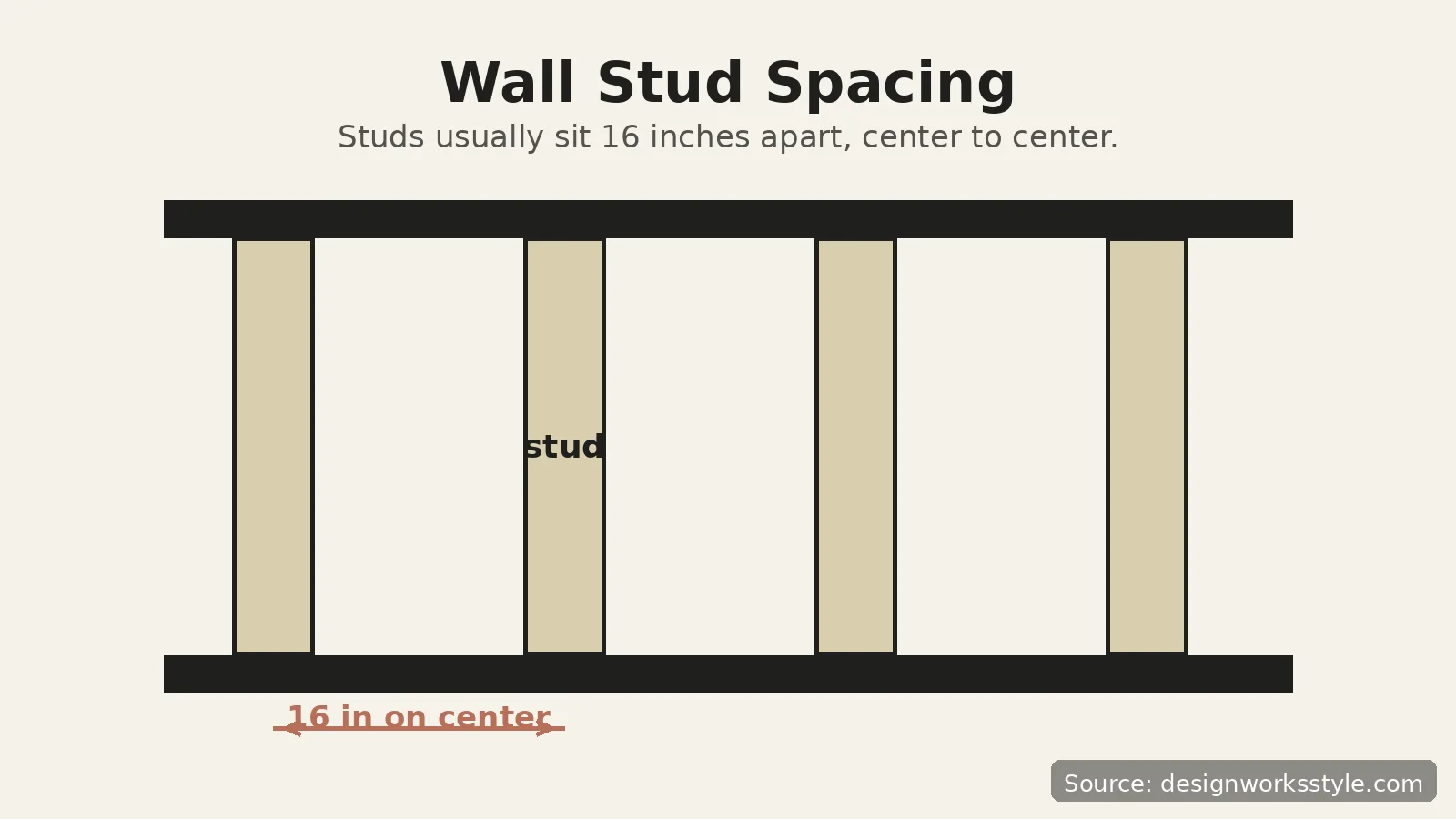
A stud is a vertical 2×4 (actually 1.5 by 3.5 inches) that forms the skeleton of a framed wall, running floor to ceiling. In most homes they sit 16 inches apart measured center to center. Some interior non-load-bearing walls use 24-inch spacing. Knowing the spacing matters because once you find one stud, you can measure 16 inches in either direction to find the next. That trick alone locates most of the studs in a room.
How Do You Use a Stud Finder?
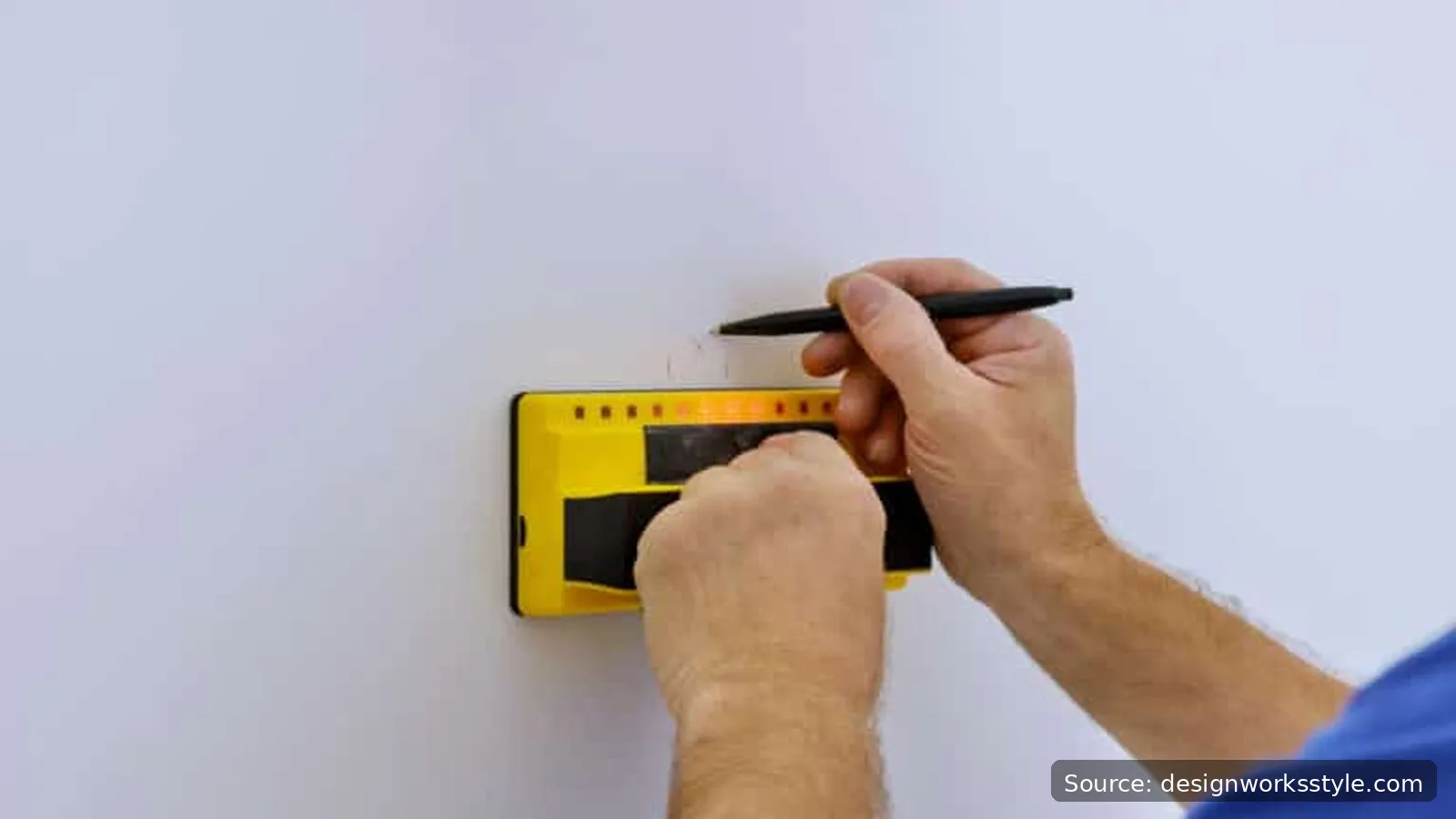
Place the stud finder flat against the wall in an area you are confident has no stud, press and hold the calibration button until it signals ready, then slide it slowly horizontally. When it beeps or lights up, you have found a stud edge. Mark it, keep sliding to find the other edge, and mark that too. The center between your marks is the sweet spot for your screw. Move slowly. Fast passes miss narrow studs, and starting calibration over a stud throws off the reading for the whole sweep.
Cheap stud finders work fine on standard drywall. Deep-scan models earn their price on plaster walls and double-layer drywall, where basic sensors get confused. Whatever model you own, verify the find before drilling: drive a thin finish nail at your mark and feel for the resistance change. A nail that sinks with steady pressure hit wood. One that punches through easily did not.
How Do You Find Studs Without a Stud Finder?
Start with the knock test: rap the wall with your knuckle as you move sideways. Hollow drywall sounds empty and resonant; a stud sounds solid and dull. It takes practice but it works. Next, look at your electrical outlets and light switches. The boxes mount directly to studs, so there is a stud immediately to one side of every outlet. Measure 16 inches from there and knock to confirm.
The magnet trick is the most reliable no-tool method. Drywall screws and nails contain steel, and a strong neodymium magnet dragged slowly across the wall will catch on every fastener. Fasteners run in vertical lines along studs, so two catches in a vertical line means you found one. Check the baseboards too: the finish nails holding them are driven into studs, and a magnet finds them easily along that horizontal line.
How Do You Find Studs in Plaster Walls?
Plaster walls are harder because the wood lath behind the plaster creates density everywhere, which fools basic stud finders into false positives. Use a deep-scan stud finder, or go straight to the magnet method: plaster was nailed to the studs through the lath, and those nails are findable. The knock test is less useful on plaster since the whole wall sounds relatively solid. When you do drill, expect more resistance and use a masonry-style slow speed to avoid cracking the plaster around the hole.
Do All Walls Have Studs?
No. Masonry walls (brick, block, poured concrete) have no studs at all. Neither do some apartment partition walls, which may be metal channel or even just double drywall. If the magnet finds nothing, the knock test sounds uniformly solid, and 16-inch measuring turns up nothing, you may be dealing with masonry. Those walls need masonry anchors and a hammer drill, not wood screws. Metal studs do exist in commercial buildings and some newer homes: a magnet finds their screws, but the studs themselves are thin steel that needs self-tapping screws or toggle bolts rather than wood screws.
Once you can find studs reliably, the hanging projects get easy. Our guides to hanging pictures and hanging curtains both assume you can hit solid wood when it counts.
Frequently Asked Questions
Can you use your phone as a stud finder?
Stud finder apps use your phone’s magnetometer to detect the metal fasteners in the wall, similar to the magnet trick. They work, but weakly: phone sensors are far less sensitive than a dedicated magnet, so results are inconsistent. A three-dollar neodymium magnet outperforms every free app. A fifteen-dollar stud finder outperforms both.
How far apart are wall studs?
Sixteen inches on center is the standard for load-bearing walls and most exterior walls. Interior non-load-bearing walls sometimes use 24-inch spacing. Older homes can be irregular, so treat spacing as a starting guess and verify with a knock or a nail rather than trusting it blindly.
Why does my stud finder beep everywhere?
Usually it was calibrated over a stud, which makes everything read as dense. Recalibrate on a section you know is empty. On plaster walls, the lath confuses basic sensors; switch to deep-scan mode or use the magnet method instead. Electrical wiring and metal pipes can also trigger false positives, which is why you verify with a nail before drilling.
What if there is no stud where I need to hang something?
Use a drywall anchor rated for the weight. Toggle bolts hold the most (up to 100 pounds in half-inch drywall), followed by molly bolts, with simple plastic expansion anchors fine for light items under 20 pounds. Anchors are a legitimate solution, not a hack. Just match the anchor rating to the actual weight and you will be fine.