
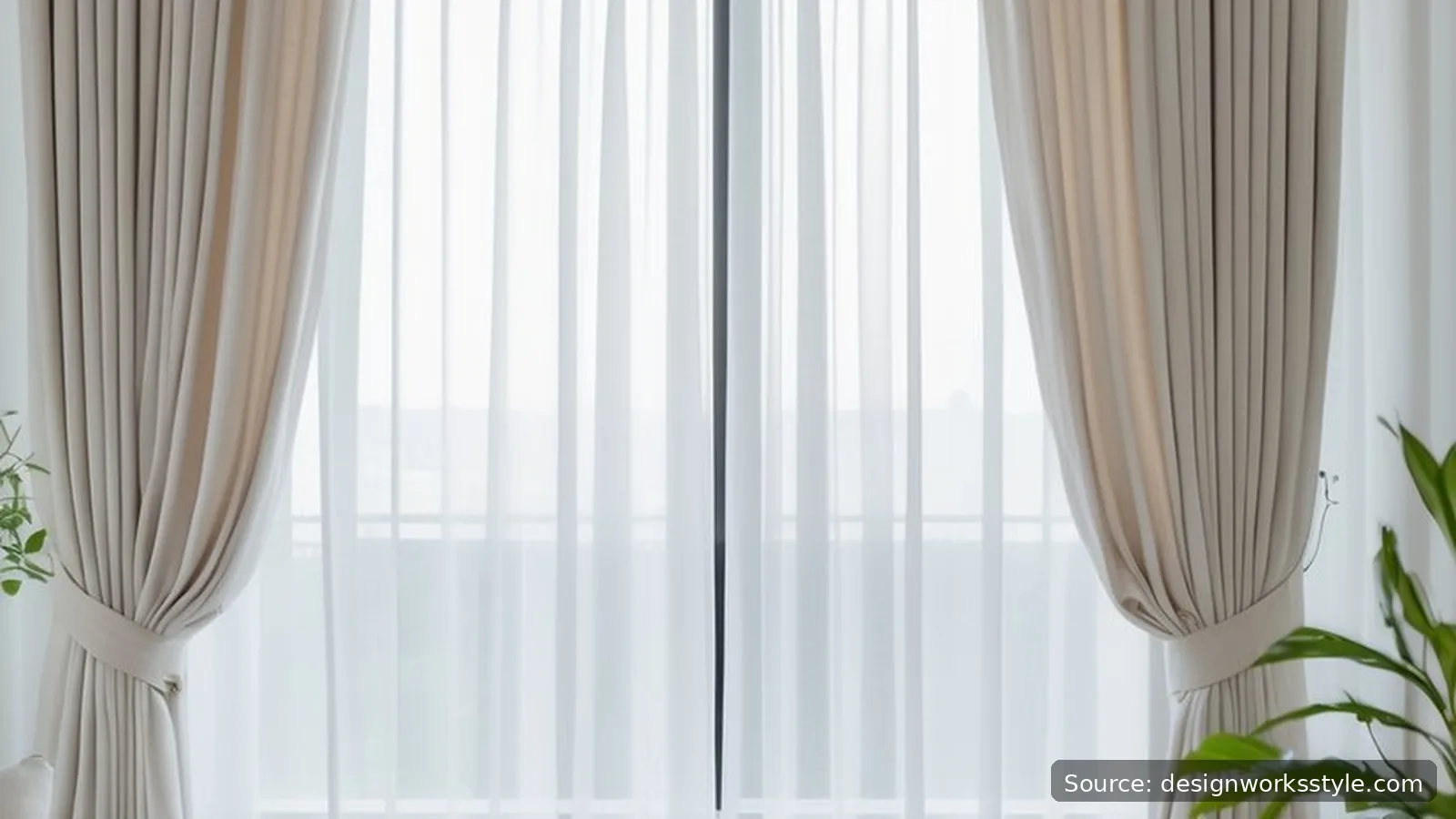
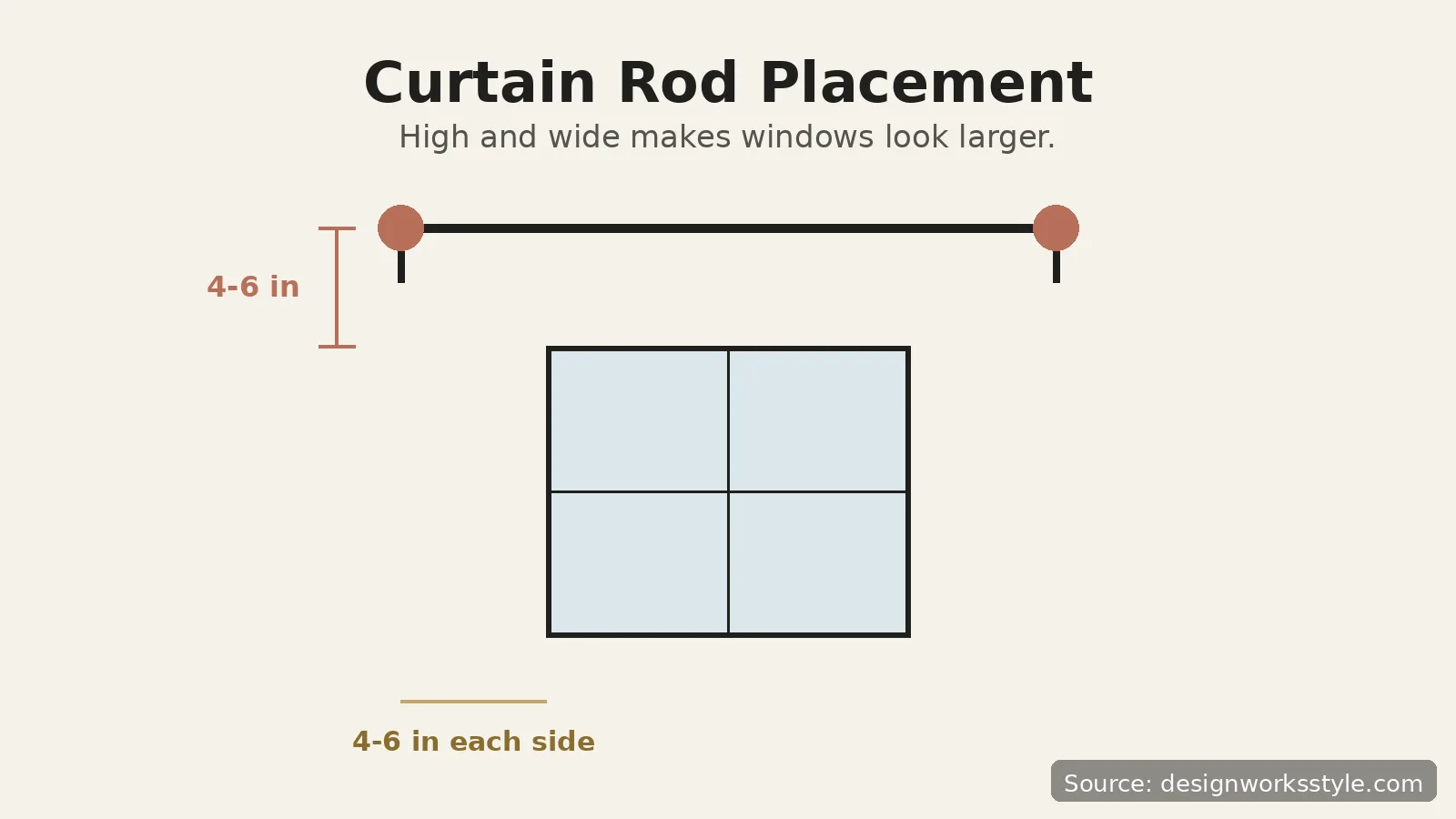
Hang the curtain rod 4 to 6 inches above the window frame and extend it 8 to 12 inches wider than the window on total. Choose curtains that either just kiss the floor or hover half an inch above it. Mount the brackets into studs when you can; otherwise use drywall anchors rated for the load. High and wide is the whole trick: it makes windows look larger and ceilings taller.
Curtains hung on the window trim look like an afterthought. Curtains hung high and wide look like interior design. The difference is a tape measure and the willingness to ignore where the window actually ends. Nearly every curtain mistake comes from mounting the rod too low, too narrow, or buying panels that are too short.
How High and Wide Should Curtain Rods Be?
Mount the rod 4 to 6 inches above the window frame, or halfway between the frame and the ceiling, whichever is higher. Extend the rod 4 to 6 inches beyond the frame on each side, so 8 to 12 inches wider overall. This does two things: it exposes the full window when curtains are open (no light blocked by bunched fabric), and it borrows visual height from the wall above. The classic error is mounting the rod on the trim and buying panels to fit. That shrinks the window visually. Go high and wide and the same window looks twice the size.
What Curtain Length Should You Choose?
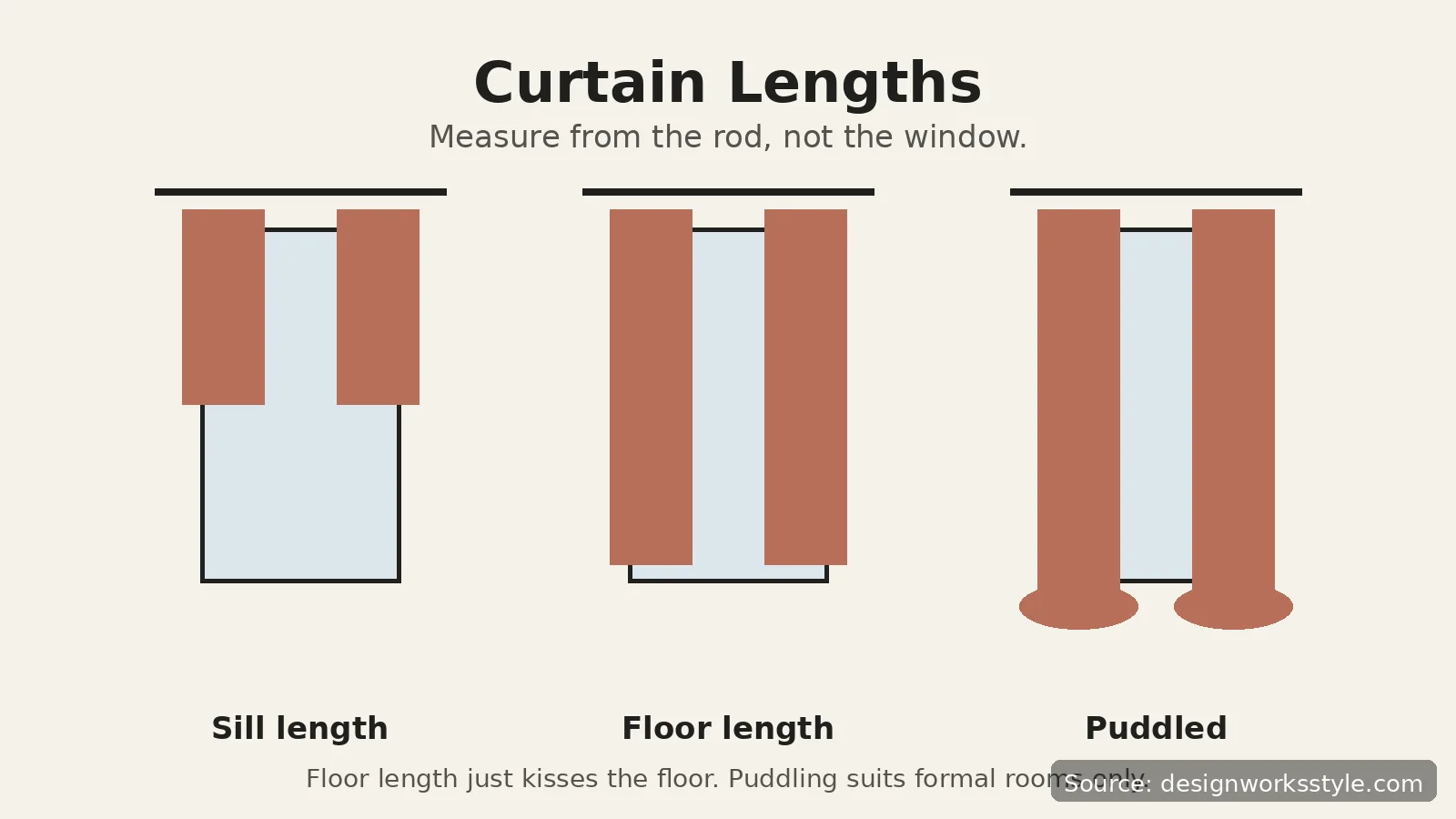
For full-length curtains, the panel should just touch the floor or float half an inch above it. This is the standard for living rooms and bedrooms: clean, tailored, no dust collection. Puddling (1 to 3 inches of extra fabric pooling on the floor) suits formal rooms and thick fabrics like velvet, but it collects dust and pet hair and trips vacuum cleaners. Sill length (ending at the windowsill) and apron length (a few inches below) belong in kitchens and bathrooms where floor-length fabric gets in the way. Measure from the rod to the floor, not from the window. People who measure from the window buy curtains six inches short every time.
How Do You Install Curtain Rods in Drywall?
Drive at least one bracket per side into a stud if the spacing allows. Our guide to finding wall studs covers the technique. Where there is no stud, use toggle bolts or self-drilling drywall anchors rated well above the combined weight of rod and curtains. Curtains are heavier than they look, especially lined or blackout panels, and a rod that pulls out of the wall takes drywall with it. For spans over 48 inches, add a center support bracket. A long rod without center support bows visibly within months.
How Do You Hang Curtains Without Drilling?
Tension rods work inside the window frame for lightweight curtains: twist to expand until they grip, and check them monthly since they loosen over time. Adhesive curtain rod brackets hold light to medium panels on smooth walls and remove cleanly, which makes them the renter’s best option. Magnetic curtain rods grip metal doors and window frames directly. None of these suit heavy blackout curtains or wide spans. For those, there is no honest no-drill substitute; use proper anchors and fill the holes when you move out.
How Full Should Curtain Panels Be?
The combined width of your curtain panels should be 1.5 to 2 times the width of the window (or the rod, if the rod extends beyond). Skimping on fullness is why curtains look flat and cheap: a single narrow panel stretched across a wide window has no folds, and folds are what make curtains look like curtains. Two panels at 1.5x fullness look better than one wide panel at 1x. When in doubt, buy the wider panels. You can always gather more fabric onto the rod; you cannot stretch fabric that is not there.
Frequently Asked Questions
Should curtains touch the floor?
Just barely. The standard is kissing the floor or hovering half an inch above it. Panels that end two inches short look like a measuring error. Panels that puddle excessively look sloppy unless the fabric and room are formal enough to carry it. If yours came too long, hemming is cheaper than replacing.
Can you hang curtains on a wall with no studs at the right spots?
Yes, with the right anchors. Toggle bolts in half-inch drywall hold 50-plus pounds each, far more than any curtain rod needs. The weak point is rarely the anchor; it is using a cheap plastic expansion anchor for a heavy lined panel. Match the anchor to the weight and drill a clean hole, and the rod will outlast the curtains.
What is the difference between grommet, rod pocket, and pinch pleat curtains?
Grommet curtains thread directly onto the rod through metal rings: modern look, easy sliding. Rod pocket curtains have a sewn sleeve the rod passes through: traditional look, harder to open and close daily. Pinch pleat curtains have sewn-in pleats and hang from hooks on rings or a traverse rod: the most tailored look, and the pleats hold their shape permanently. For curtains you open daily, grommets or rings slide best.
How do you hang curtains over blinds?
Mount the curtain rod high and wide as usual, independent of the blinds. The blinds sit inside the window frame; the curtains frame the whole assembly from outside. Use a rod with enough projection (the distance from wall to rod) that the curtains clear the blind’s headrail when drawn. A 3-inch projection handles most blinds; check before you buy the brackets.