
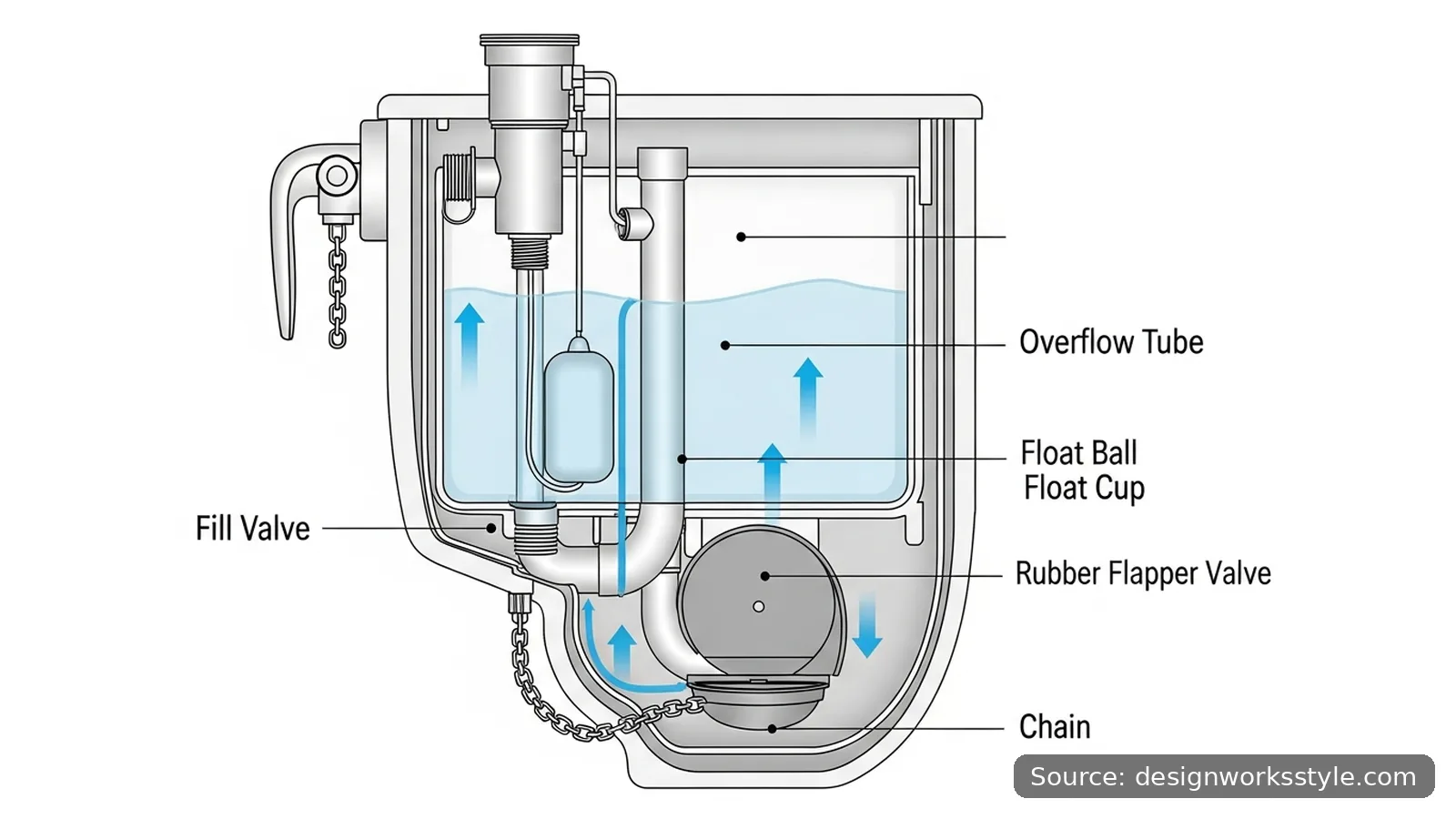
A running toilet is usually caused by a worn flapper that no longer seals the tank, or a fill valve set too high. Diagnose it with food coloring: put a few drops in the tank, wait 20 minutes without flushing. Color in the bowl means the flapper is leaking and needs replacing (a $5 part and 10 minutes). No color means the fill valve is the problem: lower the float so water stops an inch below the overflow tube.
That faint hissing from the bathroom is money running down the drain. A running toilet can waste 200 gallons of water a day, which shows up on your water bill fast. The good news: nine out of ten running toilets are fixed with a cheap part and no plumber. The trick is diagnosing which part before you start replacing things.
How Do You Diagnose a Running Toilet?
Take the tank lid off and look, then run the food coloring test. Dye in the bowl after 20 minutes means water is leaking from the tank into the bowl past the flapper. No dye but the toilet still runs or refills on its own means the fill valve is letting water in continuously, usually because the water level is set above the overflow tube. Also check the chain: it should have about half an inch of slack. A chain that is too tight holds the flapper open; one that is too long can slip underneath it and break the seal. These three checks identify the cause in nearly every case.
How Do You Replace a Toilet Flapper?
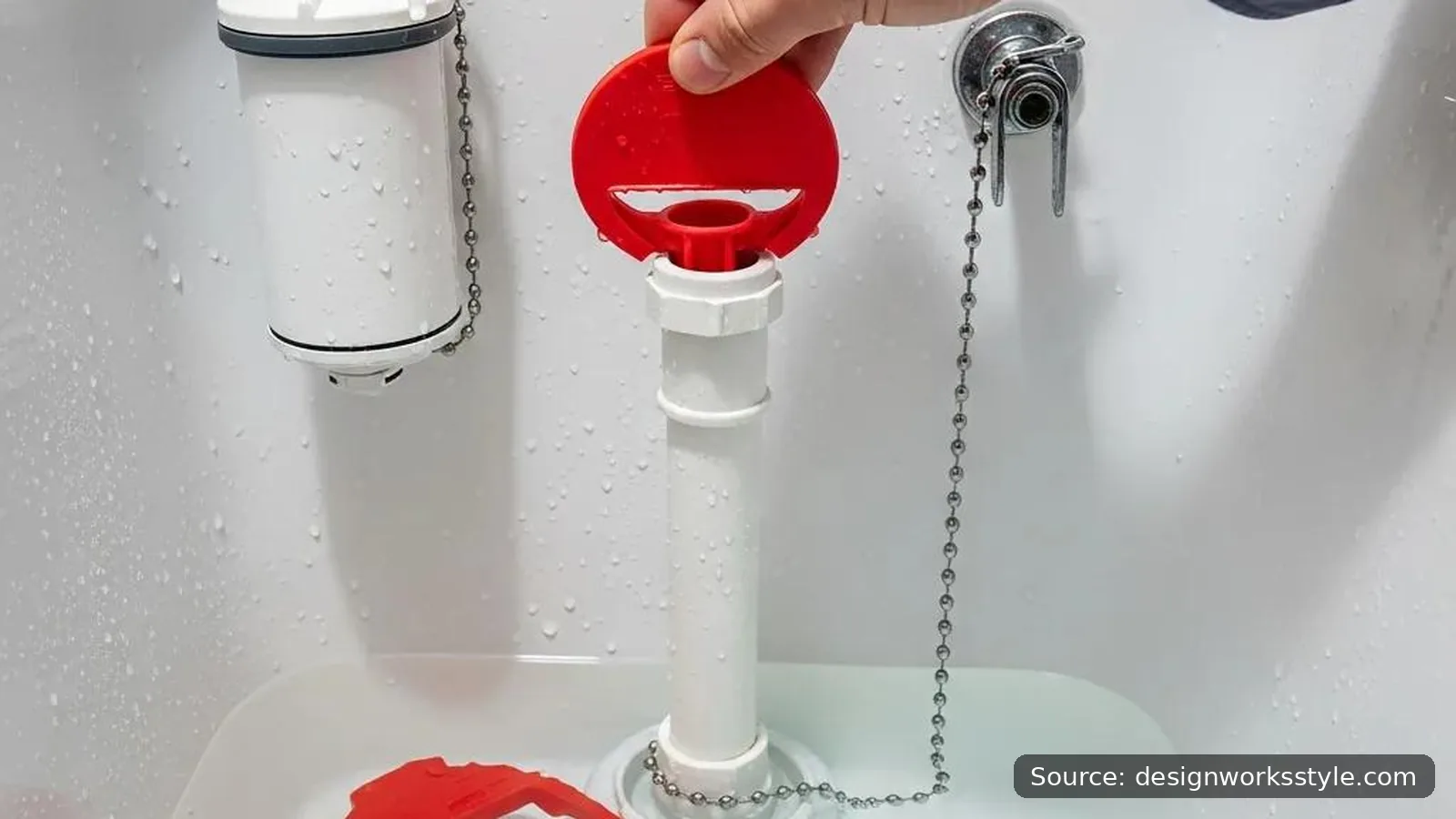
Turn off the water at the shutoff valve behind the toilet and flush to drain the tank. Unhook the old flapper from the overflow tube (it either clips on or slides off pegs) and detach the chain. Take it to the hardware store to match the size and type; flappers are not universal, and the wrong one will not seal. Install the new flapper the same way the old one came off, reconnect the chain with half an inch of slack, turn the water back on, and let the tank fill. The whole job takes 10 minutes and the part costs under $10. If the flapper seat (the ring it seals against) is rough or corroded, smooth it with fine sandpaper or the new flapper will leak just like the old one.
How Do You Fix a Toilet Fill Valve?
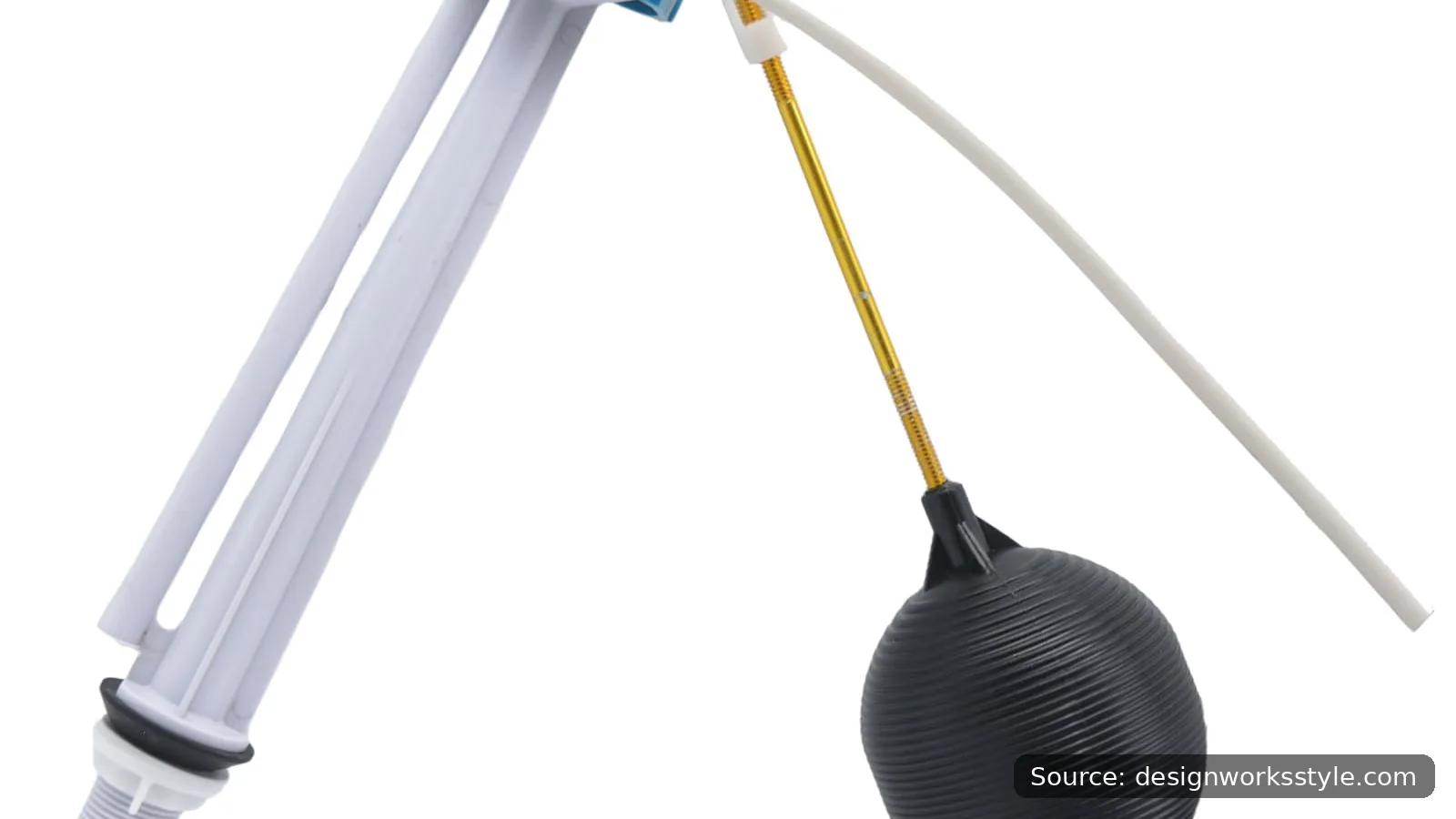
If water is flowing into the overflow tube, the fill valve is set too high. For a ball float (the arm with a ball on the end), bend the arm gently downward so the water shuts off lower. For a cup float (the cylinder that slides on the valve body), squeeze the adjustment clip and slide the float down. The target: water stops about an inch below the top of the overflow tube. If adjusting does not stop the flow, the valve’s internal seal is worn and the whole valve needs replacing. That is a $15 part and a 20-minute job: turn off water, drain the tank, unscrew the old valve from underneath, install the new one at the correct height, reconnect the water line. No special tools beyond an adjustable wrench.
Why Does My Toilet Run Intermittently?
Intermittent running (the toilet refills by itself every few minutes or hours) is almost always a slow flapper leak. Water seeps past the flapper, the tank level drops, and the fill valve kicks on to top it up. The food coloring test confirms it. Replace the flapper. Less commonly, a cracked overflow tube or a fill valve with a slow internal leak causes the same symptom. If a new flapper does not fix it, the fill valve is next.
How Do You Fix a Dual-Flush Toilet That Keeps Running?
Dual-flush toilets use a canister seal instead of a flapper. Lift the canister out (it usually twists or unclips), inspect the large rubber seal at its base, and replace it if it is warped or coated in mineral deposits. These seals cost a few dollars. Also check that the flush buttons are not sticking: a button that does not fully return holds the mechanism open. A quick clean around the button housing often fixes sticking. The fill valve adjustment works the same as on a standard toilet.
While you have the tank open, it is worth knowing how the rest of the bathroom plumbing works. If the toilet is also draining slowly, our guide to unclogging a toilet covers that end of things.
Frequently Asked Questions
How much water does a running toilet waste?
Up to 200 gallons per day for a bad leak, which is roughly what an average person uses in two days. Even a slow, quiet leak wastes 30 to 50 gallons daily. On a metered water supply, a running toilet can add $50 to $100 to a monthly bill. It is one of the most expensive small problems in a house.
Can I just jiggle the handle to fix it?
Jiggling reseats a flapper that did not close properly, which stops the running temporarily. But if you have to jiggle it more than once, the flapper is worn and needs replacing. The jiggle is a diagnostic clue, not a fix. Every jiggle confirms the flapper is the problem.
Are toilet repair parts universal?
No. Flappers come in different sizes (2-inch and 3-inch are the common ones) and attachment styles. Fill valves are more standardized but still vary in height. Bring the old part to the store, or check your toilet’s model number (stamped inside the tank). Universal kits exist and work for most toilets, but matching the original is more reliable.
Should I replace the whole toilet instead?
Only if the toilet itself is the problem: a cracked tank or bowl, a chronically weak flush that no repair fixes, or a 1990s low-flow model that clogs constantly. Running is a parts problem, not a toilet problem. A $10 flapper fixes what a $300 toilet would also fix. Replace parts first.