
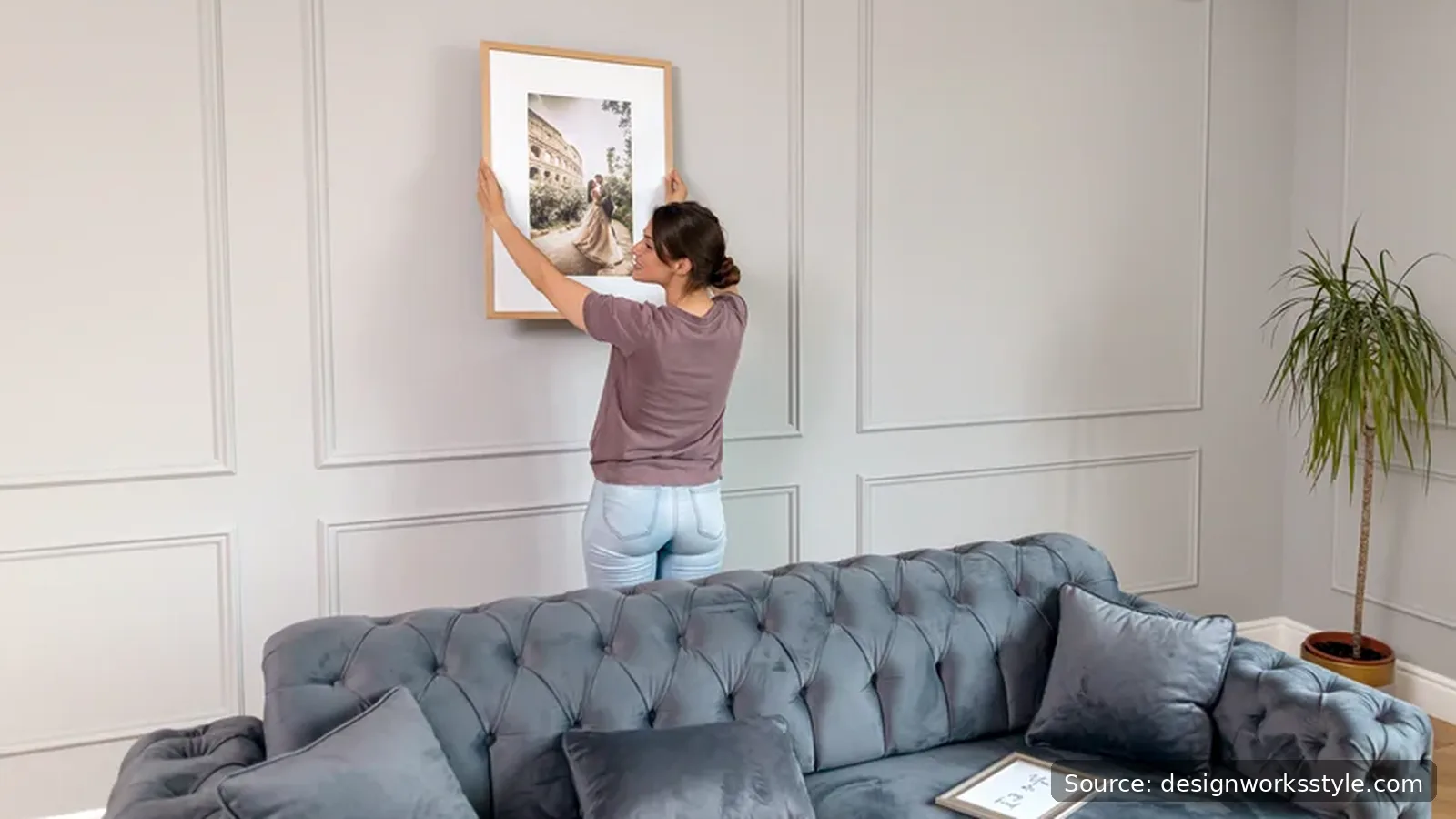
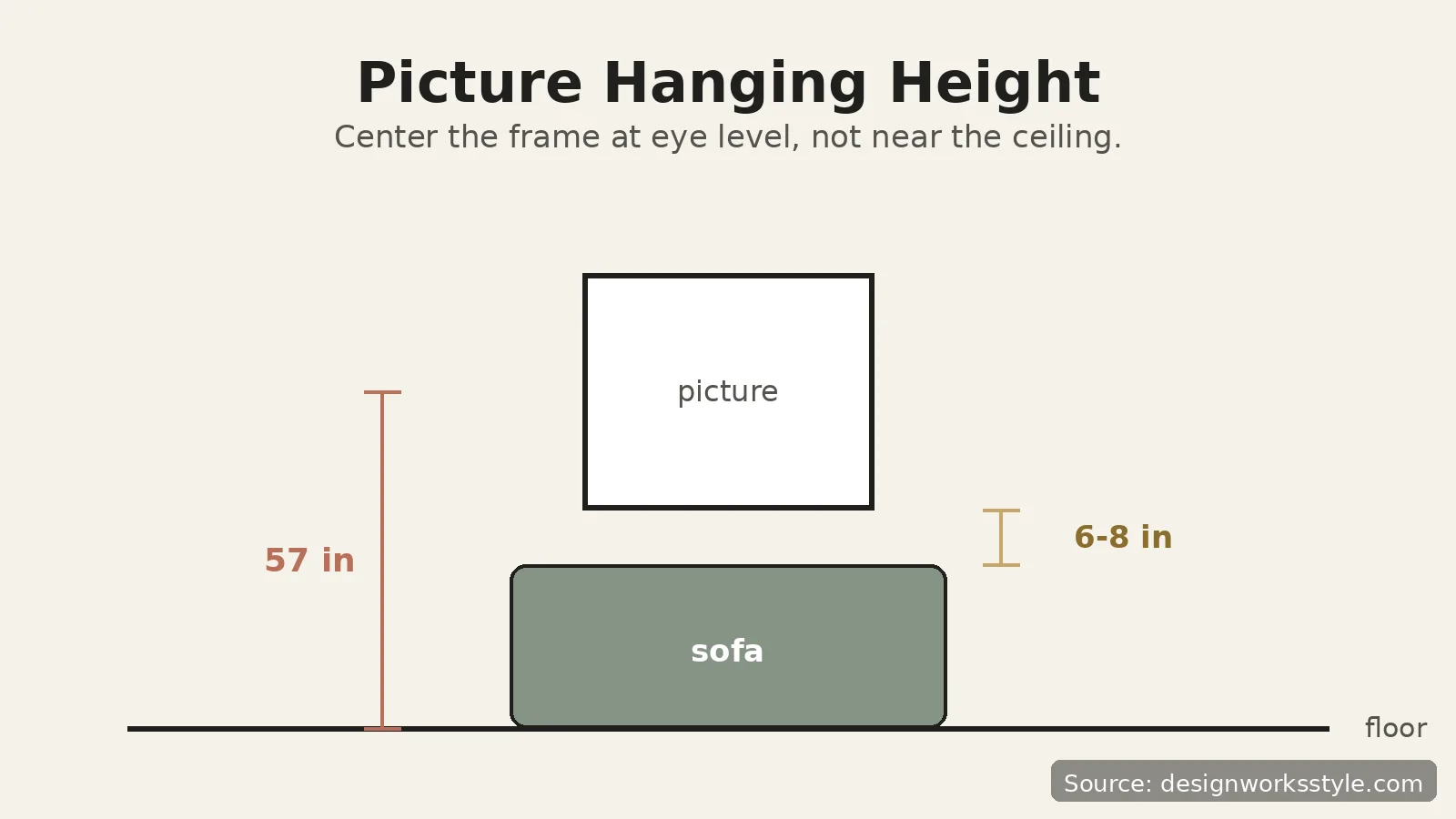
Hang pictures so the center of the frame sits 57 inches from the floor, which is average eye level and the standard galleries use. Above a sofa or console, leave 6 to 8 inches between the furniture and the bottom of the frame. Use two hooks or nails for anything wider than 24 inches so the picture stays level. Measure twice, hang once: mark the wall with painter’s tape before you drill.
Pictures hung too high are the most common decorating mistake in existence. Walk into almost any home and the art floats near the ceiling, disconnected from the furniture below it. The fix takes ten minutes and a tape measure. Everything below assumes you can find solid backing when it matters; if not, read our guide to finding wall studs first.
How High Should You Hang Pictures?
Center the picture at 57 inches from the floor. This is the gallery standard, based on average human eye level, and it works in nearly every room. When hanging above furniture, the 57-inch rule bends to a second rule: 6 to 8 inches of space between the top of the furniture and the bottom of the frame. In rooms with very high ceilings, resist the urge to hang higher to fill the wall. The art relates to the furniture and the people, not to the ceiling. A small picture floating alone on a tall wall looks lost; group it with others or choose a larger piece instead.
How Do You Hang Pictures Without Nails?
Adhesive hanging strips (3M Command is the standard) hold frames up to about 15 pounds on clean, smooth walls. Clean the wall with rubbing alcohol first, press the strips firmly for 30 seconds, and wait the full hour the package demands before hanging. They fail when people skip the wait. For heavier pieces without nails, hardwall hangers (small plastic hooks with angled pins) grip drywall and plaster with minimal holes and hold up to 25 pounds. Both remove cleanly, which is why renters live on them.
What Hardware Should You Use for Different Picture Weights?
Match the hardware to the weight. Light frames under 10 pounds: sawtooth hangers or a single nail. Medium frames 10 to 30 pounds: D-rings with picture wire, hung on two hooks spaced apart so the frame cannot tilt. Heavy pieces over 30 pounds: French cleats or direct screws into studs. Wire-hung frames should have the wire attached about a third of the way down from the top of the frame, with just enough slack to catch the hooks without the wire showing above the frame. On drywall without a stud, use anchors rated above the frame’s weight; toggle bolts are the strongest option.
How Do You Hang a Gallery Wall?
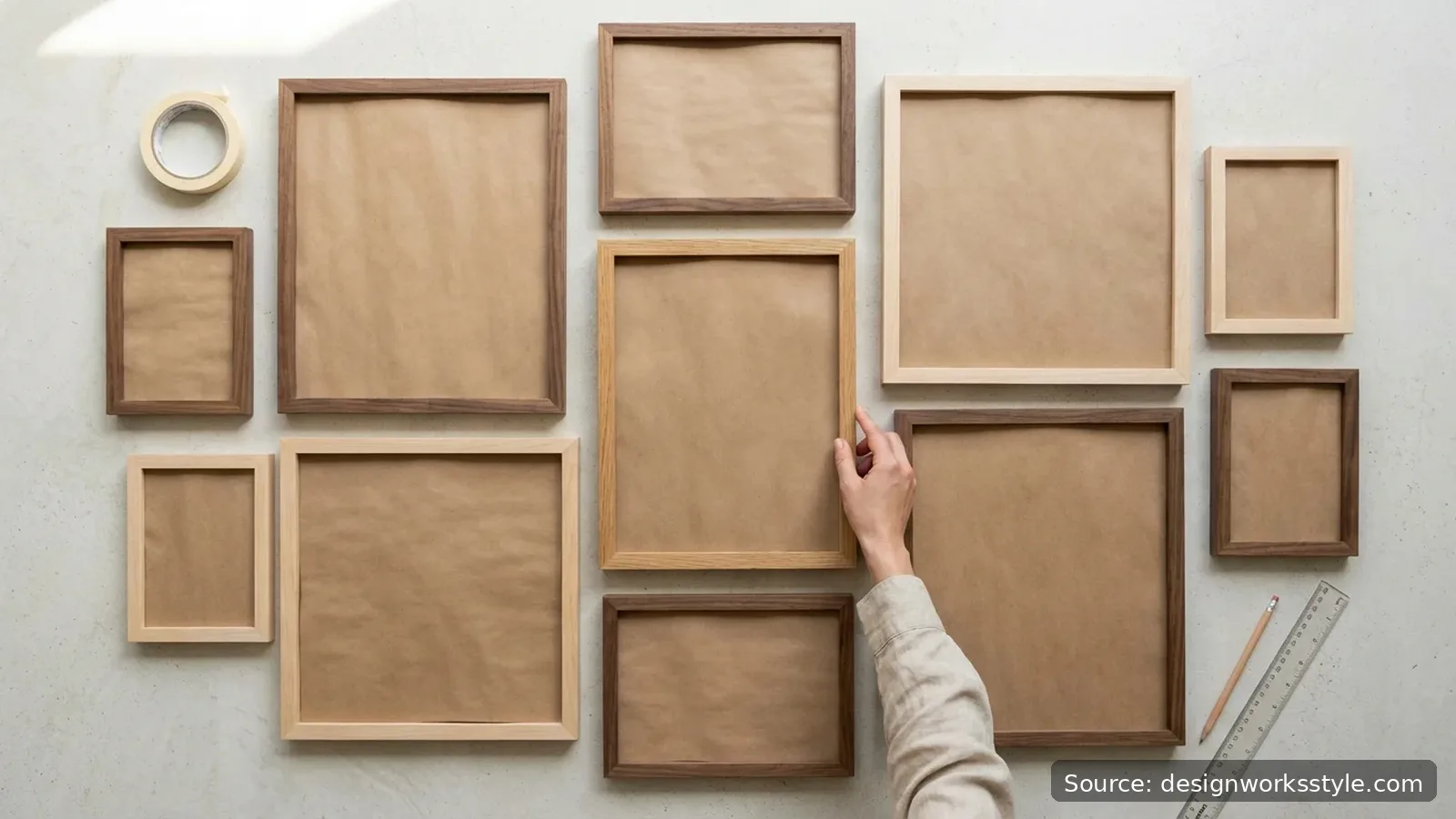
Plan it on the floor first. Lay the frames out on the ground or trace them onto kraft paper, cut out the shapes, and tape the paper to the wall. Live with the paper version for a day before committing. Treat the whole arrangement as one picture: its center sits at 57 inches, and individual frames sit 2 to 3 inches apart. Start with the largest piece slightly off-center (dead-center arrangements look static), then build outward. Keep the spacing consistent. Consistent gaps are what make a gallery wall look intentional instead of accidental.
How Do You Keep Pictures Level?
Use two hanging points instead of one for anything wider than a foot. A single nail is a pivot; two nails are a lock. After hanging, check with a small level, then step back six feet and look. Walls and floors are rarely perfectly true, so a picture that is level by the bubble can look crooked against a slanted ceiling line. Trust your eyes for the final call. Museum putty behind the bottom corners stops frames from drifting when doors slam, which is the usual reason pictures go crooked a week after hanging.
Frequently Asked Questions
How far apart should picture groupings be spaced?
Two to 3 inches between frames for a tight, intentional grouping. Wider spacing makes the arrangement read as separate pictures that happen to share a wall. For salon-style walls with many pieces, consistency matters more than the exact number: pick a gap and hold it across the whole wall.
Can you hang pictures on plaster walls?
Yes, but drill pilot holes first. Plaster cracks when a nail is hammered straight in, especially old plaster. A small masonry bit at slow speed, then the nail or screw into the pilot hole. Adhesive strips also work well on plaster since they avoid the cracking problem entirely, provided the plaster is not flaking.
How do you hang a heavy mirror?
Into studs, with screws, never on drywall alone. Heavy mirrors need two stud-mounted points or a French cleat screwed into at least one stud. If the studs do not line up with where the mirror must go, mount a horizontal board to two studs and hang the mirror from the board. A falling mirror is a safety problem, not just a decorating problem.
Should picture frames match?
Matching frames look calm and formal; mixed frames look collected and personal. Both work. What does not work is accidental mixing: three black frames and one silver one looks like a mistake, while a deliberate mix of woods, metals, and colors looks curated. If you mix, repeat each frame style at least twice so nothing looks like the odd one out.