
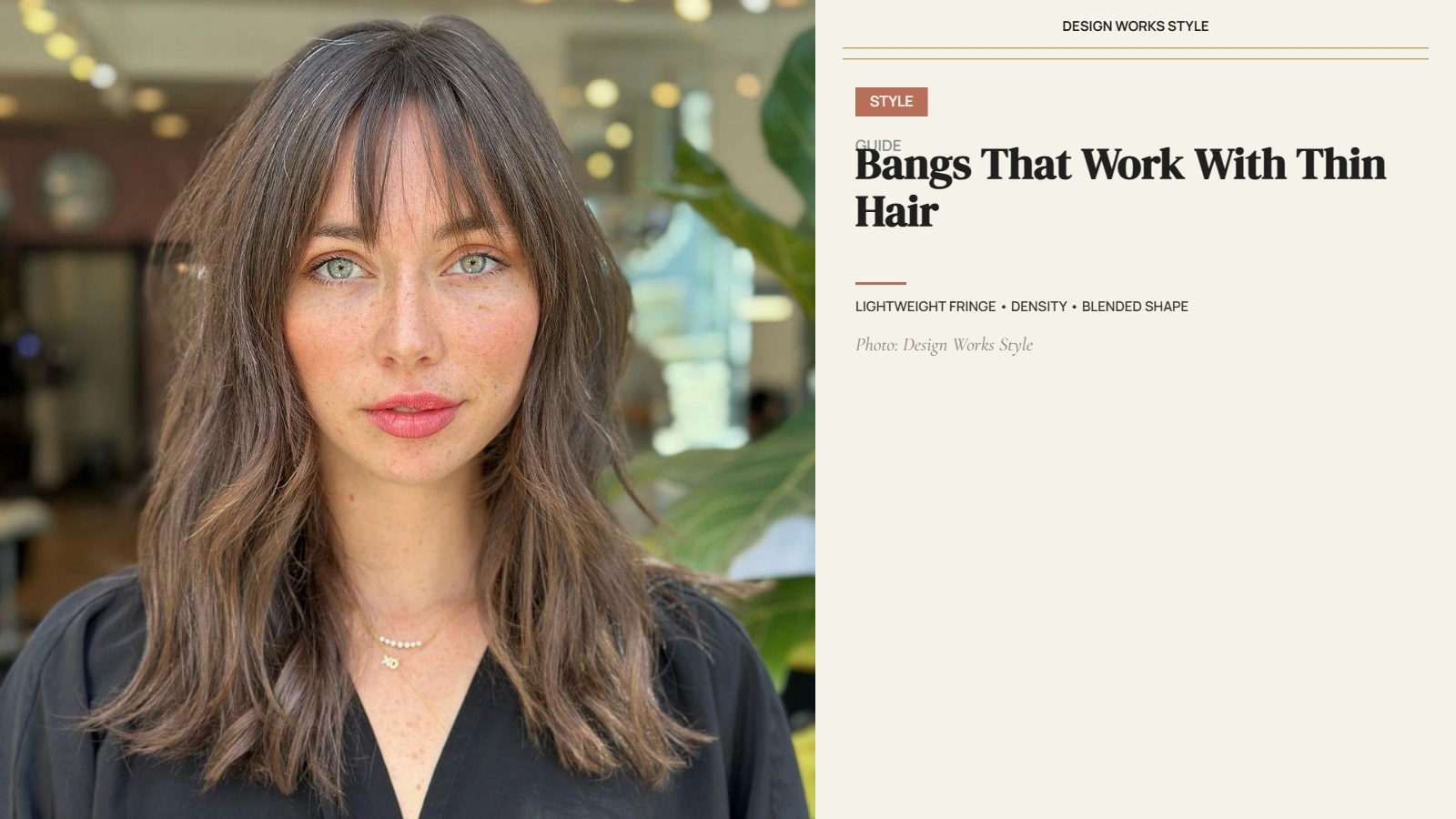
Yes, you can wear bangs with thin hair, but the choice is less about finding a universally “best” fringe and more about working with the amount of hair available at the front. Density, strand thickness, your existing haircut, natural growth pattern, and styling routine all affect how bangs will look.
A lighter, blended fringe can preserve more hair around the front, while a fuller fringe creates a stronger shape but uses more of the available hair. Fine hair and thin hair also need to be considered differently: fine strands can still be very dense, while thin hair refers to lower overall coverage. That distinction matters when deciding how much hair to put into a fringe.
Can You Have Bangs With Thin Hair?
You can have bangs with thin hair, but creating a fringe changes how the hair is distributed.
The hair used for bangs has to come from somewhere, usually the front or top section of the head. A heavier fringe therefore requires a larger section of hair, leaving less hair available around the temples, sides, and top.
A lighter fringe uses less hair and can leave more of the surrounding hair available for the rest of the hairstyle. That can make it a more practical starting point when density is limited at the front.
A useful decision rule is:
If you have limited density at the front, consider a lighter or more blended fringe before committing to a thick, blunt shape.
That does not mean a thin-haired person cannot wear fuller bangs. It means the section size should be considered carefully with the stylist rather than copied directly from a reference photo.
Fine Hair vs. Thin Hair: Why the Difference Matters
“Fine” and “thin” describe different things.
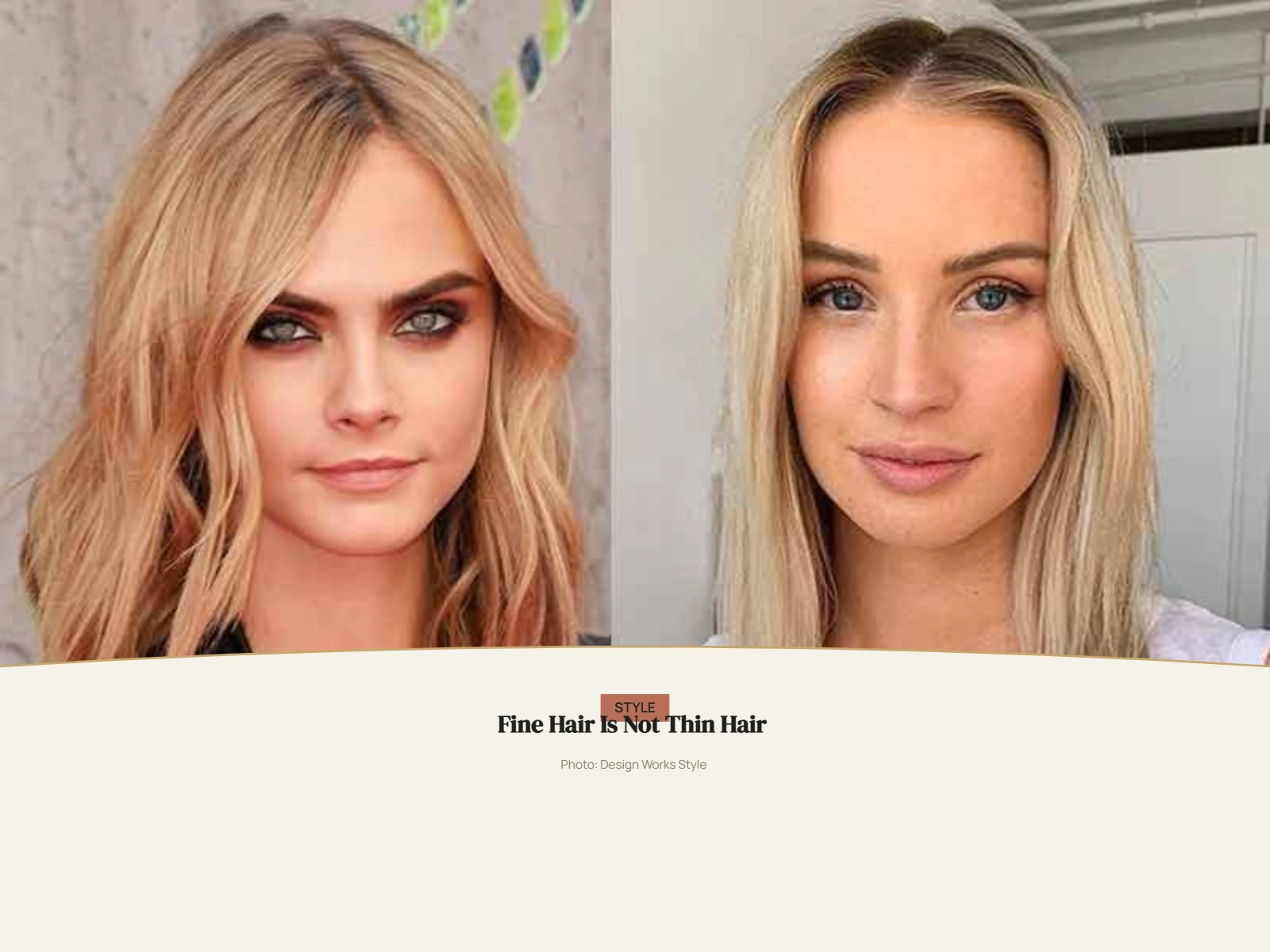
Fine hair refers to the diameter of individual strands. Someone can have very fine strands but a high number of hairs across the scalp.
Thin hair refers more to overall density or coverage. Someone can have relatively thick individual strands but still have less hair density in a particular area.
This difference changes the amount of flexibility you may have with bangs. Someone with fine but dense hair may have enough hair to create a more substantial fringe, while someone with genuinely low density at the front may need a lighter approach.
It is also possible to have both fine and thin hair. In that situation, the amount of hair available for the fringe and the way the strands behave during styling become especially important.
The key question is not simply, “Is my hair fine?” Ask instead: “How much hair do I actually have available to create the fringe I want?”
Which Bangs Work Well With Thin Hair?
There is no single fringe shape that works for everyone with thin hair. The better approach is to compare how each shape uses the available hair and how it connects with the rest of the haircut.
Curtain Bangs
Curtain bangs open through the center or slightly off-center and usually become longer toward the sides. Because they can blend gradually into the surrounding haircut, they offer several ways to adjust the amount of hair used.
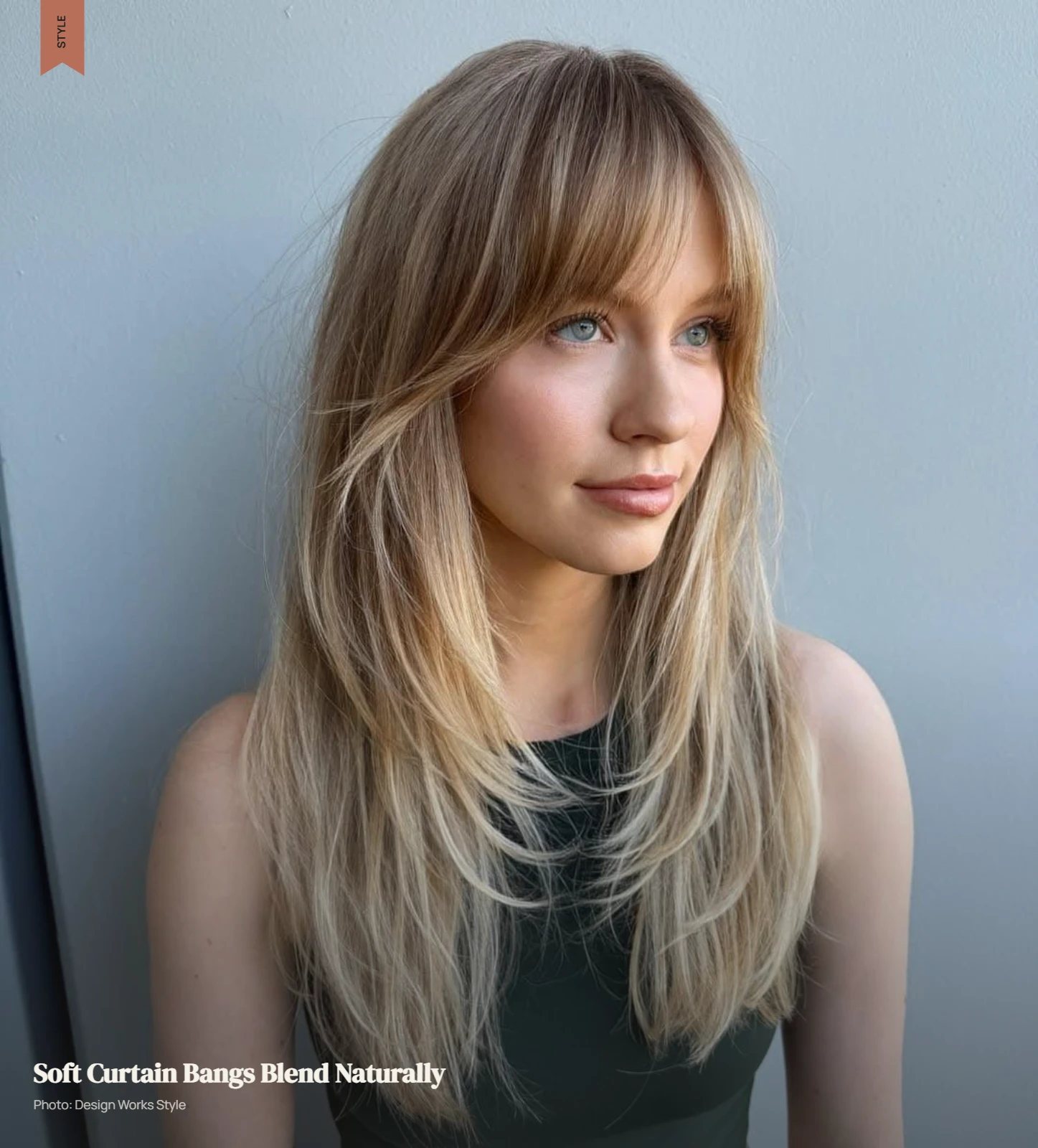
A lighter curtain fringe can leave more of the surrounding hair untouched. Longer sides can also make the transition into the rest of the haircut less abrupt.
The styling commitment matters. Curtain bangs often need some direction and shaping to maintain their intended opening, particularly if your natural growth pattern does not naturally separate in the center.
Best to consider when: You want a fringe that can blend into the rest of the haircut and offers flexibility as it grows.
Watch for: A reference with very full curtain bangs may require substantially more density than you have available.
Side-Swept Bangs
Side-swept bangs create directional movement rather than a strong straight-across line. A longer fringe can be brushed across the forehead and blended into the surrounding hair.
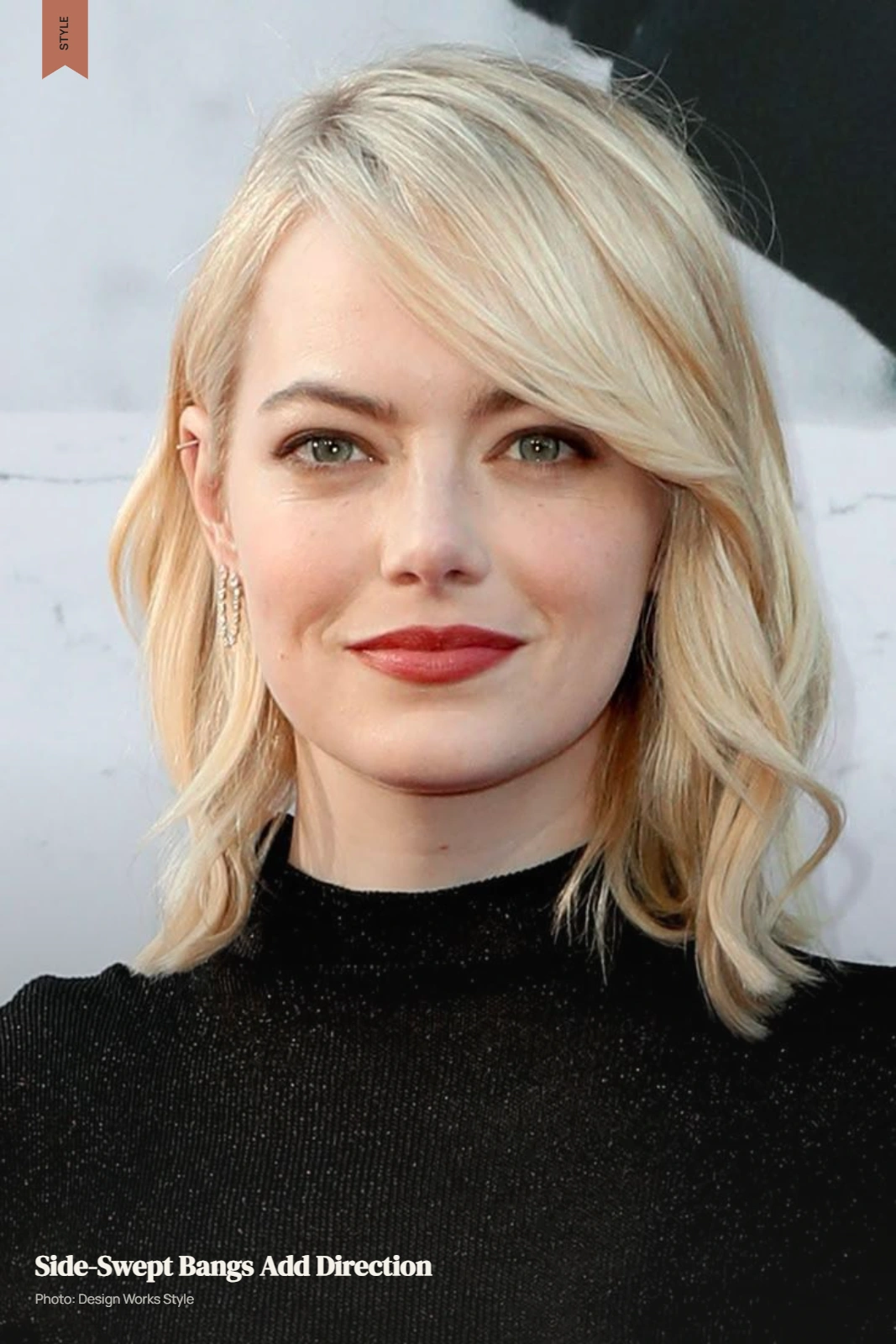
This can be useful if you want the option of wearing a fringe without creating a clearly defined horizontal edge. The same section can often be moved, blended, or incorporated into a pulled-back hairstyle.
The amount of hair used still matters. A very thick side fringe can use more of the front section than a lighter, longer version.
Best to consider when: You want directional movement and a fringe that can transition into the rest of the haircut.
Watch for: Excessive texturizing or separation if the available density is already low.
Wispy Bangs
Wispy bangs are intentionally lightweight, with separated strands and a softer visual edge. They can work well when you want the presence of a fringe without a heavy block of hair across the forehead.
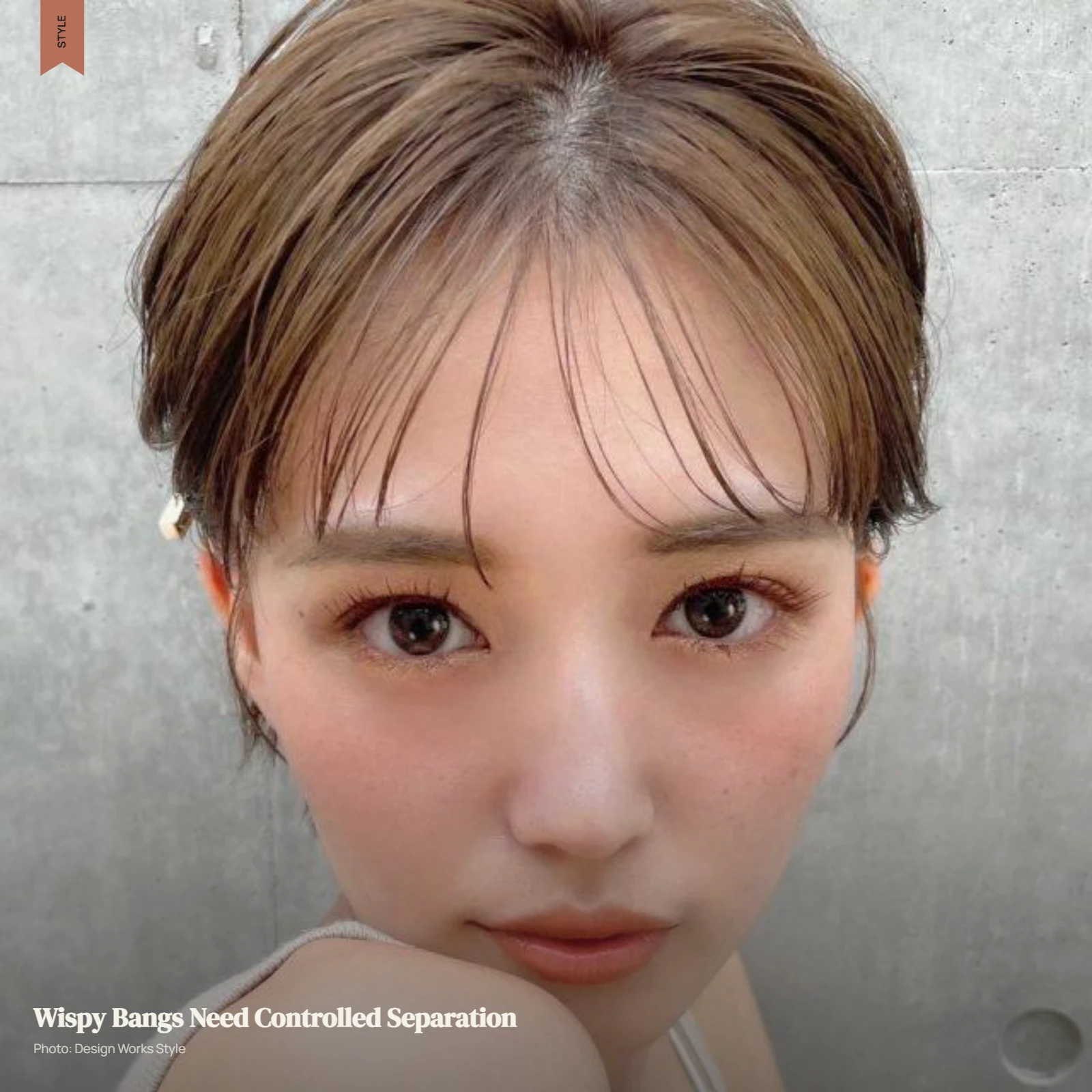
But wispy does not automatically mean fuller.
There is a difference between a deliberately lightweight fringe and one that looks sparse because there is not enough density to support the intended shape. If your front density is already very low, an overly separated wispy fringe may expose more scalp than you want.
The styling also matters. A few carefully positioned strands can look intentional, while excessive separation can make the fringe appear thinner.
Best to consider when: You want a soft, lightweight fringe and have enough density to maintain its intended shape.
Watch for: Over-separation that makes the fringe look unintentionally sparse.
Soft, Light Fringe
A soft fringe sits between a traditional straight-across bang and a deliberately wispy style. It can have a gentler perimeter, subtle texture, and some blending into the surrounding hair.
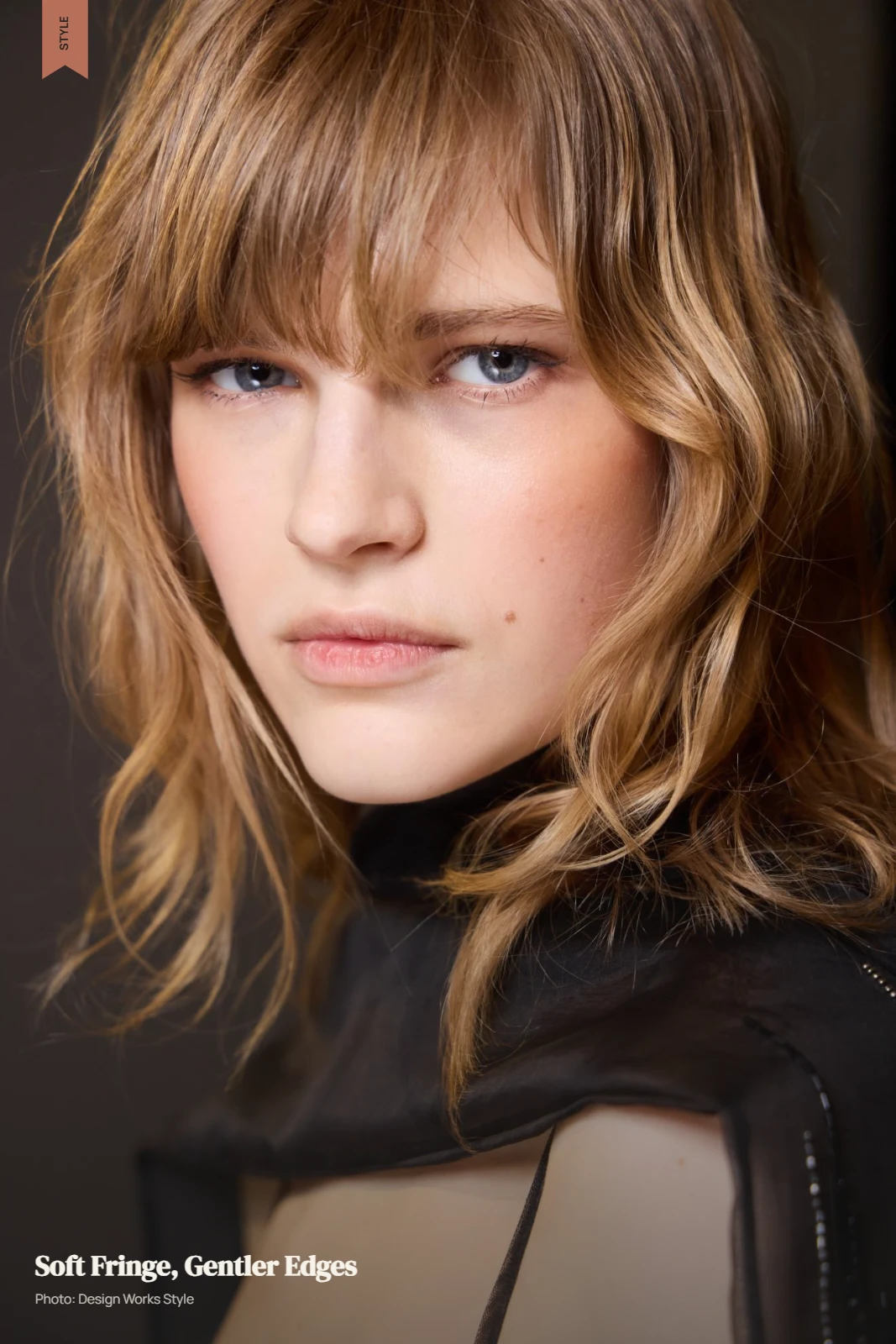
This approach can be useful when you want visible forehead coverage without creating a very rigid edge. The stylist can adjust the section size and perimeter according to your available density.
The important part is to avoid removing too much hair through aggressive texturizing. If there is already limited density, creating additional separation can make the fringe appear less substantial.
Best to consider when: You want a recognizable fringe with a softer, less rigid finish.
Blended or Longer Bangs
Longer bangs can be easier to integrate into the surrounding haircut because the transition is gradual. Instead of creating a strong dividing line between fringe and the rest of the hair, the shorter pieces can flow toward the sides.
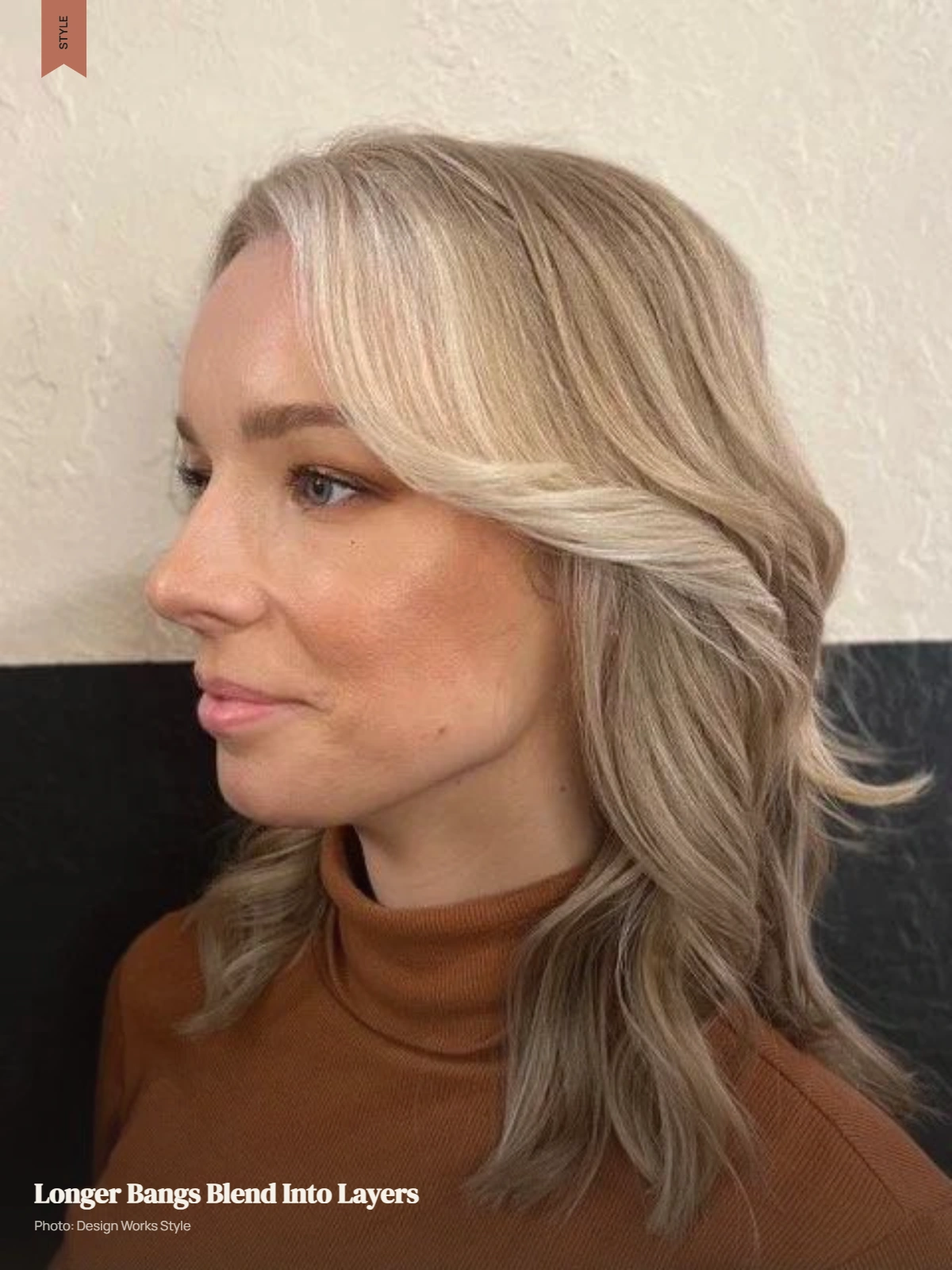
This can also provide more styling flexibility as the bangs grow. They can be worn forward, swept aside, tucked back, or incorporated into the rest of the hairstyle.
For someone unsure about committing to a short fringe, a longer, blended shape can provide an easier starting point.
Best to consider when: You want flexibility and a less obvious transition as the fringe grows.
Image placement: Side-profile or three-quarter image showing longer bangs gradually blending into the side layers.
Suggested alt text: Long blended bangs transitioning into the surrounding haircut
How Thick Should Bangs Be?
The amount of hair used for a fringe creates a basic trade-off:
More hair in the fringe → a stronger, denser-looking bang shape, but less hair remains around the front.
Less hair in the fringe → a lighter fringe while more surrounding hair remains available for the rest of the hairstyle.
There is no universal measurement that works for every person. Hair density, strand thickness, existing layers, forehead shape, and the desired fringe all change the appropriate section.
If you have limited density, ask your stylist to show you approximately how much hair would be taken before cutting. You can discuss whether preserving more hair around the temples or top is more important to you than having a heavier fringe.
A reference photo is useful for communicating the shape, but it should not automatically determine the amount of hair used.
How to Style Bangs for Thin Hair
Styling can change how a fringe sits without changing how much hair you actually have.
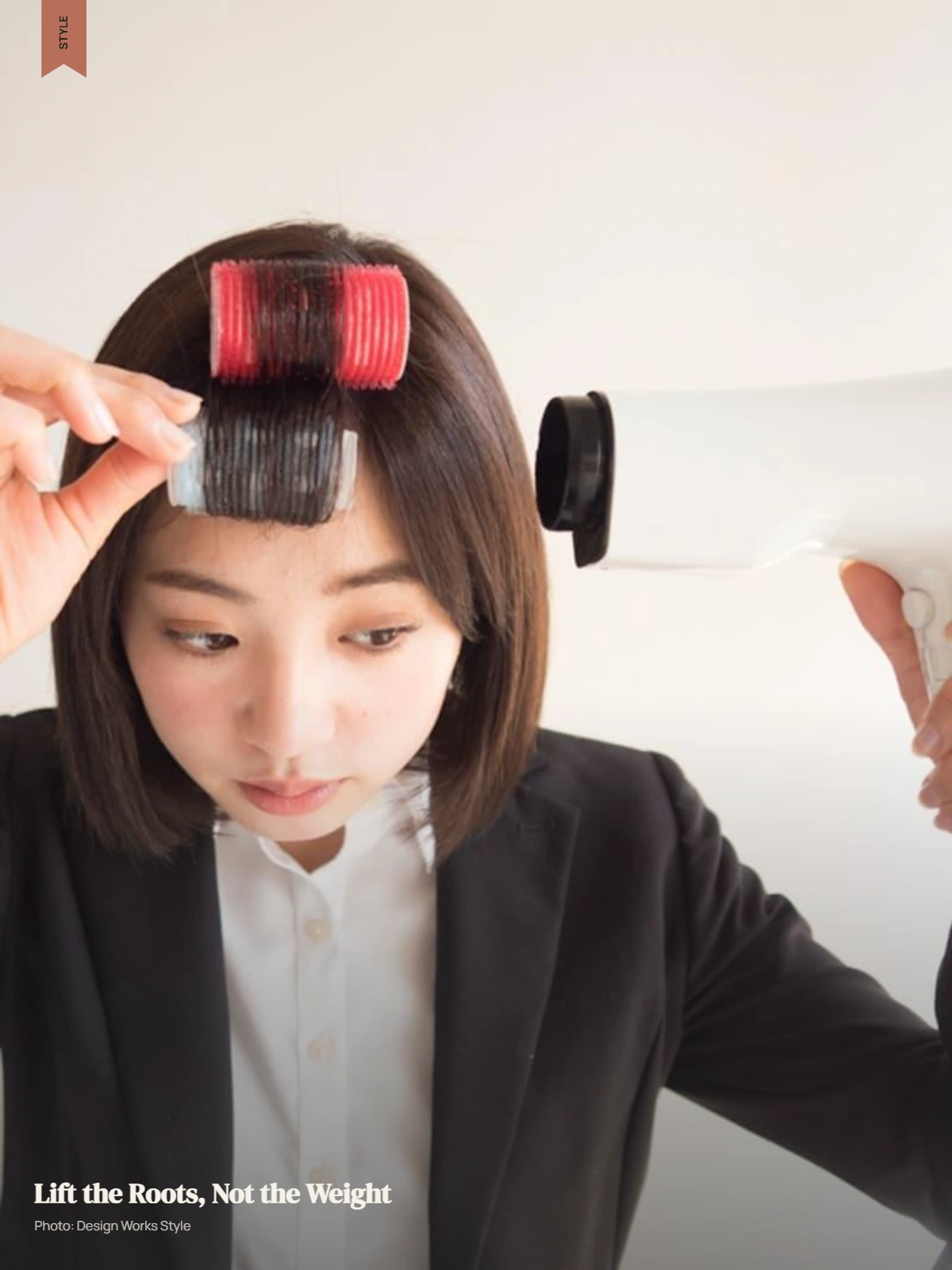
Start by drying the bangs before the rest of your hair completely sets. Direct the roots in the direction you want them to sit, then allow the fringe to cool into that position.
For a little more lift, you can create controlled root volume rather than applying large amounts of product. Lightweight products are generally easier to work with when you want the hair to remain movable.
Useful techniques include:
- Drying the roots in the desired direction.
- Lifting the roots gently while drying.
- Using a small roller for controlled root volume.
- Keeping heavy creams and oils away from the fringe when they cause it to collapse.
- Working with your natural growth pattern instead of fighting it.
- Styling the fringe before the rest of the hairstyle sets.
If rollers are part of your routine, see our guide to hair rollers for fine hair for more focused styling guidance.
The goal is controlled shape, not maximum volume. Too much manipulation can separate the strands and make a lightweight fringe appear less cohesive.
Bangs for Different Hair Textures
The same fringe behaves differently depending on natural texture.
Straight Hair
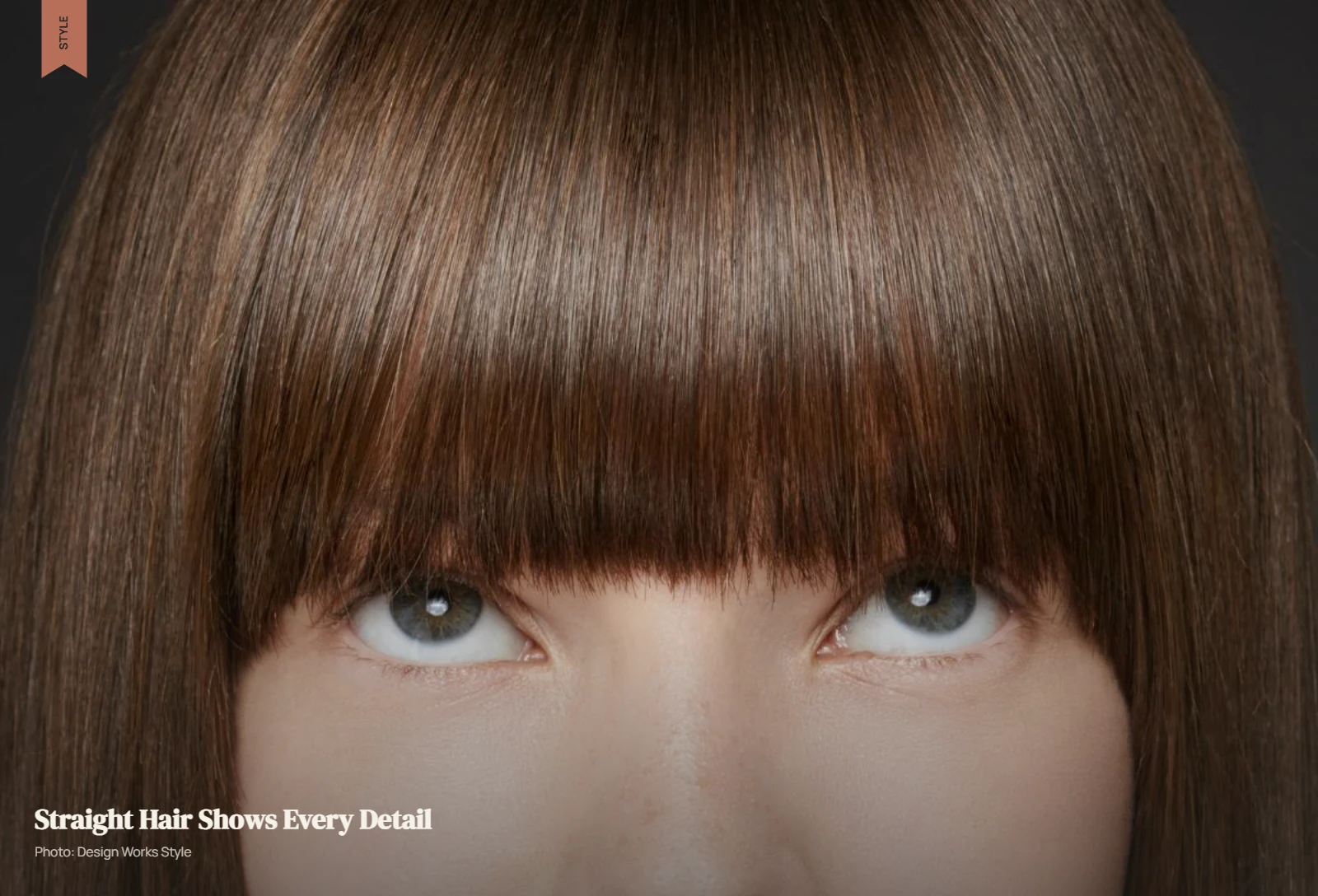
Straight hair makes the perimeter and density of a fringe especially visible. Small changes in length, section size, or edge shape can therefore make a noticeable difference.
Wavy Hair
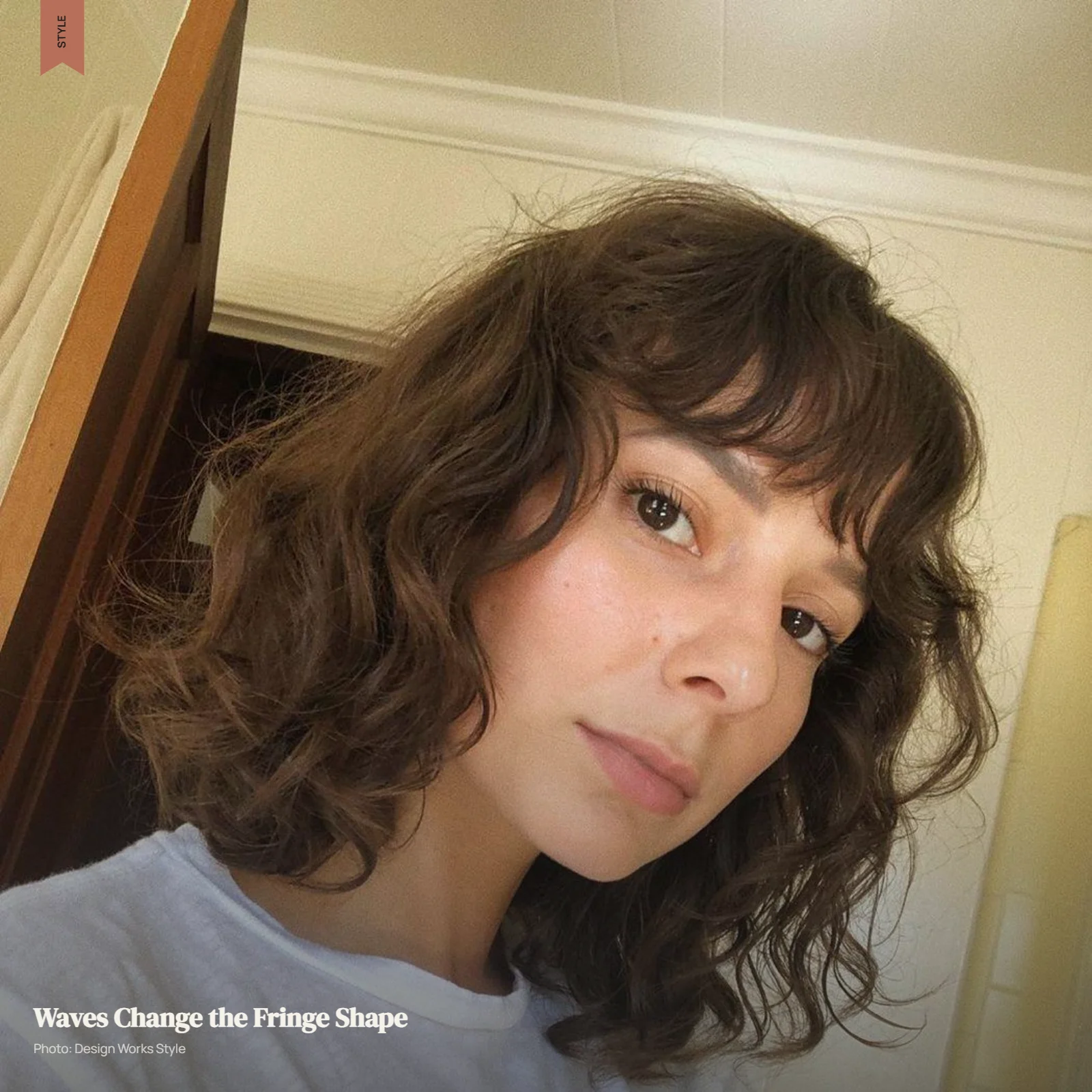
Waves can change the apparent length and direction of bangs. A fringe may appear shorter when the hair dries into its natural bend, so the finished shape should be considered with the hair in its normal texture.
Curly Hair
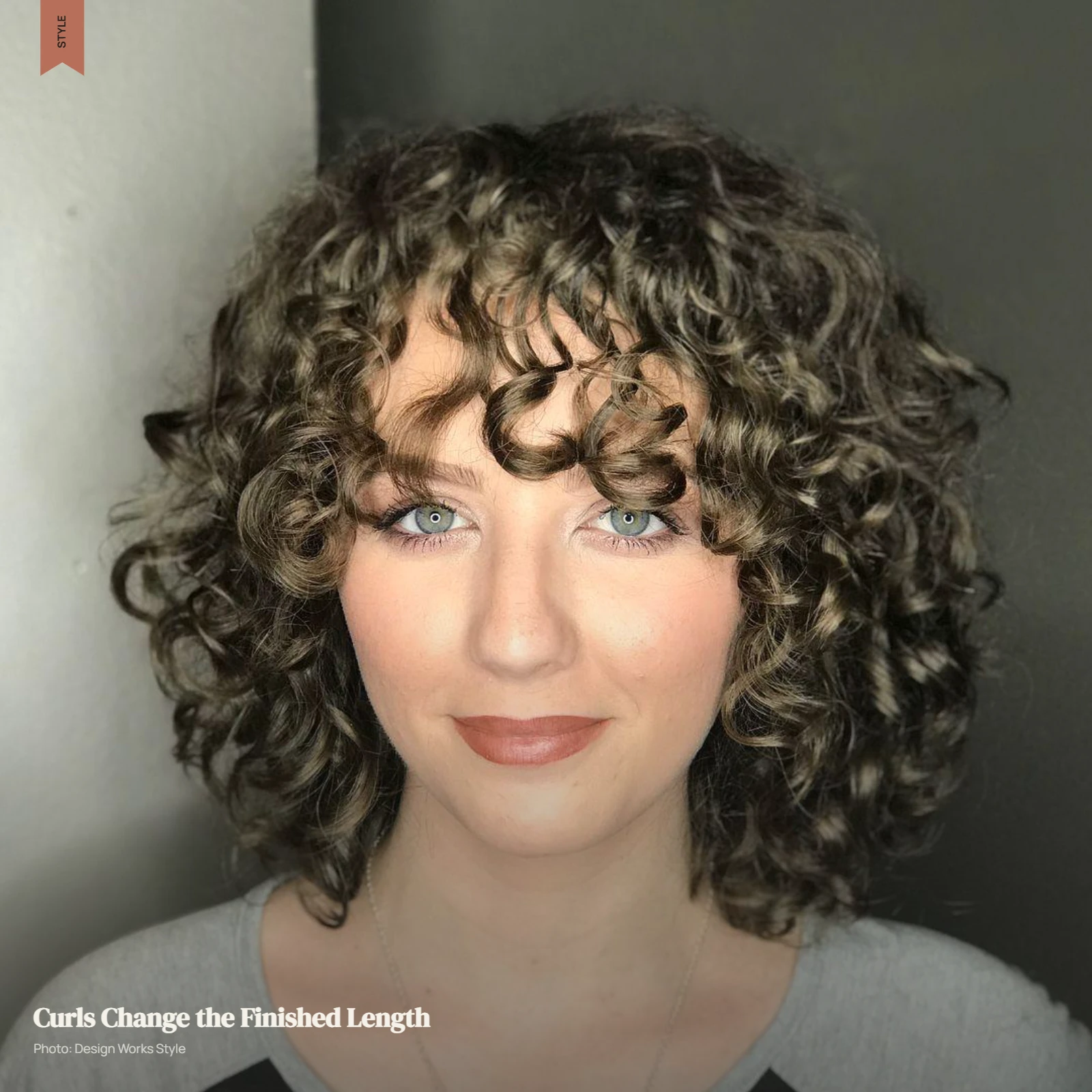
Curl pattern and shrinkage are particularly important. The length of a curl when stretched is not necessarily the length it will appear when dry, so fringe length should be planned around the natural curl pattern.
Fine, Straight Hair
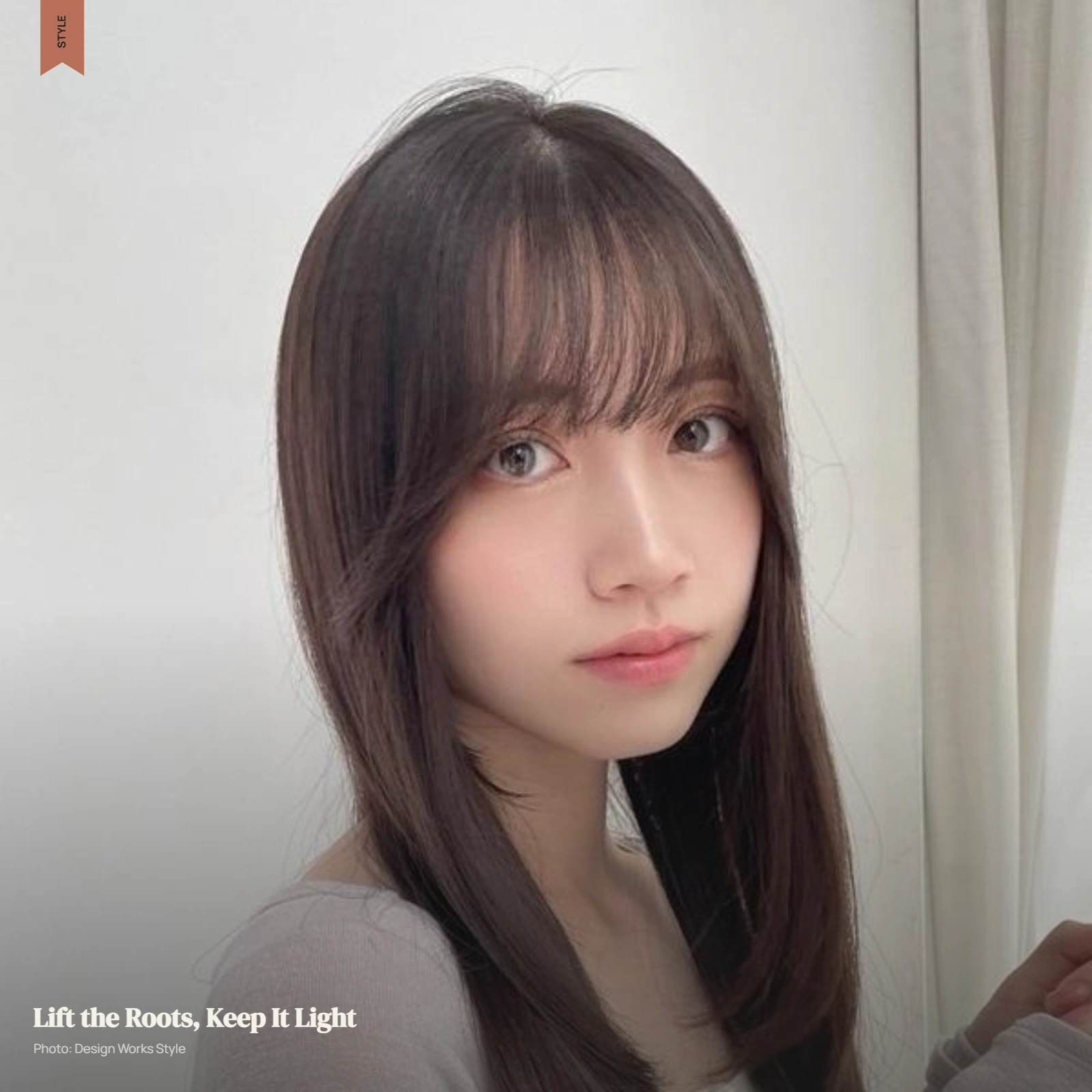
Fine, straight hair can benefit from controlled root lift and lightweight styling. Avoid automatically adding lots of product or aggressive texture in an attempt to create fullness.
The broader point is simple: a bang shape should be evaluated on hair that behaves similarly to yours, not only on the face of the person in the reference photo.
How to Make Thin Bangs Look Fuller
Styling can create the appearance of fullness, but it does not increase actual hair density.
Start with the fringe shape itself. If the available density is limited, a deliberately chosen section may produce a more cohesive result than trying to make a sparse fringe appear much thicker through styling.
You can also:
- Dry the roots in the direction you want the fringe to sit.
- Add gentle root lift.
- Experiment with strategic parting.
- Use lightweight styling products.
- Avoid excessive strand separation.
- Keep the ends maintained so the fringe retains its intended shape.
- Choose a fringe design that matches the amount of hair available.
Be careful with excessive texturizing. Separating every strand can sometimes make a fringe look lighter rather than fuller.
Think of styling as organizing the hair you have, not creating additional density.
Image placement: Close-up comparison showing a cohesive lightly styled fringe versus an overly separated fringe.
Suggested alt text: Fine hair bangs styled with cohesive strands and gentle root volume
Maintenance and Growing Out Bangs
The maintenance required depends on the length and structure of the fringe.
Short bangs usually need more frequent reshaping if you want them to remain at a precise length. Longer curtain or side-swept bangs generally provide more flexibility because small amounts of growth can be blended into the surrounding hair.
As bangs grow, their styling options change. A fringe that initially sits across the forehead may eventually be swept aside, parted, tucked back, or incorporated into longer face-framing pieces.
Growing out bangs is therefore easier when the transition is planned. Your stylist can gradually blend the fringe into the surrounding haircut rather than leaving a distinct short section to grow out on its own.
Before getting bangs, consider not only how you want them to look on day one, but also how you want them to look several weeks or months later.
Common Mistakes With Bangs and Thin Hair
A few decisions can make a fringe appear less dense or create more maintenance than expected.
- Taking too much hair from the front: A heavier fringe leaves less hair around it.
- Assuming thicker bangs automatically look fuller: A large section can create a stronger fringe while making the surrounding hair appear less substantial.
- Making the fringe too short: Shorter bangs have less room for repositioning and may require more styling.
- Over-texturizing: Removing too much weight from already low-density hair can create excessive separation.
- Using heavy styling products: Product weight can make fine strands collapse or separate.
- Creating too much separation: Individual strands can become visually disconnected rather than forming a cohesive fringe.
- Copying a high-density reference: The same fringe may not translate directly to hair with less available density.
- Ignoring natural growth patterns: Cowlicks and strong directional growth can affect how a fringe sits.
- Choosing a high-maintenance style: A fringe that requires daily heat styling or precise positioning may not suit your normal routine.
None of these means you should avoid bangs. They are simply trade-offs worth considering before choosing the shape.
When Bangs May Not Be the Right Choice
Bangs can be a good option, but there are situations where you may want to discuss the decision with a stylist before cutting.
Consider taking extra care if you have:
- very limited density at the front
- a strong cowlick or directional growth pattern
- little interest in regular styling
- a strong preference for preserving maximum hair around the face
- a reference fringe that appears substantially denser than your own hair
In these situations, a stylist can help you understand how much hair would need to be moved into the fringe and what would remain around the sides and top.
You can also start with a longer or more blended concept rather than making a dramatic change immediately.
The goal is not to decide whether bangs are universally “good” for thin hair. It is to find out whether the particular fringe you want fits the amount of hair, texture, growth pattern, and maintenance routine you have.
Need Help Choosing the Rest of the Haircut?
Bangs are only one part of a haircut. If your bigger question is which overall cut should surround the fringe, that becomes a broader haircut decision.
Our guide to Haircuts & Hairstyles can help when you are deciding on the overall shape rather than the fringe alone.
If you already know the haircut you want and are deciding what to do at the front, stay focused on the fringe: how much hair it uses, where it begins, how it ends, how it blends, and how much styling it requires.
Frequently Asked Questions
Can thin hair pull off bangs?
Yes. Wispy bangs, curtain bangs, and textured micro-fringes work best because they do not demand density. Very thick blunt bangs are the hardest style on thin hair.
Will bangs make my hair look thinner?
They can if they are cut too thick from too far back. A skilled stylist takes bangs from a shallow section so the rest of your hair keeps its fullness.
How do you style bangs on thin hair?
Blow-dry them first, before they air-dry into a cowlick. A small round brush and a light root lift at the front goes further than heavy product, which weighs thin bangs down.
How often do bangs need trimming?
Every two to four weeks to keep the shape. Many salons offer free bang trims between appointments, so it is worth asking.