
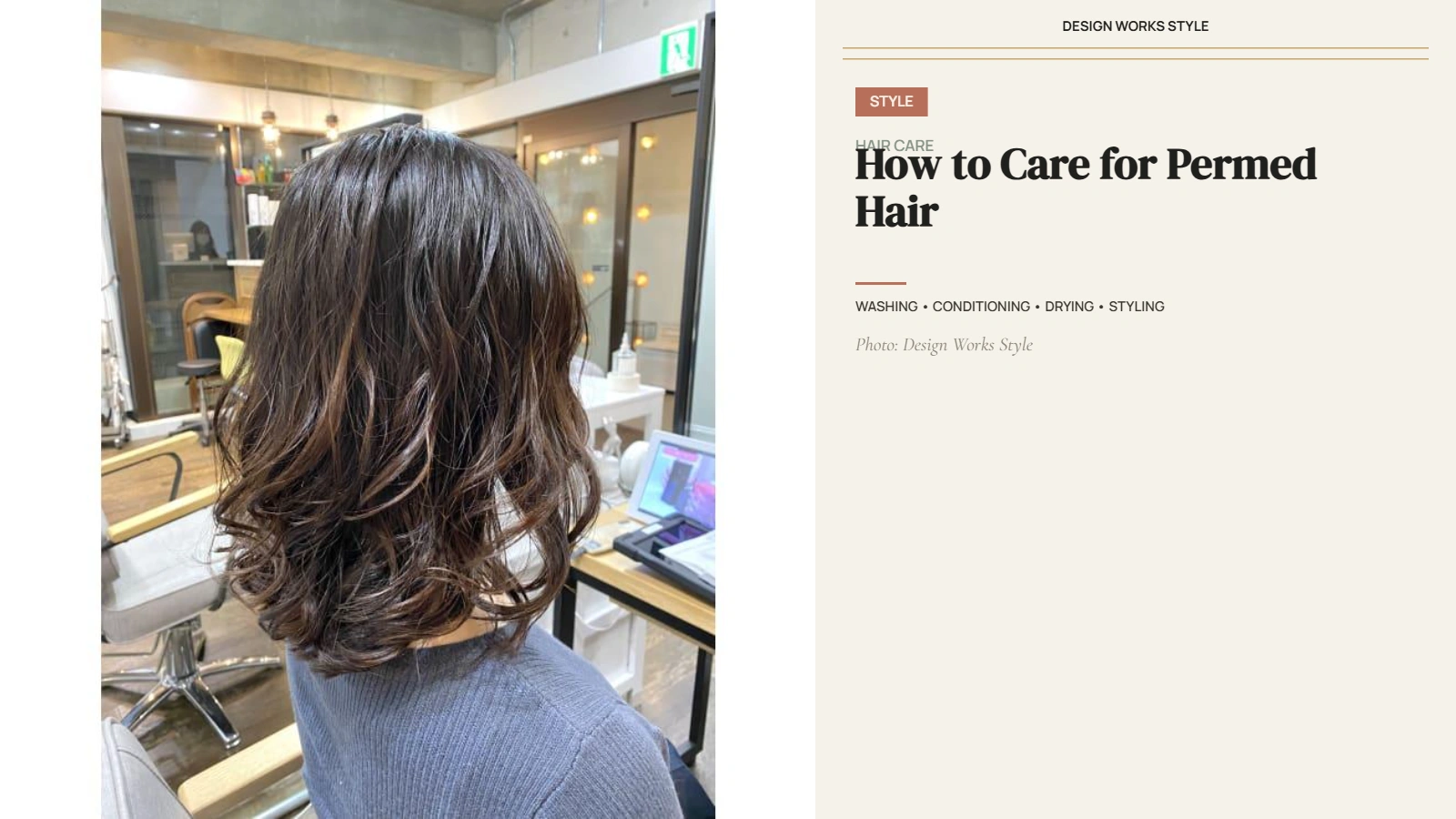
Good perm aftercare starts with one important rule: follow the instructions given for your specific perm service before following any general hair-care advice. The timing and products recommended after a perm can vary depending on the service, products used, your hair’s condition, and your stylist’s instructions.
From there, the goal is fairly simple: handle the hair gently, cleanse without unnecessary friction, condition regularly, detangle carefully, and limit unnecessary heat and chemical stress.
Your routine should also account for how your particular perm behaves. Some curls need very little styling, while others benefit from careful product application and refreshing between washes.
Think of perm aftercare as a progression: follow the initial instructions → first cleanse → regular washing → condition → detangle → dry → style → sleep → maintain → monitor your hair’s condition.
What to Do Immediately After a Perm
Before leaving the salon, make sure you understand the aftercare instructions for your specific service.
Ask your stylist:
- When should I first cleanse my hair?
- Which products should I use?
- Are there products or treatments I should avoid?
- When can I safely style my hair normally?
- When should I return for a trim or reshaping?
Avoid unnecessary manipulation immediately after the service. Rather than repeatedly touching, brushing, or rearranging the curls, give the hair a chance to settle according to the instructions you were given.
It is also a good idea to avoid introducing another chemical treatment without professional guidance, particularly if the hair has already undergone other chemical services.
Your first aftercare questions
Before you leave the appointment, you should know three things:
When should I first wash it, what should I use, and what should I avoid?
Those answers should come from the instructions for your particular perm rather than from a universal timetable.
When Can You Wash Your Hair After a Perm?
There is no single first-wash schedule that should automatically be applied to every perm.
The appropriate timing can depend on:
- The specific perm service
- The products and process used
- Your stylist’s instructions
- The condition of your hair
Some general hair-care advice recommends waiting a certain amount of time after a perm, but that should not override instructions specific to your service.
If your stylist or the product manufacturer gave you a particular first-wash recommendation, use that as your starting point.
If the instructions are unclear, contact the salon rather than guessing.
What if you washed it earlier than instructed?
Do not assume that one early wash automatically means the service has failed.
Pay attention to how the hair looks and feels, and contact your stylist if you are concerned about the result or condition of your hair. They can assess the specific service rather than relying on a generic aftercare timetable.
How to Wash Permed Hair
Once you have reached the first cleansing point recommended for your service, focus on gentle handling.
Step 1: Thoroughly wet the hair
Use enough water to saturate the hair before applying cleanser.
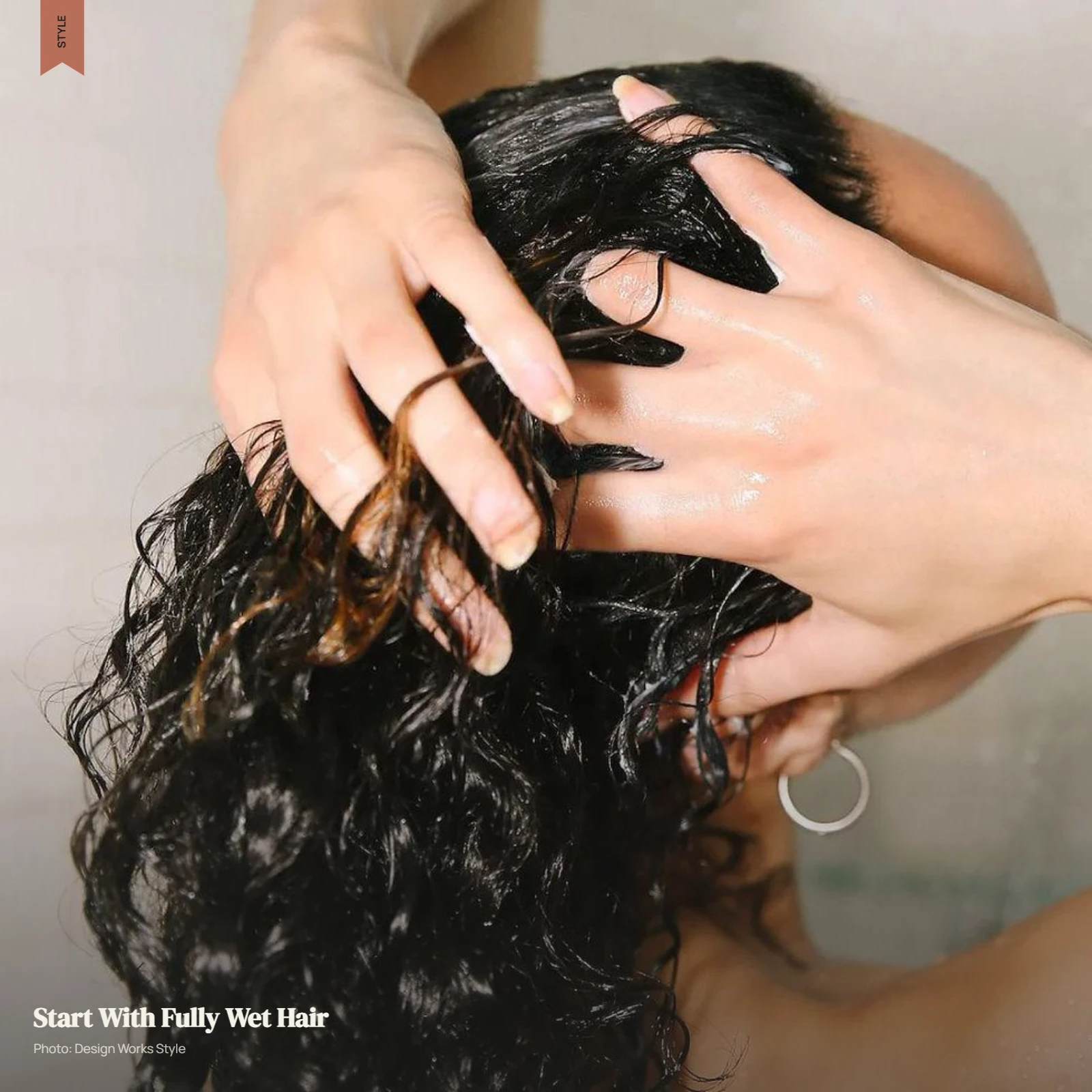
Avoid aggressively rubbing or scrubbing the lengths simply because the hair is wet. Permed curls can become tangled more easily when they are handled roughly.
Step 2: Cleanse gently
Apply your cleanser according to its instructions and concentrate on cleaning the scalp and hair without excessive friction.
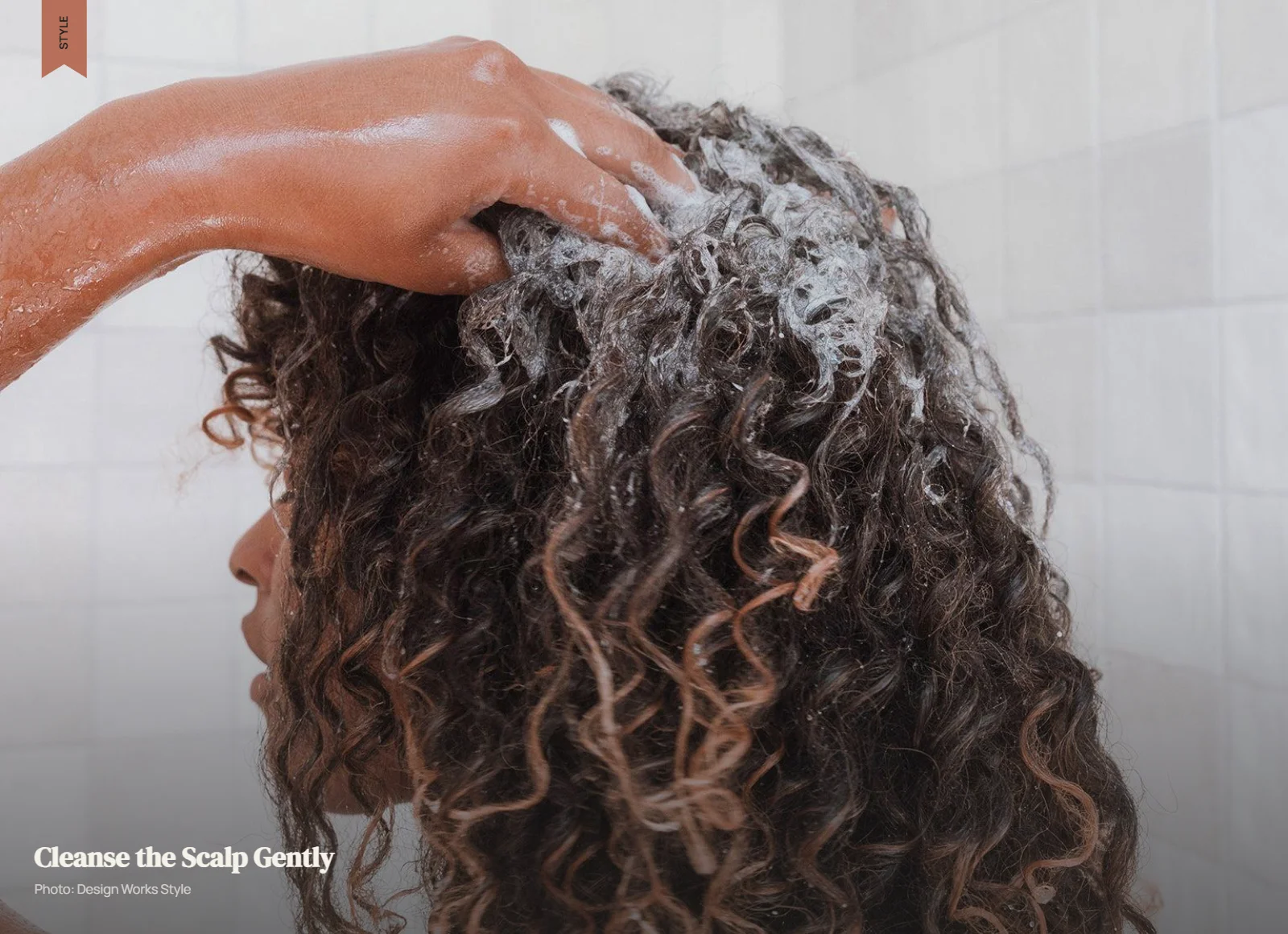
You generally do not need to vigorously scrub the lengths of the hair. Let the cleanser and water do most of the work.
Step 3: Rinse thoroughly
Rinse the hair carefully so that cleanser does not remain unnecessarily on the scalp or lengths.
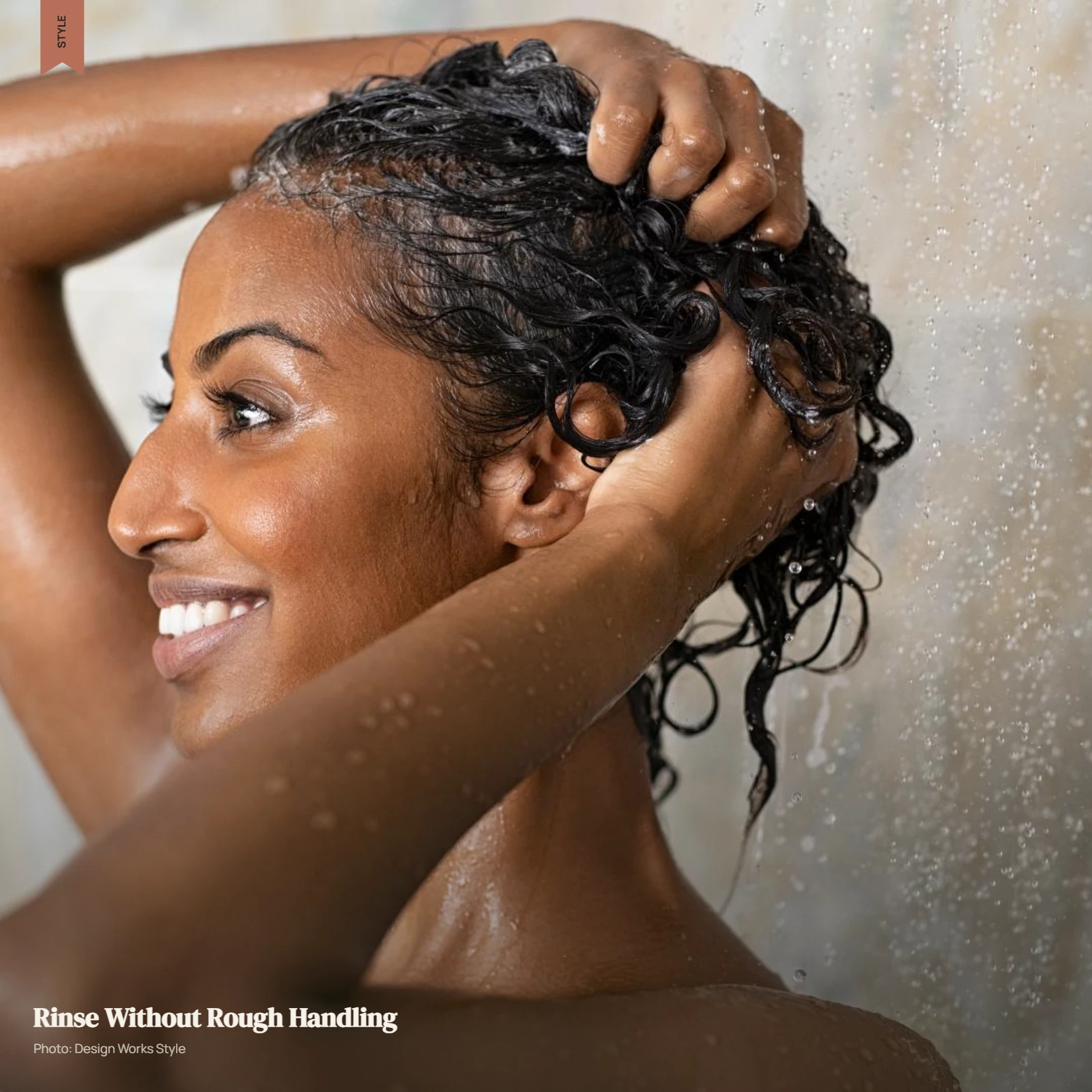
Keep manipulation controlled rather than repeatedly scrunching, pulling, or rubbing the hair while rinsing.
Step 4: Condition
Apply conditioner where appropriate, concentrating on the lengths and ends.
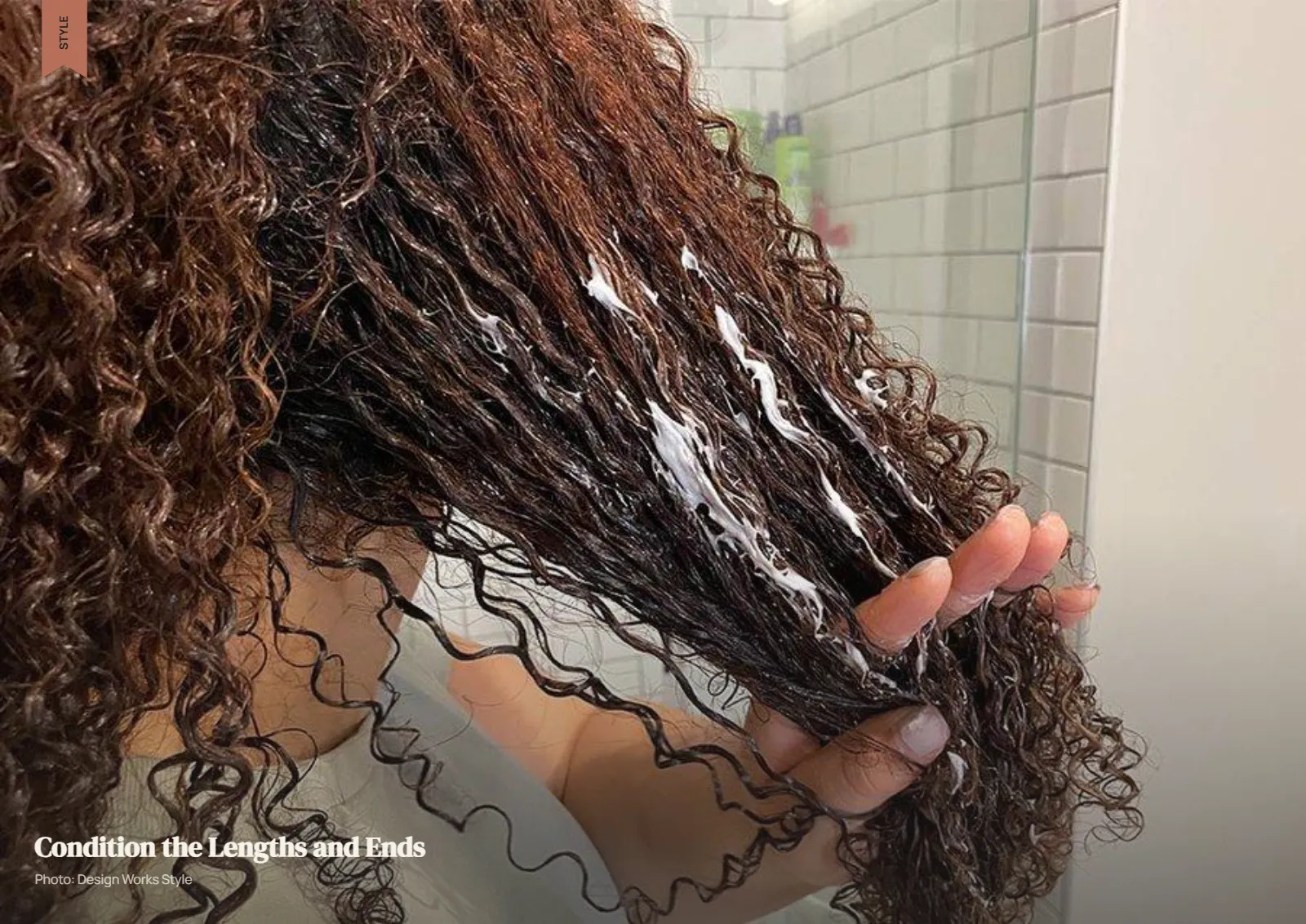
Allow the product to sit for the amount of time recommended on its packaging, then rinse according to the product instructions.
Step 5: Handle the curls gently afterward
Once washing is complete, avoid rough towel rubbing or aggressive brushing.

The less unnecessary friction you introduce, the easier it is to handle the curls without creating additional mechanical stress.
How to Condition Permed Hair
Conditioning is an important part of caring for hair after a chemical service because it can improve manageability, reduce the feeling of dryness, and make detangling easier.
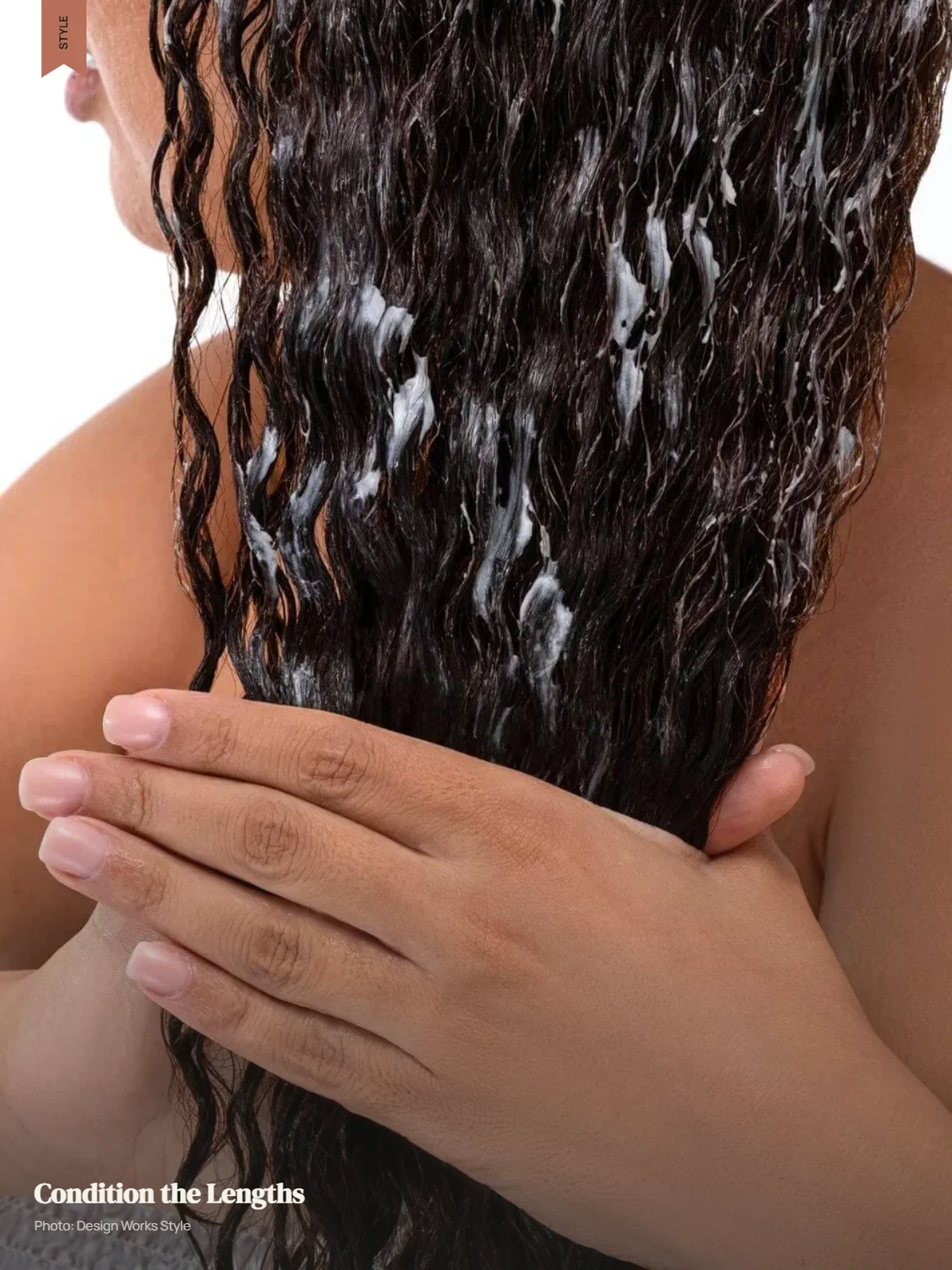
A practical routine can include:
- Regular conditioner after cleansing
- Deeper conditioning when appropriate for your hair
- Concentrating conditioner on the lengths and ends
- Rinsing according to product instructions
- Adjusting the routine based on how your hair feels and behaves
There is no need to assume that more conditioner is always better. Excessive product can contribute to buildup, particularly if you are layering several styling and conditioning products.
Pay attention to the condition of your hair. If it feels increasingly dry or difficult to manage, reassess your cleansing, conditioning, heat, and styling routine rather than simply adding more products.
Conditioning can improve softness and manageability, but it does not completely reverse the structural changes caused by chemical processing.
How to Detangle Permed Hair
Detangling should be slow and controlled.
Permed curls can become difficult to separate if they are brushed aggressively, particularly when the hair is dry and tangled.
A practical approach is:
- Work with hair that is appropriately damp or wet for your routine.
- Apply conditioner or another suitable product if needed.
- Start at the ends.
- Gradually work upward toward the roots.
- Use your fingers or a suitable wide-tooth comb where appropriate.
- Stop and work through individual tangles rather than pulling forcefully.
Starting at the ends means you are not pushing every tangle toward the bottom of the hair and then trying to force your way through one large knot.
Avoid aggressive brushing through the curls simply to make the hair look immediately neat. Rough handling can add unnecessary mechanical stress.
If your curls tangle easily
Before reaching for more styling products, look at your conditioning and detangling process.
The issue may be related to how the hair is being handled rather than a need for additional product.
How to Dry Permed Hair
There is no single drying method that is automatically right for every person with a perm.
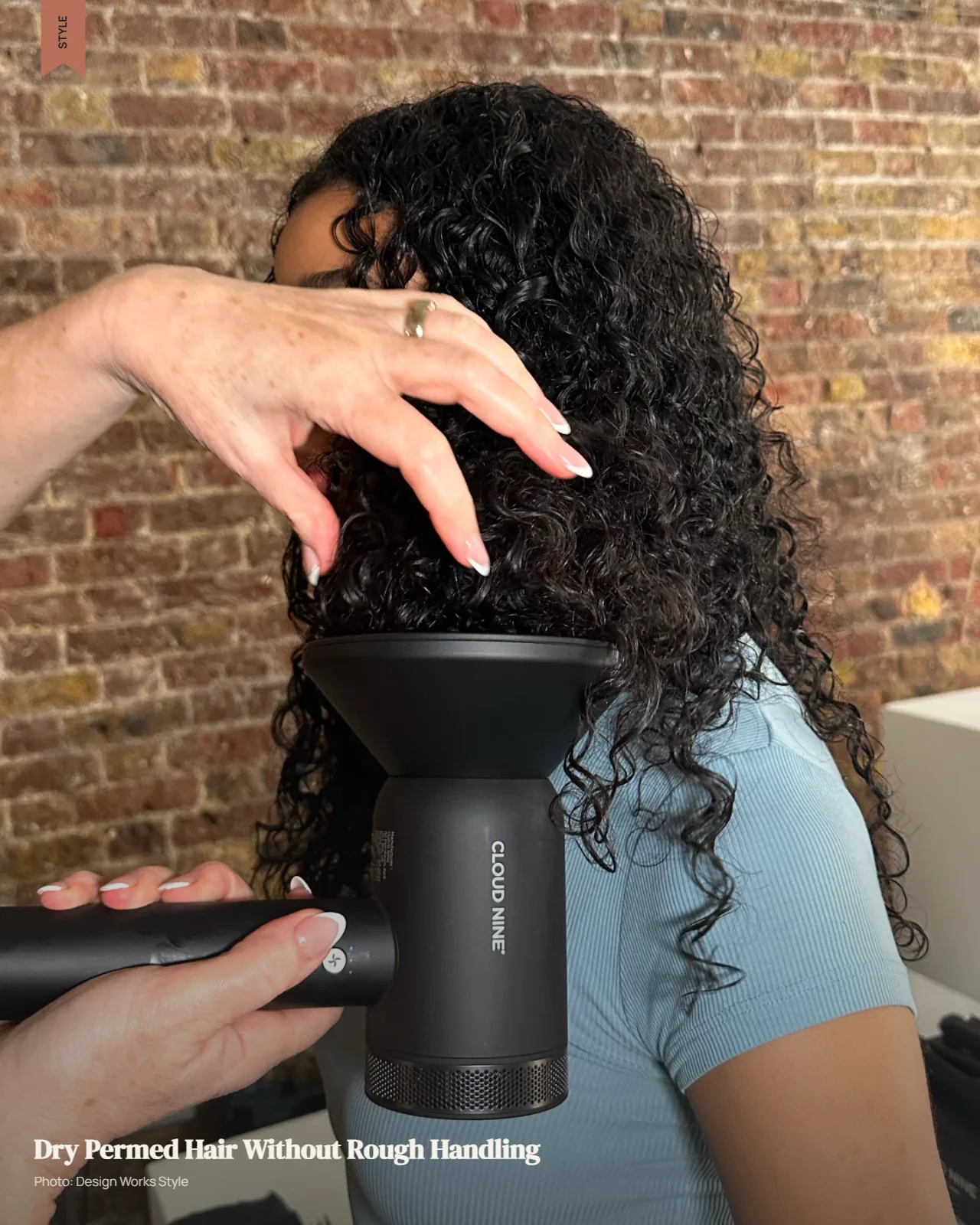
The useful goal is to reduce unnecessary friction and heat while allowing the curl pattern to settle naturally.
Air-drying
Air-drying can be convenient if you prefer minimal heat.
After washing, gently remove excess water and arrange the curls without repeatedly manipulating them. Allow the hair to dry while maintaining the shape you want.
Air-drying is not automatically better for every person, however. Your preferred method should depend on your hair, routine, environment, and desired finish.
Diffusing
A diffuser can help dry curly or permed hair while keeping the airflow more controlled than a concentrated stream of air.
Use an appropriate diffuser attachment and a controlled heat and airflow setting. Avoid repeatedly blasting one section of hair with intense heat.
The goal is to dry the hair without creating unnecessary heat exposure or disrupting the curl pattern.
Towel drying
Avoid vigorously rubbing permed hair with a towel.
Instead, gently blot, squeeze, or press out excess water. The objective is to remove moisture without creating unnecessary friction or pulling the curls apart.
Can You Use Heat on Permed Hair?
You can use heat as part of your routine, but chemically processed hair deserves careful handling.
Heat styling can add additional stress, so consider:
- How often you use heat
- The temperature you use
- Whether you use heat protection
- The current condition of your hair
- Whether heat styling is actually necessary
This applies to blow dryers, diffusers, curling irons, and flat irons.
There is no single temperature that can be called universally safe for every person’s hair. Your hair’s texture, condition, previous chemical processing, and styling method all matter.
A practical rule
Use the lowest effective heat and limit unnecessary repeated heat exposure.
If your hair already feels unusually dry or fragile, reducing heat becomes even more important.
You may also find that you do not need a curling iron to recreate your curls. If your perm already provides the shape you want, styling techniques that work with the existing curl pattern can reduce unnecessary heat.
How to Style Permed Hair Without Losing the Curl Pattern
The easiest starting point is to work with the curl pattern your perm has created rather than repeatedly trying to reshape it.
Depending on your hair and perm type, useful techniques may include:
- Applying styling products with minimal manipulation
- Scrunching where appropriate
- Arranging curls while the hair is damp
- Allowing curls to settle as they dry
- Avoiding repeated brushing once the curls have formed
- Refreshing curls between washes when useful
Different perm services produce different patterns, so there is no mandatory styling routine.
If your curls naturally group together, avoid repeatedly separating them throughout the day. If your hair needs more definition, experiment with small adjustments to product amount and application technique rather than automatically adding several products.
The finished celebrity-style curl you see in a photograph may also involve professional styling, so judge your routine by what works consistently for your own hair.
How to Sleep With Permed Hair
Sleeping can create friction and flatten parts of the curl pattern, so the goal is to keep the hair arranged comfortably without pulling tightly.
Depending on your hair length and curl pattern, you can consider:
- Arranging curls loosely before bed
- Using a loose protective style where appropriate
- Avoiding tight elastics or hairstyles that pull on the hair
- Choosing a sleep setup that minimizes unnecessary friction
- Leaving enough room for the curls to retain their general shape
Satin or silk materials are often used as friction-reduction options, but they should not be treated as guaranteed curl-preservation solutions.
The most important point is comfort and gentle handling. A sleep routine that pulls tightly on the hair is not useful simply because it is intended to preserve the curl pattern.
How Often Should Permed Hair Be Trimmed?
There is no universal trimming interval for permed hair.
Your needs depend on:
- Your haircut
- Your hair length
- Split or visibly damaged ends
- The shape you want to maintain
- How quickly the haircut needs reshaping
A trim is primarily about maintaining the haircut and dealing with visibly split or damaged ends. It is not a way to “reset” the perm.
If your haircut has a very defined shape, you may want reshaping more frequently than someone with a longer, less structured cut.
Talk to your stylist about the shape you want to maintain and how your hair is changing as it grows.
What Should You Avoid After a Perm?
A few habits are worth limiting when caring for chemically processed hair.
Avoid unnecessary chemical processing
Do not immediately add another chemical service simply because the result is not exactly what you expected.
If you are considering color, straightening, another perm, or another chemical treatment, discuss the timing with a professional who can assess the condition of your hair.
Limit excessive heat
Repeated high-heat styling can add stress to already processed hair.
Use heat when it serves a purpose rather than making it an automatic part of every styling session.
Avoid aggressive brushing
Pulling a brush through tangled curls can create unnecessary mechanical stress.
Detangle gradually instead.
Do not rub the hair aggressively with a towel
Rough towel drying adds friction and can disrupt the curl pattern.
Blot or gently squeeze instead.
Avoid repeatedly pulling curls straight
If you are constantly stretching the curls with brushes, irons, or other techniques, you are adding more manipulation to the hair.
Avoid tight hairstyles
Repeatedly pulling the hair into tight styles can create tension, particularly around the hairline.
Watch for product buildup
Using multiple creams, gels, oils, conditioners, and refreshers can leave buildup if they are not balanced with appropriate cleansing.
Do not ignore worsening hair condition
If the hair becomes increasingly dry, rough, tangled, weak, or prone to breakage, reassess the routine rather than simply continuing with the same level of chemical, heat, or mechanical stress.
Signs Your Permed Hair Needs More Care
Pay attention to changes in how your hair looks, feels, and behaves.
Possible signs that your routine needs adjustment include:
- Unusual dryness
- Increased tangling
- Excessive roughness
- Visible breakage
- Split ends
- Reduced manageability
- Hair that feels significantly weaker than before
These signs do not identify a specific cause on their own.
For example, increased tangling could relate to conditioning, handling, texture, product buildup, or the condition of the hair. Avoid trying to diagnose the cause based on one symptom.
When to get professional help
If you experience significant breakage, scalp irritation, burning, or another concerning reaction after a chemical service, contact your stylist and, where appropriate, seek medical advice.
The purpose of aftercare is to support the condition of your hair, not to diagnose a chemical injury yourself.
What If Your Perm Does Not Look Right?
Sometimes the finished result does not match what you expected.
The safest response is usually to pause before making another chemical change.
The curls seem too loose
If your curls look different from what you expected, contact your stylist before attempting another chemical service.
Do not immediately re-perm the hair at home simply to increase the curl.
The hair feels excessively dry
Focus first on gentle handling and conditioning.
Reduce unnecessary heat and mechanical stress, and consider professional assessment if the condition seems severe or continues to worsen.
The hair is frizzy
Frizz can have several possible contributors, including moisture, styling technique, product use, natural texture, and how the curls are drying.
Avoid assuming there is one universal fix.
Review how you are washing, conditioning, drying, and styling before making major changes.
The hair feels damaged
Minimize additional chemical and heat stress and seek professional evaluation when appropriate.
Most importantly:
Do not immediately re-perm or chemically correct the hair at home.
A stylist who can see and assess your hair is in a better position to determine what should happen next.
A Simple Perm Aftercare Routine
If you want a quick version of the routine, use this as your reference.
After the appointment
Follow the instructions specific to your perm service.
Before the first cleanse
Use the waiting period and product guidance supplied by your stylist or the relevant service instructions.
First cleanse
Wash gently and avoid unnecessary manipulation.
Every wash
Cleanse gently → condition → detangle carefully → dry with minimal unnecessary friction.
Between washes
Refresh and restyle according to your curl pattern rather than repeatedly manipulating the hair.
When styling
Use products and heat according to what your hair actually needs. Limit unnecessary heat and work with the curl pattern rather than constantly reshaping it.
Ongoing
Monitor the condition of your hair, manage heat exposure, and trim as needed to maintain the haircut and deal with visibly split or damaged ends.
This routine is a framework, not a replacement for the instructions given for your particular service.
Learn More About Perms
If you are still learning about the service itself, our broader Perms guide can help you understand different perm approaches and the basics of how the service works.
For aftercare, however, the most important principle remains simple: start with your service-specific instructions, then keep your routine gentle and adjust it according to how your hair behaves.
Frequently Asked Questions
When can I wash my hair after a perm?
Wait at least 48 hours, and 72 is safer. Washing too soon can loosen the curl pattern before it fully sets.
How should I wash permed hair?
With sulfate-free shampoo and lukewarm water, focusing on the scalp. Scrubbing the lengths roughs up the curl pattern and creates frizz.
Can I use heat on permed hair?
Sparingly, with heat protectant, on low to medium settings. Frequent high heat loosens the perm faster and dries out already-processed hair.
How do I sleep with a perm?
On a silk or satin pillowcase, or with hair in a loose pineapple ponytail on top of your head. Cotton pillowcases create friction and frizz overnight.