
Your face shape can be a useful starting point when choosing a haircut, especially when you are comparing length, layers, volume, framing, and where the cut ends around the face. But it is not a rulebook. The same haircut can look very different depending on hair texture, density, natural movement, facial features, styling habits, and personal preference.
The most useful approach is to identify your approximate face shape, understand which haircut characteristics interact with it, and then compare those ideas with the way your own hair behaves. The six commonly discussed categories are round, oval, square, heart-shaped, long or oblong, and diamond. You do not need to fit perfectly into one category to use the framework.
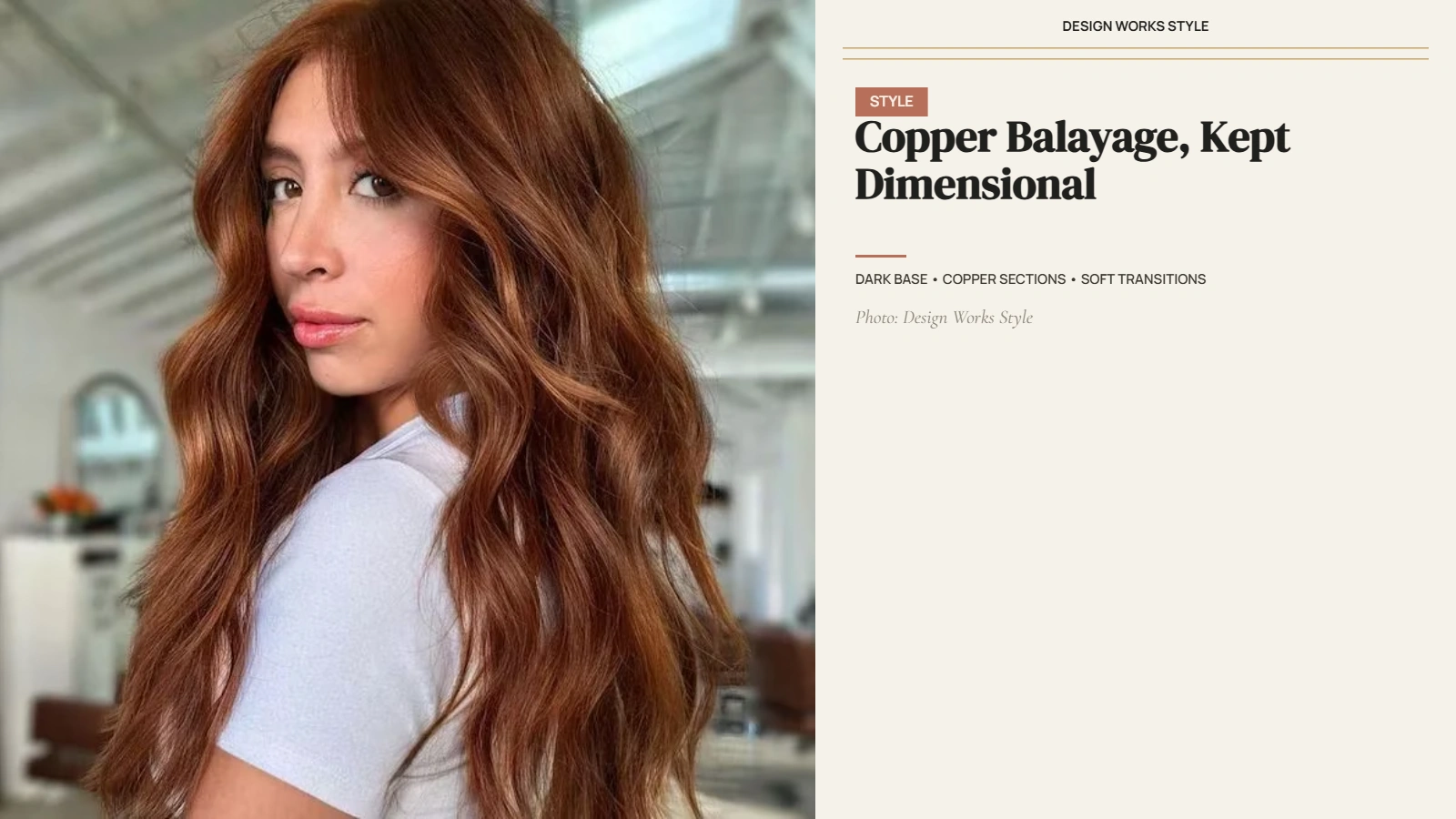
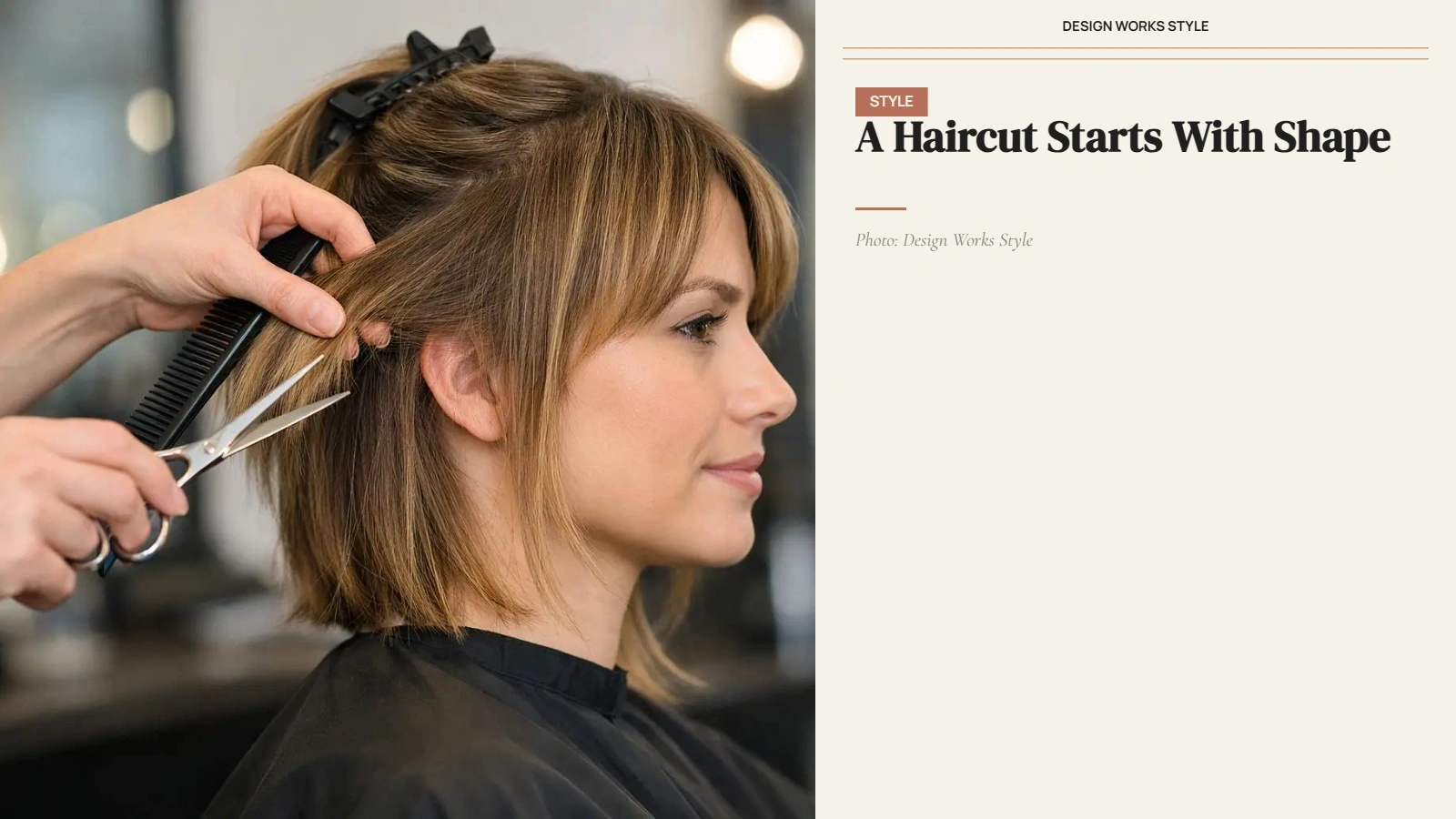
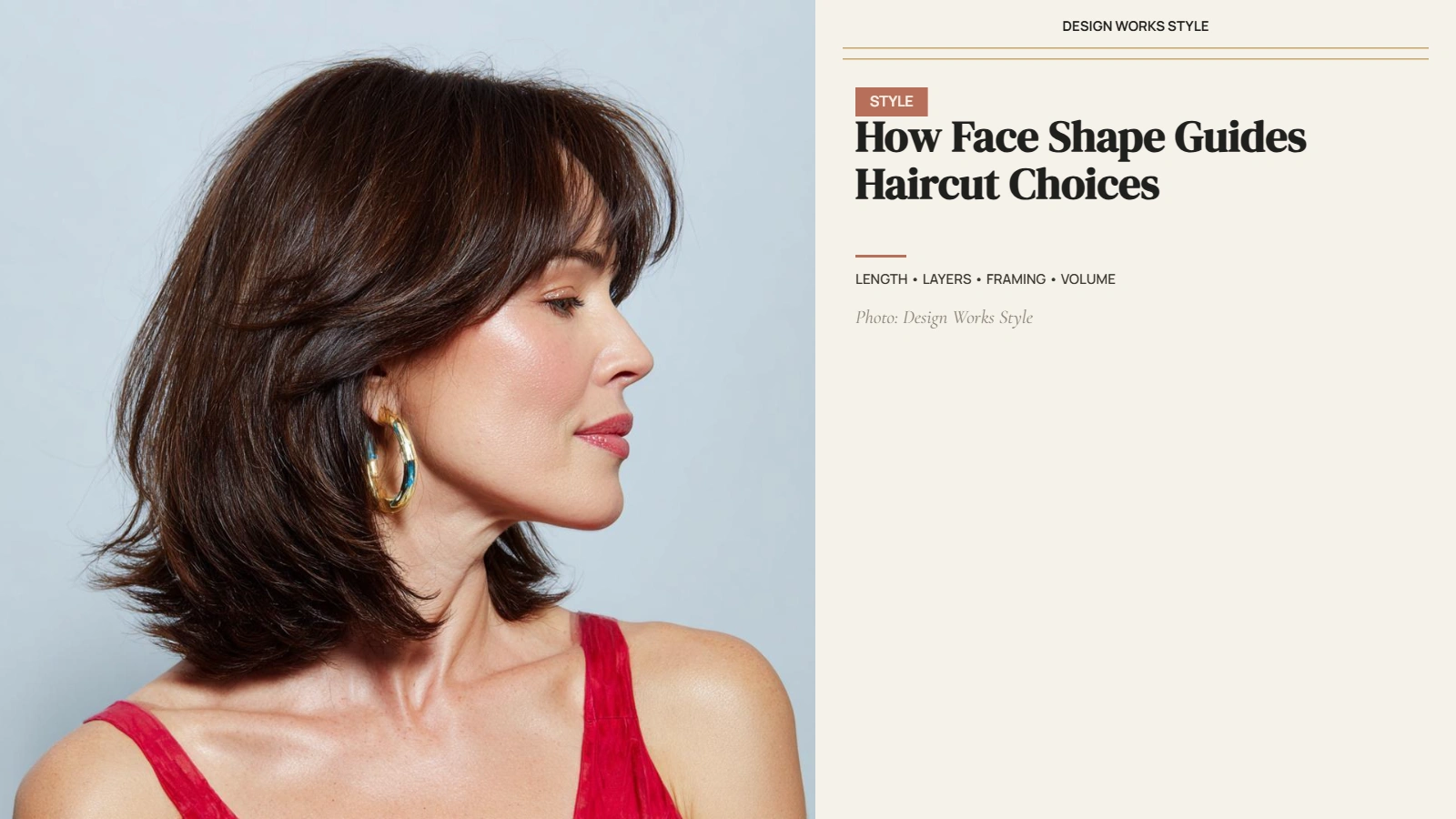
Image placement: Hero image showing a polished haircut from a three-quarter angle, with enough of the hair visible to understand its length, layers, framing, and overall silhouette.
Suggested alt text: Layered haircut showing length, framing and overall face shape
How Face Shape Can Influence a Haircut
Face shape matters because a haircut changes the visual relationship between your hair and the outline of your face.
Length can make the hair appear more compact or extended. The width of the haircut can change depending on where layers and volume sit. Face-framing pieces can alter how the hair connects with the cheeks, jaw, and forehead, while the perimeter determines where the strongest horizontal or diagonal lines appear.
Look at these details when comparing a haircut:
- Length: Where does the haircut end?
- Width: Where is the hair widest?
- Volume: Is fullness concentrated at the crown, sides, or ends?
- Framing: How closely does the hair follow the face?
- Layers: Where do they begin, and what kind of movement do they create?
- Perimeter: Is the bottom edge blunt, angled, rounded, or textured?
- Natural movement: How does the hair behave without extensive styling?
The point is not to “correct” a face shape. Different haircut structures simply create different visual relationships and proportions.
The Main Face Shapes
There is no perfect measuring system that every face follows. Think of these categories as useful descriptions of overall proportions rather than fixed classifications.
Round Face
A round face generally has a softer outline, with width and length appearing relatively close and fuller proportions around the cheeks.
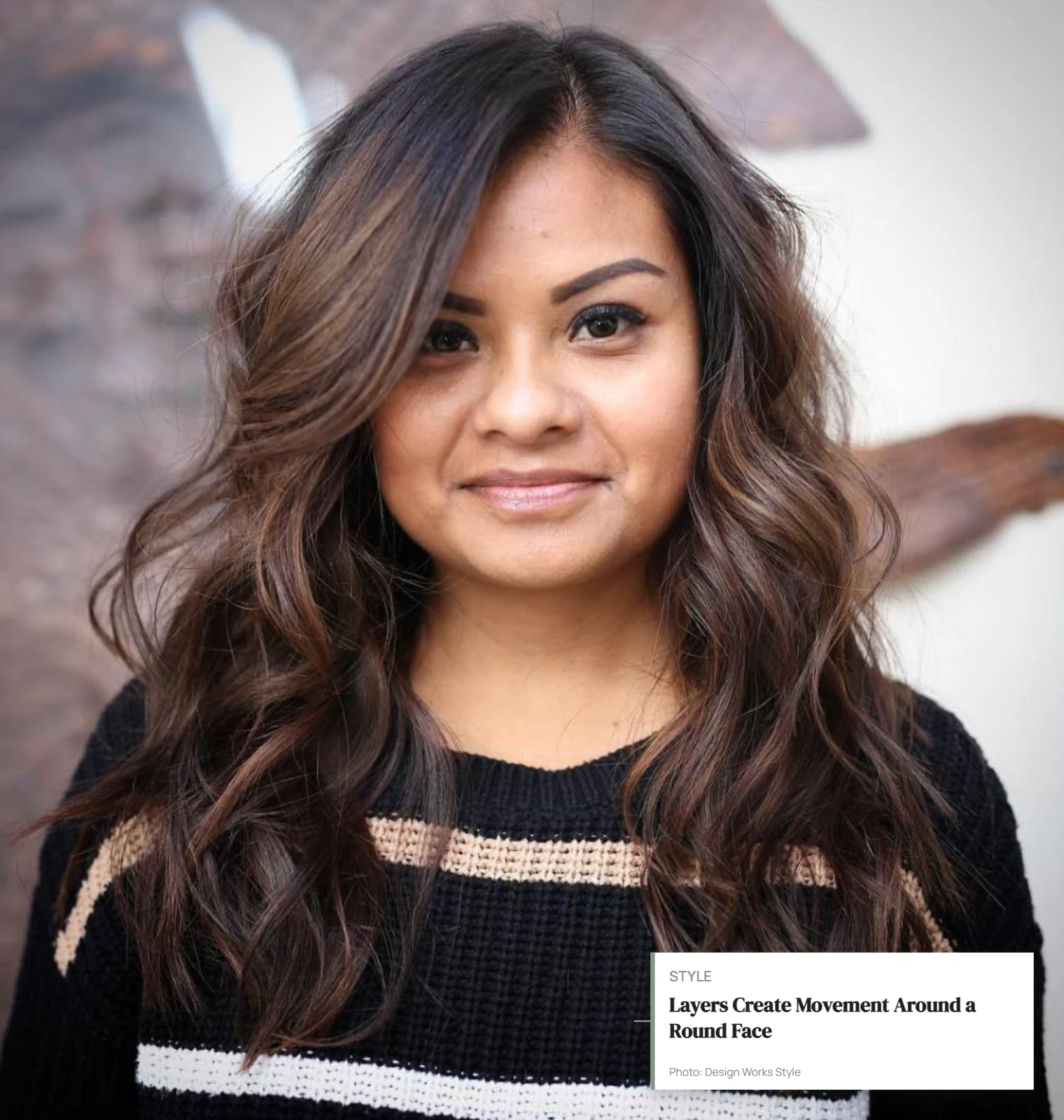
When choosing a haircut, consider where the cut creates width, where it introduces vertical movement, and how layers or framing interact with the sides of the face. The length of the haircut can also change the overall silhouette.
For more specific guidance, see our guide to haircuts for round faces, which focuses specifically on choosing a cut for this face shape.
Oval Face
An oval face generally has a longer overall proportion, with the forehead and jaw appearing relatively balanced and the face gradually narrowing toward the chin.
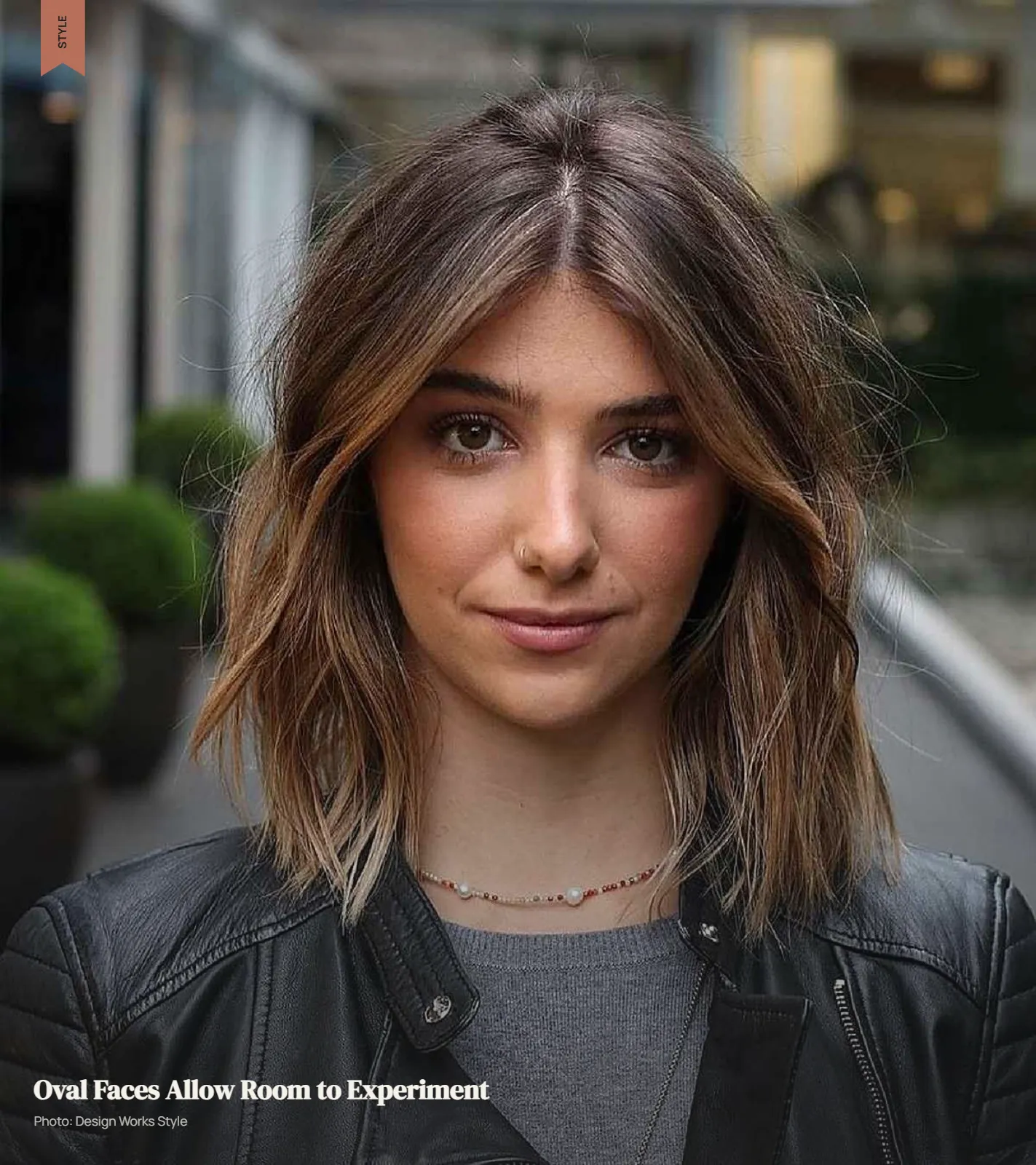
Rather than assuming every haircut works equally well, compare the haircut’s length, layers, framing, and natural texture with the features you want to emphasize. A very structured cut and a highly textured cut can create very different results even when they have the same basic length.
Personal preference still matters more than trying to satisfy a category perfectly.
Square Face
A square face often has a more defined jaw and forehead, with width that can appear relatively consistent through the upper and lower parts of the face.
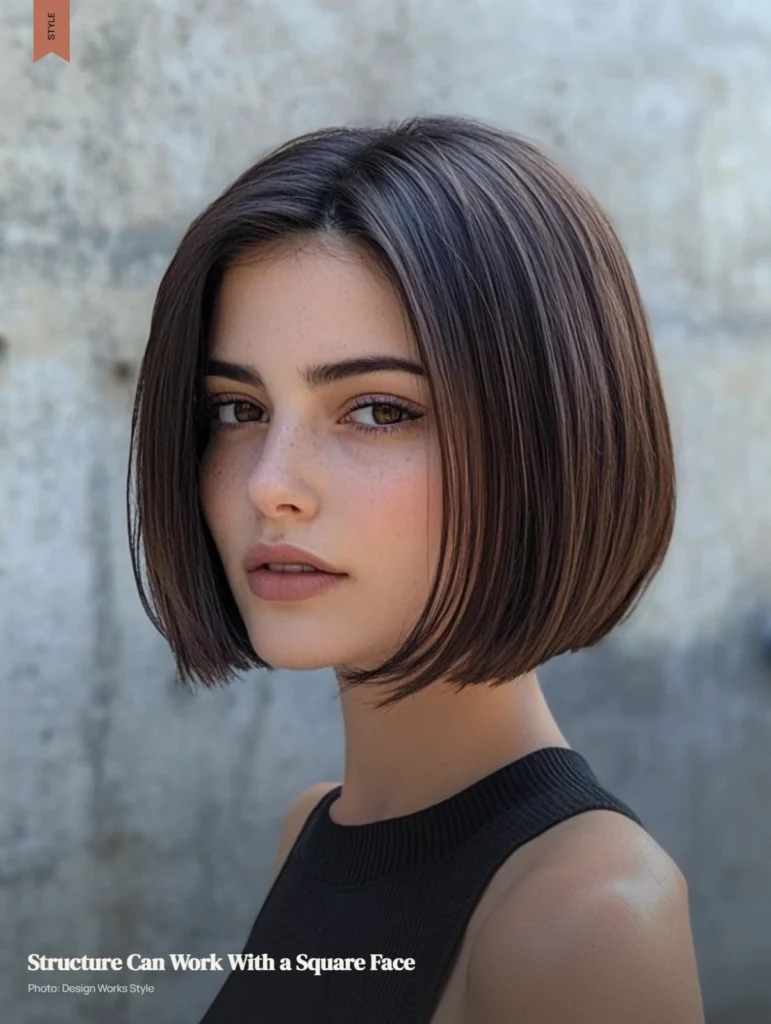
When comparing haircuts, look at how the cut interacts with that stronger outline. A blunt perimeter, soft layers, textured ends, or face-framing pieces can each create a different relationship between the hair and jaw.
There is no requirement to soften angular features. If you like a structured haircut, the goal is simply to understand how its lines interact with your natural features.
Heart-Shaped Face
A heart-shaped face is often characterized by more width through the forehead and a narrower chin area.
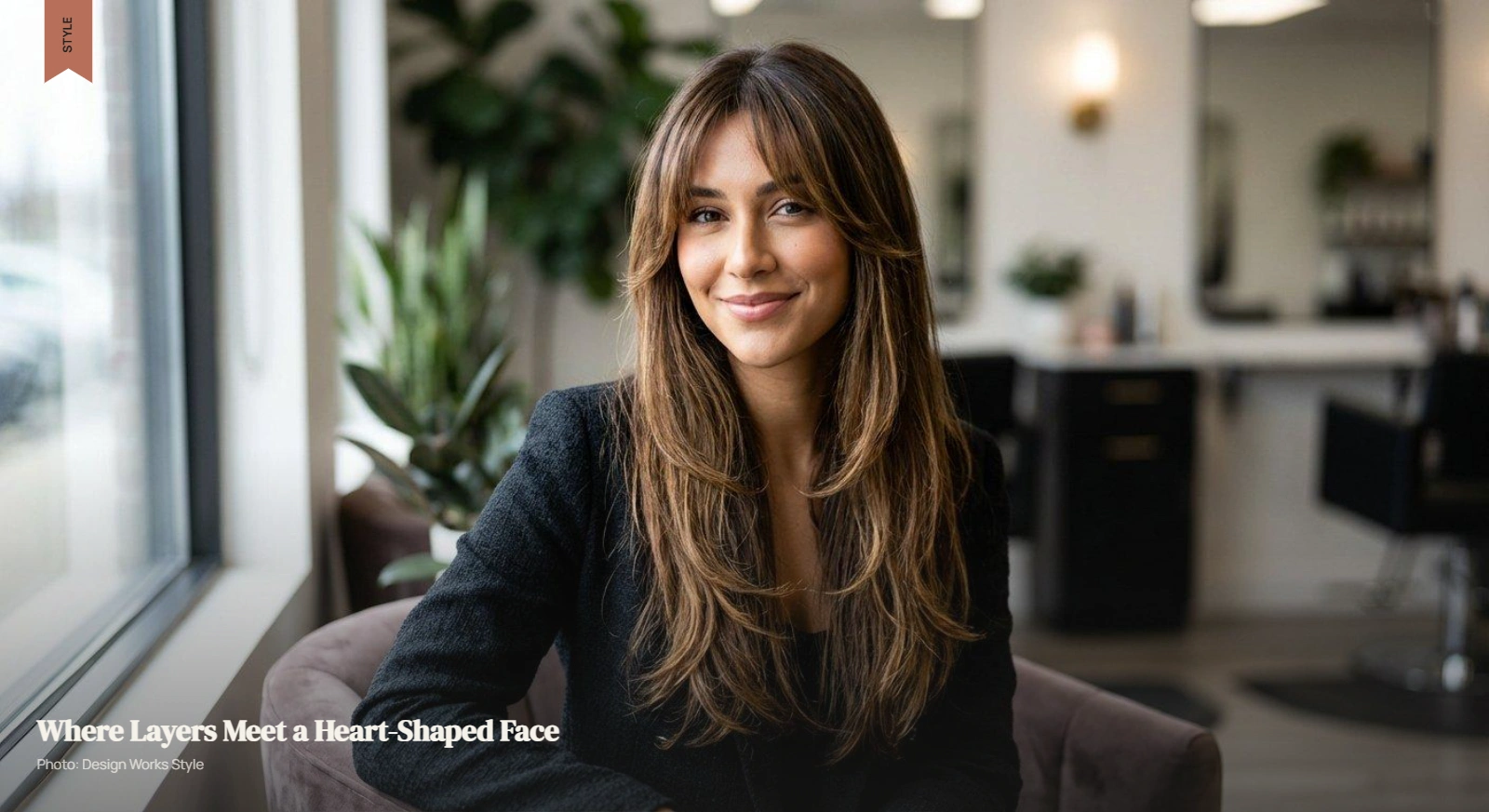
Haircut decisions can therefore involve looking at how framing and volume are distributed from the forehead through the jaw. Length and layers can also change where the eye sees the most fullness.
Rather than choosing a cut solely because it is labeled “heart-shaped face friendly,” examine the actual structure of the reference and compare it with your own hair.
Long or Oblong Face
A long or oblong face generally has more length relative to width.
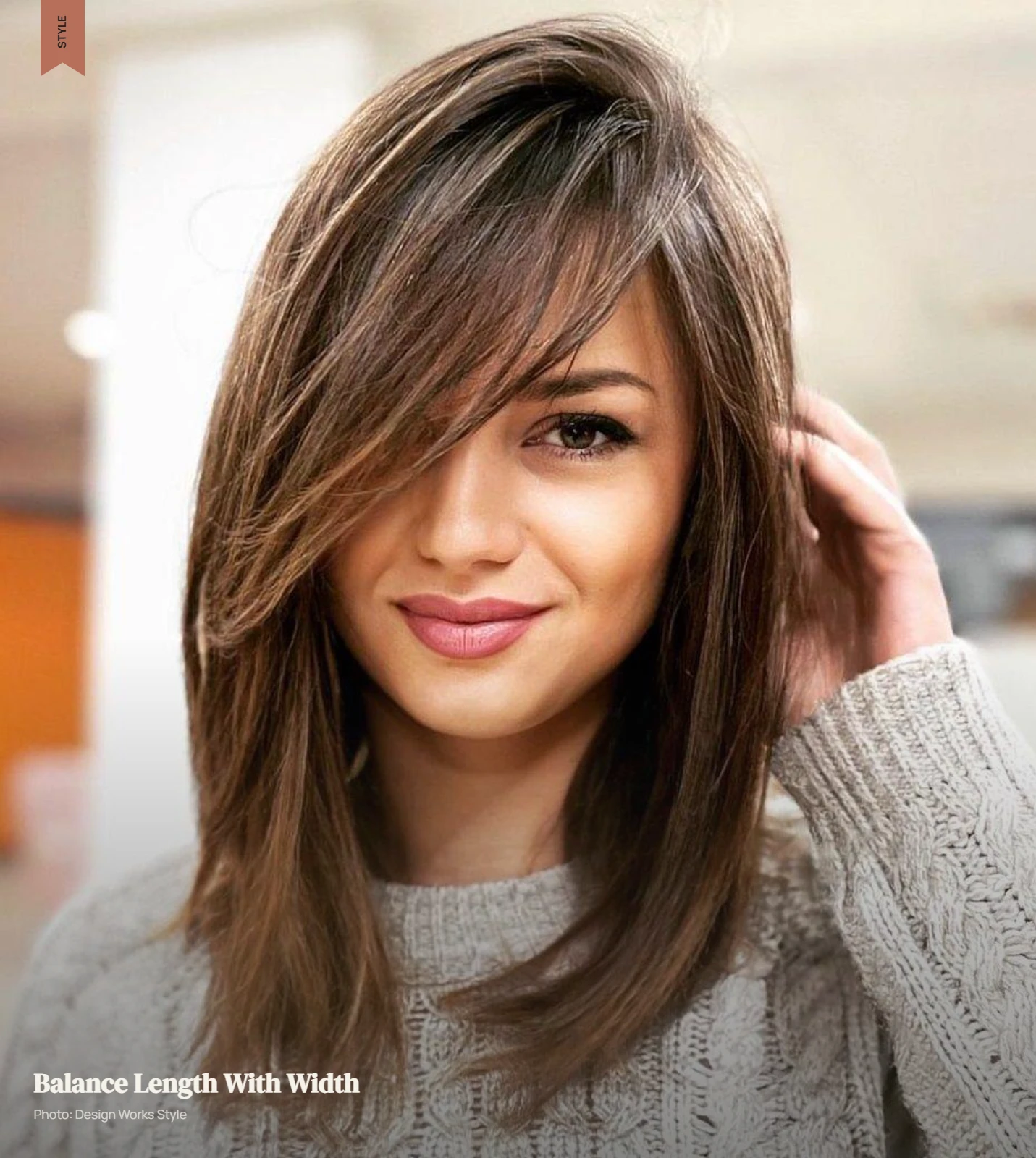
When comparing haircuts, consider the balance between overall length and width. Layers, fringe, volume, and styling direction can all change the silhouette without requiring the same haircut length.
A longer haircut can still work well if you like the look. The useful question is how its layers, volume, and framing interact with your proportions.
Diamond Face
A diamond-shaped face is generally characterized by more width around the cheekbones, with the forehead and jaw appearing narrower by comparison.
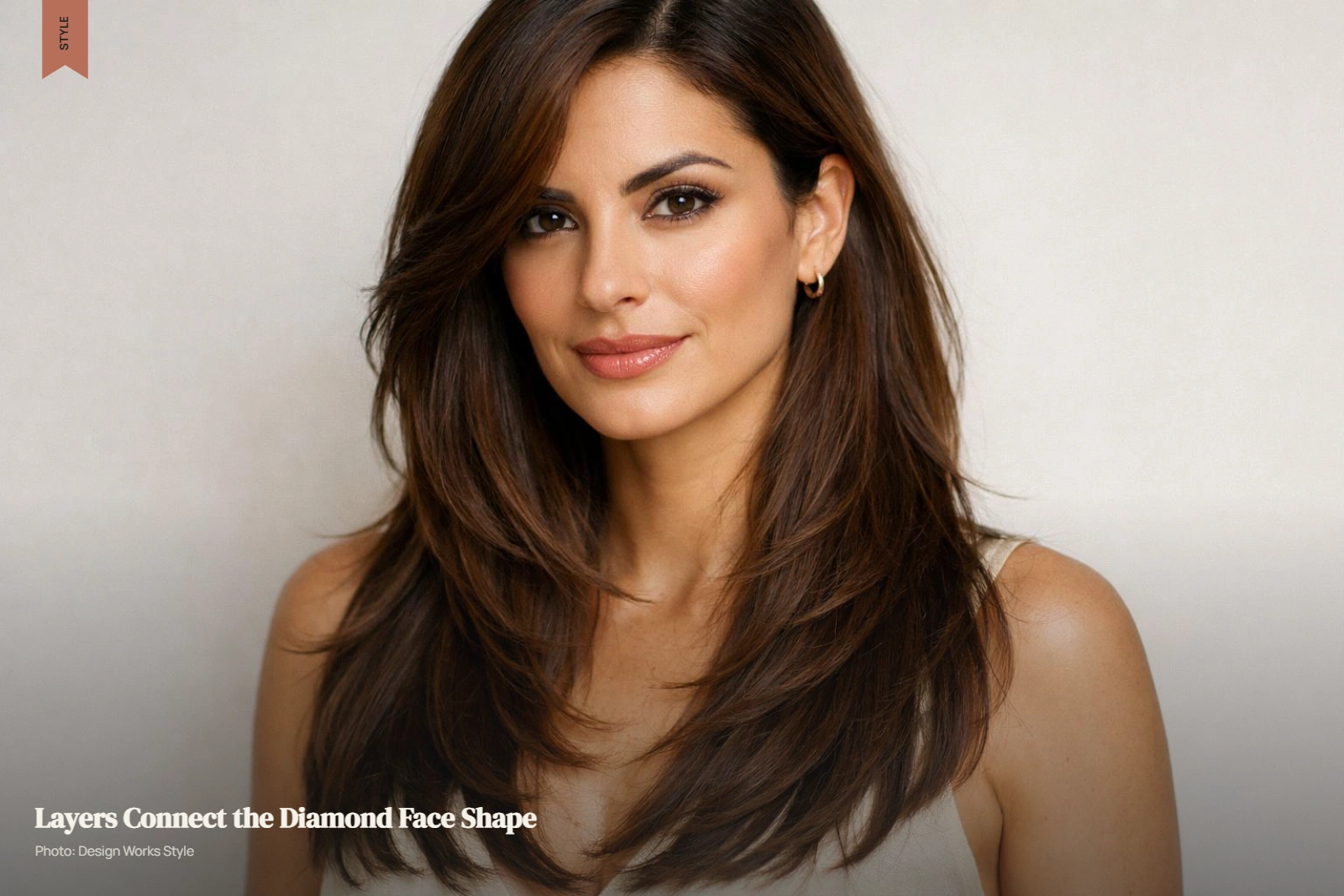
Haircuts can be evaluated by looking at framing, layers, and where volume is concentrated. The perimeter and length can also influence how the hair connects the cheekbone area with the forehead and jaw.
Because this is a broad category, use it as a starting point rather than trying to match yourself precisely to an illustration.
How to Identify Your Face Shape
You do not need exact measurements to get a useful starting point. Focus on the overall pattern.
Step 1: Pull Your Hair Away From Your Face
Tie or clip your hair back so the outline of your forehead, cheeks, jaw, and chin is easier to see.
A straight-on photograph taken in natural light can also make comparison easier.
Step 2: Look at the Overall Proportions
Compare the apparent width and length of your:
- forehead
- cheekbones
- jaw
- overall face
Do not focus on one feature in isolation. Look at how they relate to one another.
Step 3: Find the Widest Area
Ask where your face appears widest:
- around the forehead
- around the cheekbones
- around the jaw
- or relatively evenly across the face
This can help distinguish broad categories.
Step 4: Consider the Jaw Shape
Look at whether your jaw appears:
- softer and rounded
- more angular
- narrower
- relatively broad
Again, this is about the general outline rather than an exact measurement.
Step 5: Compare Overall Length and Width
Finally, consider the complete shape. Does your face appear noticeably longer than it is wide? Does the width and length feel relatively balanced? Where does the face narrow?
If you fall between two categories, that is completely normal. Use whichever characteristics are actually useful for the haircut decision instead of trying to force yourself into one label.
Image placement: A practical visual showing hair pulled away from the face and highlighting forehead, cheekbones, jaw, and overall length.
Suggested alt text: Face shape assessment showing forehead cheekbones jaw and overall length
What If You Have More Than One Face Shape?
Real faces do not always fit neatly into six categories.
You might see characteristics of an oval and round face, square and oval face, heart and diamond face, or long and oval face. Even small differences in facial features can make categorization less obvious.
That does not make the framework useless. It simply means you should identify the characteristics that are most relevant to the haircut you are considering.
For example, if you are comparing two cuts, you may find that where the haircut ends and where the volume sits are more useful questions than deciding whether your face is technically round or oval.
Use the label as a starting point, not as a final verdict.
Face Shape Is Only One Part of Choosing a Haircut
A face-shape guide can narrow the possibilities, but several other factors may matter just as much.
Hair Texture
Straight, wavy, and curly hair can behave very differently in the same haircut. A layered style photographed on straight hair may develop a completely different silhouette when worn with natural curls.
Hair Density
Fine, dense, thick, and lower-density hair each respond differently to layers and volume.
A haircut that relies on substantial fullness may need to be adapted for lower-density hair, while very thick hair may require more deliberate weight distribution.
Current Length
The haircut you want may require a transition period. Going from long hair to a short cut is different from reshaping an existing medium-length style.
Styling Routine
Consider how much work you actually want to do.
A haircut that depends on blow-drying, heat styling, rollers, or daily product may not be practical if you prefer a simple wash-and-go routine.
Maintenance
Think beyond the first appointment. Consider:
- how often the cut needs reshaping
- how much styling it requires
- how much product you use
- how the haircut behaves as it grows
- whether you are comfortable maintaining its shape
Personal Preference
You do not need to choose a haircut simply because it follows a traditional face-shape recommendation.
If you like a particular cut, understanding its structure gives you a better opportunity to adapt it to your hair and preferences.
How to Use Face Shape When Choosing a Haircut
Once you have an approximate face shape, turn it into a practical selection process.
1. Identify the General Shape
Do not spend too much time trying to achieve a perfect label. Identify the broad characteristics that seem most noticeable.
2. Decide What You Want From the Haircut
Ask what you actually want to change or maintain.
Maybe you want:
- more movement
- less daily styling
- shorter hair
- more texture
- face-framing
- easier maintenance
- a stronger or softer shape
This helps prevent face shape from becoming the only deciding factor.
3. Consider Your Hair’s Natural Behavior
Look at your:
- texture
- density
- growth pattern
- natural volume
- current length
A haircut needs to work with the hair that will actually grow out of your head, not just the hair in a reference photograph.
4. Compare the Haircut Shape
When looking at reference photos, identify:
- overall length
- perimeter
- layers
- volume
- framing
- direction of movement
Try to understand the construction of the haircut rather than judging it only by its name.
5. Check the Maintenance Requirement
Ask yourself whether you would realistically maintain the haircut.
A cut that requires daily styling may not be the right choice if you want something that takes only a few minutes in the morning.
Image placement: A comparison visual showing three haircuts with different lengths, layer placement, and volume distribution. The purpose should be to demonstrate how shape changes rather than simply show three attractive hairstyles.
Suggested alt text: Haircut comparison showing different lengths layers and volume placement
Face Shape vs. Haircut vs. Hairstyle
These three terms describe different parts of the decision.
Face shape = the proportions and outline of your face.
Haircut = the underlying length, shape, layers, and structure created by cutting the hair.
Hairstyle = how that haircut is arranged or styled.
That distinction makes it easier to find the right resource.
If you need to choose the actual cut, start with the dedicated haircuts for round faces guide when round is your primary concern.
If you already have the haircut and want to change how you wear it, a styling guide such as hairstyles for round faces is more relevant.
If you specifically want to go short, see the guide to short haircuts for round faces.
Explore Haircut Guides by Face Shape
This page is the starting point for the face-shape haircut cluster. Once you know which category or characteristics you want to explore, move into the most specific guide available.
Round Faces
This guide goes deeper into length, layers, framing, volume, and the practical decisions involved in choosing a haircut for a round face.
Future Face-Shape Guides
More specific guides can be added as the cluster develops and as distinct search intent supports them.
Potential future topics include:
- Haircuts for Oval Faces
- Haircuts for Square Faces
- Haircuts for Heart-Shaped Faces
- Haircuts for Long Faces
- Haircuts for Diamond Faces
These should be treated as future content opportunities rather than assumed existing resources.
When a Face-Shape Guide Is Not Enough
Sometimes the face shape is not the main constraint.
You may need a more specific guide if:
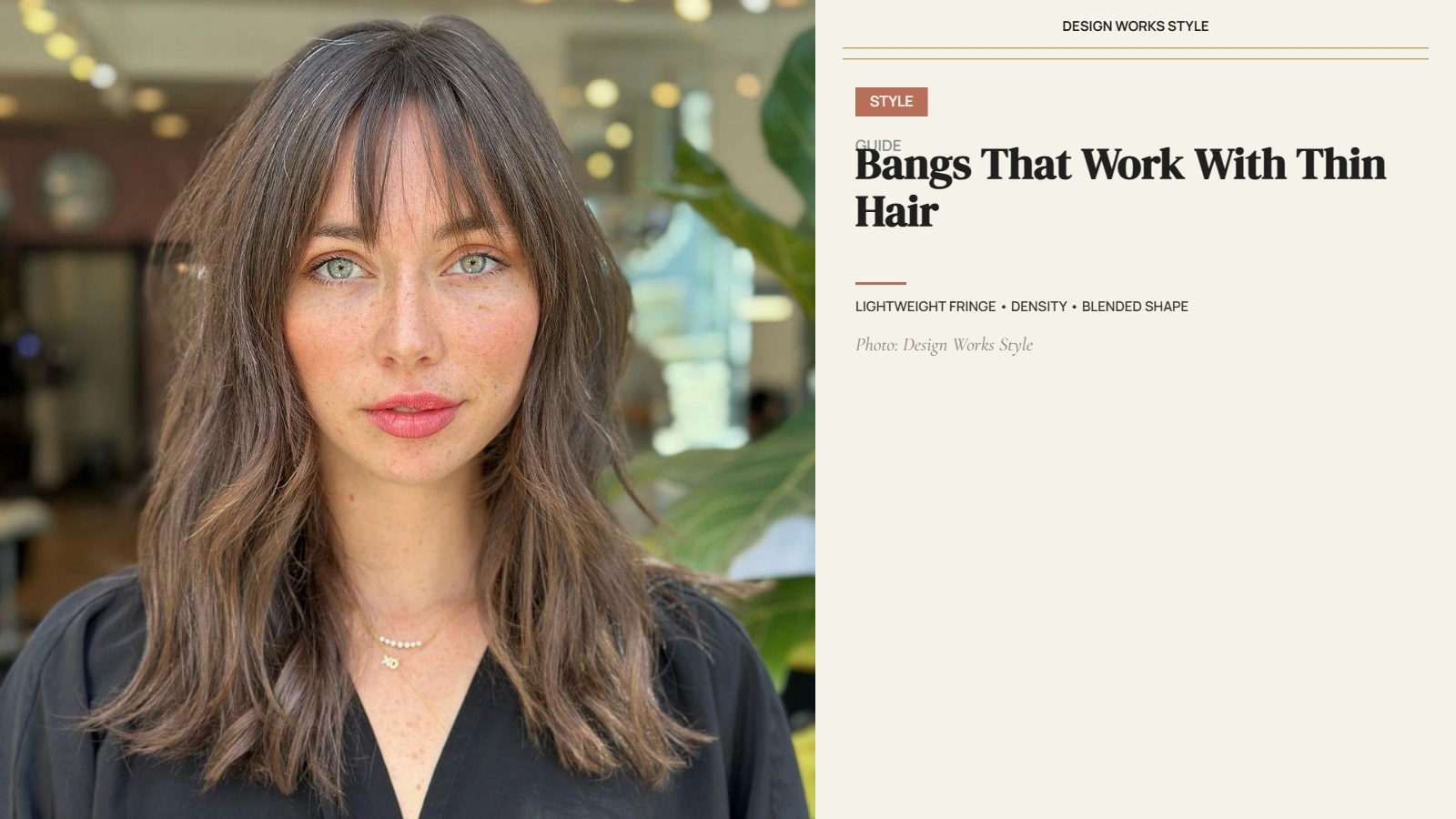
For example, if hair density is the main issue and you are considering a fringe, Bangs for Thin Hair addresses that more specific decision.
- your hair is very fine or thin
- you want bangs
- you are considering a short haircut
- you want styling ideas rather than a haircut
- your lifestyle or maintenance preferences are driving the decision
The same principle applies throughout the Hair section: use face shape to establish a direction, then consider the characteristic that actually determines your next decision.
Frequently Asked Questions
How do I figure out my face shape?
Pull your hair back, look straight into a mirror, and note the widths of your forehead, cheekbones, and jaw, plus the overall length. Compare them: most people are a blend of two shapes rather than one textbook oval or square.
Does face shape really matter for a haircut?
It is one factor, not the whole decision. Hair texture, density, lifestyle, and how much styling you will do matter at least as much as the shape of your face.
What if I am between two face shapes?
Borrow from both guides instead of forcing one label. Tell your stylist which features you want to play up and which you want to soften; a good cut mixes strategies.
Should I bring photos to my appointment?
Yes. Photos of cuts you like on similar hair texture communicate more than face-shape terminology ever will. Bring a few you like and one you do not want.