
If your face looks fuller through the cheeks or lower face, certain haircuts can create different visual effects through length, framing, layers, and volume. The goal is not to change your face shape, but to choose a haircut that works with the proportions and movement you prefer.
Here are seven haircut ideas to consider, from longer layered styles to shorter cuts.
1. Long Layers With Face-Framing Pieces
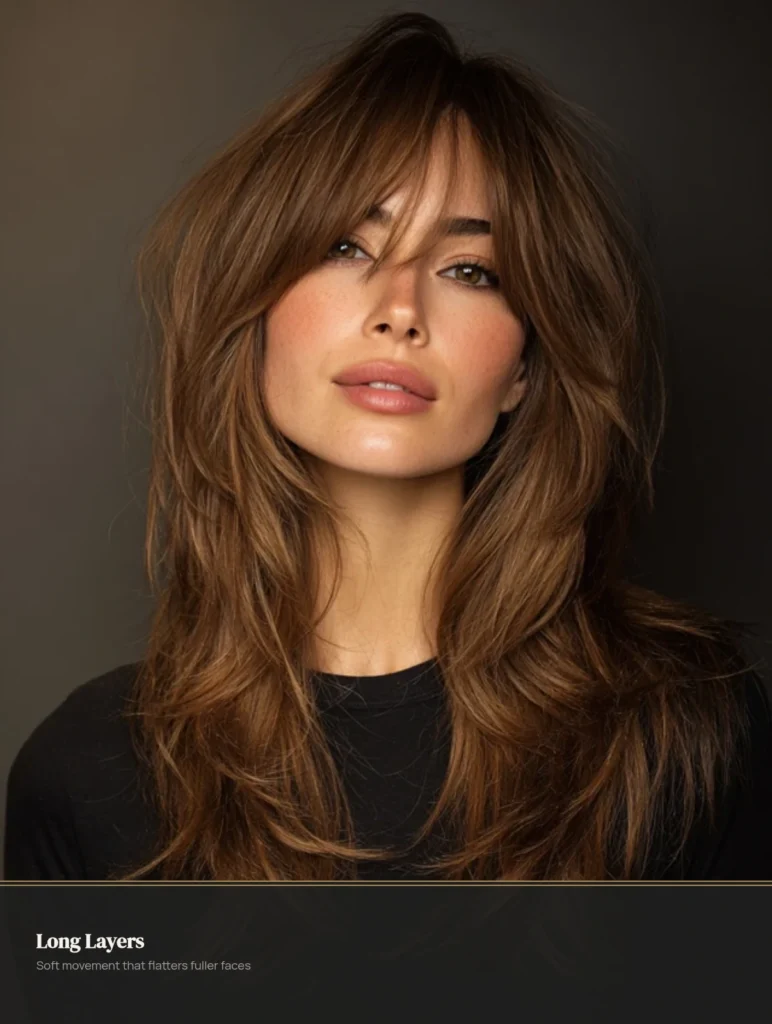
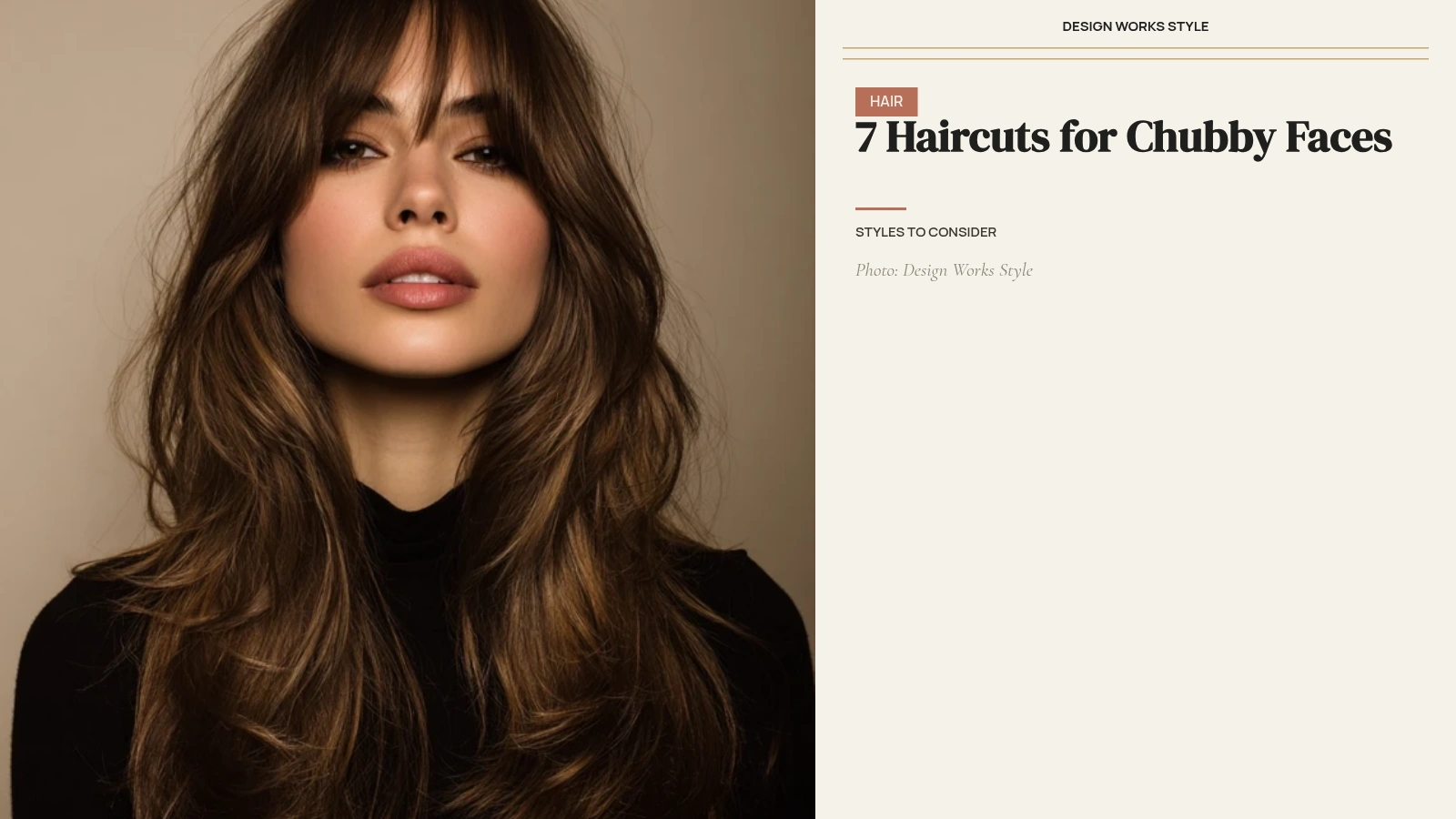
Long layers can keep plenty of length while adding movement around the face. Face-framing pieces can help guide the hair along the sides of the cheeks instead of creating a solid line at their widest point.
This style can be a good option if you like long hair but want more shape around the face.
Consider it if you have:
- Medium to thick hair
- Straight or wavy texture
- A preference for longer hair
- Enough length to support blended layers
Ask your stylist for long, blended layers and face-framing pieces that work with your natural hair texture.
2. Layered Lob
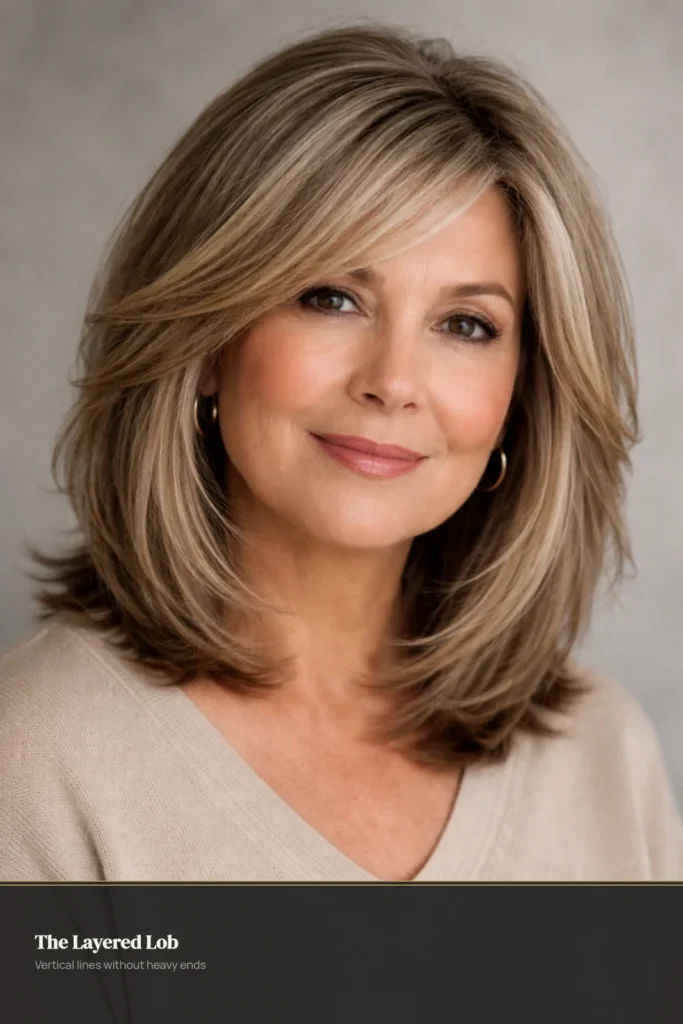
A lob, or long bob, typically falls around the shoulders or slightly above them. Adding subtle layers can give the haircut movement while keeping the overall shape relatively clean.
The length can create more vertical movement than a very short, wide haircut, while the layers prevent the ends from looking too heavy.
Consider it if you want:
- Medium-length hair
- A more manageable alternative to long hair
- Movement without very short layers
- A haircut that works with straight or wavy hair
The exact length can be adjusted depending on where you want the haircut to sit around your face.
3. Side-Parted Layered Haircut
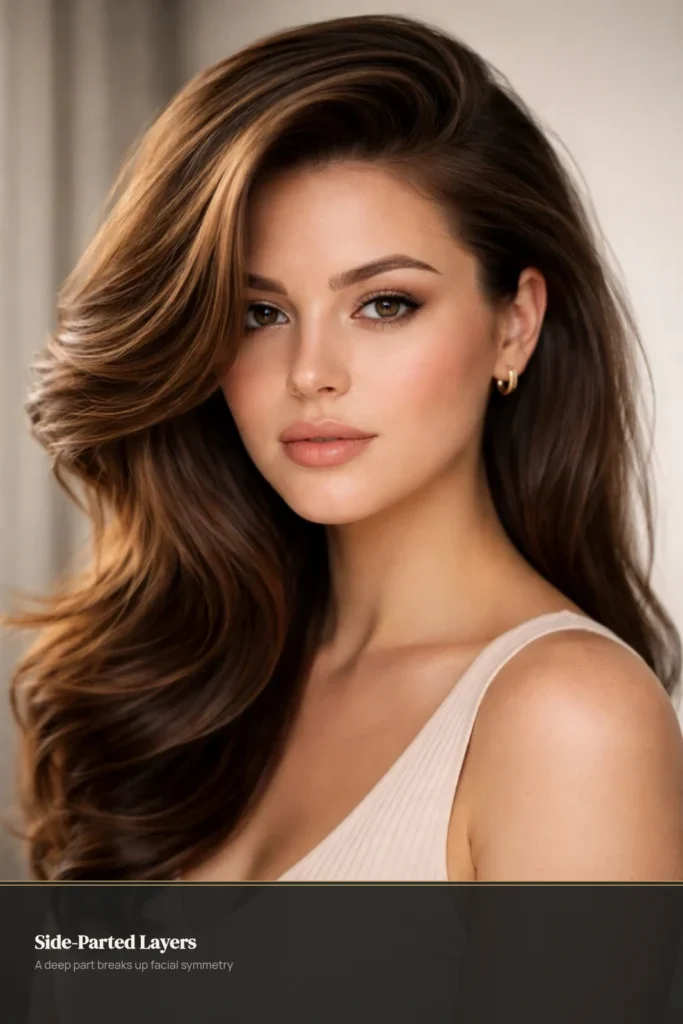
Changing the part can change how the hair frames the face. A side part creates an asymmetrical starting point and can make a layered haircut look less uniform.
Longer layers can add movement through the lengths, while the side part changes the direction of the hair around the face.
Consider it if you:
- Prefer side parts
- Want more asymmetry in your hairstyle
- Have straight, wavy, or lightly curly hair
- Want to change your look without dramatically changing your length
This approach can also be combined with other cuts, including a lob or longer layered haircut.
4. Soft Curtain Bangs With Long Hair
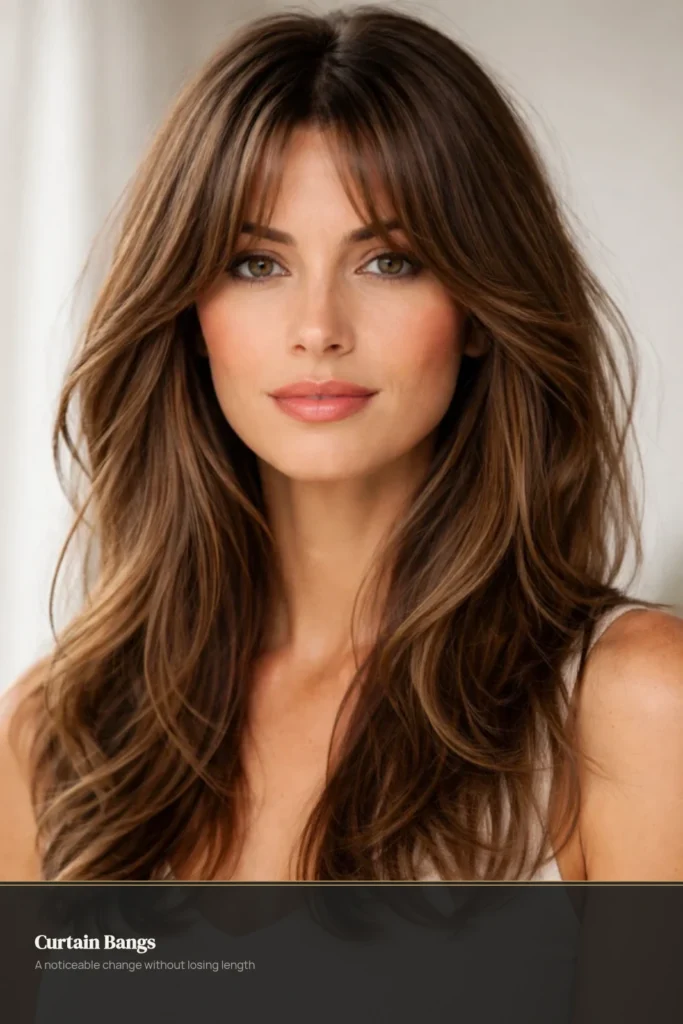
Curtain bangs can create a face-framing effect while leaving more length through the rest of the haircut. They can be parted through the center or adjusted to suit the way your hair naturally falls.
Longer curtain bangs can blend into layers around the cheekbones and sides of the face.
Consider them if you want:
- A noticeable change without losing much length
- Face-framing around the forehead and cheeks
- A softer alternative to blunt bangs
- A style that can grow out into longer layers
If your hair is fine, ask for enough length and density to prevent the bangs from looking too sparse.
5. Textured Shoulder-Length Cut
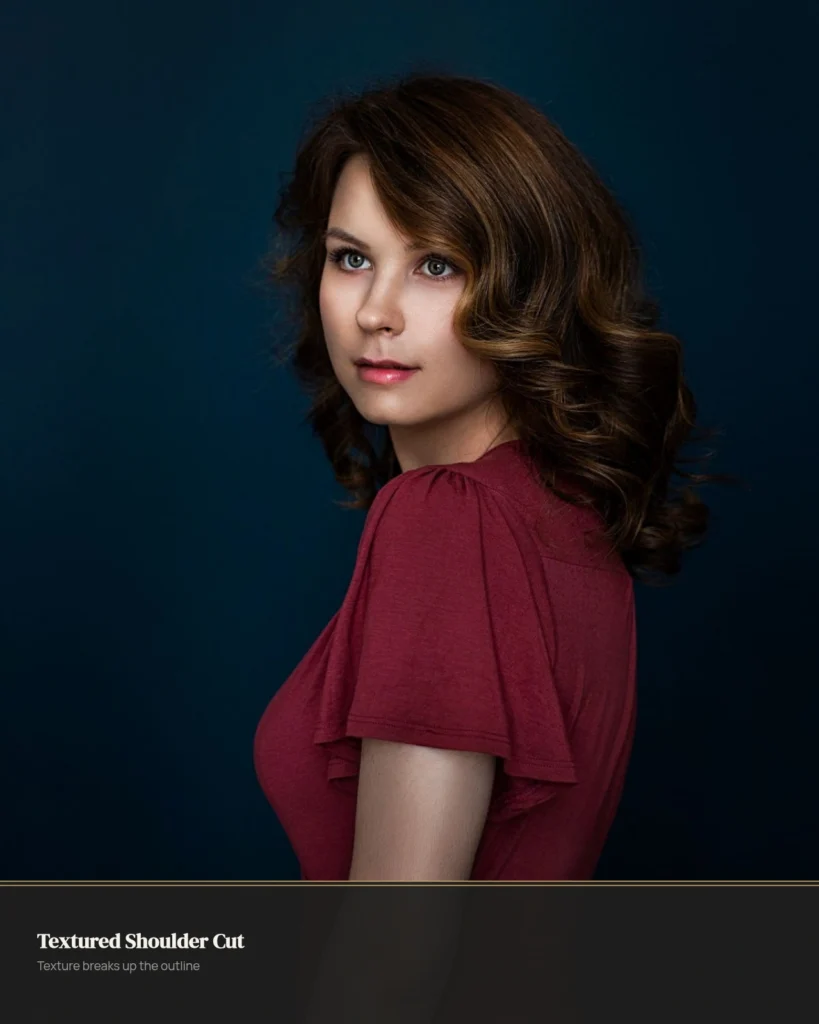
A shoulder-length haircut with natural texture can create movement throughout the sides and ends. Instead of forming one solid shape, the texture breaks up the outline of the haircut.
This can be particularly useful for naturally wavy hair, where the haircut can be designed around the existing wave pattern.
Consider it if you have:
- Naturally wavy hair
- Medium to thick density
- A preference for shoulder-length styles
- A low-to-moderate styling routine
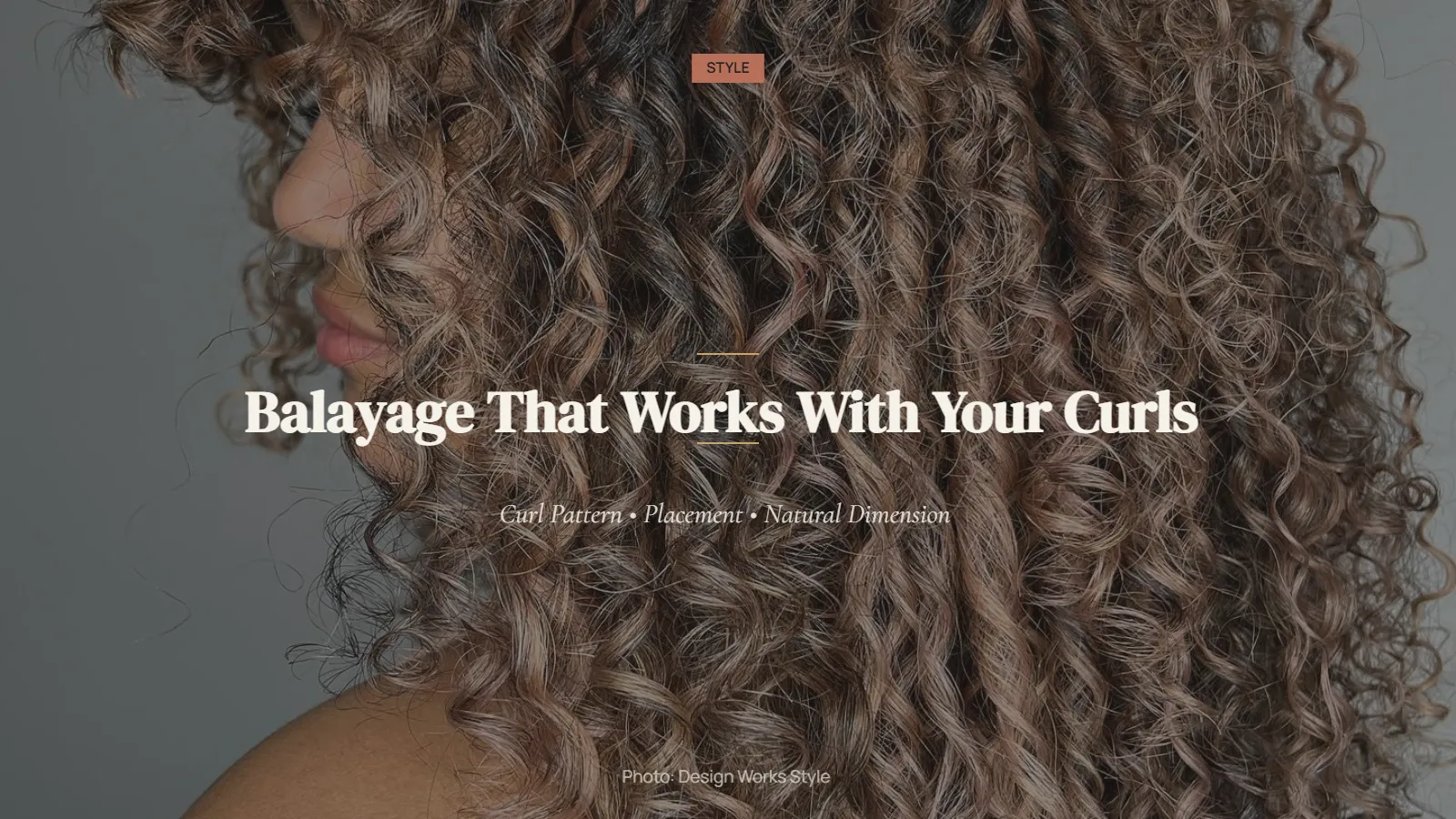
For curly hair, the cut should be planned around the natural curl pattern, shrinkage, and volume rather than copied directly from a straight-hair reference.
6. Long Bob With Side-Swept Bangs
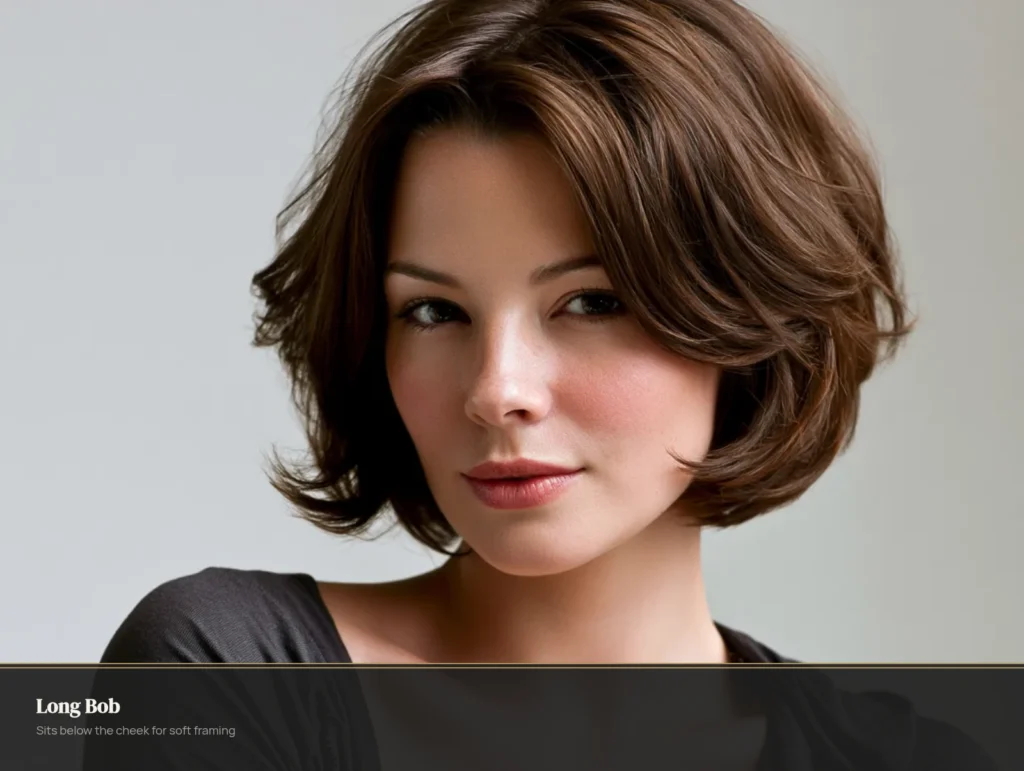
A longer bob paired with side-swept bangs combines a defined haircut shape with a softer, directional frame around the face.
The side-swept fringe can create movement across the forehead, while the longer bob keeps the main length below the cheek area.
Consider it if you want:
- A polished medium-length haircut
- Some fringe without a full blunt bang
- A side-swept styling direction
- A shape that works with straight or slightly wavy hair
Ask your stylist to show you where the bob will sit when your hair is naturally styled, especially if your hair has significant wave or curl.
7. Longer Pixie With Height on Top
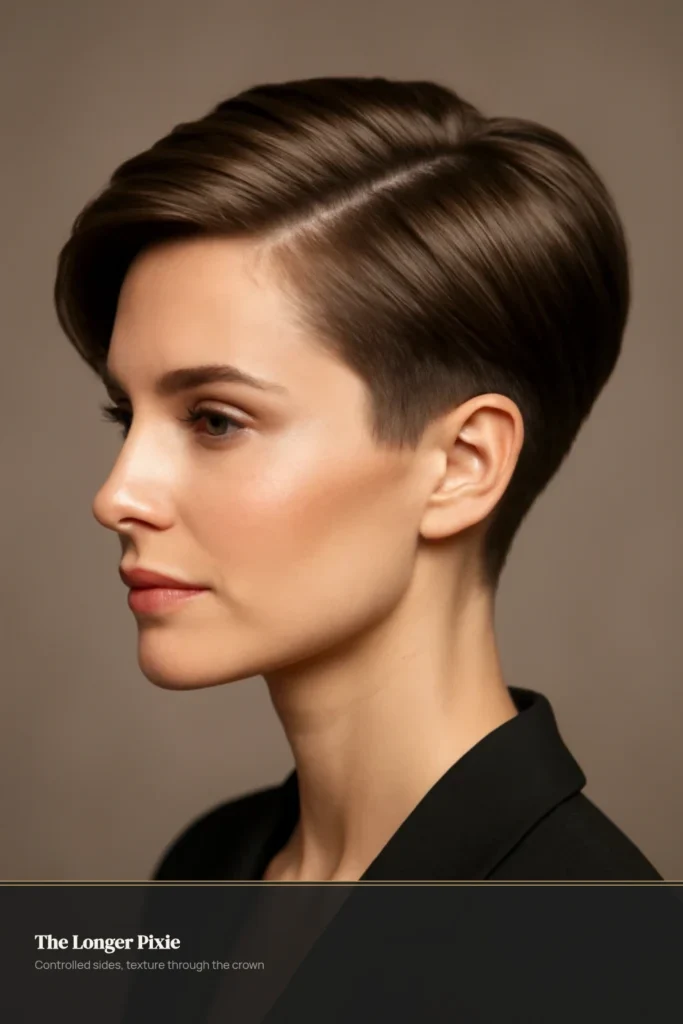
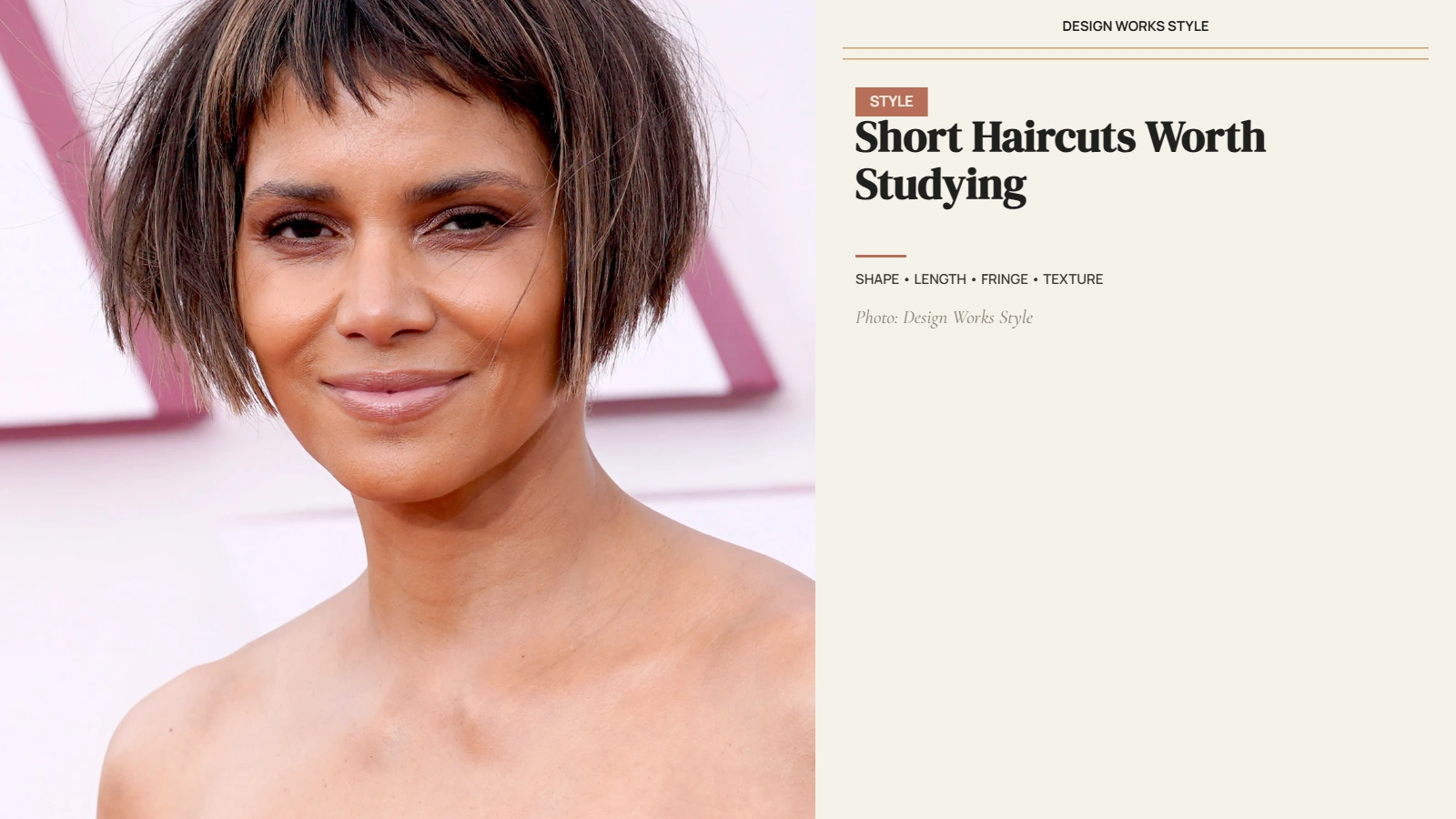
Short hair can also work for fuller-looking faces. A longer pixie can keep the sides relatively controlled while allowing some height or texture through the top.
The result depends heavily on the haircut’s shape, your hair density, and how you style it.
Consider it if you:
- Prefer short hair
- Want a lower-length haircut
- Like textured or piecey styling
- Are comfortable with more frequent trims
If you want more short-cut inspiration, see our guide to short hairstyles.
How to Choose Between These Haircuts
The best choice depends on the effect you want from your haircut rather than the label attached to your face.
If you want to keep your hair long
Consider long layers with face-framing pieces or curtain bangs with long hair.
These options allow you to keep length while adding movement around the face.
If you want medium-length hair
A layered lob, textured shoulder-length cut, or long bob with side-swept bangs can give you more shape without committing to a short haircut.
If you want more movement
Look at layers, waves, texture, or a side part rather than simply adding more volume at the sides.
If you want short hair
A longer pixie can give you a cropped look while leaving enough length through the top to create different styling options.
For more short-cut inspiration, see Short Haircuts for Round Faces if your facial proportions also fit a round-face shape.
What About a Round Face?
A fuller-looking face is not automatically a round face.
“Chubby face” is commonly used to describe fuller cheeks or softer-looking facial features, while a round face refers to a particular set of facial proportions. Some people may have fuller cheeks without having a round facial shape.
If your facial proportions also fit a round-face framework, see our guide to haircuts for round faces for more specific ideas.
For broader haircut decisions based on length, texture, density, and lifestyle, see What Haircut Suits Me?.
How Hair Type Changes the Look
The same haircut can produce a different result depending on your natural hair.
Fine hair: Keep layers controlled so the ends do not become too thin. Soft layers and strategic styling can add movement without removing excessive density.
Thick hair: Weight distribution matters. Internal layering or carefully placed layers can reduce bulk while maintaining the overall shape.
Straight hair: The haircut outline tends to be more visible, so the placement of face-framing pieces and the perimeter matters.
Wavy hair: Use the natural wave to create movement. A layered shoulder-length or longer cut can work particularly well when the layers follow the wave pattern.
Curly hair: Consider curl shrinkage, density, and natural volume before choosing a reference. A curly haircut should be designed for how the hair behaves naturally.
What to Ask for at the Salon
Bring reference photos that have a similar hair texture, density, and length to yours.
Instead of simply asking for a “haircut for a chubby face,” explain the effect you want. For example:
- “I want face-framing pieces that blend into my layers.”
- “I want to keep my length but add movement around my face.”
- “I want less bulk around the sides.”
- “I want a medium-length cut that works with my natural waves.”
- “I want a short cut with more texture and height through the top.”
Your stylist can then adjust the shape based on your actual hair rather than trying to reproduce a reference photo exactly.
Frequently Asked Questions
What is a good haircut for a chubby face?
Long layers, layered lobs, face-framing cuts, textured shoulder-length styles, and some longer short cuts can all be considered. The right choice depends on your hair type, preferred length, and the visual effect you want.
Are layers good for chubby faces?
Layers can work well when they create movement without adding unnecessary width around the cheeks. Longer, blended layers are one option, but placement should be adjusted for your hair density and texture.
Can I have short hair if I have a chubby face?
Yes. A fuller-looking face does not mean you need long hair. A longer pixie, textured crop, or other short cut can work depending on how the shape distributes volume around the face.
Are bangs good for chubby faces?
Bangs can work, but different styles create different effects. Curtain bangs and side-swept bangs provide a softer, directional frame, while blunt bangs create a stronger horizontal line.
Should I avoid volume around my face?
Not necessarily. The important question is where the volume sits. Height and movement can create a different visual balance from broad volume concentrated directly beside the cheeks.
There is no single haircut that everyone with a fuller-looking face should choose. Long layers, lobs, face-framing cuts, bangs, textured shoulder-length styles, and shorter cuts can all create different visual effects.
Choose the option that matches your preferred length, natural texture, maintenance routine, and the way you want your hair to frame your face.