

Hair Care for Curly Hair
Curly hair care is a moisture first routine: wash less often, condition well, detangle wet with a wide tooth comb, apply styling products to soaking wet hair, and dry without touching the curls much. Curls break and frizz when they dry out or are brushed dry, so most of the routine is about keeping them wet, coated, and left alone.
What Makes Curly Hair Different?
Curly hair is drier than straight hair because the bends in each strand slow down the oils that travel from the scalp, and the raised cuticle at those bends lets moisture escape faster. So curly hair frizzes in humidity, tangles easily, and breaks at the bends, and a routine built for straight hair leaves curls dry and undefined.
Curl patterns vary a lot, from loose waves to tight coils, and the pattern decides how much product and handling the hair needs. Loose waves need lighter products or they fall flat, while tight coils need heavier creams and butters to stay moist. Most heads carry more than one pattern, so the routine has to suit the driest and tightest sections, not just the front pieces you see in the mirror.
Porosity matters as much as pattern. Low porosity hair has a tight cuticle that resists water and product, so it needs light products and heat to open the cuticle during conditioning. High porosity hair soaks up water fast and loses it just as fast, so it needs heavier sealing products and protein now and then. A strand test in a glass of water gives a rough guide, but how your hair behaves on wash day tells you more.
How Often Should You Wash Curly Hair?
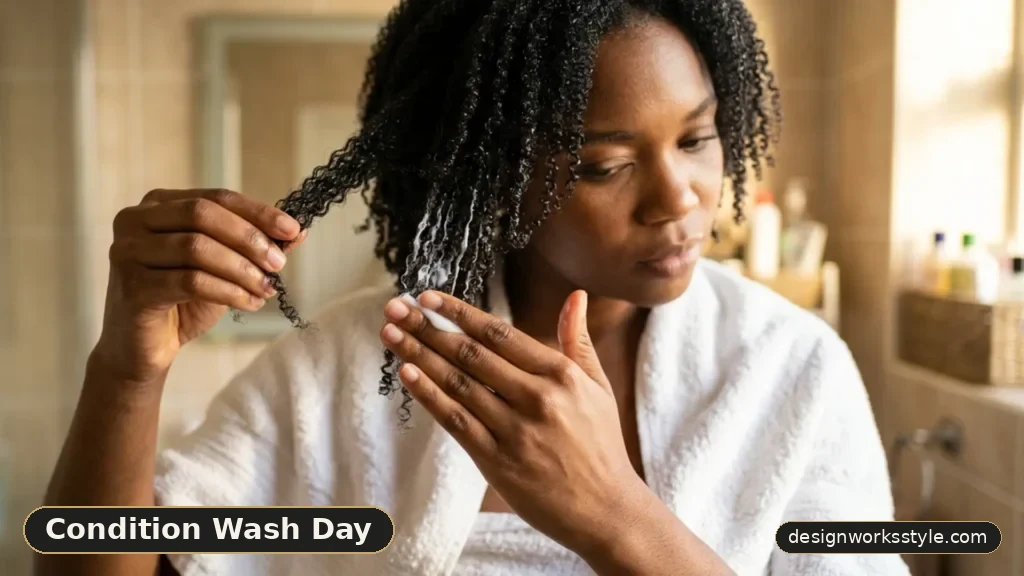
Most curly hair does fine washed once or twice a week, with conditioner only washes in between if the scalp needs refreshing. Washing less often keeps natural oils on the hair, and since curly hair is already dry, every wash is a chance to strip moisture that takes days to replace.
Use a sulfate free shampoo or a cleansing conditioner, and apply it mainly to the scalp. The lengths get clean enough from the rinse, and scrubbing them with shampoo dries them out. If your scalp builds up fast, wash the scalp twice with a small amount of shampoo, and keep conditioner on the lengths the whole time.
Condition every wash, and use more than you think you need. Work it through in sections, finger detangle as you go, and leave it on for three to five minutes before rinsing. A deep conditioner once a week or every two weeks helps tight or high porosity curls, and a hair care routine by hair type gives a useful starting point for how much moisture each pattern needs.
Between washes, refresh instead of rewash. Spritz with water mixed with a little leave in conditioner, smooth the curls back into shape with your hands, and let them dry untouched. Refreshing keeps the style going for two or three extra days without the dryness a full wash brings.
How Do You Detangle Curly Hair Without Damage?
Detangle curly hair only when it is wet and coated with conditioner, working in sections from the ends up with your fingers or a wide tooth comb. Dry detangling breaks curls apart and creates frizz, since the curl pattern locks together when dry and pulls apart only with force.
Split hair into four to six sections before you start, and clip the rest out of the way. Work conditioner through one section at a time, finger detangle it first, then pass a wide tooth comb through if you need it. Finger detangling first finds knots by feel, and you lose fewer hairs than you would dragging a comb through a dry tangle.
Never brush curly hair dry unless you want volume and frizz. A brush breaks the curl clumps apart, and the result is a halo of frizz instead of defined curls. If you want volume on purpose, pick the curls out at the roots only, after they are fully dry, and leave the lengths alone.
Detangle on wash day, and then leave the curls alone between washes as much as you can. Every extra comb through dry curls costs definition and adds breakage at the bends. Hands are the gentlest tool for daily shaping, and a wide tooth comb is the fallback when a section truly tangles.
What Products Work Best for Curly Hair?
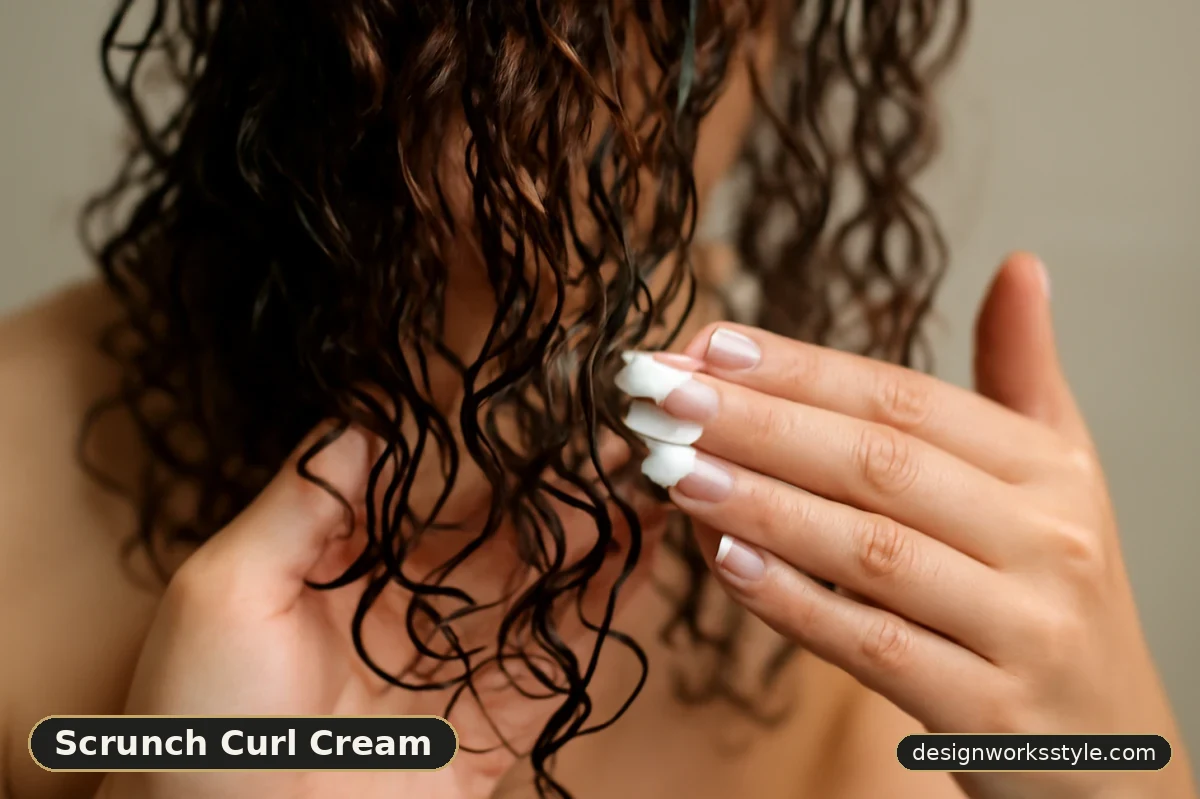
Curly hair needs three products: a leave in conditioner for moisture, a curl cream or gel for definition, and an oil or butter to seal the ends. The leave in goes on first, the styling product defines the curl, and the seal keeps moisture in, and skipping any shows up as frizz or dryness by day two.
Apply styling products to soaking wet hair, in sections, using the praying hands method or scrunching. Soaking wet hair lets product coat each curl evenly, and scrunching pushes the curl pattern back into shape. Raking product through with fingers works too, but it can pull curls apart, so scrunch after raking to bring the clumps back together.
Match product weight to curl type. Fine waves need light foams and gels, or the hair falls flat under the weight. Medium curls suit creams and light gels. Tight coils need thick creams and butters, since lighter products dry out before they can seal the hair. When a product leaves white flakes, you used too much, or it does not mix with the product under it, so test new pairs on one section first.
Read labels for drying alcohols and heavy silicones, which build up on curly hair and block moisture. A clarifying wash once a month removes buildup, and hair products explained in plain terms helps sort which ingredients help curls and which ones weigh them down. When in doubt, use fewer products well, and add one at a time so you know what each one does.
How Should You Dry Curly Hair?
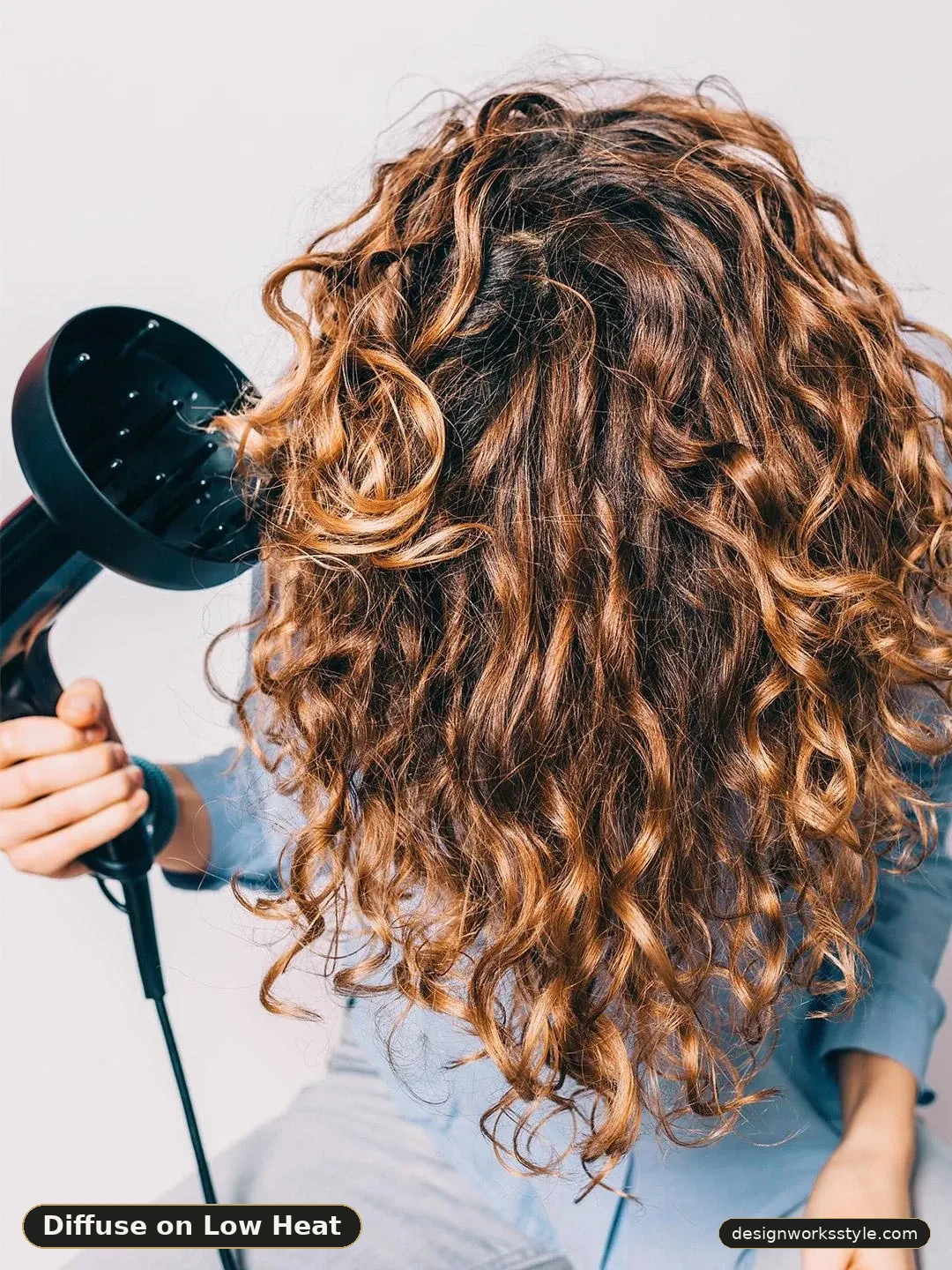
Dry curly hair with as little touching as possible: plop with a cotton T-shirt or microfiber towel, then air dry or diffuse on low heat and low speed. Regular towels rough up the cuticle and break curl clumps, and touching wet curls while they dry creates the frizz most people try to avoid.
Plopping means laying a T-shirt flat, flipping wet hair onto it, and wrapping it up so the curls set in their natural shape. Leave it on for twenty to thirty minutes, then unwrap and let the hair finish drying untouched. The T-shirt absorbs water without the friction of a terry towel, and the curls hold their shape better.
Diffusing works when you need to dry faster. Use low heat and low speed, cup sections into the diffuser bowl, and hold still instead of moving the dryer around. Moving the dryer blows curls apart. Dry to about 80 percent, then air dry the rest, since fully diffusing to dry often leaves the ends crispy.
Once hair is fully dry, scrunch out the crunch. Gel forms a cast around each curl as it dries, and that cast looks stiff until you break it. Rub a drop of oil between your palms and scrunch upward gently, and the curls soften while keeping their shape. Do this only when hair is fully dry, since scrunching damp curls creates frizz.
How Do You Keep Curls Healthy Between Wash Days?
Keep curls healthy between washes by protecting them at night, refreshing with water and leave in conditioner, and avoiding dry brushing and tight styles. Curls lose moisture and shape overnight, so night protection matters as much as wash day, and a good refresh routine can stretch a wash day style to four or five days.
Sleep on a silk or satin pillowcase, or wrap hair in a silk scarf or bonnet. Cotton pillowcases absorb moisture and catch on curls, which flattens them and adds frizz by morning. A loose pineapple, gathering hair high on top of the head with a soft scrunchie, keeps curls from being crushed while you sleep, and it takes seconds.
Refresh in the morning with a spray bottle of water and a little leave in conditioner. Mist until the curls are damp, smooth them into shape with your hands, and add a small amount of gel or cream only where the curl has fallen out. Let the refresh dry untouched, just like wash day, or the frizz comes back.
Trim curly hair every ten to twelve weeks, and ask for a dry cut if your stylist offers it. Dry cutting lets the stylist see how each curl falls, which matters because curly hair shrinks and springs up when it dries. Choosing a haircut for curls means finding a stylist who cuts curly hair often, since a cut made for straight hair rarely sits right once the curls dry.
Heat damage shows up fast on curly hair, so limit straightening and high heat styling. A straightened curl that will not spring back has lost its pattern, and that damage grows out only with time and trims. When you do straighten, use heat protectant and one slow pass, and deep condition after, since hair damage repair habits, with moisture and gentle handling, are what bring curls back over the following weeks.
Frequently Asked Questions
Should I brush curly hair?
Brush curly hair only when it is wet and coated with conditioner, or not at all. Dry brushing breaks curl clumps apart and creates frizz. Finger detangling on wash day, plus a wide tooth comb when needed, keeps curls defined and loses less hair.
Why is my curly hair frizzy even after conditioning?
Frizz usually means the hair dried out after conditioning, or the curls were touched while drying. Apply styling products to soaking wet hair, dry without touching, and seal the ends with oil or butter. If frizz stays, check for buildup, since heavy products can block moisture and leave curls dry underneath.
Can I wash curly hair every day?
You can, but most curly hair does better washed once or twice a week. Daily washing strips the oils curly hair already lacks, and the extra drying time adds friction. If your scalp needs daily attention, rinse with conditioner only on the off days, and keep shampoo for wash day.
How do I refresh second day curls?
Mist the curls with water mixed with a little leave in conditioner until damp, smooth them into shape with your hands, and add a small amount of gel or cream only where the curl has fallen out. Let the refresh dry untouched, and the curls should hold for another day or two without a full wash.