
Best Haircuts for Thin Hair
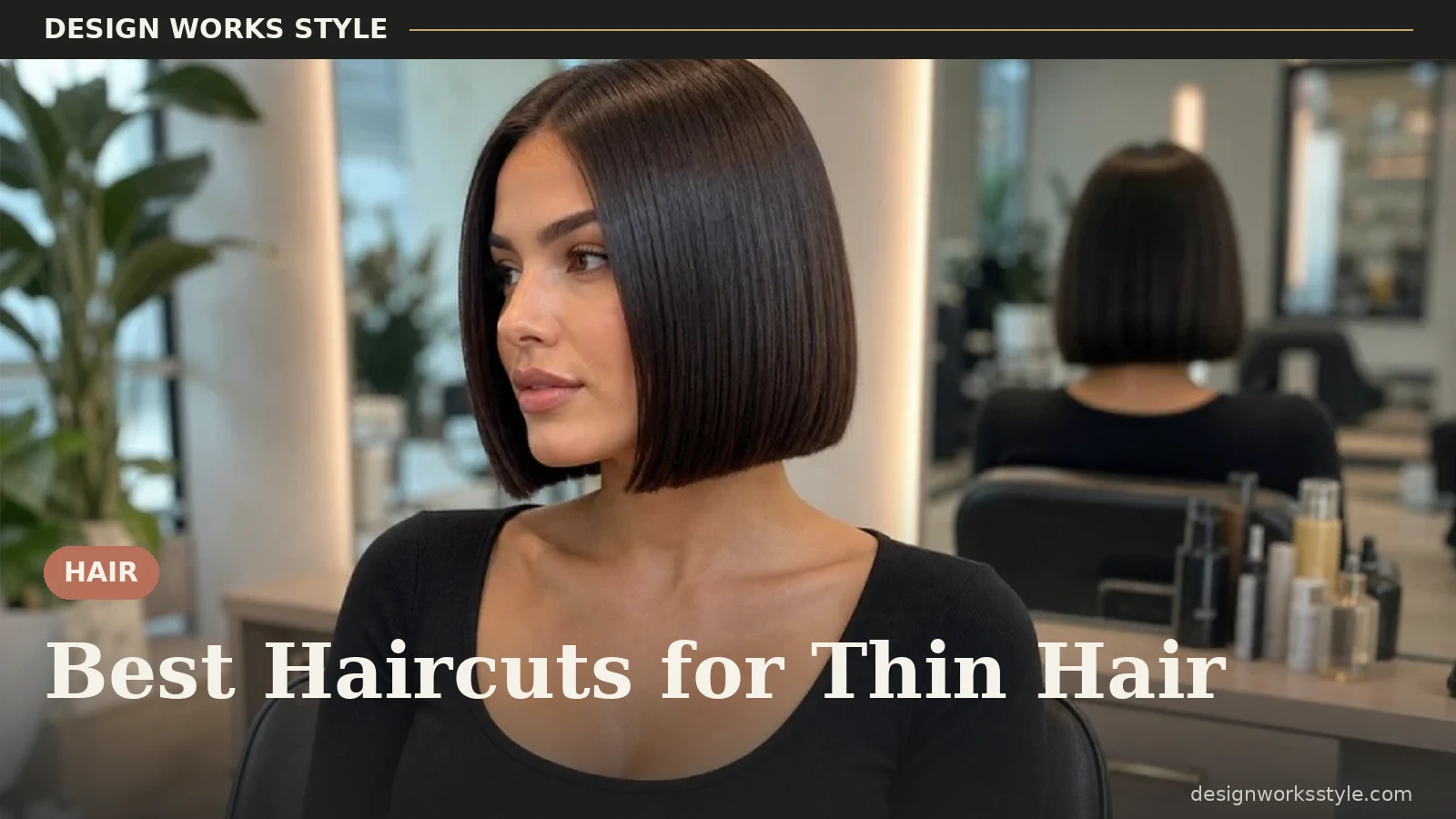
The best haircuts for thin hair keep the ends thick, add movement without removing weight, and hold their shape between cuts: a blunt bob, a long bob with soft layers, or a shoulder length cut with face framing pieces. Length past the shoulders pulls thin hair flat, and heavy layering takes away bulk the hair needs to look full.
Why Does Thin Hair Go Flat?
Thin hair goes flat because each strand is fine and light, so it has little lift at the root and little bulk at the ends. Gravity pulls it down, oil travels down the shaft fast and weighs it flat, and a cut that removes too much weight leaves nothing to hold a shape.
Density matters too. Some people have fine strands but a lot of them, and some have fewer strands overall. A stylist should check both before cutting. Fine, dense hair can carry more layering than fine, sparse hair. If your part shows a lot of scalp, the cut needs to protect every strand it can.
Growth patterns play a part as well. Hair that grows flat against the head at the crown will lie flat no matter what product goes on it, unless the cut builds in lift. Hair with a cowlick at the front or crown needs a cut that works with that direction, not against it, or the front will keep splitting open.
What Length Works Best for Thin Hair?
Chin to shoulder length works best for most thin hair, because it keeps the ends thick enough to look full while staying light enough to hold lift at the roots. Shorter cuts give the most lift, since less weight pulls the roots down, and shoulder length still gives enough hair to style in a few different ways.
Very long thin hair rarely looks fuller than a bob. The ends get wispy as they age, the top goes flat under the weight, and the whole head can look stringy by the end of the day. If you want to keep length, ask for a blunt cut at the ends and only light shaping around the face, and accept that the hair will need more frequent trims to keep the ends from thinning out.
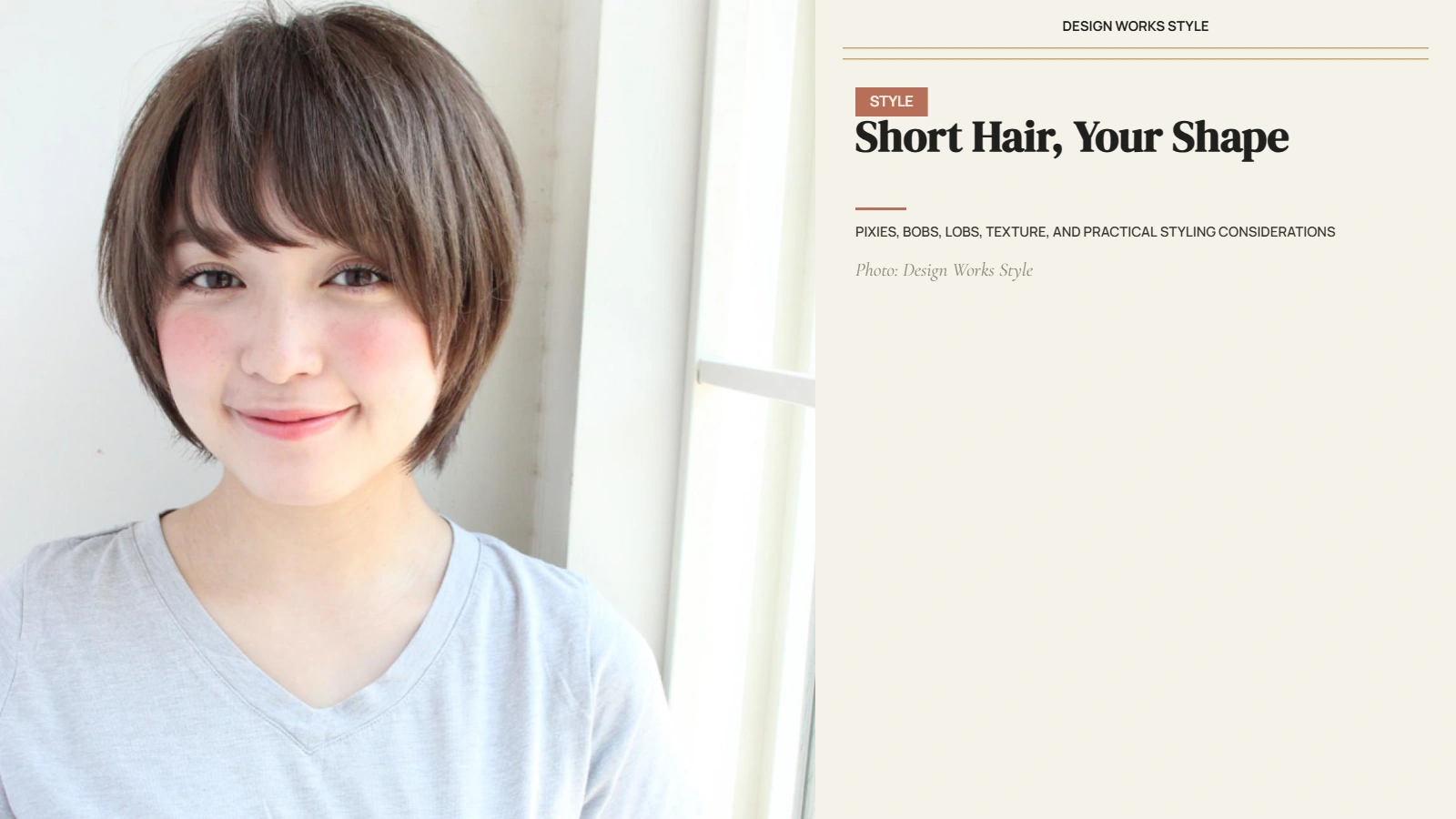
A pixie or short crop can suit thin hair well, especially if the hair is straight and the face shape suits a short cut. Short hair dries fast, holds a style with little product, and shows off the cut itself instead of relying on bulk. The trade off is upkeep: short cuts need a trim every four to six weeks to keep their shape.
Which Cuts Add Fullness?
A blunt bob adds fullness because every strand ends at the same line, so the bottom edge looks thick instead of wispy. Ask for a clean, straight line at the ends with almost no thinning at the bottom, and keep the length at or just below the chin for the fullest look.
A long bob, or lob, with soft, long layers works when a full bob feels too short. The layers should start below the chin and stay long, so they add movement without cutting away bulk. Short layers on top are the mistake to avoid here; they leave the ends thin and the top puffy, which is the opposite of full.
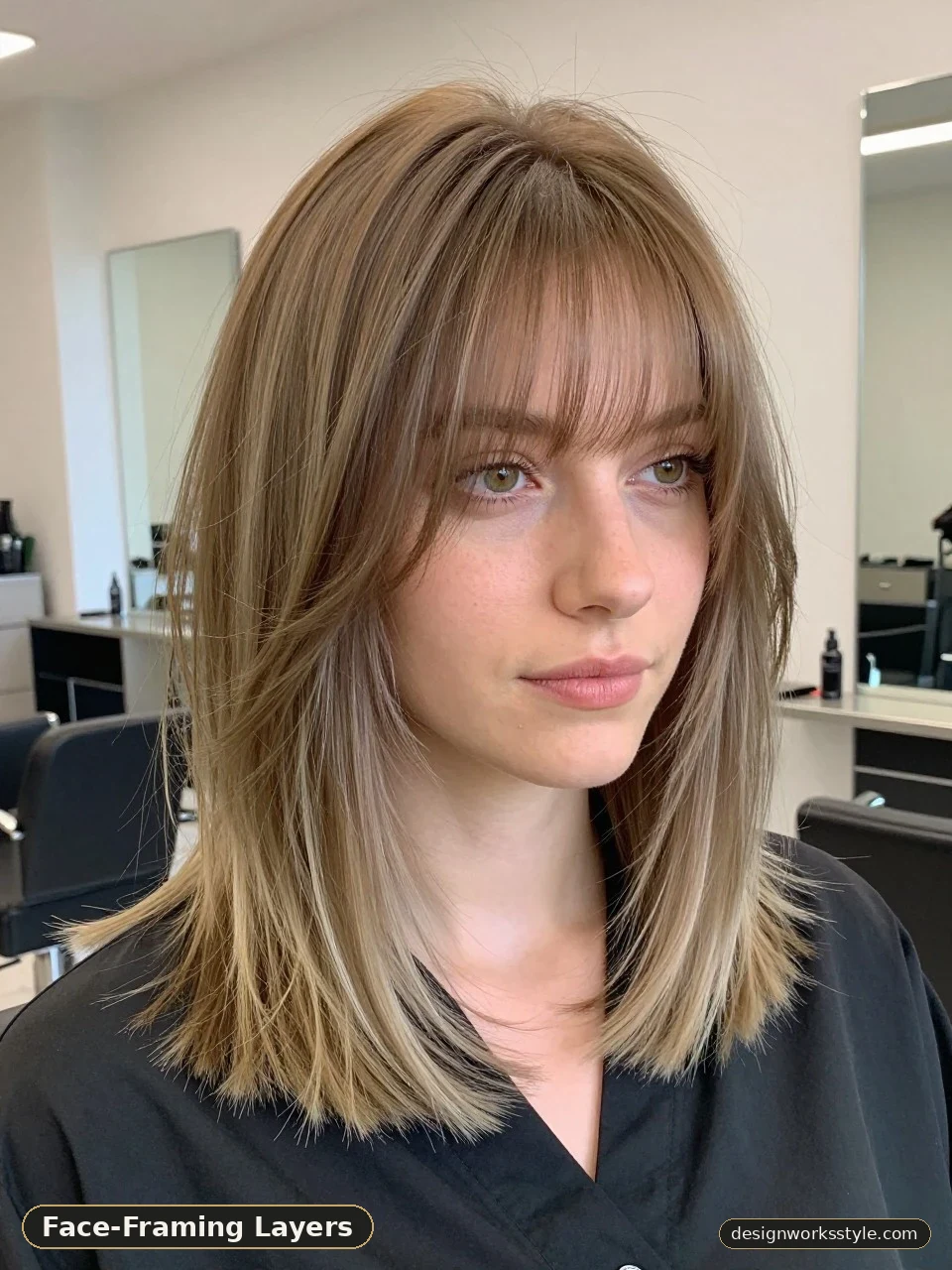
A shoulder length cut with face framing pieces suits thin hair that needs a softer shape. The framing pieces open up the face and add movement at the front, while the back stays blunt and thick. Keep the framing long, starting at the cheekbone or lower, so the front does not turn into short, flyaway pieces.
A shag can work on thin hair only when it is cut with a light hand. A true shag removes a lot of weight, which thin hair cannot spare, but a soft shag with long layers and a blunt perimeter gives texture without hollowing out the ends. Tell the stylist you want texture at the surface, not thinning through the lengths, and check the back in the mirror before you leave.
What Should You Ask Your Stylist?
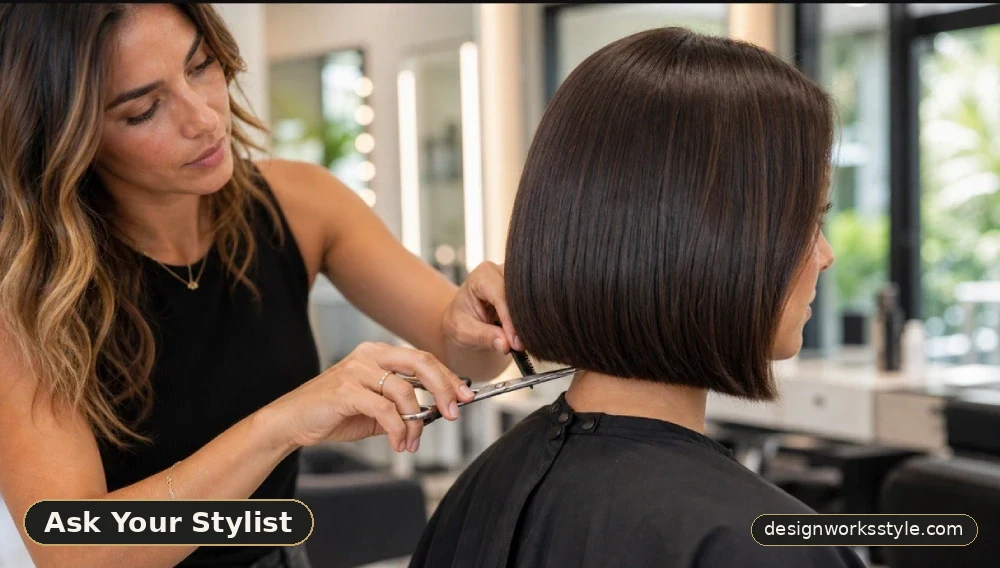
Ask for blunt ends, long layers only, and no thinning shears through the lengths, and bring photos of cuts on hair like yours, not on thick hair. Photos on thick hair mislead both you and the stylist, because a cut that looks full on thick hair can look sparse on thin hair.
Talk about how you style your hair day to day before the cut starts. A cut that needs daily blow drying will not suit someone who air dries, and a cut that needs a round brush will not suit someone who uses a flat iron. The stylist should shape the cut around your real routine, and choosing a haircut that fits your routine matters more than picking the trendiest shape.
Ask how often you will need a trim to keep the shape. Blunt bobs need a trim every six to eight weeks to keep the line sharp, while a lob can go eight to ten weeks. Knowing the upkeep in advance keeps the cut looking full instead of growing into a shapeless length that thins at the ends.
Ask the stylist to show you how to style the cut before you leave. A quick blow dry lesson, or a demo of how to part the hair for lift, saves weeks of trial and error at home. If the stylist uses a product you like, note the name and how much they used, since too much product weighs thin hair down fast.
How Do You Style a Cut for Thin Hair?
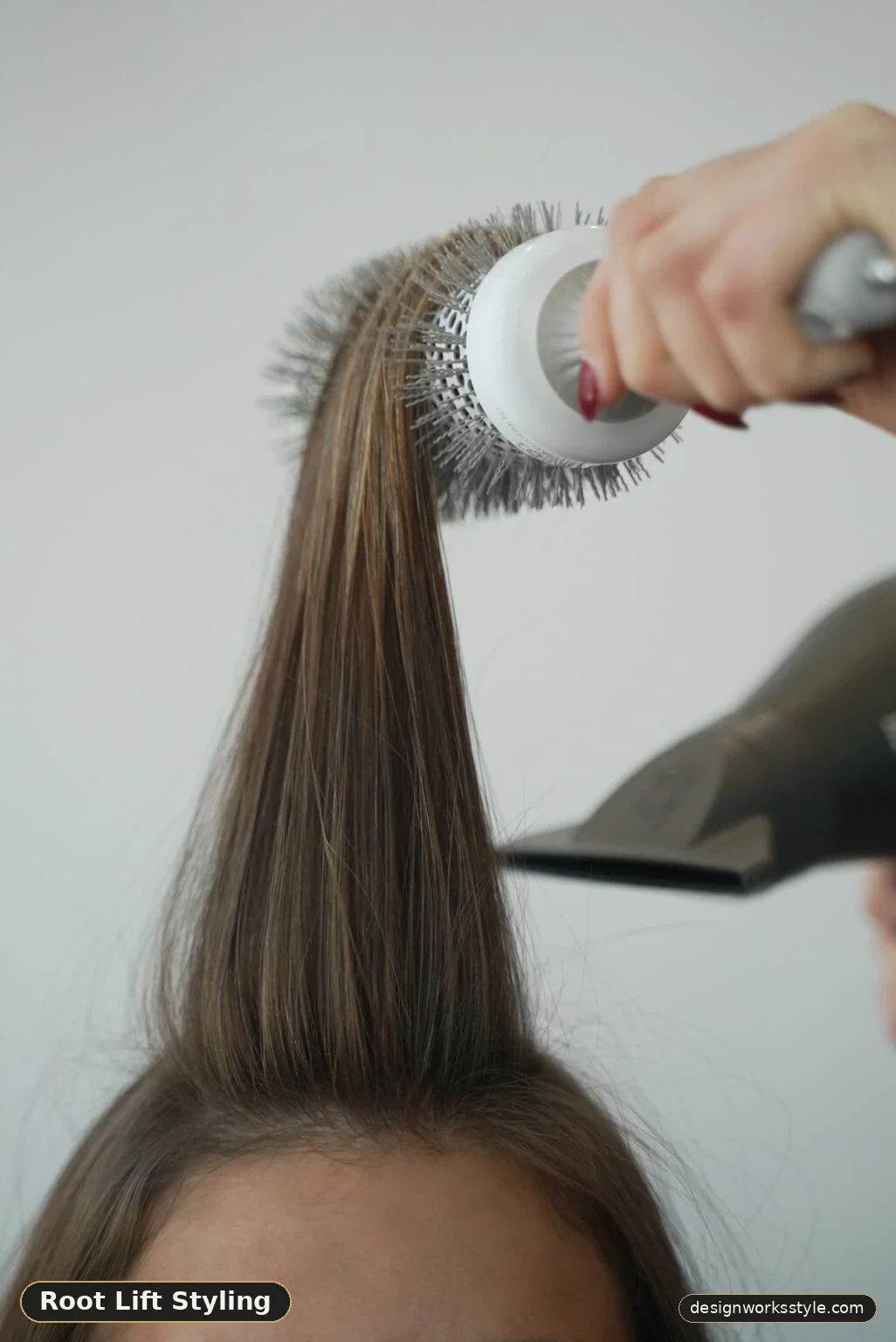
Style thin hair by drying the roots first with your head flipped forward or with a round brush lifting at the crown, then smoothing the lengths. Root lift is what makes thin hair look full, and it has to be set while the hair is damp. Once the roots dry flat, no amount of product will lift them for long.
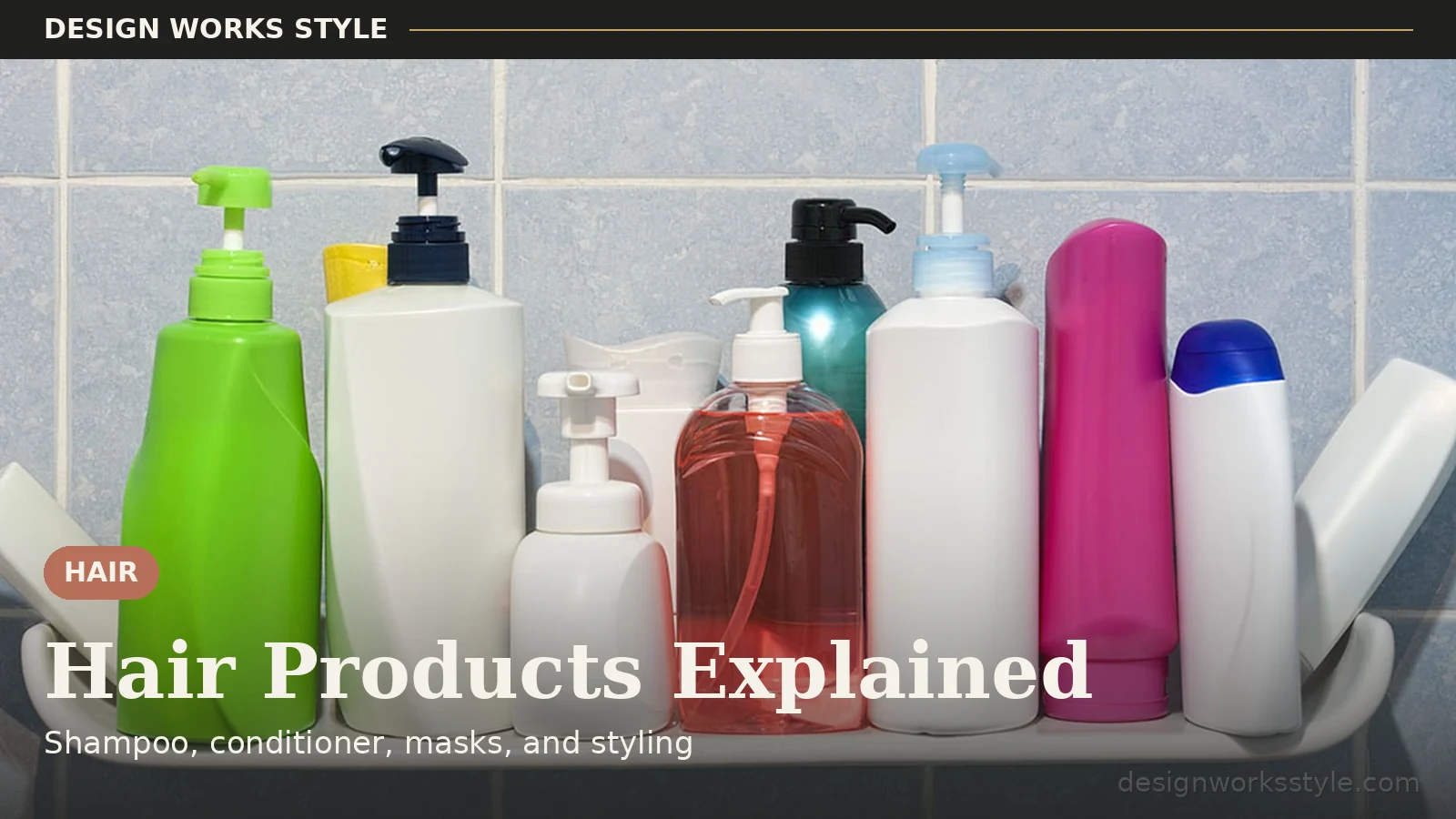
Use light products and use less than you think you need. A volumizing mousse the size of a golf ball, worked through damp roots, gives lift without stiffness. Heavy creams, oils, and thick serums coat fine strands and pull them flat, so keep those on the ends only, if you use them at all. A hair products explained in plain terms helps sort which products add lift and which ones weigh fine hair down.
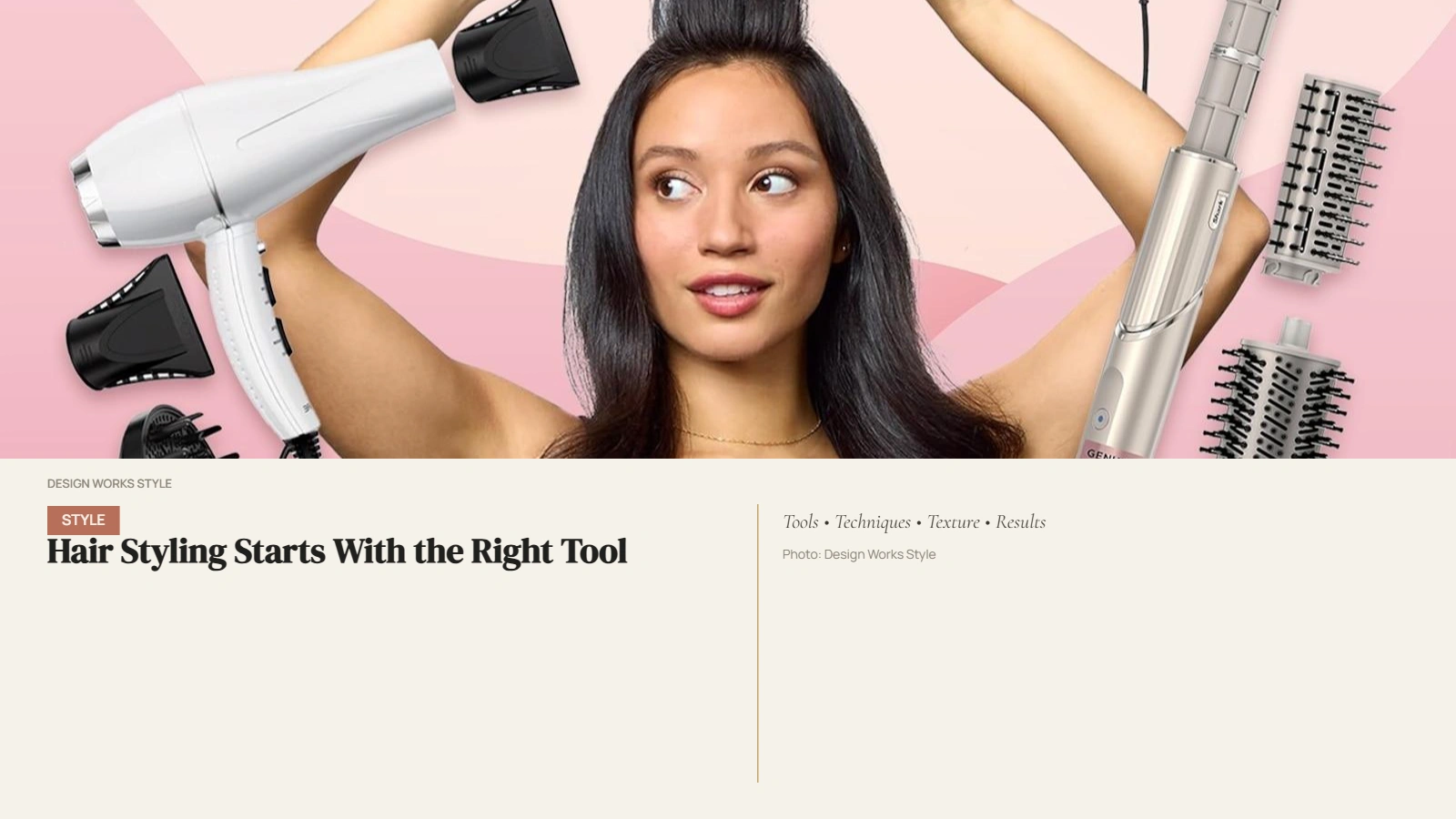
Blow dry with a medium round brush, lifting each section up and away from the scalp as you dry. Roll the brush at the root, hold for a few seconds, then move down the section. Let each section cool before you drop it, since cool hair holds its shape better than hot hair. A cool shot from the dryer at the end locks in the lift.
Part your hair where it lifts best, not always where it falls naturally. A deep side part gives instant lift at the crown, and switching the part every few days stops the roots from training flat in one direction. If your hair always parts in the middle, try moving it an inch to one side and see how much fuller the top looks.
How Do You Keep Thin Hair Looking Full Between Cuts?
Keep thin hair looking full between cuts by washing with a light shampoo, conditioning only the ends, and trimming the ends before they turn wispy. Washing too often strips the hair and leaves it limp, while skipping washes lets oil weigh it flat, so most thin hair does best washed every other day or every two days.
Conditioner on the roots is the most common cause of flat thin hair. Apply conditioner from the mid lengths down, rinse well, and skip leave in conditioner at the crown. The ends need the moisture; the roots do not, and a hair care routine by hair type gives a useful starting point for how much moisture fine hair actually needs.
Dry shampoo can help on the second day, but only in small amounts at the roots. Spray from a distance, wait a minute, then brush through gently. Too much dry shampoo builds up and makes thin hair look dull and gritty, so use it as a bridge to wash day, not as a daily habit.
Watch for breakage, since thin hair loses bulk fast when strands snap. Rough brushing, tight ponytails, and daily high heat all thin the ends over time, and how to prevent hair breakage with gentler handling and regular trims keeps the cut thick for longer between visits.
Frequently Asked Questions
Should thin hair be layered?
Light, long layers can add movement to thin hair, but short or heavy layers remove bulk and make the ends look thinner. Keep layers long, starting below the chin, and keep the bottom edge blunt. If your stylist reaches for thinning shears, ask them to stop and explain what they plan to remove.
Does a shorter cut always make thin hair look thicker?
Shorter cuts usually look thicker because less weight pulls the roots flat, but the cut shape matters more than length alone. A blunt bob at chin length looks fuller than a long, heavily layered cut, while a poorly shaped short cut can still look sparse. Talk through the shape, not just the length, with your stylist.
Can thin hair hold curls or waves?
Thin hair can hold waves, but the curls drop faster than on thick hair because there is less bulk to hold the shape. Use a light mousse before styling, curl in small sections, and let each section cool fully before brushing out. Heatless methods, like braids left in overnight, also give waves without the damage of daily hot tools.
How often should thin hair be trimmed?
Thin hair needs a trim every six to eight weeks for a bob, or eight to ten weeks for a lob or shoulder length cut. The ends thin out fast on fine hair, and waiting longer turns a blunt edge into a wispy one. Regular trims keep the bottom edge thick, which is what makes the whole cut look full.