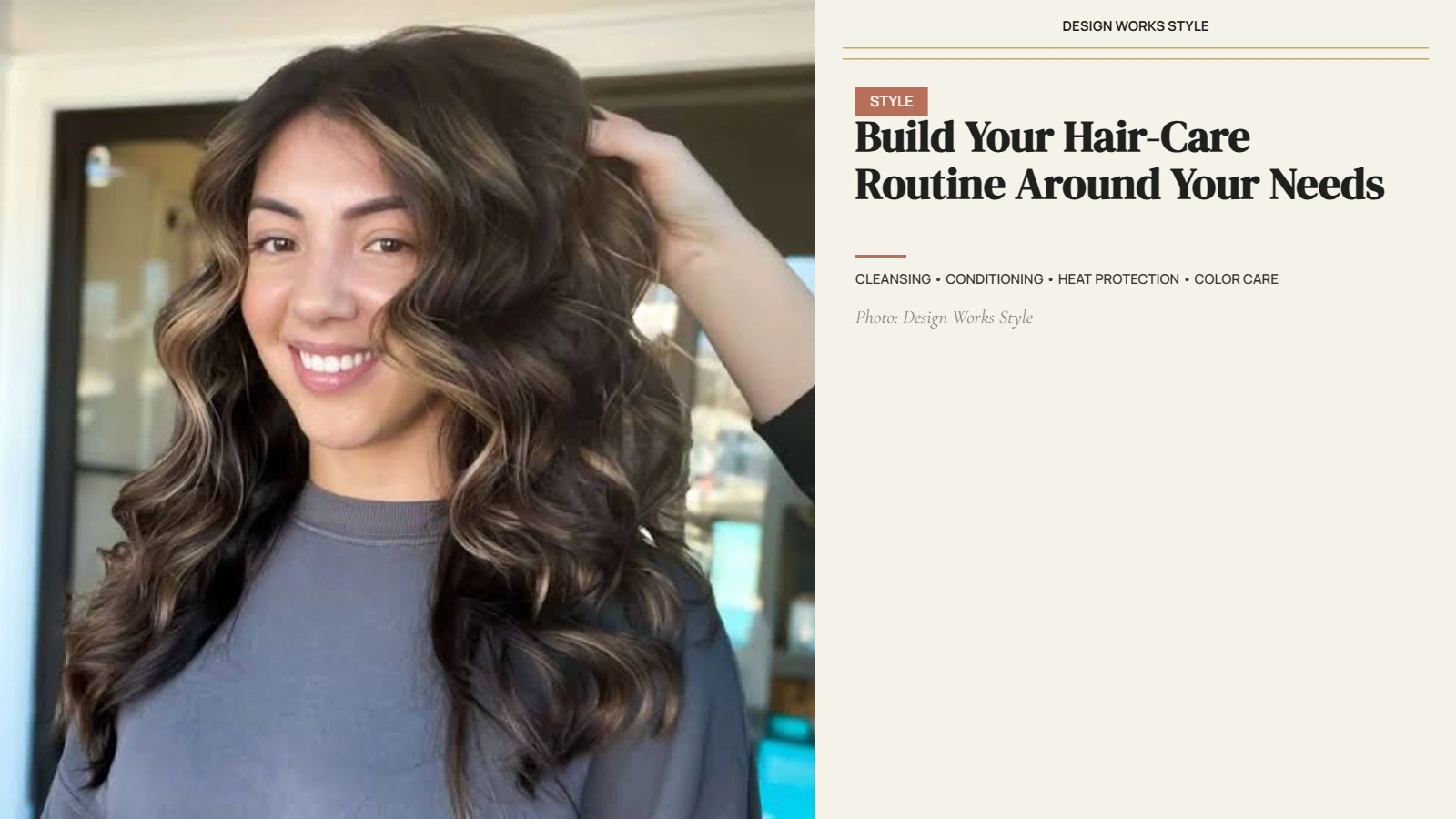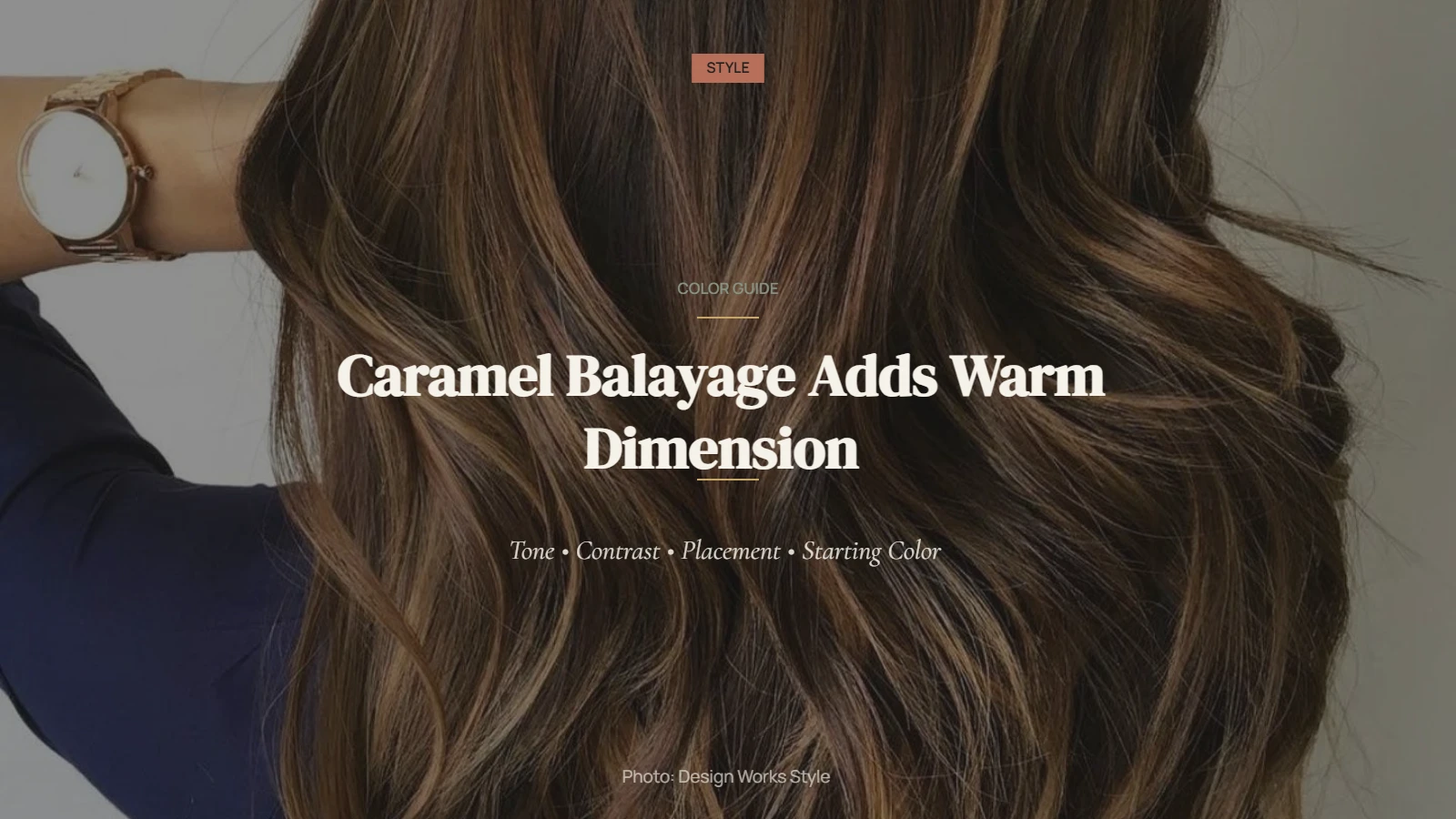

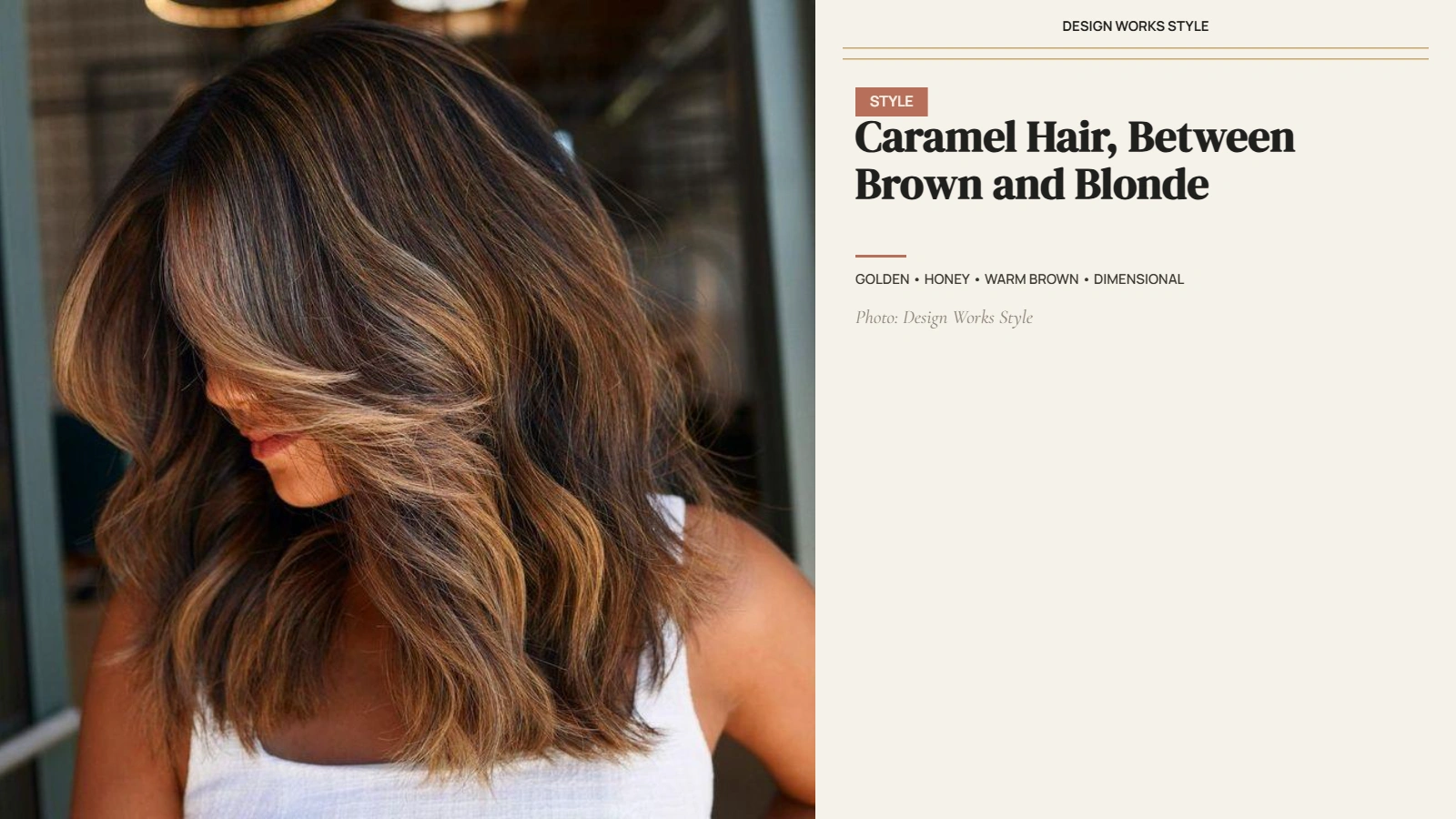
Caramel hair color is a warm brown-to-blonde color family with golden, honey, beige-gold, and amber qualities. It can be used as an all-over color or introduced through dimensional techniques, and the right version depends on your starting shade, desired depth, amount of warmth, and maintenance preference.
The important distinction is that caramel describes a color direction, while techniques such as balayage describe how that color is placed. You can have caramel hair color without having balayage, and caramel can range from a subtle warm brunette to a much lighter honey-toned result.
What Is Caramel Hair Color?
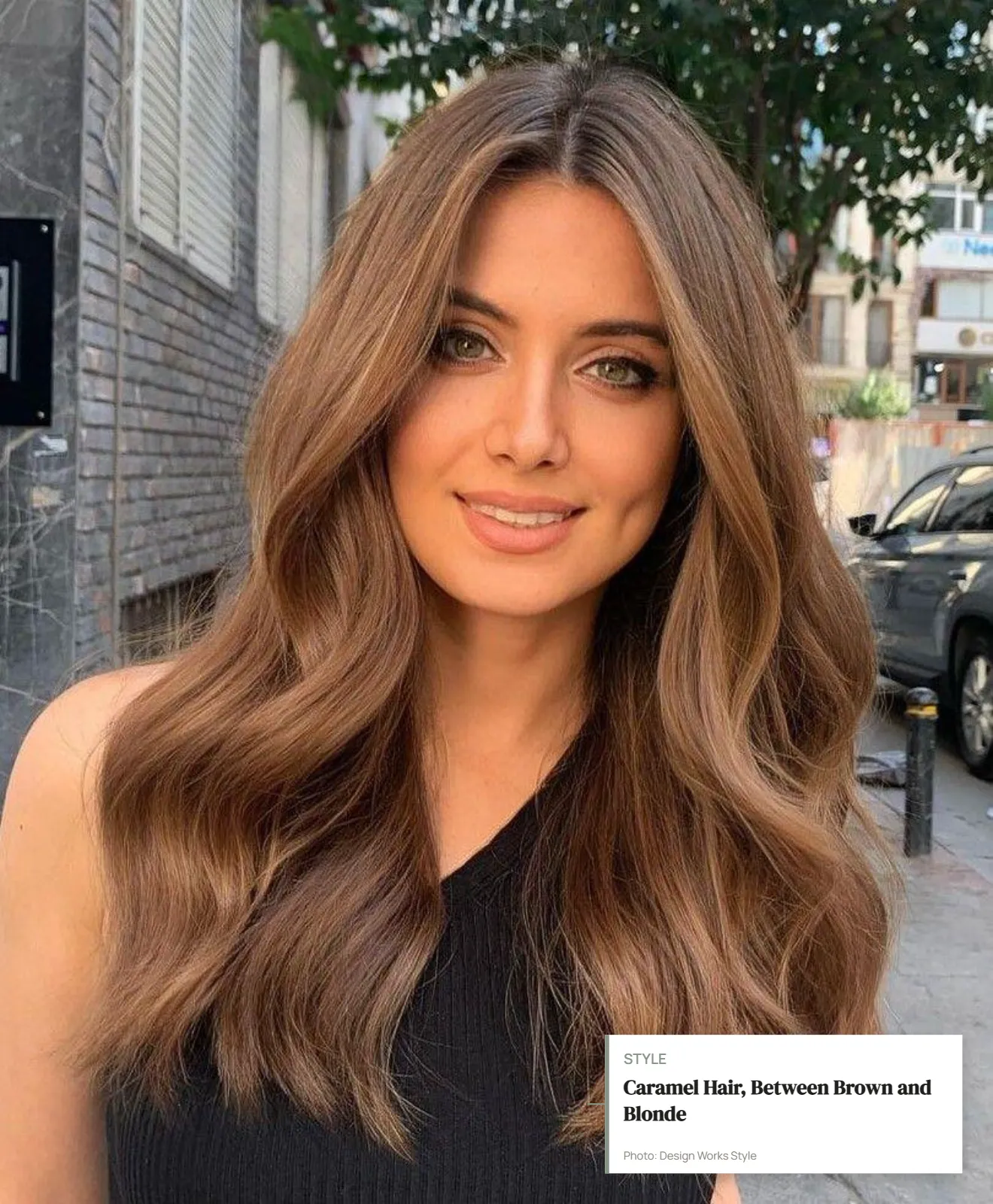
Caramel hair color sits somewhere between brown and blonde, depending on its depth and formulation. It is generally warmer than cool brunette shades such as ash brown hair and can include several related tones:
- Golden warmth
- Honey
- Amber
- Beige-gold
- Warm brown
- Soft copper-gold in some variations
Caramel is not one standardized shade. A dark caramel can remain visibly brunette, while a lighter honey caramel can move closer to dark blonde.
If you are comparing caramel with other color families and trying to decide which direction makes sense for your starting hair, our Hair Color guide provides the broader framework.
Caramel vs. Other Color Directions
| Color direction | Typical quality | Overall impression |
|---|---|---|
| Caramel | Golden, honey, amber, warm beige | Warm and dimensional |
| Ash brown | Smoky, muted, cool | Cool and subdued |
| Neutral brown | Balanced warmth and coolness | Natural and balanced |
| Chocolate brown | Rich brown, usually neutral-warm | Deep and rich |
| Honey blonde | Lighter golden warmth | Brighter and more blonde |
| Copper brown | Orange/red warmth | More noticeably copper |
The most useful question is not whether one shade is universally better. Instead, decide how much warmth, brightness, and contrast you actually want.
Caramel Hair Color by Depth
Caramel becomes easier to choose when you think about depth first. The same warm caramel direction can look very different on dark brown, medium brown, light brown, or dark blonde hair.
Light Caramel
Light caramel sits closer to dark blonde or light brown. It can have honey, beige-gold, or soft golden-brown qualities.
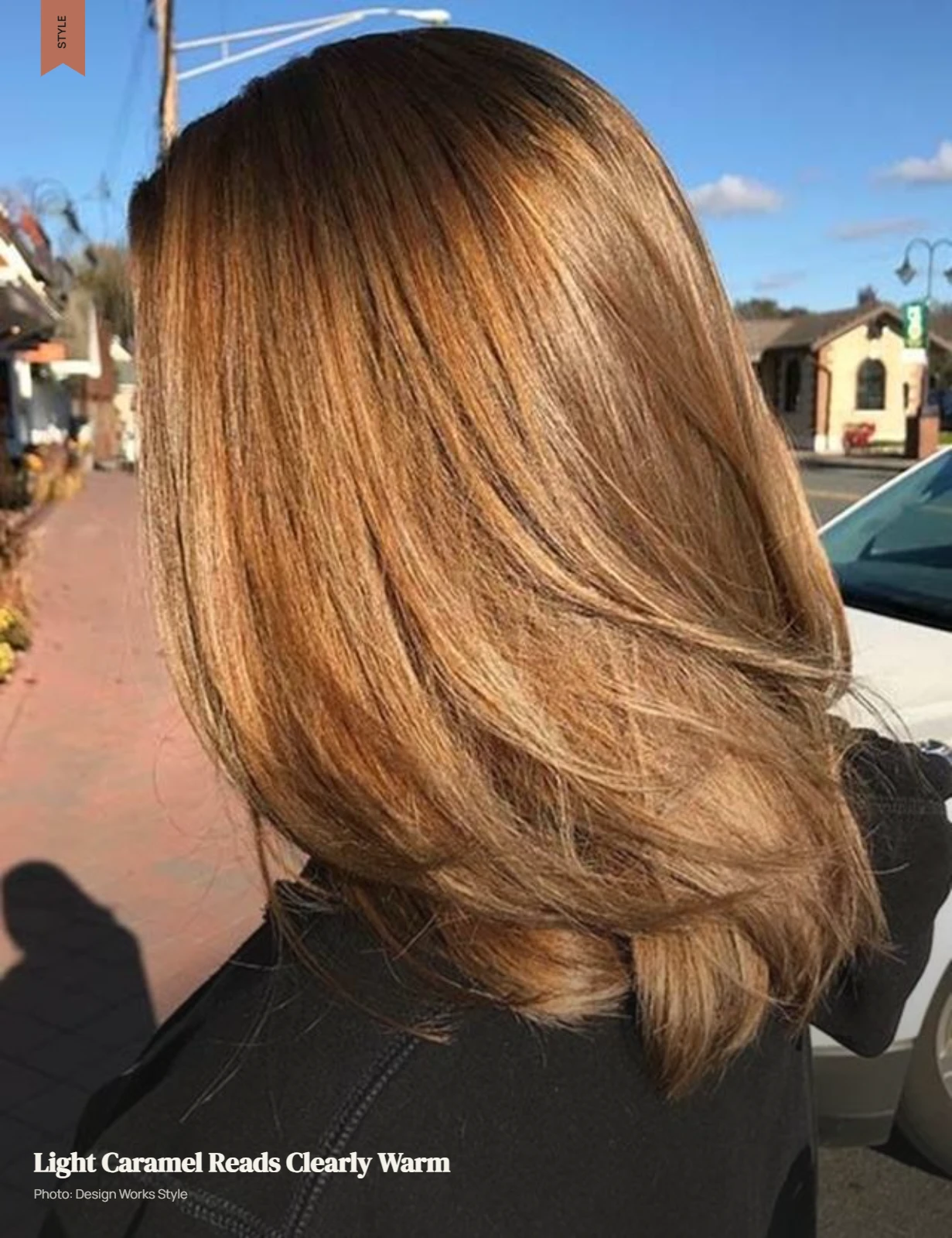
This direction generally needs enough underlying lightness for the caramel tones to become clearly visible. On darker hair, achieving a substantially lighter caramel may require professional lightening rather than simply applying a lighter caramel color.
Choose this direction if you want the caramel to read clearly rather than simply adding a warm reflect to brunette hair.
Consultation phrase:
“I want a light caramel that looks warm and honeyed without becoming very blonde.”
Medium Caramel Brown
Medium caramel brown keeps brown visually dominant while introducing noticeable golden warmth.
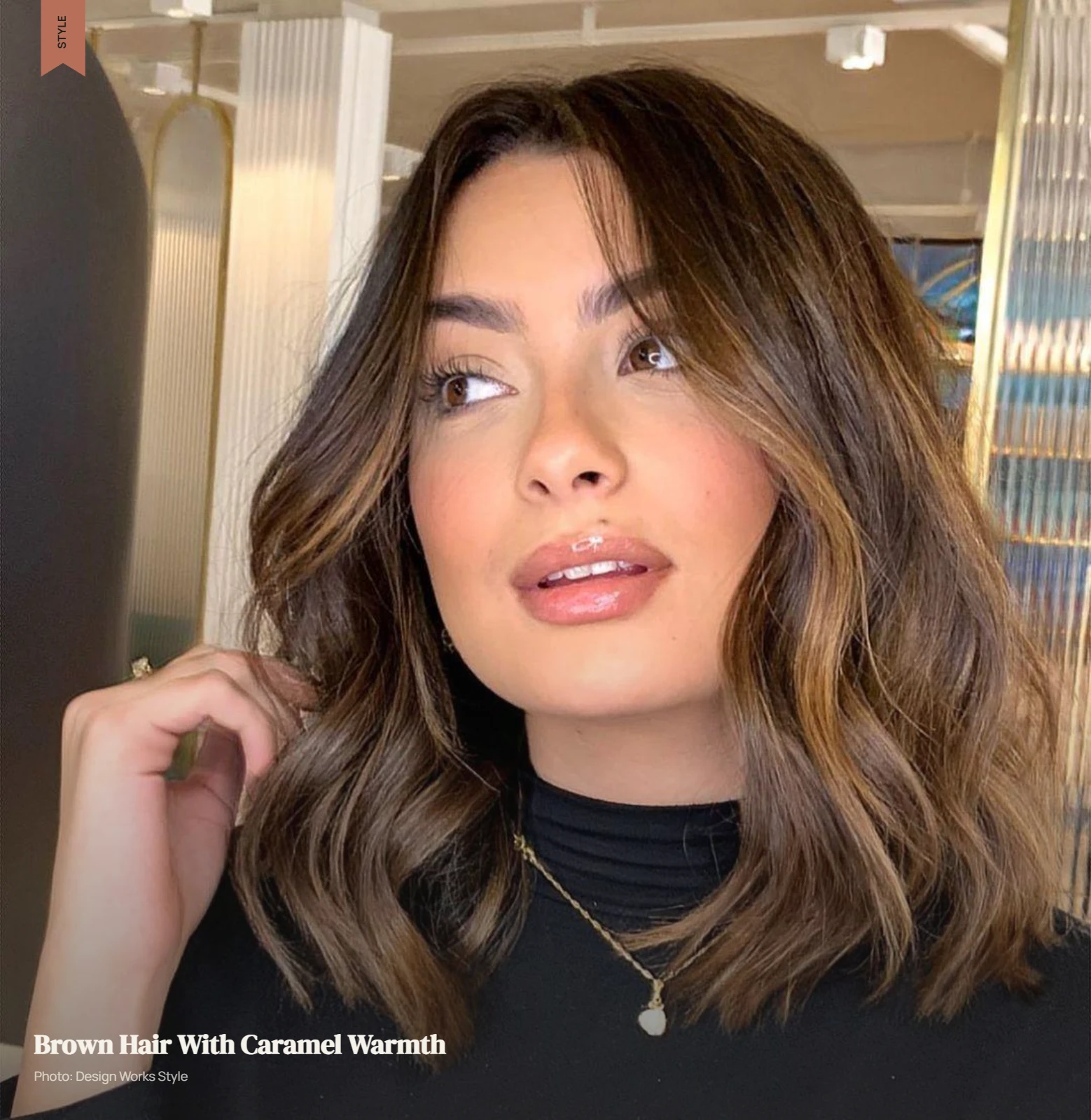
It can be a middle ground between a traditional brunette and a lighter caramel result. The contrast is generally less dramatic than with very light caramel, while the warm reflect remains visible.
Choose this direction if you want brown hair with visible caramel warmth rather than a predominantly blonde result.
Consultation phrase:
“I want to stay brunette but add a noticeable caramel-golden warmth.”
Dark Caramel
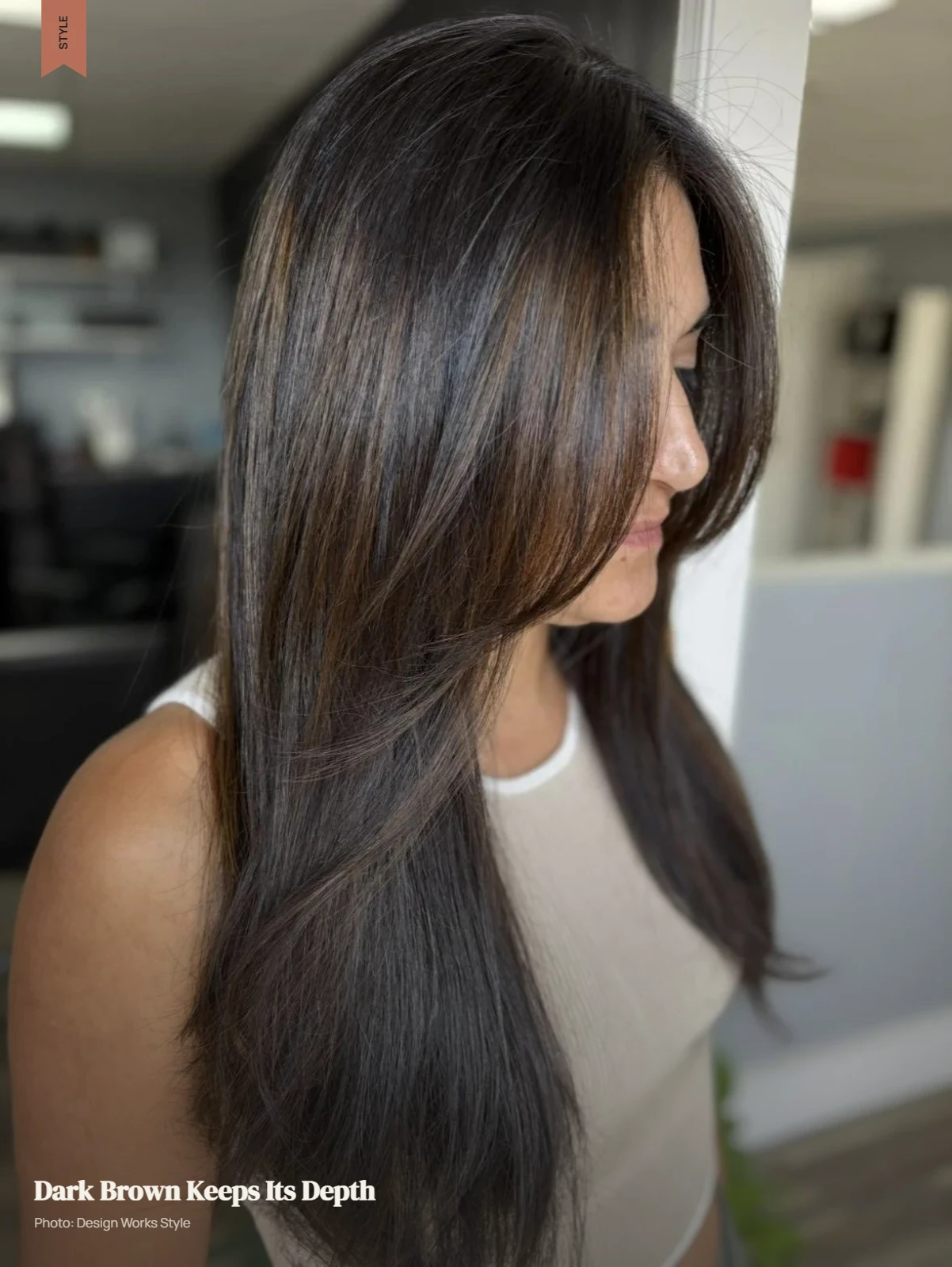
Dark caramel retains a deep brown foundation while adding amber or caramel warmth.
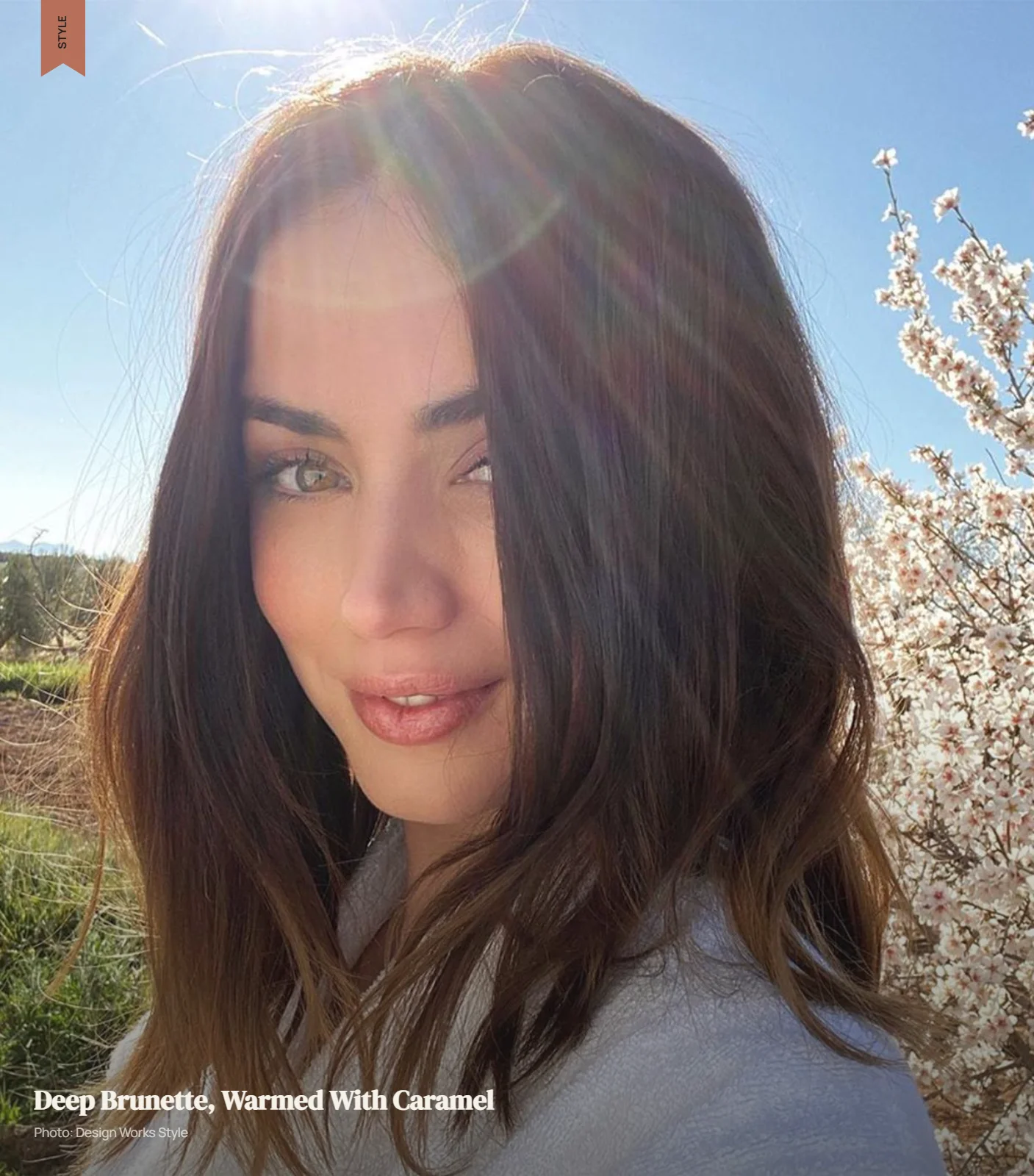
The overall hair can remain relatively deep, with the warmer tones becoming more apparent in different lighting conditions. Sunlight may make the warmth more noticeable than indoor lighting.
Choose this direction if you want warmth without making the overall hair substantially lighter.
Consultation phrase:
“Keep the brunette depth, but add warm caramel dimension rather than going much lighter.”
Honey Caramel
Honey caramel moves toward the lighter, more golden end of the caramel family. It can combine honey, golden, and caramel qualities and may appear closer to dark blonde depending on the starting color and final formula.
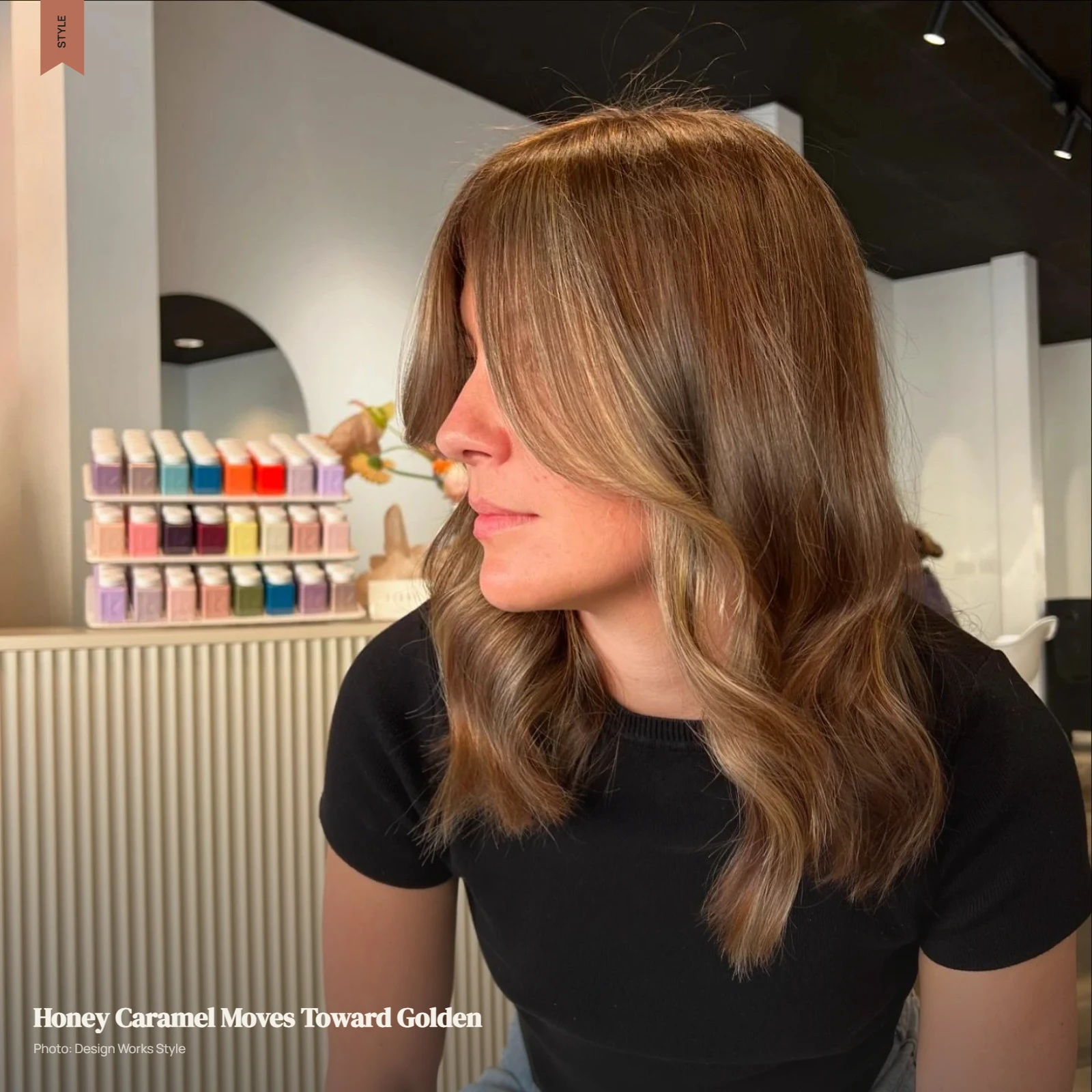
Because “honey caramel” is not a universally standardized technical shade, reference photos are useful when communicating the exact balance of brown, gold, and blonde you want.
Your Starting Hair Color Changes the Result
Caramel will not look identical on every starting color. Your natural depth, previous color, existing warmth, and whether the hair has been lightened can all affect the final result.
| Starting point | Possible caramel direction | Main consideration |
|---|---|---|
| Dark brown | Dark caramel or subtle warm brunette | Lighter caramel may require lifting |
| Medium brown | Medium caramel brown | Warmth can be introduced without a very light result |
| Light brown | Medium or light caramel | More caramel brightness may be achievable |
| Dark blonde | Light caramel or honey caramel | The result can appear significantly warmer |
| Previously colored warm brown | Caramel may intensify existing warmth | The formula should account for existing pigment |
| Previously lightened hair | Light or dimensional caramel | Porosity can affect how color deposits |
The key distinction is between depositing warmth and lightening the hair.
Applying a caramel color does not automatically make very dark hair several levels lighter. If you want a light caramel result from a significantly darker starting point, the hair may need to be lightened first. Previous permanent color can also change what is realistically achievable.
For readers starting with brunette hair who are considering a dimensional rather than uniform result, our guide to balayage on brown hair covers that broader starting point.
How Much Warmth Do You Want?
Caramel is generally warm, but that does not mean every caramel result has the same intensity.
Subtle Warmth
This approach keeps brown dominant and adds a softer golden reflect. It works for someone who wants a tonal shift without a major change in overall brightness.
Noticeable Caramel
This creates a clearer golden or honey identity. The warmth becomes more obvious, particularly through lighter sections or in natural light.
Bright Caramel or Honey
This moves toward a lighter, more golden result. As caramel becomes brighter, the starting level and potential lightening process become increasingly important.
A useful rule is simple: the more visible you want the caramel to be, the more important your starting depth becomes.
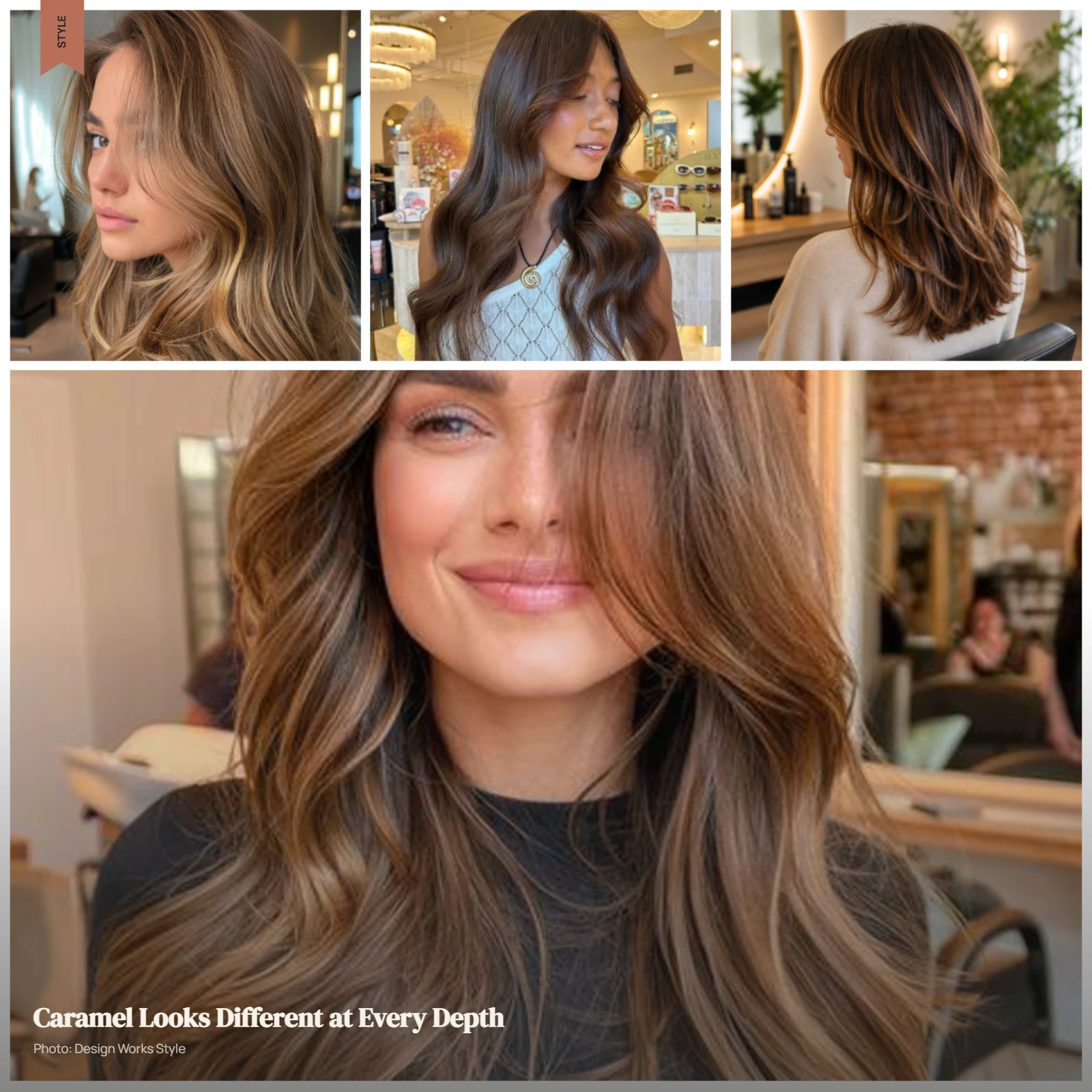
All-Over Caramel vs. Dimensional Caramel
Caramel does not have to be applied uniformly. The application approach can significantly change the finished appearance.
All-Over Caramel
With all-over caramel, the intended tone influences most or all of the hair.
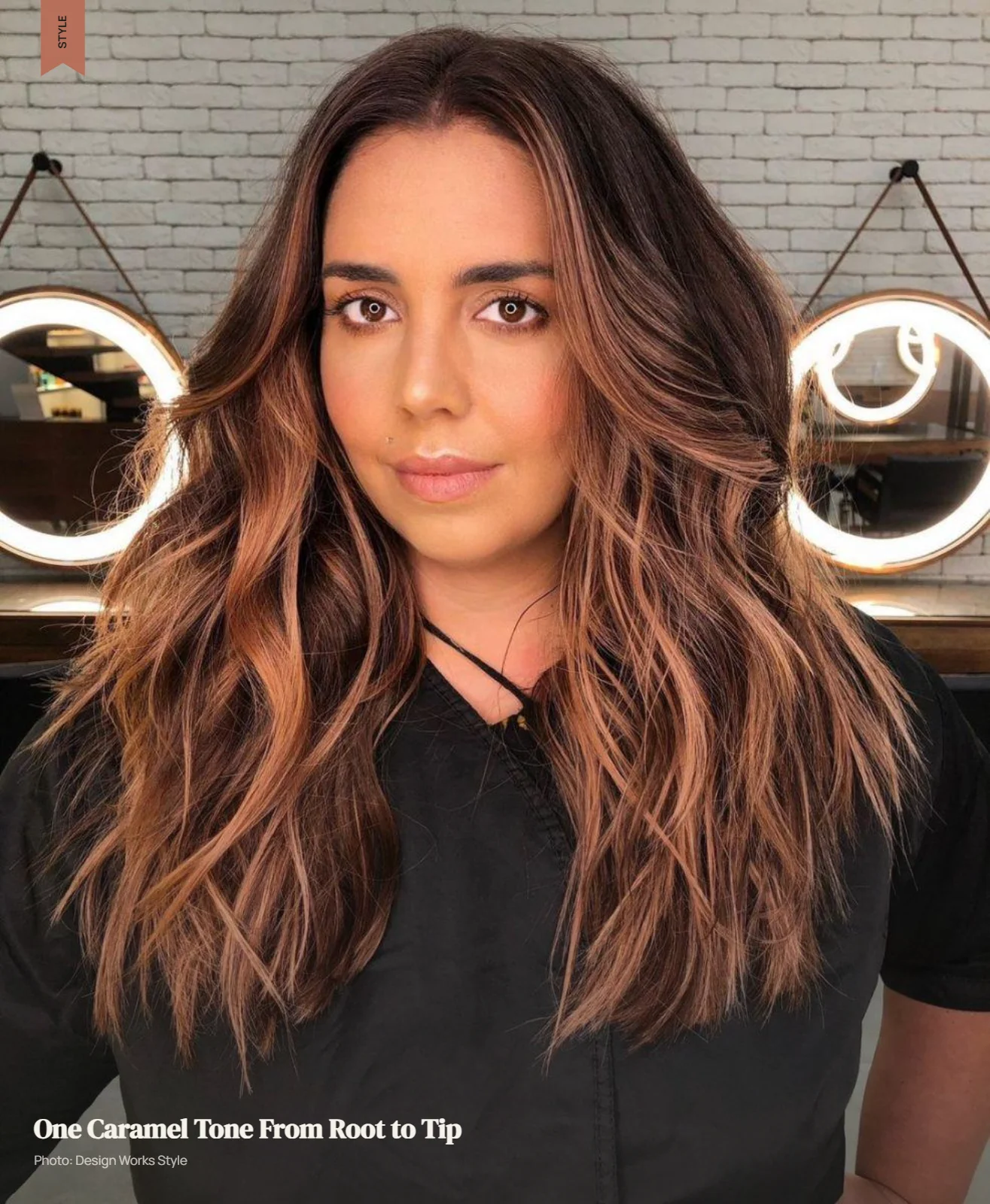
This approach can be useful when you want:
- Consistent overall warmth
- A unified color
- Less contrast between individual sections
The final result still depends on the existing base and whether the hair needs to be lightened before the desired caramel tone can be achieved.
Dimensional Caramel
Dimensional caramel introduces the warmer color selectively while retaining more of the original base.
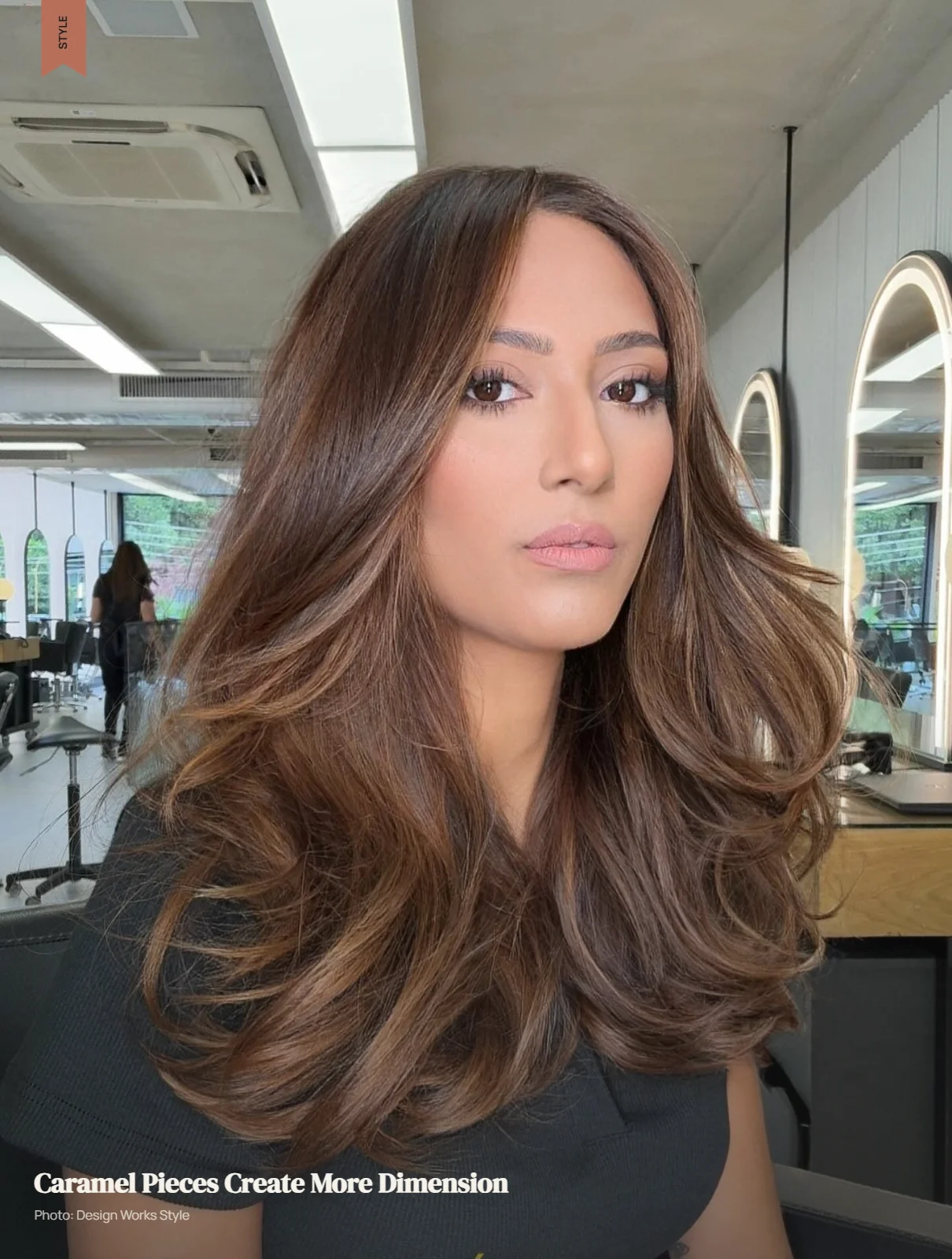
This can create:
- More variation
- Visible contrast
- A brunette base with caramel pieces
- Less uniform color
Dimensional color can be created through several techniques. The important decision here is the desired visual result rather than assuming that “caramel” automatically means highlights or balayage.
Caramel Hair Color vs. Caramel Balayage
The difference comes down to what the term describes.
Caramel hair color describes the shade family.
Caramel balayage describes caramel tones being incorporated through a balayage placement technique.
| Caramel hair color | Caramel balayage |
|---|---|
| Describes a color family | Describes a placement technique |
| Can be all-over or selective | Usually strategically placed |
| Base visibility depends on application | Base is often intentionally retained |
| Main effect is warm caramel tone | Main effect is dimensional caramel contrast |
| Maintenance depends on formula and regrowth | Maintenance depends on placement, lift, and root/base |
If you specifically want caramel tones placed as dimensional balayage rather than choosing caramel as a general color direction, see our caramel balayage guide.
If your starting hair is specifically dark and your goal is caramel balayage, the caramel balayage on dark hair guide is more relevant to that particular starting point.
The distinction matters because asking for “caramel” does not tell a stylist whether you want a uniform color or strategically placed dimension.
Choosing Caramel for Brown Hair
Many caramel color decisions begin with brunette hair, so your starting brown level is particularly important.
Dark Brown Hair
Dark caramel can add warmth while preserving much of the brunette depth. If you want significantly lighter caramel pieces or an overall lighter result, professional lightening may be necessary.
During lightening, underlying orange or red warmth can also become visible and needs to be considered when planning the final tone.
Medium Brown Hair
Medium brown provides more room for visible caramel without necessarily creating a very light result.
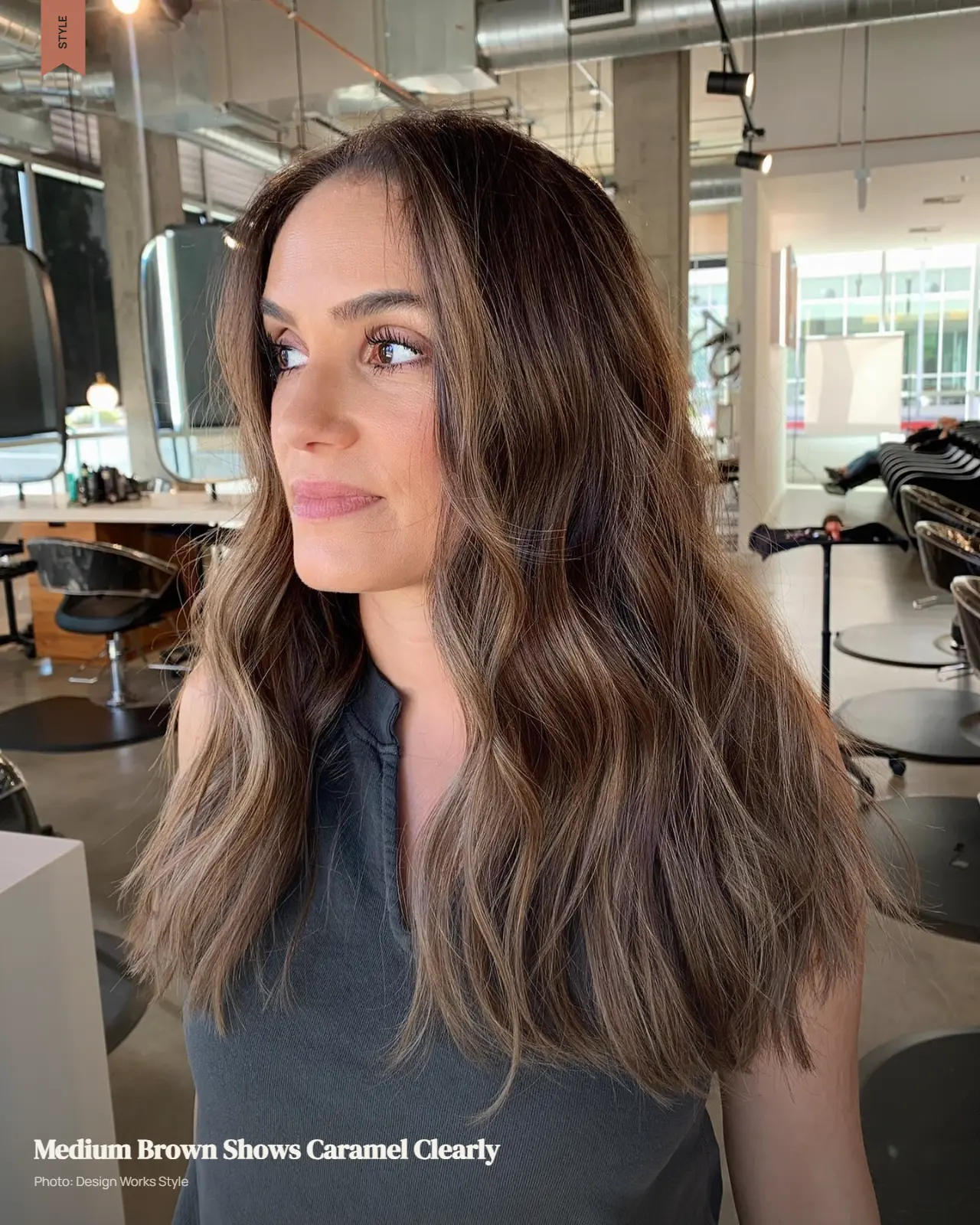
A medium caramel brown can maintain the brunette foundation while introducing noticeable golden warmth.
Light Brown Hair
On light brown hair, caramel can appear more golden and may move toward honey or dark blonde depending on the chosen depth.
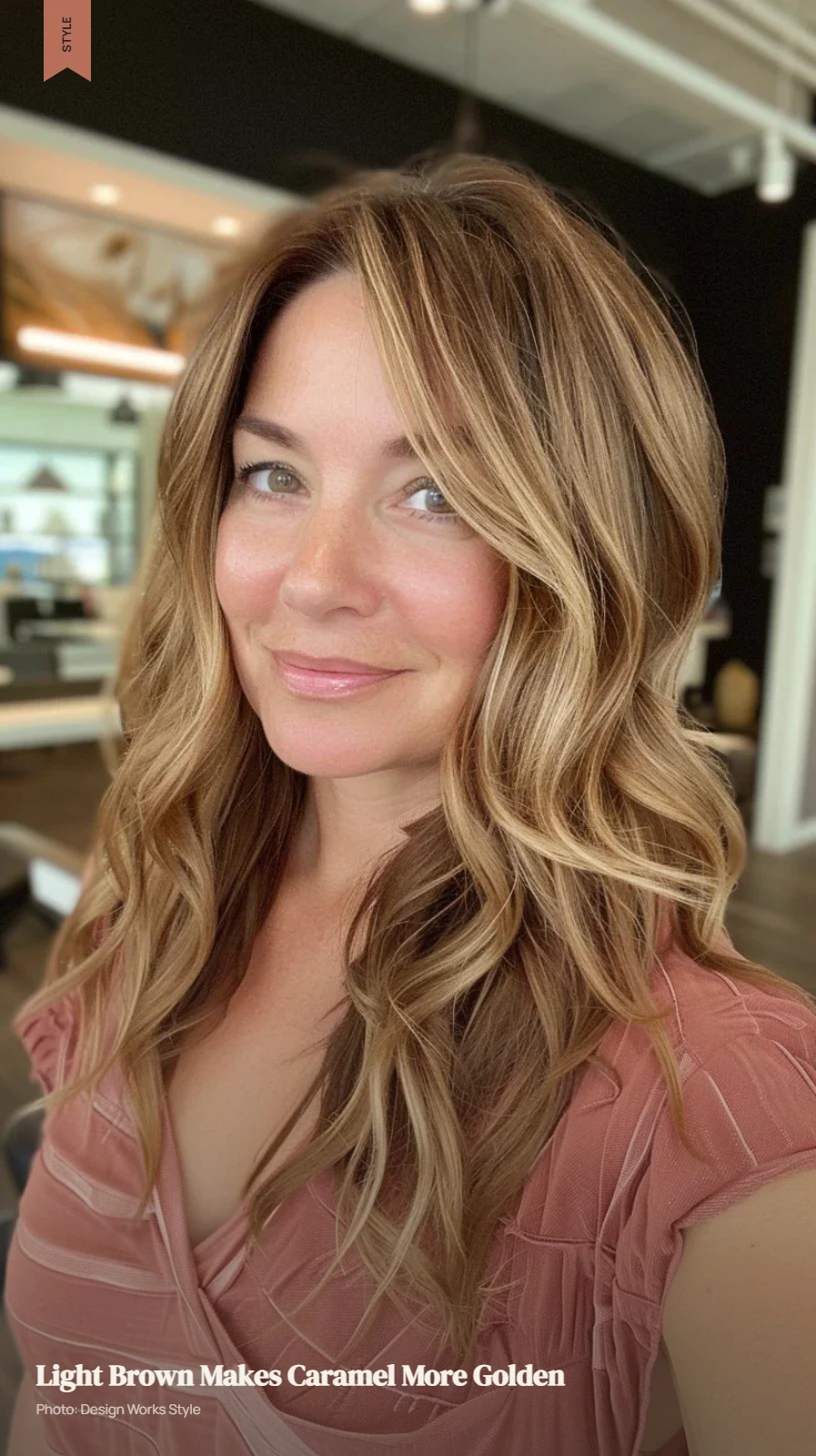
The same caramel formula can therefore produce a different visual balance depending on how light the starting hair already is.
How to Maintain Caramel Hair Color
Maintenance depends on how the caramel was created. An all-over deposited color, dimensional color, lightened sections, and color applied to porous hair can all behave differently.
Basic maintenance includes:
- Use shampoo appropriate for color-treated hair and your scalp needs.
- Condition regularly, particularly through colored or lightened lengths.
- Limit unnecessary high heat.
- Use heat protection when styling.
- Follow the specific aftercare instructions provided for your color service.
For broader guidance on cleansing, conditioning, heat styling, and maintaining colored hair, see our Hair Care guide.
There is no universal wash or refresh schedule. The appropriate timing depends on how quickly the particular color changes and how you want the result to look as it fades.
What Happens as Caramel Fades?
Fading does not necessarily mean the color has gone wrong. Caramel can simply become softer or less saturated over time.
Depending on the original color and process:
- Golden warmth may become softer.
- Previously lightened sections may look different from the base.
- The color may become less saturated.
- Underlying warmth may become more noticeable.
- Porous sections may hold or lose pigment differently.
If you still like the warmer result, a normal tonal refresh may be enough. If the color becomes uneven, excessively orange, or significantly different from the intended shade, consult your colorist rather than repeatedly layering color at home.
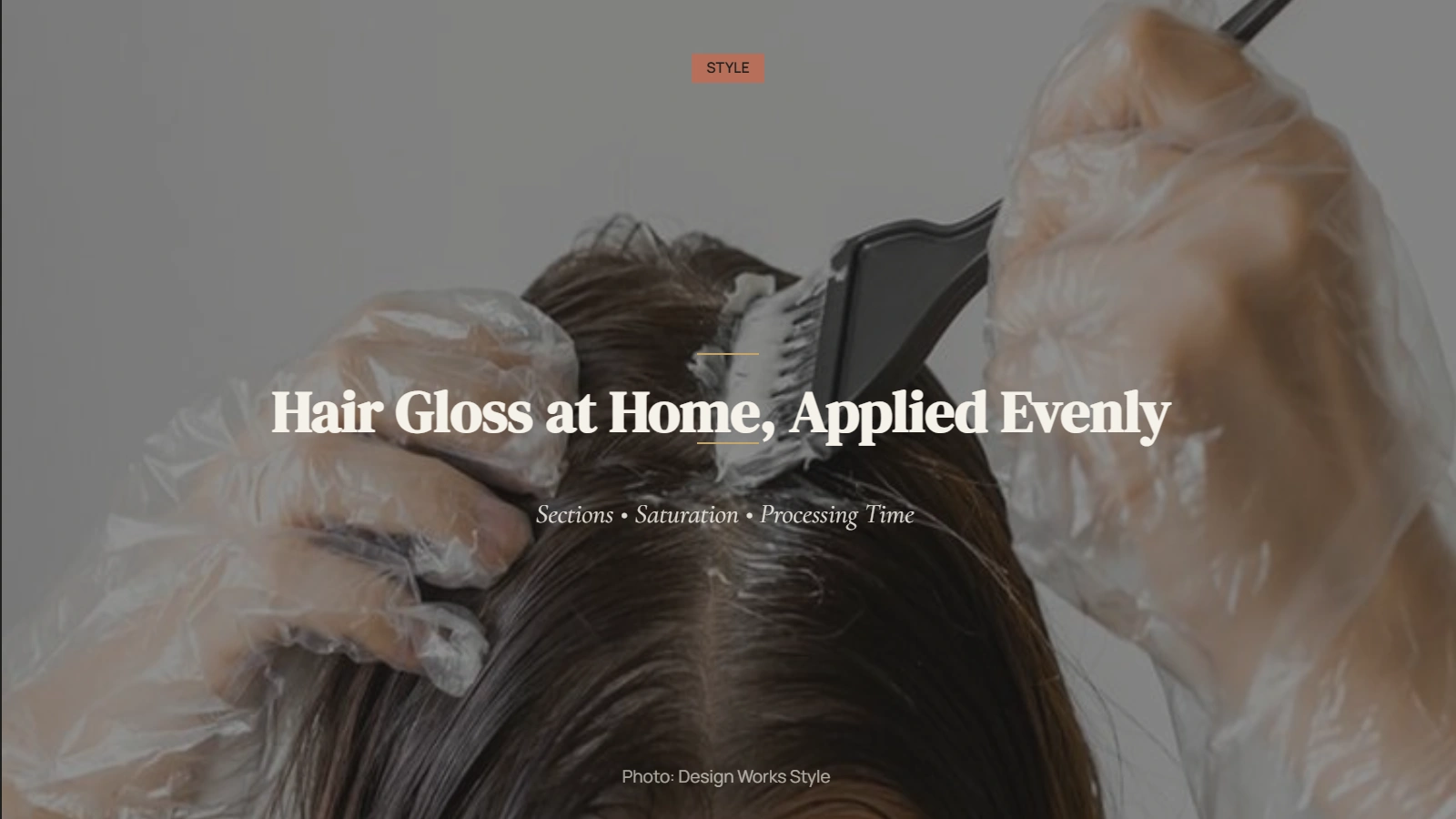
Can a Hair Gloss Refresh Caramel?
A gloss or similar tonal service can sometimes refresh faded caramel tones, warmth, and shine.
A hair gloss may be considered when the underlying color is still appropriate but the tone or visual finish has become less noticeable.
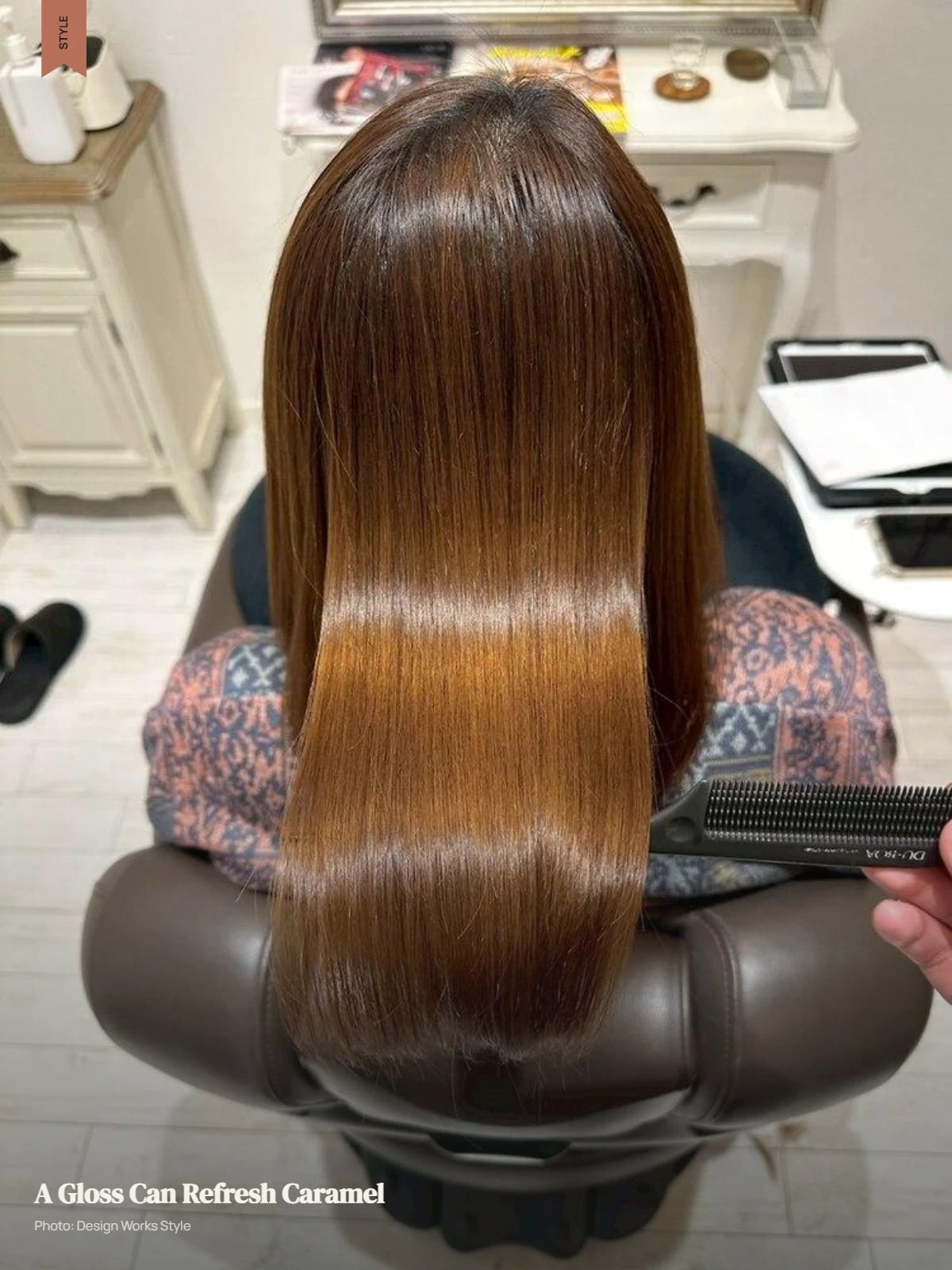
However, formulas differ, and a gloss does not automatically replace a full color service. If the issue is significant regrowth, unwanted bands, insufficient lightness, or a major change in depth, a different color service may be needed.
Common Caramel Hair Color Mistakes to Avoid
Small differences in depth, warmth, placement, and color history can change the final caramel result.
Caramel can vary widely in depth, warmth, placement, and maintenance needs. Be specific about the result you want before choosing a color.
| Common mistake | Why it matters | Better approach |
|---|---|---|
| Treating Every Caramel Shade as the Same | Caramel can range from a subtle warm brunette to a much lighter honey-gold result. |
Specify depth and warmth Tell your stylist whether you want light, medium, or dark caramel and how noticeable you want the warmth to be. |
| Choosing From a Filtered Photo | Lighting, camera settings, and editing can change how warm or bright a hair color appears. |
Compare references in natural daylight Bring more than one useful reference to your consultation and compare images taken under natural lighting. |
| Expecting Caramel to Lighten Very Dark Hair | Caramel describes a color direction, not a guaranteed amount of lift. Very dark hair may need professional lightening for a lighter result. |
Ask about the starting level Ask whether your desired depth can be achieved through deposit or whether professional lightening would be required. |
| Asking Only for “Caramel” | The word alone does not define the depth, warmth, placement, or maintenance level you want. |
Describe the result more precisely
|
| Ignoring Previous Color | Previous permanent color, dark dye, lightening, and other chemical services can affect the final result. |
Share your color history Give your stylist an accurate history, including recent color changes even if your current hair looks different. |
How to Explain Your Desired Caramel Color to a Stylist
A simple consultation formula is:
Depth + warmth + placement + maintenance
For example:
“I want a medium brown base with noticeable caramel-golden warmth, but I do not want the result to look blonde. I’d prefer a lower-maintenance result with the brown depth still visible.”
Other useful descriptions include:
- “Soft caramel, not orange.”
- “Warm brunette with honey-gold reflect.”
- “Dark caramel with minimal overall lightening.”
- “Light caramel that stays closer to beige-gold than copper.”
- “Dimensional caramel rather than one uniform color.”
The more specifically you describe the visual result, the easier it is to separate the color you want from the technique used to create it.
Frequently Asked Questions
What is caramel hair color?
Caramel hair color is a warm brown-to-blonde color family with golden, honey, beige-gold, or amber qualities. Its exact appearance depends on depth, formulation, and the hair’s starting color.
Is caramel hair color warm or cool?
Caramel is generally a warm color direction. It commonly contains golden, honey, amber, or warm beige qualities rather than the smoky or muted undertones associated with ash brown.
What caramel shade works with brown hair?
The appropriate caramel depth depends on how dark the brown is and how much warmth or contrast you want. Dark caramel can preserve brunette depth, while lighter caramel may require sufficient lightening.
Is caramel hair color the same as caramel balayage?
No. Caramel describes the color family, while balayage describes a placement technique. Caramel can be used as an all-over color or introduced through techniques such as balayage.
Does caramel hair color require bleaching?
Not always. Some caramel effects can be created by depositing or adjusting tone, while substantially lighter caramel results may require lightening. The starting color and previous color history determine what is realistic.
How do you maintain caramel hair color?
Use color-appropriate cleansing and conditioning, protect the hair from unnecessary heat, and follow the maintenance plan recommended for the specific color service. Refresh timing varies with the formula and application.