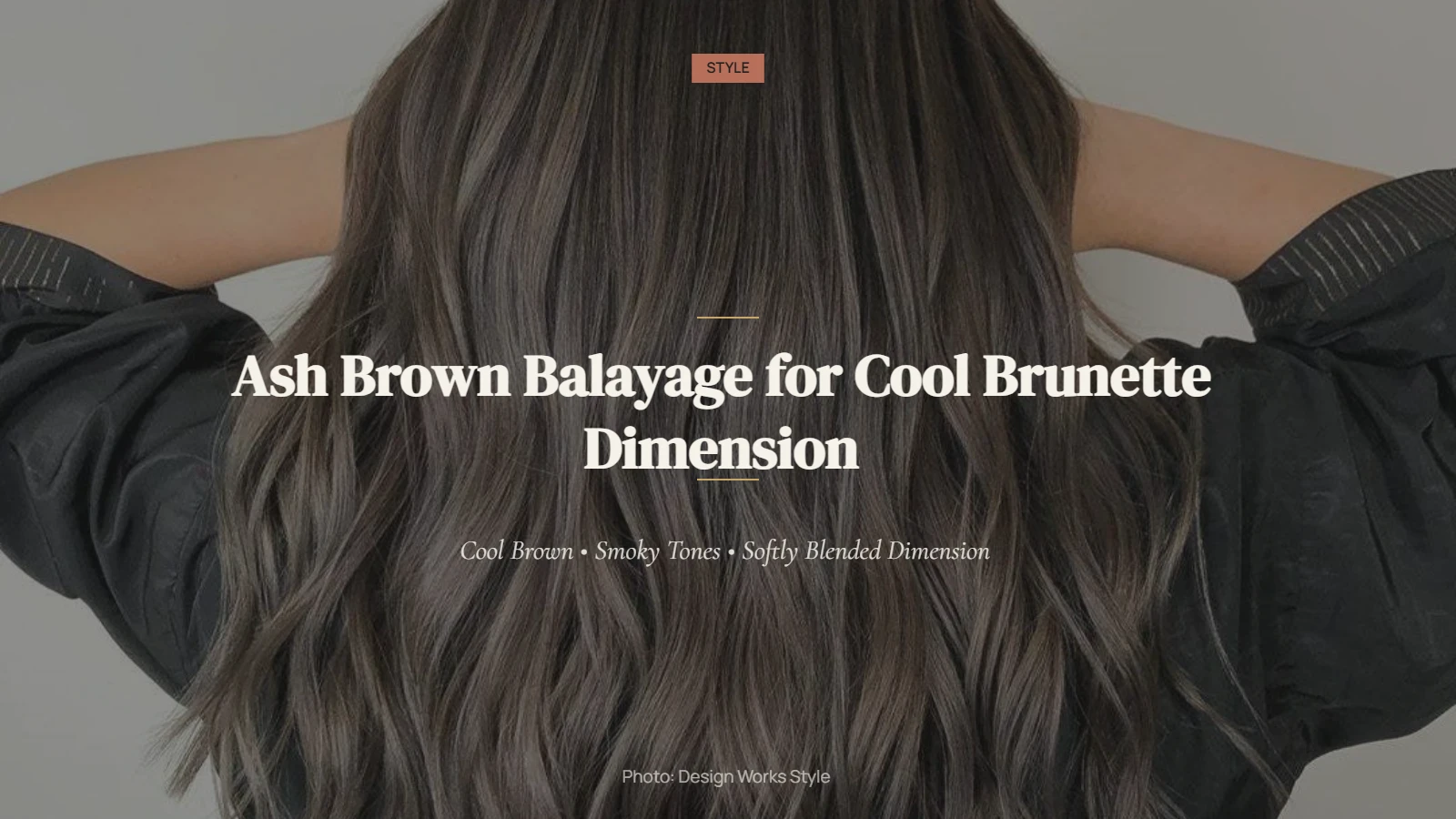

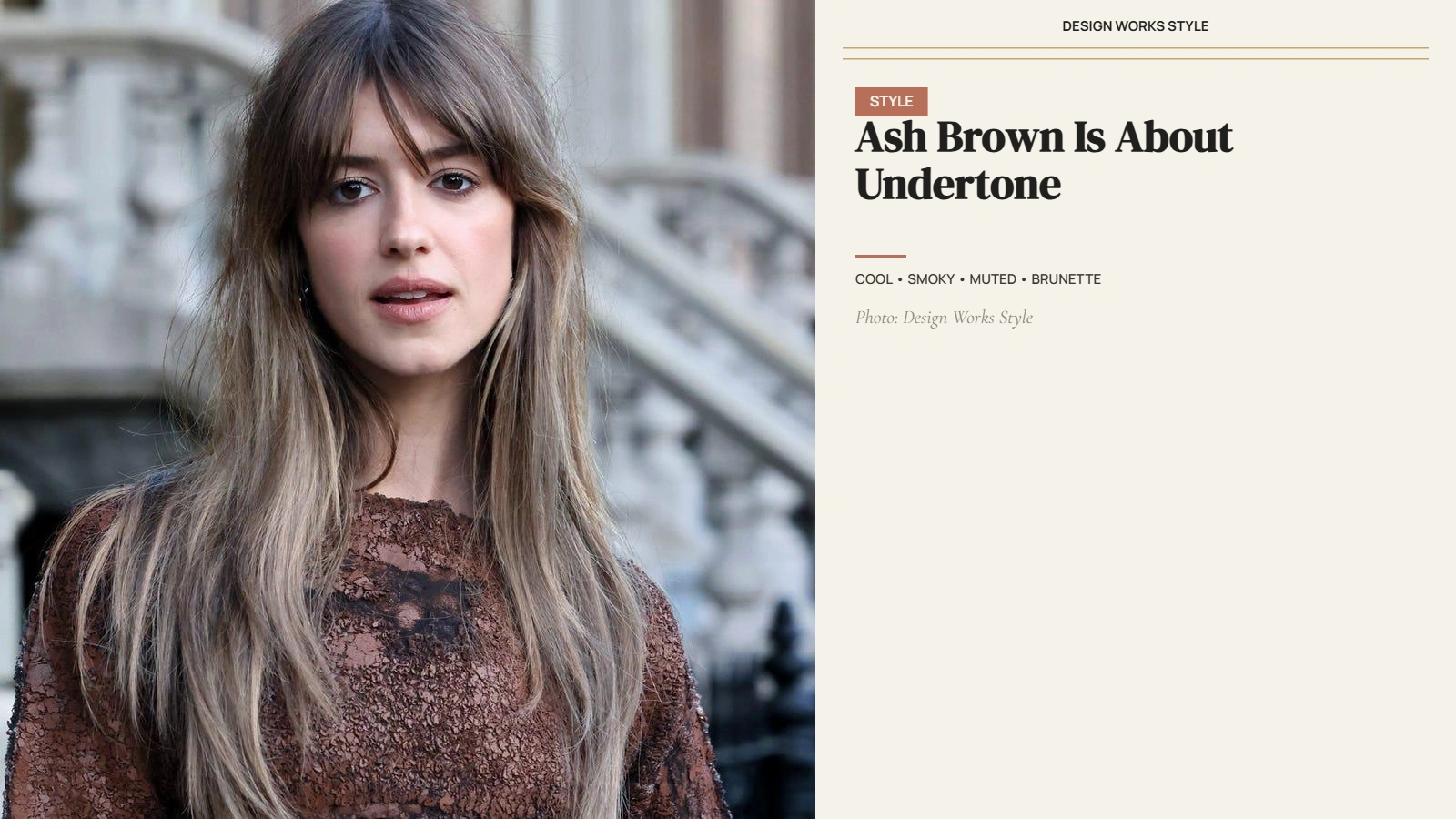
Ash brown hair is a cool brunette shade that softens the golden, orange, or red undertones often visible in brown hair. It can range from relatively light brown to deep brunette, so choosing the right version depends on your current depth, existing warmth, previous color, and how much maintenance you want.
The most important thing to understand is that ash describes undertone, not darkness. A dark brown can be warm, neutral, or ash, just as a lighter brown can have different undertones.
If you’re considering a new color, it also helps to understand how ash brown fits into the broader range of hair color options before deciding on a specific shade.
What Is Ash Brown Hair?
Ash brown is a cool brown color family that uses cool tonal characteristics to reduce or soften warmer-looking tones.
Depending on the starting hair color and formula, ash brown can look:
- Smoky
- Muted
- Taupe-like
- Gray-brown
- Cool-neutral
- Deep and charcoal-toned
Lighting can also change how the shade appears. Hair that looks distinctly cool indoors may show more of its underlying warmth in direct sunlight.
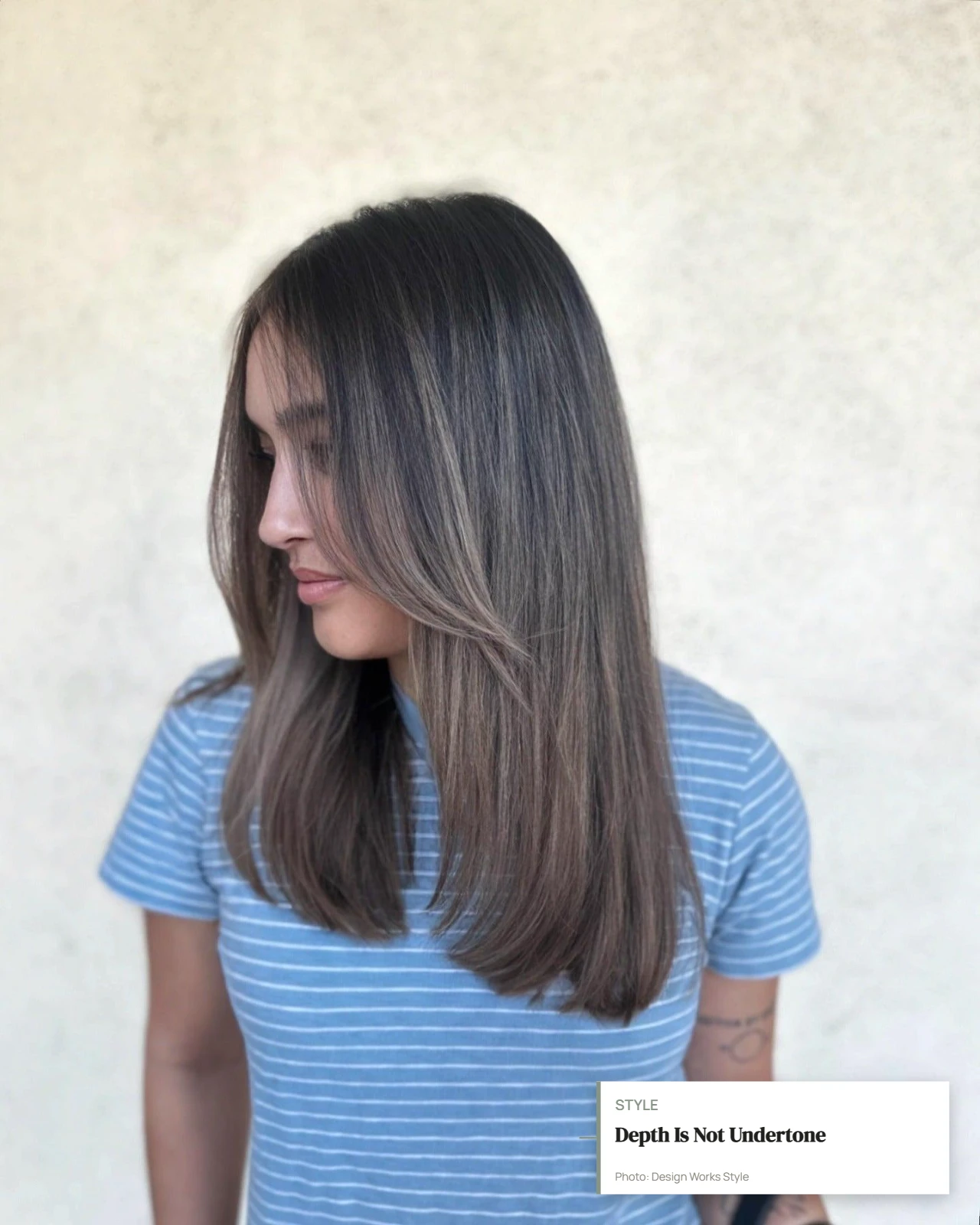
The easiest way to think about it is:
Depth tells you how light or dark the brown is. Undertone tells you whether it reads warm, neutral, or cool.
That distinction matters when choosing a shade. A dark brown dye does not automatically create an ash brown result.
Is Ash Brown Warm or Cool?
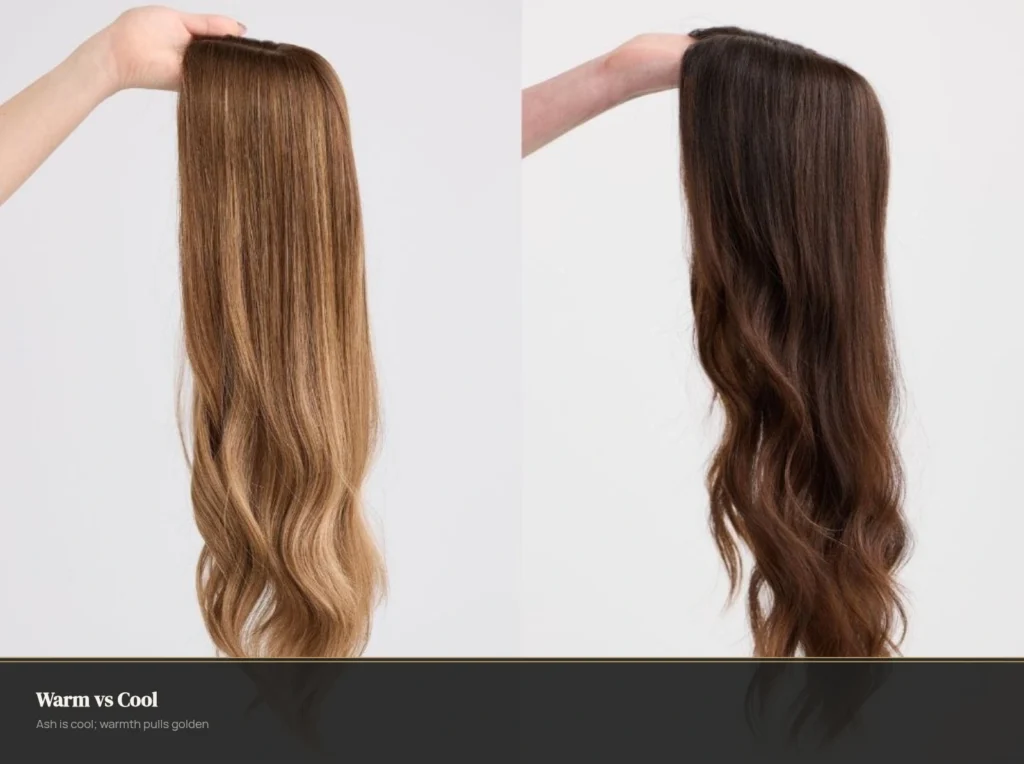
Ash brown is cool.
Warm browns tend to show more golden, caramel, amber, chestnut, copper, or red qualities. Cool browns generally look more smoky, muted, taupe, gray-brown, or cool-neutral.
| Brown direction | Typical undertone | Overall appearance | Consultation description |
|---|---|---|---|
| Ash brown | Smoky, gray, blue/green/violet leaning | Cool and muted | Cool brown without obvious copper or gold |
| Neutral brown | Balanced, limited warmth | Natural and balanced | Brown without looking warm or gray |
| Warm brown | Gold, caramel, copper, red | Rich and sunlit | Brown with visible warmth |
| Mushroom brown | Taupe, beige-gray, soft ash | Soft and muted | Neutral-cool taupe brown |
| Smoky espresso | Deep brown with charcoal/cool reflects | Deep and polished | Dark brunette without obvious red |
These categories are useful for communication, but their boundaries are not perfectly standardized between color lines or salons.
If you’re comparing ash brown with warmer brunette options, caramel hair color is a useful contrasting direction because caramel generally sits on the warmer side of the brown spectrum.
Ash Brown Hair Ideas by Depth
Rather than choosing a shade from a photo alone, consider depth, starting color, and maintenance together.
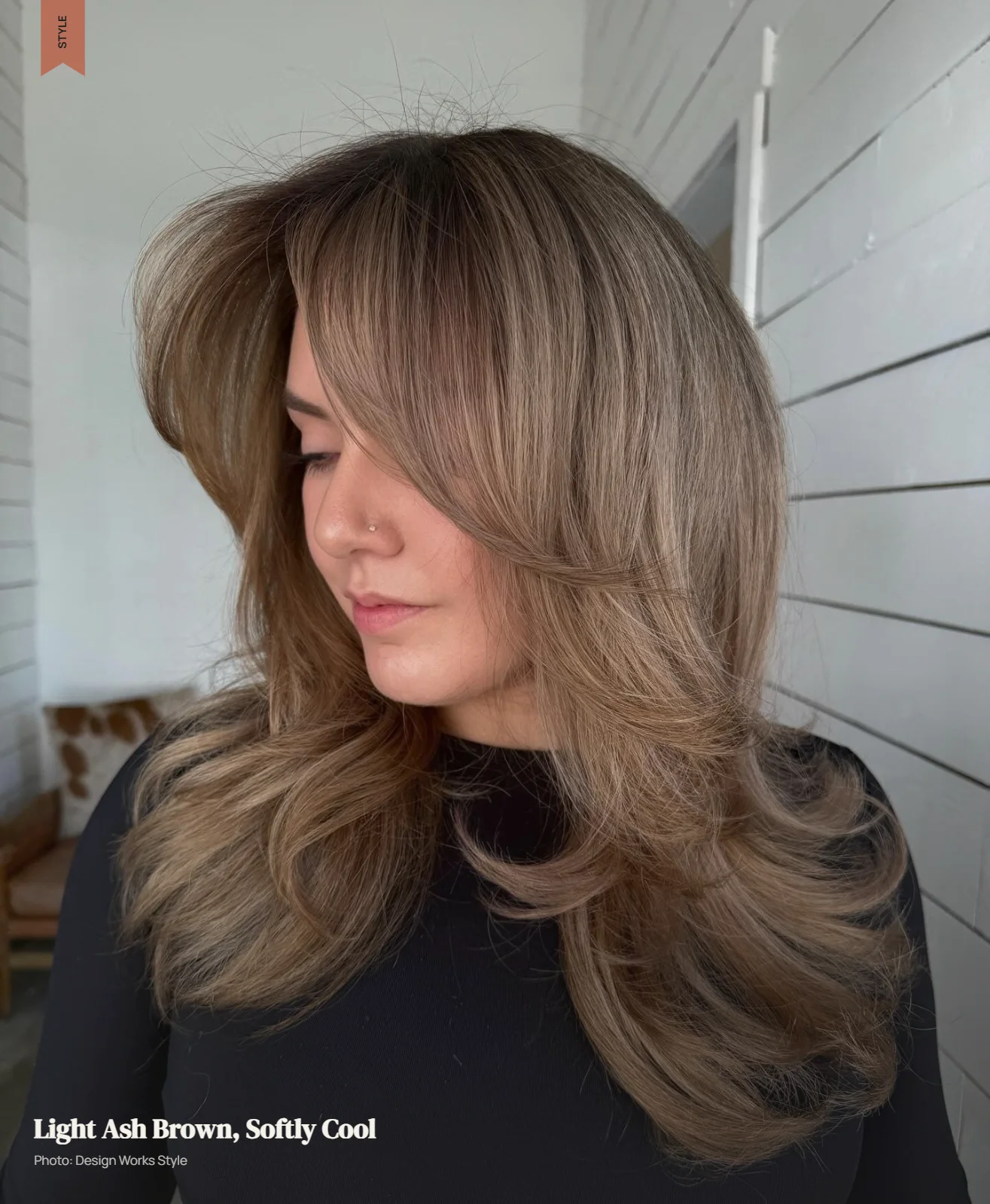
Light Ash Brown
Light ash brown sits around the dark-blonde to light-brown range.
It can include beige-ash and taupe variations and may work particularly well when the hair already has enough lightness to support the desired result.
One consideration is visible yellow warmth. As the cool tone fades, warmer underlying tones may become more noticeable.
A useful consultation phrase is:
“I want a light brown with a beige-ash finish, not golden blonde and not flat gray.”
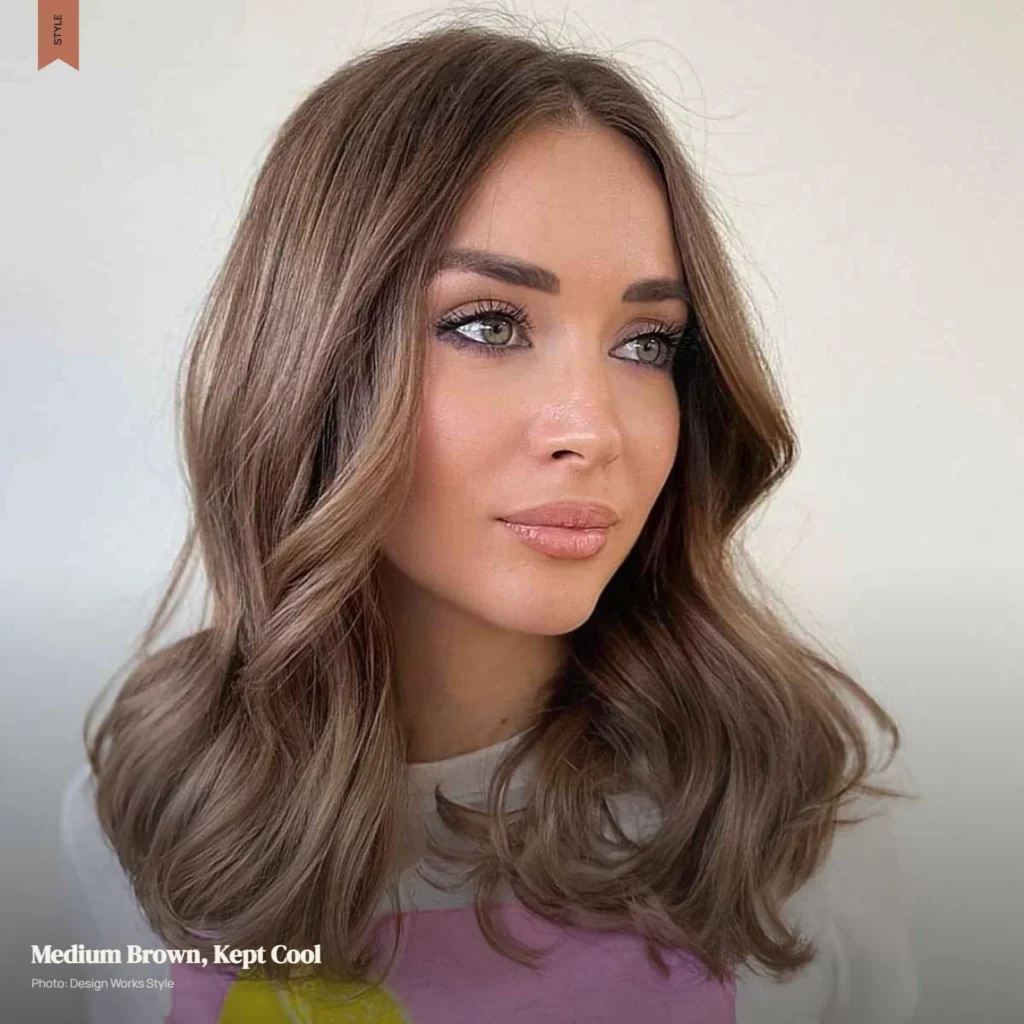
Medium Ash Brown
Medium ash brown is a versatile cool-brunette direction. It can reduce the appearance of orange or copper warmth while keeping the overall result clearly brunette.
The result does not have to look strongly gray. A cool-neutral medium brown can provide a softer version of the same general direction.
A useful consultation phrase is:
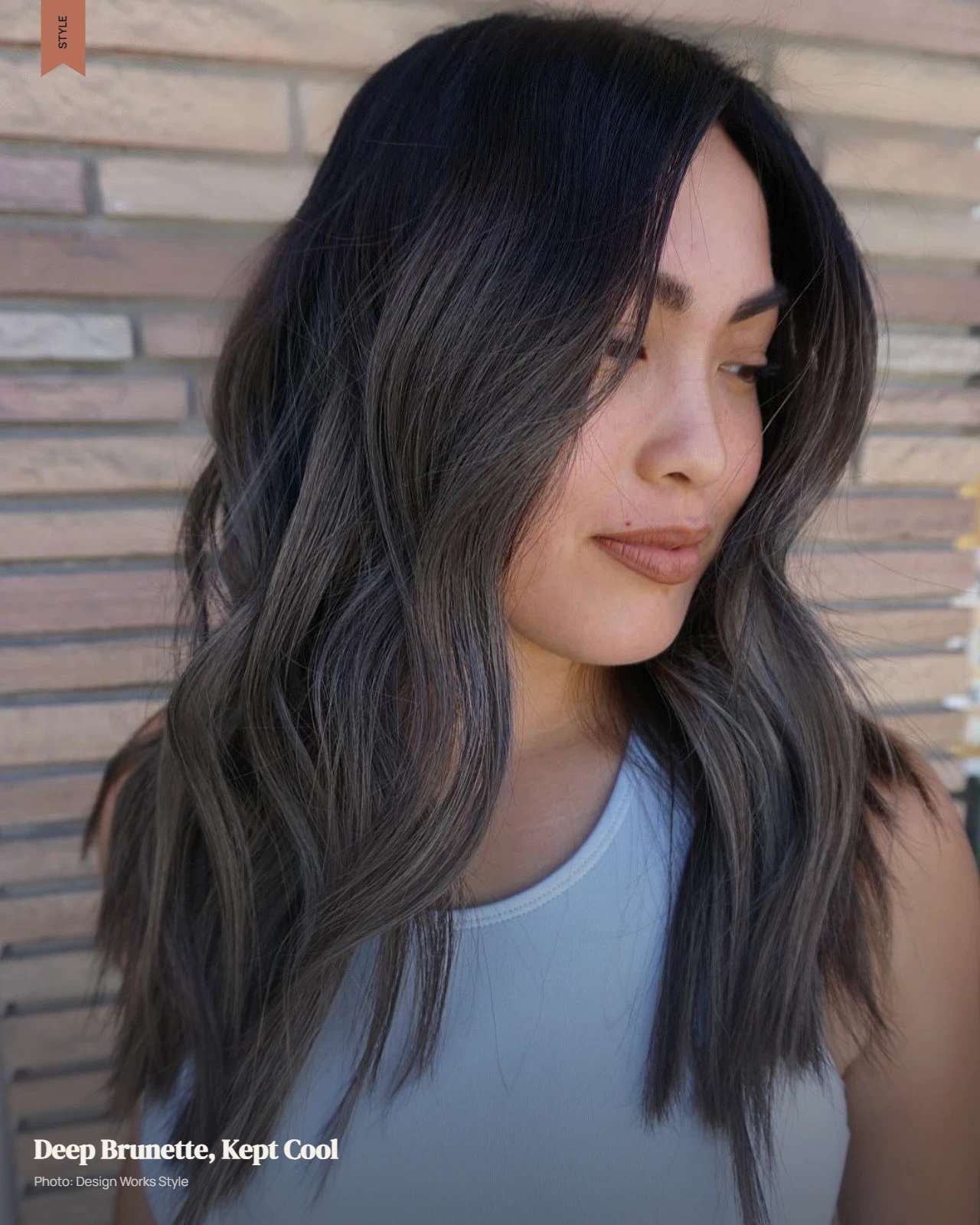
Dark Ash Brown
Dark ash brown is a deep brunette with relatively little visible red or golden reflection.
It can have a smoky or charcoal quality while remaining clearly brown rather than black.
Importantly, dark ash brown does not require making the hair dramatically lighter. If your starting hair is already dark, the goal may simply be to shift its visible tone toward a cooler direction.
You could tell a stylist:
“I want a deep brunette that stays cool in daylight without burgundy or warm red reflects.”
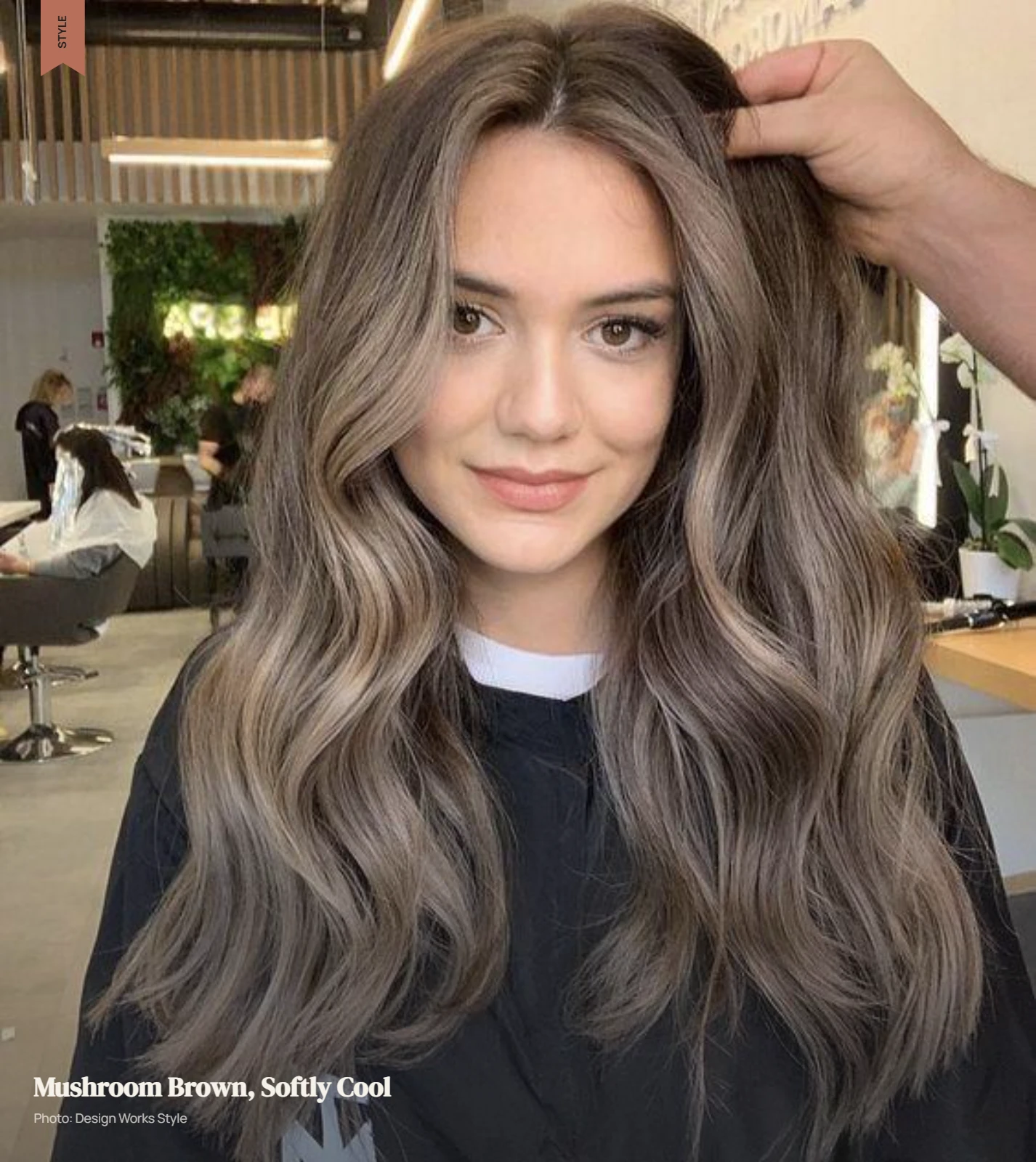
Mushroom Brown
Mushroom brown is a softer direction within the cool-brown family.
It commonly sits around taupe, beige-gray, and soft ash territory. Compared with a strongly ash or smoky brunette, mushroom brown tends to have a gentler, lower-contrast appearance.
It is also different from an icy or silver brunette.
A consultation description could be:
“I want a soft mushroom brown that is neutral-cool and dimensional, not flat gray.”
Your Starting Hair Color Changes the Result
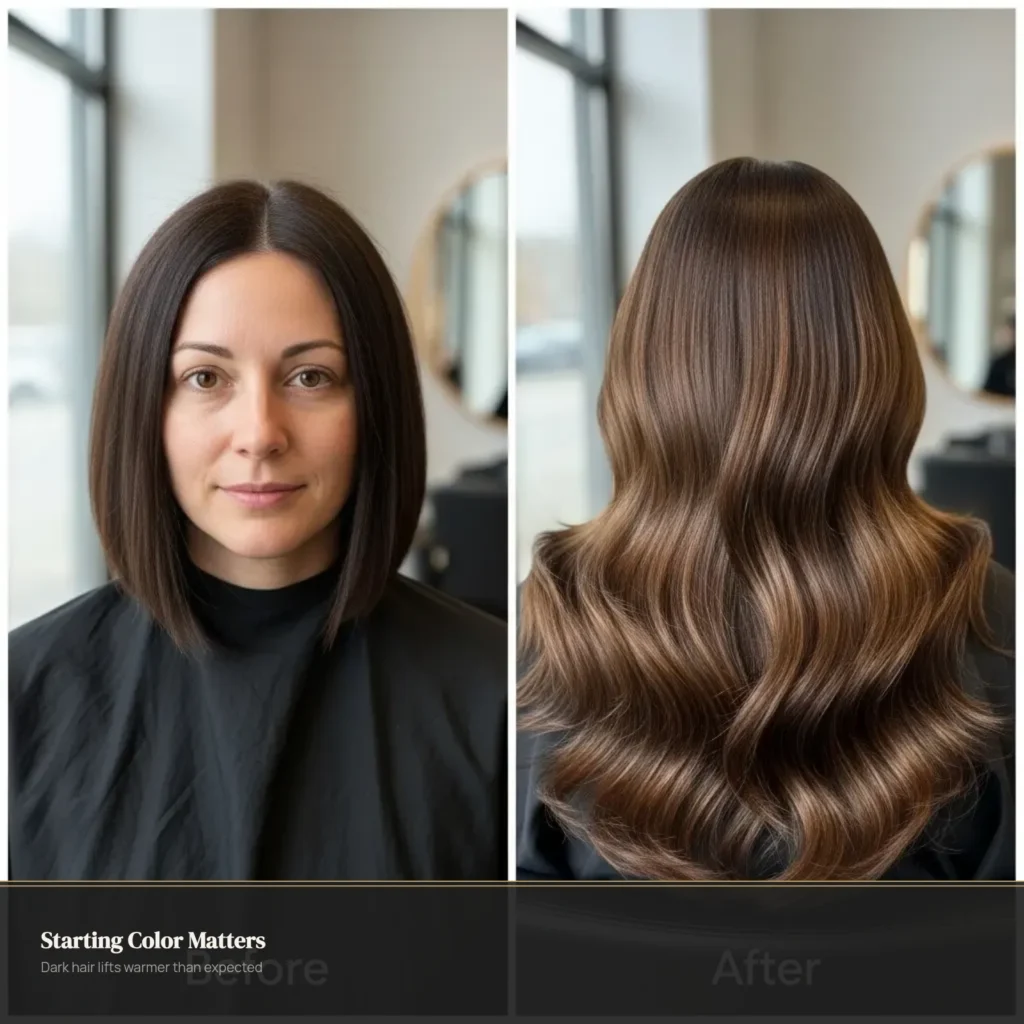
The same ash-brown formula will not create the same result on every head of hair.
Before choosing a shade, consider:
- Natural hair depth
- Previous permanent color
- Box dye
- Bleach or lightening history
- Existing red, orange, or yellow warmth
- Hair porosity
- Previous chemical services
| Starting hair | Potential direction | Main consideration |
|---|---|---|
| Dark blonde/light brown | Light or medium ash brown | Yellow warmth may return as tone fades |
| Medium brown | Medium ash or cool brunette | Orange warmth may become visible |
| Dark brown | Deep ash brown | Lighter ash shades may require lifting |
| Warm/red previously colored hair | Cooler brunette may be possible | Correction may need to happen gradually |
| Bleached/porous hair | Soft ash or mushroom tones | Lightened areas may grab cool pigment strongly |
| Very dark/black dyed hair | Deep cool surface tone may be possible | Significant lightening is more complex |
The key point is simple: ash is a tonal direction, not a lightening mechanism.
Putting an ash-brown color on very dark hair does not automatically produce a lighter mushroom brown. If the desired result is substantially lighter than the current color, the hair may need a separate lightening process.
For a broader overview of color families, techniques, and choosing a color based on your starting hair, see our Hair Color guide.
Ash Brown or Cool-Neutral Brown?
The difference comes down to how strongly you want to reduce visible warmth.
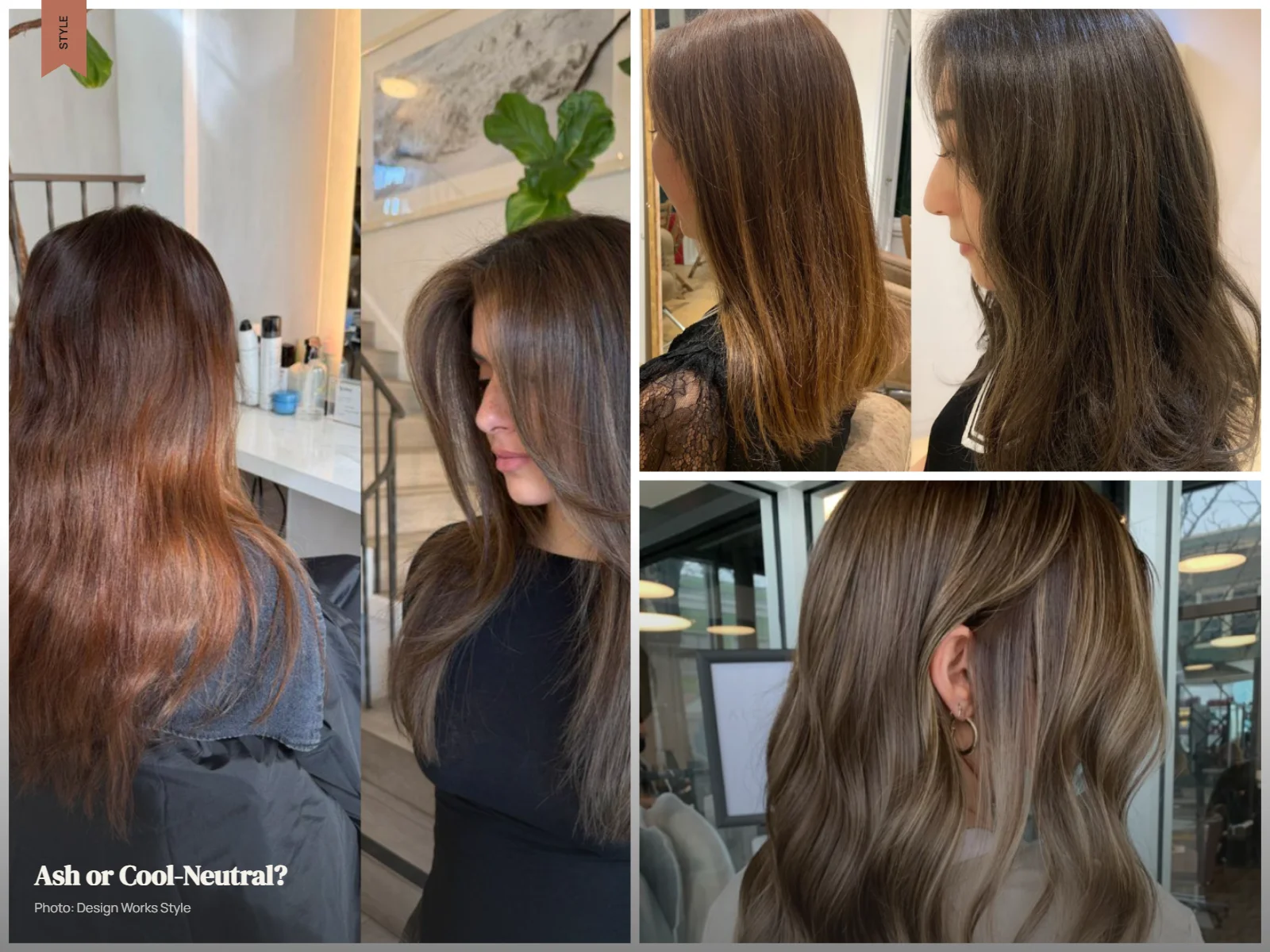
Choose a stronger ash direction when:
- You clearly dislike visible warmth.
- You want a smoky or muted appearance.
- You prefer distinctly cool brunette tones.
- You are comfortable with some tonal maintenance.
Consider cool-neutral or beige-neutral when:
- You want less orange but still want a natural-looking brunette.
- You do not want an obviously gray or smoky result.
- You prefer softer warmth rather than eliminating warmth completely.
A useful rule is:
If your goal is “less warm,” cool-neutral may be enough. If your goal is “visibly cool,” ash is the clearer direction.
If you like the idea of brown with more warmth rather than less, caramel balayage offers a different direction, with lighter pieces and warmer tonal dimension.
Ash Brown vs. Balayage
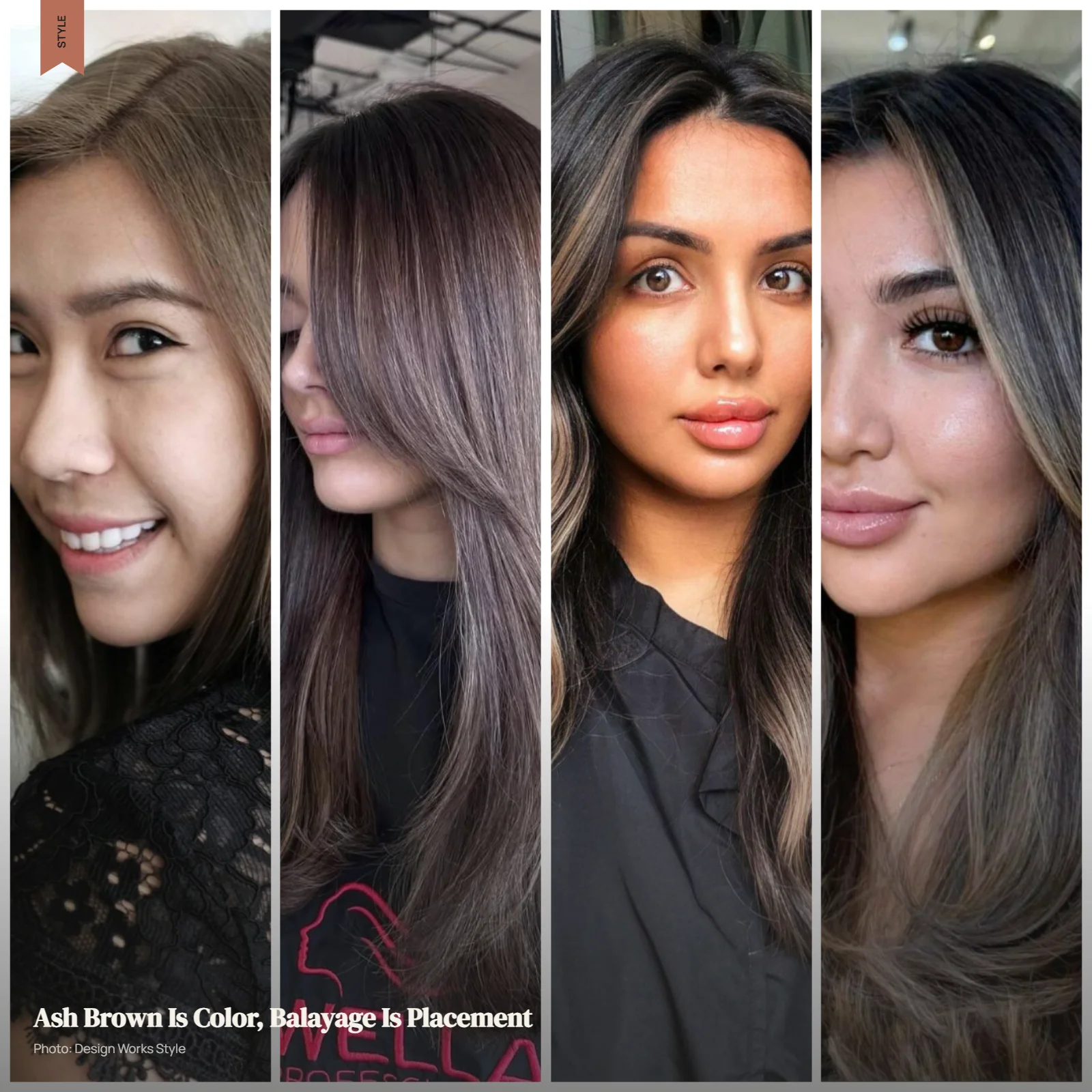
Ash brown describes a color direction, while balayage describes a highlighting technique and placement approach. They can therefore be used together.
An all-over ash brown creates a more consistent brunette color, while ash tones can also be incorporated into selected lighter pieces for a more dimensional result.
If you’re interested in combining the two, see our guide to ash brown balayage.
For a broader explanation of the technique itself, our balayage guide covers the basics of how balayage differs from an all-over color approach.
Ash Brown on Brown Hair
Starting with brown hair can provide a useful base for a cool brunette direction, but the amount of existing warmth matters.
If you already have brown hair and mainly want to reduce warmth rather than become significantly lighter, the color process may be different from someone starting with very dark hair.
See balayage on brown hair if you’re considering a dimensional brown-on-brown approach rather than an all-over ash color.
How to Maintain Ash Brown Hair
Ash brown can look warmer as the cool tone gradually fades. Maintenance is therefore less about constantly adding ash pigment and more about responding to the warmth you actually see.
Everyday Routine
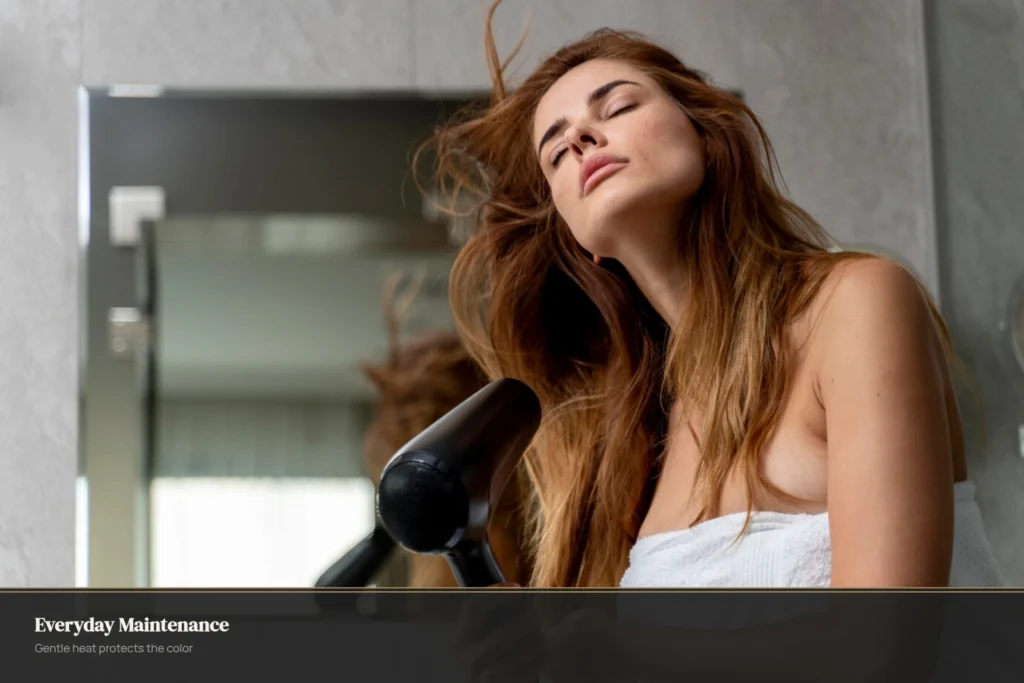
Start with basic hair care:
- Use a gentle shampoo appropriate for your scalp and color-treated hair.
- Condition the mid-lengths and ends.
- Use lukewarm rather than very hot water where practical.
- Protect the hair before high-heat styling.
- Avoid treating every wash as a toning session.
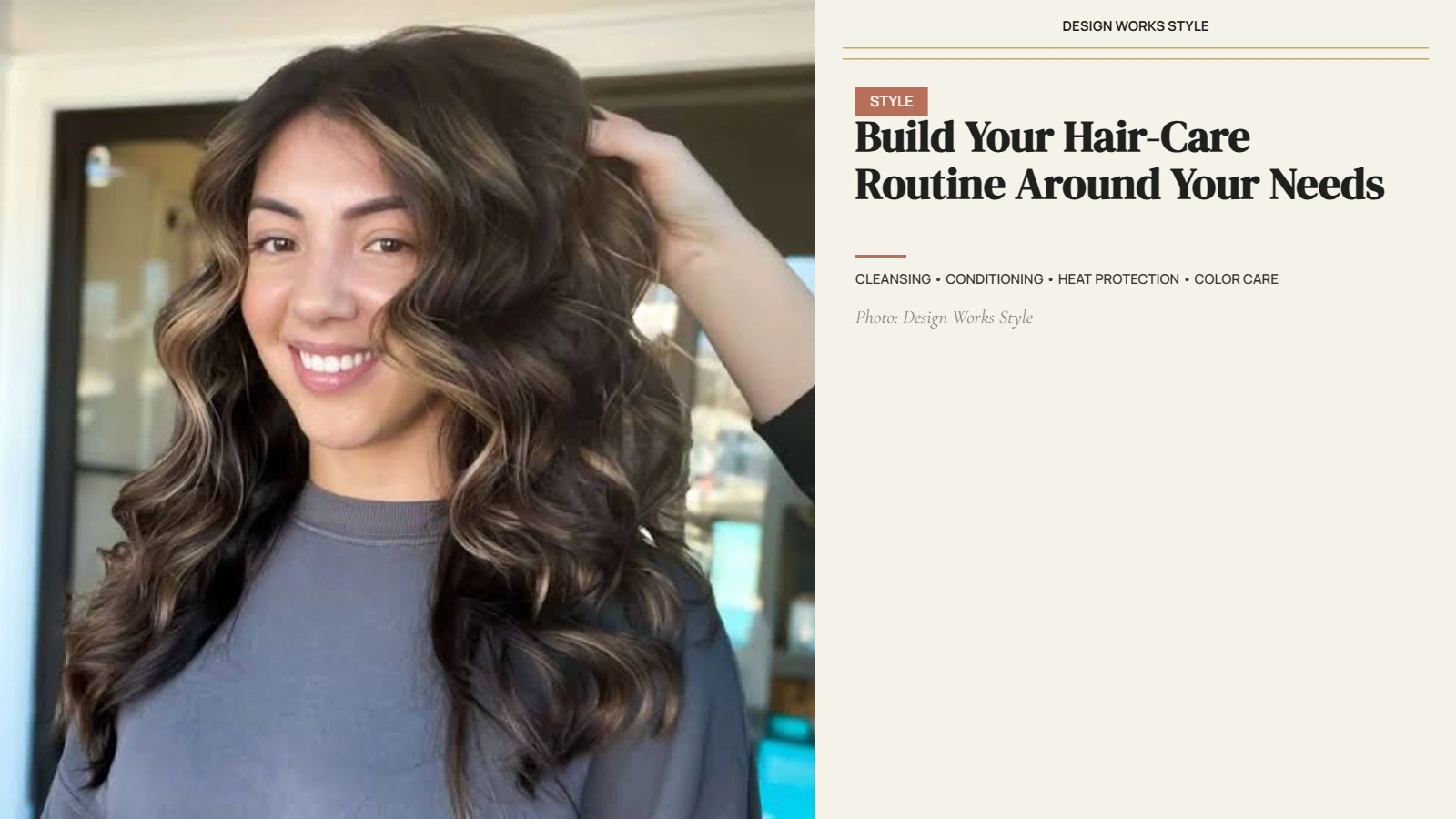
For the broader fundamentals of cleansing, conditioning, styling, and maintaining colored hair, see our hair care guide.
If your hair has also been lightened with balayage, our guide to balayage hair care covers maintenance considerations specific to highlighted hair.
Choose Toning Products Based on the Warmth You Actually See
Different unwanted tones call for different approaches.
| Visible unwanted tone | Relevant pigment family | Practical note |
|---|---|---|
| Yellow/gold | Violet/purple | More relevant for yellow warmth |
| Orange/copper | Blue or blue-violet | More relevant for orange warmth |
| Red/orange | Professionally selected cool brunette/blue-violet direction | Formula depends heavily on hair history |
| Greenish/muddy/overly gray | Stop adding ash/toning pigment | Professional assessment may be needed |
Purple shampoo is not a universal maintenance product for every ash-brown problem.
Purple is generally more relevant when the unwanted warmth looks yellow. Orange or copper warmth may call for a different pigment family.
Toning products deposit temporary pigment and do not permanently change the underlying base. On porous or lightened hair, cool pigment can also appear more strongly, so follow the specific product instructions rather than assuming more processing will produce a better result.
What Happens When Ash Brown Fades?
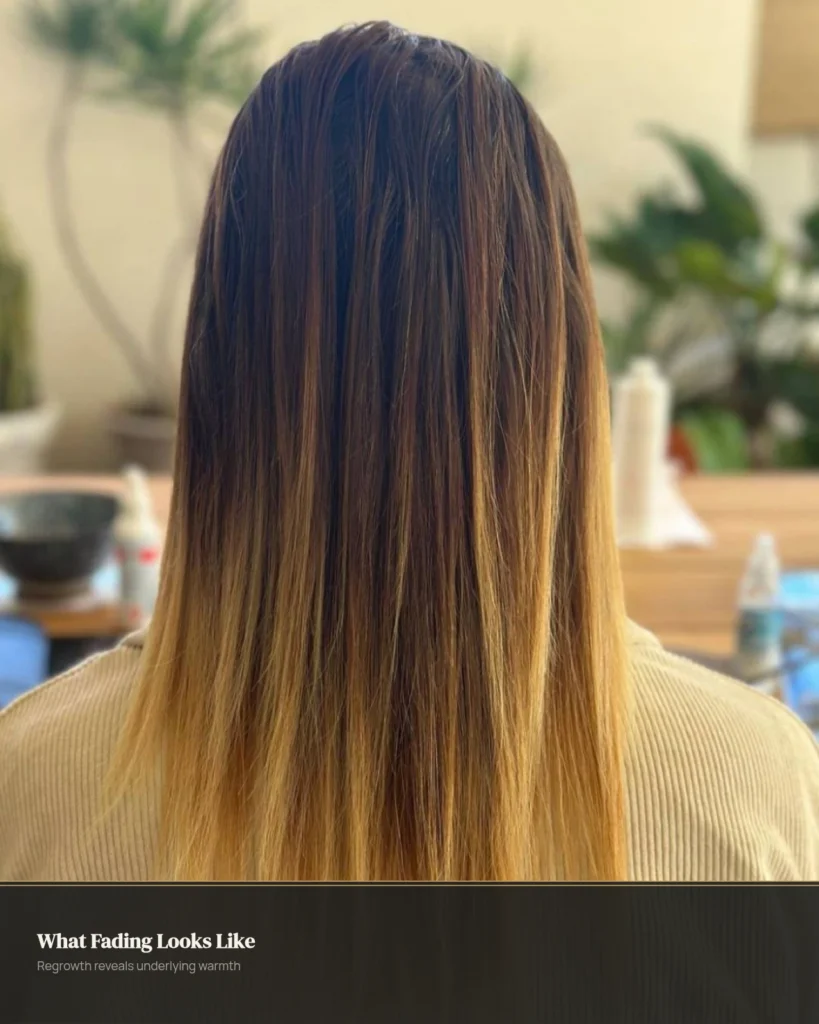
Normal fading does not necessarily mean something has gone wrong.
As the cool tone becomes less visible, you may notice:
- Less smokiness
- More visible warmth
- Brown appearing slightly more golden
- Underlying orange or red becoming easier to see
That is different from a more significant color problem such as:
- Uneven color
- Strong orange or red bands
- Greenish or muddy sections
- Excessively gray or blue-violet areas
- Unexpected darkening
If the result is significantly uneven, avoid repeatedly layering toner over it without understanding what is happening. Professional color assessment may be more appropriate.
A temporary gloss can sometimes be part of a color-maintenance plan when the issue is primarily dullness or mild fading. If that is the situation, see our guide to Hair Gloss for more information about shine and tonal refreshes.
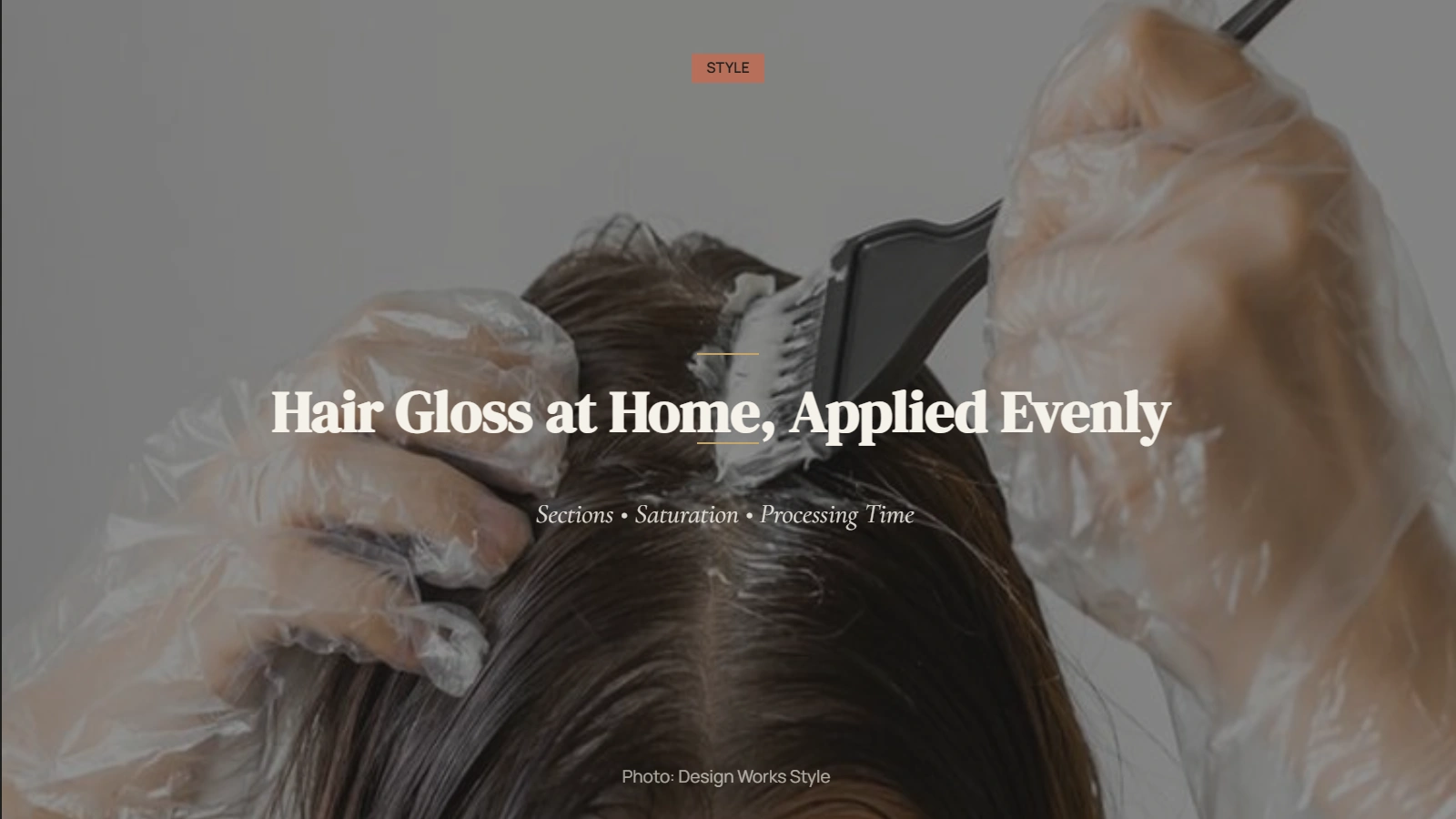
If you are considering applying a gloss yourself, our guide to hair gloss at home covers strand testing, application, processing, and aftercare.
Common Ash Brown Mistakes
Choosing Ash Only Because You Want Less Orange
A strongly ash result can become too gray or muted when the actual goal is simply a natural cool-neutral brunette.
Better approach: If you want less warmth without an obviously smoky result, ask about cool-neutral or beige-neutral brown.
Expecting Ash Brown to Lighten Dark Hair
Ash describes tone, not lifting power.
Better approach: Determine whether your hair needs professional lightening before selecting the final ash-brown shade.
Using Purple Shampoo for Every Warm Tone
Purple is primarily associated with yellow correction. Orange and copper warmth generally require a different pigment direction.
Better approach: Identify the color you actually see before choosing a toning product.
Over-Toning
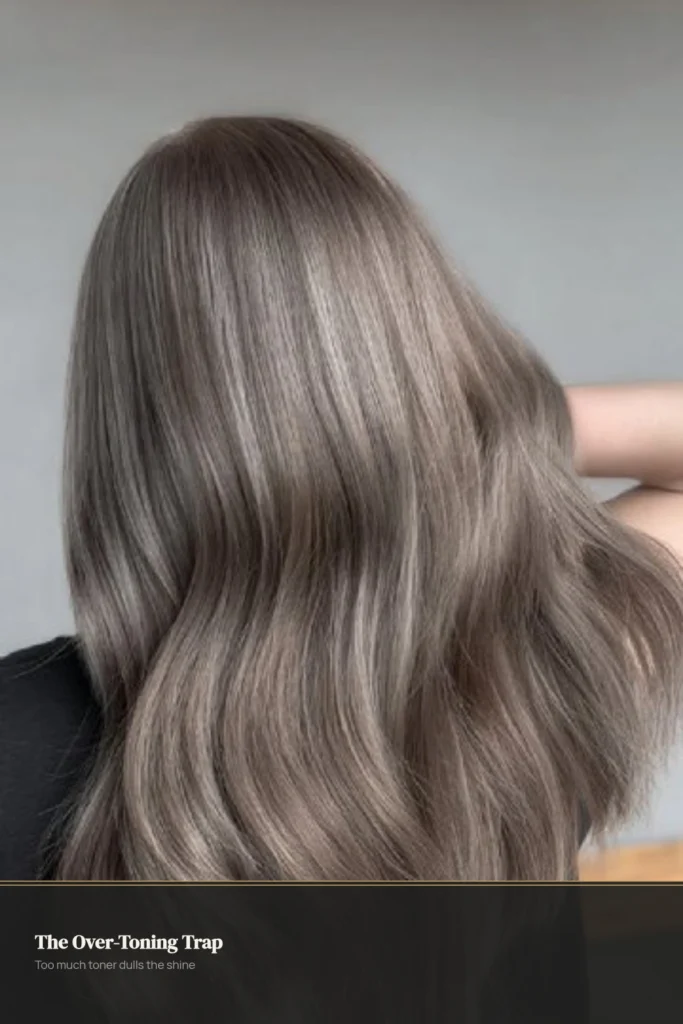
Frequent pigment application can cause porous sections to look overly smoky, dull, blue-violet, or uneven.
Better approach: Tone in response to visible unwanted warmth and follow the product’s directions.
Bringing Only a Filtered Inspiration Photo
Lighting and filters can significantly change the appearance of cool brown hair.
Better approach: Bring your stylist a realistic reference and explain your current hair history.
Useful information includes:
- Current hair in natural daylight
- Current hair in indoor lighting
- Desired light, medium, or dark depth
- Recent dye or bleach history
- Any color remover or henna use
- Other recent chemical services
- How often you are willing to refresh the tone
Ash Brown With Balayage
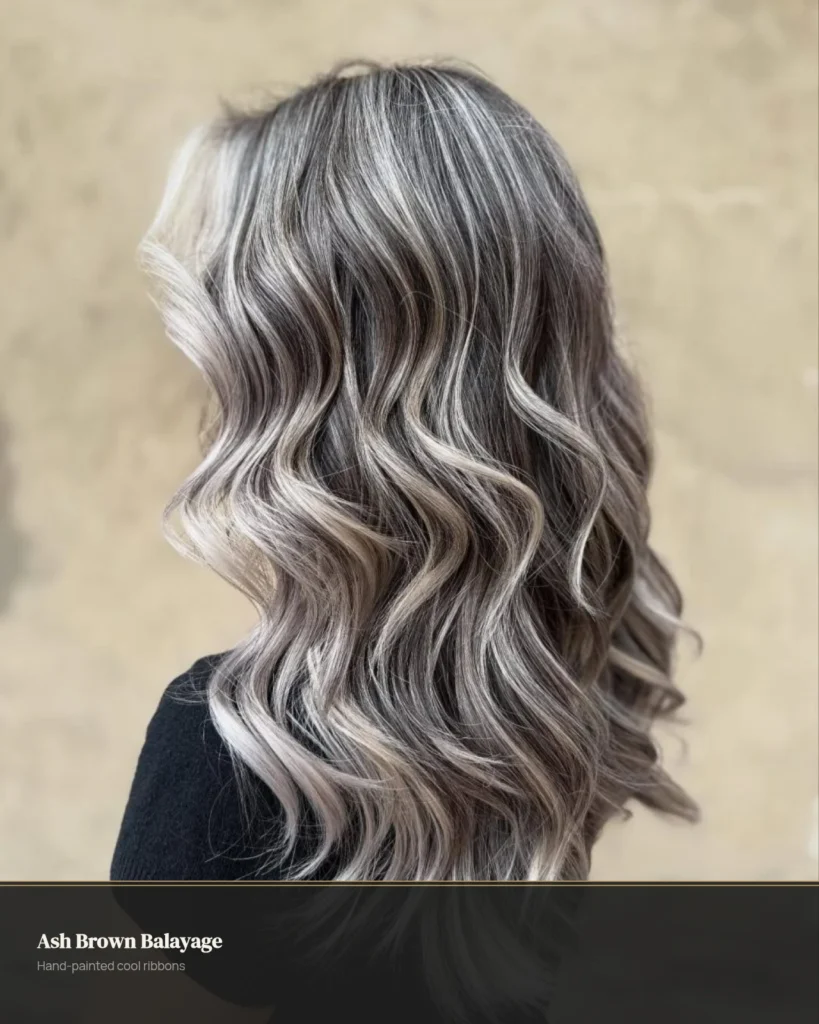
If you want a cool brunette base with lighter pieces rather than a uniform color, balayage gives you another option.
Ash brown balayage can combine a cool brunette foundation with strategically placed lighter sections. The final effect depends on the starting color, placement, level of lightening, and desired contrast.
For a dedicated look at this combination, see ash brown balayage.
If you prefer warmer dimensional color instead, you can compare it with copper balayage or caramel balayage on dark hair.
Ash Brown Hair Consultation Guide

Before a salon appointment, know these six things:
- Your current natural or artificial base
- Whether you want light, medium, or dark brown
- Whether you want true ash or softer cool-neutral
- How much visible warmth you are comfortable with
- How often you are willing to refresh the tone
- Your recent color and chemical-service history
A stylist may also need to assess the existing color or perform a strand test before confirming what is realistically achievable.
If you’re comparing several color directions before your appointment, start with our broader hair color guide and then move into the specific technique or shade that matches your goal.
Frequently Asked Questions
Is ash brown hair warm or cool?
Ash brown is a cool brunette shade designed around muted, smoky undertones rather than obvious gold, copper, or red warmth.
Does ash brown hair fade quickly?
The cool tone can become less noticeable as the hair is washed, allowing underlying warmth to become more visible. The pace varies with formula, porosity, hair history, washing, heat, and aftercare.
Can naturally dark brown hair become ash brown?
Naturally dark brown hair can often be shifted toward a deeper cool ash brown. A substantially lighter ash or mushroom result may require lifting first.
Will purple shampoo maintain ash brown hair?
Purple is primarily relevant to yellow warmth. Orange or copper warmth generally calls for a different pigment family, such as blue or blue-violet.
Is mushroom brown the same as ash brown?
Not exactly. Mushroom brown is a softer taupe, beige-gray, or muted brunette direction within the cool-brown family. Ash brown can range from subtle cool brunette to more visibly smoky tones.
Can ash brown work with balayage?
Yes. Ash brown can be used as an overall brunette direction or incorporated into balayage. The appropriate approach depends on the starting color, desired contrast, existing warmth, and hair condition.
The Bottom Line
Ash brown is not simply a darker version of brown. Ash describes the cool undertone, while depth determines whether the result is light, medium, or dark.
Start by deciding how cool you actually want the finished color to look. Then consider your current hair, previous color, underlying warmth, and maintenance preferences.
If you want a clearly smoky brunette, a stronger ash direction may be appropriate. If you mainly want to reduce orange while keeping the result natural, a cool-neutral brown may be a better direction. If you want a softer taupe finish, mushroom brown may be worth discussing.
If you want dimension rather than an all-over color, consider ash brown balayage. If you’re exploring warmer alternatives, caramel hair color or copper balayage can help you compare different tonal directions.
The most useful color decision is not just “I want ash brown.” It is how light or dark, how cool, how much warmth you want to keep, and how much maintenance you are willing to do.