
Latex paint dries to the touch in 1 to 2 hours and accepts a second coat in 2 to 4 hours. Oil-based paint takes 6 to 8 hours to dry to the touch and 24 hours between coats. Full curing, when paint reaches maximum hardness, takes 2 to 4 weeks for latex and up to 30 days for oil. Dry and cured are different things, and the difference matters.
Most paint disasters come from impatience, not bad paint. The second coat goes on too early and drags. The furniture goes back too soon and sticks. The tape pulls up a layer that looked dry but was not cured. Every one of these is a timing problem, and timing is the easiest part of painting to get right once you know the numbers.
How Long Does Latex Paint Take to Dry?
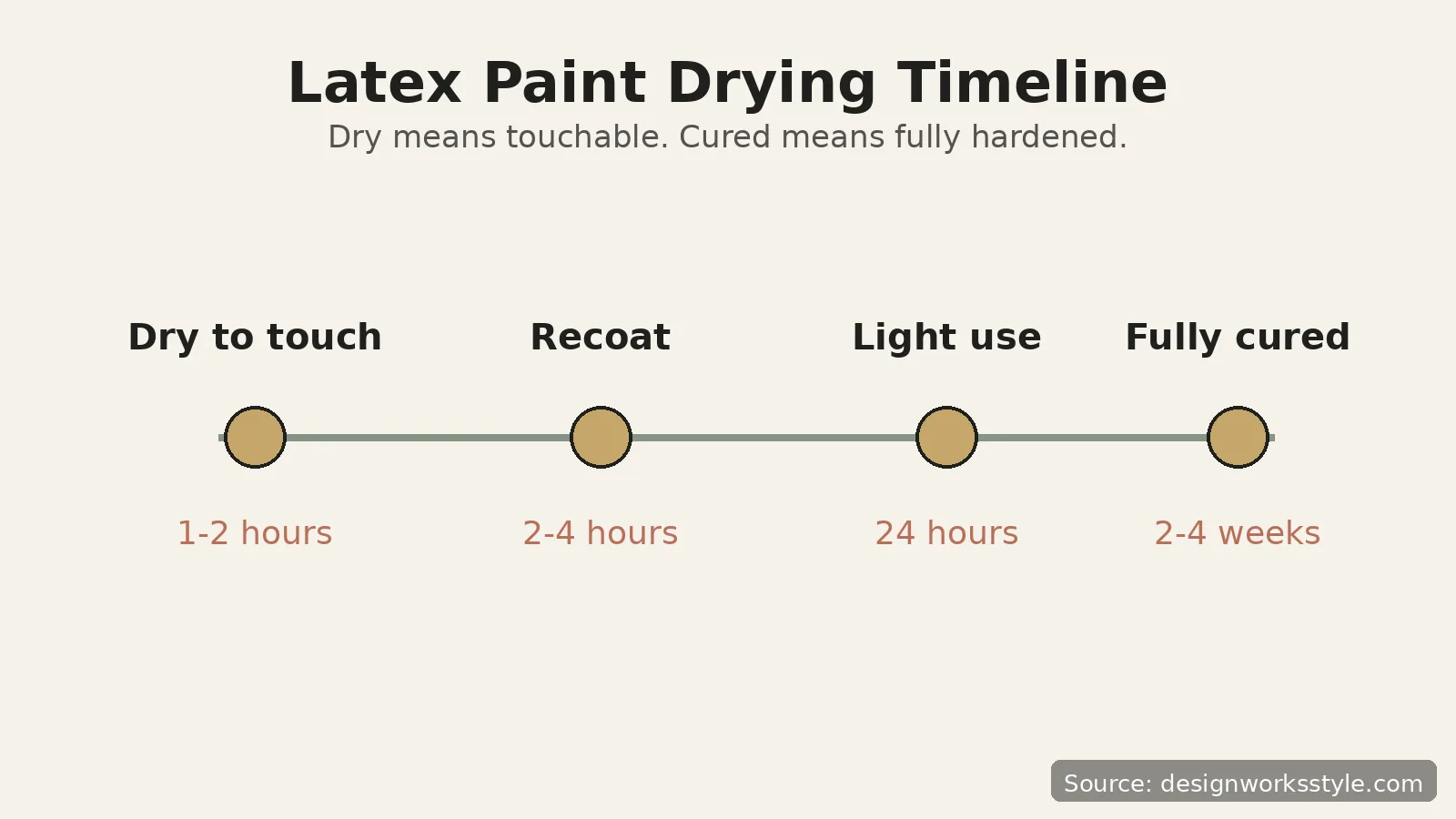
Water-based latex paint, the kind used for nearly all interior walls, dries to the touch in 1 to 2 hours under normal conditions. You can apply the second coat after 2 to 4 hours. The room is usable for light activity after about 24 hours. But full cure takes 2 to 4 weeks. During that window the paint looks finished but has not reached full hardness, so treat it gently: no scrubbing, no leaning heavy furniture against it, no adhesive hooks.
Those times assume roughly 70°F and moderate humidity with some air movement. Cold, damp, or still air stretches every stage. A bathroom painted in a humid July week can take twice as long to stop feeling tacky. If the paint still feels cool or slightly sticky to the back of your knuckle, it is not ready, whatever the clock says.
How Long Does Oil-Based Paint Take to Dry?
Oil-based paint dries to the touch in 6 to 8 hours and needs a full 24 hours before recoating. It cures harder and slower than latex, reaching full hardness in up to 30 days. Oil is now mostly used for trim, doors, and cabinets rather than walls, which is worth knowing because the surfaces people touch most are the ones where cure time matters most. A handrail painted in oil feels dry the next morning but will show fingerprints pressed into it for weeks if you grip it hard.
What Is the Difference Between Dry and Cured Paint?
Dry means the solvents have evaporated enough that the surface feels solid. Cured means the paint film has fully hardened through chemical cross-linking, reaching its final durability. Latex paint dries in hours but cures in weeks. This is why a bookshelf placed against a week-old wall can peel the paint right off when you move it. The paint was dry. It was not cured. Heavy contact, cleaning, and masking tape all need to wait for cure, not just dryness.
How Long Should Paint Dry Between Coats?
Wait 2 to 4 hours between coats of latex paint, and 24 hours between coats of oil-based paint. The second coat applied too early re-dissolves the first one. Instead of two clean layers you get one smeared layer, and the finish never quite evens out. When in doubt, wait longer. An extra hour of drying costs nothing. A ruined coat costs you a full re-do of that wall.
When Can You Put Furniture Back After Painting?
Light furniture can go back after 24 hours for latex paint, kept a few inches from the walls. Heavy pieces like bookcases and sofas should wait 48 hours, and anything that presses hard against the wall should wait as close to the full cure as you can manage. Slide furniture, do not drag it, for the first couple of weeks. For oil-based paint, double these times. If you are also hanging pictures, give the wall at least 48 hours so anchors and nails do not crack the still-soft film.
What Makes Paint Dry Faster or Slower?
Four things control drying speed: temperature, humidity, airflow, and film thickness. Paint dries fastest around 70 to 75°F with humidity below 50 percent and steady air movement. Cold slows it, humidity slows it more, and still air slows it most. Thick coats dry slower than two thin ones, which is another reason two thin coats beat one heavy coat. To speed things up, open windows on opposite sides of the room for cross-ventilation and run a fan. Do not point a heater directly at the wall. Blasting heat can skin over the surface while the paint underneath stays soft, trapping solvents and leaving a finish that never fully hardens.

Frequently Asked Questions
How long does paint take to dry on wood?
About the same as on drywall for latex: 1 to 2 hours to the touch, 2 to 4 hours to recoat. Raw wood absorbs the first coat, so it may feel dry faster but needs primer first or the finish will look uneven. Oil-based paint on wood follows the standard oil timing: 6 to 8 hours to touch, 24 hours to recoat.
Can you sleep in a freshly painted room?
Yes once the paint is dry to the touch and the room is ventilated, usually the same evening for latex paint. Low-VOC and zero-VOC paints make this a non-issue for most people. With oil-based paint, wait at least 24 hours and ventilate well. If you are sensitive to smells or have respiratory issues, give it an extra day regardless of paint type.
Why is my paint still tacky after 24 hours?
Usually high humidity, cold temperatures, or coats applied too thick. Poor ventilation is the most common cause indoors. Improve airflow and give it more time. If it is still tacky after several days in good conditions, the paint may have been applied over a contaminated surface (grease, wax) or mixed with an incompatible product. That version needs to be stripped, not waited out.
Does paint dry darker or lighter?
Latex paint dries slightly darker than it looks when wet. The wet paint contains water that lightens its appearance, and the true color shows once it evaporates. This is why you should never judge a color from a wet wall. Wait for full dry, then evaluate in both daylight and artificial light before deciding whether you like it.