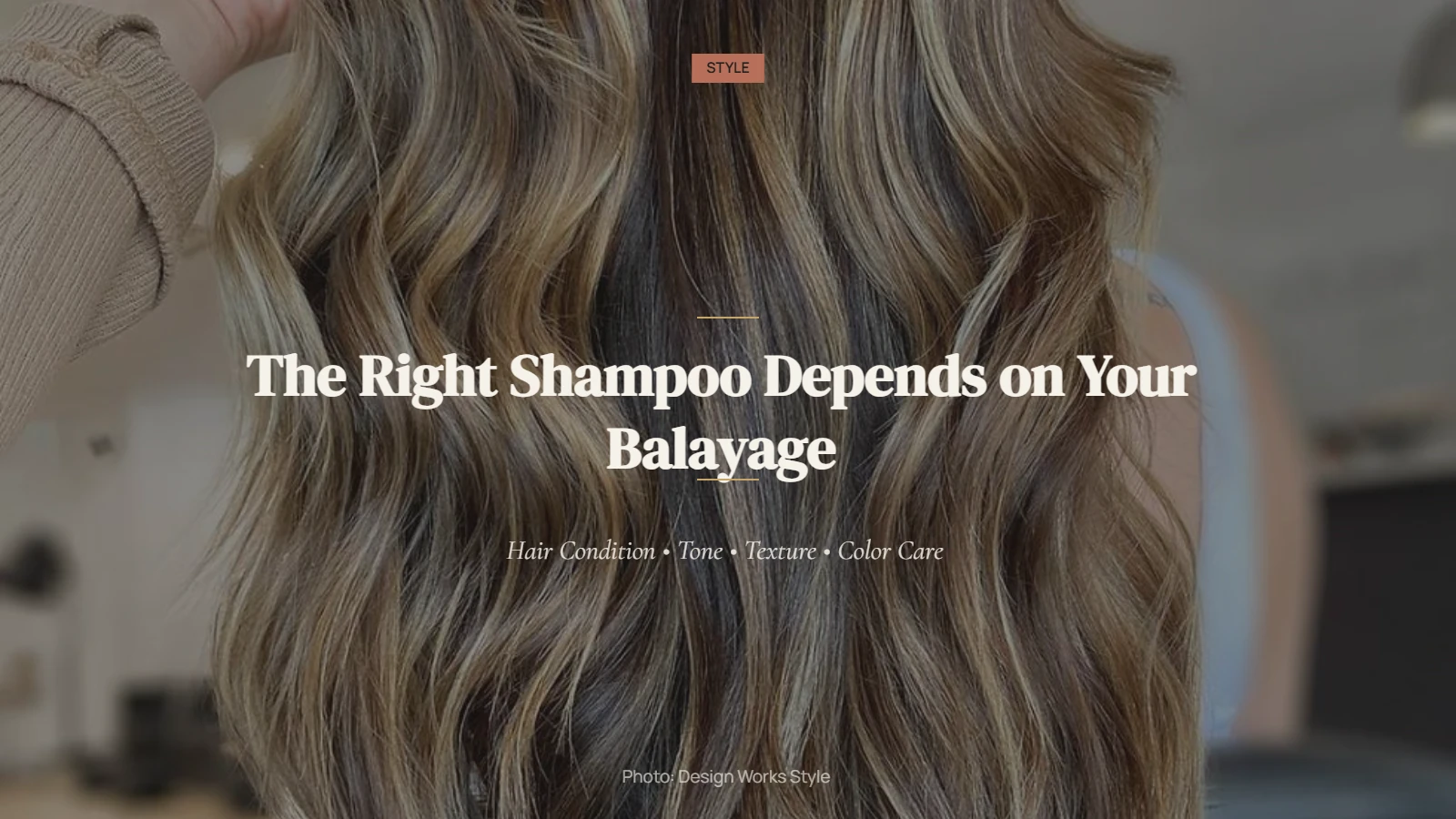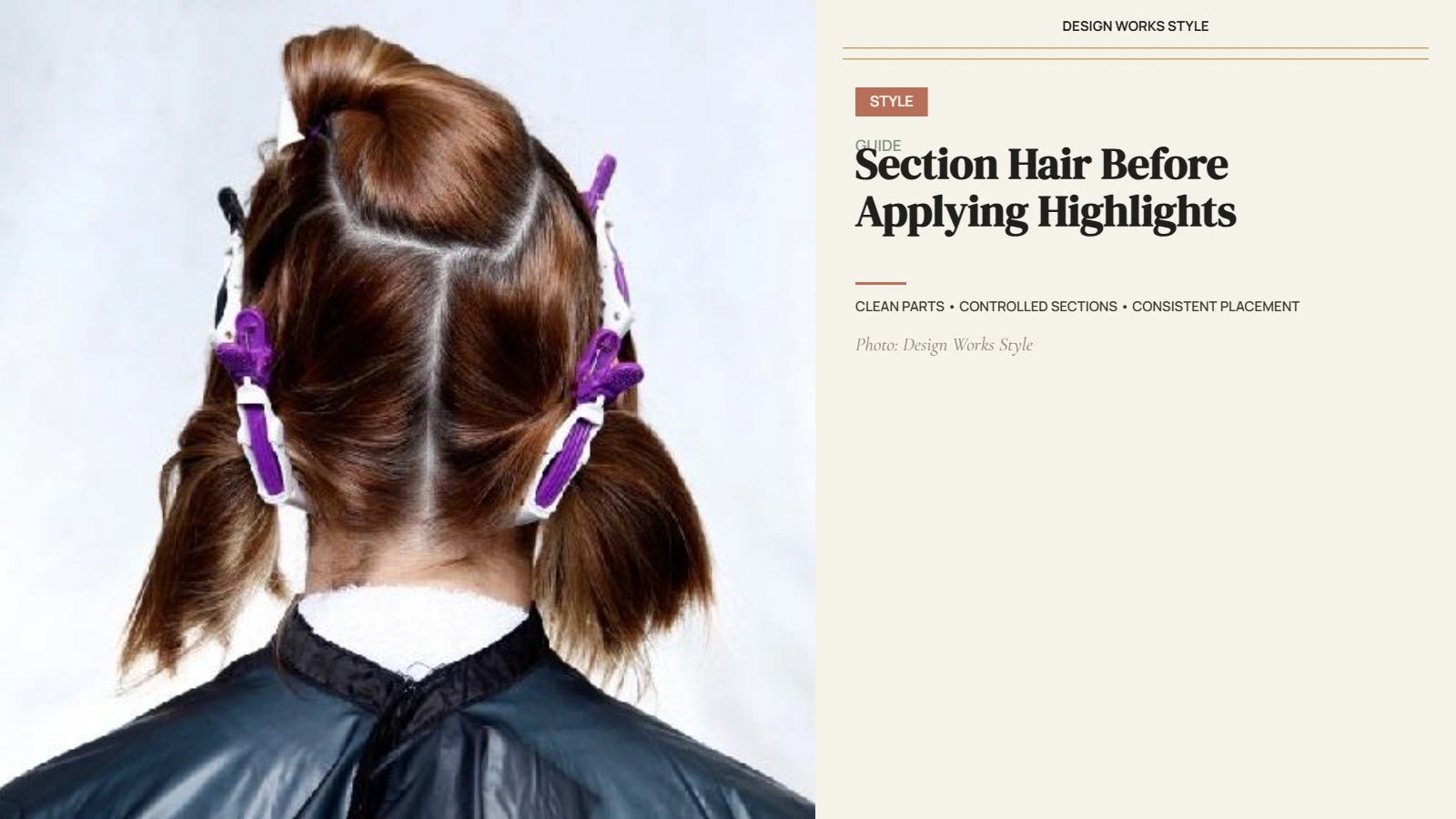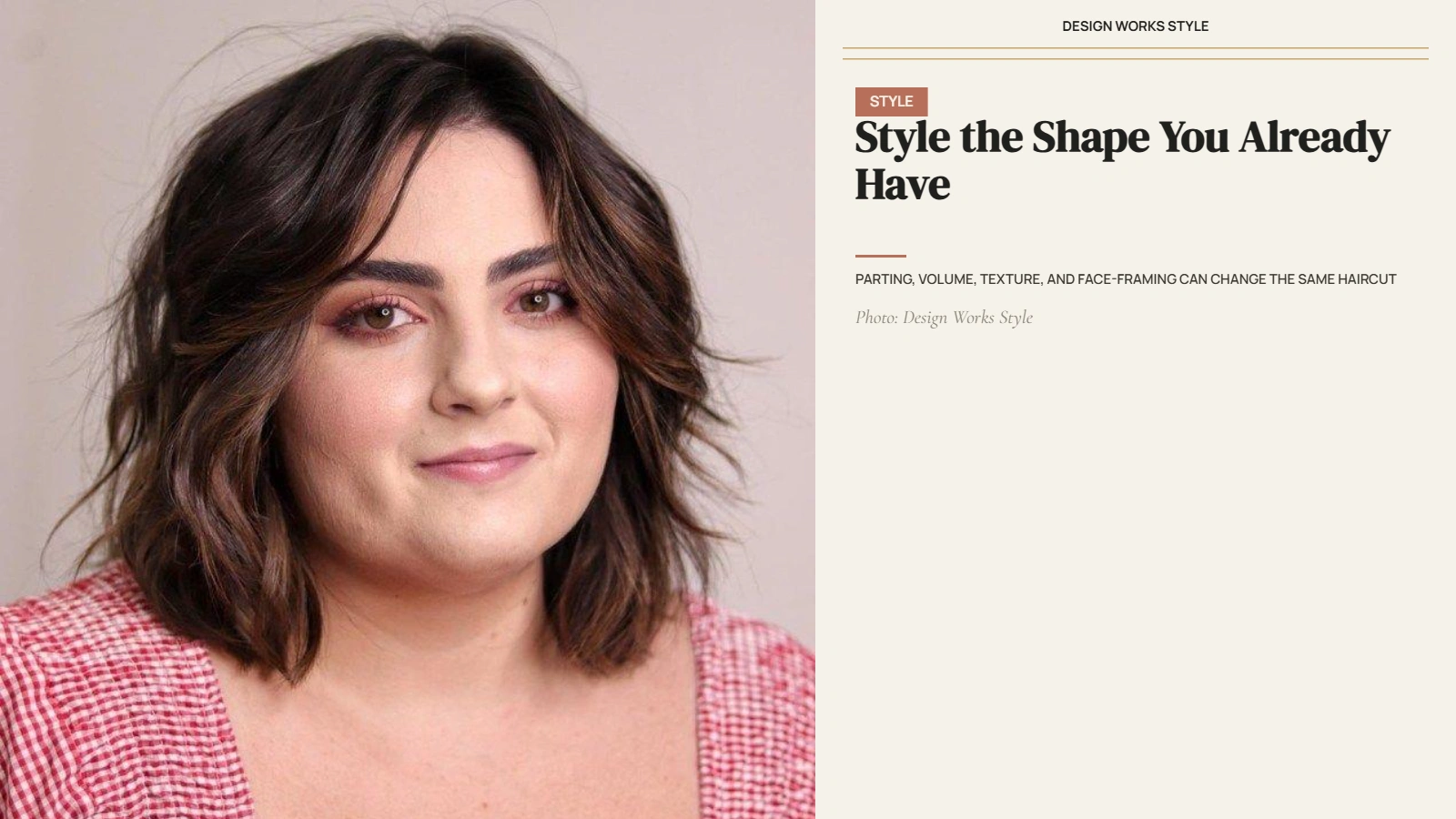

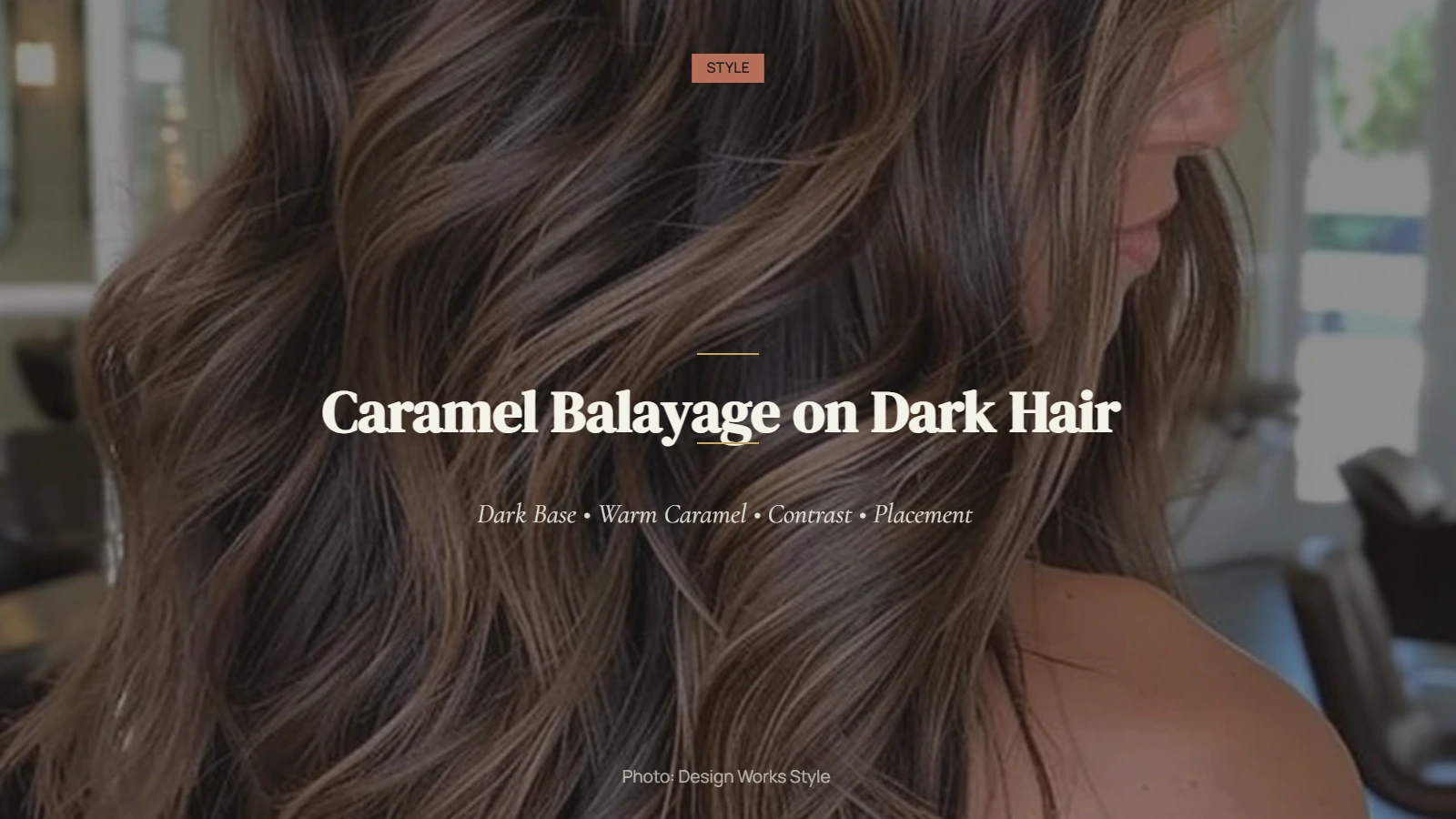
Caramel balayage can work on dark hair, but the finished result depends on the starting shade, previous color, hair condition, desired brightness, and professional lightening approach. Dark hair often needs to be lightened before caramel can appear clearly, and the amount of lightening affects how warm, bright, or subtle the result becomes.
A deep brown base can support anything from softly blended caramel ribbons to much brighter pieces with stronger contrast. The most useful decision is not simply whether caramel balayage is possible. It is deciding how light, how warm, how contrasting, and where you want the caramel to appear.
Can You Get Caramel Balayage on Dark Hair?
Yes, caramel balayage can be created on dark brown and other brunette bases.
The starting color matters because caramel is generally lighter than a dark brown base. A deeper base can make caramel pieces more noticeable, but reaching a particular level of brightness may require more lightening.
Previous color also changes the equation. Natural dark hair and previously colored dark hair may respond differently during a professional color service, so a reference photo should be treated as an example of the desired direction rather than a guarantee of the exact result.
“Dark hair” also covers a wide range of starting shades. Someone with medium-dark brown hair may have a different starting point from someone with very deep brown hair, even if both describe their hair as dark.
The practical goal is to establish a realistic target based on the hair you actually have.
What Does Caramel Balayage Look Like on Dark Hair?
Caramel balayage on dark hair can range from understated dimension to a much more visible contrast.
Some common directions include:
- Deep brown with soft caramel ribbons
- Medium caramel pieces through the lengths
- Brighter caramel around the face
- Caramel concentrated toward the ends
- Scattered caramel pieces for multidimensional color
- Higher-contrast caramel against a deep brown base
A darker base naturally creates more separation when lighter caramel is introduced. Keeping the caramel closer to the existing brown creates a quieter transition.
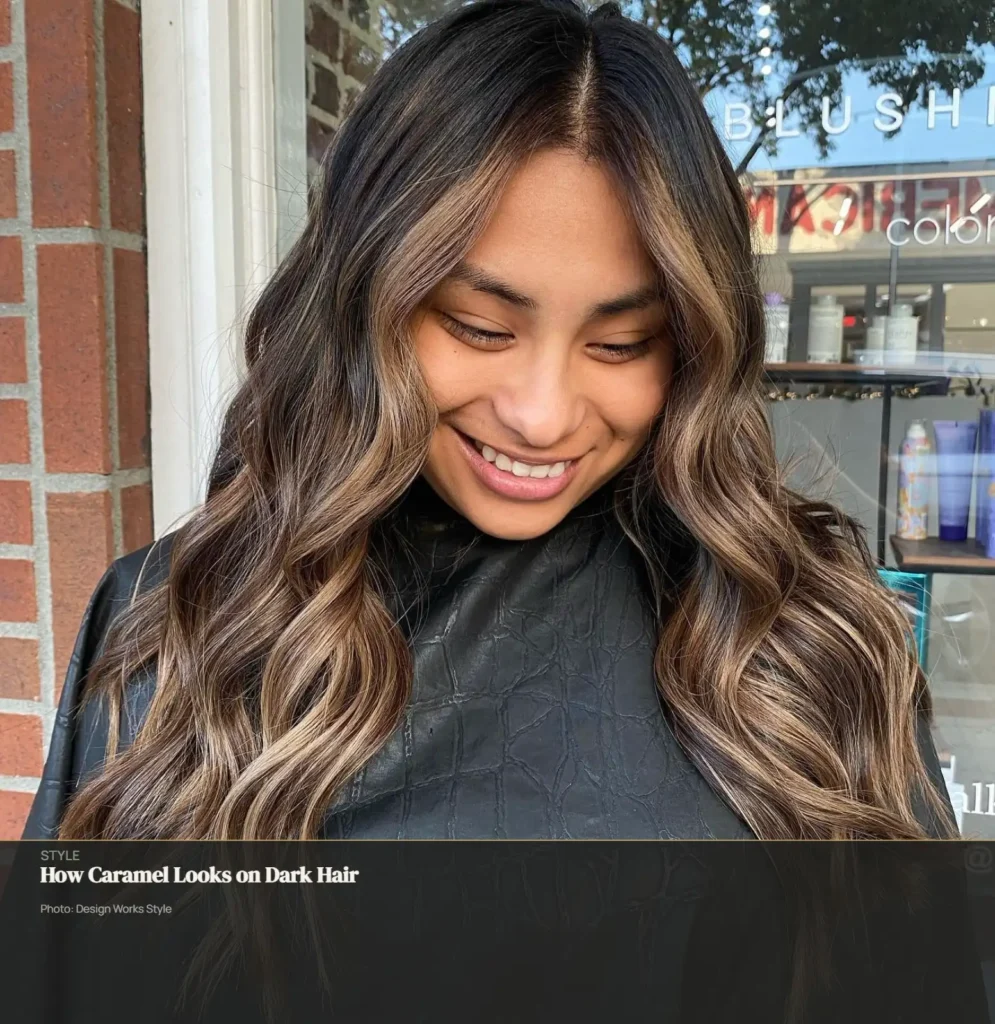
Placement also changes what you notice first. Caramel concentrated around the face creates a different effect from color distributed evenly through the lengths.
How Dark Does Your Hair Need to Be?
There is no single starting shade that defines whether caramel balayage will work.
Dark Brown Hair
Dark brown hair can create visible contrast with caramel pieces while still allowing the brown base to remain the dominant color.
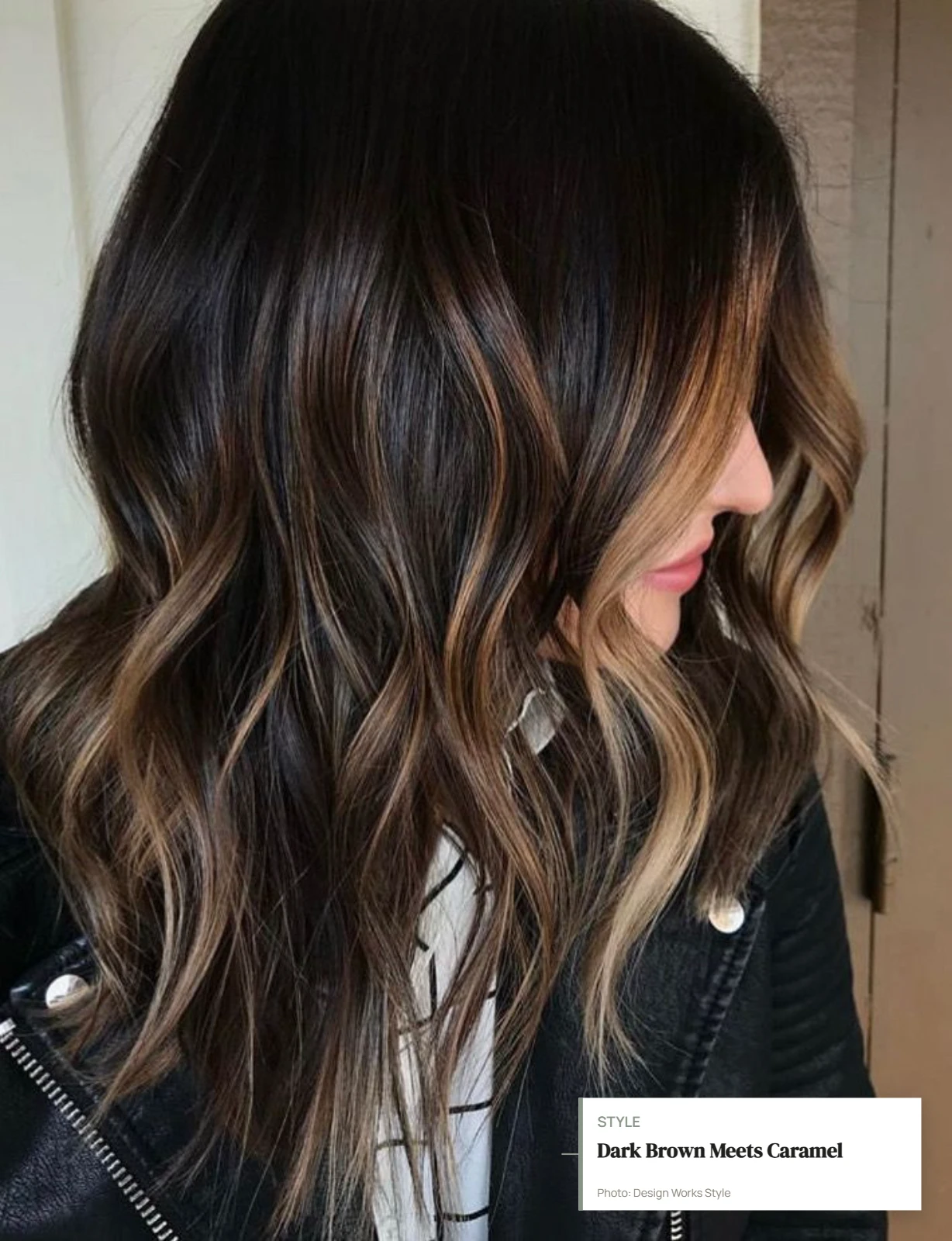
A softer result can keep the caramel relatively close to the existing brown. A stronger result can use visibly lighter pieces to create more separation.
Very Dark Brown Hair
Very dark brown hair may require more substantial lightening if the goal is a noticeably bright caramel.
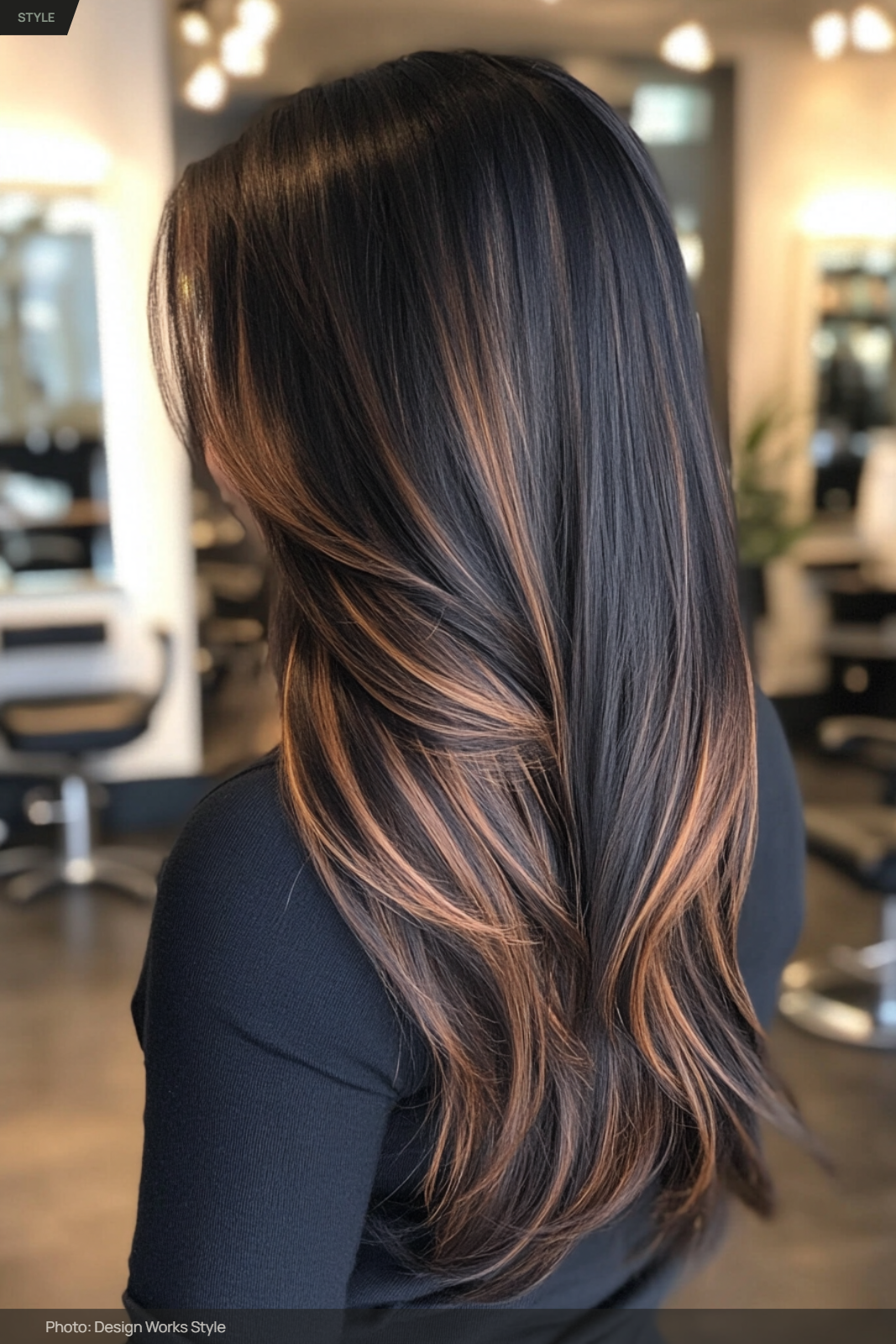
The larger the difference between the starting color and desired result, the more important it becomes to establish realistic expectations during the consultation.
A reference image showing bright caramel on a much lighter starting base may not be directly reproducible on very dark hair in the same way.
Previously Colored Dark Hair
Previously colored dark hair requires additional consideration.
Permanent color, previous highlights, bleaching, color corrections, and other chemical services can all affect how the hair responds during lightening.
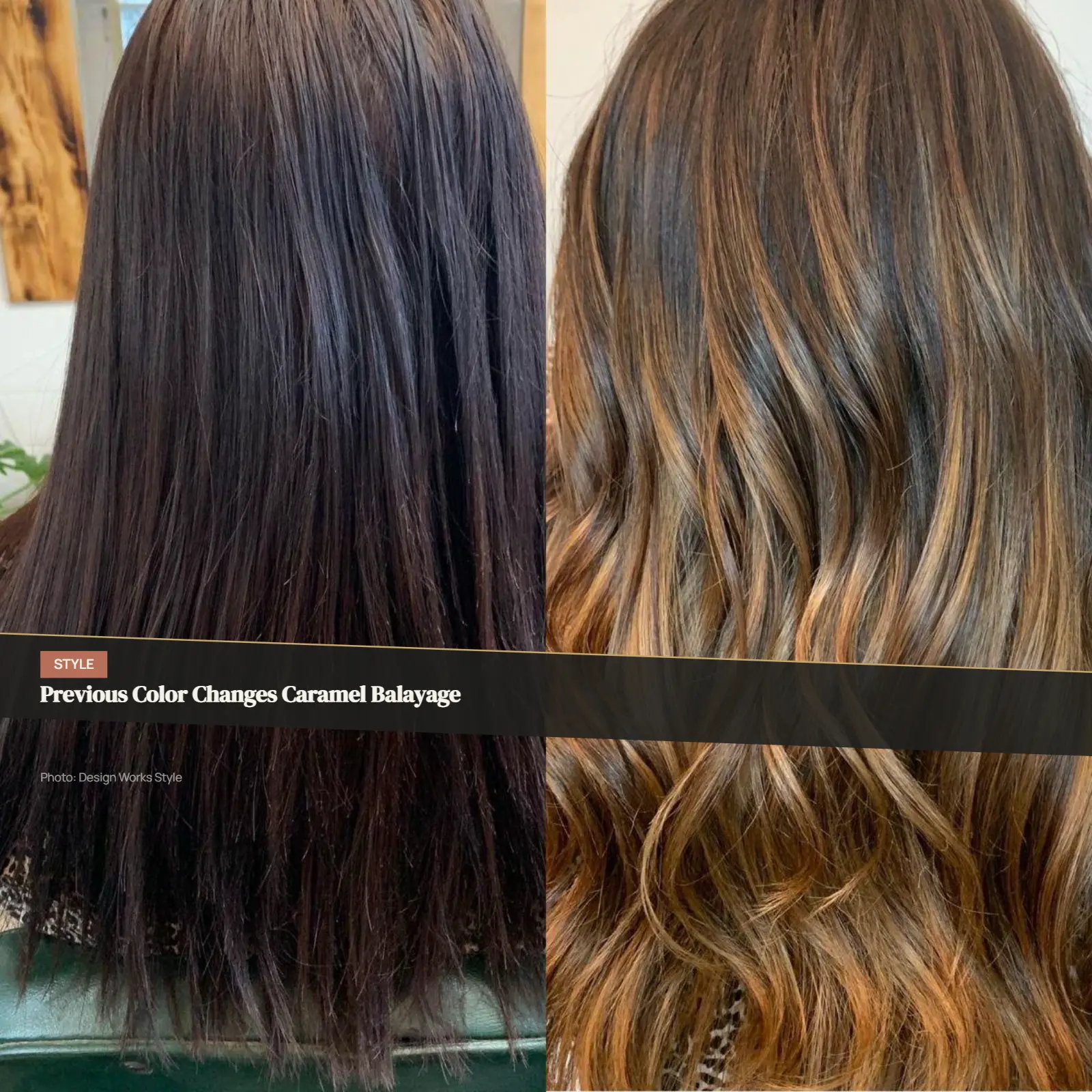
Artificial pigment can behave differently from natural hair, so your stylist needs an accurate history of previous color services before planning the result.
The darker or more heavily colored the starting hair, the more important it is to agree on a realistic target rather than relying on a reference photo alone.
How Much Lightening Does Dark Hair Need for Caramel Balayage?
Caramel is lighter than many dark brown starting bases, so some degree of lightening may be needed for the caramel pieces to become clearly visible.
The amount required depends on:
- Your starting hair color
- The caramel shade you want
- How much contrast you want
- Whether the hair has been colored before
- The condition of the hair
- The professional lightening approach
Dark hair can also reveal warmer underlying tones as it becomes lighter. This is one reason the final result may not look exactly like the color shown in a reference photo.
The goal of the consultation is to determine what level of caramel is realistic for your particular starting point.
Chemical formulas, developer ratios, and at-home lightening instructions are not part of that decision. Those details belong to the professional service.
How to Avoid an Overly Brassy Result
Warmth can become more visible when dark hair is lightened. That does not automatically mean the finished color will look brassy.
There is an important difference between intentional warmth and unwanted warmth.
Caramel is naturally a warm color direction. Golden, honey, brown, and toffee-like qualities can all be part of the intended result. Brassiness refers to warmth that does not match the tone you were trying to achieve.
A professional can account for this by:
- Choosing an appropriate target tone
- Discussing how warm you want the caramel to be
- Considering the underlying color of your starting hair
- Using appropriate professional toning when needed
- Setting realistic expectations from the reference image
- Taking previous color history into account
Toning can help adjust the appearance of the color, but it should not be treated as a permanent solution that eliminates all warmth.
If you want a distinctly warm caramel, do not bring only cool-toned reference photos to the consultation and expect the same result to read as caramel. Your reference should match the actual tone you want.
Subtle or High-Contrast Caramel Balayage?
The amount of contrast can completely change how caramel balayage looks against dark hair.
| Subtle caramel | High-contrast caramel |
|---|---|
| Smaller visual shift | Larger visual shift |
| More dark base remains visible | Lighter pieces stand out more |
| Softer overall transition | Stronger separation |
| Caramel blends closely into the brown | Caramel becomes a major visual feature |
| Can create a quieter grow-out | Changes in brightness may be more noticeable |
A subtle result is not simply a darker version of high-contrast balayage. Placement, spacing, and the relationship between the caramel and base all contribute to the finished effect.
If you want your dark hair to remain the dominant feature, ask for restrained contrast.
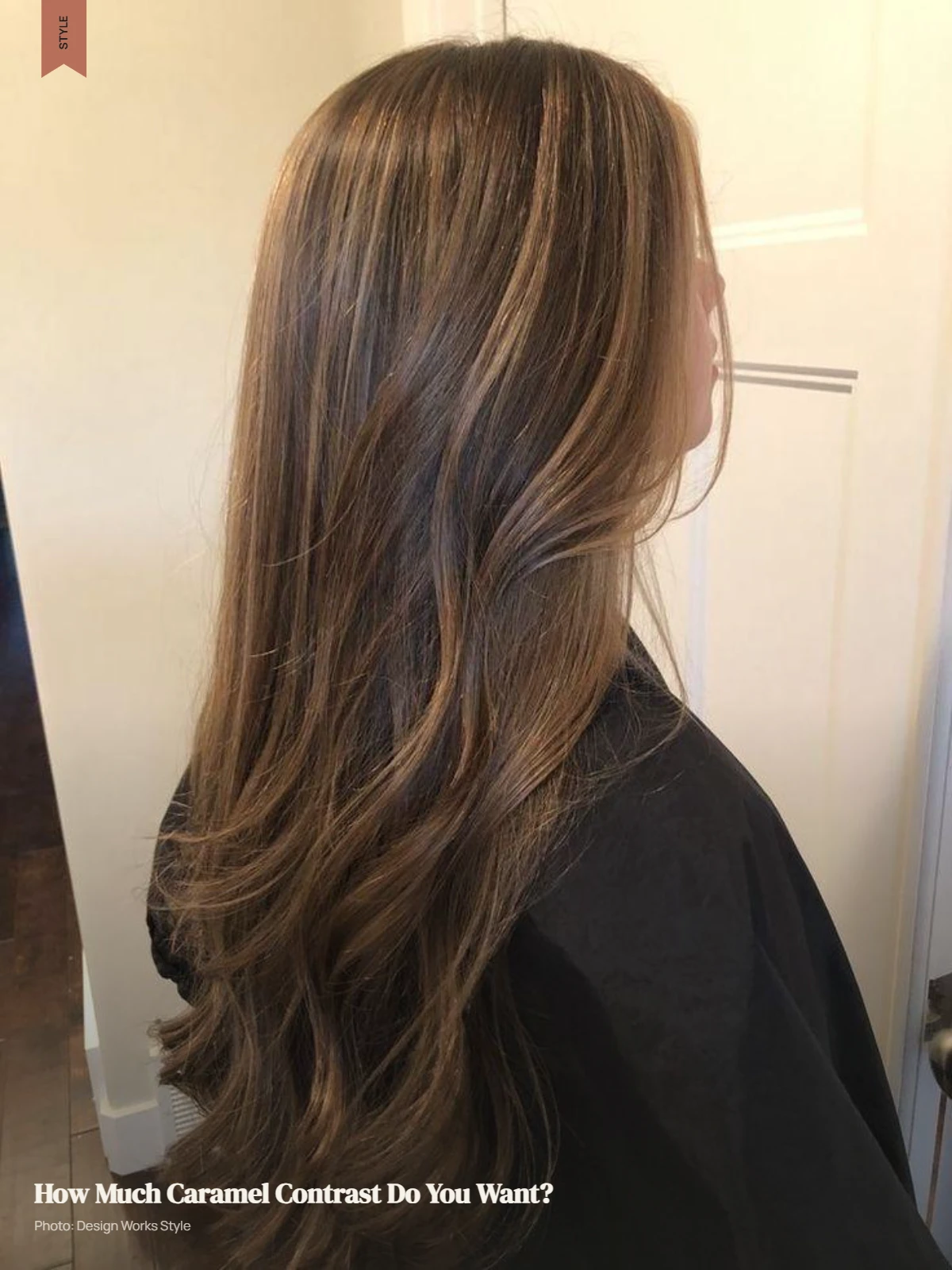
If you want the caramel to be immediately visible, discuss a brighter target and more deliberate placement.
Neither direction is inherently better. The choice depends on how much change you actually want to see.
Where Should Caramel Balayage Go on Dark Hair?
Placement can make the same caramel tone look significantly different.
Face-Framing Caramel
Brighter pieces around the front can make caramel more noticeable near the face.
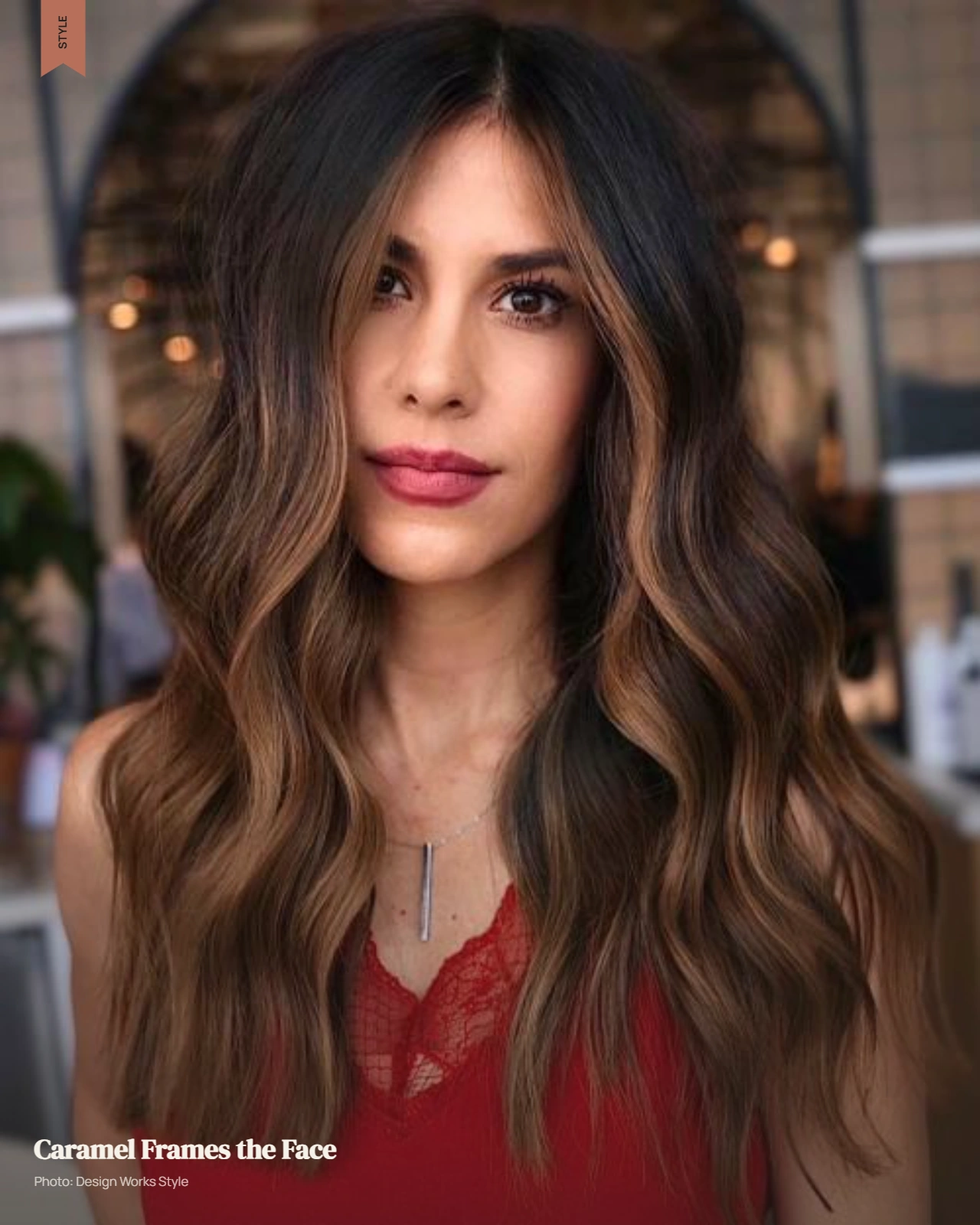
The amount of brightness can be concentrated around the front while keeping the rest of the hair more restrained.
Face framing should be chosen based on the desired visual effect and haircut rather than assuming one placement works for every face shape.
Caramel Through the Mid-Lengths
Placing caramel through the mid-lengths can create visible dimension while preserving more of the dark root area.
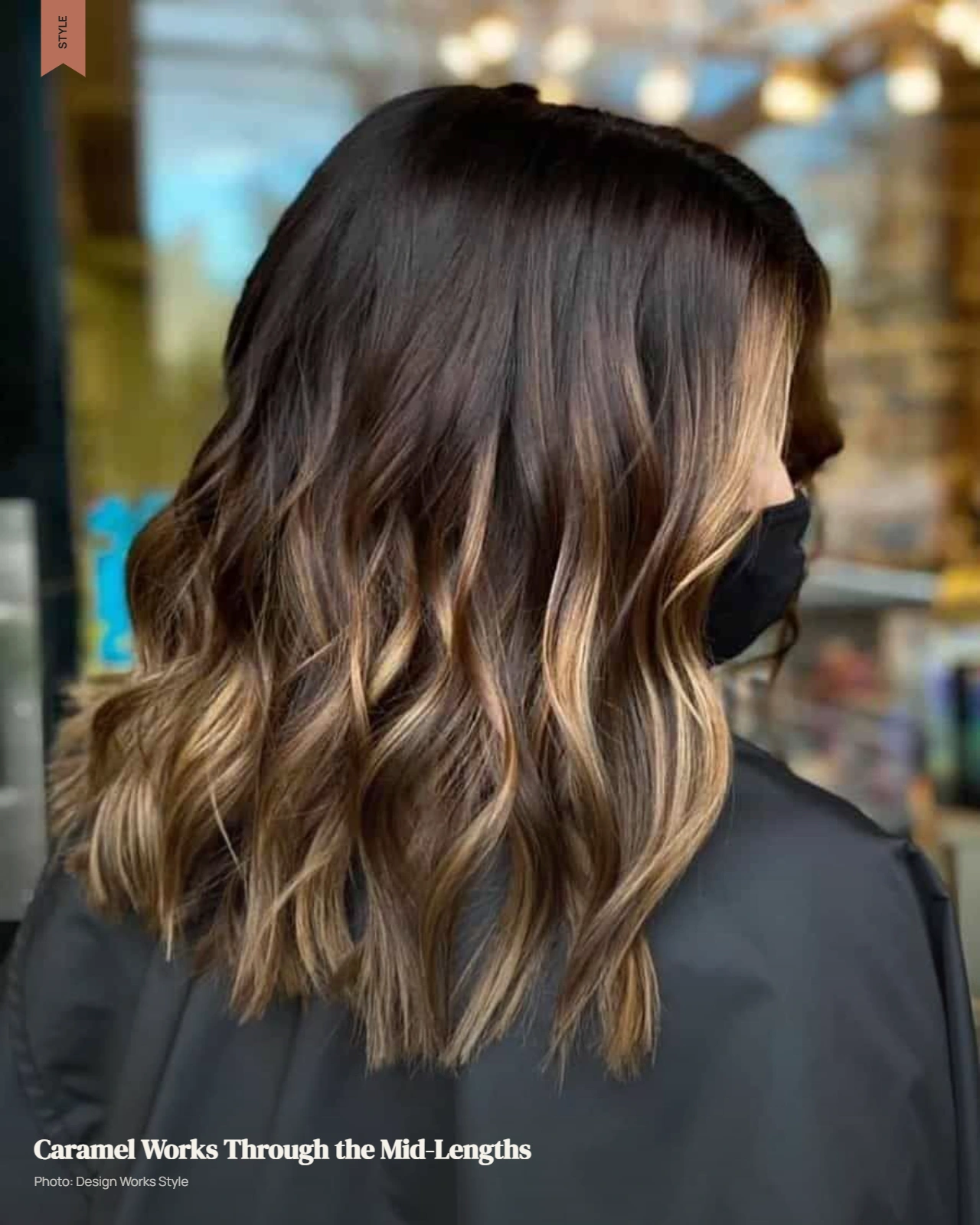
This can make the contrast noticeable when the hair moves without creating an equally bright effect at the roots.
Caramel Through the Ends
Concentrating caramel toward the ends creates a gradual lower-length transition.
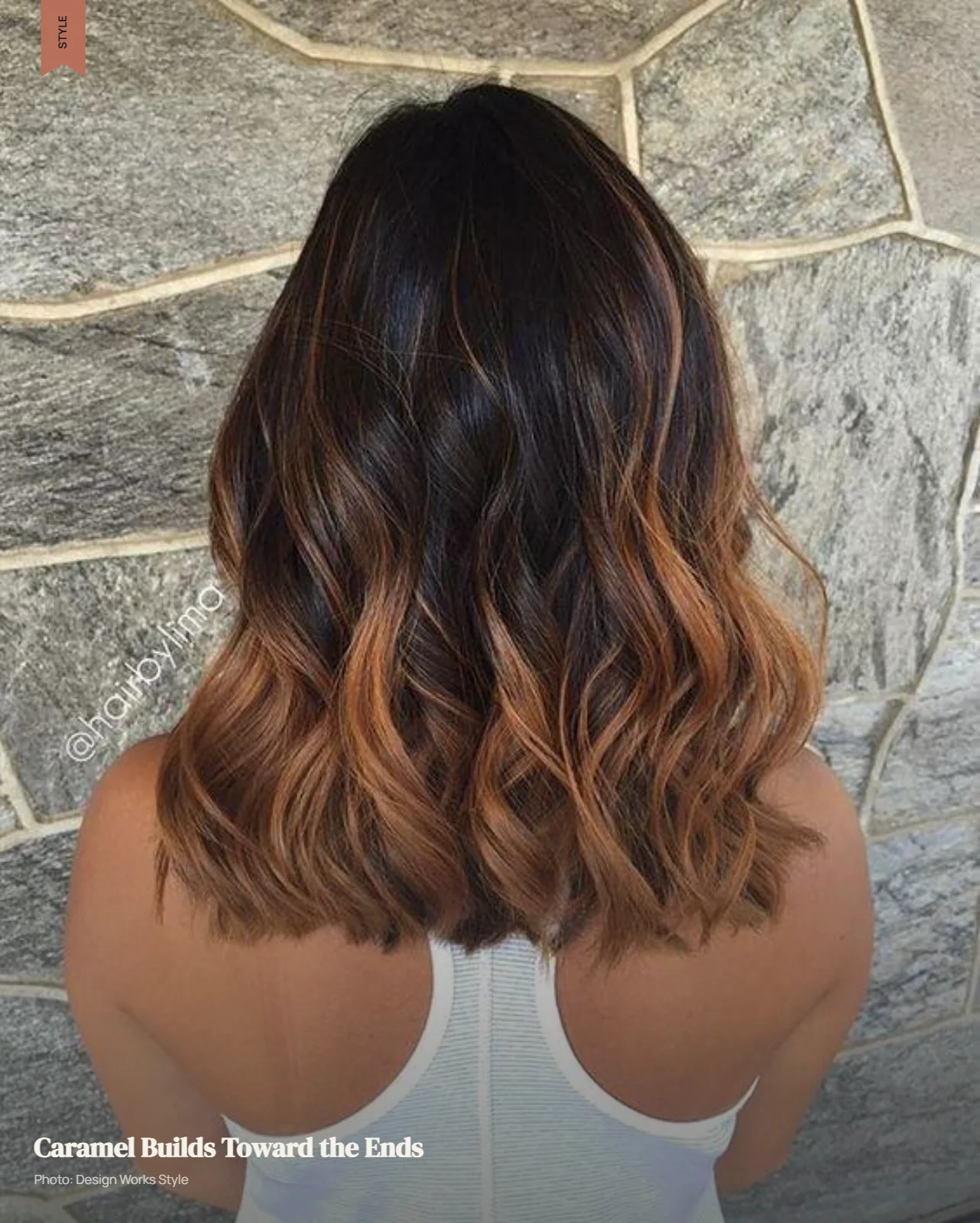
The darker root and upper lengths remain prominent while the caramel becomes more visible toward the bottom of the hair.
Scattered Caramel Pieces
Smaller pieces distributed throughout the hair can create variation without making the entire head look lighter.
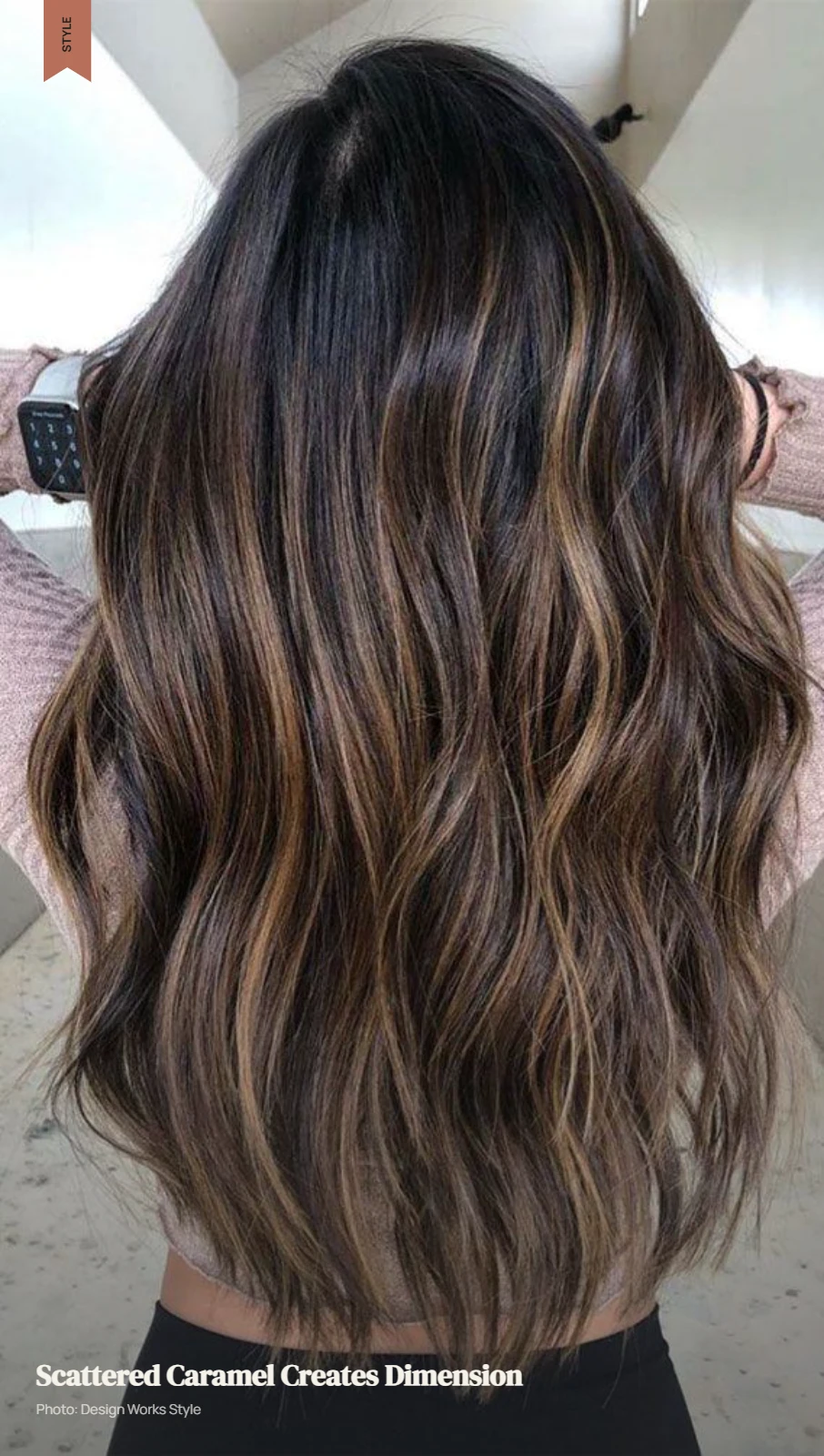
This approach can be useful when you want dimensional color rather than a large block of caramel.
Which Caramel Shade Works With Dark Hair?
There is no standardized single shade called “caramel.”
Depending on the desired result, caramel can lean toward:
- Deep warm caramel
- Brown caramel
- Golden caramel
- Honey-caramel
- Toffee-inspired caramel
- More muted or neutral caramel
These names describe general color directions rather than exact formulas.
The same caramel reference can appear different depending on the surrounding base, lighting, existing pigment, and amount of contrast.
For a softer result, a caramel tone closer to the existing brown can create a more gradual transition.
For stronger contrast, a visibly lighter caramel can create a clearer separation from the dark base.
If you are still deciding between different caramel directions rather than focusing specifically on dark hair, see the broader Caramel Balayage guide.
Caramel Balayage Ideas for Dark Hair
The most useful inspiration photos show a clear difference in tone, contrast, or placement.
Dark Brown With Soft Caramel Ribbons
A deep brown base with restrained caramel ribbons keeps most of the hair dark while introducing warmer dimension.
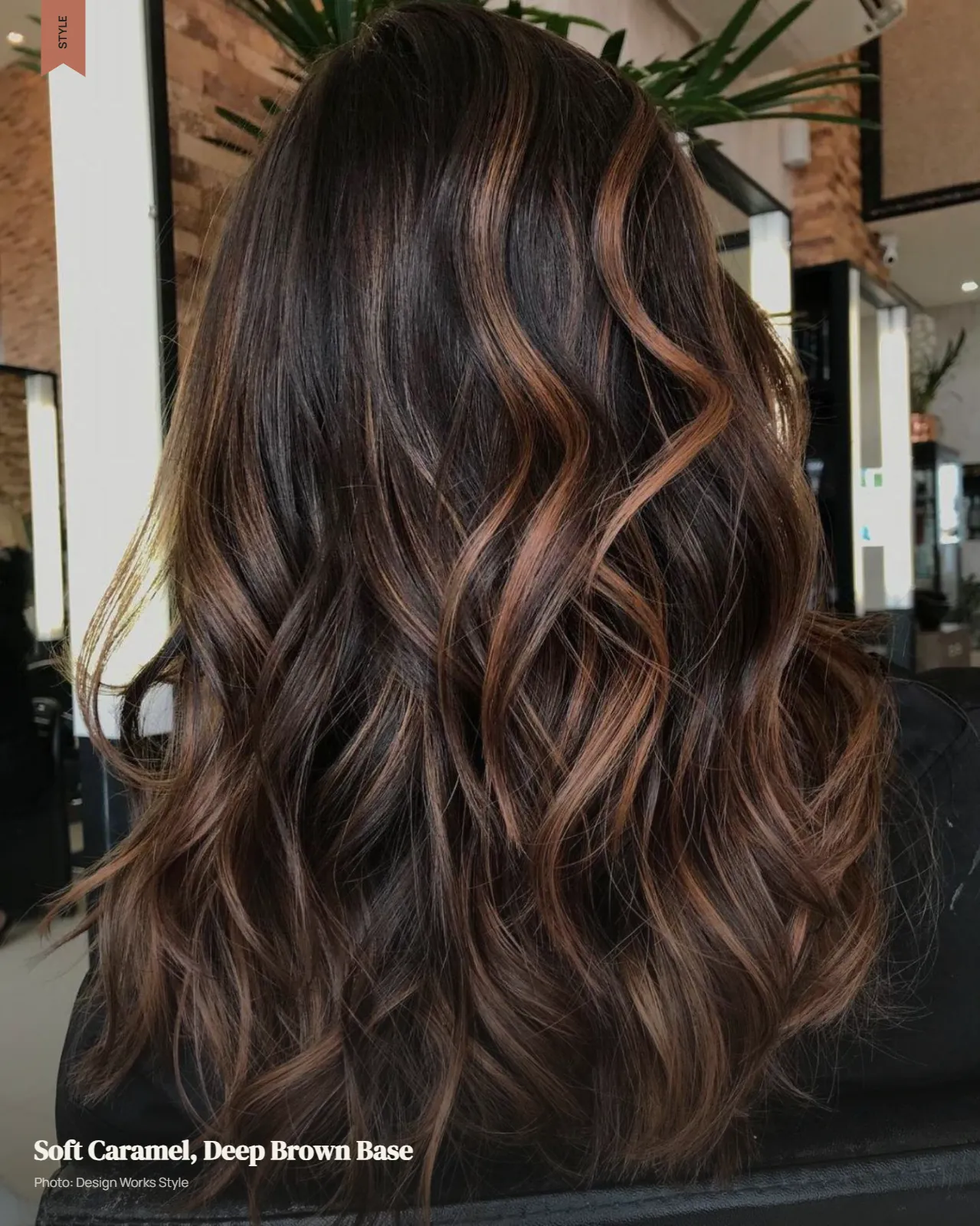
This is a useful reference direction if you want people to notice the color without making the caramel the dominant feature.
Deep Brown With Face-Framing Caramel
Here, the brighter caramel is concentrated around the front while the rest of the hair uses more controlled placement.
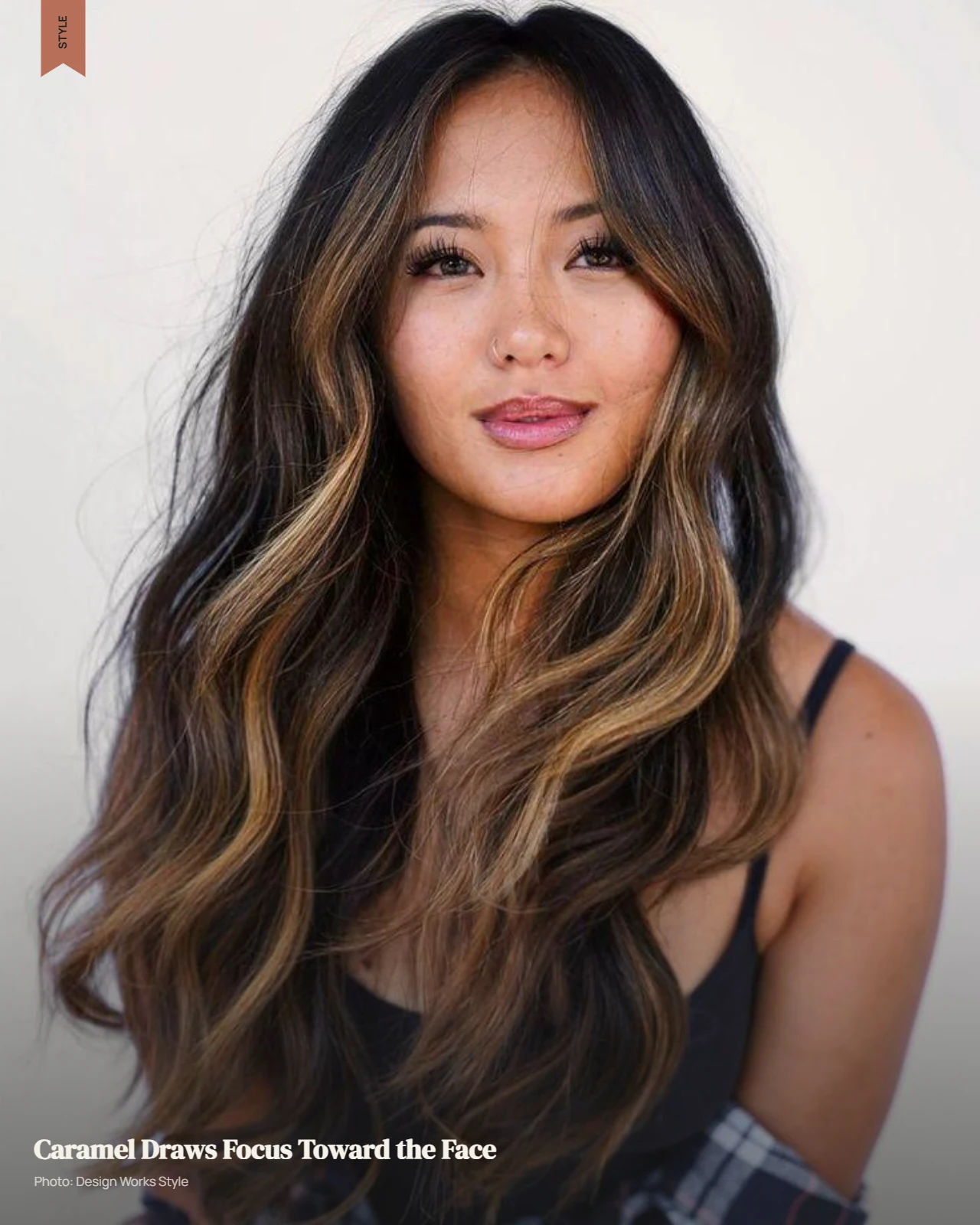
The result places more visual emphasis near the face without requiring the entire head to have the same brightness.
Dark Hair With Caramel Ends
Caramel concentrated toward the ends creates a gradual transition from the dark upper lengths into warmer, lighter sections.
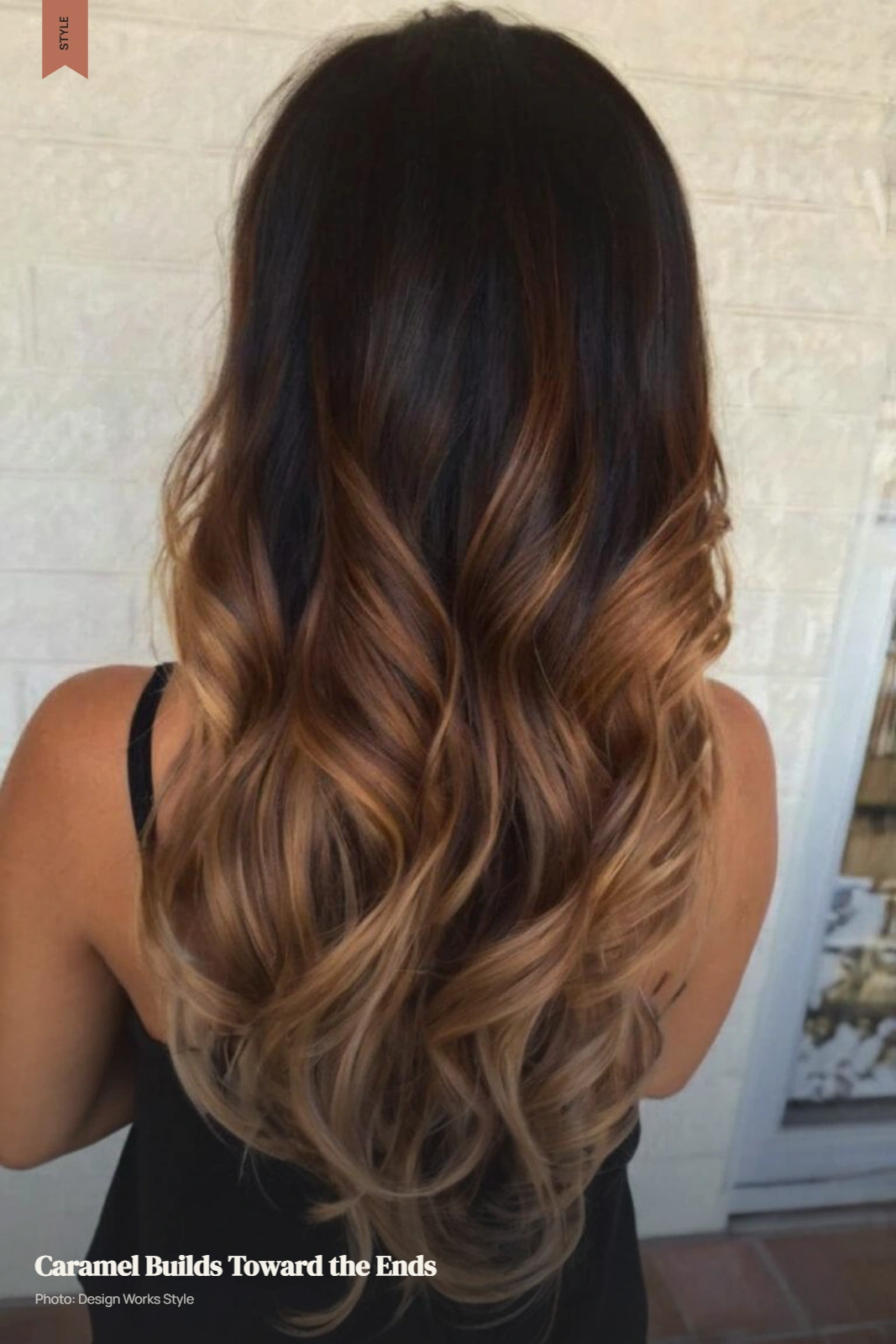
This can communicate a lower-root-contrast approach during a consultation.
Rich Brown and Golden Caramel
A warmer caramel paired with rich brown creates tonal variation without requiring the entire base to become lighter.
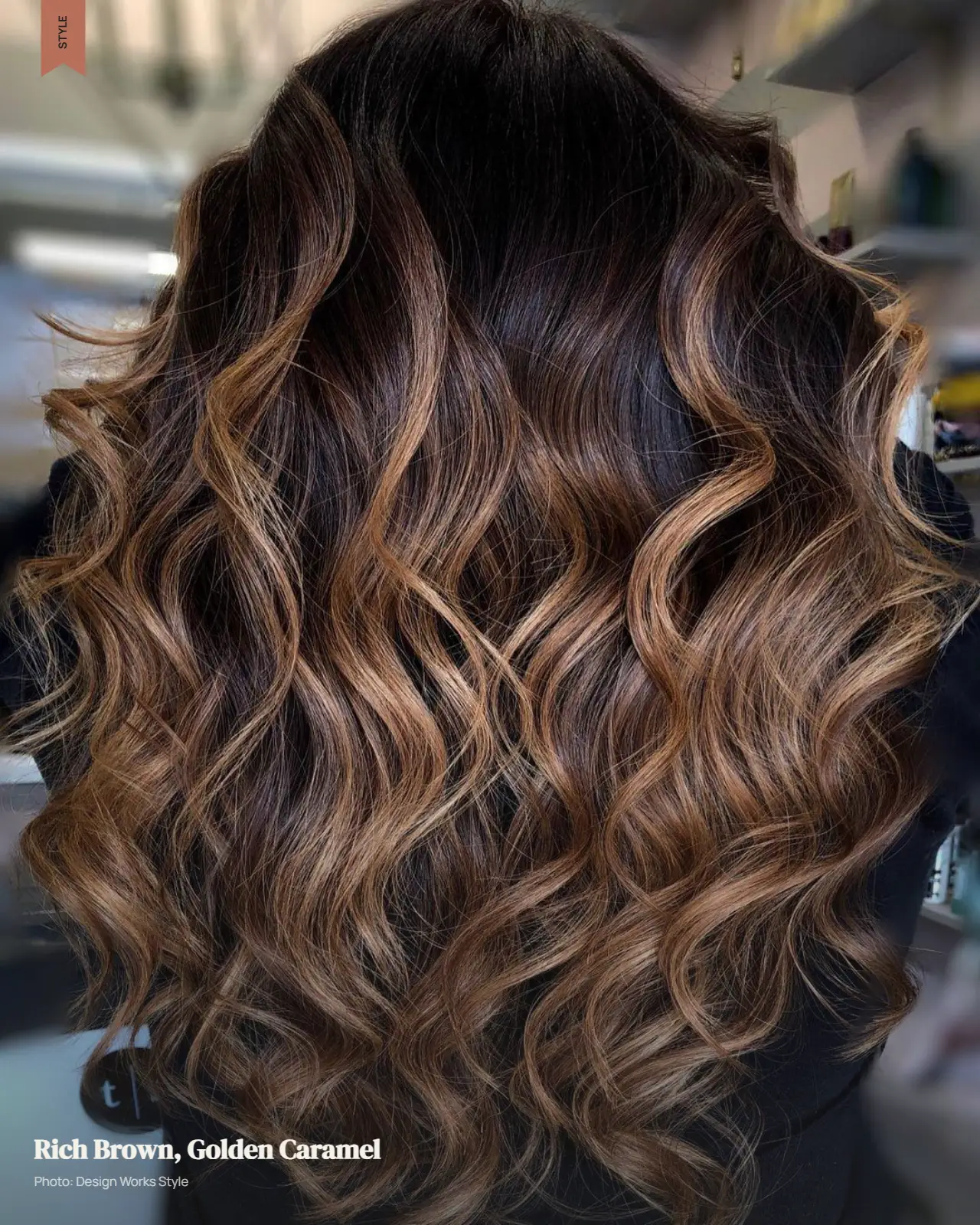
The distinction between the two tones becomes part of the overall dimension.
Dark Base With High-Contrast Caramel
A noticeably lighter caramel against a deep brown base creates a stronger visual change.
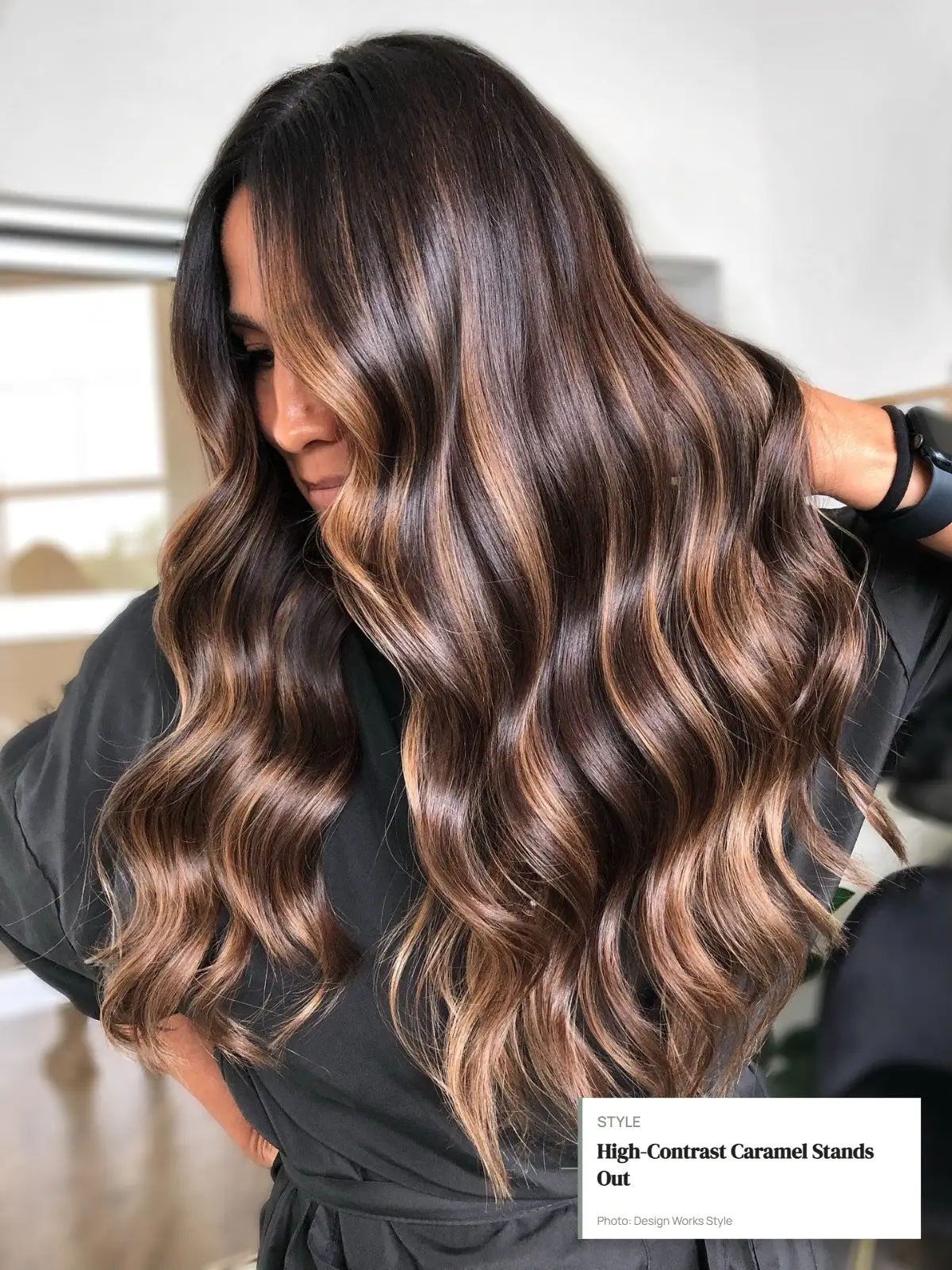
This is the direction to show your stylist if you want the caramel to be immediately visible rather than quietly blended.
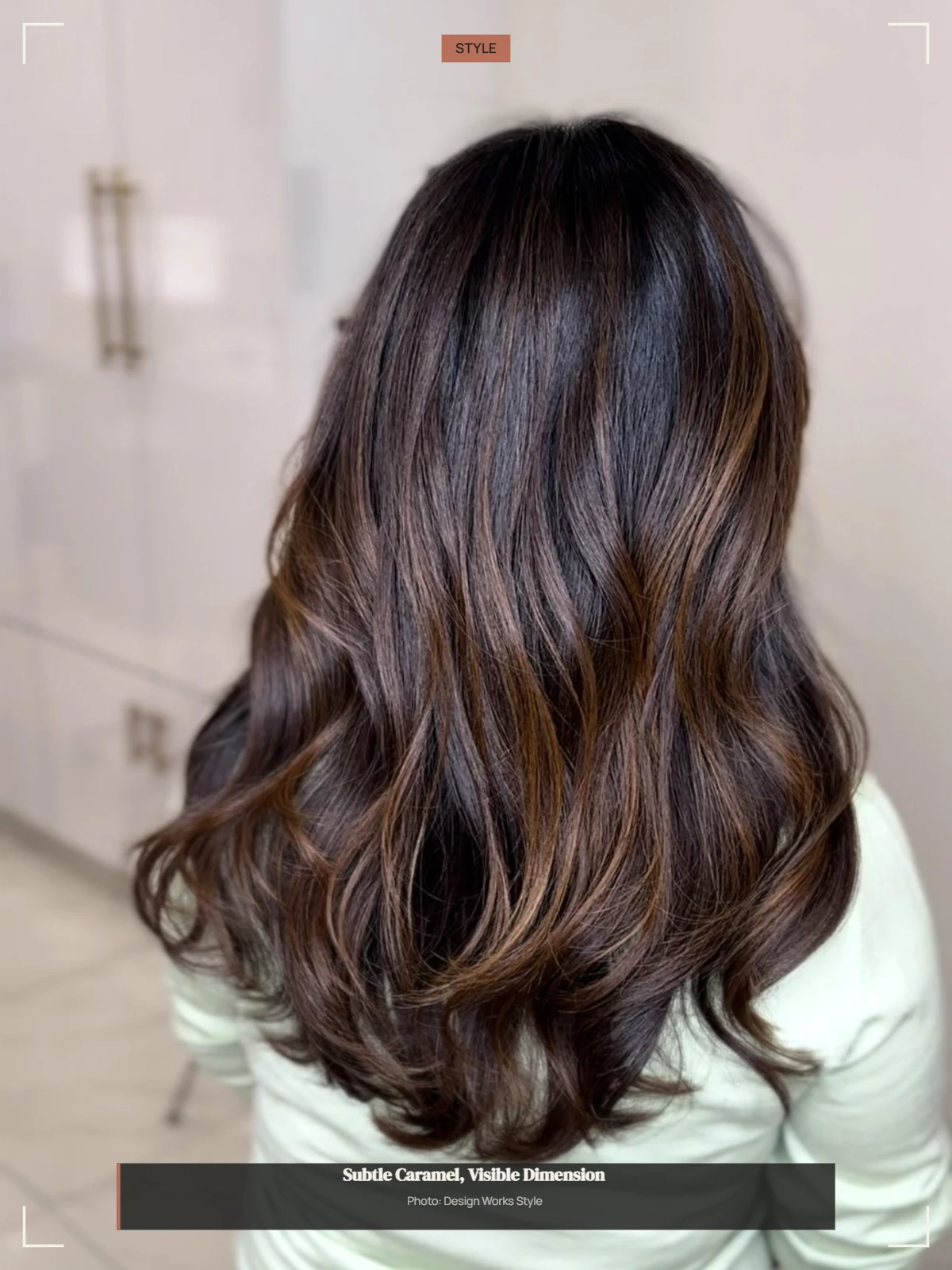
Subtle Caramel Dimension
Small amounts of caramel distributed through selected sections can preserve most of the dark base while adding movement and variation.
What If Your Dark Hair Has Been Colored Before?
Your color history matters.
Tell your stylist if your hair has previously had:
- Permanent color
- Semi-permanent color
- Highlights
- Bleaching
- Color corrections
- Other chemical services
Artificial pigment can behave differently from natural hair during lightening. That can affect how quickly the hair reaches a particular appearance and what tones become visible along the way.
Previously colored dark hair should therefore be assessed on its current condition rather than treated as equivalent to untouched natural dark hair.
Do not assume that a reference photo showing bright caramel can be reproduced in one appointment. The realistic result depends on what is already in the hair and how it responds during the professional service.
How to Maintain Caramel Balayage on Dark Hair
Maintenance depends on how much caramel was added, where it was placed, how bright you want it to remain, and how the tone changes over time.
General maintenance can include:
- Using products intended for color-treated hair
- Conditioning regularly
- Protecting the hair from heat during styling
- Watching for unwanted tonal changes
- Professional toning or glossing when appropriate
- Refreshing lighter pieces when the desired brightness changes
- Following your stylist’s specific aftercare recommendations
A dark root with blended balayage can allow a softer grow-out, but that does not mean the color requires no maintenance.
The lighter the caramel, the more noticeable tonal changes may become. You may also want a refresh simply because you prefer the original level of contrast.
For broader maintenance guidance, see Balayage Hair Care.
How Long Does Caramel Balayage Last on Dark Hair?
There is no single maintenance schedule that applies to every dark-hair balayage.
How long the result continues to look the way you want depends on:
- Hair growth
- Color placement
- Starting color
- Amount of contrast
- Degree of lightening
- Tonal fading
- Home-care habits
- Personal preference
A blended result can remain wearable as the darker root grows, but that does not mean it will maintain the same tone and brightness indefinitely.
There is a useful difference between still having visible caramel and having caramel that looks freshly refreshed.
Someone who prefers subtle dimension may be comfortable with more tonal change, while someone who wants a specific bright caramel may choose professional maintenance sooner.
What to Ask for at Your Appointment
A clear consultation can prevent a lot of confusion.
Instead of saying only “I want caramel balayage,” discuss the specific result you want.
Ask:
- Can my current hair reach the caramel shade in my reference photo?
- How much lightening would that require?
- What warmth should I expect from my starting color?
- Can we keep the caramel warm without making it look brassy?
- Should the brightest pieces frame my face?
- How much of my dark base should remain?
- What will the grow-out look like?
- How often might I want a refresh?
- Will my previous color affect the result?
- What should I use at home to maintain the tone?
Bring reference photos that show:
- Your preferred base color
- The caramel tone
- The brightness
- The placement
- The amount of contrast
A photo showing the right color but the wrong placement may communicate something very different from what you actually want. Showing several examples can help your stylist identify the common elements you like.
Common Questions About Caramel Balayage on Dark Hair
Can you get caramel balayage on black hair?
Very dark hair may require more substantial lightening to create clearly visible caramel. The achievable result depends on the starting hair, previous color, hair condition, desired brightness, and professional assessment.
Will caramel balayage look orange on dark hair?
Dark hair can reveal warm underlying tones during lightening, but intentional caramel warmth is different from unwanted orange or brassy tones. The desired tone should be discussed before the service.
Can caramel balayage be subtle on dark hair?
Yes. Softer contrast, restrained placement, and a caramel tone closer to the existing brown can create more subtle dimension while keeping most of the dark base visible.
Can caramel balayage be high contrast?
Yes. A visibly lighter caramel combined with stronger separation from the dark base can create a more noticeable result. The amount of contrast should be discussed during the consultation.
Does caramel balayage damage dark hair?
Caramel balayage may involve lightening, and lightening can affect hair condition. The impact depends on the starting hair, previous processing, amount of lightening, and professional approach.
How often does dark hair need caramel balayage touched up?
There is no universal schedule. Maintenance depends on placement, hair growth, brightness, tonal changes, home care, and how closely you want to maintain the original appearance.
Explore More Caramel Balayage Ideas
If you are comparing caramel tones and placements more broadly, see the Caramel Balayage guide for the wider color framework.