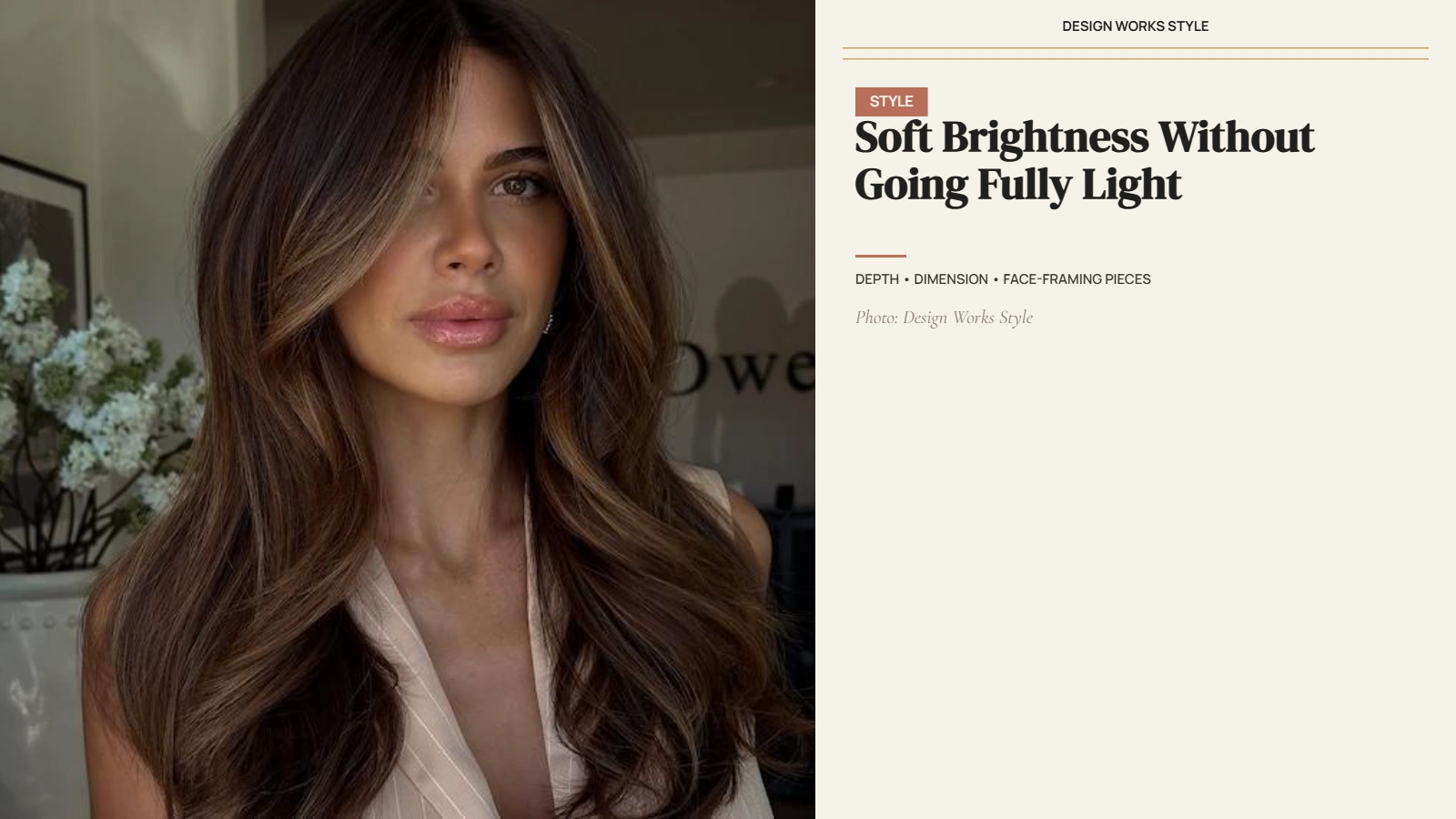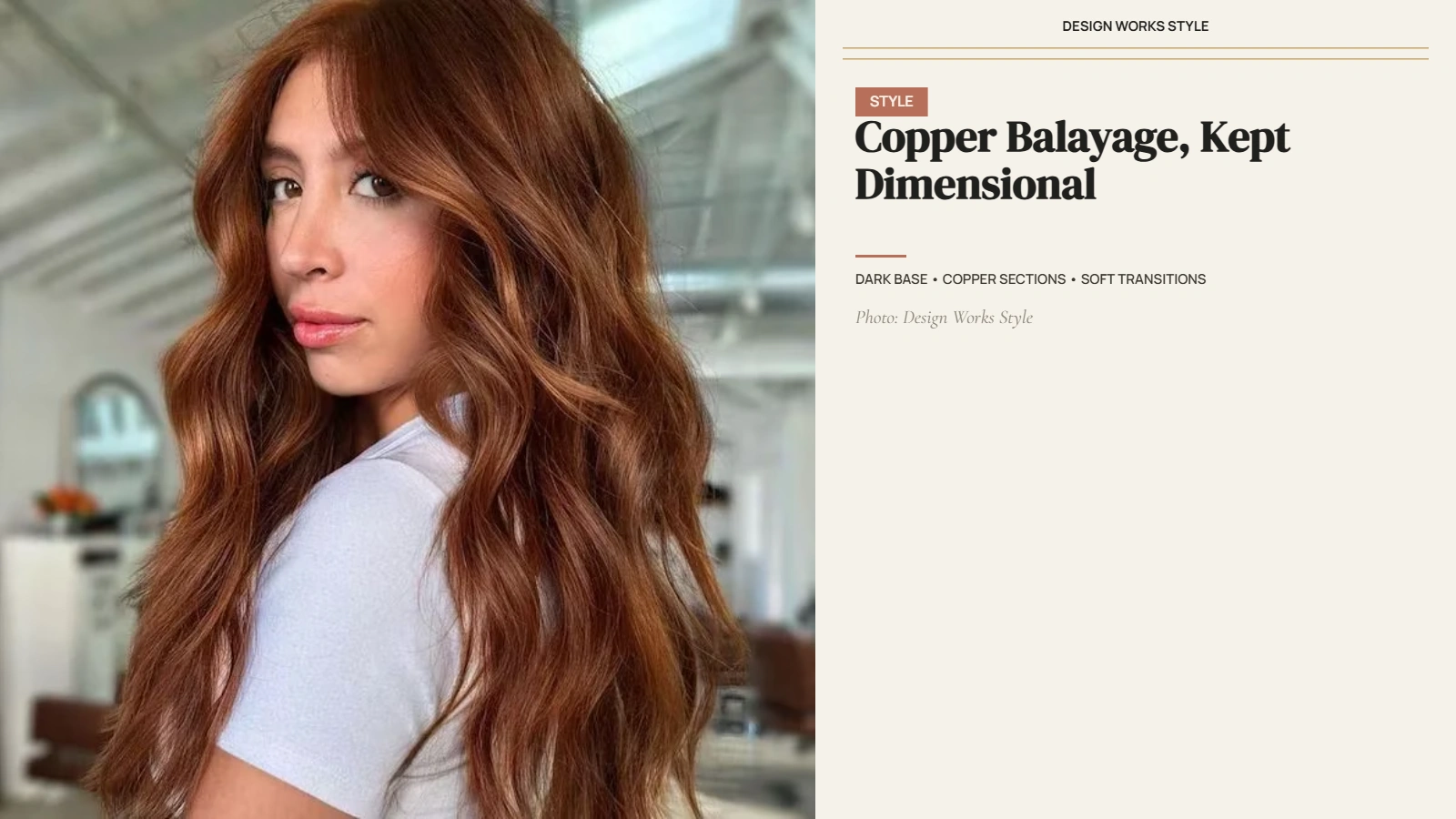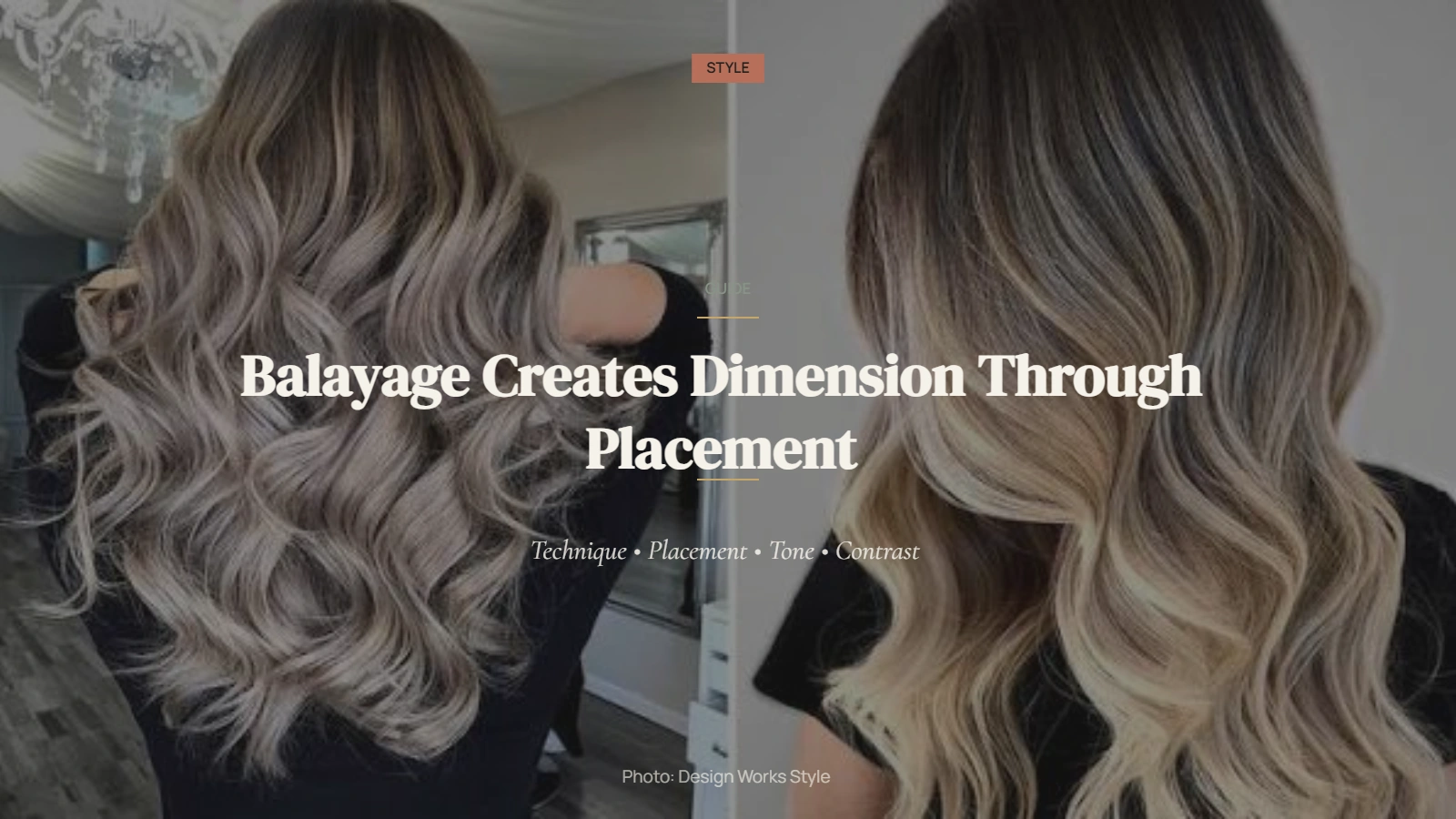

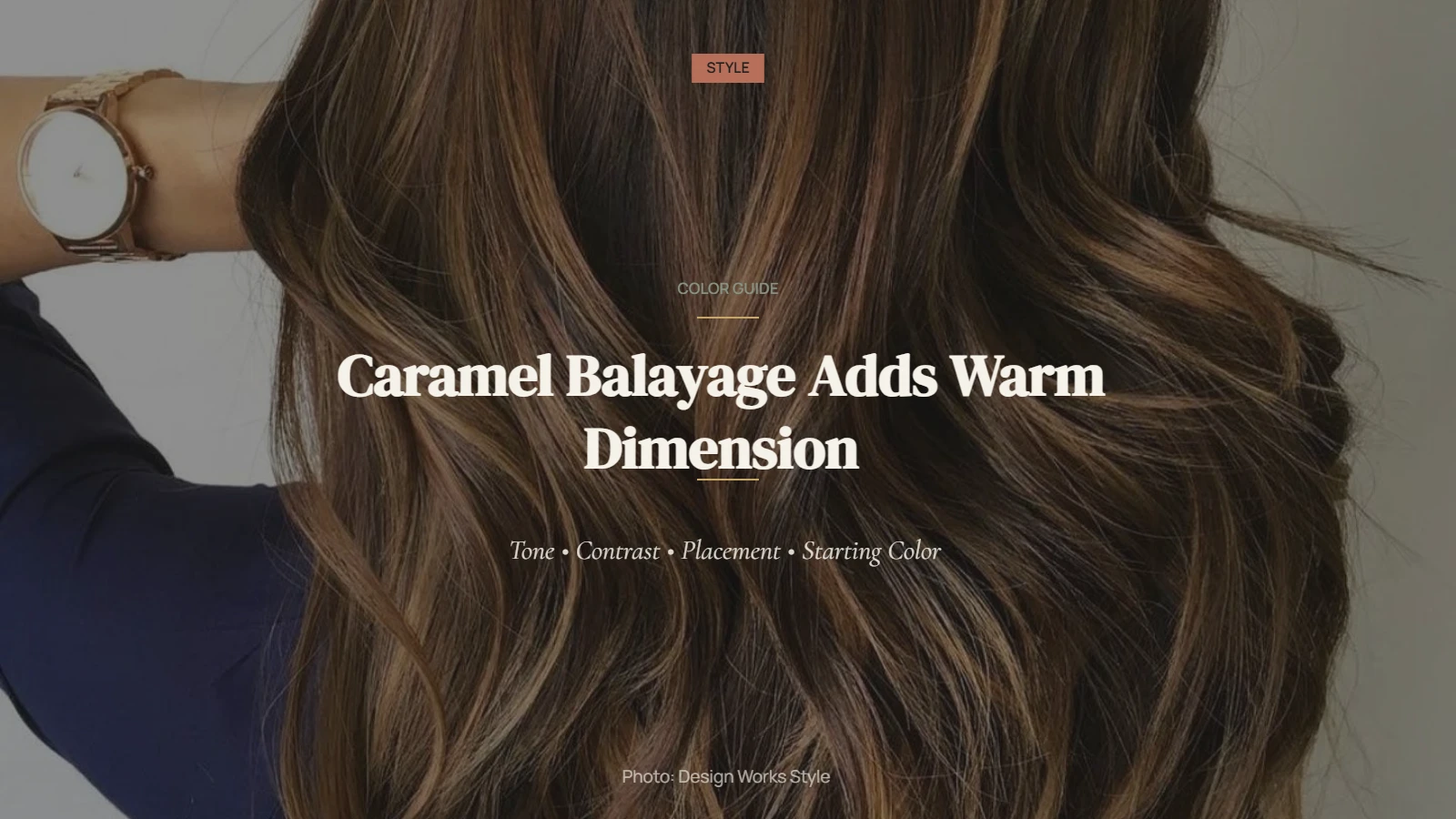
Caramel balayage combines the hand-painted, blended approach of balayage with warm caramel-toned highlights or lighter pieces. The result can range from subtle warmth through brown hair to more noticeable caramel ribbons that create stronger contrast.
Caramel is not one exact shade. It can lean golden, honey-toned, warm brown, toffee-like, or slightly more neutral depending on the starting hair color and the finish you want.
That makes the most useful caramel balayage decision less about choosing a single color name and more about deciding three things: how warm you want the tone, how much contrast you want, and where you want the brightest pieces placed.
What Is Caramel Balayage?
Caramel balayage uses balayage placement to introduce caramel-toned dimension through the hair.
The color is typically blended into the natural or existing base rather than changing the entire head to one uniform shade. A colorist can vary the placement and intensity of the lighter pieces depending on the haircut, starting color, and desired result.
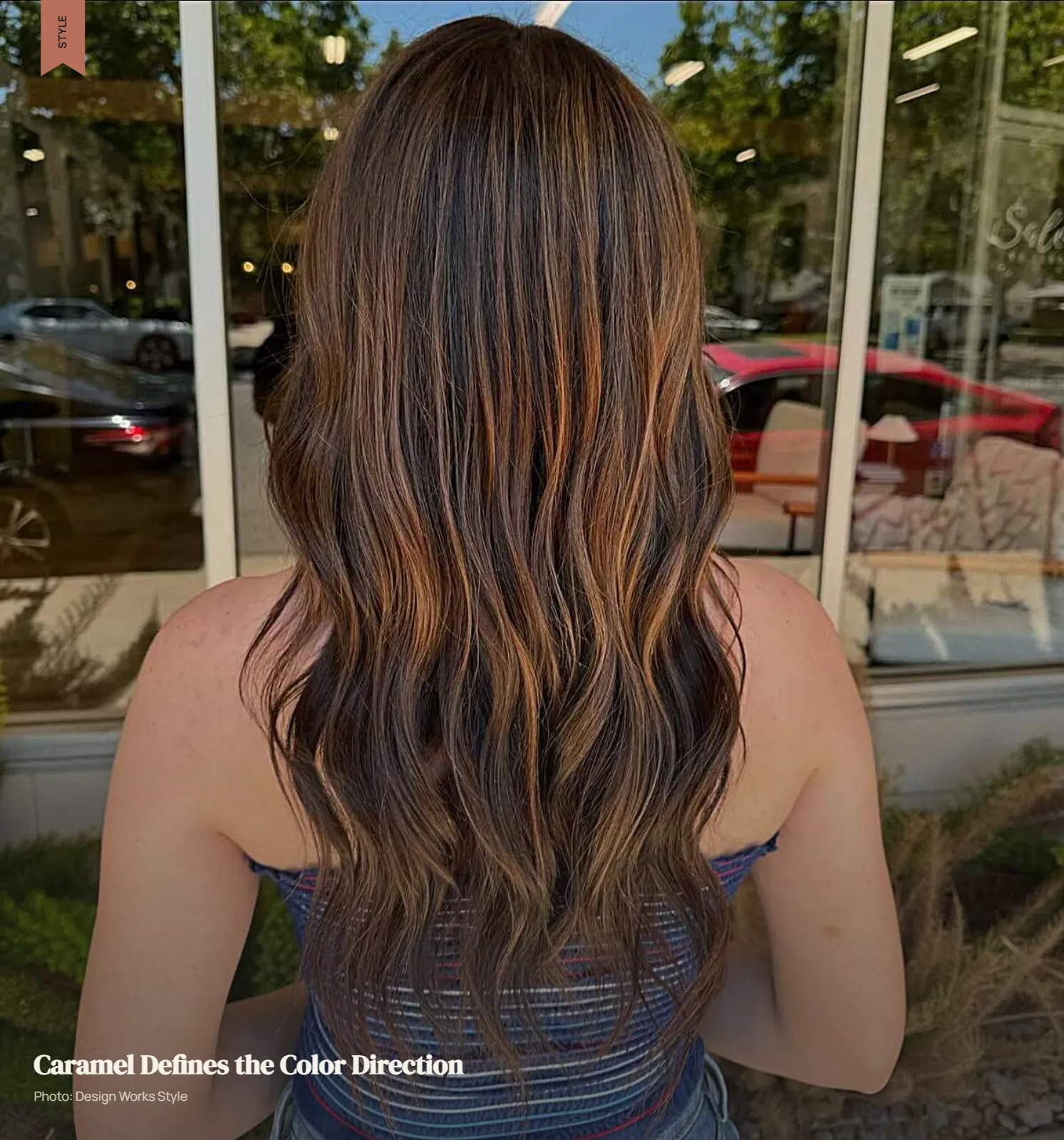
Caramel generally sits in a warm range between brown and golden tones, but the exact appearance can change significantly from one person to another.
A dark brown base with brighter caramel ribbons creates a different effect from medium brown hair with softly blended caramel pieces. The same is true when the brightest color is concentrated around the face instead of distributed evenly through the lengths.
The technique creates the placement. Caramel describes the color direction.
If you are still deciding whether balayage itself is the right coloring approach, start with the broader balayage guide.
Choosing the Right Caramel for Your Base Color
Your starting hair color is one of the biggest factors in how caramel balayage will look.
The same caramel tone can appear more contrasting on dark brown hair and more blended on a lighter brown or dark blonde base. Your existing color also affects what can realistically be achieved during a professional color service.
Caramel Balayage on Dark Brown Hair
A dark brown base can create noticeable contrast against caramel pieces. Depending on the desired result, the caramel can be kept relatively subtle or placed more visibly through selected sections.
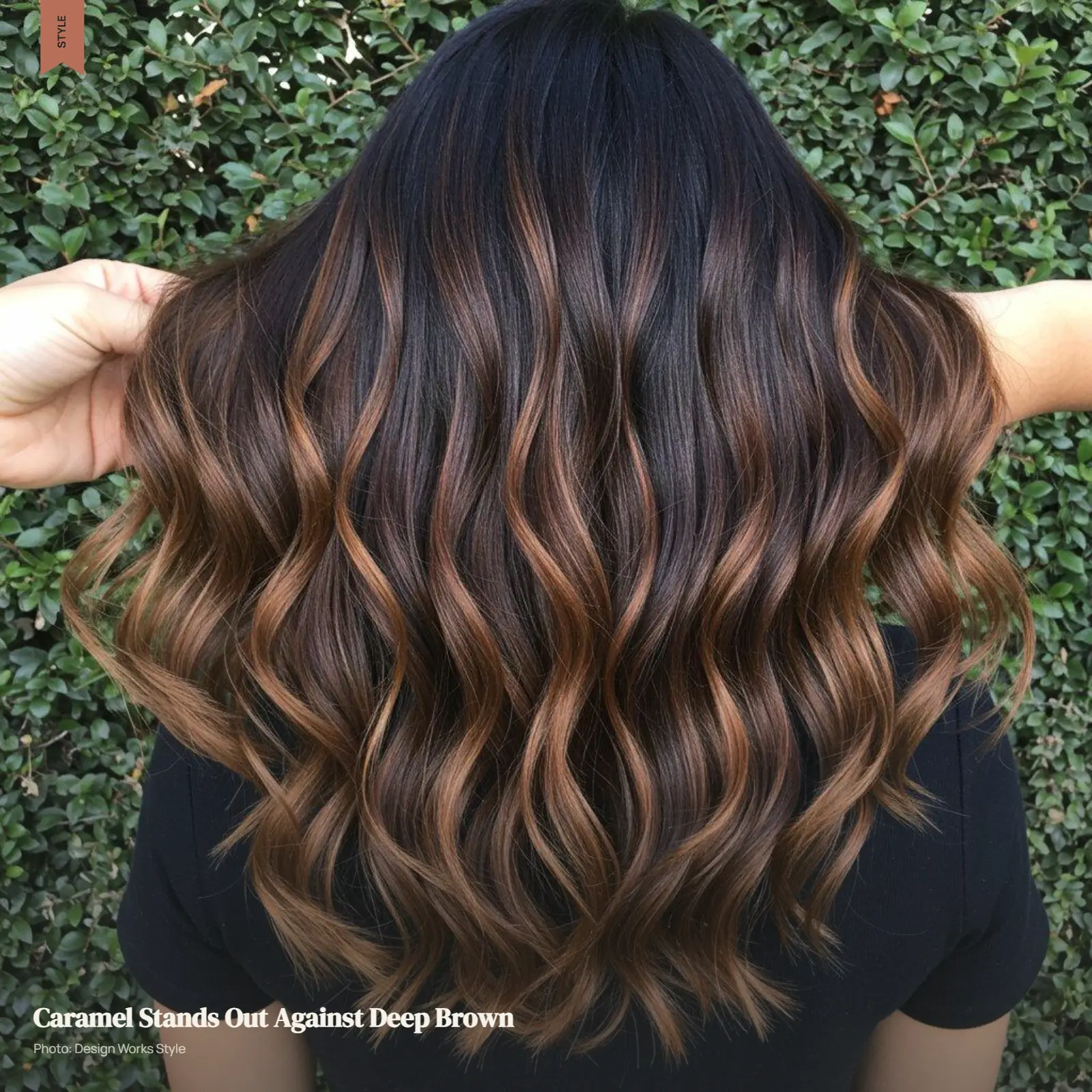
If you want significantly brighter caramel against a deep base, the starting color and previous color history become especially important.
For detailed considerations specific to a dark base, see Caramel Balayage on Dark Hair.
Caramel Balayage on Medium Brown Hair
Medium brown hair can provide a softer transition into many caramel shades because the starting color is already relatively close to the finished direction.
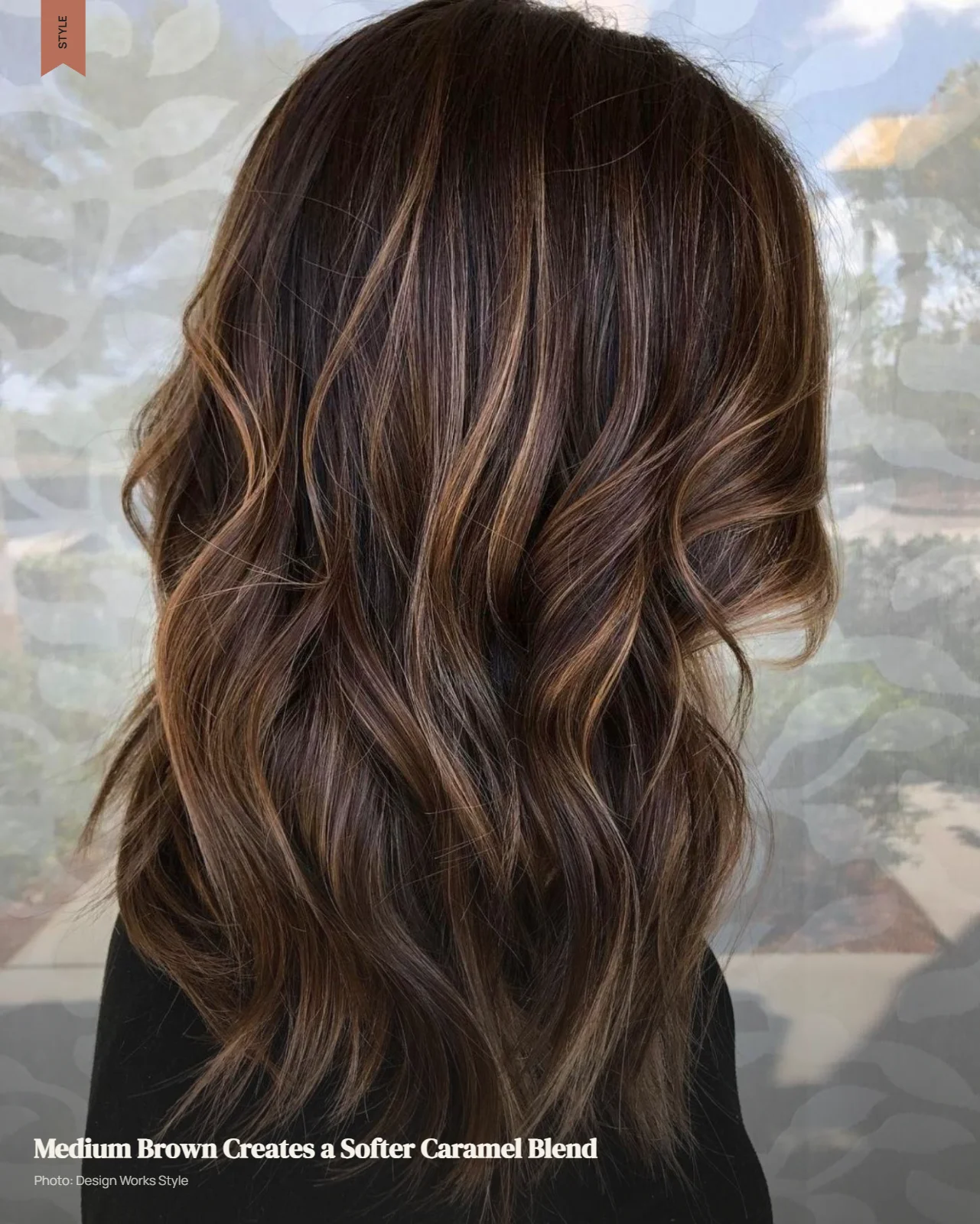
A subtle version might use caramel pieces only slightly lighter than the base. A higher-contrast version can make the lighter ribbons more visible while keeping plenty of brown through the overall look.
Caramel Balayage on Lighter Brown or Dark Blonde Hair
On lighter brown or dark blonde hair, caramel can read more as added warmth and tonal dimension than as a dramatic change in brightness.
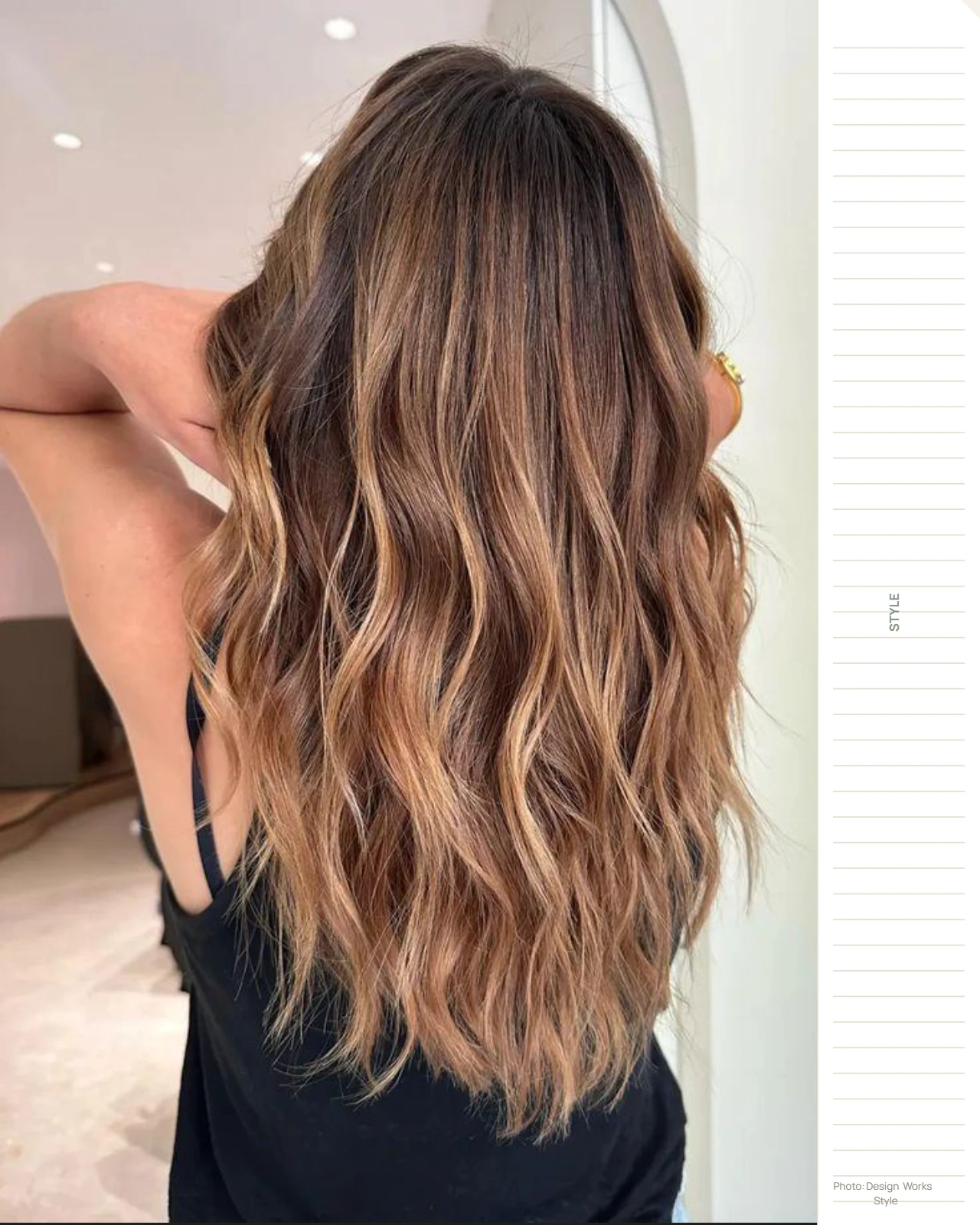
This can be useful if your goal is to make the existing color feel warmer or more dimensional without creating a strong contrast between the base and lighter pieces.
The final tone should still be chosen according to the existing hair, desired appearance, and professional color assessment rather than the base-color label alone.
How Warm Should Caramel Balayage Be?
Caramel is a broad color family rather than one fixed formula.
Depending on the desired finish, caramel balayage can lean toward:
- Golden caramel, with more noticeable golden warmth
- Warm brown caramel, which stays closer to a brunette base
- Honey-caramel, with a lighter and warmer appearance
- Toffee-inspired caramel, with richer brown warmth
- Neutral caramel, where the warmth is more restrained
The closer the chosen caramel is to the existing base, the softer the overall contrast tends to appear. A larger difference between the base and caramel creates a more noticeable result.
Your reference images should therefore show more than a color name. Look for examples where you like both the tone and the amount of contrast.
Subtle or High-Contrast Caramel Balayage?
The biggest visual difference between caramel balayage looks often comes down to contrast.
| Subtle caramel | Higher-contrast caramel |
|---|---|
| Smaller visual shift | More noticeable color change |
| Softer transition | Stronger separation |
| More of the natural base remains visible | Lighter pieces become more prominent |
| Understated dimension | More visible balayage effect |
| Blends closely with the existing color | Creates a stronger difference between base and lighter pieces |
Neither approach is automatically better.
If you want your natural brown to remain the dominant color, subtle caramel may be closer to the direction you have in mind. If you want the caramel to be one of the first things people notice, stronger contrast may make more sense.
The right choice depends on your starting color, desired visibility, and willingness to maintain the result.
Where Should Caramel Balayage Be Placed?
Color placement can change the overall effect just as much as the shade itself.
Rather than thinking only about how light the caramel should be, consider where you want the most visible dimension.
Face-Framing Caramel
Caramel pieces around the front of the hair can create more visible brightness near the face.
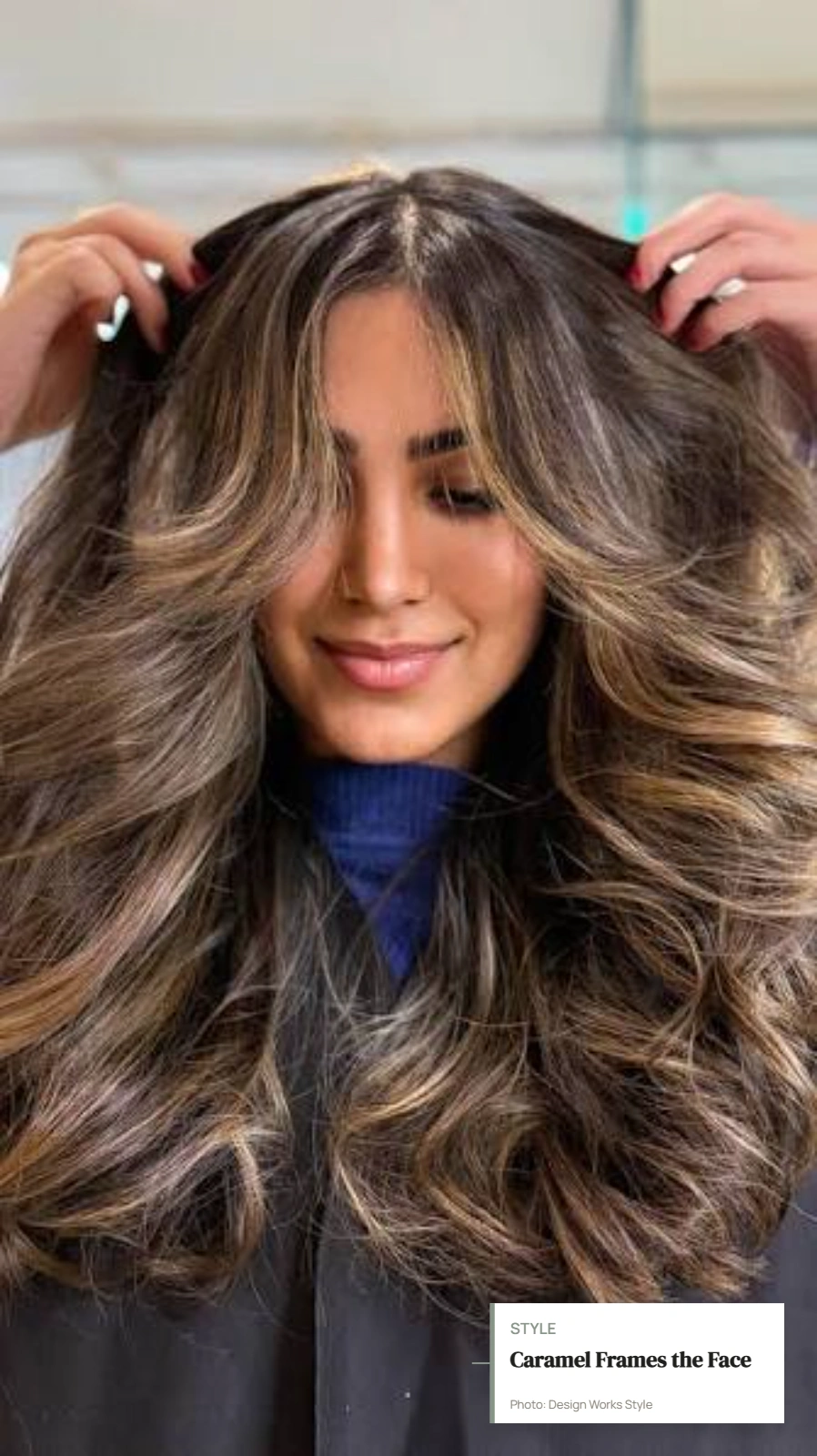
The face-framing sections can be made more noticeable while keeping the rest of the balayage relatively restrained. This creates a focal point without necessarily making the entire head highly contrasted.
How bright or concentrated these pieces should be depends on the desired result and the rest of the hair.
Mid-Length and End Placement
Concentrating caramel through the mid-lengths and ends can create a softer transition, particularly when the root area remains close to the natural or existing color.
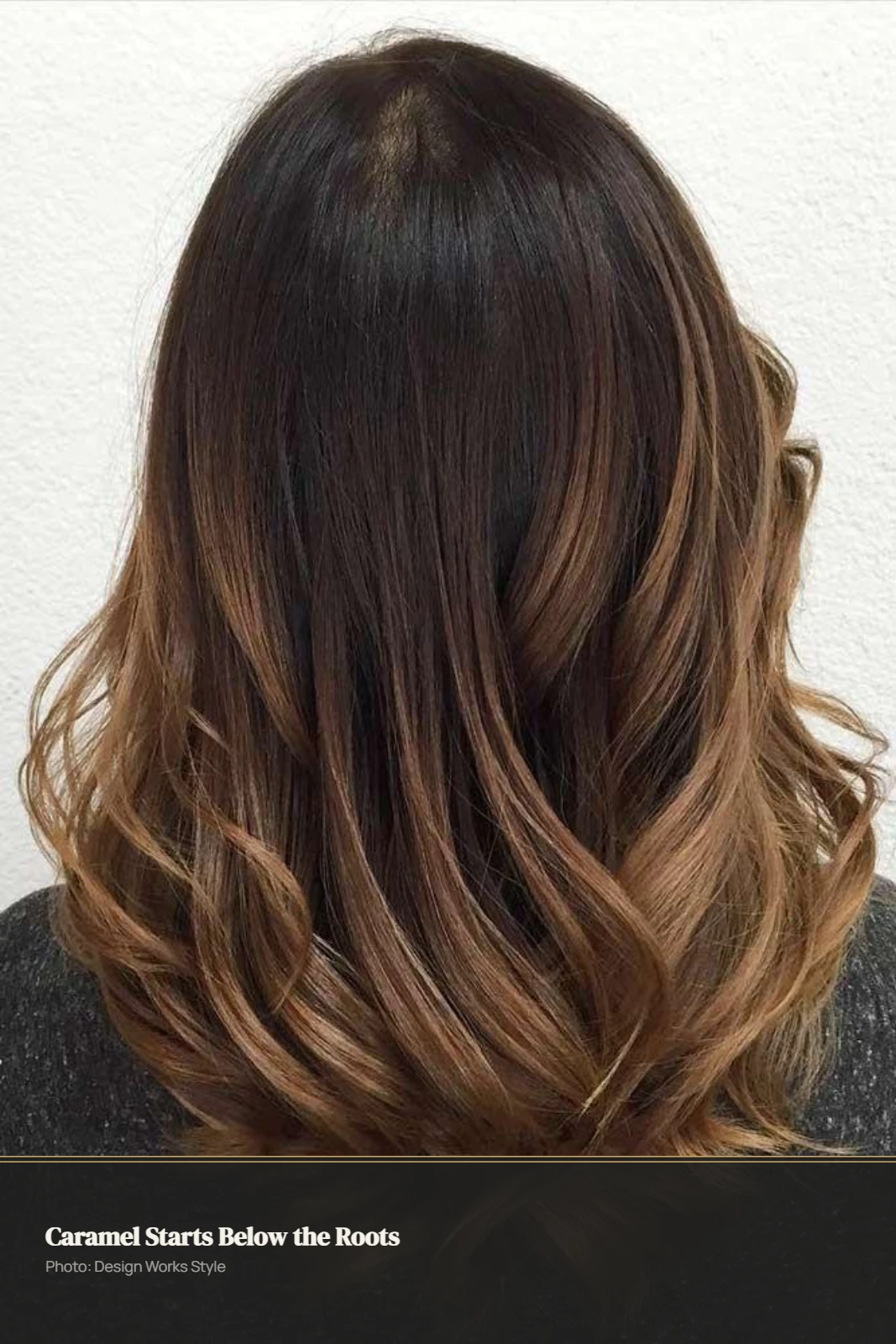
This approach can make the lighter pieces more noticeable when the hair moves while keeping the overall root area darker.
Scattered Caramel Ribbons
Smaller pieces distributed through different sections can create dimension without making the color appear uniform.
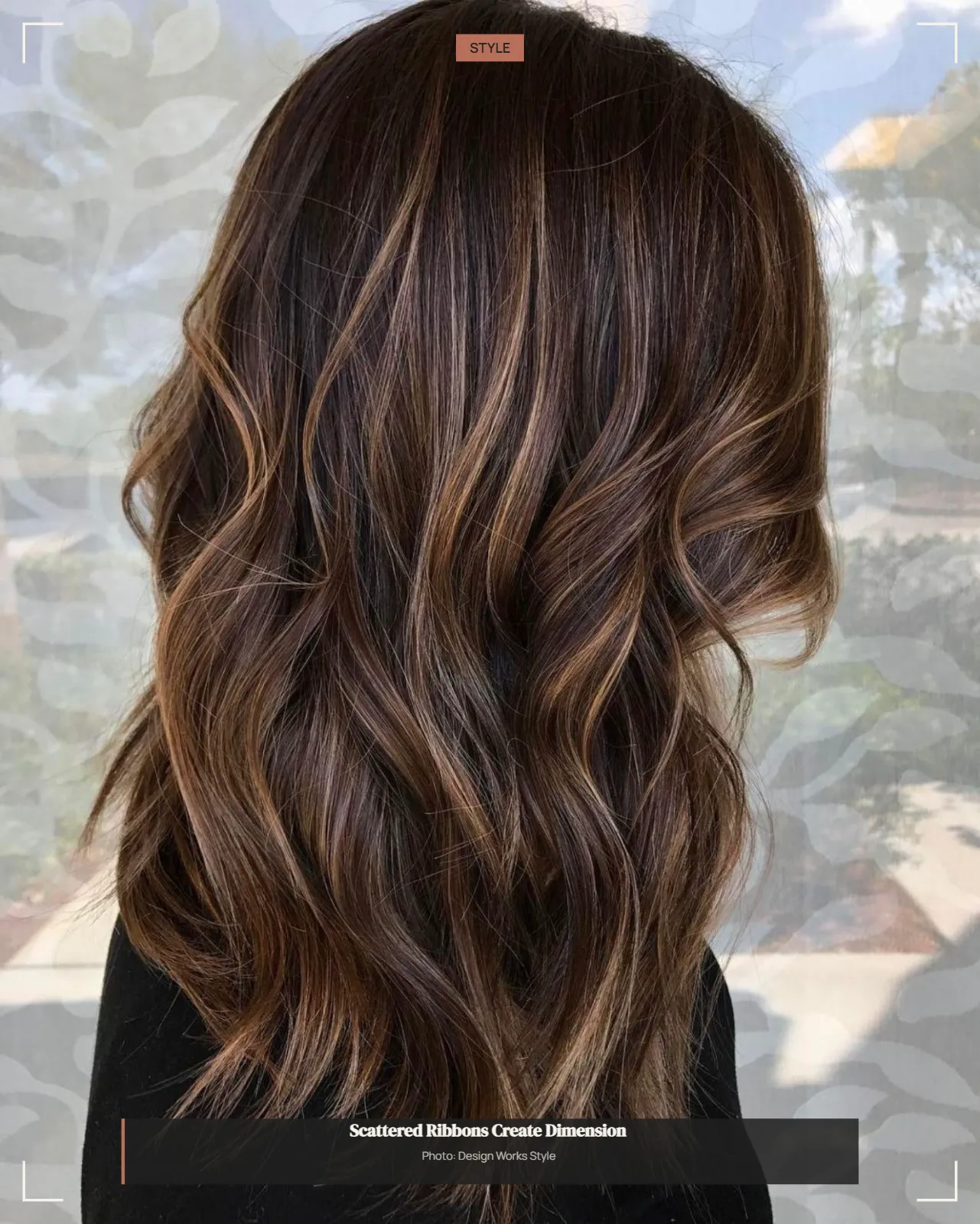
This can be useful when you want visible variation rather than a large block of lighter color.
The spacing and size of the pieces can be adjusted according to the haircut and the amount of contrast you want.
Root-Softened Placement
Keeping the color transition soft near the root can affect how noticeable regrowth becomes.
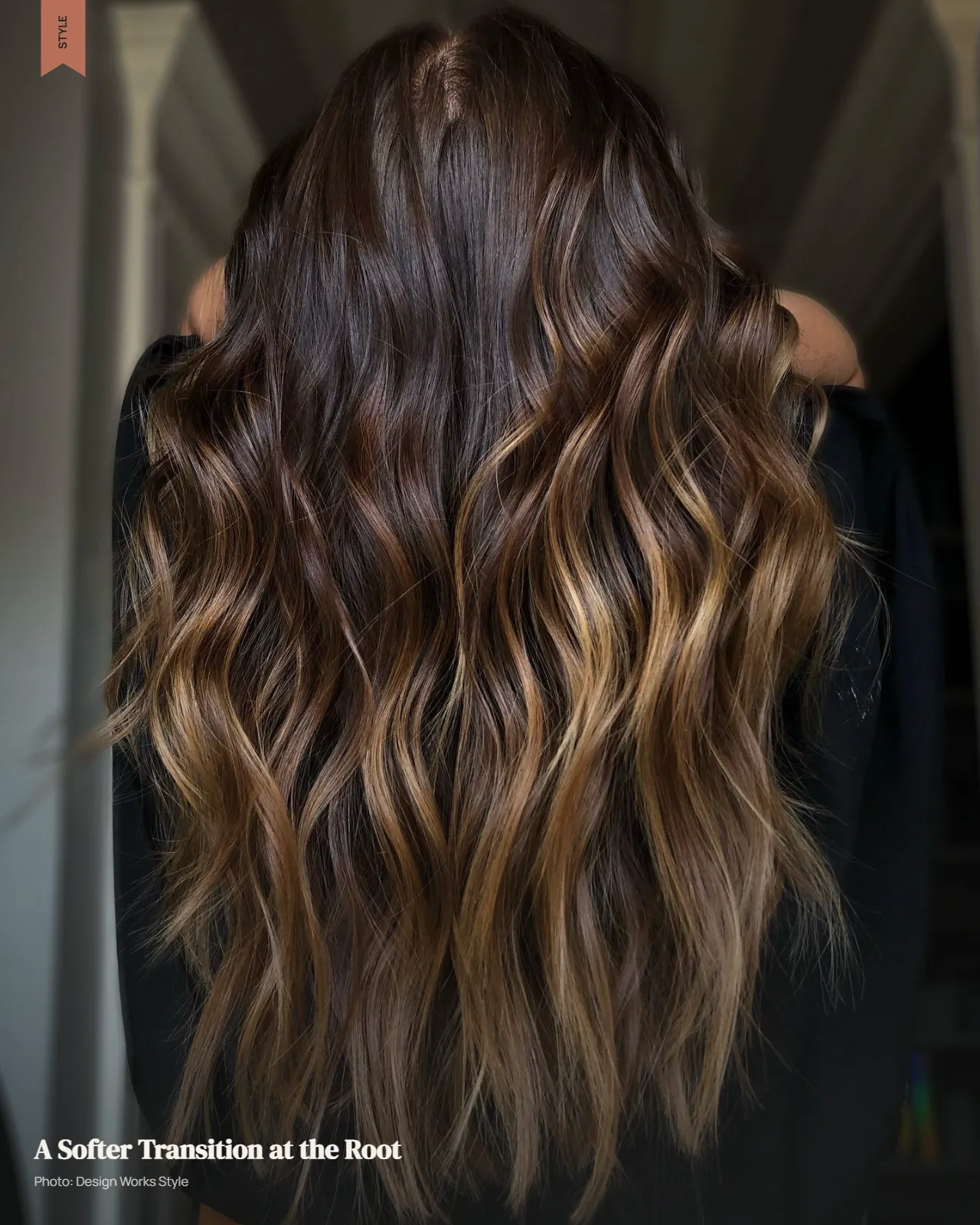
However, placement does not eliminate maintenance. Hair growth, fading, tone changes, and your preferred level of brightness can all determine when you want the color refreshed.
Caramel Balayage Ideas to Consider
The best reference photos do more than show a pretty color. They help communicate the relationship between the base, caramel tone, contrast, and placement.
Soft Caramel on Medium Brown
A medium brown base with softly blended caramel creates low-to-moderate contrast.
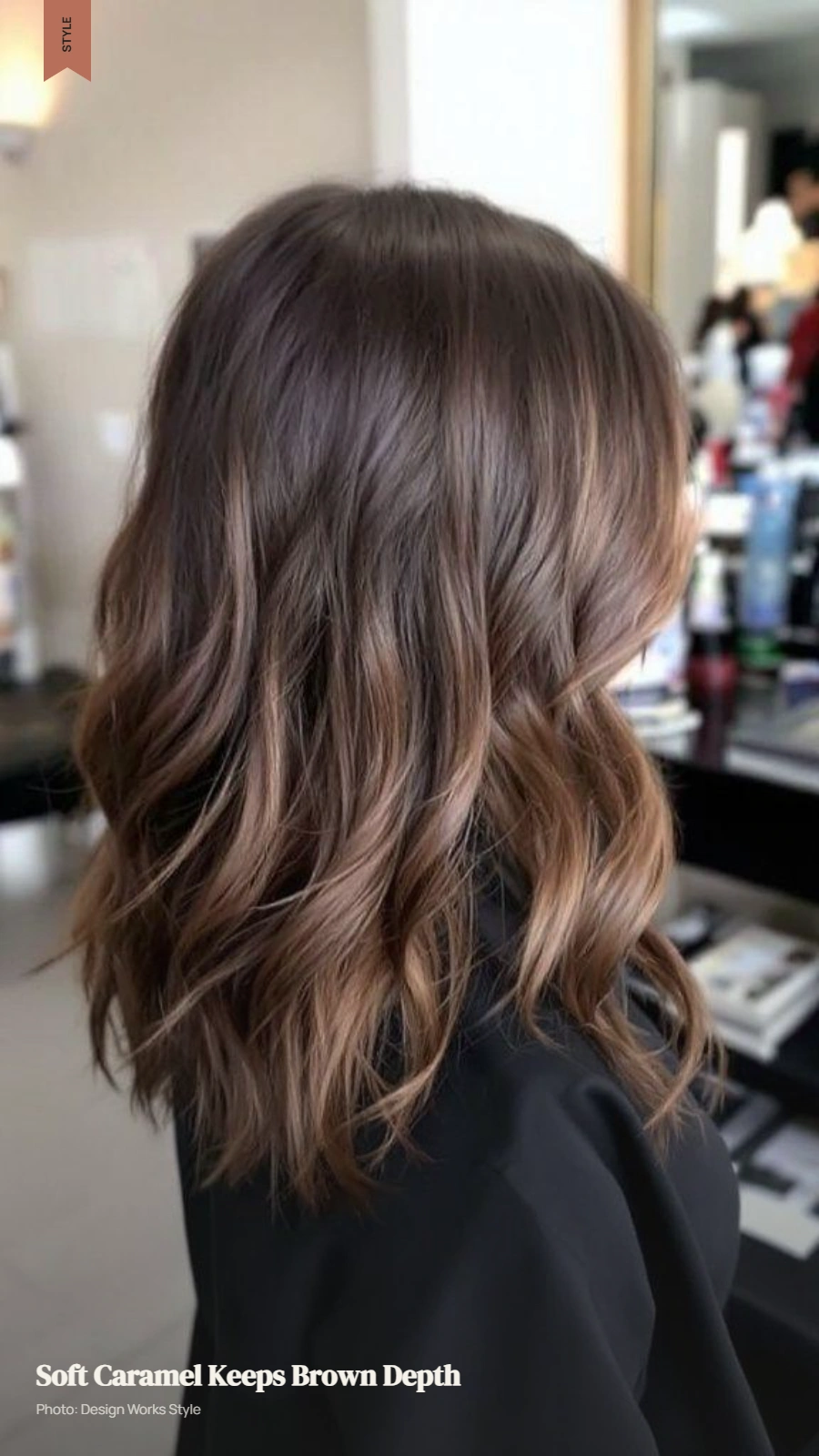
Most of the natural depth remains visible, while warmer pieces add dimension through selected areas.
Deep Brown With Caramel Ribbons
A deep brown base paired with more visible caramel ribbons creates stronger contrast.
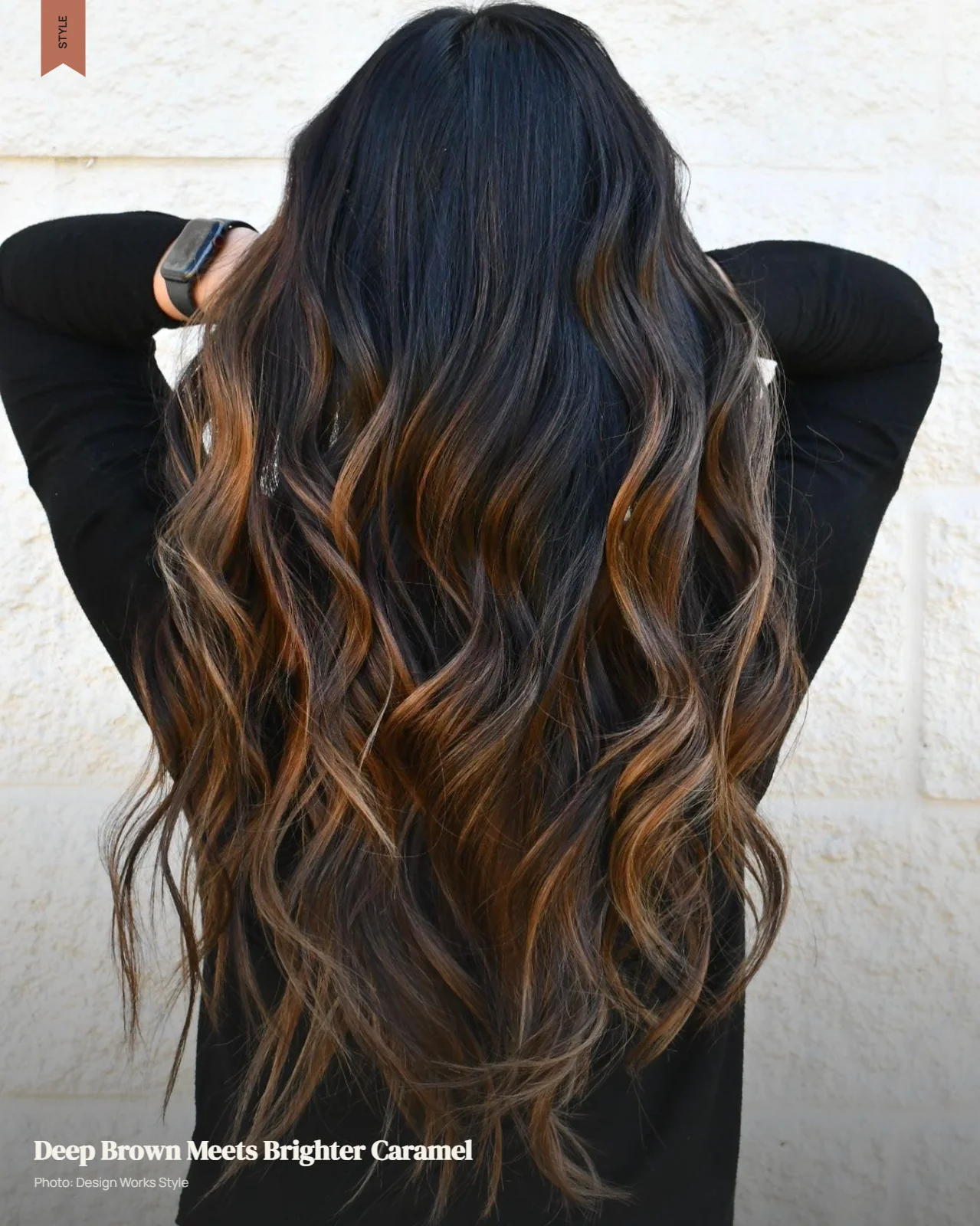
The darker base remains important to the overall look, while the caramel pieces provide clearer points of brightness.
Face-Framing Caramel
Here, the most noticeable caramel is concentrated around the front.
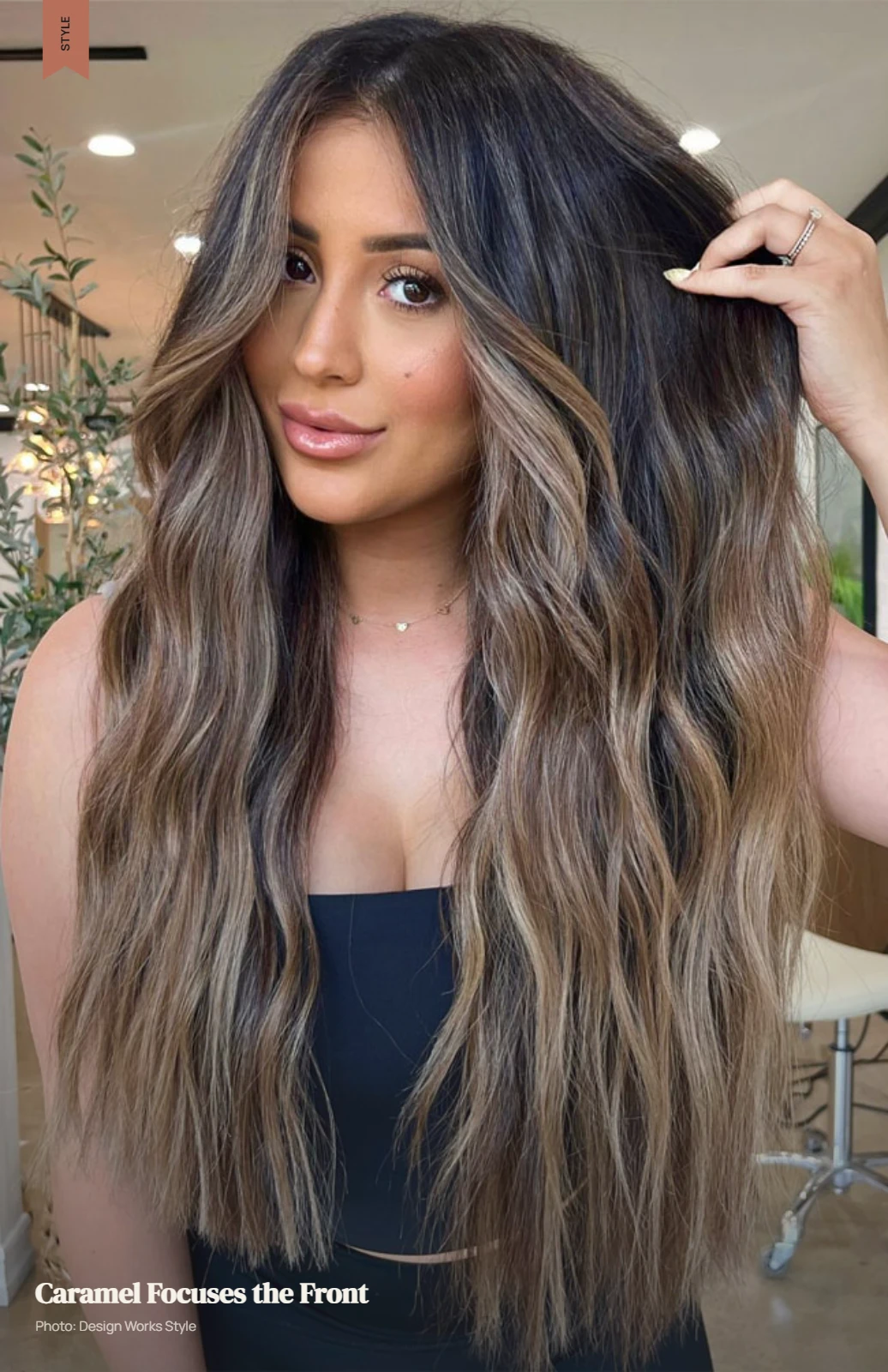
The rest of the hair can use more restrained placement, creating a stronger visual focus without requiring equally bright pieces everywhere.
Caramel Through the Ends
Caramel concentrated toward the lower lengths creates a softer progression from the darker root area into lighter ends.
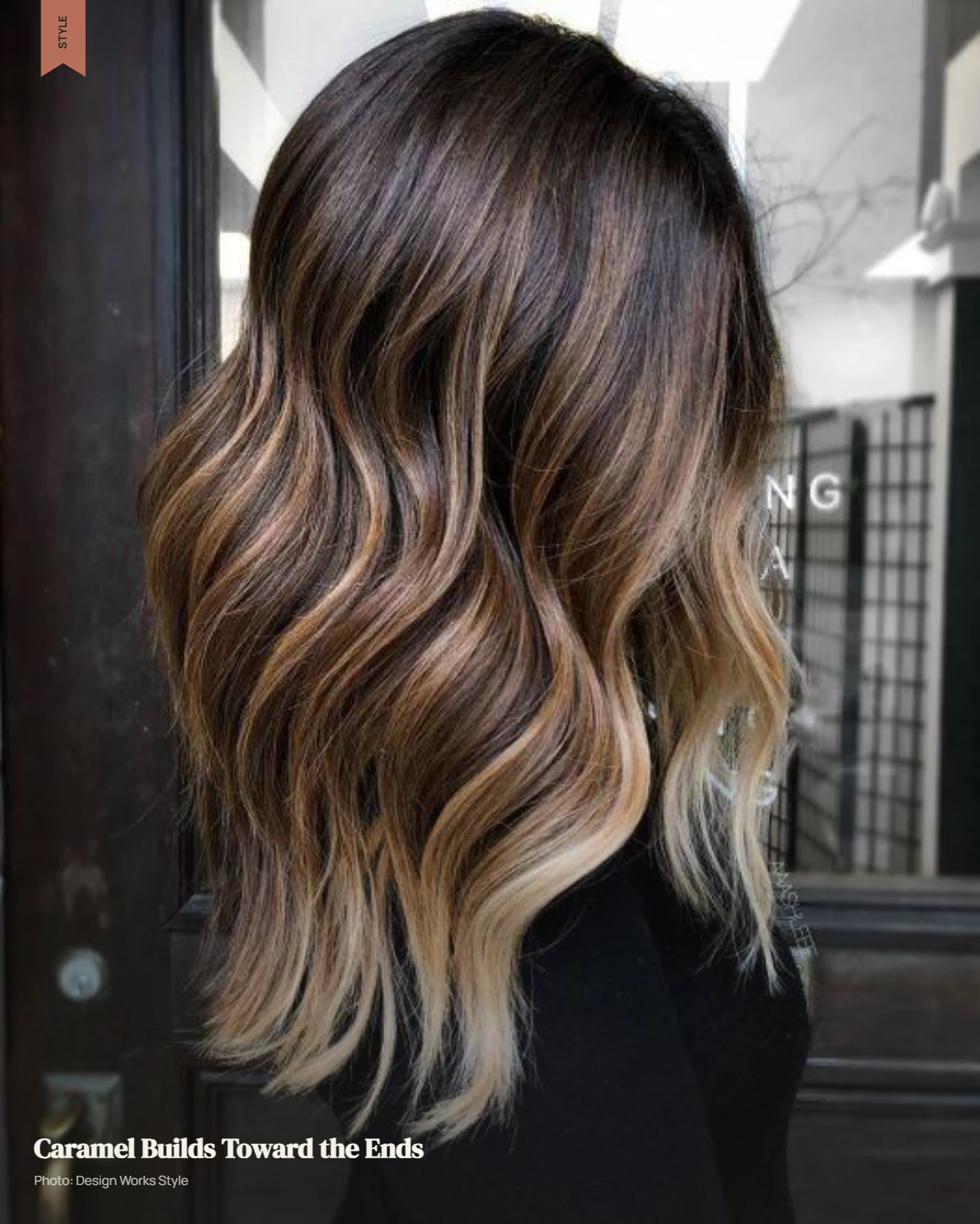
This can be useful when you want dimension without making the root area the main focus.
Dimensional Caramel and Brown
Instead of making the entire result progressively lighter, the color can use variation between brown and caramel to create depth.
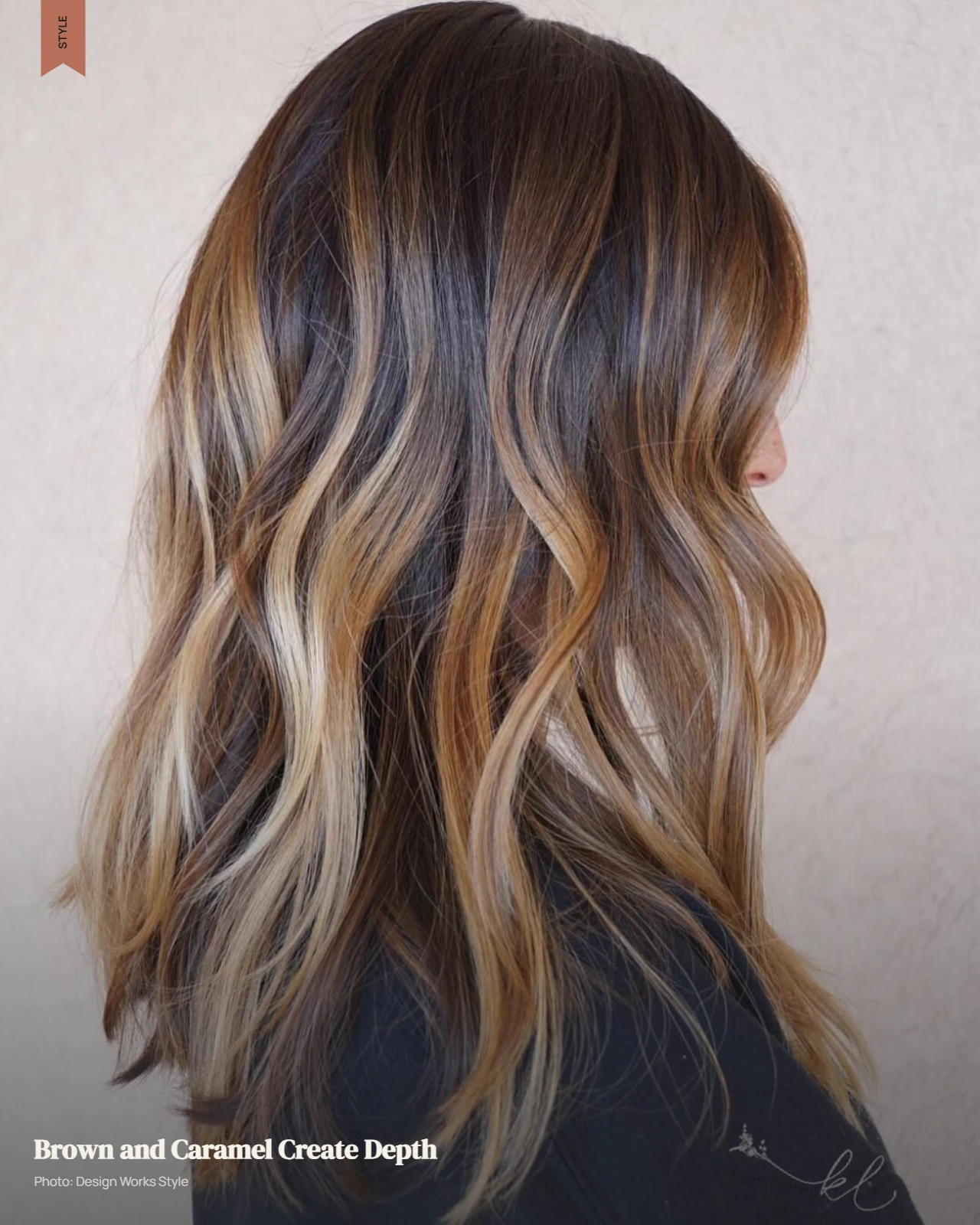
This keeps multiple tones visible rather than turning the hair into one overall lighter shade.
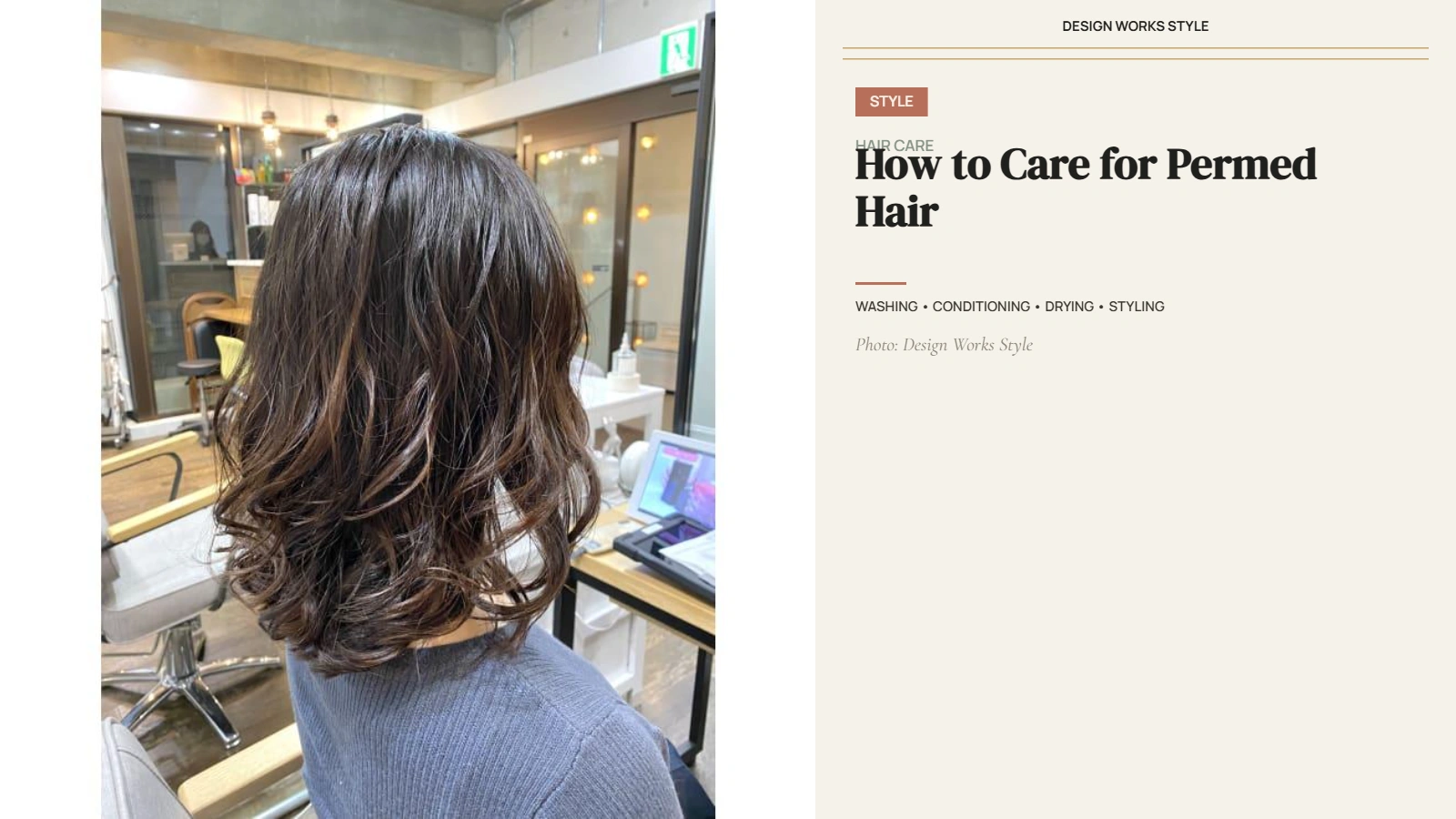
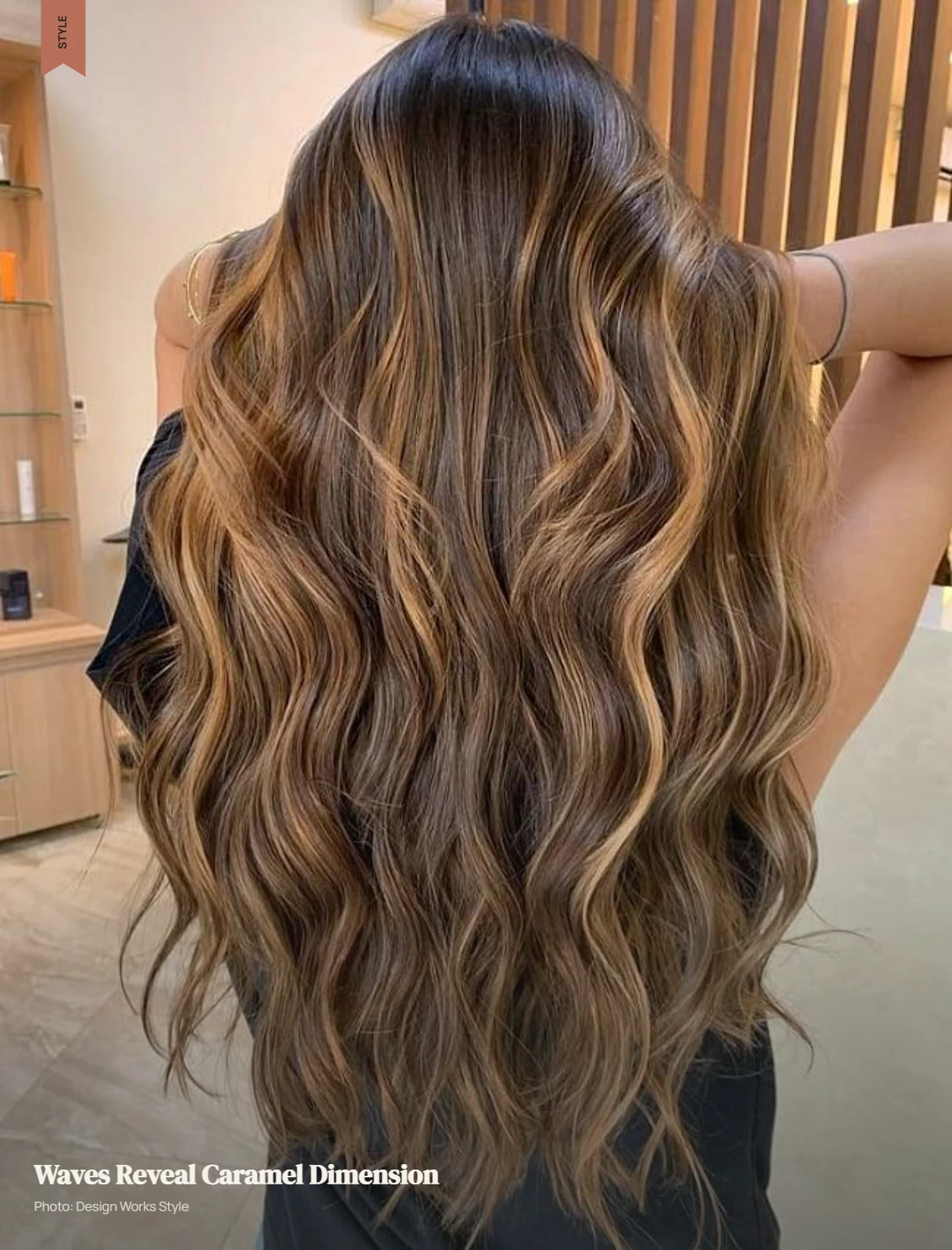
Wavy Hair With Caramel Dimension
Natural waves can make different sections of color more visible as the hair bends and moves.
Placement should account for the way the hair naturally falls so the finished dimension works with the texture rather than against it.
Is Caramel Balayage Right for Your Hair?
Caramel balayage can be customized, but your starting hair and desired result still set practical limits.
Starting Color
The existing base affects how much contrast the caramel creates.
A caramel shade that looks subtle on medium brown hair may appear much more noticeable against a deeper brown base.
Previous Color
Tell your stylist about previous dye, highlights, bleaching, or other chemical services.
Existing color can affect what is achievable and how the final result develops.
Hair Condition
Lightening can affect hair condition, particularly when the hair has already undergone significant processing.
If your hair has been heavily processed or you are unsure about its condition, a professional assessment is important before deciding on the service.
Desired Maintenance
A softer transition can reduce the visual impact of growing roots, but caramel balayage still requires maintenance if you want to preserve a particular tone or level of brightness.
Consider how much upkeep you are comfortable with before choosing very bright or root-focused placement.
Desired Level of Change
Ask yourself which of these is closest to what you want:
- A subtle warmth shift
- Noticeable dimension
- Strong caramel contrast
- Bright face-framing pieces
This makes it easier to communicate your expectations during a consultation.
What to Ask for at Your Balayage Appointment
Instead of asking only for “caramel balayage,” describe the tone and placement you want.
Useful questions include:
- What caramel tone would work with my current base?
- How warm should the caramel be?
- How much contrast should we create?
- Where should the lightest pieces go?
- Should the face-framing pieces be brighter?
- How much of my natural color should remain visible?
- What will the grow-out look like?
- What maintenance will this placement require?
- Will my previous color affect the result?
Bring reference photos that show the tone, contrast, and placement you like.
Two photos can both be labeled “caramel balayage” while producing very different results. Showing your stylist what you like about each example gives them more useful information than the color name alone.
How to Maintain Caramel Balayage
Caramel balayage maintenance depends on how bright the color is, where it was placed, how quickly your hair grows, and how closely you want to preserve the original result.
General care can include:
- Using products intended for color-treated hair
- Conditioning regularly
- Using heat protection before hot styling
- Addressing unwanted tonal changes
- Scheduling professional toning or glossing when appropriate
- Refreshing the balayage when the brightness or contrast no longer matches your preference
There is no single maintenance schedule that applies to every caramel balayage.
A softly blended result with limited root placement may look acceptable as it grows out, while brighter or more precisely toned color may need attention sooner.
For broader guidance on caring for balayage-treated hair, see Balayage Hair Care.
How Long Does Caramel Balayage Last?
Caramel balayage does not have one fixed lifespan.
The visible color can remain for a long time, but when you want a refresh depends on several factors:
- Where the balayage was placed
- Your starting hair color
- How much the hair was lightened
- How quickly your hair grows
- How bright you want the caramel to remain
- How the tone changes over time
- Your home-care routine
- How closely you want to maintain the original contrast
There is a difference between still having visible caramel and having caramel that looks freshly refreshed.
A blended balayage may remain wearable as it grows, while changes in tone or a preference for brighter pieces can make you want a professional refresh earlier.
Common Questions About Caramel Balayage
Is caramel balayage warm or cool?
Caramel generally sits on the warmer side of the color spectrum, although the finished tone can be made more muted or neutral. The exact result depends on the starting hair and the tone selected during the professional color service.
Can caramel balayage work on dark hair?
Yes. Caramel can create noticeable dimension against a dark base, but the starting color, previous processing, hair condition, and desired brightness affect the achievable result. See the dedicated Caramel Balayage on Dark Hair guide for more specific information.
Can caramel balayage be subtle?
Yes. A smaller difference between the base and caramel, combined with softer placement, can create understated dimension while keeping more of the natural color visible.
Does caramel balayage require frequent touch-ups?
Not necessarily. A softer transition can make regrowth less noticeable, but maintenance still depends on placement, brightness, tone, hair growth, and how closely you want to maintain the original appearance.
Can caramel balayage work on curly or wavy hair?
Yes. Placement can be adapted to natural movement and texture. Waves and curls can also change how different caramel pieces become visible as the hair moves.
Understand Balayage Before Choosing Your Color
Caramel is one color direction within the broader balayage technique. If you are still deciding between different balayage approaches, start with the broader Balayage guide.
It explains the overall technique, how balayage differs from traditional highlights, the major color variations, and the factors to consider before choosing a specific directio
Frequently Asked Questions
What is caramel balayage?
Warm golden-brown tones hand-painted through the hair for a sun-kissed, dimensional look. Softer than traditional highlights and warmer than ash shades.
Is caramel balayage high maintenance?
Medium. The grow-out is forgiving, but warm tones fade and brass creeps in, so toning products and refresh appointments are part of the deal.
What base hair color works best?
Medium to dark brown is ideal. Very dark hair needs more lift; blonde hair can go caramel but it may read more as lowlights.
How do I ask for it at the salon?
Say caramel balayage, show photos of the exact warmth level you want, and discuss how much contrast you want around your face. Words mean different things to different stylists; photos do not.