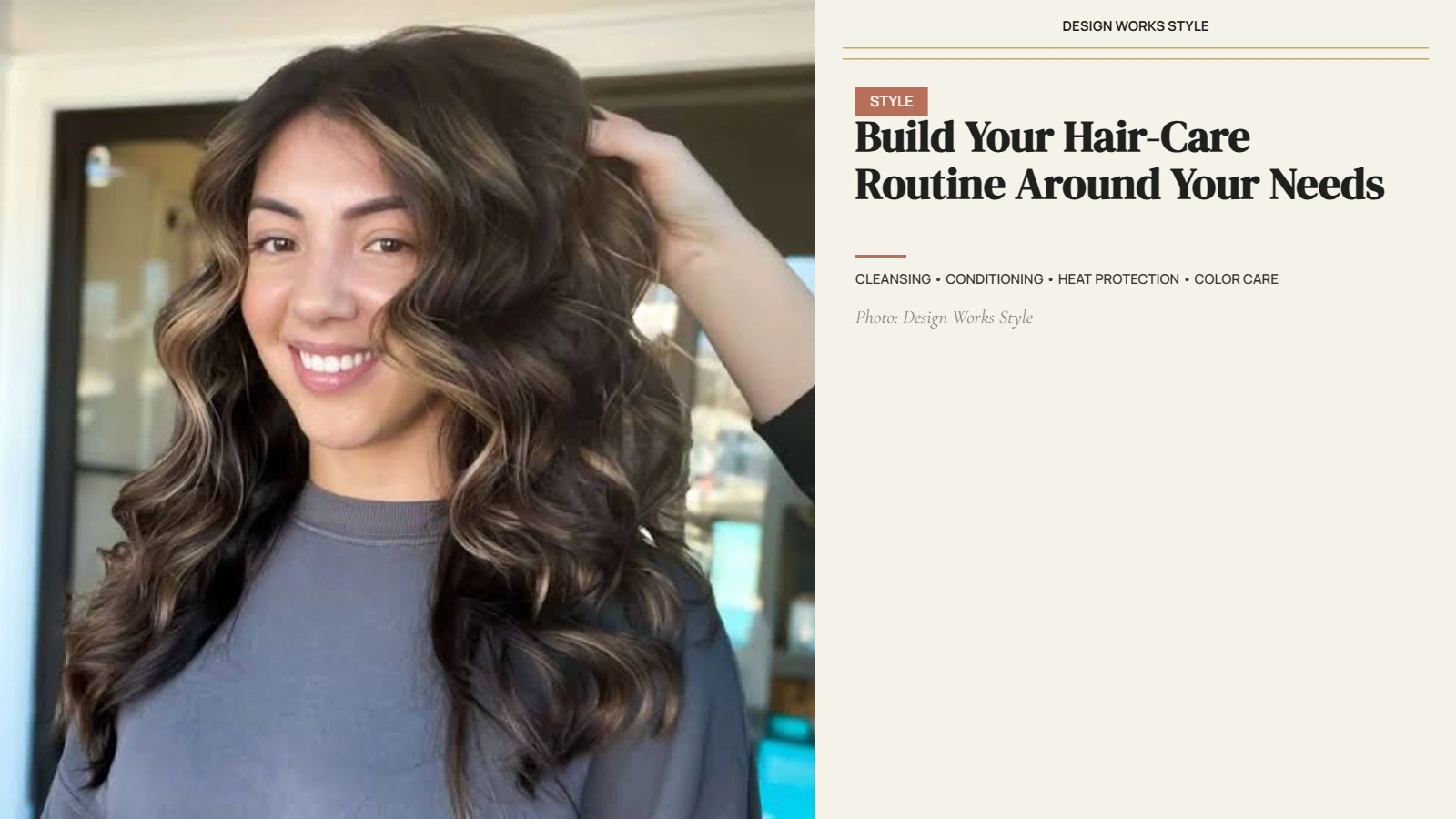

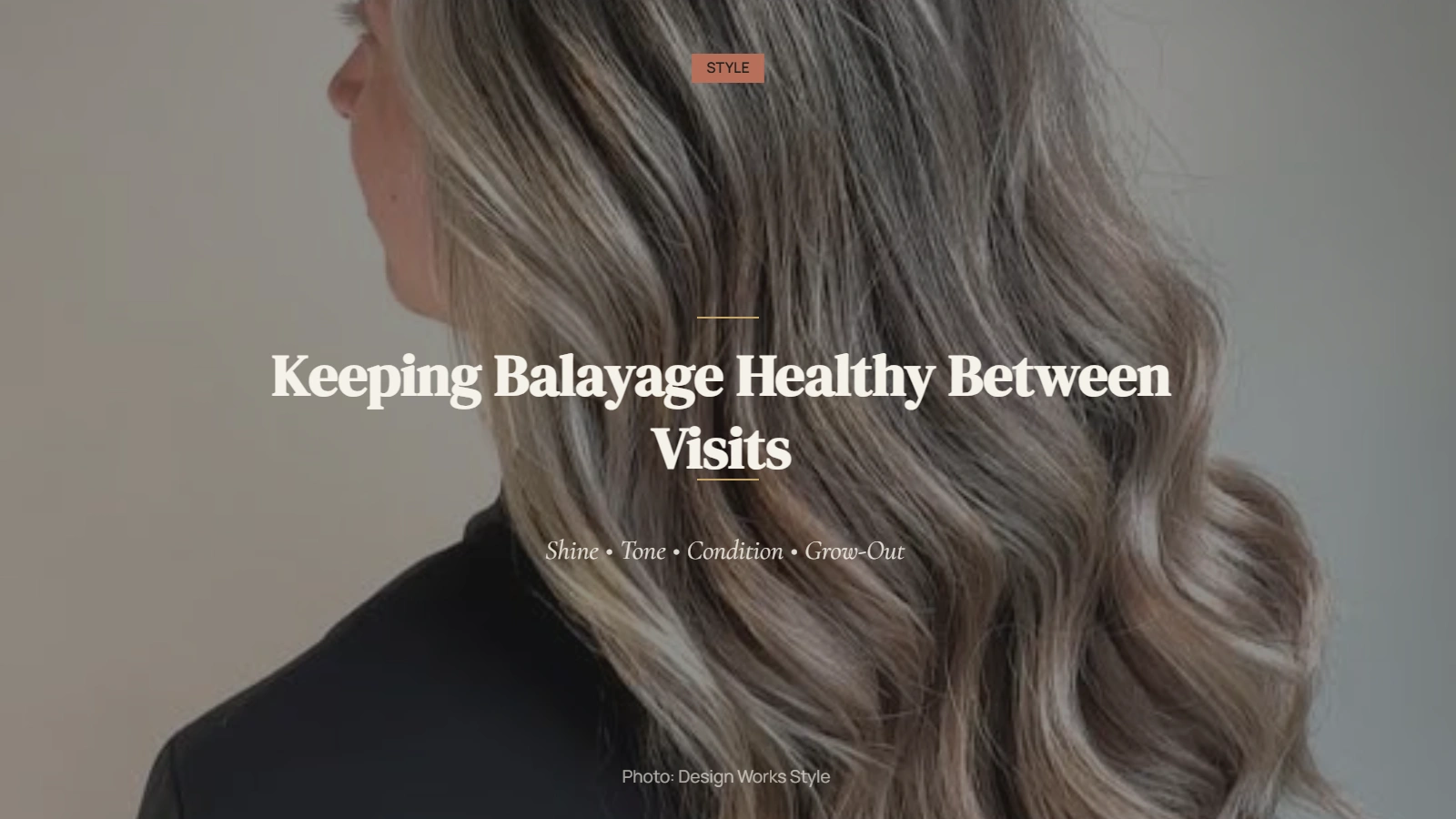
Good balayage maintenance is less about following a fixed schedule and more about responding to how your color and hair change over time.
A practical routine includes washing according to your scalp and hair needs, conditioning the lighter sections, limiting unnecessary heat, protecting your hair from prolonged environmental exposure, and paying attention to changes in tone and condition. A salon refresh may eventually make sense, but there is no single appointment schedule that works for everyone.
How often you need maintenance can depend on how light your balayage is, how much hair was lightened, how frequently you wash and style it, environmental exposure, your desired level of brightness, and how your hair is holding up.
Start With the Right Everyday Routine
Balayage does not require an entirely different hair-care routine. The important difference is that the lightened sections may need more attention than your natural hair.
Your scalp still needs appropriate cleansing, while the mid-lengths and ends may benefit from more conditioning and gentler handling.
Wash your hair according to how quickly your scalp becomes oily or dirty and what your hair needs. There is no universal number of washes per week that applies to every balayage client. Dermatologists similarly recommend adjusting washing frequency to factors such as hair type, scalp oiliness and how quickly the hair becomes dirty.
During your routine:
- Cleanse the scalp rather than aggressively scrubbing the full length of the hair.
- Condition the lengths and ends after washing.
- Detangle gently, particularly when the hair is wet.
- Avoid rough towel drying.
- Give the hair some time to air-dry when practical.
- Use controlled heat when styling rather than automatically choosing the highest setting.
The goal is not to avoid washing or styling altogether. It is to avoid unnecessary stress on already lightened sections.
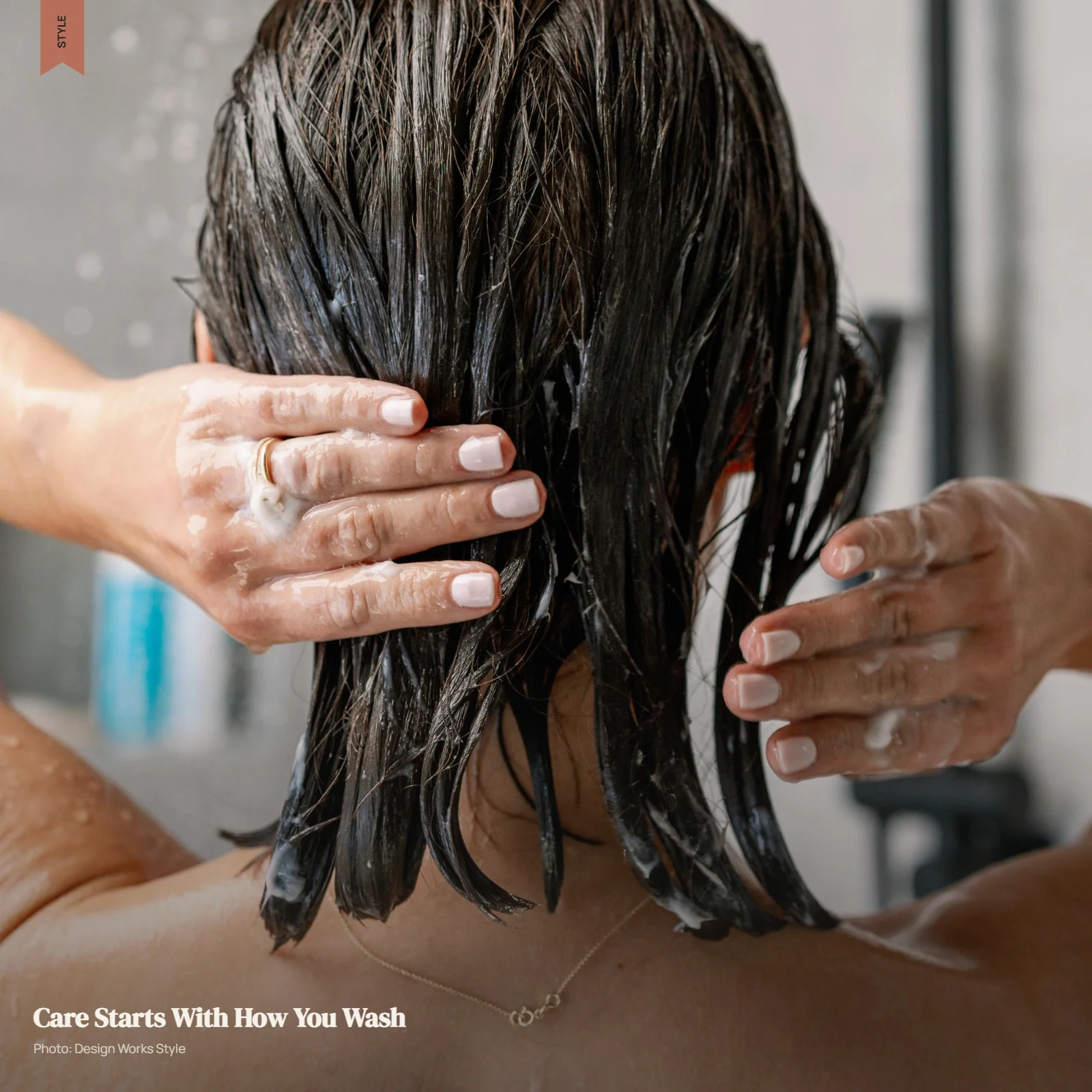
How to Wash Balayage Hair Without Unnecessary Fading
Washing is a normal part of maintaining balayage. The technique matters more than trying to avoid shampoo entirely.
Start by thoroughly wetting the hair. Apply shampoo primarily to the scalp and areas that need cleansing. As you rinse, the shampoo and water will pass through the lengths without requiring aggressive scrubbing.
Follow with conditioner through the mid-lengths and ends, paying particular attention to the lighter sections.
A simple washing sequence is:
- Wet the hair thoroughly.
- Cleanse the scalp gently.
- Rinse thoroughly.
- Apply conditioner to the lengths and ends.
- Detangle carefully.
- Rinse and dry without excessive rubbing.
The American Academy of Dermatology recommends applying shampoo to the scalp rather than the entire length and using conditioner after washing. It also recommends gentle handling because wet hair can be more vulnerable to breakage.
If you are deciding what cleansing products to use, see our guide to the best shampoo for balayage hair rather than treating one shampoo as a universal solution.
Condition the Parts of the Hair That Need the Most Care
Conditioner is particularly useful on the mid-lengths and ends, where hair is older and may have received more lightening.
Work conditioner through the sections that feel dry or difficult to detangle rather than concentrating it unnecessarily on the scalp.
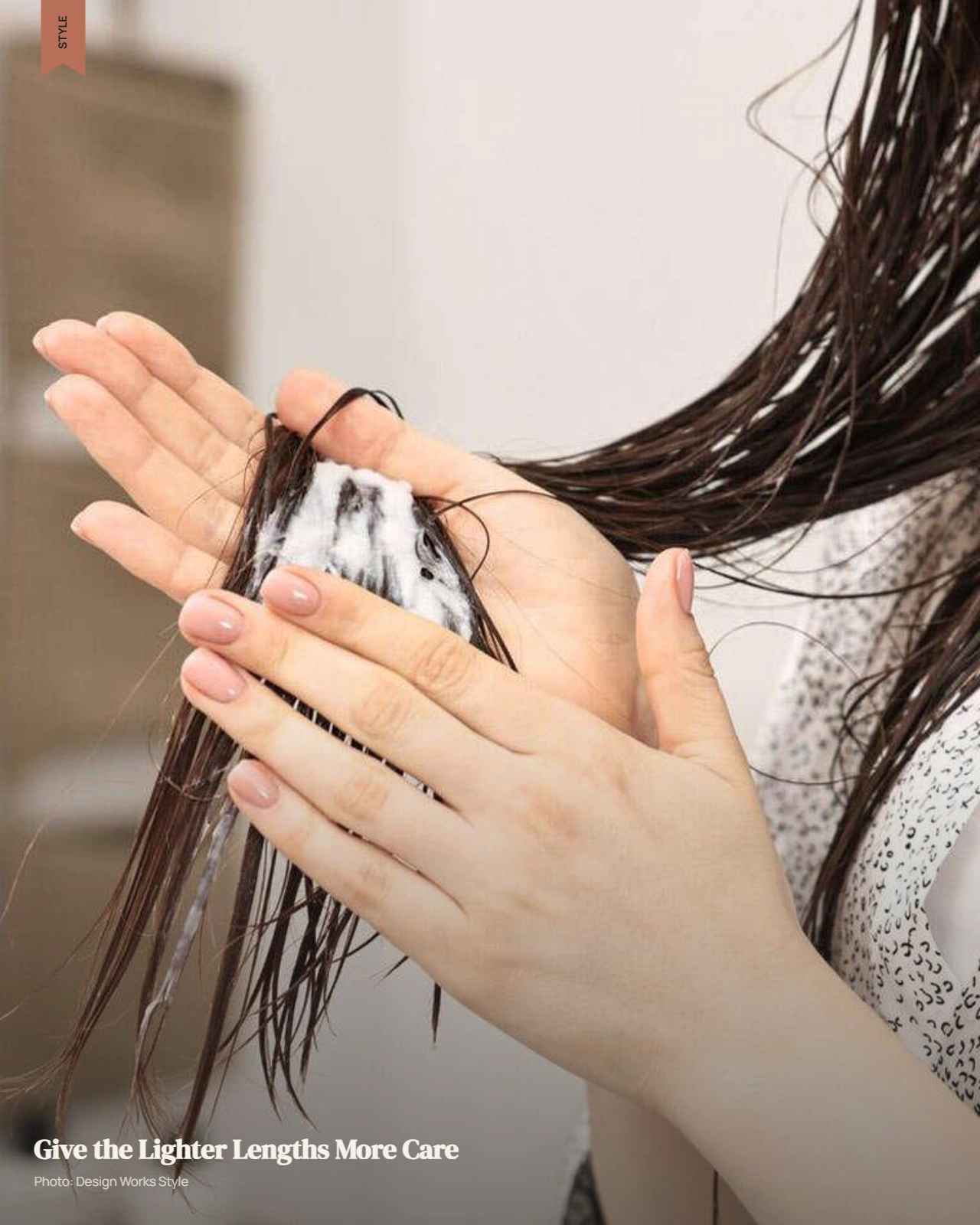
The ends may need more attention because they have been exposed to more washing, brushing, styling and environmental stress over time. If your hair is fine or easily weighed down, you may prefer a lighter conditioner. If it is coarse, dry or difficult to manage, a richer conditioning product may be more appropriate.
Detangle gently rather than pulling through knots. A wide-tooth comb can be useful, and the American Academy of Dermatology recommends minimizing rough handling of wet hair.
Heat Styling Can Change How Your Balayage Looks
Heat styling does not automatically mean you need to stop using your blow dryer, flat iron or curling iron. The issue is repeated or excessive heat, particularly on sections that have already been lightened.
Before heat styling, use a product designed to provide heat protection. Keep the temperature controlled and avoid repeatedly passing a hot tool over the same section.
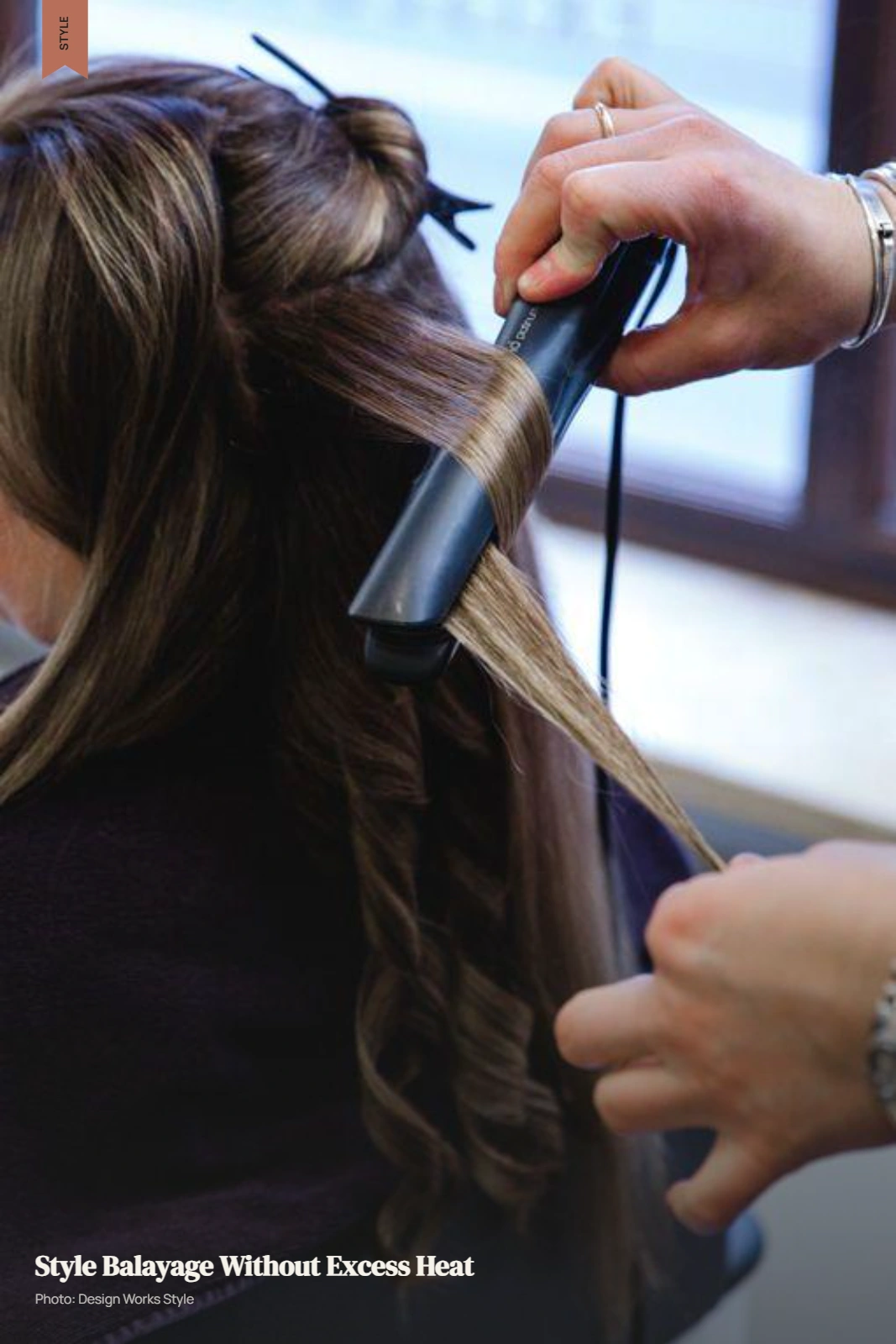
If you are blow-drying, allowing some moisture to leave the hair naturally before using concentrated heat can reduce the amount of time spent under the dryer. For flat irons and curling irons, use them on dry hair and avoid unnecessarily high temperatures.
The American Academy of Dermatology notes that excessive heat can damage hair and recommends limiting heat styling, using low or medium settings and reducing repeated exposure.
What About Sun, Pool Water and Other Environmental Exposure?
Your balayage also spends time outside your bathroom.
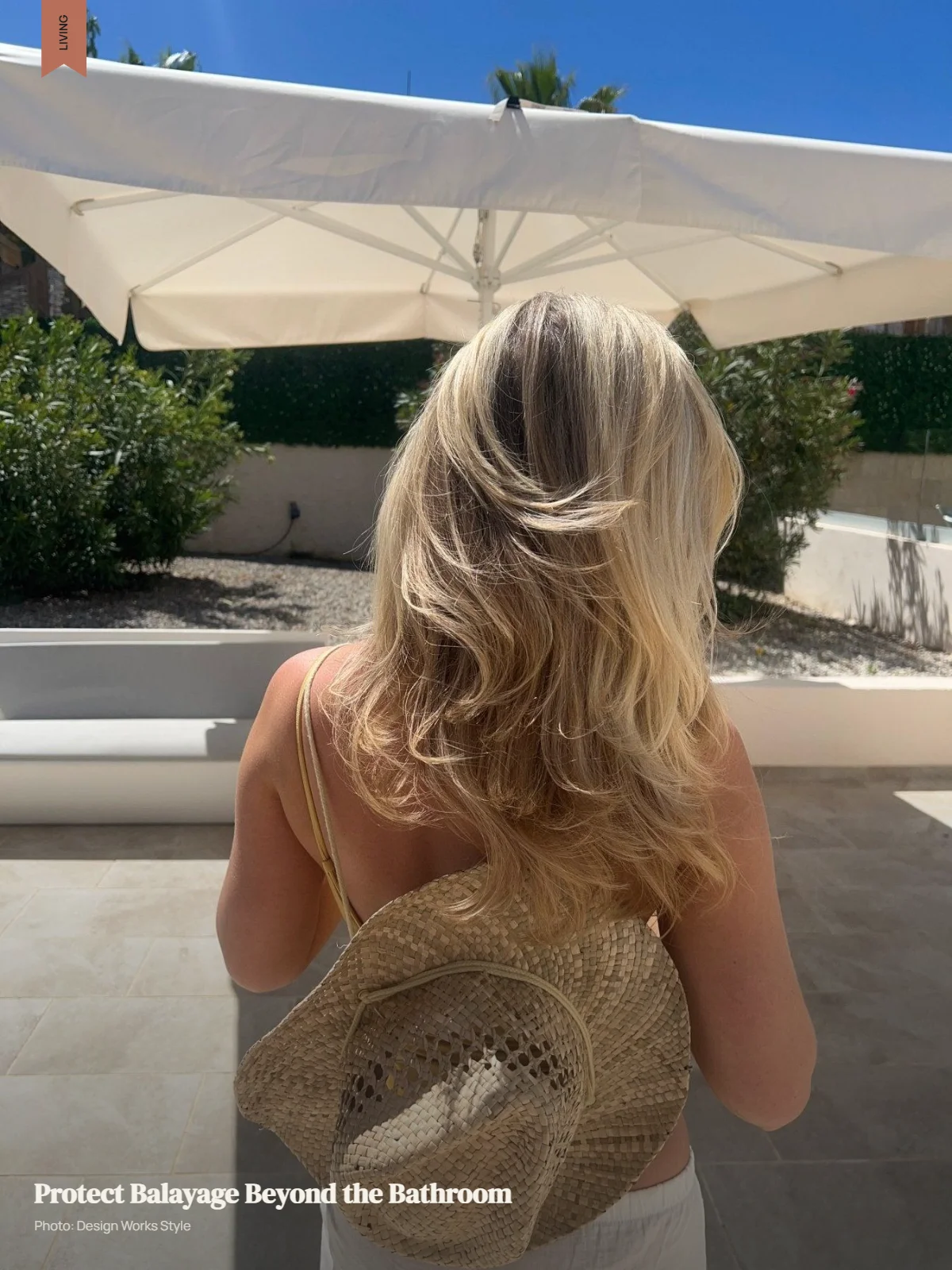
Prolonged sun exposure can affect both the appearance and condition of hair. UV exposure can contribute to dryness, brittleness and changes in color, while chemically treated or lighter hair can be more susceptible to these effects.
If you spend a long time outdoors, consider practical protection such as a hat, shade or a hair product formulated with UV protection.
Swimming deserves separate attention. Chlorine can strip natural oils from the hair and leave it feeling dry or rough, while repeated exposure can contribute to breakage. Lighter or chemically treated hair can also be more susceptible to changes caused by pool water.
Before swimming, wet your hair with fresh water. A leave-in conditioner can provide an additional barrier, and a swim cap can reduce exposure. After swimming, rinse the hair with fresh water as soon as practical and condition it afterward.
Salt water can also leave color-treated hair feeling dry and may contribute to faster fading with repeated exposure. Rinsing with fresh water before and after swimming can reduce the amount of salt water absorbed by the hair.
When Should You Use a Toning Product?
A balayage that looks different from when it was first colored does not necessarily need the same type of maintenance.
First identify what has changed.
If the color looks less vibrant, normal fading may be part of the explanation.
If the lighter pieces look warmer or more yellow, orange or otherwise different in tone, the issue may be tonal rather than simply fading.
If you want substantially brighter pieces, a toning product is unlikely to create the same result as changing the placement or lightness of the balayage.
Toning products are intended to influence the appearance of tone. They are not a universal solution for every balayage concern.
Purple or other toning products should therefore be used according to the existing color and the result you are trying to achieve. Using them too frequently or choosing an inappropriate tone can create a new color issue rather than solving the original one.
If your question is really about adding shine or making a tonal adjustment through a gloss, our hair gloss guide can provide more specific context.
How Often Does Balayage Need to Be Refreshed?
There is no universal balayage refresh schedule.
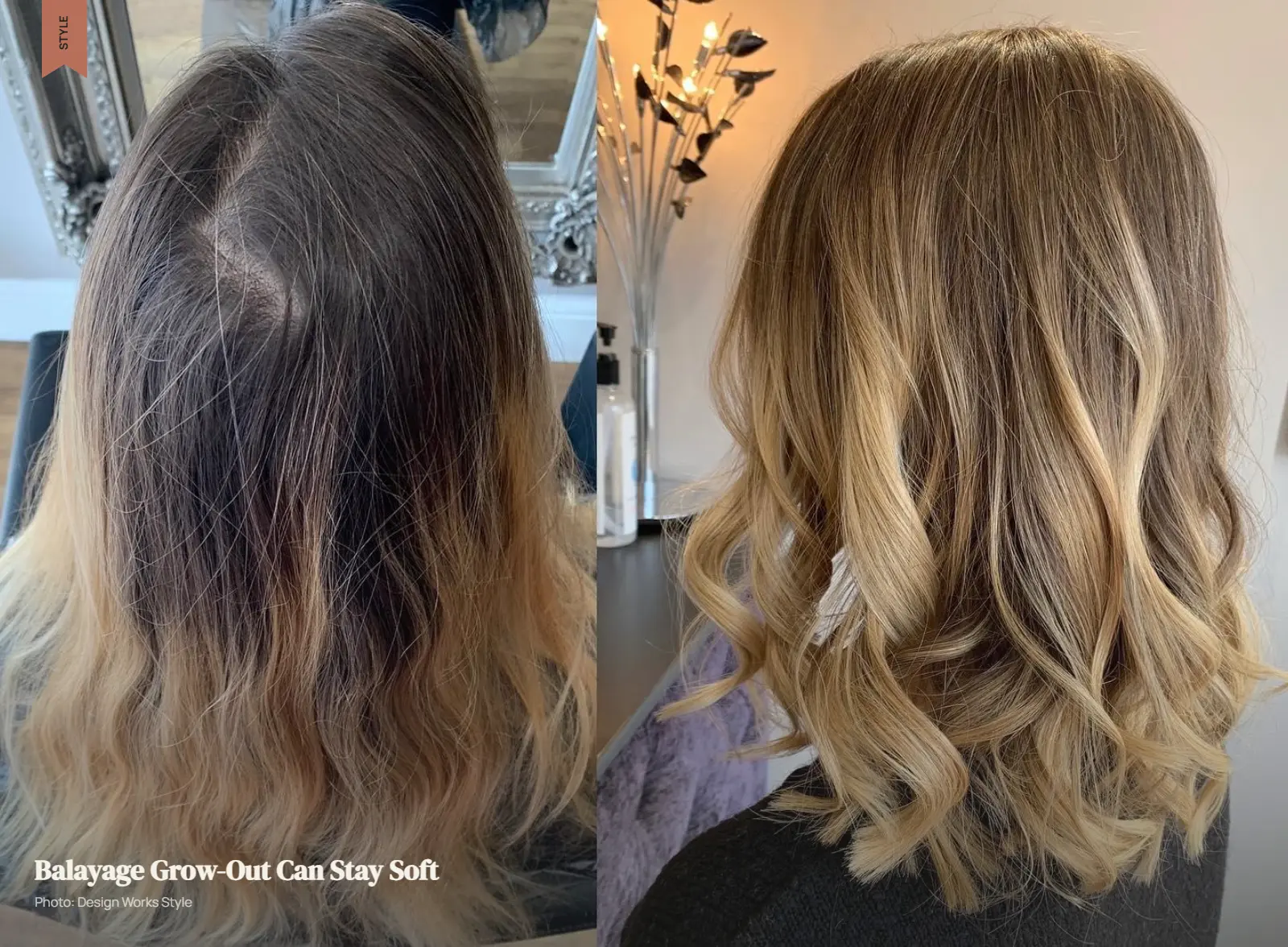
Some people may be ready for maintenance when the regrowth or change in brightness becomes noticeable. Others may be happy with their balayage for considerably longer because they prefer a softer, more grown-out appearance.
Consider:
- How visible the regrowth has become
- Whether you still like the current brightness
- How much contrast exists between your natural hair and lighter pieces
- Whether the tone has changed
- How much of the hair has previously been lightened
- The current condition of the hair
- Whether you want maintenance or a substantially different result
Because balayage can be placed with a softer transition rather than a solid line at the roots, grow-out can look relatively gradual. That does not mean every balayage will grow out in exactly the same way.
If you want more background on the technique itself, see our guide to balayage.
When a Trim or Salon Visit Makes More Sense
Color maintenance and hair-condition maintenance are not always the same thing.
Your color may still look good while the ends are becoming increasingly dry, tangled or worn. In that situation, changing your shampoo may not address the underlying concern.
A trim or professional assessment may make sense when you notice:
- Increasingly dry or difficult-to-manage ends
- Persistent tangling
- Split or visibly worn ends
- A tonal change you cannot correct confidently at home
- Uneven-looking balayage
- A desire for substantially brighter pieces
- A significant change in the color you want
- Hair condition that has noticeably deteriorated
A salon visit can therefore be about maintaining the condition of the hair, adjusting the tone, changing brightness or planning a more substantial color service.
A Simple Way to Tell What Your Hair Needs
The easiest way to choose your next step is to look at the specific change rather than assuming every problem means your balayage needs to be redone.
| What you notice | What it may indicate | What to consider |
|---|---|---|
| Color looks less vibrant | Normal fading or a tonal change | Review washing and color-maintenance habits |
| Hair feels dry | Increased conditioning needs or effects of lightening | Focus on conditioning and gentler handling |
| Color looks warmer | A tonal shift | Consider whether appropriate toning could help |
| Ends look worn | Hair-condition issue | Consider a trim or professional assessment |
| Balayage has grown out but still looks good | Normal grow-out | A refresh may not be immediately necessary |
| You want substantially brighter pieces | A change beyond routine maintenance | Consult a stylist about the desired result |
These observations are not diagnoses. They are simply a way to separate common maintenance concerns before deciding what to do next.
Balayage Hair Care Mistakes to Avoid
Some maintenance mistakes are less about choosing the wrong product and more about responding to the wrong problem.
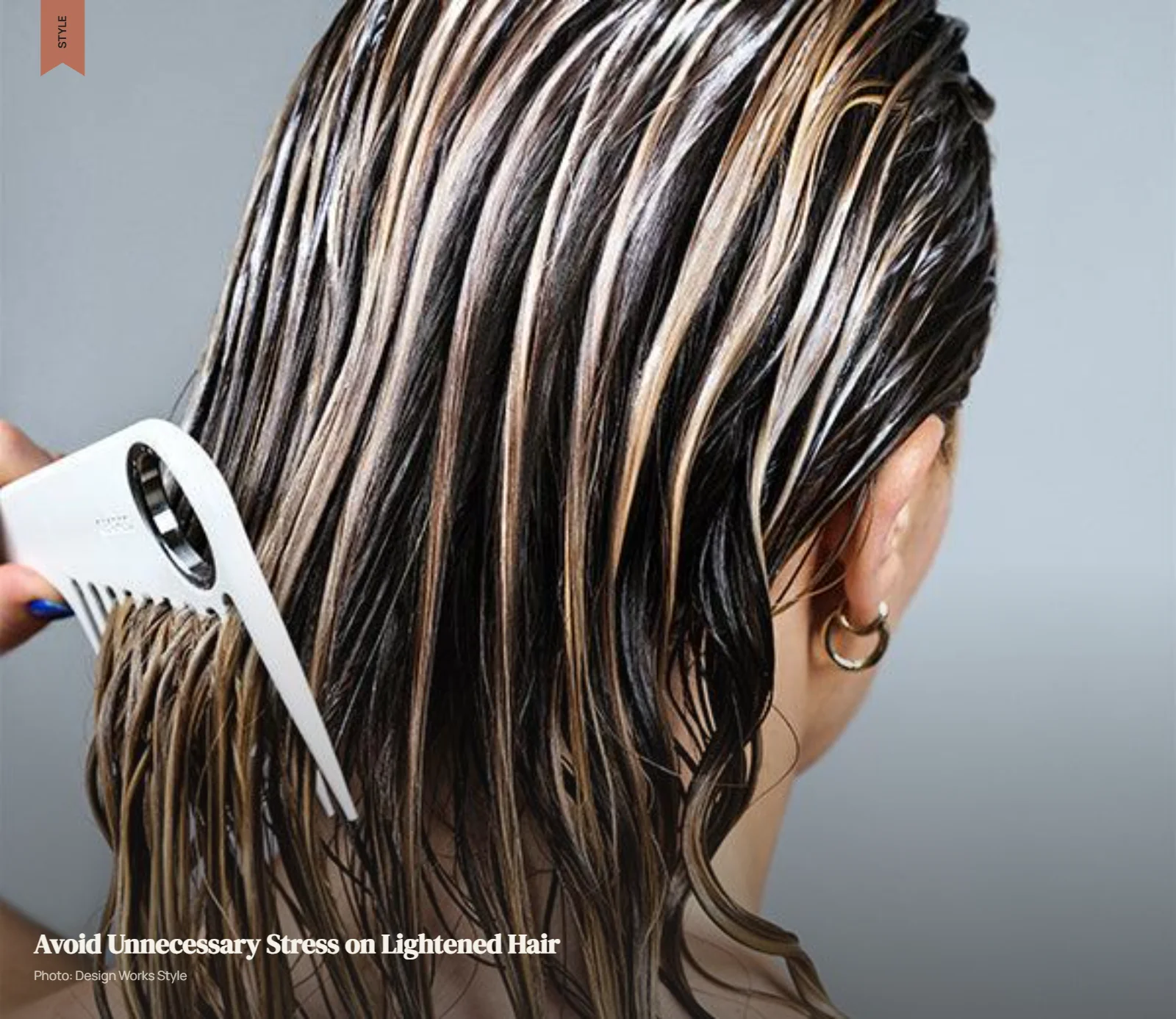
Washing aggressively: Clean the scalp without repeatedly scrubbing the lighter lengths.
Using excessive heat: Use controlled temperatures and avoid unnecessary repeated passes over lightened sections.
Skipping conditioner: Give the lengths and ends the conditioning they need after washing.
Roughly brushing wet hair: Detangle carefully and minimize pulling.
Assuming purple shampoo solves every color problem: First determine whether the issue is brassiness, fading or a need for greater brightness.
Toning too frequently: Toning should have a specific purpose rather than becoming an automatic step in every wash routine.
Booking appointments only because the calendar says so: Look at the actual color, grow-out, desired result and hair condition.
Ignoring worsening condition because the color still looks good: A color result can look acceptable while the ends are becoming increasingly difficult to manage.
When At-Home Care Is No Longer Enough
At-home maintenance works well for many ordinary changes, but there is a point where changing products is unlikely to produce the result you want.
Consider professional help if the balayage has become uneven, you want a significant change in brightness or placement, the desired tone is difficult to achieve, or the condition of the hair has noticeably deteriorated.
A stylist can assess the existing color and previous lightening before deciding whether the appropriate next step is a tonal adjustment, trim, refresh or more substantial color service.
This is particularly important when previous chemical services have left the hair difficult to manage. Lightening can weaken the hair fiber, so repeatedly adding more chemical processing is not always the appropriate response to a color concern.
A Practical Balayage Maintenance Routine
Every wash
- Cleanse according to your scalp and hair needs.
- Focus shampoo on the scalp rather than aggressively washing the lengths.
- Condition the mid-lengths and ends.
- Detangle gently.
- Avoid rough towel drying.
When heat styling
- Use heat protection.
- Keep the temperature controlled.
- Avoid repeated passes over the same section.
- Allow some air drying when practical.
When the tone changes
- Identify whether the issue is warmth, fading or a need for more brightness.
- Use toning products only when they suit the existing color.
- Get professional guidance when the desired correction is unclear.
When the hair or color changes significantly
- Look at the condition of the ends as well as the color.
- Consider whether a trim would solve part of the problem.
- Consider a salon refresh when the desired result goes beyond ordinary maintenance.
The most useful balayage routine is one you can adjust as your hair changes. Wash when your scalp and hair need cleansing, give the lightened sections appropriate conditioning, control unnecessary heat and environmental exposure, and pay attention to whether a change is actually about fading, tone, dryness or the need for a new color result.