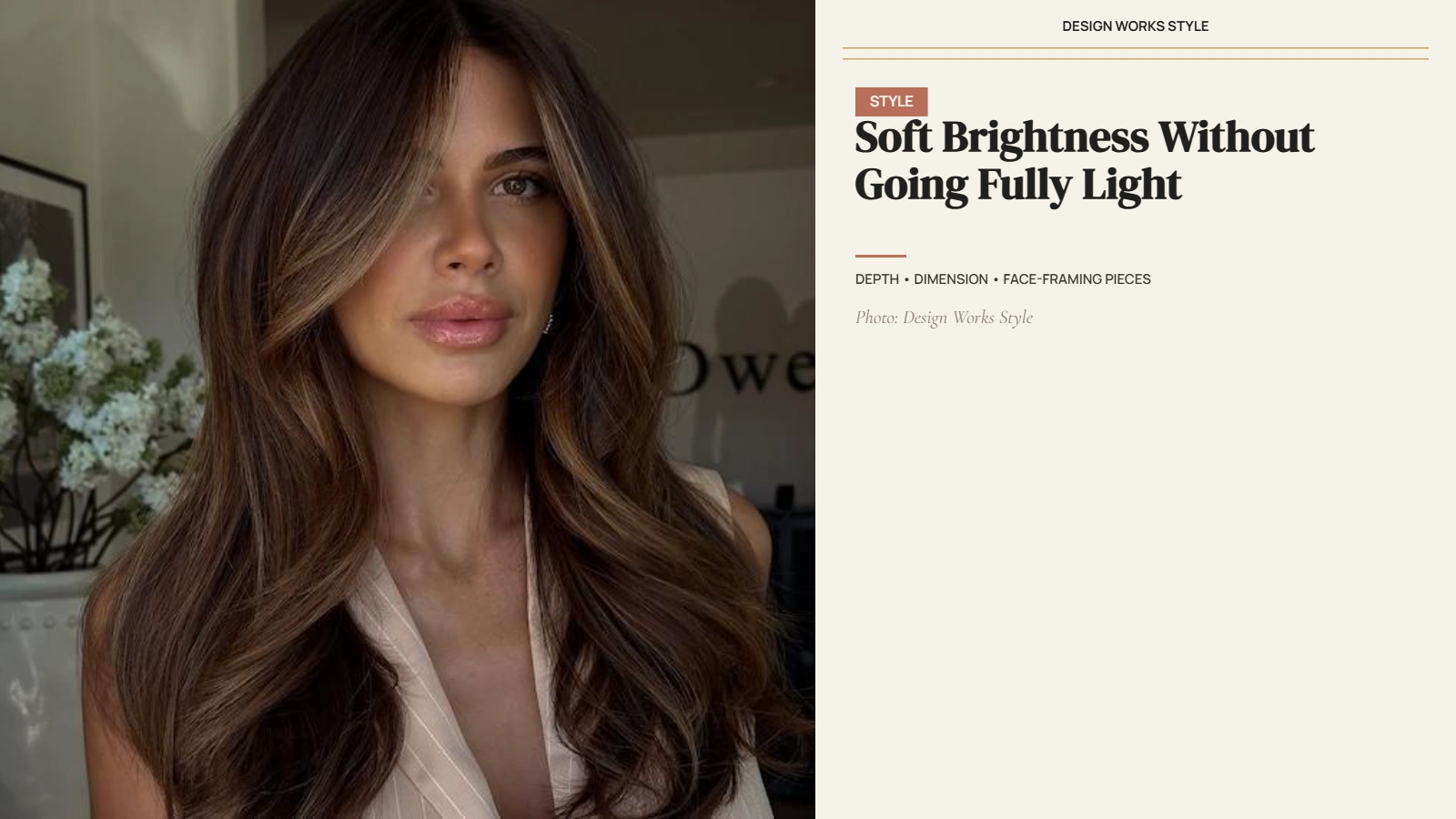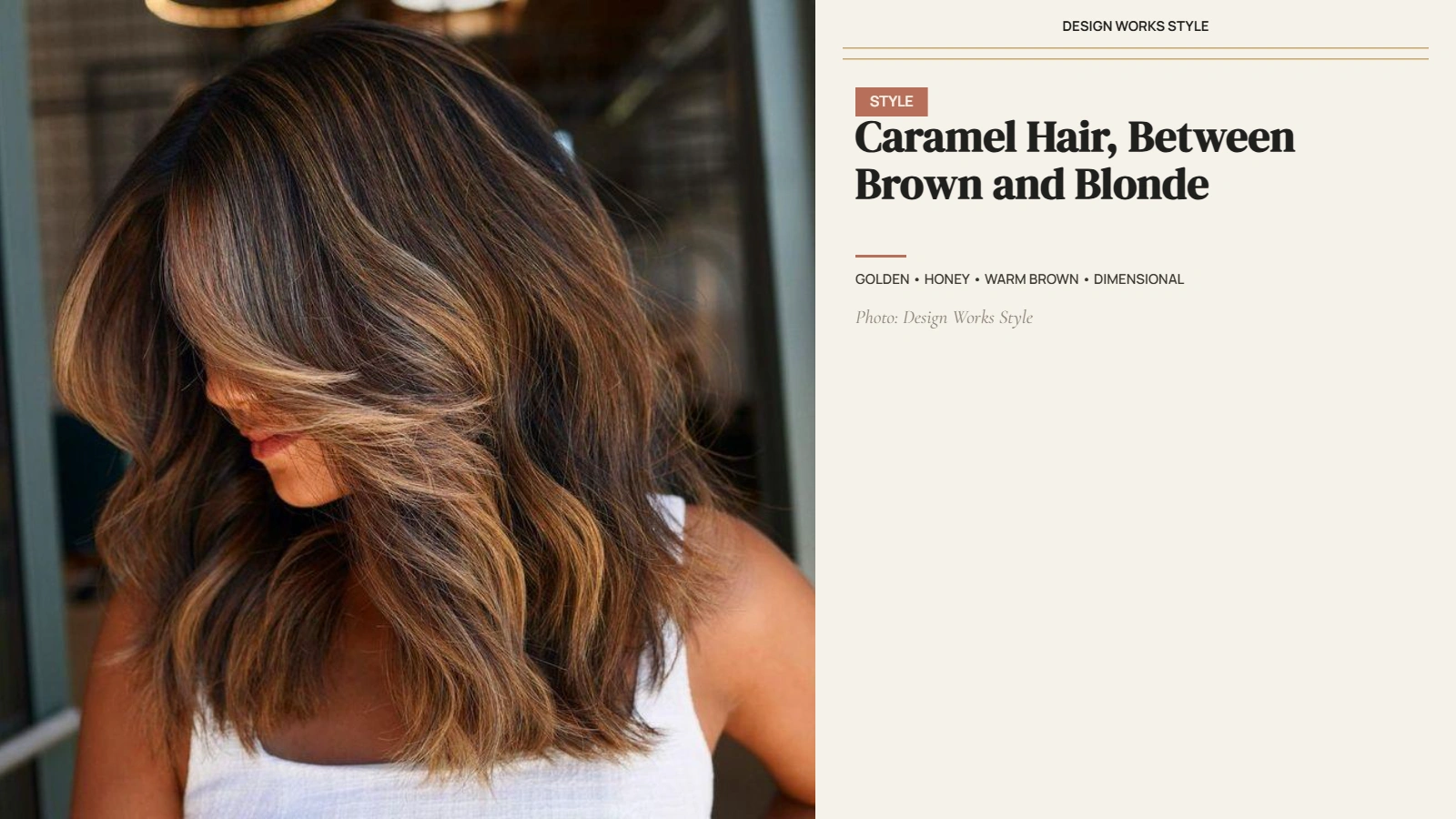

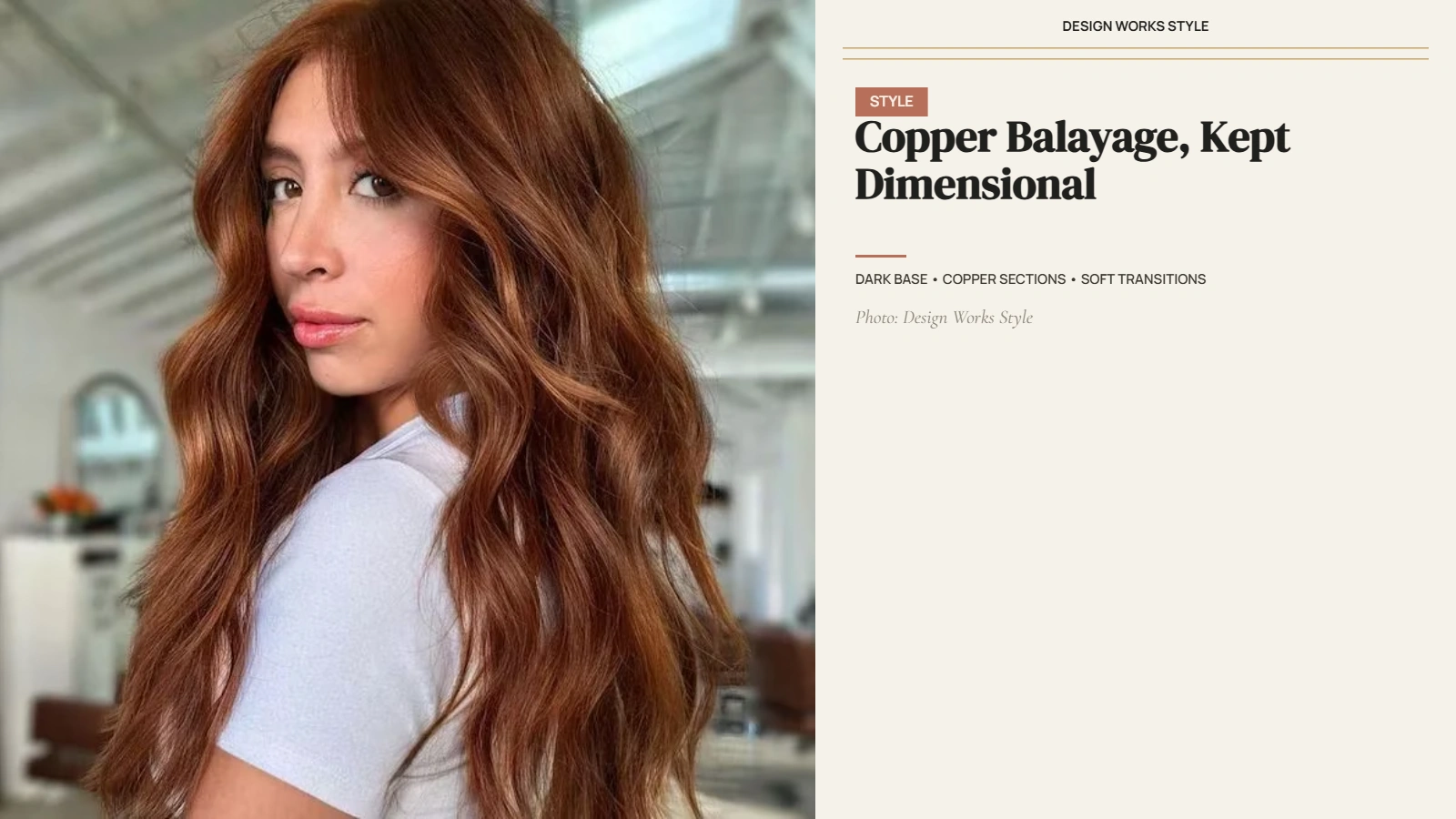
Copper balayage brings warm copper tones into the hair through strategically placed lighter sections rather than changing the entire head to one copper shade. The result can range from subtle copper warmth blended into the existing color to brighter, more noticeable copper dimension.
The right version depends on your starting hair color, the copper shade you want, how much contrast you prefer, where the lighter pieces are placed, and how much maintenance you are willing to do.
What Is Copper Balayage?
Copper balayage is a balayage color direction that introduces copper tones through selected sections of the hair. Instead of applying copper uniformly from roots to ends, the color is placed strategically to create variation and dimension.
The technique combines:
- Strategically placed or hand-painted balayage sections
- Warm copper tones
- A visible natural or darker base
- Gradual visual transitions
- Dimensional color rather than one uniform shade
The copper itself can vary considerably. A softer copper may read as a warm reflection through the existing color, while a brighter copper can become a much more prominent part of the overall look.
That difference is important when choosing a reference photo. Two images may both be described as copper balayage while having very different levels of brightness, contrast, and placement.
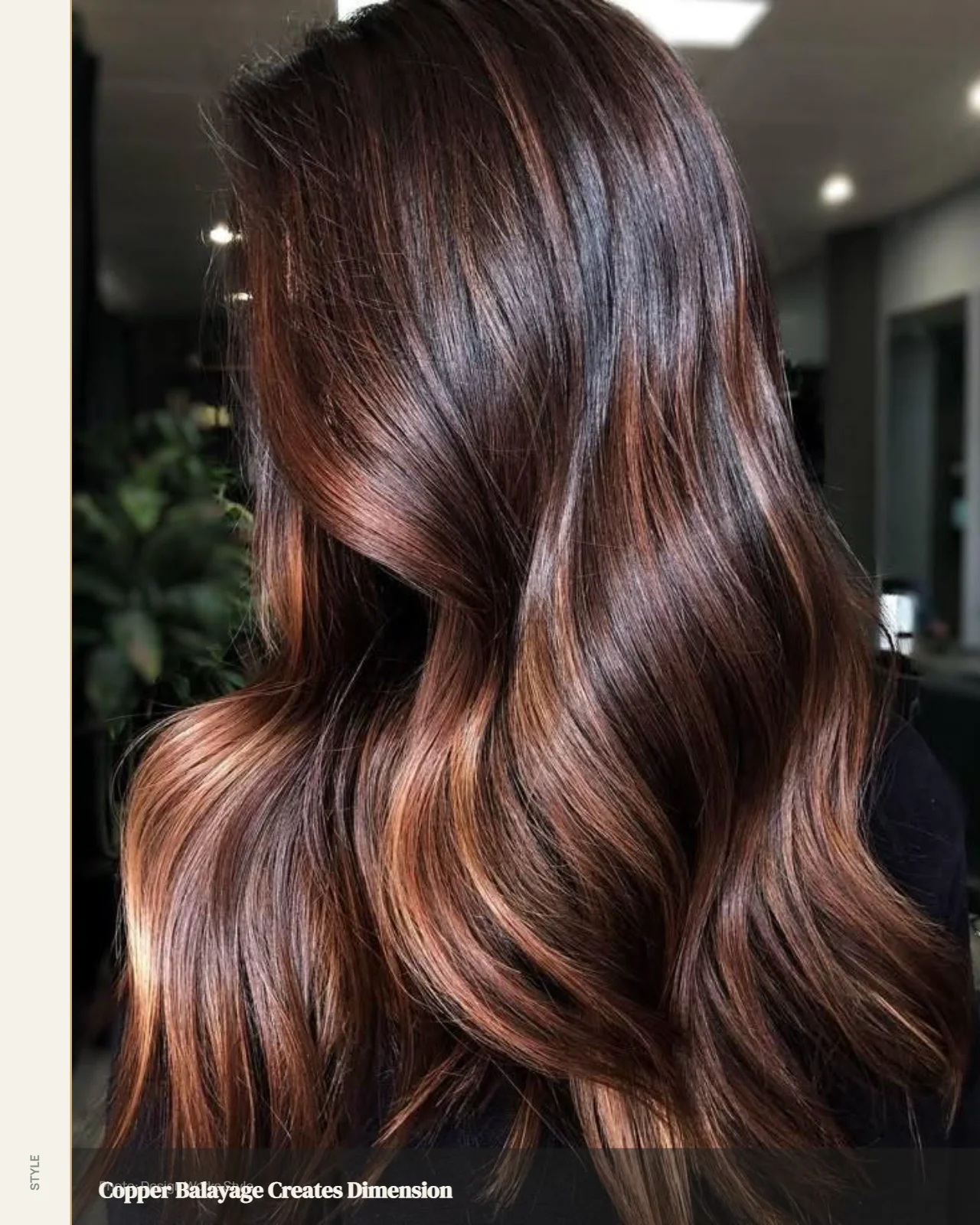
What Does Copper Balayage Look Like?
Copper balayage can look different from one person to another because the final appearance depends on more than the color name.
The main factors include:
- Starting hair color
- Copper shade
- Amount of lightening
- Placement
- Contrast
- Hair length
- Natural or styled texture
On a lighter base, copper pieces may create a noticeable warm shift without requiring a deep brunette foundation. On brown hair, copper can appear as warm dimensional color against the existing brunette base. On dark hair, brighter copper pieces can create more visible separation.
Placement also changes the effect. Copper concentrated around the face will be more immediately noticeable from the front, while copper through the mid-lengths and ends can create a more gradual transition.
A useful way to describe the desired result is to decide whether you want copper as a subtle reflection or copper as a prominent color feature.
Choosing a Copper Shade
Copper is a broad color family rather than one standardized shade. When discussing copper balayage with a stylist, it helps to identify the general depth and intensity you prefer.
Light Copper
Light copper creates a brighter, more noticeable interpretation of the color. It can introduce a lighter warm effect into selected sections while allowing the existing base to remain visible.
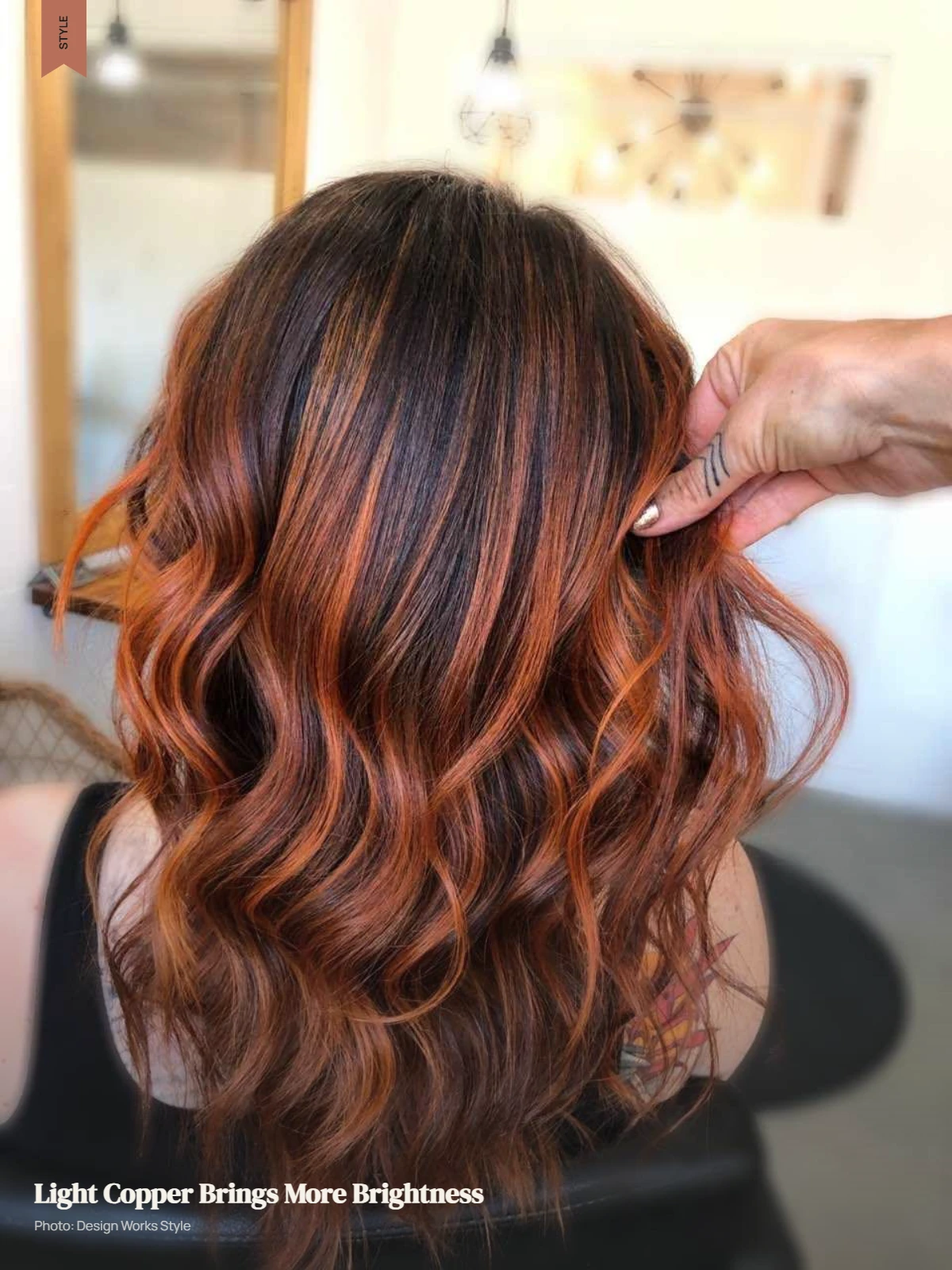
Because it sits higher in brightness, light copper may create more contrast against a darker starting color.
Medium Copper
Medium copper provides a balanced copper direction that can be noticeable without necessarily becoming extremely bright.
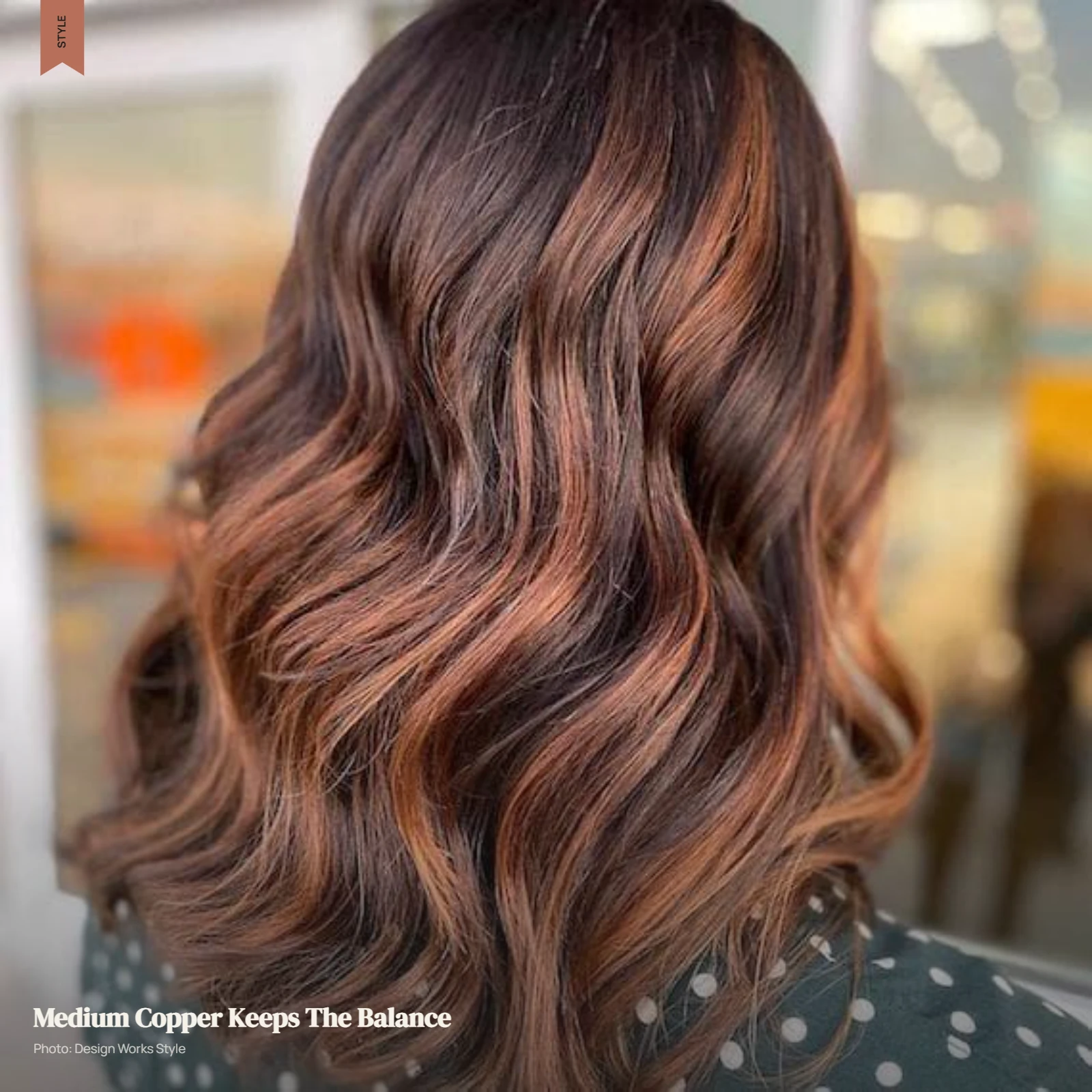
It can work as a dimensional warm tone through the lengths, particularly when the goal is to retain a relationship between the copper pieces and the existing base.
Deep Copper and Copper Brown
Deep copper and copper-brown directions sit closer to brunette shades. They can create warmth and variation without requiring the copper pieces to appear dramatically lighter than the base.
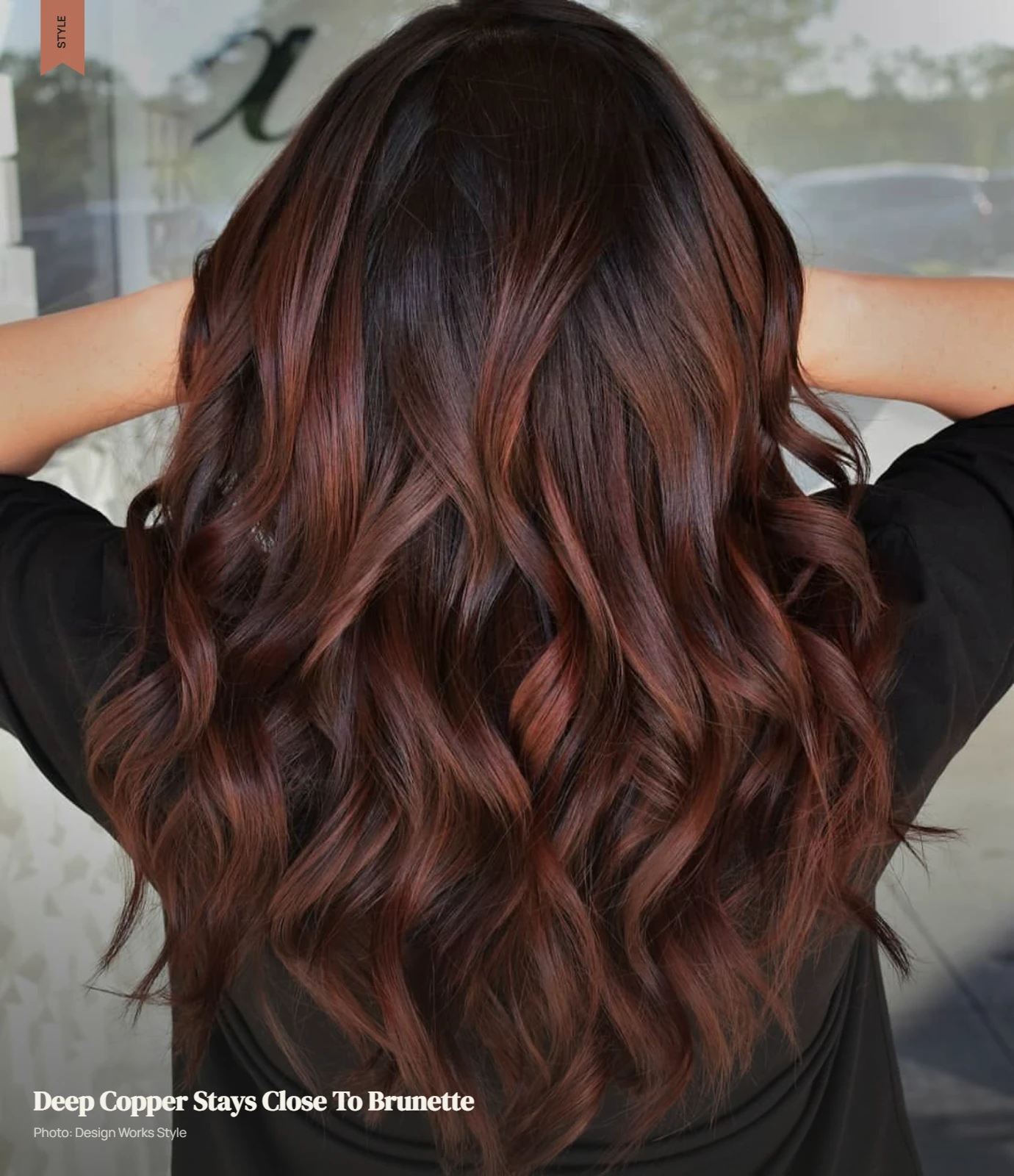
This can be useful when the goal is dimensional copper rather than a highly contrasted result.
The exact names used for copper shades can vary between salons and color lines, so describing the visual depth, warmth, and brightness you want is often more useful than relying on a single shade name.
Copper Balayage for Different Starting Hair Colors
Your starting color is one of the biggest factors in how copper balayage will appear.
Blonde Hair
Copper pieces can add warmth and dimension to blonde hair, creating a visible shift without necessarily covering the entire head in copper.
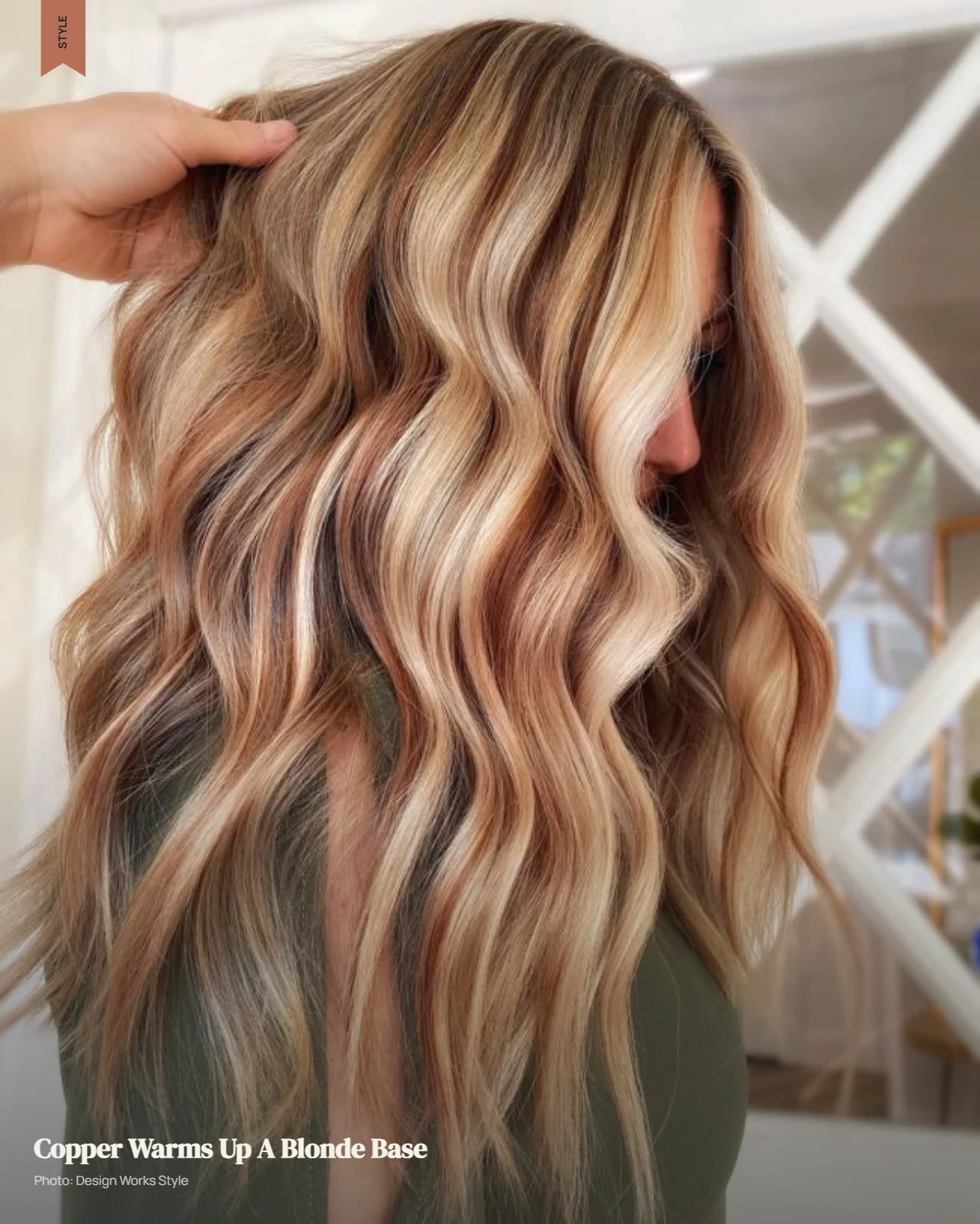
The final appearance depends on how much copper is introduced and whether the goal is a soft warm effect or a more obvious copper direction.
Light to Medium Brown Hair
Light and medium brown hair can provide a brunette foundation for copper balayage.
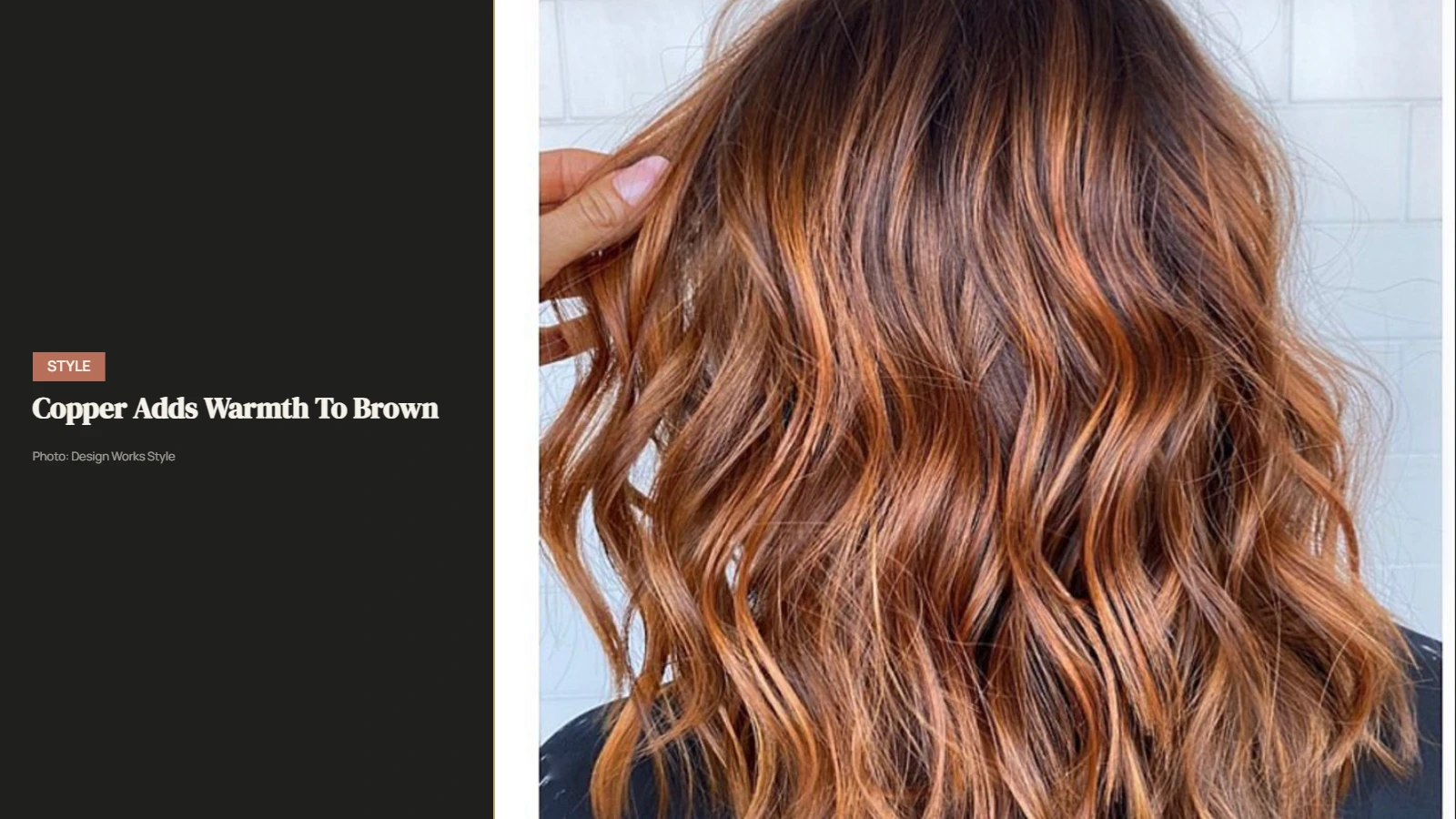
Copper may appear as a clearly visible warm variation against the brown base, while the amount of contrast can be adjusted through the brightness and placement of the lighter pieces.
A softer copper-brown direction can keep the result closer to the existing brunette color, while brighter copper creates more separation.
Dark Brown Hair
Copper balayage can also be adapted to dark brown hair. If the desired copper is significantly lighter or more visible than the starting color, selected sections may need to be lightened first.
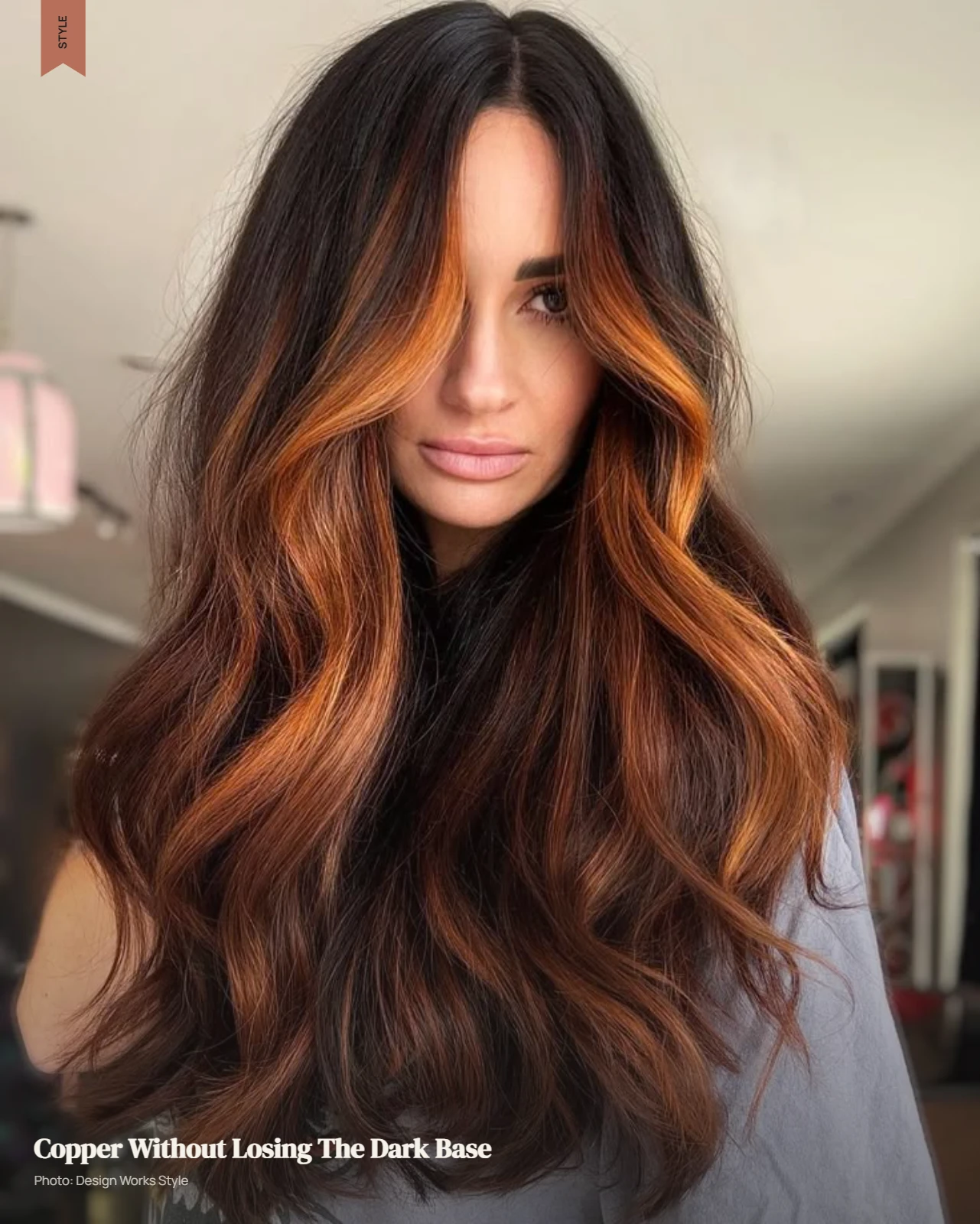
The amount of change depends on the target copper shade, desired contrast, previous color, and condition of the hair.
The goal is not necessarily to make the entire head lighter. Balayage can preserve the deeper base while introducing copper selectively.
Previously Colored Hair
Previous color history matters when planning copper balayage.
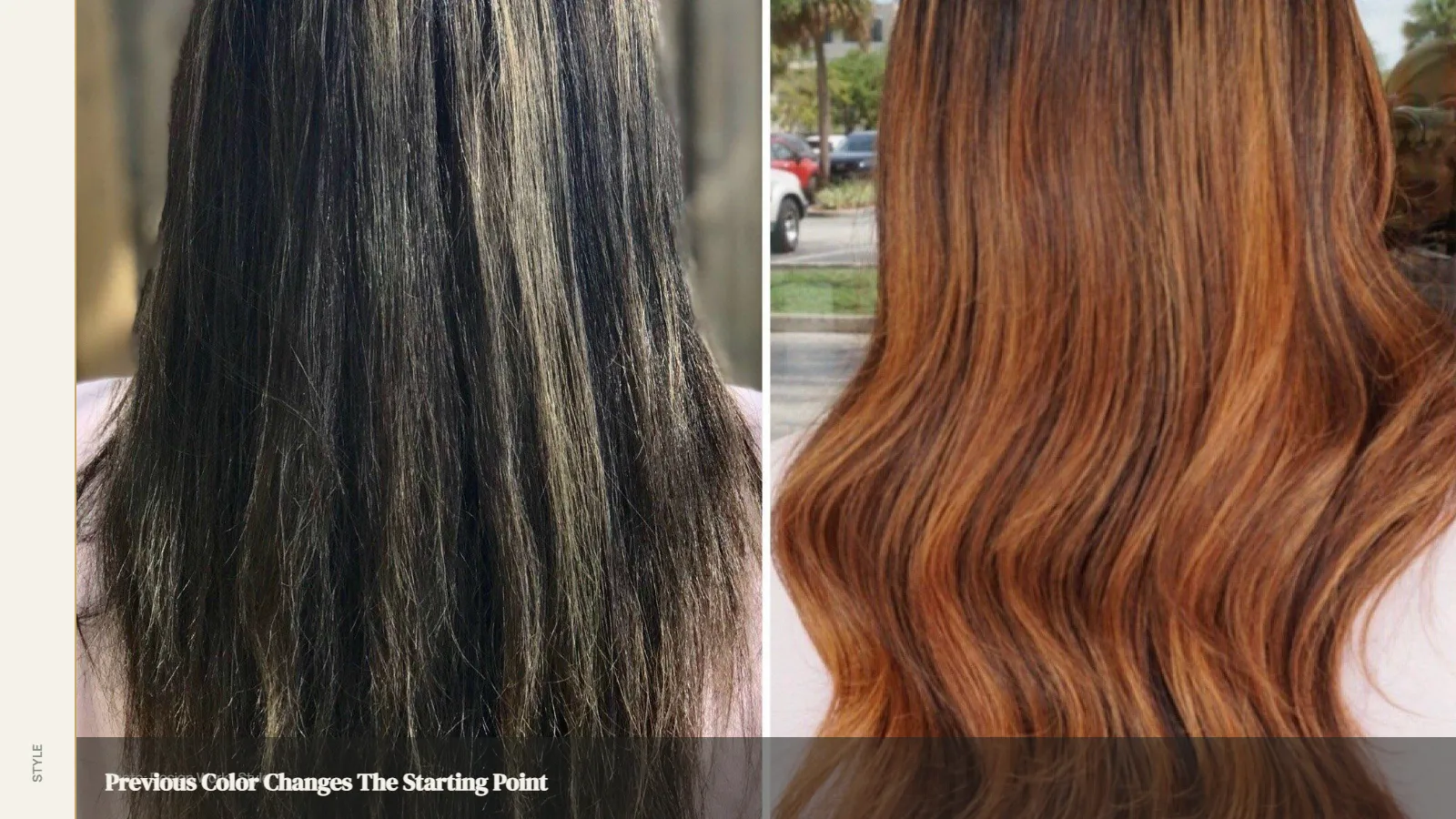
Artificial color can affect what is realistically achievable and how the hair responds to lightening. A stylist may need to consider previous color services before determining the appropriate approach.
Bring an accurate history of previous coloring and chemical services to your consultation rather than assuming the current visible color tells the entire story.
Subtle vs. High-Contrast Copper Balayage
The same copper family can create very different results depending on the level of contrast.
Subtle Copper Balayage
A subtle copper balayage uses softer tonal variation and keeps the copper relatively connected to the existing base.
It may involve:
- Lower contrast
- Softer copper tones
- Blended transitions
- Less dramatic brightness
- More of the original base remaining visible
This direction can suit someone who wants to introduce copper without making it the dominant feature of the hair.
High-Contrast Copper Balayage
A higher-contrast version uses brighter copper pieces that stand out more clearly from the starting color.
It can involve:
- Brighter copper sections
- Stronger separation from the base
- More noticeable visual variation
- Greater overall color impact
- Potentially more maintenance
Neither approach is objectively better. The choice depends on how visible you want the copper to be and how much upkeep you are comfortable with.
Copper Balayage Placement Ideas
Placement determines where the copper becomes most visible.
Face-Framing Copper
Lighter copper pieces around the face can make the color particularly noticeable from the front.
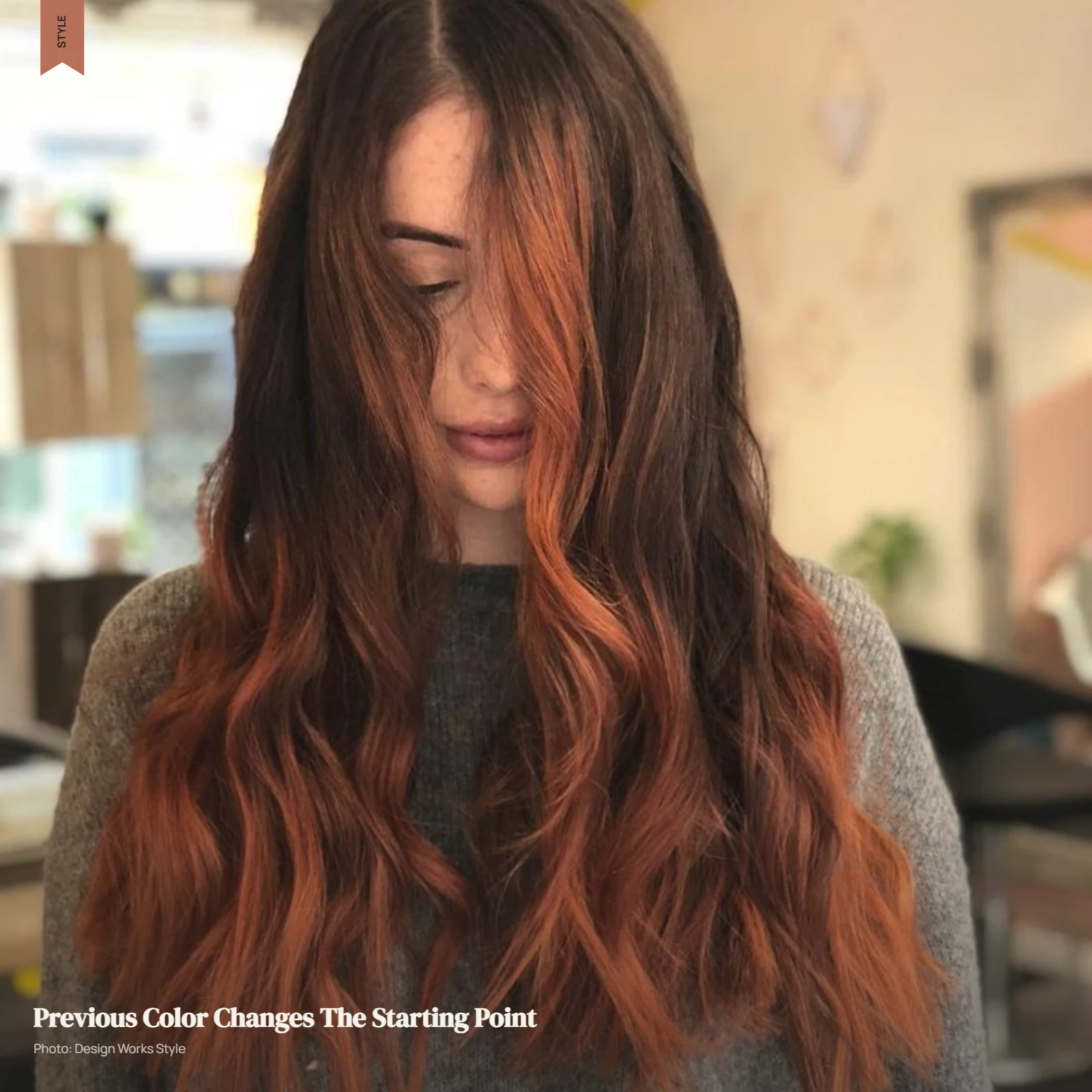
This placement can put more emphasis on the front sections while allowing the rest of the hair to retain a deeper or more subtle color relationship.
The exact placement should be adapted to how the hair naturally falls and the amount of brightness you want around the face.
Mid-Length and Ends
Concentrating copper through the mid-lengths and ends can create a gradual dimensional effect.
The roots and upper sections can remain closer to the starting color while the copper becomes more visible farther down the hair.
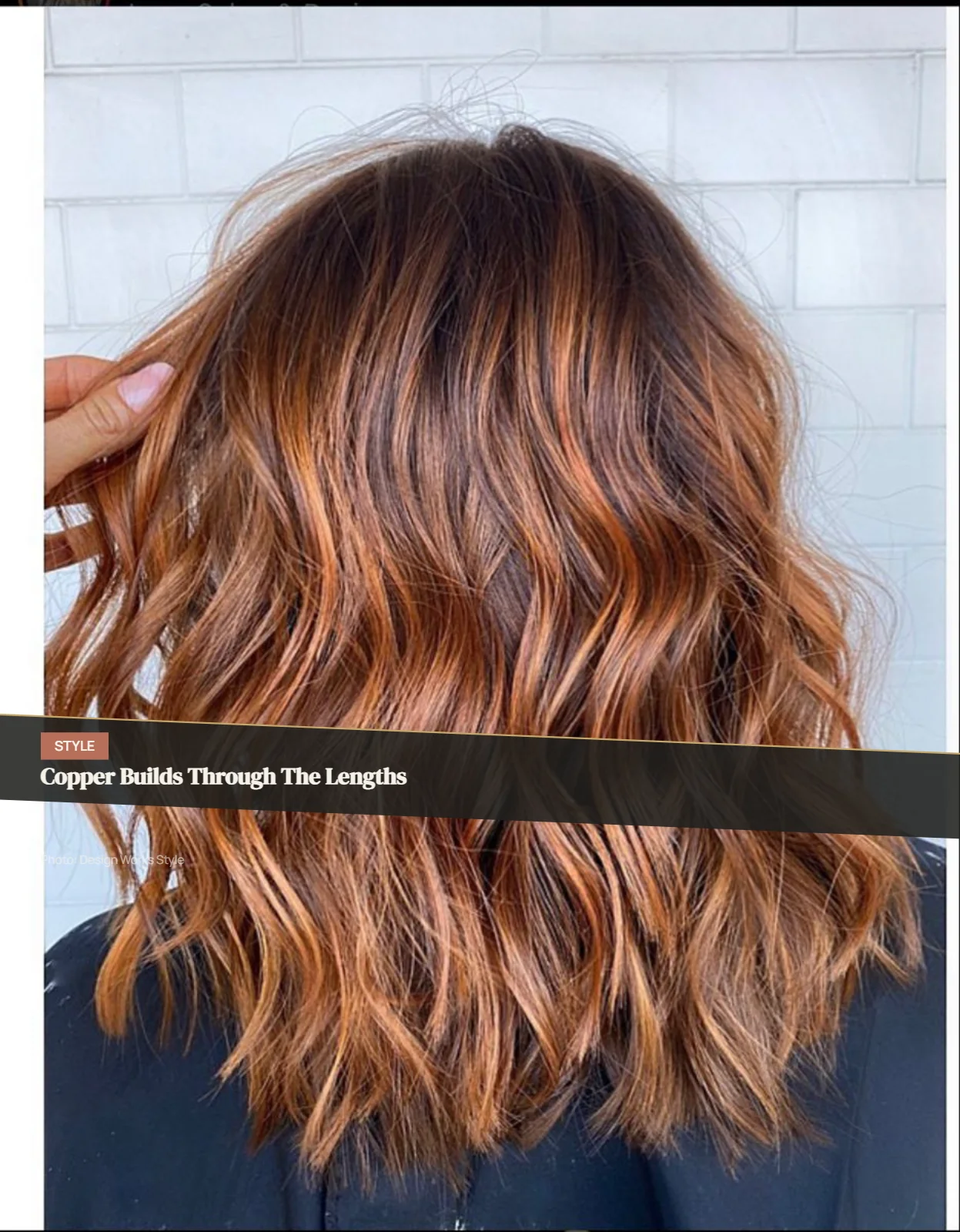
This can create a different visual balance from face-framing placement and may work well when you want the change concentrated through the lengths.
Crown and Surface Pieces
Selected pieces through the crown and surface of the hair can catch light and make the copper more visible.
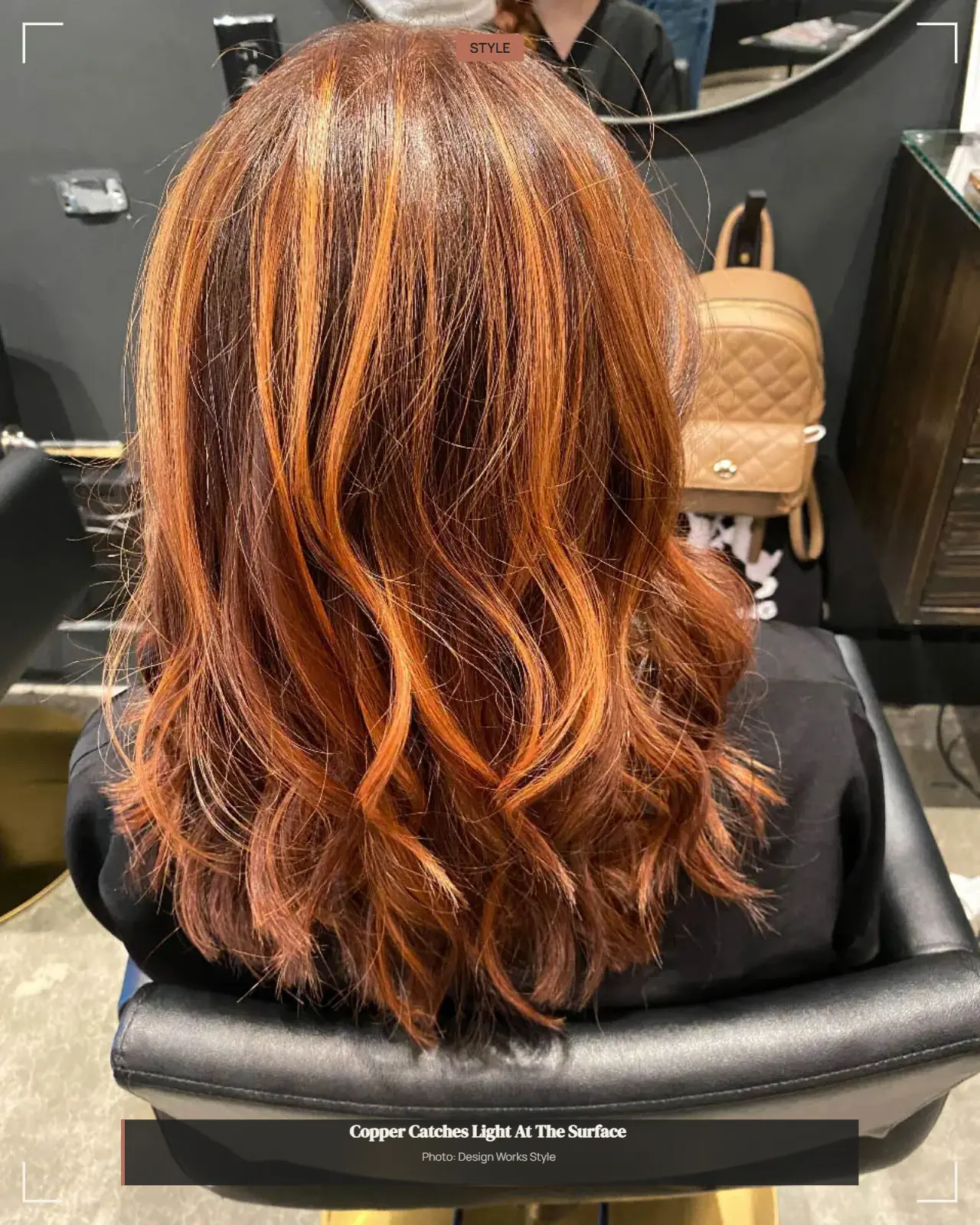
The effect depends on how much color is placed in these areas and how strongly it contrasts with the base.
Scattered, Blended Placement
Less concentrated copper placement can create a softer effect.
Instead of making a few sections particularly bright, smaller pieces can be distributed through the hair to create variation without making the entire head look uniformly copper.
Copper Balayage vs. All-Over Copper Hair
Copper balayage and all-over copper create different types of color changes.
| Copper Balayage | All-Over Copper |
|---|---|
| Copper is strategically placed | Copper is applied throughout the hair |
| Natural or darker base can remain visible | Overall hair color shifts toward copper |
| Creates dimensional variation | Creates a more uniform color direction |
| Placement controls where brightness appears | The overall head becomes the copper statement |
Choose between them based on the type of change you want.
If you want dimensional copper accents while keeping your existing base visible, balayage provides that type of approach.
If you want the overall hair to read as copper, an all-over color service is a different direction.
This distinction also matters for maintenance because the grow-out and refreshing process can differ between strategically placed balayage and an overall color change.
Does Copper Balayage Require Lightening?
If the desired copper is lighter or more visible than the starting hair, selected sections may need to be lightened before the final copper tone is applied.
The process depends on:
- Starting color
- Desired copper brightness
- Previous color
- Hair condition
- Desired contrast
- Existing balayage or highlights
For example, a subtle copper-brown effect may require a different level of change from a much brighter copper result.
Previously colored hair can also behave differently from natural hair. If significant lightening is involved, an in-person stylist assessment is important for determining what is realistic for the existing hair.
The reference image should therefore be treated as a visual direction rather than a guarantee of an identical result.
Why Copper Balayage Fades
Copper tones can change over time as the color fades. The final appearance may gradually become less intense or shift away from the freshly toned result.
How quickly that happens varies according to factors such as:
- Washing frequency
- Heat styling
- Sun exposure
- Hair-care routine
- Starting hair color
- Type of color service
- Desired copper intensity
There is no single fading timeline that applies to every copper balayage.
Someone who prefers a strong, clearly defined copper may notice tonal changes sooner than someone who is comfortable with a softer, more blended result.
How to Maintain Copper Balayage
Maintaining copper balayage is largely about preserving the tone, condition, and level of contrast you actually want.
Basic care can include:
- Using products recommended for color-treated hair
- Avoiding unnecessarily frequent washing
- Conditioning regularly
- Minimizing excessive heat exposure
- Following your stylist’s recommendations for toning or refreshing the color
- Considering how much copper intensity you want to maintain
Maintenance can also change as your preferences change. You may initially want noticeable copper, then decide that a softer, more blended tone suits you better as the color grows out.
For broader maintenance guidance, see Balayage Hair Care.
Is Copper Balayage Right for You?
Consider the entire color plan rather than choosing based on the copper shade alone.
Current Hair Color
Your starting color affects how visible the copper can be and whether selected sections may need lightening.
Desired Copper Intensity
Decide whether you want:
- A subtle copper reflection
- Noticeable copper dimension
- Bright copper pieces
- A strong copper statement
This gives your stylist a clearer idea of the target.
Desired Contrast
Think about how different you want the copper to look from your existing hair.
Lower contrast keeps the result closer to the base, while higher contrast makes the copper more obvious.
Previous Color History
Previous color treatments can affect what is achievable. Be transparent about past services during your consultation.
Maintenance Preference
Consider how much effort you want to put into preserving the original copper tone.
A brighter or more specific copper result may require more attention to tonal changes than a softer dimensional version.
Desired Placement
Decide whether you want the color concentrated around the face, through the lengths, toward the ends, across the surface, or distributed more softly.
Balayage or All-Over Color?
Finally, ask yourself whether you want dimensional copper accents or for your overall hair to read as copper.
That distinction can help narrow the right type of color service before you even choose a specific shade.
What to Ask Your Stylist
A useful consultation should go beyond showing a copper reference photo.
Ask:
- What copper tone would work with my current base?
- How much contrast can we create without making the result too bright?
- Which sections would you lighten?
- How will the copper be placed?
- How will my previous color affect the result?
- What maintenance will this particular version require?
- How should I care for the color between appointments?
When you bring inspiration images, explain what you like about each image.
You may like the copper tone but not the brightness. You may like the placement but want less contrast. Or you may like the overall warmth while wanting to keep more of your natural base.
Those details give your stylist more useful information than simply asking for an identical copy of the photograph.
Common Copper Balayage Mistakes
Choosing a Copper Shade Without Considering the Starting Base
A copper shade can appear very different depending on what color sits underneath it. The starting base should be part of the decision from the beginning.
Asking for a Result Without Specifying Contrast
“Copper balayage” can mean anything from subtle warmth to highly visible copper pieces. Be specific about how noticeable you want the change to be.
Ignoring Previous Color History
Previous coloring can affect the process and what is realistically achievable. Always share your color history with your stylist.
Assuming Every Copper Shade Requires the Same Amount of Lightening
Light copper, medium copper, and deep copper have different brightness targets. The starting hair also changes the amount of visible change required.
Treating an Inspiration Photo as a Guarantee
A photograph shows one person’s starting hair, lighting, processing history, placement, and final result. Use it to communicate direction rather than expecting an identical outcome.
Neglecting Maintenance
Copper can change as it fades. Consider how much tonal maintenance you are willing to do before choosing a highly specific or highly visible copper result.
Attempting Significant Lightening or Color Correction at Home
Major lightening and corrective color work depend on the condition and history of the actual hair. These are better assessed by a professional rather than approached through generic at-home instructions.
Frequently Asked Questions
Is copper balayage high maintenance?
Maintenance varies according to brightness, contrast, starting color, placement, fading, and how closely you want to maintain the original copper tone. A softer, blended result may have different maintenance needs from a brighter, more contrasted version.
Can you get copper balayage on dark hair?
Yes, copper balayage can be adapted to dark hair. However, how visible and bright the copper becomes depends on the starting color, previous treatments, hair condition, and amount of lightening needed.
Does copper balayage look good on brown hair?
Copper can create several different effects on brown hair, from copper-brown dimension to more visible brighter copper pieces. The result depends on the relationship between the copper and the existing brown base.
Does copper balayage fade?
Yes, copper tones can change as color fades. Washing, heat styling, sun exposure, hair care, the type of color service, and the desired intensity can all affect how the tone changes over time.
Is copper balayage the same as copper highlights?
The terms can describe related color services, but the placement and blending approach may differ. Salon terminology is not completely standardized, so it is useful to describe the desired placement, brightness, and level of blending rather than relying only on the service name.
Explore More Balayage Guides
If you are new to the technique, start with Balayage for the broader guide.
If you are deciding whether your starting color changes the options available, see Balayage on Brown Hair.
For detailed aftercare and maintenance principles, see Balayage Hair Care.
Together, these guides can help you move from understanding the technique to choosing a color direction and planning how you want to maintain it.