
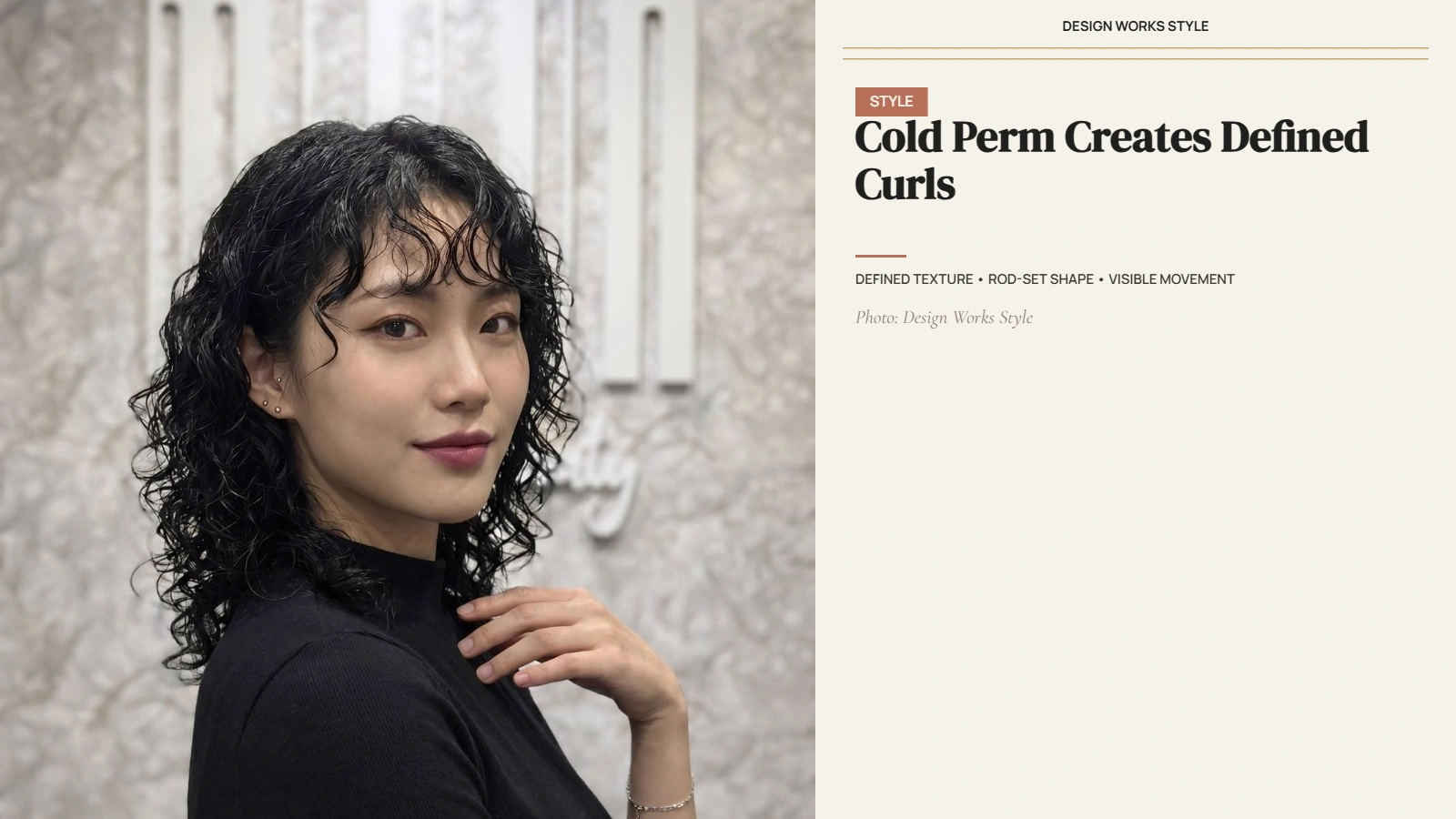
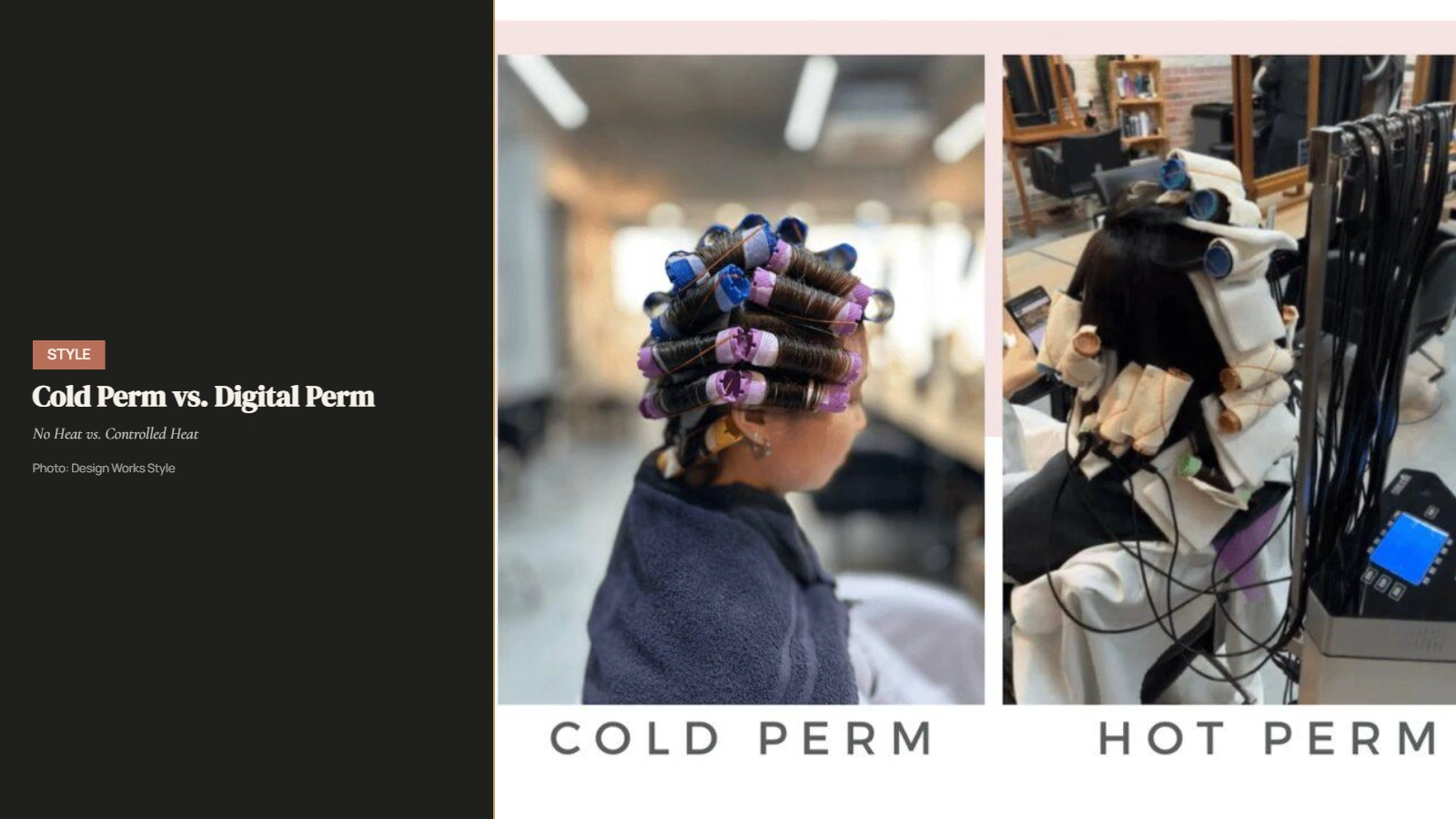
A cold perm is a type of permanent waving service that creates curls or waves using chemical solutions rather than heat from heated perming equipment. The hair is wrapped around rods, treated to reshape its structure, and then neutralized to set the new pattern.
Unlike a digital or heated perm, a cold perm does not rely on heated rods to create the final curl pattern. The result can range from defined curls to softer waves depending on the rod size, wrapping technique, hair characteristics, and the desired finish.
What Is a Cold Perm?
A cold perm, sometimes called a cold wave perm, is a traditional chemical perming method.
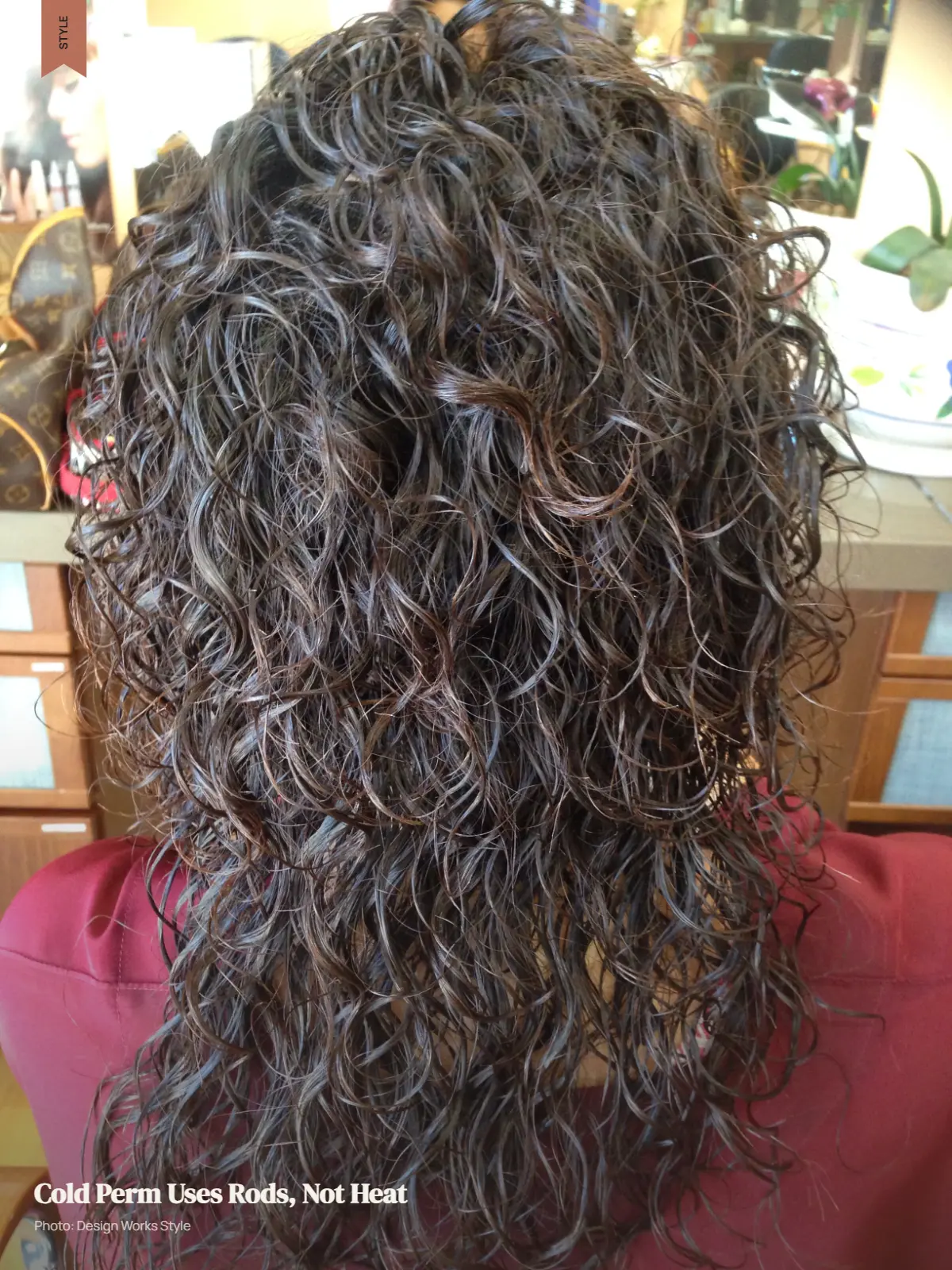
The basic process involves wrapping the hair around rods and applying a waving solution that temporarily changes the bonds responsible for the hair’s shape. A neutralizing step then helps reform those bonds around the new curl or wave pattern.
The word “cold” refers to the fact that the process does not require the same type of external heat used in heated or digital perming systems.
The exact result depends on the hair and the technique used by the stylist, so a reference photo should be treated as a direction rather than a guaranteed outcome.
What Does a Cold Perm Look Like?
Cold perms are commonly associated with curls or waves that are visible throughout the hair.
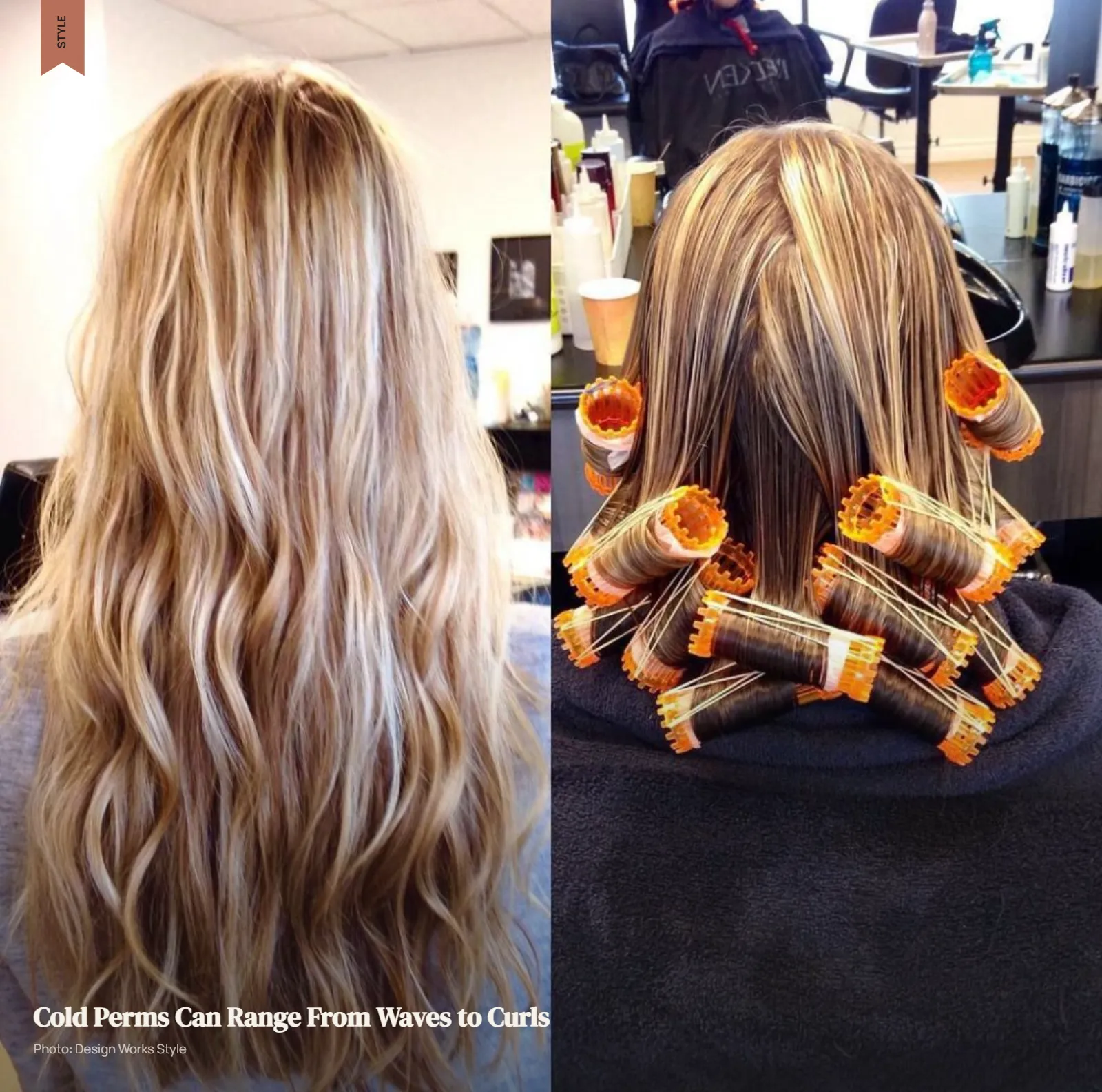
The finished pattern can vary considerably. Smaller rods generally create a tighter curl pattern, while larger rods can produce a looser wave or softer curl. The wrapping pattern and haircut also affect how the finished hair looks.
A cold perm may be considered when you want:
- Defined curls
- More consistent waves
- Additional texture
- A change from naturally straight or loosely textured hair
- A hairstyle that does not depend entirely on daily curling with hot tools
The final appearance also changes as the hair dries and as the perm settles into the haircut.
How Does a Cold Perm Work?
At a high level, a cold perm has three main stages.
1. The Hair Is Wrapped
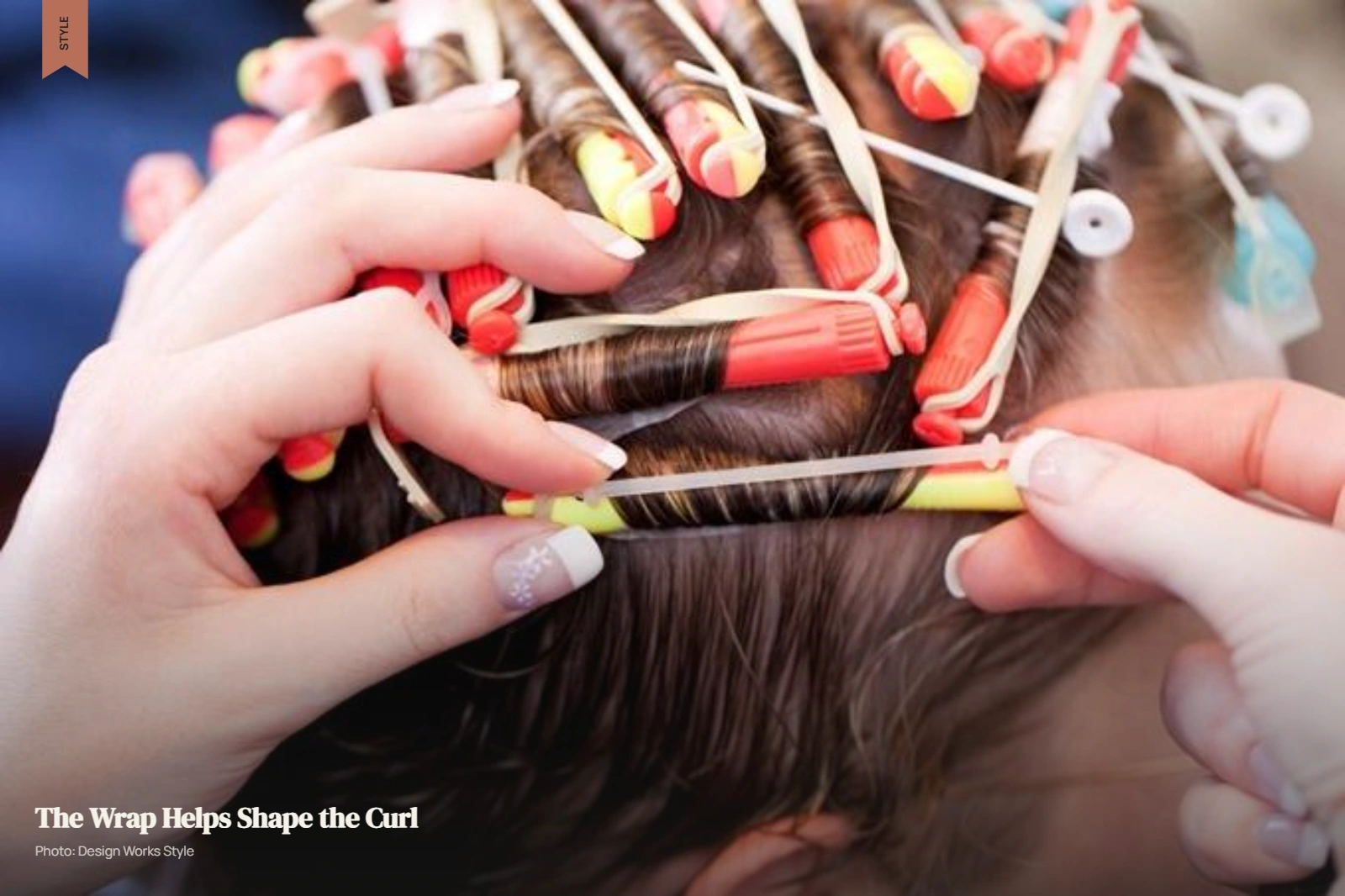
The stylist divides the hair and wraps sections around perm rods. The rod size and placement help determine the shape and direction of the finished curl.
2. A Waving Solution Reshapes the Hair
A chemical solution is applied to allow the hair to take on the shape of the rods.
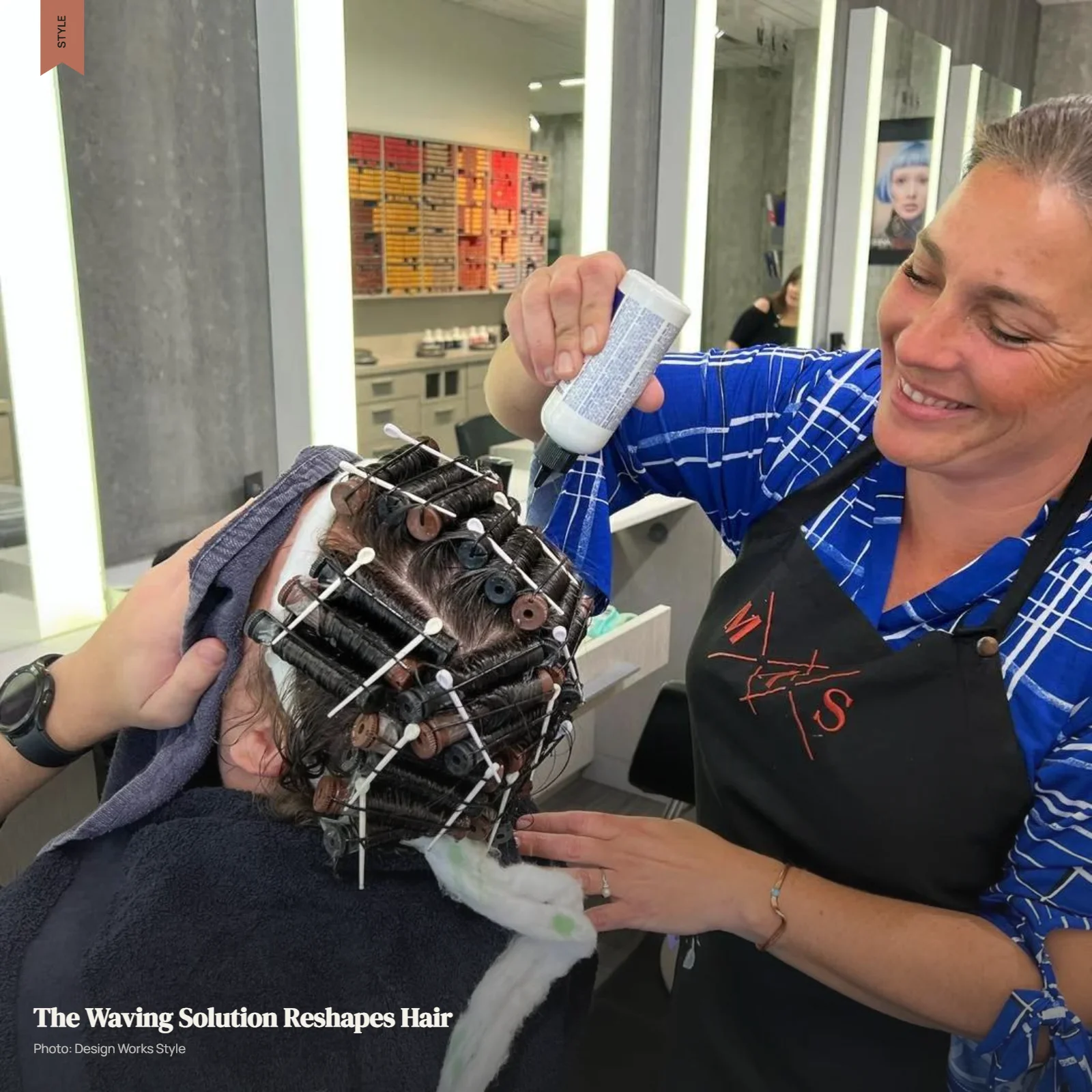
This is the part of the service that permanently changes the hair’s existing structure, which is why the condition of the hair matters before the service.
3. The Hair Is Neutralized
A neutralizing solution is used after the waving stage to help stabilize the newly formed shape.
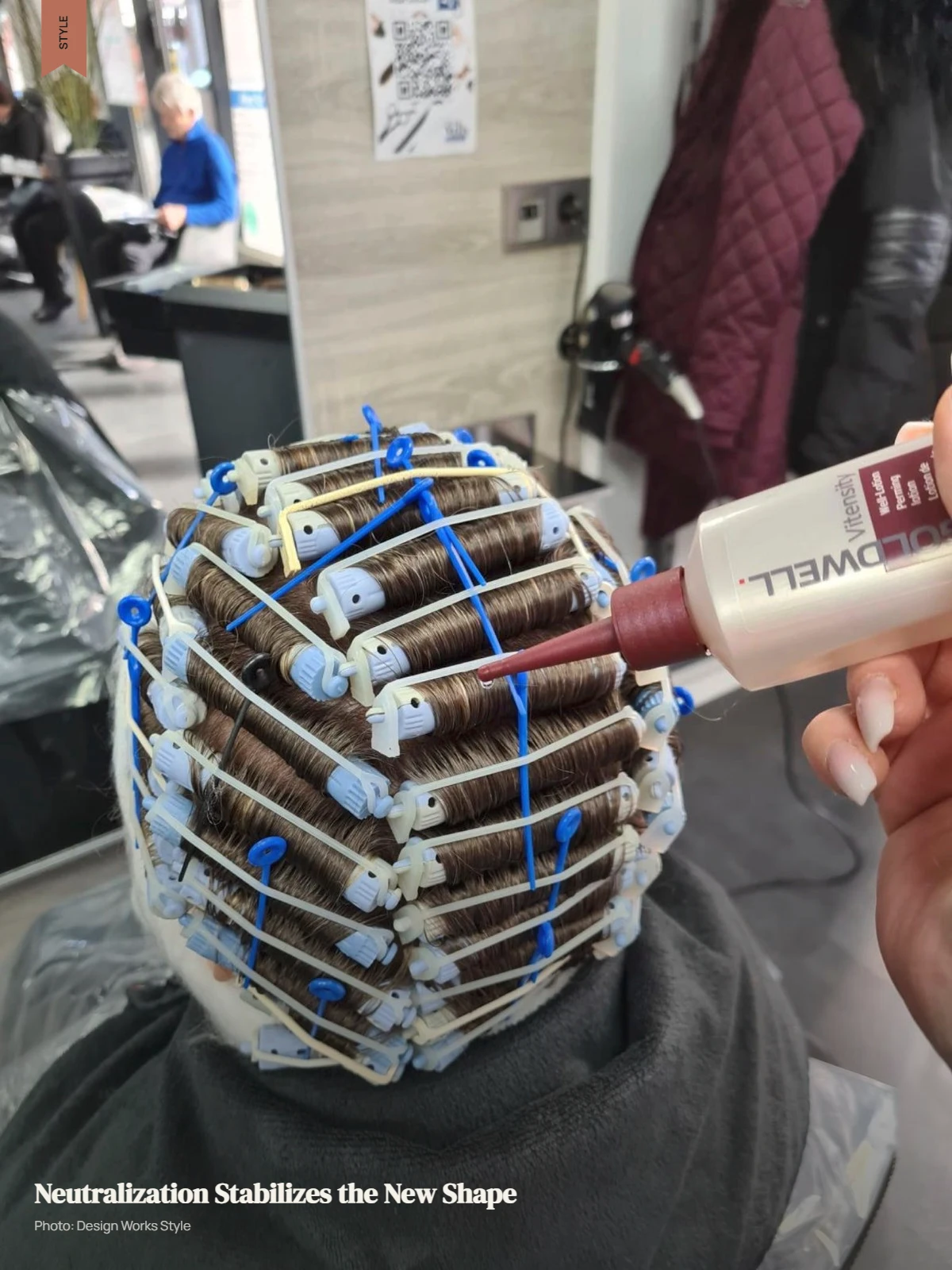
The exact products, timing, and application method depend on the professional system being used and the condition of the client’s hair.
Because chemical processing can affect hair differently, cold perms should be performed according to the product manufacturer’s instructions by a qualified professional.
Cold Perm vs. Digital Perm
The main difference is how the curl is created and set.
| Feature | Cold Perm | Digital / Heated Perm |
|---|---|---|
| Main approach | Chemical waving with rods | Chemical waving combined with controlled heat |
| Heat | Not central to the process | Used as part of the perming system |
| Typical result | Often more defined when wet | Often designed for a softer, looser finish |
| Styling behavior | Curl pattern can be visible without heat styling | Final appearance can be influenced by how the hair is dried and styled |
| Hair suitability | Depends on condition, texture, and desired result | Also depends on condition, texture, and desired result |
Neither method is automatically right for every person. Hair condition, previous chemical services, natural texture, and the desired curl pattern all need to be considered.
For a broader overview of different perm techniques, see our guide to Types of Perms.
What Kind of Curl Can a Cold Perm Create?
A cold perm can create different levels of curl depending on the technique.
Tighter Curls
Smaller rods can produce a more defined curl pattern. This can create a noticeably curly result rather than a loose wave.
Medium Curls
Medium-sized rods can create a balance between definition and movement. The result may work well when you want visible curls without an extremely tight pattern.
Loose Waves
Larger rods and a suitable wrapping technique can produce a softer wave. However, the exact result depends heavily on the hair’s natural texture, length, and condition.
Your stylist should assess your hair rather than selecting rod sizes based only on a photograph.
Which Hair Is Suitable for a Cold Perm?
Suitability depends more on hair condition and previous chemical processing than on one particular hair type.
Naturally straight, wavy, or lightly textured hair may all be candidates for a perm, but the starting point affects the final result.
Before a cold perm, your stylist may consider:
- Current hair condition
- Previous bleaching or coloring
- Previous chemical straightening or relaxing
- Hair density
- Natural texture
- Existing damage or excessive dryness
- Hair length and haircut
- The amount of curl you want
Previously processed hair can require additional caution because another chemical service may increase the risk of breakage or unwanted texture changes.
If your hair has been heavily lightened or chemically treated, discuss its condition honestly during the consultation before deciding on a perm.
How to Maintain a Cold Perm
A cold perm changes the hair’s structure, but it does not remove the need for normal hair care.
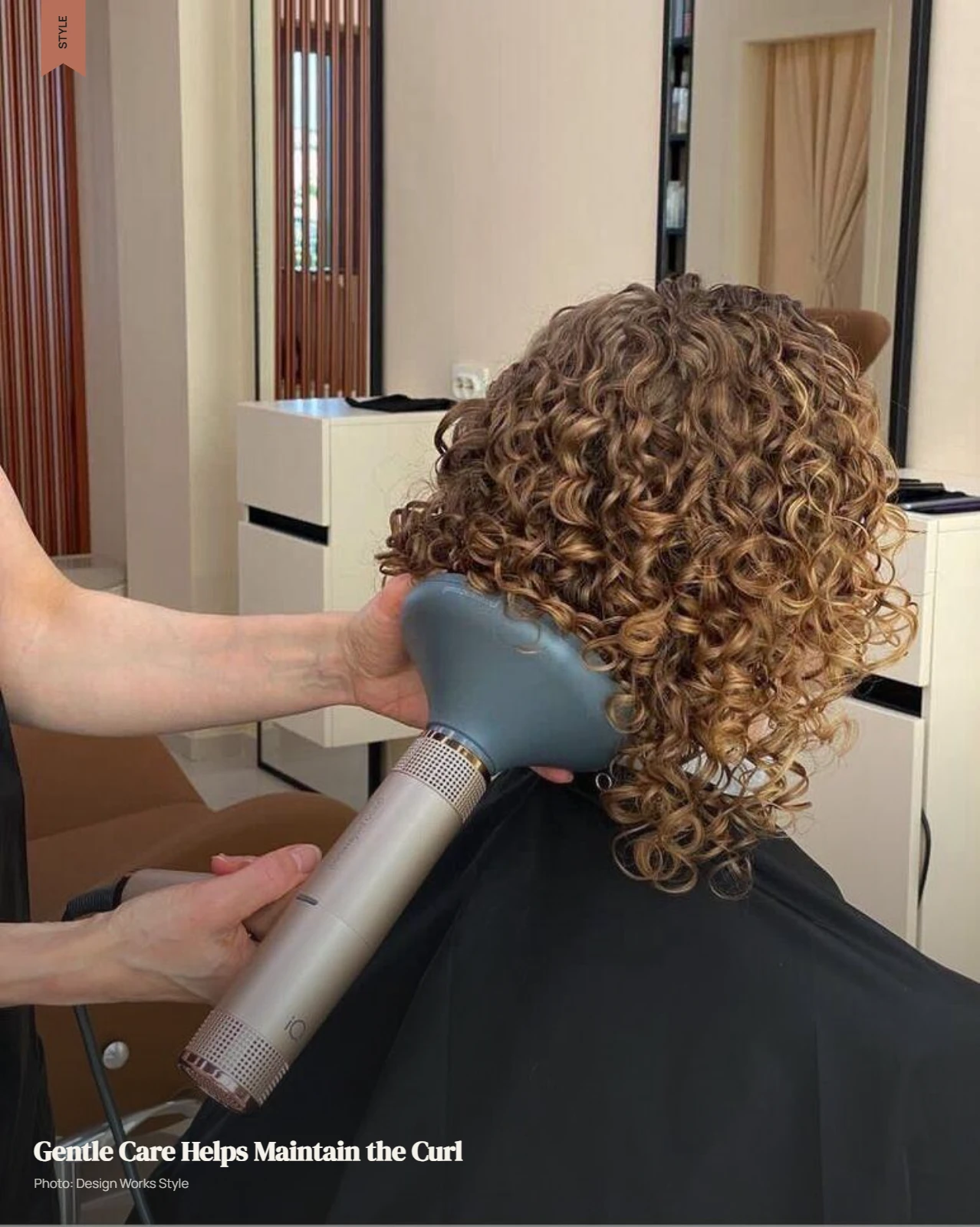
Your maintenance routine may include:
- Using products suited to your hair’s new texture
- Avoiding unnecessary heat styling
- Conditioning regularly
- Handling curls gently when wet
- Avoiding aggressive brushing that can disrupt the curl pattern
- Following your stylist’s recommendations for washing and styling
Curly or wavy hair often looks different depending on whether it is wet, air-dried, diffused, or brushed, so your styling routine can have a significant effect on the finished appearance.
There is no universal maintenance routine because the right approach depends on the hair’s condition and the products used during the service.
What Are the Tradeoffs?
A cold perm can provide a lasting change in texture, but it is still a chemical service.
Potential considerations include:
Chemical processing: A perm changes the structure of the hair, so there is potential for dryness, texture changes, or breakage, particularly when hair is already compromised.
Regrowth: New hair grows with your natural texture. This can eventually create a visible difference between the treated and untreated sections.
Styling: A perm may reduce the need to create curls from scratch, but you may still need to learn how your new texture behaves and which products work for it.
Result variation: A photo cannot guarantee an identical result. Hair history, density, texture, length, and technique all influence the finished pattern.
What to Ask During a Consultation
Bring a few reference photos that show the curl pattern you like, preferably on hair with a similar length and texture.
Then discuss:
- How tight or loose you want the curl
- Whether you want curls or waves
- How much daily styling you are willing to do
- Your previous color and chemical treatments
- Whether your current hair condition is suitable
- How the perm will work with your existing haircut
- What maintenance the stylist expects afterward
Be particularly clear about previous bleaching, coloring, straightening, relaxing, or other chemical services.
A professional should be able to explain whether the desired result is realistic for your current hair and suggest an alternative if the condition of the hair makes a perm unsuitable.
Frequently Asked Questions
Is a cold perm the same as a regular perm?
A cold perm is one type of traditional chemical perm. The term generally refers to a perming method that does not rely on heated rods in the way digital or heated perm systems do.
Does a cold perm create curls or waves?
It can create either, depending on the rods, wrapping technique, hair characteristics, and desired result. Smaller rods generally produce tighter patterns, while larger rods can produce softer movement.
Is a cold perm suitable for straight hair?
Straight hair can potentially be permed, but suitability depends on its condition, previous chemical treatments, density, and the desired result. A consultation is the best way to assess whether the service is appropriate.
Is a cold perm suitable for colored hair?
It depends on the type and condition of the colored hair. Hair that has been significantly lightened or chemically processed may require additional caution. Tell your stylist about all previous chemical services before proceeding.
Does a cold perm damage hair?
A perm is a chemical process that changes the structure of the hair, so it can contribute to dryness, weakness, or breakage. The risk varies with the hair’s starting condition, previous processing, products, and professional technique.
What should I bring to a cold perm consultation?
Bring reference photos showing the curl or wave pattern you want and be prepared to explain your previous color and chemical treatments. Your stylist can then assess whether the desired result is realistic for your hair.
Final Takeaway
A cold perm is a traditional chemical perming method that creates curls or waves without relying on the heated rod system used by digital perms. The result can range from defined curls to softer waves depending on the technique and the characteristics of your hair.
The most important considerations are your current hair condition, previous chemical treatments, desired curl pattern, and willingness to maintain the new texture.
For a broader look at different perm methods, see Types of Perms.