
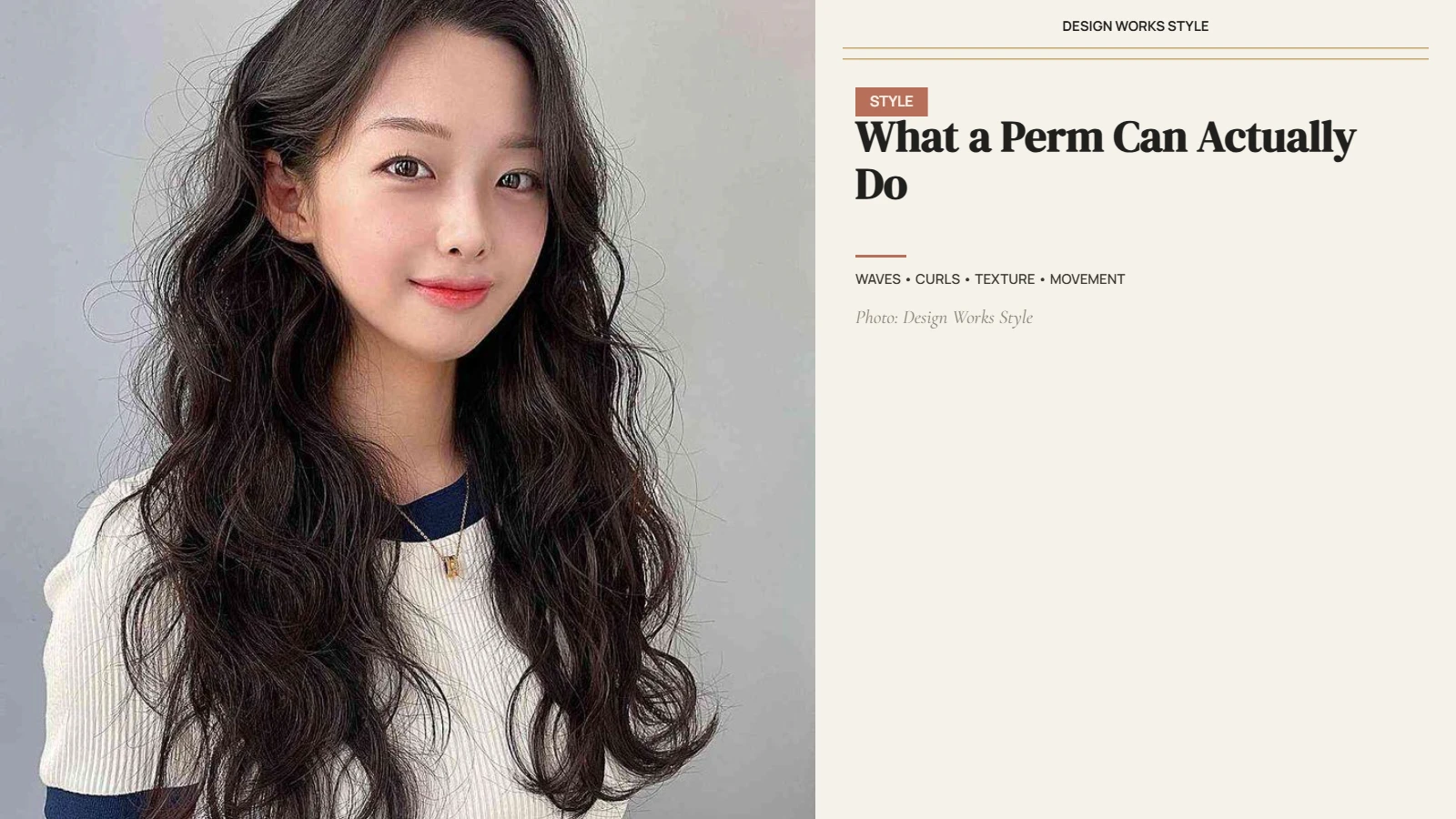
A perm is a professional chemical hair service that changes the hair’s pattern so it can hold a new wave or curl shape. Unlike temporary curling or waving, which changes how hair looks for a limited time, a perm changes the structure of the treated hair.
The result can range from soft waves and added movement to more defined curls. What makes sense for you depends on your starting hair, its condition, previous chemical treatments, the result you want, and how much maintenance you are willing to do.
A perm is also not one universal look. Different techniques and approaches can produce different patterns, which is why a good consultation matters before the service.
This guide covers what perms are, what they can do, the main approaches you may encounter, what to consider before booking, what happens during a professional appointment, and how to find more specific guidance on types of perms and perm aftercare.
What Is a Perm?
A perm, short for permanent wave, is a chemical service designed to change the pattern of the treated hair.
Temporary styling can use heat, rollers, braiding, or products to create a wave or curl. Those changes generally fade when the hair is washed or otherwise returned to its natural state.
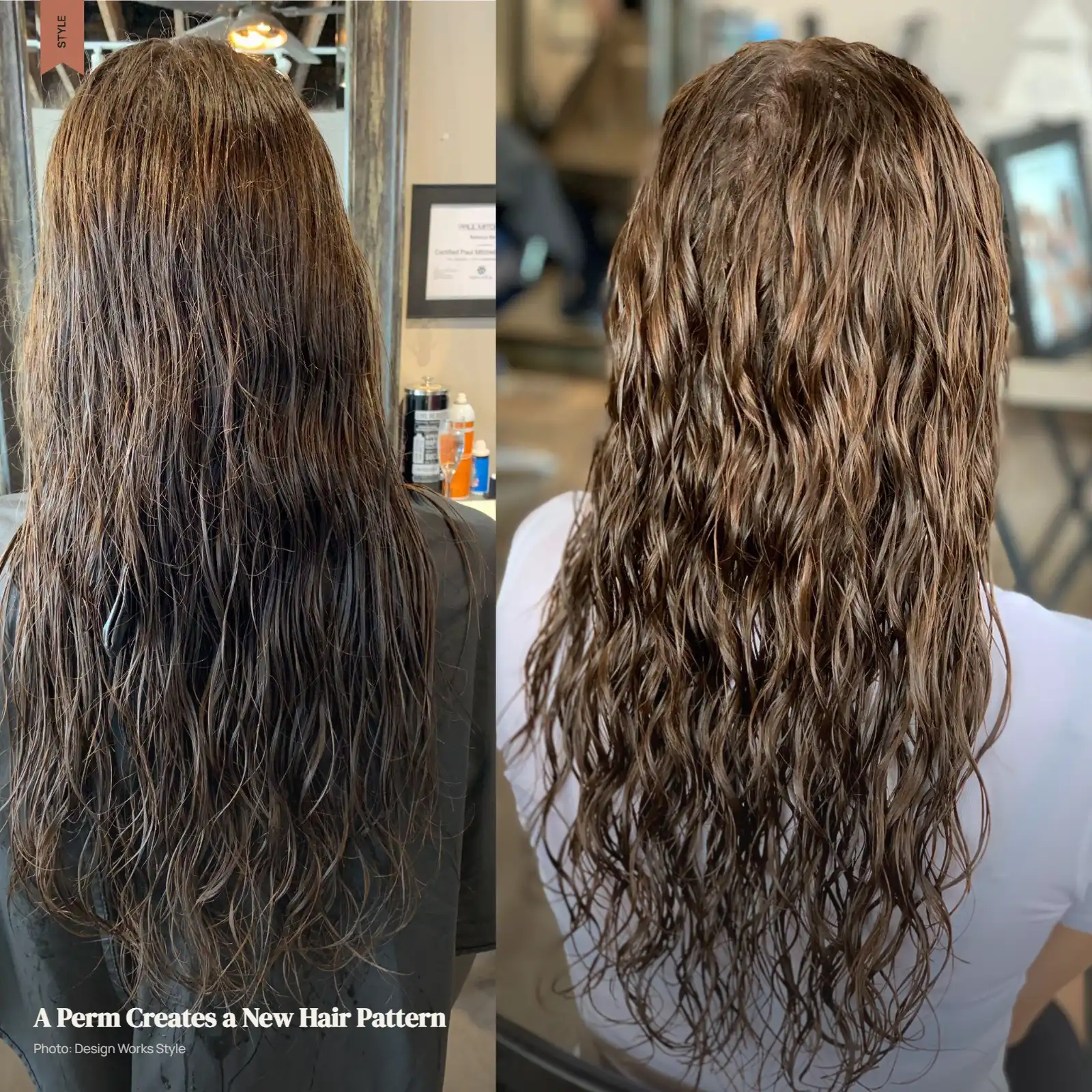
A perm works differently. The professional process changes the hair’s structure so the treated sections can hold a new wave or curl pattern.
The final result depends on several variables, including:
- The hair you start with
- Its texture and density
- Its current condition
- Previous chemical services
- The technique used
- The desired curl or wave pattern
- How the hair is subsequently styled and maintained
That is why a photograph of a particular perm should be treated as a reference rather than a guarantee of how your own hair will look.
The useful decision point
If you are considering a perm, do not start by asking only whether your hair is straight, wavy, or curly.
Start with two questions:
What pattern do I actually want, and is my current hair in suitable condition for the service?
Those questions give your stylist much more useful information.
Safety note: A perm involves chemical processing. The technical chemistry and processing should be handled by a trained professional rather than recreated at home.
What Can a Perm Do?
A perm does not automatically mean tight, uniform curls.
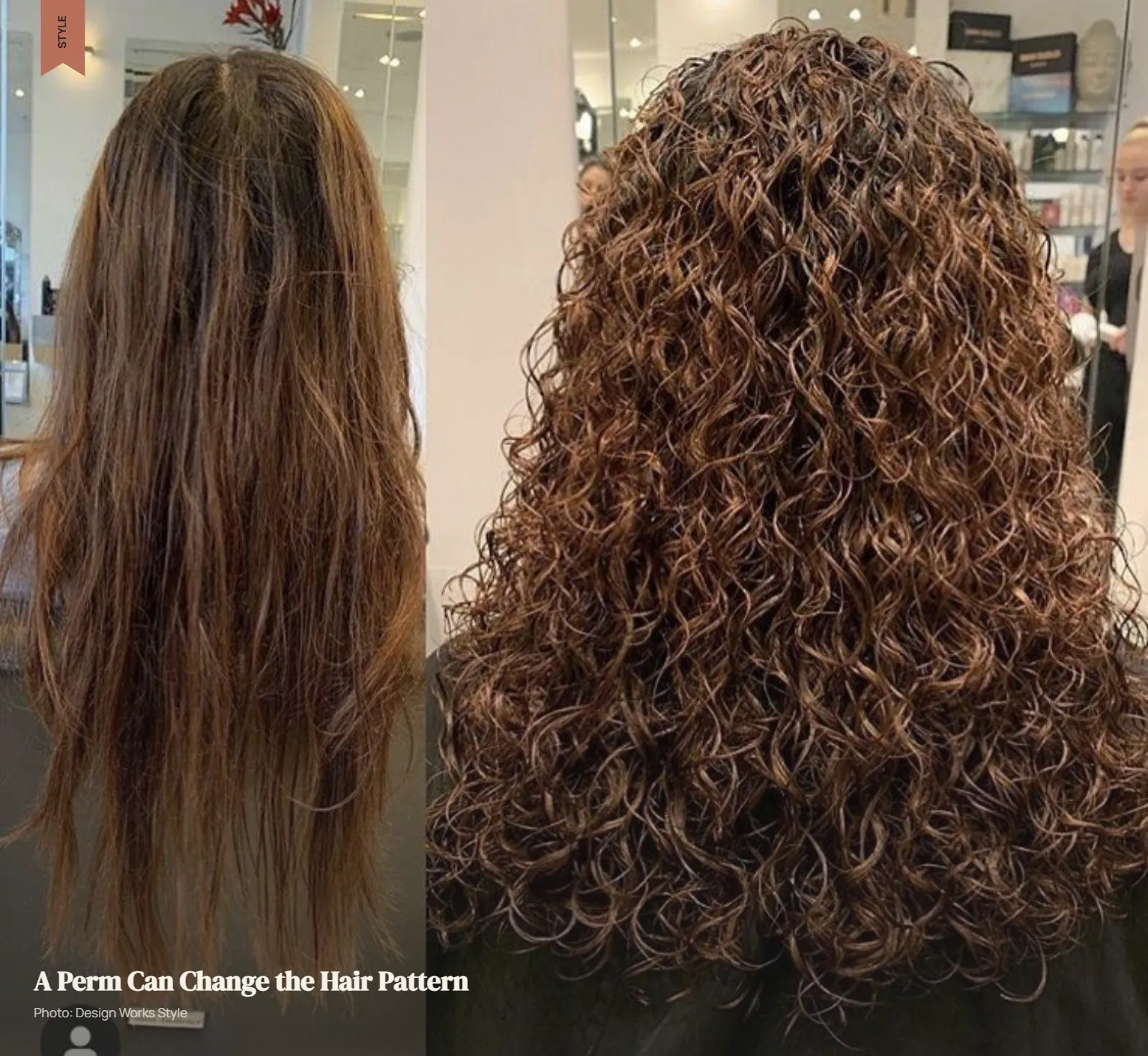
Depending on the technique, tools, hair characteristics, and desired outcome, a perm can be used to create different visual effects, including:
- Defined curls
- Softer waves
- Additional texture
- More visible movement
- A more consistent wave or curl pattern
The shape and size of the resulting pattern can vary considerably.
Someone looking for loose movement may have a very different consultation from someone who wants clearly defined curls. Even when two people request a similar general result, their existing hair can influence how that result develops.
This is why the consultation should focus on the pattern and finish you want, not simply the word “perm.”
What Types of Perms Are There?
There are several approaches to perming, and the terminology can be confusing when you first start researching them.
Different techniques can influence:
- Curl or wave pattern
- Amount of movement
- Overall finish
- Styling requirements
- How the result interacts with the person’s starting hair
The important thing to understand is that a perm is a category of chemical service, not one single finished hairstyle.
If you want to compare the different approaches in more detail, continue to our Types of Perms guide.
That page is the better resource when your question is specifically:
- Which types of perms are available?
- How do different techniques compare?
- What kind of curl or wave does each approach aim to create?
This broader page is about understanding the category and deciding what you need to research next.
Cold Perms and Other Approaches
“Cold perm” is one term you may encounter while researching perms.
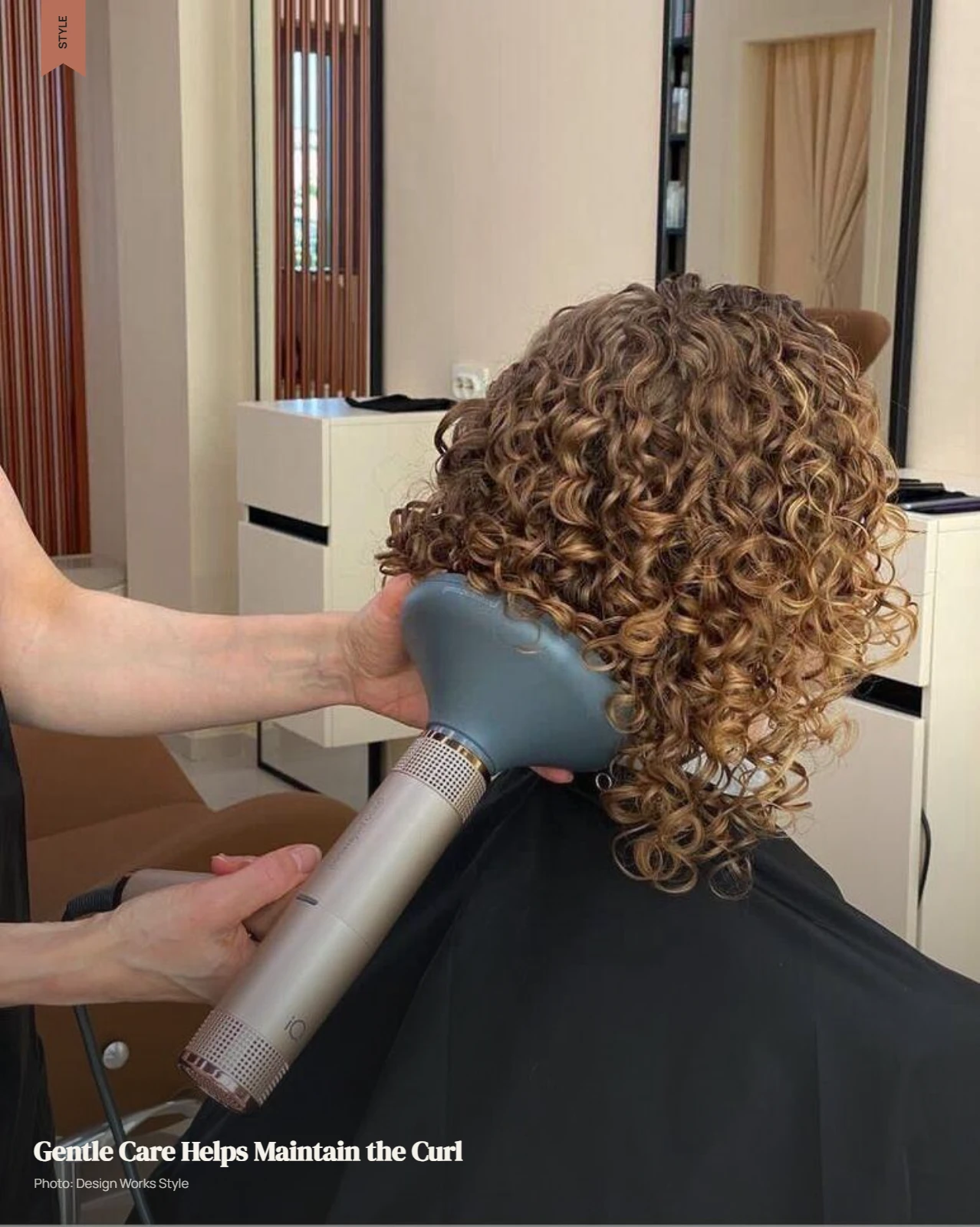
At a high level, the name refers to an approach within the broader perm category. The terminology can be confusing because people often encounter names for techniques, tools, products, and finished looks alongside one another.
You do not need to understand every technical distinction before having a consultation.
Instead, bring a clear idea of the result you want and ask your stylist which approach is appropriate for your hair.
If you want the detailed comparison of perm types and techniques, see Types of Perms.
The purpose of this page is to help you understand the landscape without turning the guide into a chemical-processing manual.
Image placement: If a technical visual is available and properly licensed, use a simple editorial illustration or salon image that helps distinguish different curl-pattern approaches without showing DIY chemical instructions.
Suggested alt text: Salon consultation discussing different perm curl patterns
Is a Perm Right for Your Hair?
This is one of the most important questions to answer before booking a service.
A perm changes the structure of the treated hair, so the condition and history of your hair matter.
Hair Condition
Hair that is already fragile, heavily processed, or visibly damaged requires additional caution before another chemical service.
Do not try to determine suitability from a single description or photograph.
Your stylist should assess the actual condition of your hair and discuss whether the service makes sense.
If your hair has undergone significant chemical processing, mention that during the consultation even if the previous service happened some time ago.
Previous Chemical Treatments
Tell your stylist about previous:
- Hair color
- Lightening or bleaching
- Straightening
- Relaxing
- Other chemical services
The history of your hair can affect how a perm should be approached.
Do not assume that enough time between services automatically makes every combination suitable. Your stylist needs to consider the condition and history of the hair as a whole.
Hair Texture and Density
Your starting texture and density can influence the finished appearance.
Straight, wavy, and curly hair may respond differently to the same general approach. Density can also affect how much volume and visual fullness the finished result has.
These factors can also change maintenance requirements.
Desired Result
Be specific about what you want.
Instead of saying:
“I want a perm.”
Try explaining whether you are looking for:
- Soft waves
- Defined curls
- More movement
- Additional texture
- A particular curl direction or finish
A reference photograph can help, especially if it shows the hair clearly from more than one angle.
Remember that the reference is an example of a desired direction, not a promise of an identical result.
Maintenance Commitment
A perm changes the hair’s pattern, but it does not eliminate styling or maintenance.
You may still need to:
- Cleanse and condition the hair
- Detangle carefully
- Manage drying
- Adjust heat styling
- Use suitable styling products
- Maintain the haircut
- Manage new growth
Think about the routine you are willing to maintain before deciding on the service.
Image placement: Use a realistic salon consultation image showing a stylist discussing the client’s existing hair and desired result.
Suggested alt text: Stylist consulting with client about a perm and desired curl pattern
What to Expect From a Perm Appointment
A professional perm appointment generally begins with a consultation rather than immediately applying products.
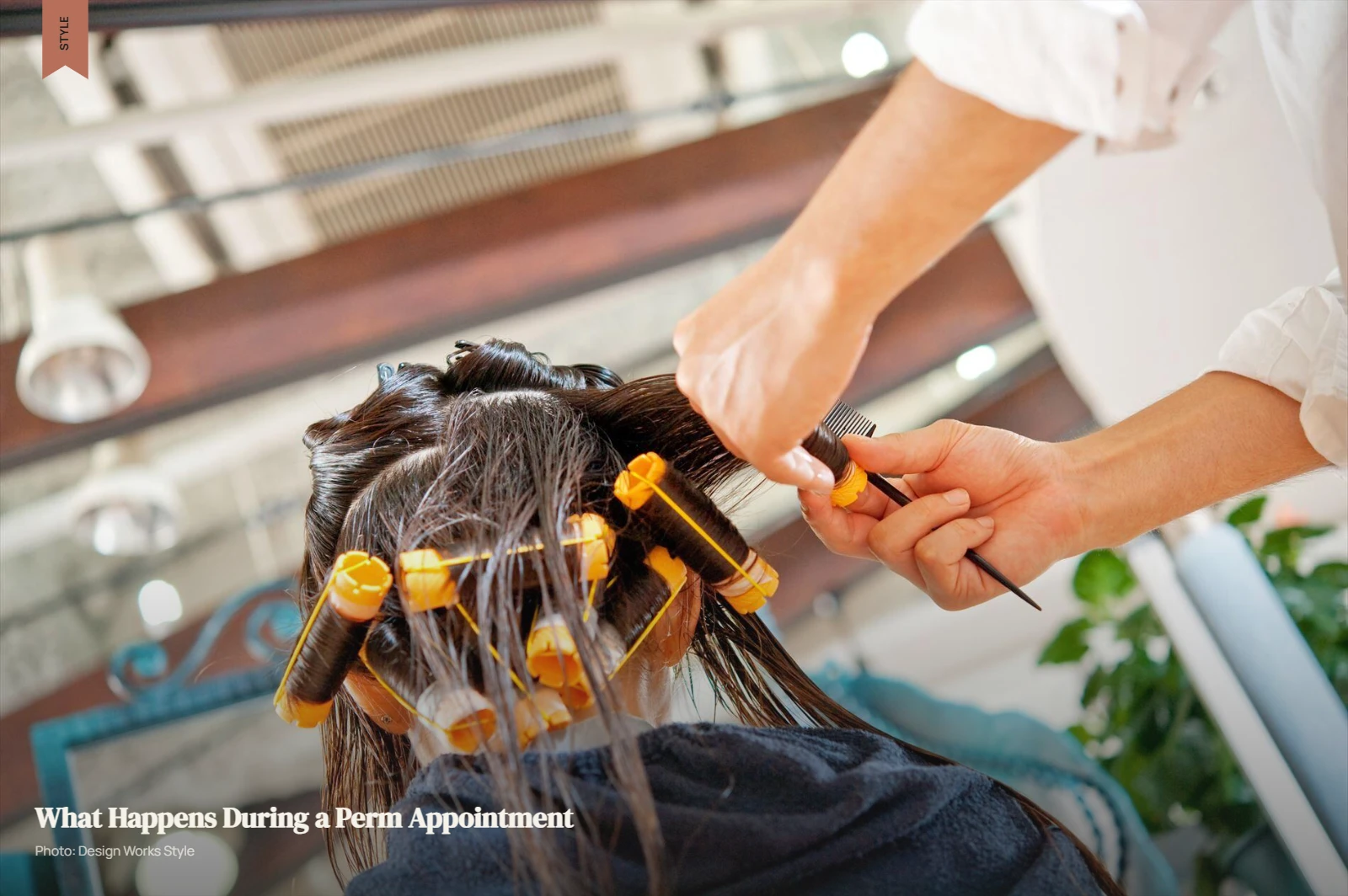
The exact experience varies, but the process can broadly include:
1. Consultation
You discuss the result you want, your current hair, and your previous chemical services.
2. Hair assessment
Your stylist considers the condition, texture, density, and history of your hair.
3. Choosing the desired pattern
The stylist determines an appropriate approach based on the result you are trying to achieve and the characteristics of your hair.
4. Sectioning and professional product application
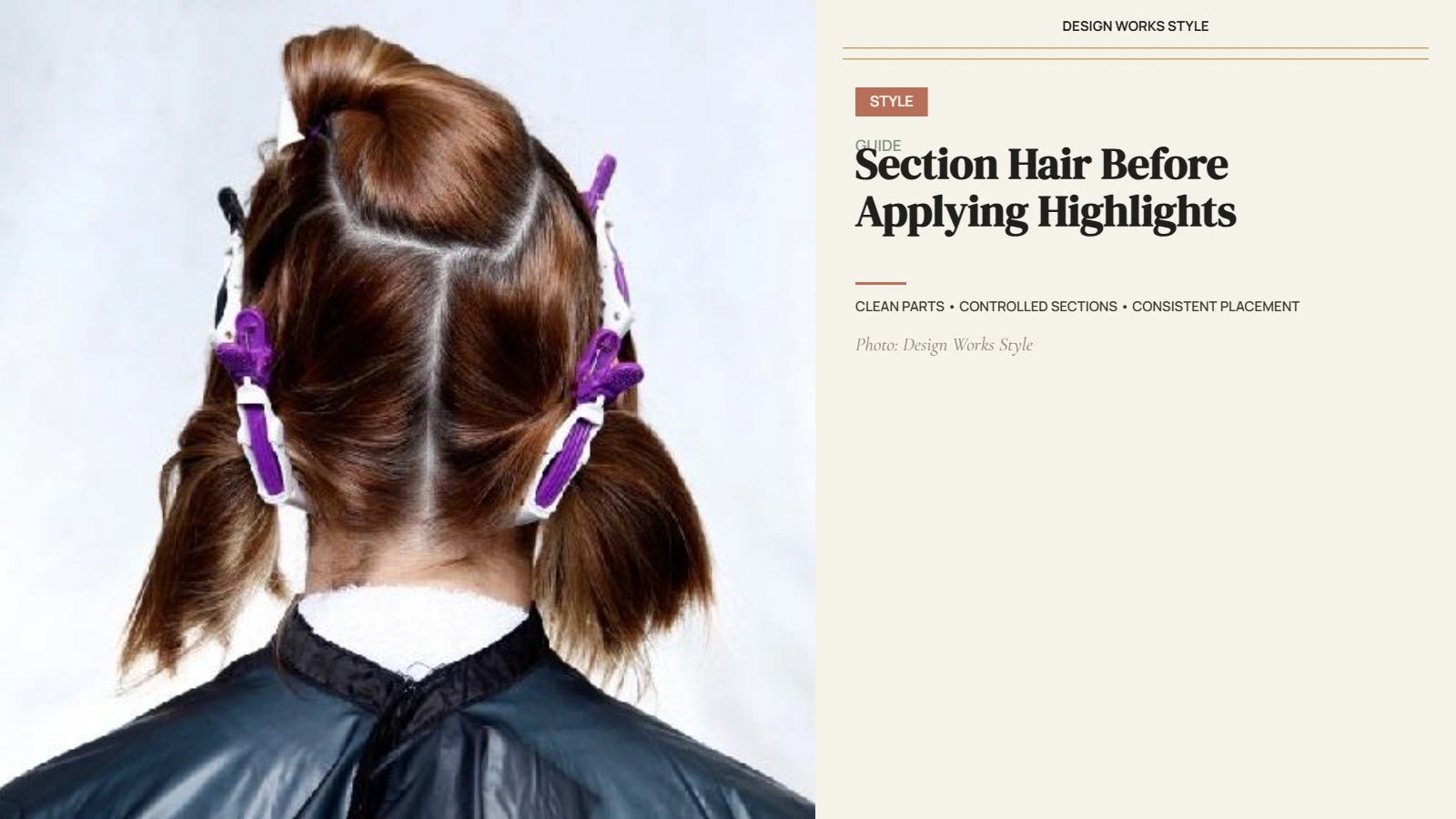
The hair is sectioned and the appropriate professional products and tools are used as part of the service.
5. Processing and shaping
The hair undergoes the professional processing required for the selected service while being shaped into the intended pattern.
6. Rinsing and finishing
The hair is rinsed and finished according to the service.
7. Styling guidance
Your stylist may explain how to cleanse, condition, dry, and style your newly permed hair.
This overview is intended to explain what a salon appointment involves. It is not a set of instructions for performing a perm yourself.
Perm Maintenance and Aftercare
Once the service is complete, your routine should begin with the instructions given by your stylist.
There is no universal first-wash waiting period that applies to every perm. Timing can depend on the service, products used, and the instructions provided for your particular hair.
Ongoing care generally involves:
- Following service-specific instructions
- Gentle cleansing
- Regular conditioning
- Careful detangling
- Gentle drying
- Thoughtful use of heat
- Comfortable sleeping and everyday handling
- Maintaining the haircut
- Paying attention to changes in hair condition
Your styling routine should also account for the altered texture of the hair.
If you want detailed guidance on washing, conditioning, detangling, drying, sleeping, heat styling, and ongoing care, see our Perm Aftercare guide.
This page provides the overview; the aftercare guide is designed for the day-to-day details.
How Long Does a Perm Last?
A perm is designed to create a lasting change in the treated hair, but the visible result does not remain exactly the same forever.
Over time, the appearance can change as:
- New hair grows
- Treated hair ages
- The curl or wave pattern changes
- Hair is washed and styled
- Ends are trimmed
- The haircut changes
There is no single guaranteed duration that applies to every perm.
Longevity can vary according to the technique, your hair characteristics, maintenance, styling habits, and individual growth.
It is also important to distinguish between the treated hair and new growth. The hair that grows after the service has not undergone the same chemical change, so the overall appearance can gradually become different as more untreated hair appears.
Common Questions Before Getting a Perm
Does a perm work on every hair type?
Not necessarily. Suitability depends on the condition and history of your hair, previous chemical services, your starting texture and density, and the result you want. A professional assessment is particularly important if your hair has been heavily processed or is already fragile.
Can you get a perm if your hair is colored?
It depends on the condition and history of the hair. Color and other chemical services can affect whether another chemical service is appropriate, so tell your stylist about previous processing and allow them to assess the hair before proceeding.
Does a perm damage your hair?
A perm is a chemical service and can affect the hair. The potential impact depends on factors such as the hair’s condition, previous processing, technique, and professional handling. That is why assessing the hair before the service is important.
Can a perm create waves instead of tight curls?
Yes, different techniques and approaches can produce different wave and curl patterns. The desired result should be discussed during the consultation so the stylist can determine an appropriate approach for your hair.
Can you style permed hair?
Yes. Permed hair can still be styled, but the routine should account for its altered texture and condition. Cleansing, conditioning, drying, heat use, products, and everyday handling can all affect how the result looks and feels.
What to Ask Your Stylist Before Getting a Perm
A consultation is your opportunity to understand both the potential result and the maintenance involved.
Consider asking:
- What type of perm would suit the result I want?
- Is my current hair condition suitable for this service?
- How will my existing color or chemical treatments affect the result?
- What maintenance will I need?
- What products or styling approach do you recommend?
- What should I avoid immediately after the service?
- How will the result change as my hair grows?
Bring reference images when possible.
A good reference should communicate the type of wave or curl you want rather than simply showing a person whose overall appearance you like.
If you have several photographs, point out what you like about each one. You may prefer the curl pattern from one reference, the amount of volume from another, and the overall length from a third.
That gives your stylist more useful information than simply asking to reproduce one photograph.
Explore the Perm Guides
Once you understand the basics of perms, your next question will determine which guide is most useful.
If you want to understand the different techniques and approaches, continue with Types of Perms.
If you already have a perm or are preparing for one and need practical guidance on caring for the hair, continue with Perm Aftercare.
The cluster is intentionally divided this way:
Perms
The broad overview: what a perm is, what it can do, what to consider, and what to expect.
Types of Perms
The detailed comparison of different perm types and techniques.
Perm Aftercare
The practical routine for caring for permed hair after the service.
This lets you go directly to the level of information you actually need rather than reading the same information across multiple pages.
The Bottom Line
A perm is a chemical service that changes the pattern of treated hair so it can hold a new wave or curl shape.
The important decision is not simply whether you want “a perm.” Consider the pattern you want, the condition and history of your hair, your natural texture and density, and the amount of maintenance you are willing to do.
A professional consultation can help determine whether the service and desired result are appropriate for your hair.
If you are still deciding which approach interests you, start with Types of Perms. If you already have a perm and need help caring for it, go to Perm Aftercare.
Frequently Asked Questions
How does a perm actually work?
A chemical solution breaks the hair’s bonds, the hair is wrapped around rods to set the new shape, then a neutralizer locks it in. The result is curl or wave that lasts for months.
Does a perm damage hair?
It is a chemical process, so some dryness is normal, especially on already-colored or bleached hair. A strand test and an honest consultation protect you from the worst outcomes.
How long does a perm last?
Typically three to six months, depending on hair length, the perm type, and aftercare. Shorter hair shows the pattern longer because there is less weight pulling it down.
Can I get a perm on colored hair?
Sometimes, but bleached or heavily processed hair is risky. Tell your stylist your full color history and expect a strand test first. Our perm aftercare guide covers what comes next.