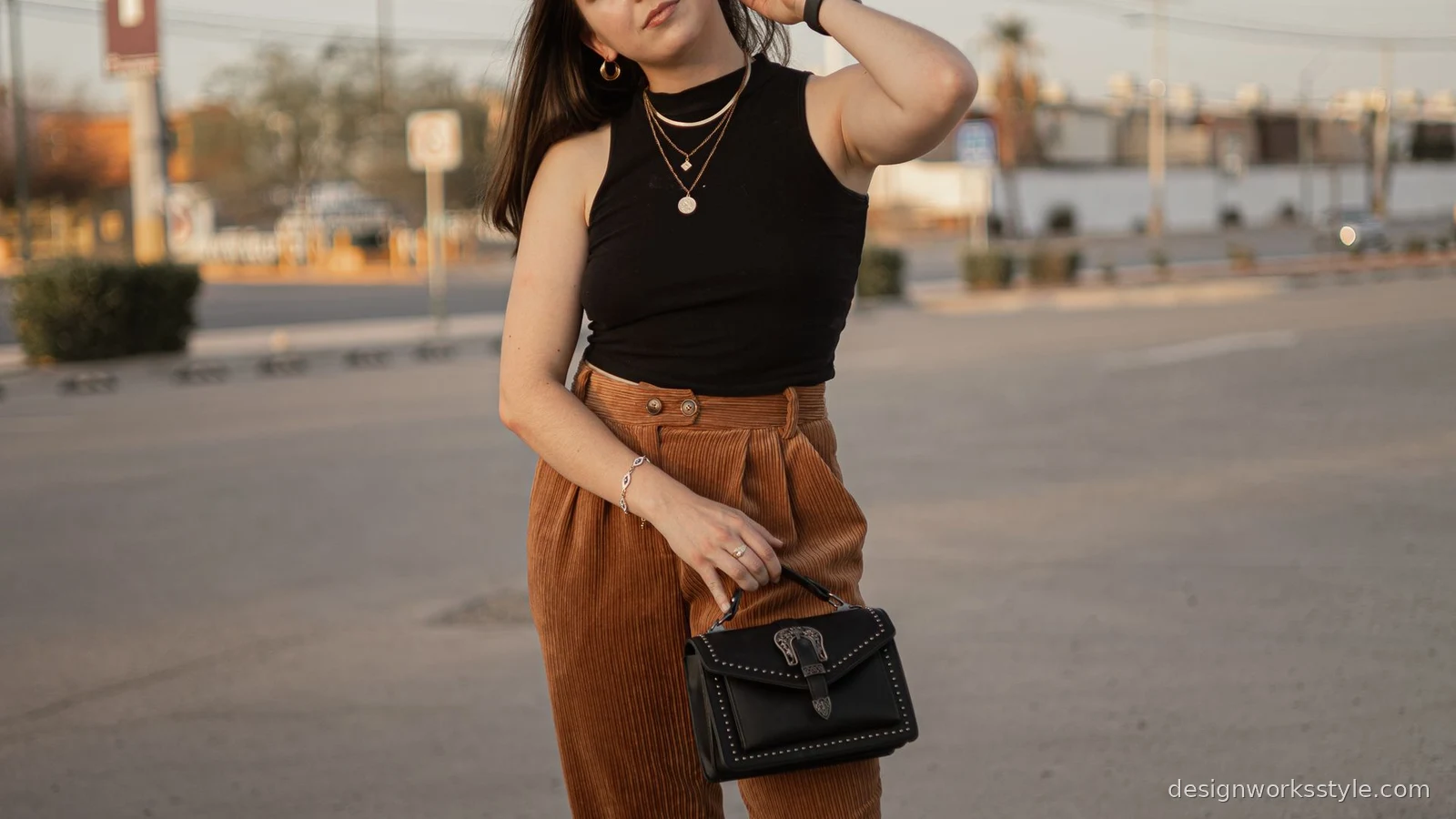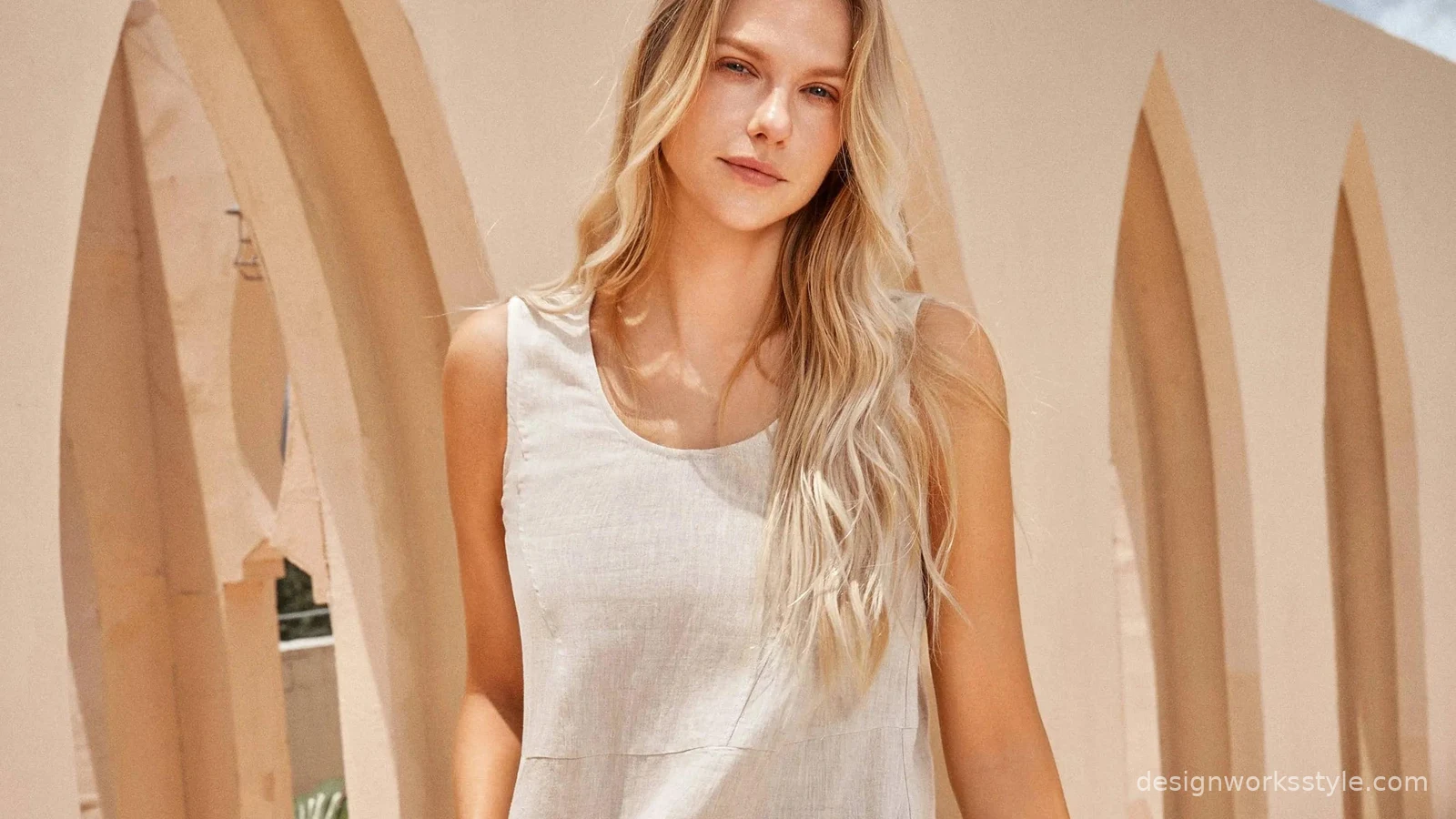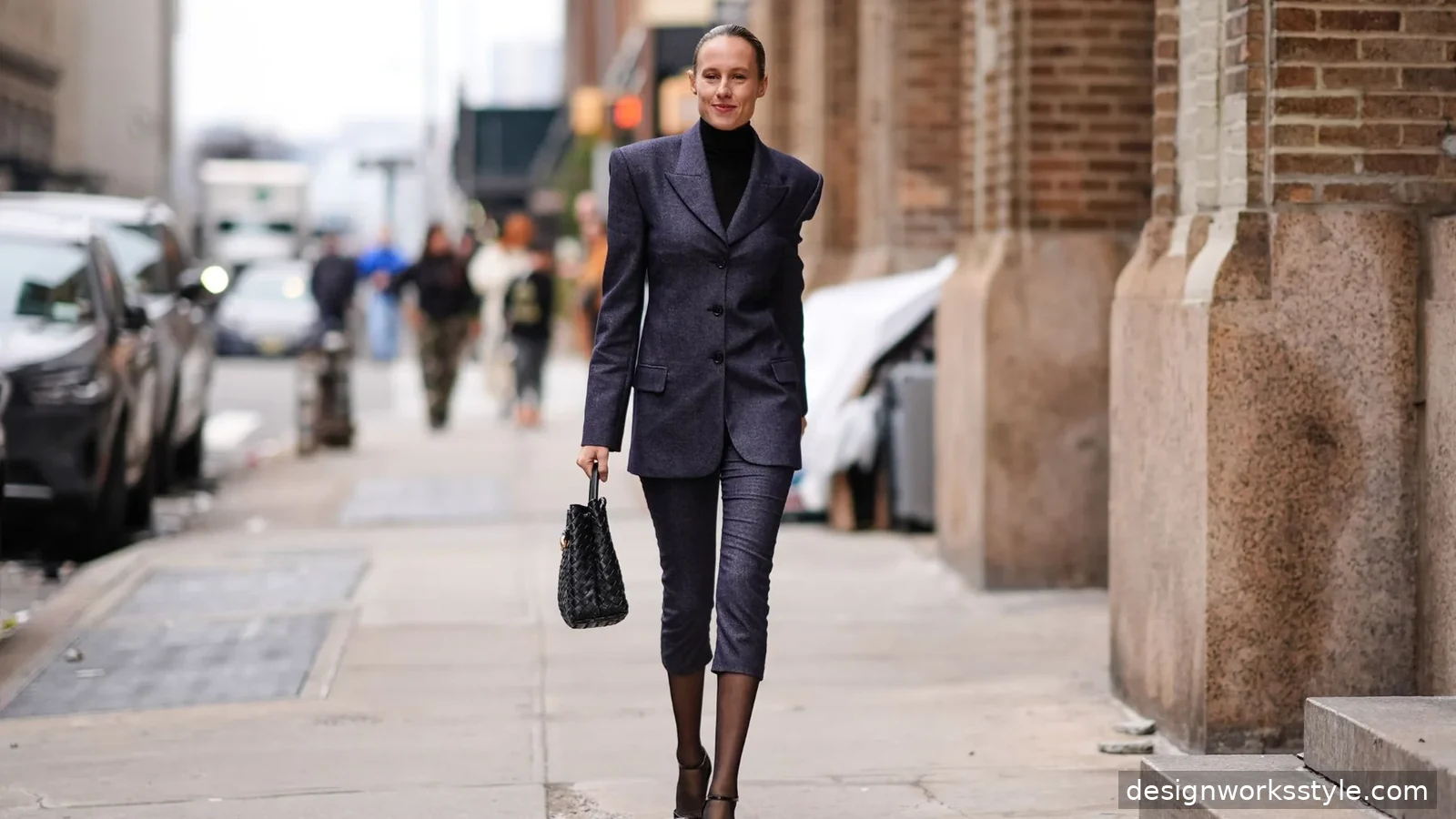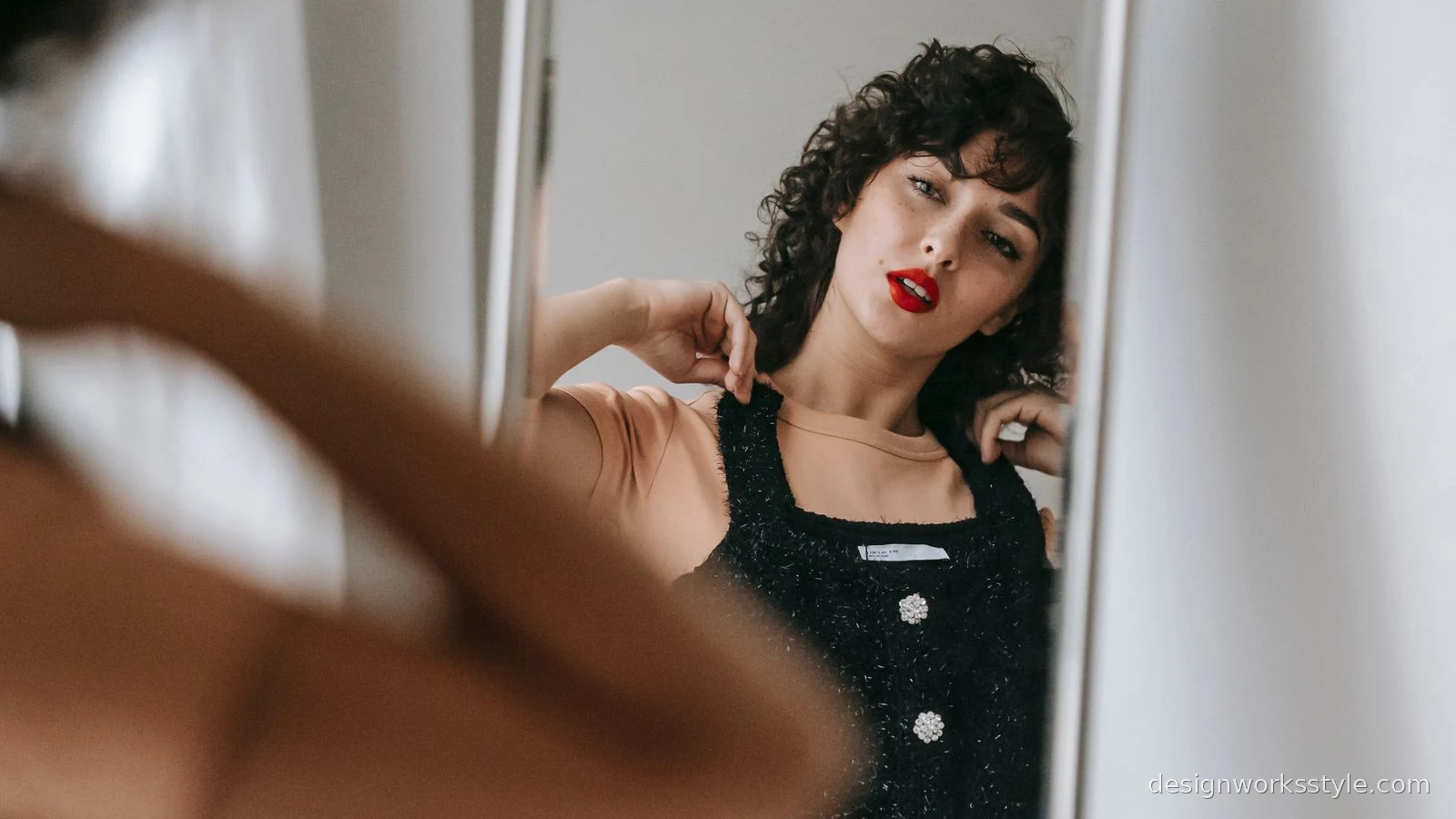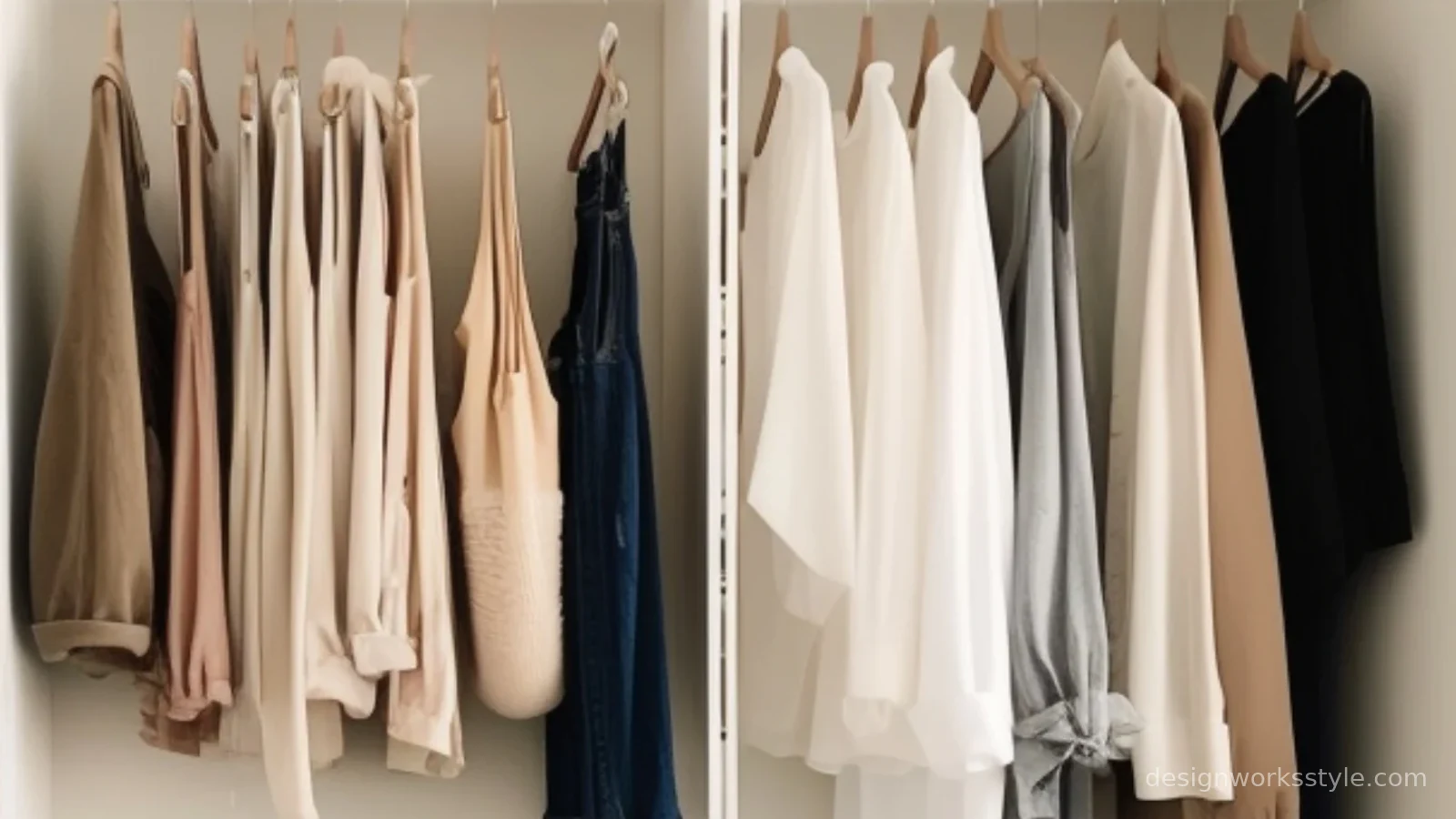


Workwear fashion means clothes that fit the office dress code, feel comfortable for a full day, and mix with each other so a small set of pieces covers a whole week. Start with neutrals, add one accent color, and buy shoes you can walk in.
What Do the Main Office Dress Codes Actually Mean?
Business formal means a suit or a tailored dress with closed-toe shoes, business casual means trousers or a skirt with a blouse and no full suit, smart casual drops the suit but keeps the outfit neat, and creative offices allow jeans and bolder colors. Dress one step above the code in your first week, then match what colleagues wear.
Business formal still exists in law firms, banks, and client-facing roles. A dark suit, a plain blouse or shirt, closed-toe shoes, and minimal jewelry are the safe base. Patterns stay quiet: pinstripes, fine checks, and solid colors. A sheath dress with a blazer counts as business formal when the hem sits at or below the knee and the fabric holds its shape.
Business casual is the most common office code, and also the vaguest. Trousers, a skirt, or a smart dress, paired with a blouse, a knit top, or a blazer, all fit. Jeans usually do not, unless the office says so plainly. Skip shorts, flip-flops, and graphic tees. When the written code says “business casual” but the team wears suits on client days, keep a blazer at your desk for those meetings.
Smart casual and creative codes give more room. Dark jeans with a blazer, a midi dress with loafers, or tailored trousers with a printed blouse all work. The line is still neatness: clean shoes, no wrinkles, no gym clothes. If you are unsure about a new office, ask what people wear on a normal Tuesday, not what they wear to the holiday party. Tuesday is the truth.
Which Pieces Should a Work Wardrobe Start With?
A work wardrobe starts with six pieces: a blazer, tailored trousers, a pencil or A-line skirt, two blouses, and a sheath dress. Those six mix into a week of outfits before you buy anything else, and each one earns its place by pairing with at least three others.
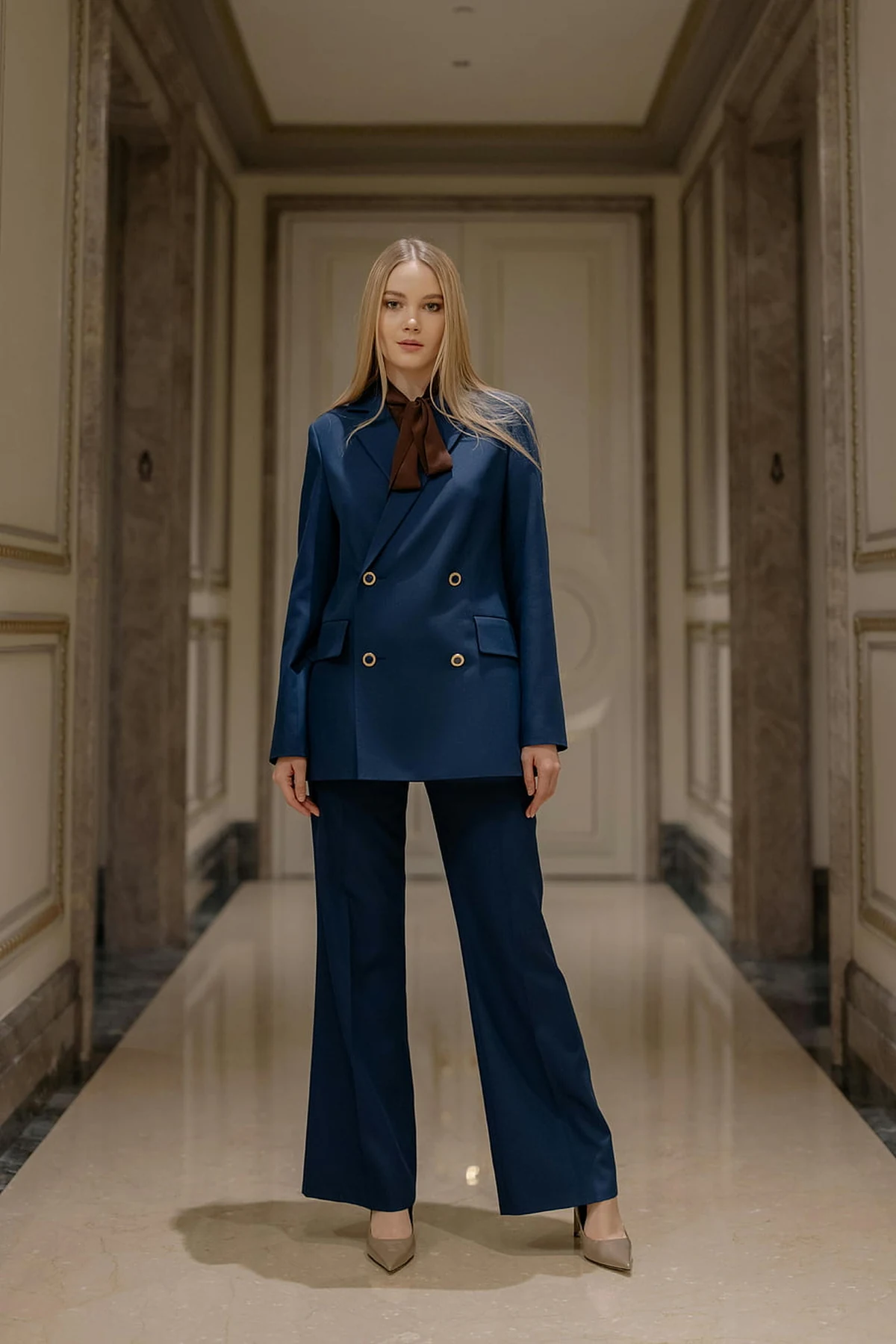
The blazer does the most work. A single-breasted blazer in navy or charcoal, with a fit that closes without pulling, turns jeans into a smart outfit and a dress into a meeting outfit. Check the shoulders first: the seam should sit at the edge of your own shoulder, not past it. A blazer that fits in the shoulders can be tailored at the waist; one that does not fit in the shoulders usually cannot be fixed.
Trousers should sit at the natural waist and break slightly over the shoe. A straight or tapered leg suits most offices, and a crease down the front reads as formal while a flat front reads as relaxed. Buy the length for the shoes you wear most: trousers hemmed for flats pool around heels, and trousers hemmed for heels trip you in flats.
Blouses fill the gap between tops and shirts. One white blouse, one in a soft color or small print, and both in a fabric that does not need ironing at lunch. Silk looks polished but stains and wrinkles fast; a silk-blend or a good polyester crepe holds up better through a long day. The sheath dress covers days when you want one piece instead of two: add a blazer for meetings, remove it at your desk, and the outfit shifts without a change of clothes.
How Do You Build a Week of Work Outfits?
Build a week of work outfits by starting with five bottoms and five tops, then pairing each top with two bottoms so no combination repeats. Write the pairs down on Sunday night, hang them in order, and mornings take five minutes instead of twenty.
Monday can carry the blazer and the darkest trousers, since the week starts with meetings for many people. Tuesday pairs the sheath dress with loafers. Wednesday uses the skirt with a knit top. Thursday repeats the trousers with the second blouse. Friday, where the code allows, swaps in dark jeans with the blazer. The same pieces repeat, but no full outfit repeats, which is what keeps a small wardrobe from looking small.
Rotation matters more than volume. A blouse worn Monday and again Thursday reads as fresh when the bottom, shoes, and accessories change. A blouse worn three days in a row reads as a uniform. Keep a simple rule: no piece appears in the same combination twice in one week, and every piece gets a rest day between wears so it can air out and hold its shape.
For the small-wardrobe system behind this rotation, see our capsule wardrobe guide, which shows how a few dozen pieces cover a whole season. For fits that suit your shape, see our dress for your body type guide before you buy trousers or skirts.
What Colors and Fabrics Work Best for the Office?
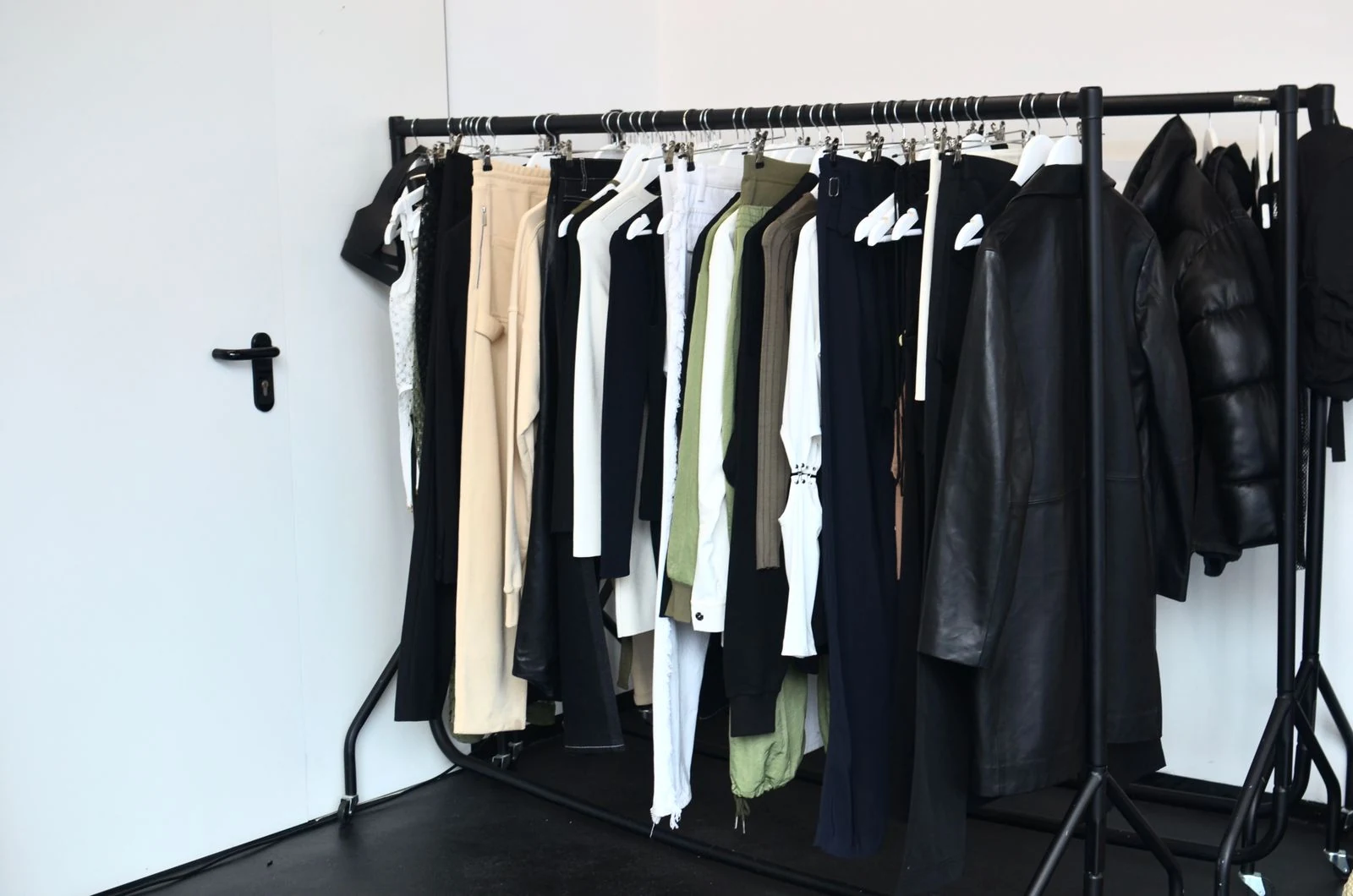
Office colors run dark and quiet: navy, charcoal, black, and gray as the base, white and cream as the light neutrals, and one accent like burgundy, teal, or dusty blue for variety. Fabrics should hold a crease through a seated day, which points to wool blends, cotton with stretch, and crepe.
Navy is the most useful office color. It pairs with white, cream, gray, burgundy, and olive, and it looks less severe than black while still reading as formal. Charcoal suits gray and black wardrobes, and it hides wear better than black, which fades to gray at the elbows and knees. White blouses brighten a dark outfit, but buy a weight that is not see-through under office lights.
For the color system behind these pairings, see our color matching outfits guide. Accent colors work best as one piece per outfit: a burgundy blouse under a navy blazer, a teal scarf with gray trousers, or a dusty blue knit with charcoal. Two accents in one outfit compete, and the result looks busy in a meeting room.
Fabric choice decides whether an outfit survives the day. Wool blends breathe and hold shape, cotton with a little stretch moves with you, and crepe drapes without wrinkling. Pure linen wrinkles by lunch and pure silk stains at the first coffee spill, so save both for days with no long meetings. Check the care label before buying: work clothes you cannot wash at home cost time and money at the dry cleaner every week.
What Shoes and Bags Suit Work Days?
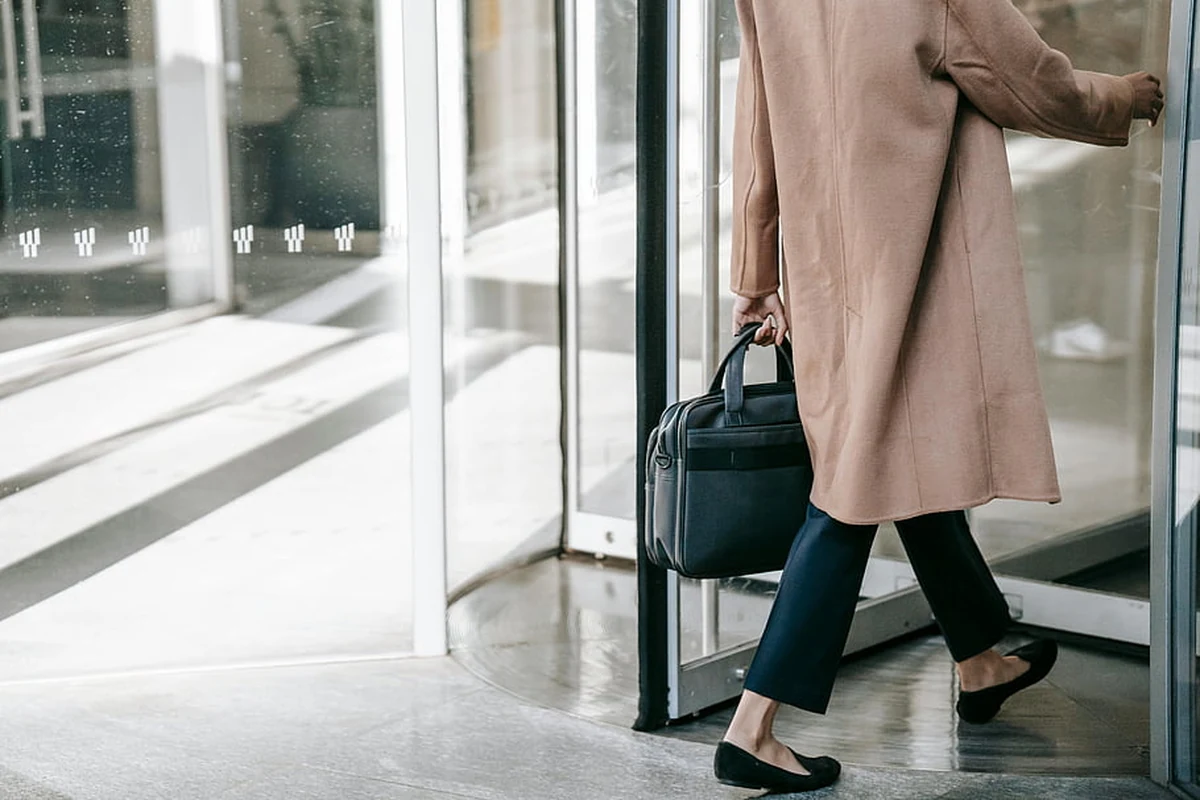
Work shoes need a low, stable heel, a cushioned sole, and a closed toe for most offices, while work bags need structure, room for a laptop, and a color that pairs with every outfit. Buy both for the commute first and the desk second, since the walk to the office is where cheap shoes fail.
Loafers are the safest work shoe. Leather loafers in black or navy pair with trousers, skirts, and dresses, and they walk well on city streets. A low block heel, one to two inches, adds height without the pain of a stiletto on a long day. Pointed flats suit narrow feet and slim trousers, while round-toe flats suit wider feet. Break in new shoes at home for a few evenings before a full workday.
Keep a second pair at the office if the commute is long. Walk in comfortable shoes, change into work shoes at your desk, and both pairs last longer. For the bag, a structured tote in black, navy, or tan holds a laptop, a notebook, and a wallet without sagging. Leather lasts longer than coated canvas in rain. For the full bag guide, see our how to accessorize guide, which covers bags by occasion.
How Do You Take One Outfit From Work to Evening?
Take a work outfit to evening by changing three things: shoes, jewelry, and one layer, while the base outfit stays the same. Swap loafers for a low block heel, add a bolder earring or a cuff, and trade the blazer for a leather jacket or remove it entirely.
The base matters: a sheath dress or dark trousers with a silk-blend blouse carry into the evening, while a gray suit with a white shirt reads as office no matter what you add. Dark colors help here, since navy and black look right under evening light. A clutch or a small crossbody replaces the work tote, since a large bag beside a dinner outfit looks out of place.
Hair and nails finish the shift. A sleek bun or a fresh blowout changes the whole outfit without a change of clothes, and a neat manicure shows at dinner in a way it does not at a desk. For hairstyles that hold up through a long day, see our hair styling guide, and for nail shades that suit work and evenings alike, see our elegant nude nails gallery.
How Do You Build Workwear on a Budget?
Build workwear on a budget by spending on the blazer and shoes, saving on blouses and knit tops, and buying secondhand for coats and leather bags. The pieces people see most, and the pieces that take daily wear, deserve the money; the layers underneath do not.
A good blazer costs more than a good blouse, and it should: it frames every outfit, it takes daily wear, and a cheap one shows it at the shoulders and lapels within weeks. Shoes follow the same logic, since cheap shoes hurt by lunch and wear out in months. Blouses, knit tops, and simple skirts cost less to replace, so buy those at lower prices and replace them when they fade.
Secondhand shops suit workwear well, since blazers, wool coats, and leather bags are classic shapes that change little year to year. Check the seams, the lining, and the elbows before buying. End-of-season sales suit coats and boots. For the budget system behind this, see our spring outfit ideas guide, which covers transitional pieces that stretch across seasons.
Frequently Asked Questions
Can I wear jeans to work?
It depends on the office code. Creative and smart casual offices usually allow dark, well-fitting jeans with a blazer, while business formal and most business casual offices do not. Check what colleagues wear on a normal day, and when unsure, wear trousers. Dark jeans without rips or fading are the only kind that pass in an office.
How many work outfits do I actually need?
Five bottoms and five tops, mixed so no combination repeats, cover a work week, and a second set of the same size covers two weeks without repeats. Add a blazer, a coat, and two pairs of shoes, and the wardrobe stays small while the outfits stay fresh. More pieces help only when each new piece pairs with at least three things you already own.
What should I wear to a job interview?
Wear a dark suit or a tailored dress with a blazer, closed-toe shoes, and minimal jewelry, one step above the office’s normal code. A suit in navy or charcoal with a white or light blouse is the safe choice for most industries. Creative roles allow more color and personality, but neatness still matters: clean shoes, pressed clothes, and no strong perfume.
How do I keep work clothes looking new?
Wash on cold, hang to dry, and rotate pieces so none gets worn two days in a row. Steam instead of ironing when the fabric allows it, since steam is gentler on wool blends and crepe. Keep a lint roller and a stain pen at your desk, and repair a loose button or hem at once, since small damage spreads fast with daily wear.
Start with the dress code, buy the blazer and shoes first, and let a small set of neutrals carry the week. Work dressing stays simple once each piece pairs with several others.