
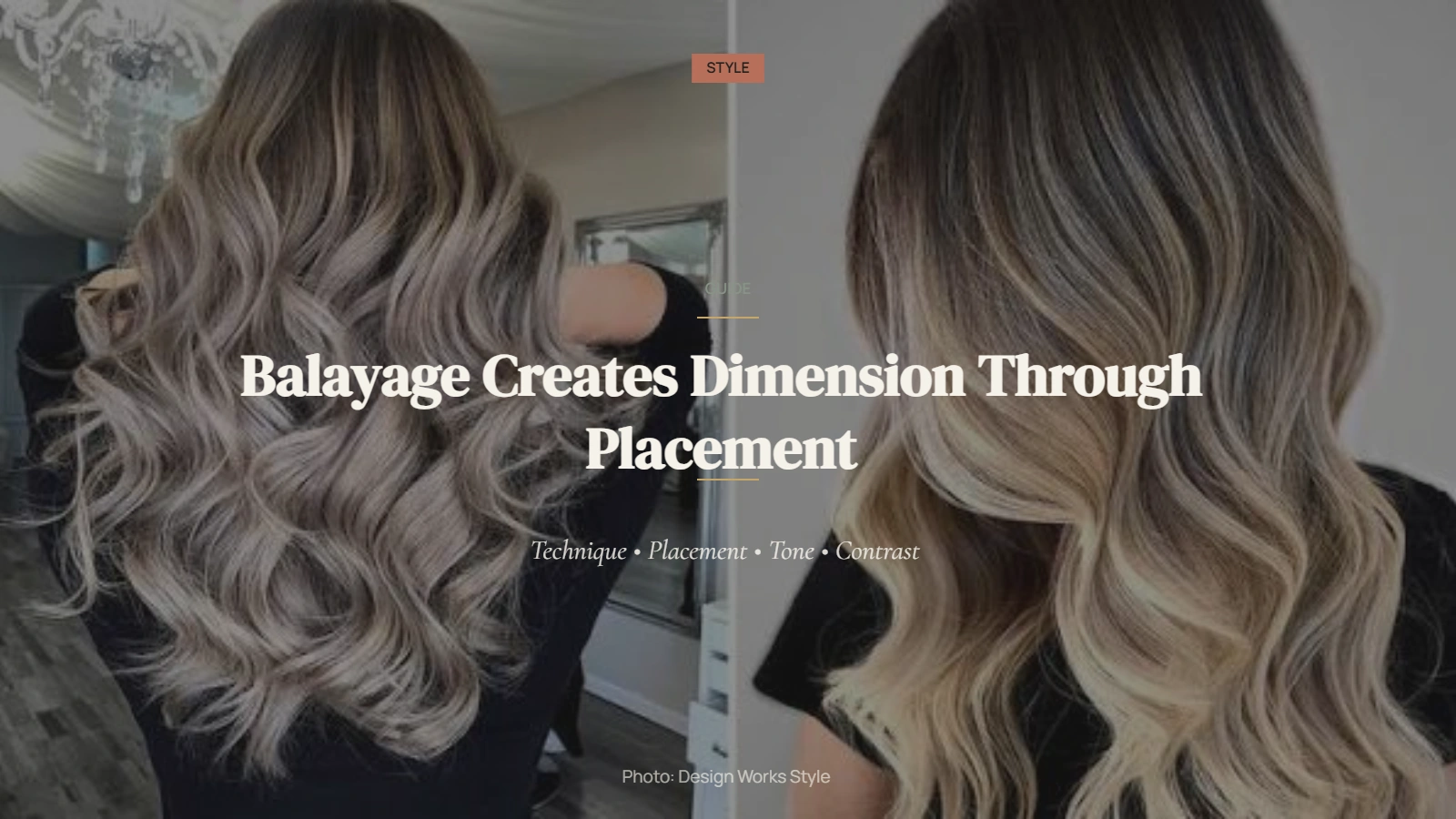
Balayage is a hair-coloring technique that uses strategically placed, blended color or lightener to create dimension through the hair. Rather than applying one uniform shade from root to end, a colorist can vary the placement, brightness, and tone to create a more customized result.
That is why balayage can look very different from one person to another. It can be subtle or high contrast, warm or cool, and adapted to different starting colors, haircuts, and textures.
Balayage is a technique, not one specific hair color. Understanding that distinction makes it easier to compare different balayage styles, decide what kind of result you want, and know what to discuss with your colorist.
What Is Balayage?
Balayage refers to a coloring approach in which lighter or colored sections are strategically placed and blended through the hair. The placement is part of what creates the finished effect.
Instead of making every section identical, a colorist can adjust where the lighter pieces begin, how concentrated they are, and how they transition into the surrounding hair. This allows the finished color to work with the haircut and the way the hair naturally moves.
Balayage can also vary considerably between appointments and colorists. Two people may both ask for balayage while choosing completely different tones, levels of contrast, and placement.
The important distinction is that balayage describes the technique and placement approach, rather than a single shade such as blonde, caramel, or copper.
How Does Balayage Create Dimension?
Balayage creates dimension by controlling where lighter and darker areas appear throughout the hair.
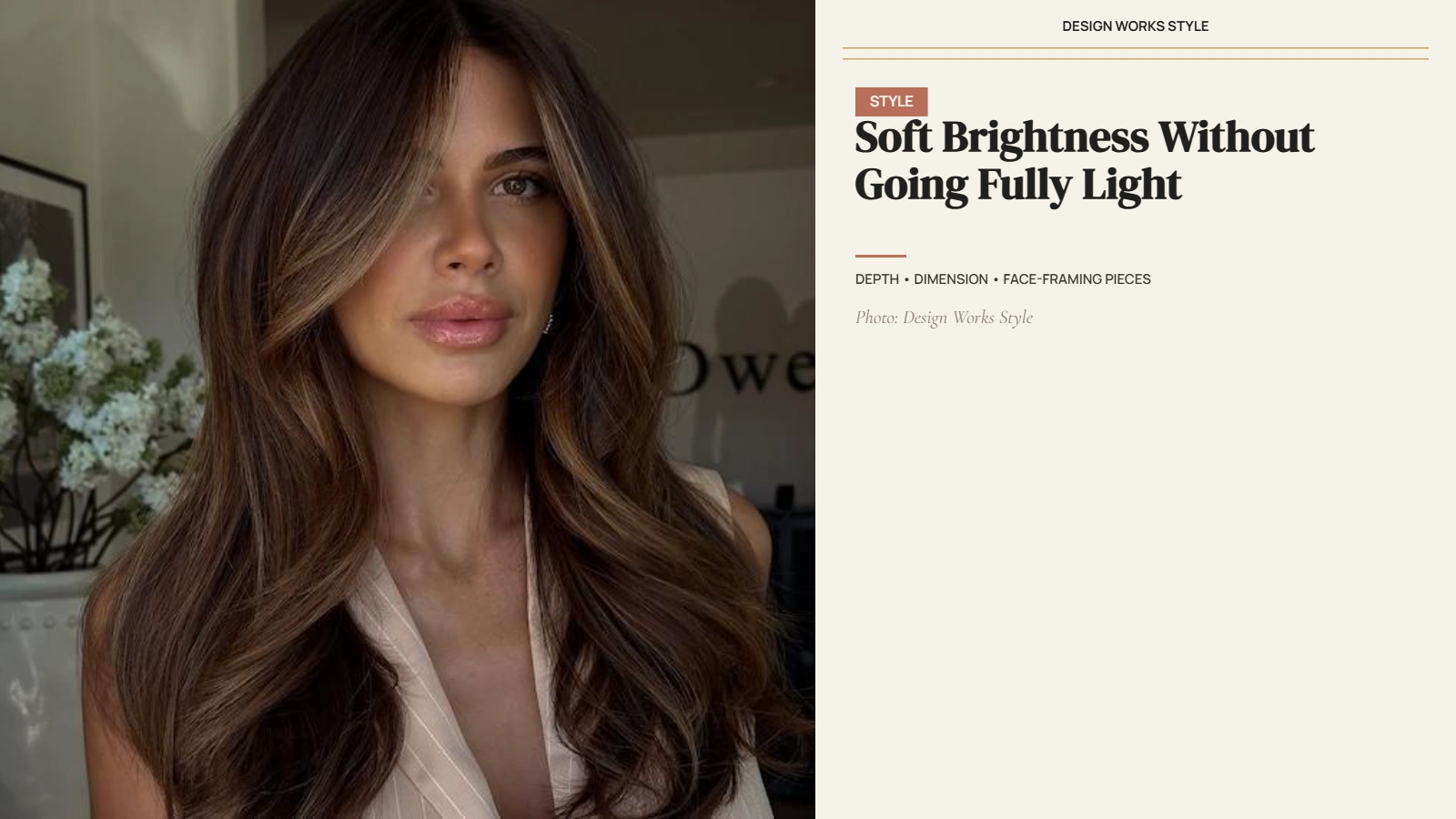
A colorist may place brighter pieces around the face, through the mid-lengths, or toward the ends while leaving other areas closer to the natural or existing color. The transition between those areas helps prevent the result from looking like one solid block of color.
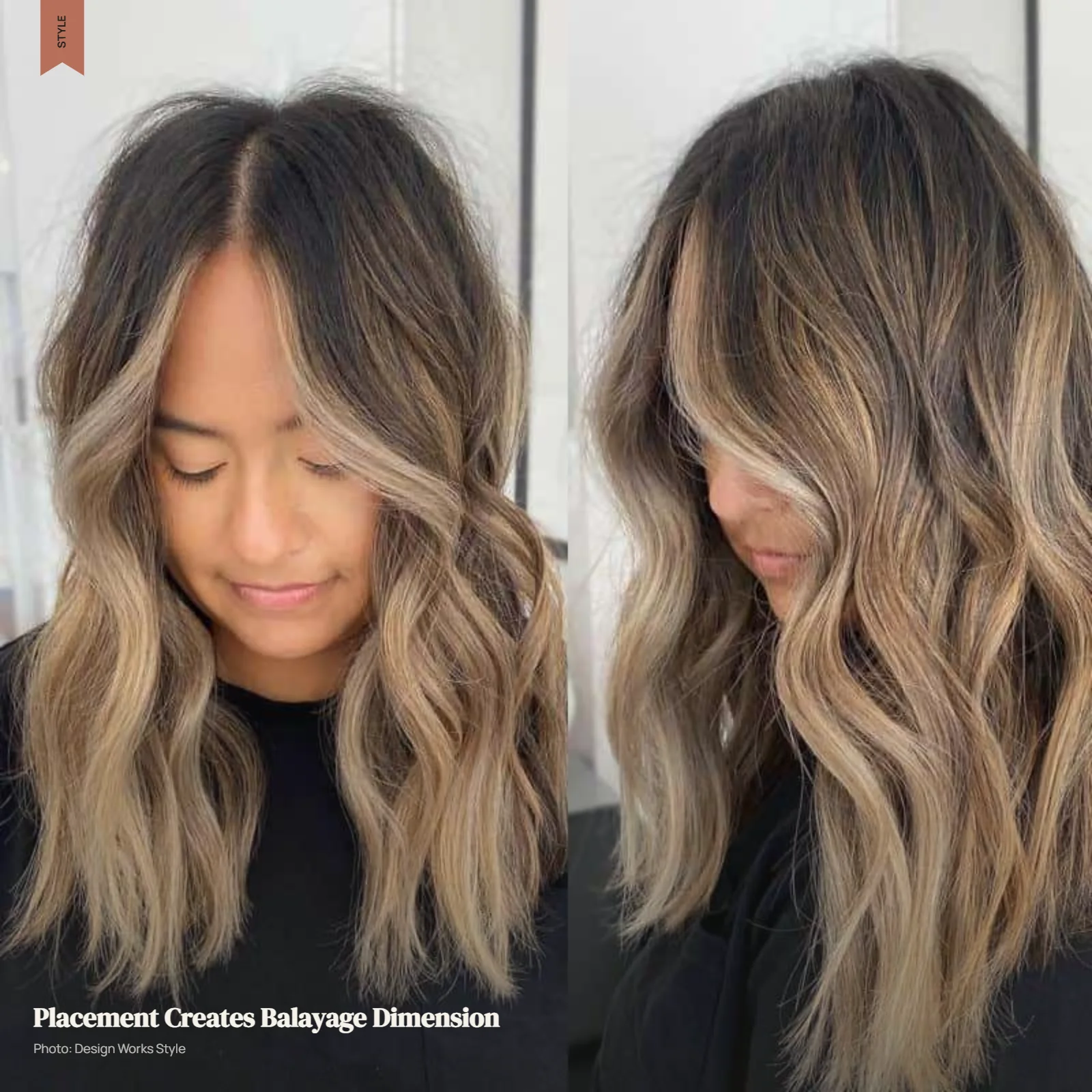
Placement can also change how the finished balayage looks when the hair moves.
Waves and curls can reveal different sections as the hair bends, while layers can distribute lighter pieces across different lengths. Face-framing placement can make brightness more noticeable around the front, while more restrained placement through the lengths can create a subtler result.
The amount of contrast matters too. A small difference between the base and lighter pieces creates understated dimension. A larger difference produces a more noticeable effect.
Balayage vs. Highlights
Balayage and traditional highlights can both add lighter pieces and dimension, but they generally differ in how those pieces are placed.
| Balayage | Traditional highlights | |
|---|---|---|
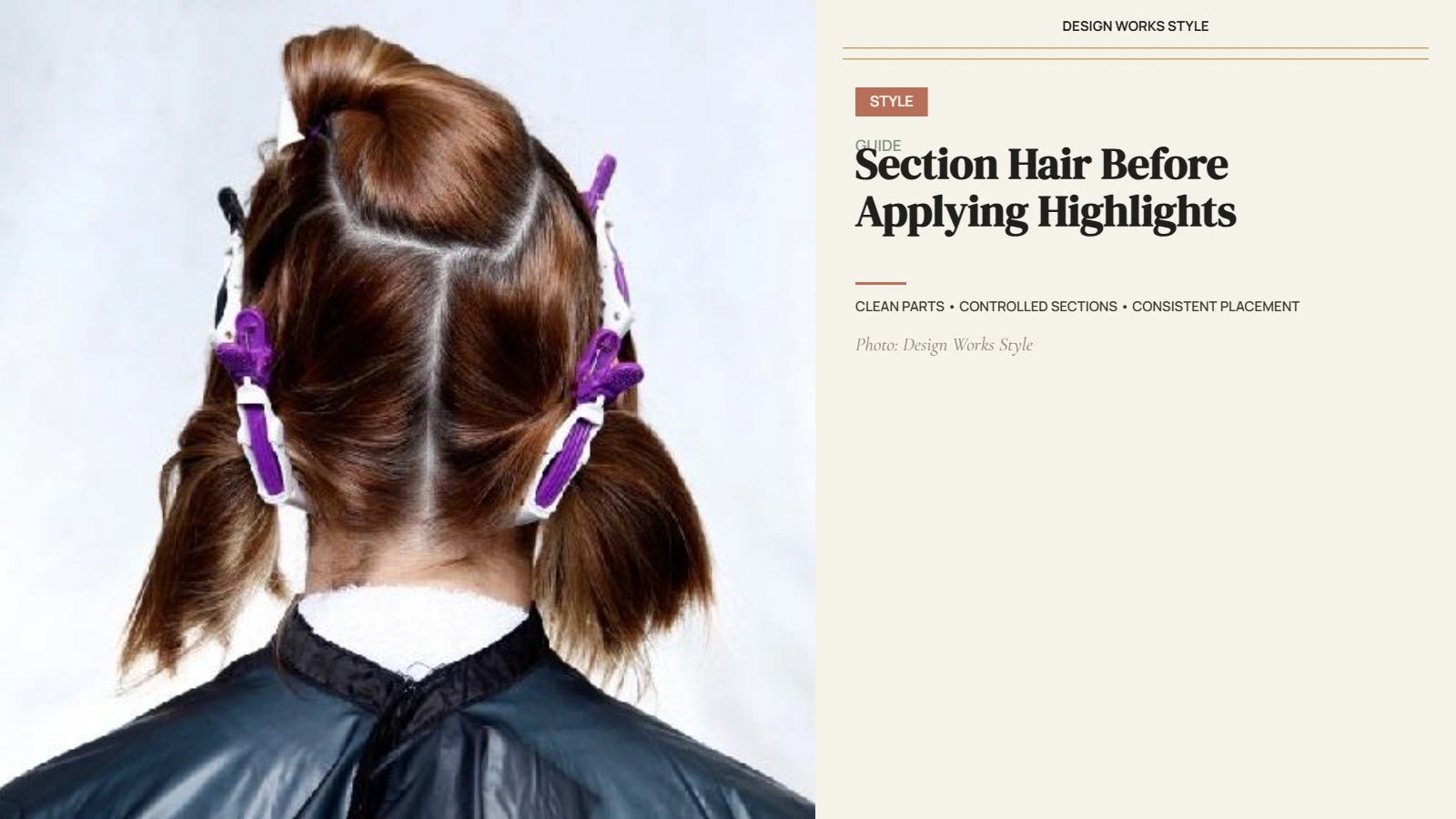
| General application | Often freehand and strategically painted | Often uses foils and structured sectioning |
| Placement | Can concentrate brightness through selected areas | Can create more consistent placement from closer to the root through the lengths |
| Root appearance | Often has a softer transition | Can create more noticeable regrowth |
| Contrast | Can range from subtle to pronounced | Can also range from subtle to high contrast |
| Grow-out | Often softer when color is kept away from the root | Can become more visible as the natural root grows |
| Customization | Placement can be adjusted around haircut and movement | Sectioning allows controlled and consistent placement |
Neither technique produces one universal result. The final appearance depends on the starting hair, placement, tone, amount of lightening, and the colorist’s approach.
The useful question is not which technique is automatically better. It is which approach matches the brightness, contrast, placement, and maintenance you want.
Balayage Colors and Styles
Because balayage describes a technique rather than a single shade, there are many directions you can take it. The most useful starting point is your existing hair color, the amount of contrast you want, and whether you prefer warmer or cooler tones.
Caramel Balayage
Caramel balayage uses warm brown, golden, or caramel-toned pieces to add visible dimension without necessarily taking the entire head dramatically lighter.
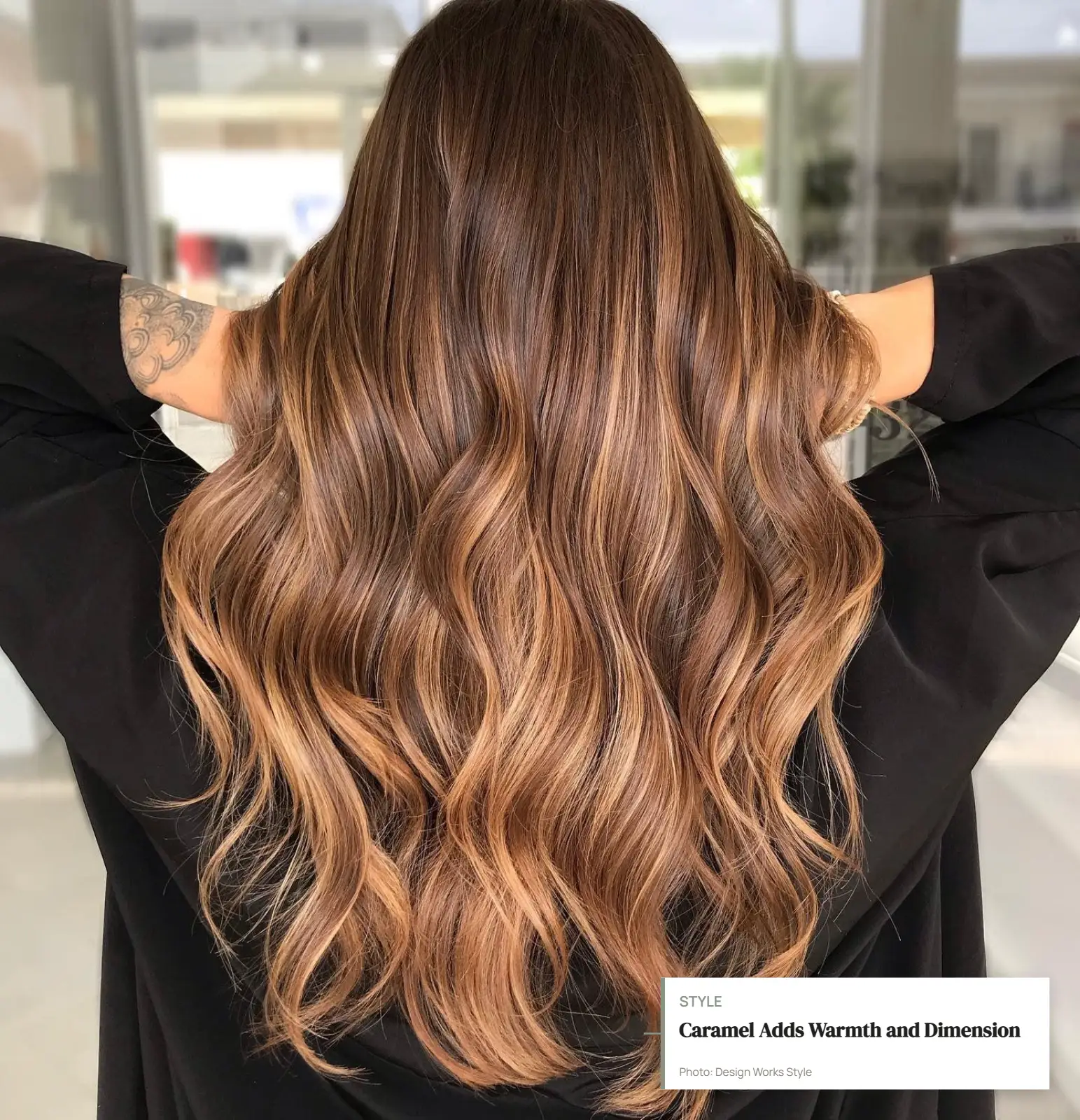
It can be adapted to different starting shades, with the final result depending on the underlying color and the level of brightness being pursued.
For more specific color ideas and shade decisions, see Caramel Balayage.
Ash Brown Balayage
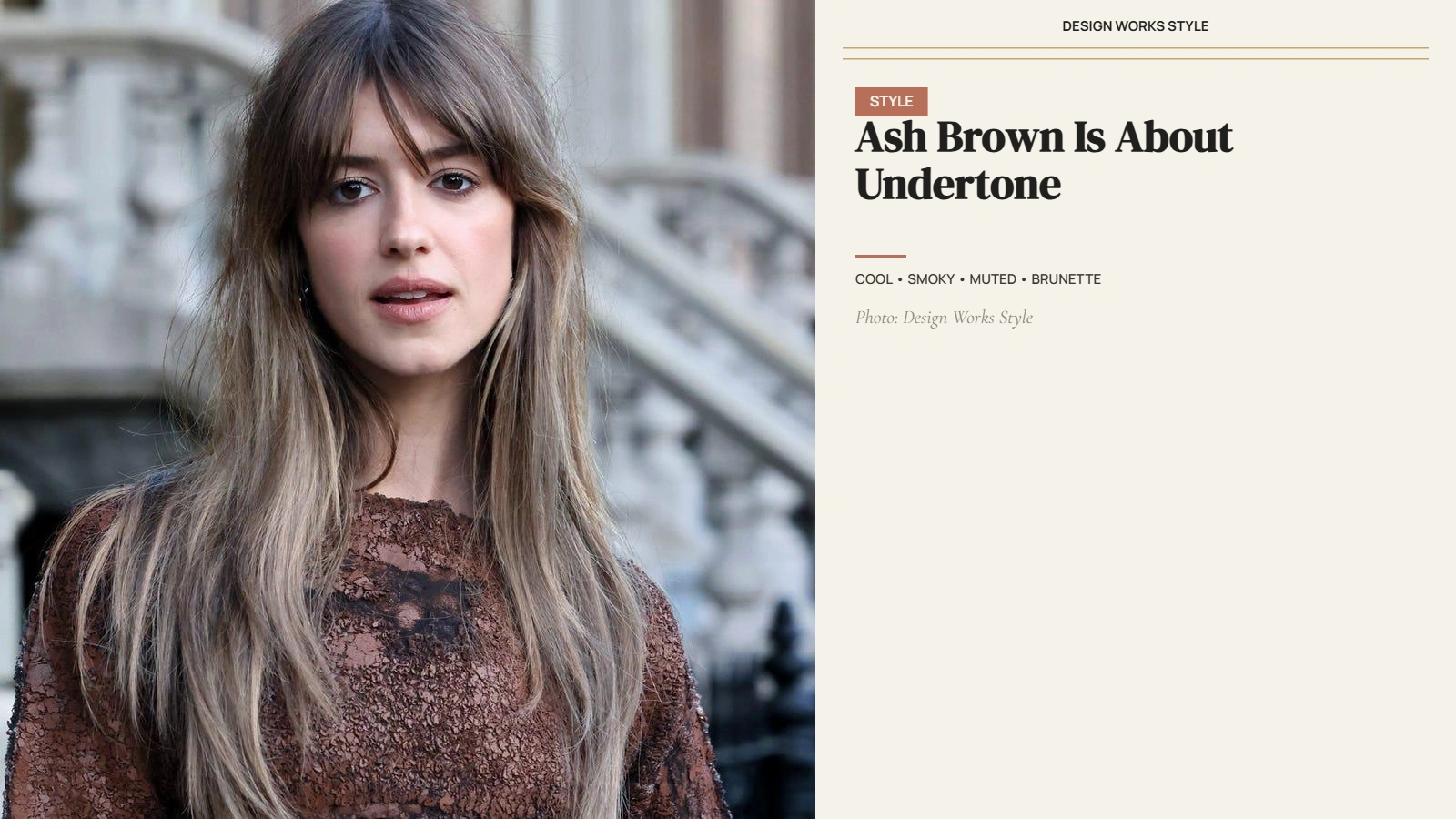
Ash brown balayage takes a cooler direction, using brown and muted tones to create dimension without relying on strongly golden warmth.
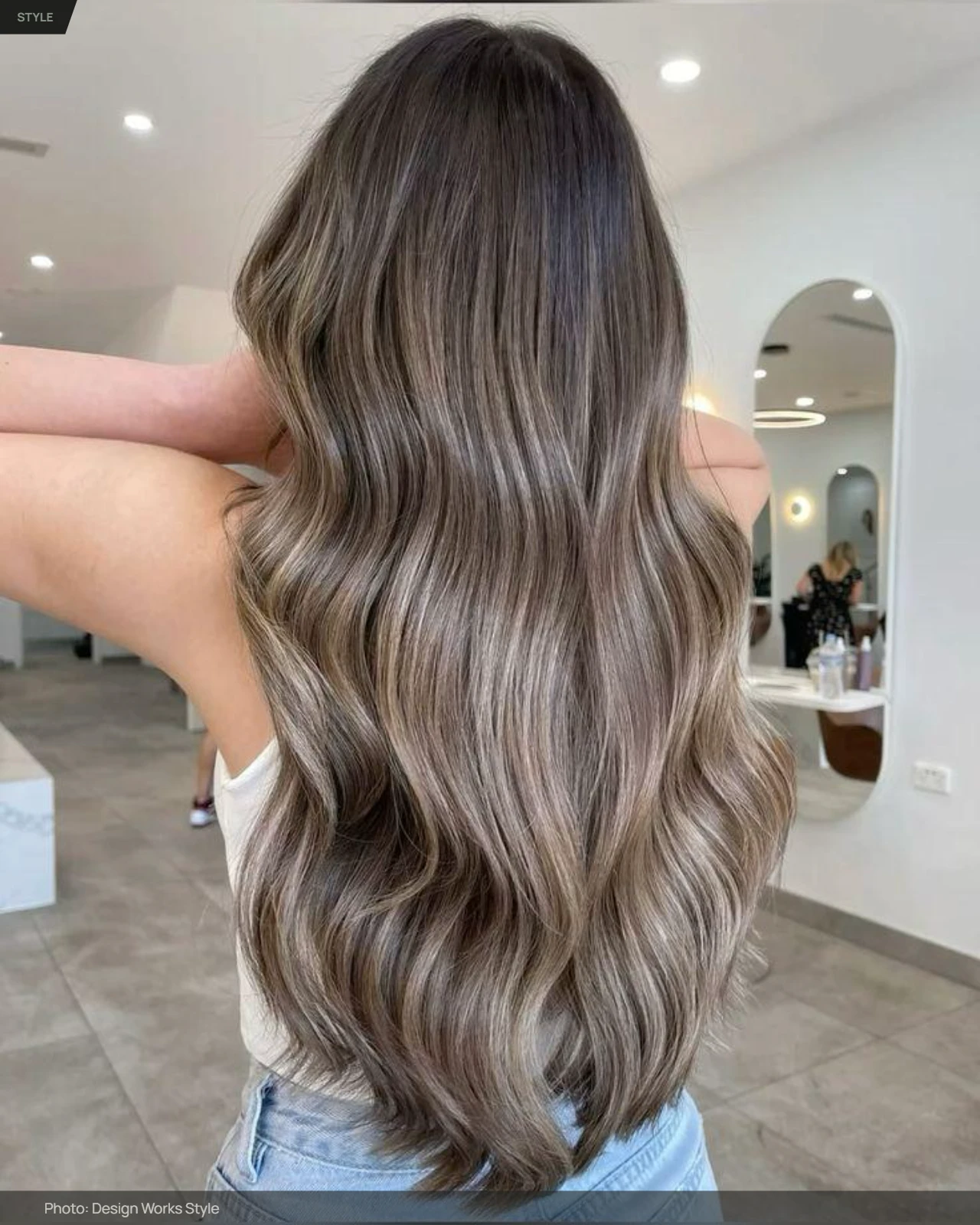
The result can vary significantly depending on the starting color and how much contrast is introduced.
See the dedicated Ash Brown Balayage guide for more detail.
Balayage on Brown Hair
Brown hair can provide several balayage possibilities, from subtle tonal variation to more noticeable lighter pieces.
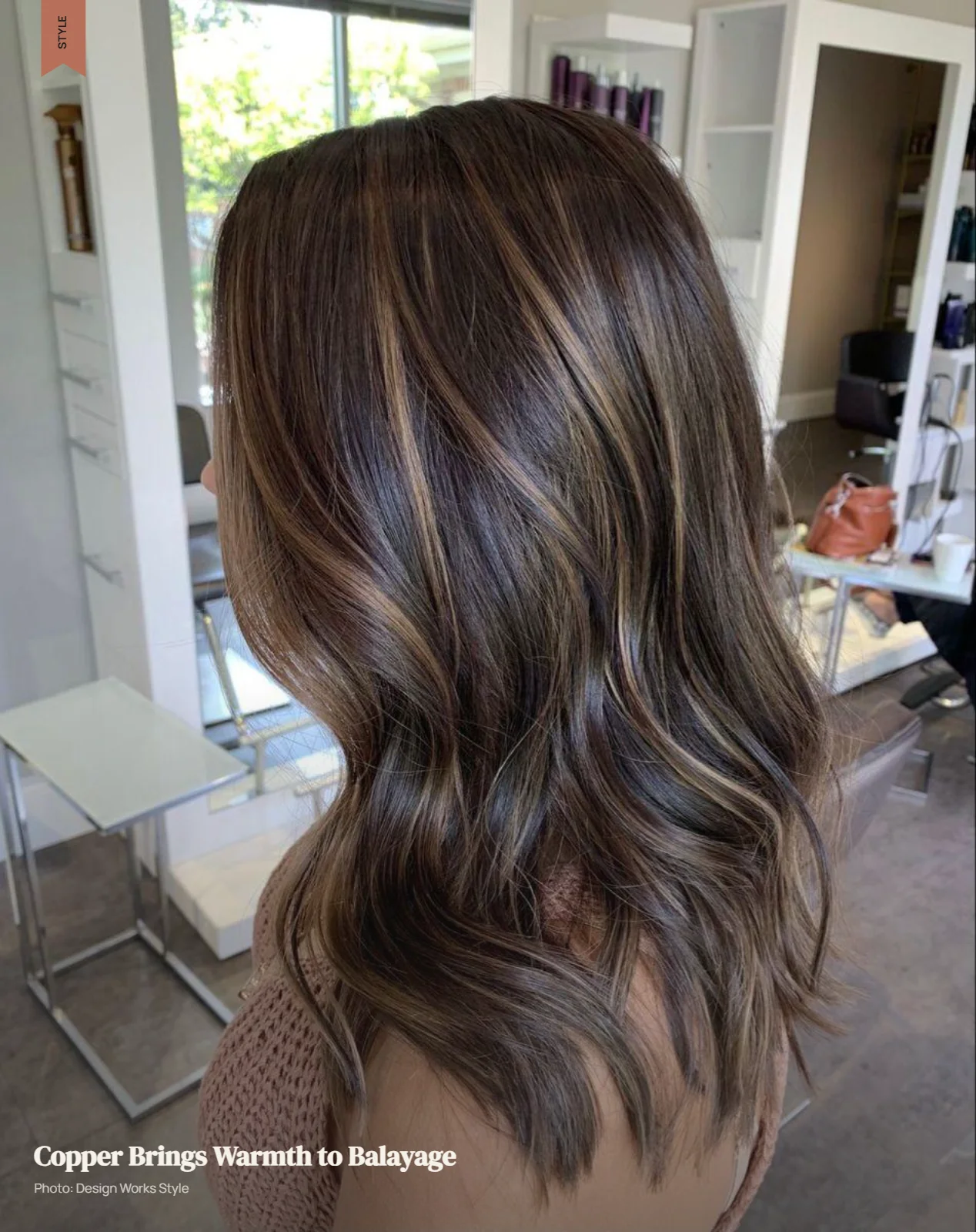
The starting shade matters because the distance between the existing brown and the desired result affects how much contrast can be created.
For a closer look at starting shades and color choices, see Balayage on Brown Hair.
Copper Balayage
Copper balayage brings a warmer and more noticeable direction to the technique. Depending on the starting color, copper can appear soft and blended or become a stronger focal point.
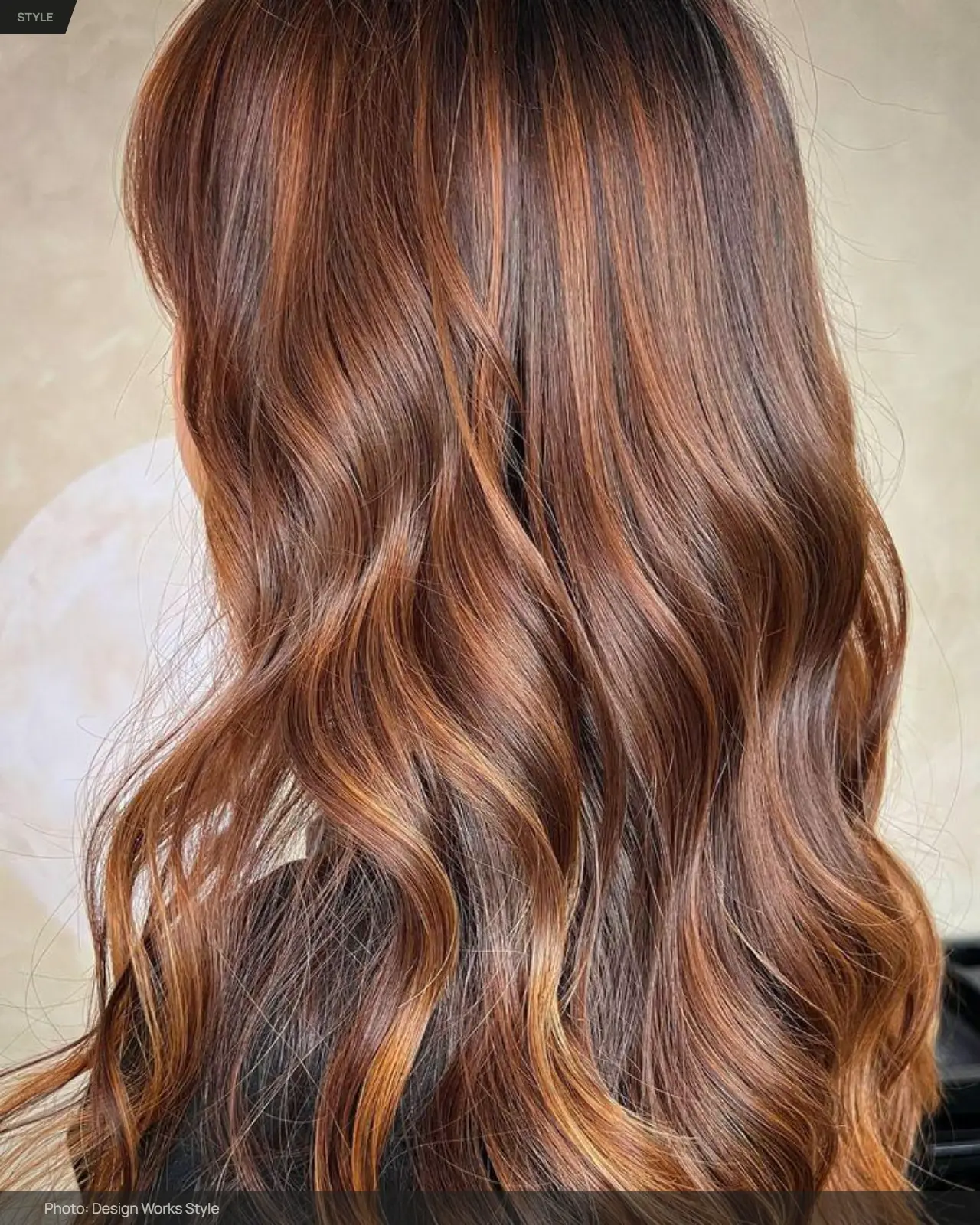
The final result depends on both the underlying hair color and the specific copper tone being pursued.
Explore Copper Balayage for the dedicated color guide.
Balayage for Curly Hair
Balayage can be adapted to curly hair, but natural curl pattern and movement affect how color appears.
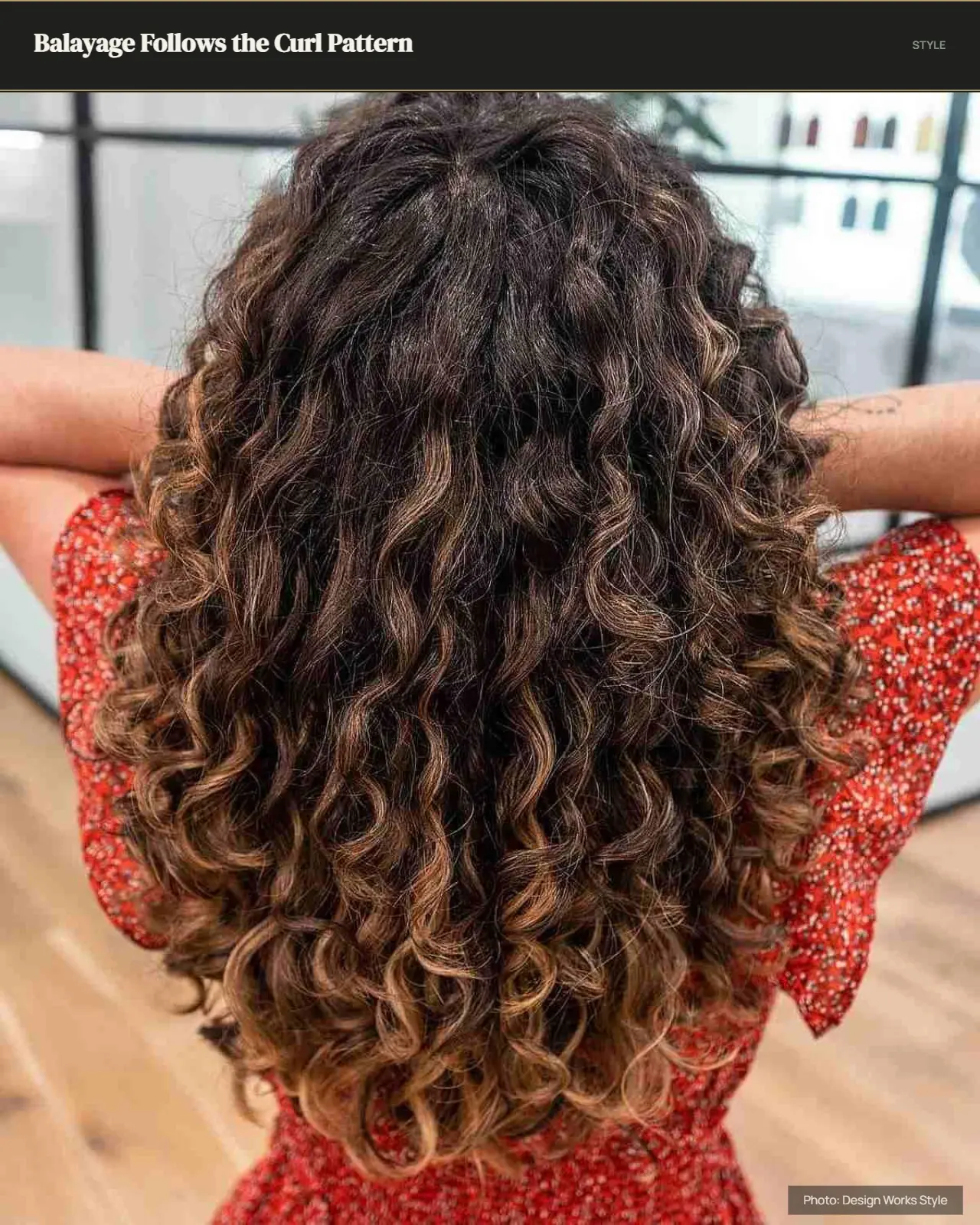
Placement needs to account for how curls group together, where the hair naturally catches light, and how different sections move when styled.
For more specific application and styling considerations, see Balayage for Curly Hair.
Balayage Hair Care
Color-treated hair benefits from thoughtful maintenance, including conditioning, heat protection, and attention to unwanted changes in tone.
The right routine depends on the color, amount of lightening, hair condition, and personal styling habits.
See Balayage Hair Care for the detailed maintenance guide.
Is Balayage Right for Your Hair?
Choosing balayage starts with more than a reference photo. Your current hair and the result you want both matter.
Starting Hair Color
Your natural or existing color affects the range of results that can be achieved.
A darker starting color may require a different approach from lighter hair, particularly if the goal is significantly brighter. The desired contrast also matters. A subtle change does not require the same result as highly visible lighter pieces.
Hair Condition
Previously processed or fragile hair needs additional consideration before lightening.
Lightening can affect the condition of the hair, so a professional assessment is useful when there is significant previous processing or uncertainty about how the hair will respond.
Previous Color or Chemical Treatments
Tell your colorist about previous color services and chemical treatments before your appointment.
Existing color can affect the result, and the history of the hair may influence what is realistically achievable in one appointment.
Desired Contrast
Think about how noticeable you want the balayage to be.
Subtle balayage can create a small shift between the base and lighter pieces. More contrast makes the lighter sections easier to see and creates a stronger visual change.
Neither approach is inherently right for everyone. The important part is communicating how visible you want the result to be.
Desired Tone
Balayage can be created in warmer or cooler directions.
Warm tones may include caramel, honey, golden, or copper influences. Cooler directions can include ash and cooler brown tones.
Your starting color and existing pigment affect which tones can realistically be achieved, so a reference image can help communicate the direction you prefer.
Maintenance Preference
Balayage can have a softer grow-out when the placement does not create a strong line at the root. That does not mean every balayage service is maintenance-free.
Brightness, placement, tone, hair growth, and personal preference all influence how often you may want a refresh.
What to Expect From a Balayage Appointment
A professional balayage appointment generally begins with a consultation rather than immediate color application.
The process may include:
- Consultation to discuss your goals and expectations.
- Assessment of your existing hair including current color and previous processing.
- Reference images to clarify the type of result you want.
- Color and placement planning based on your starting hair and desired contrast.
- Application of the selected color or lightener.
- Processing according to the professional’s planned service.
- Rinsing and finishing after the color has developed.
- Styling and aftercare discussion so you understand how to look after the result.
The exact appointment will vary depending on the hair, technique, amount of color work, and desired result.
You do not need to know the technical formulas or application details before booking. The more useful preparation is knowing what you want the finished hair to look like and being honest about your previous color history.
Balayage Maintenance and Aftercare
Maintaining balayage is less about following one fixed schedule and more about preserving the condition, tone, and appearance you want.
Color-treated hair may benefit from:
- Conditioning and moisturizing care
- Heat protection when using hot styling tools
- Products intended for color-treated hair
- Professional refreshes when the tone or placement needs adjustment
- Attention to unwanted tonal changes
- Following the specific aftercare instructions provided by your stylist
Your maintenance needs can change depending on how light the balayage is, how close the placement comes to the roots, how quickly your hair grows, and how particular you are about keeping the color looking freshly toned.
For a detailed care routine, see Balayage Hair Care.
How Long Does Balayage Last?
Balayage does not have one fixed lifespan.
How long it continues to look the way you want depends on several factors, including where the color was placed, how close it sits to the roots, how quickly your hair grows, how much the hair was lightened, and whether the tone changes over time.
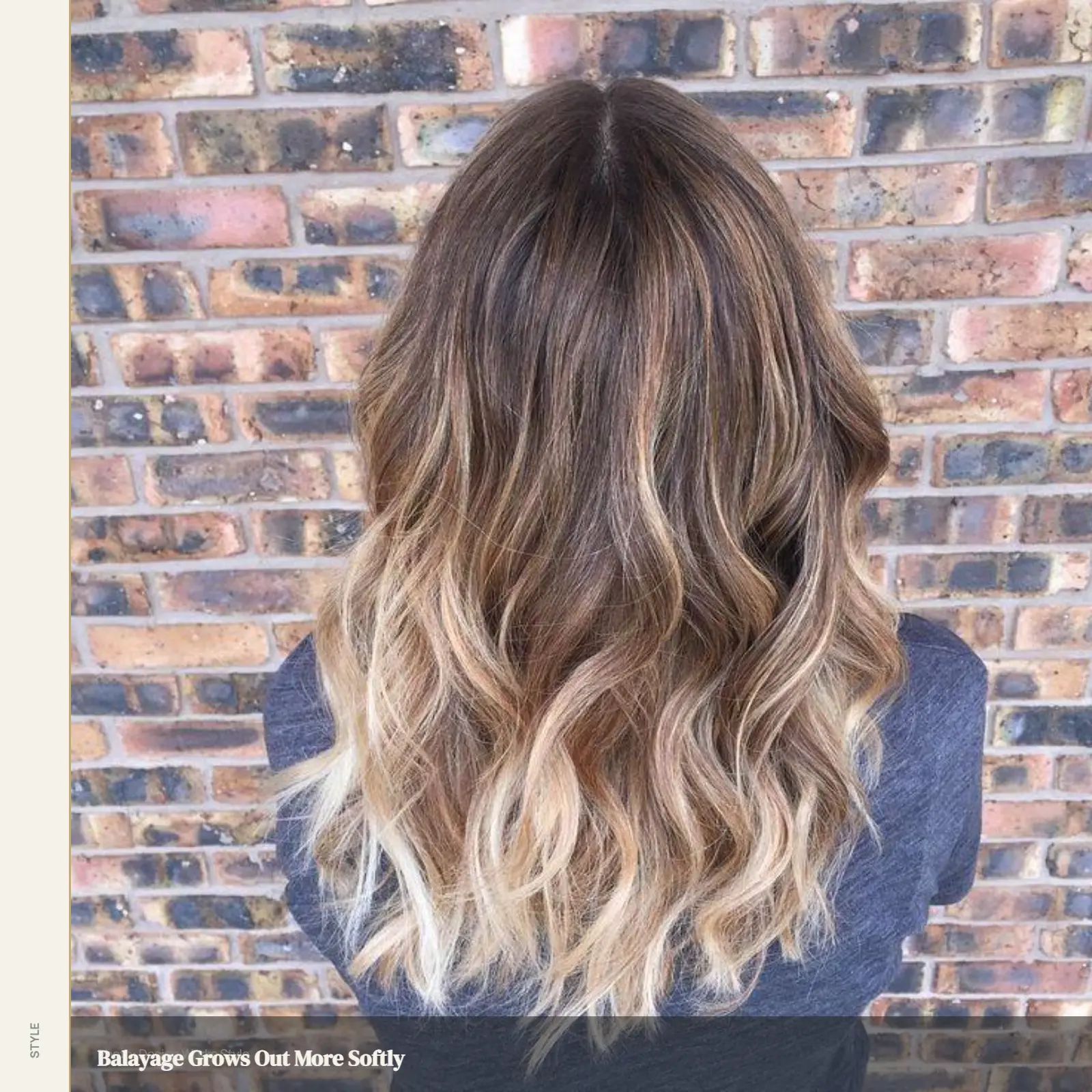
There is also an important difference between color remaining visible and color continuing to look the way you want it to look.
Because balayage can be placed away from the root and blended through the lengths, the grow-out can be softer than a more root-focused highlighting pattern. However, a person who wants a very bright or precisely toned result may choose to refresh the color sooner.
Common Questions About Balayage
Is balayage only for blonde hair?
No. Balayage describes a coloring technique rather than one specific shade. It can be used to create different levels of dimension and can include brown, caramel, copper, blonde, and other color directions.
Can you get balayage on dark hair?
Yes, balayage can be adapted to dark hair. The achievable result depends on the starting color, hair condition, desired brightness, previous processing, and professional assessment.
Can you get balayage on brown hair?
Yes. Brown hair can be used as a starting point for subtle or more noticeable balayage, depending on the existing shade and the amount of contrast you want. See the dedicated Balayage on Brown Hair guide for more detail.
Can balayage work on curly hair?
Yes. Balayage can be adapted to curly hair, with placement considered around the natural curl pattern and movement. The way curls group together can affect how the dimension appears.
Is balayage low maintenance?
It can be lower maintenance than some root-focused highlighting approaches because the grow-out can be softer. However, maintenance varies according to placement, brightness, tone, hair growth, and how closely you want to maintain the original result.
Does balayage damage hair?
Lightening can affect hair condition. The impact depends on factors such as the starting hair, previous processing, amount of lift, and professional technique. There is no guarantee that a particular balayage service will have the same effect on every head of hair.
What to Ask Your Stylist Before Getting Balayage
A good consultation should give you a realistic understanding of what can be achieved from your current hair.
Consider asking:
- What placement would work with my current haircut?
- How light can my hair realistically become?
- What tone can we achieve from my current color?
- Will my previous color affect the result?
- How much contrast should I expect?
- What will the grow-out look like?
- What maintenance will I need?
- What should I use at home to care for the color?
- Would balayage alone achieve my desired result, or would another technique be appropriate?
Bring reference images if you have them, but use them as examples of the direction you like rather than as a guarantee of an identical result.
Your current hair, previous color, texture, and starting level can all affect what is realistically achievable.
Explore the Balayage Guides
Once you understand the basic technique, you can explore a more specific guide based on the result you want:
- Caramel Balayage for warm caramel-toned dimension
- Ash Brown Balayage for a cooler brown direction
- Balayage on Brown Hair for starting shades and brown-hair considerations
- Copper Balayage for warmer copper color directions
- Balayage for Curly Hair for curl-specific placement and styling considerations
- Balayage Hair Care for ongoing maintenance and aftercare
Frequently Asked Questions
What is balayage?
A freehand highlighting technique where color is painted onto the hair for a soft, graduated, sun-kissed effect. No foils, no harsh lines, and a soft grow-out without a demarcation line.
How is balayage different from highlights?
Highlights, usually done with foils, are more uniform from root to tip. Balayage is painted on, softer at the root, and grows out without a visible line.
How long does a balayage appointment take?
Two to four hours depending on hair length, density, and how much lightness you want. It is not a quick service, so plan accordingly.
Is balayage low maintenance?
Lower than traditional highlights because of the soft grow-out, but the tone still needs refreshing every few months. See our balayage hair care guide for the routine.