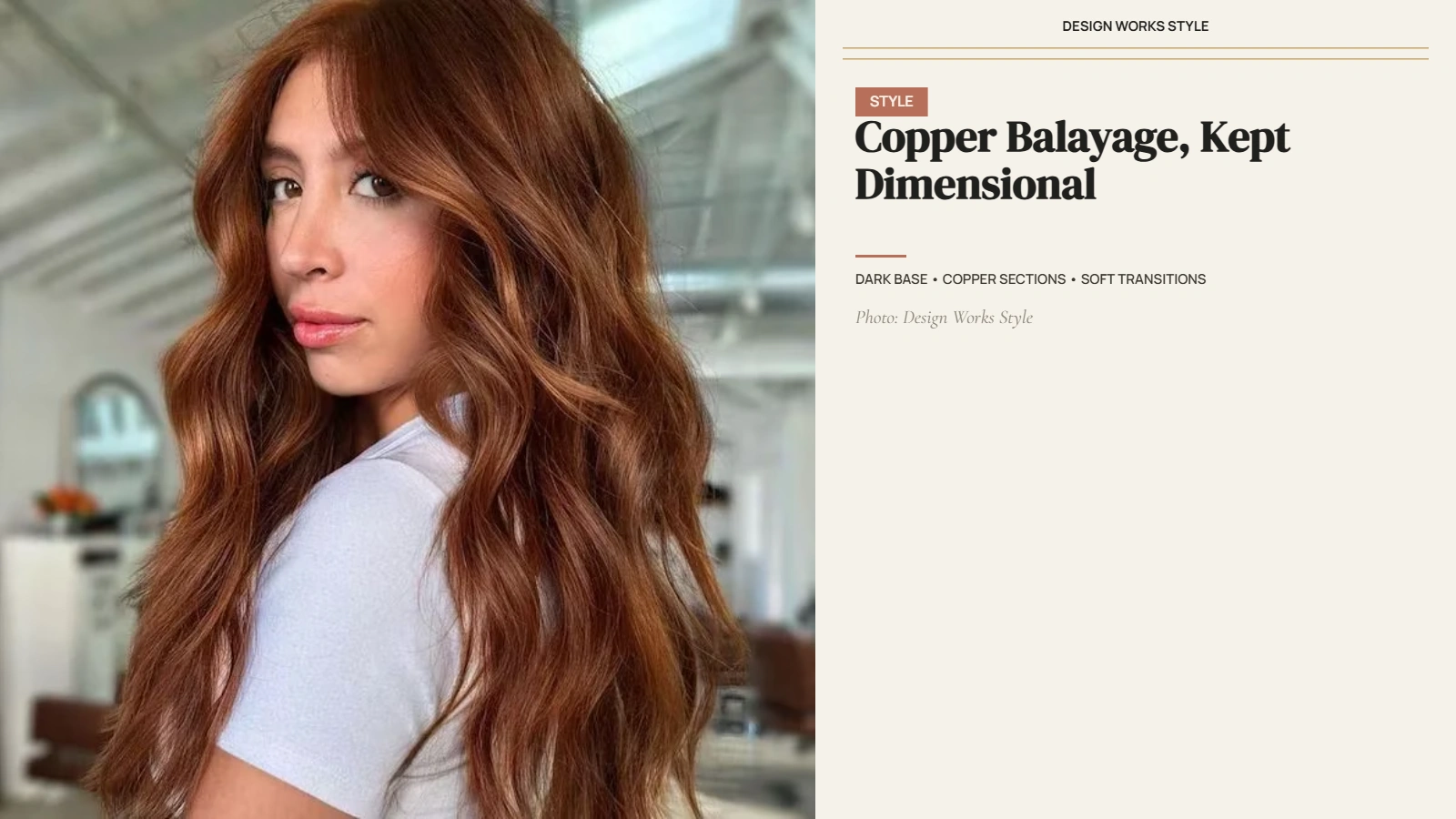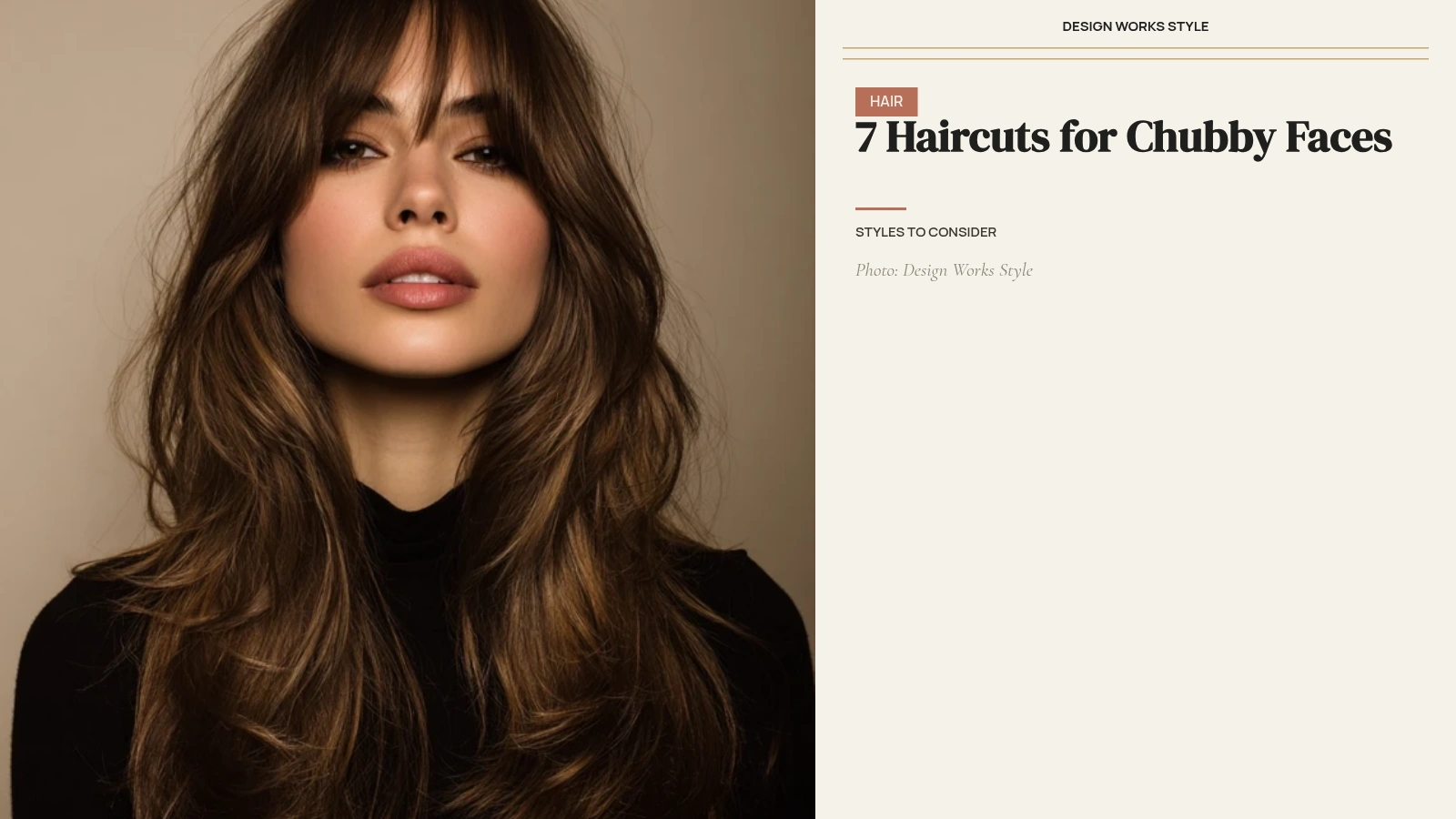

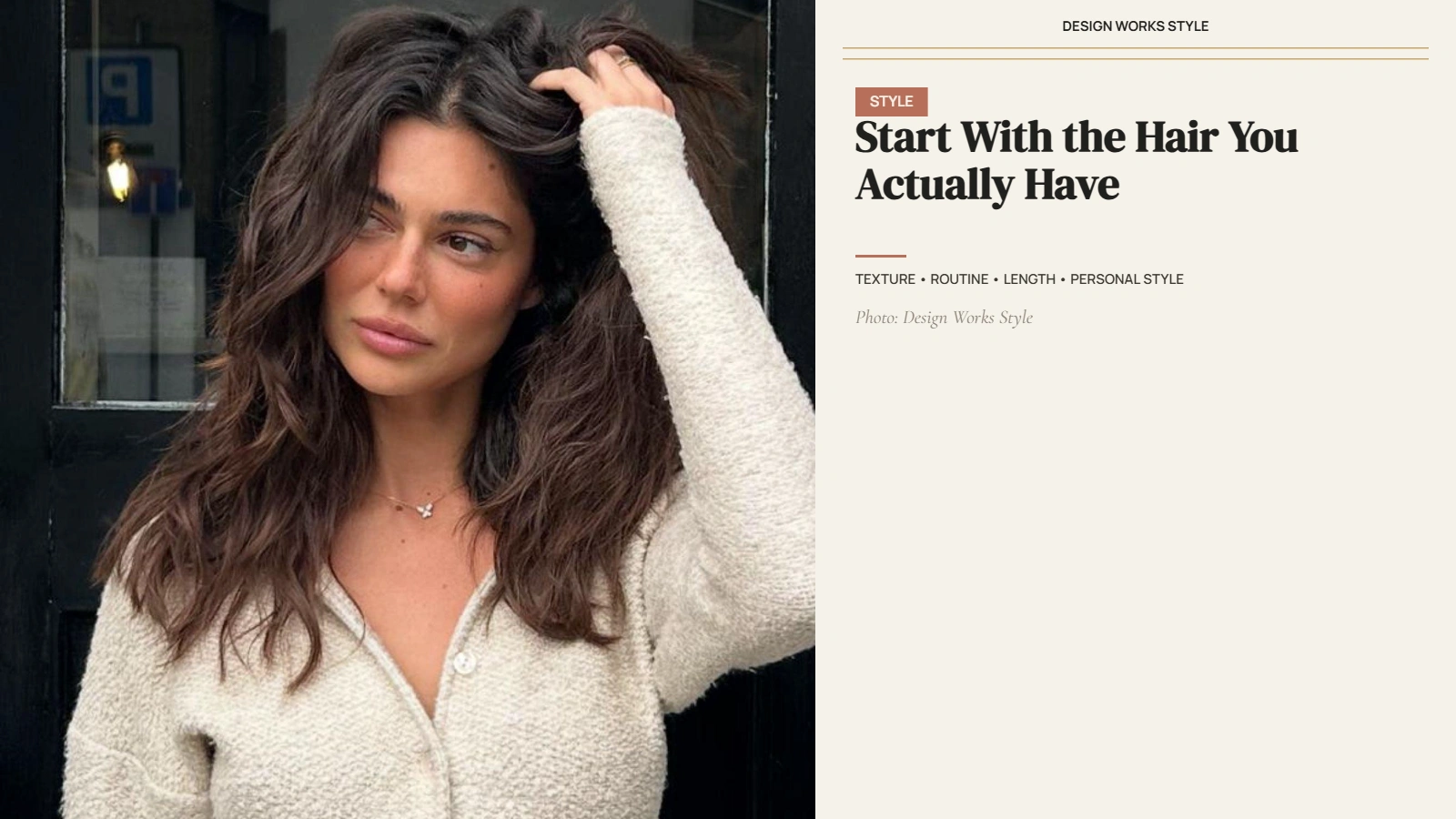
The hairstyle that suits you best is usually the one that works with your hair, fits your routine, and gives you the kind of finish you actually want to wear.
Face shape can be useful, but it is only one part of the decision. Your hair texture, density, length, styling ability, daily schedule, occasion, heat-styling habits, and personal preference can all change which hairstyles make sense for you.
Start by asking what you want your hair to do. Do you want to wear your natural texture, create a polished finish, put your hair up, add waves, or have something you can recreate quickly on an ordinary morning?
The key distinction is simple:
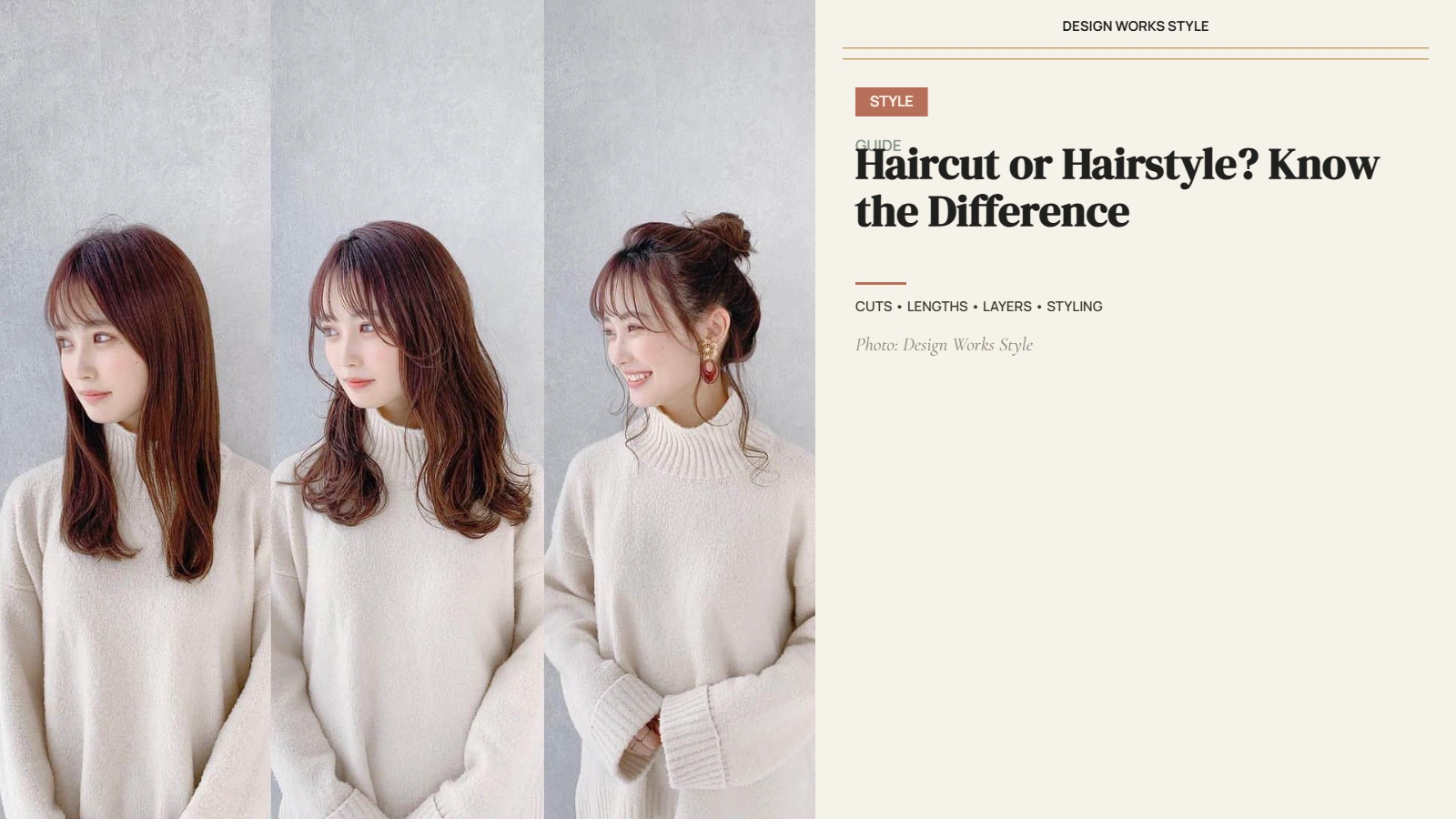
A haircut creates the underlying shape. A hairstyle is how you wear, arrange, or finish that hair.
Start With the Hair You Actually Have
Before choosing a hairstyle from a photo, look at how your own hair behaves.
Ask yourself:
- Is my hair straight, wavy, curly, or coily?
- Is each strand fine, medium, or coarse?
- Is my hair dense or relatively low-density?
- How much natural volume does it have?
- Does it hold a style easily?
- Does it naturally frizz, flatten, curl, expand, or fall straight?
These details can tell you more about the practicality of a hairstyle than a photograph alone.
A style that looks effortless on naturally wavy hair may require regular heat styling on straight hair. A voluminous updo may be easier to create with dense hair, while lower-density hair may need a different approach to achieve a similar visual effect.
Start with natural behavior
A useful rule is to begin with what your hair naturally does.
You can always change that behavior temporarily with heat, products, rollers, braiding, or other styling techniques. The question is whether you actually want to spend the time and effort doing that regularly.
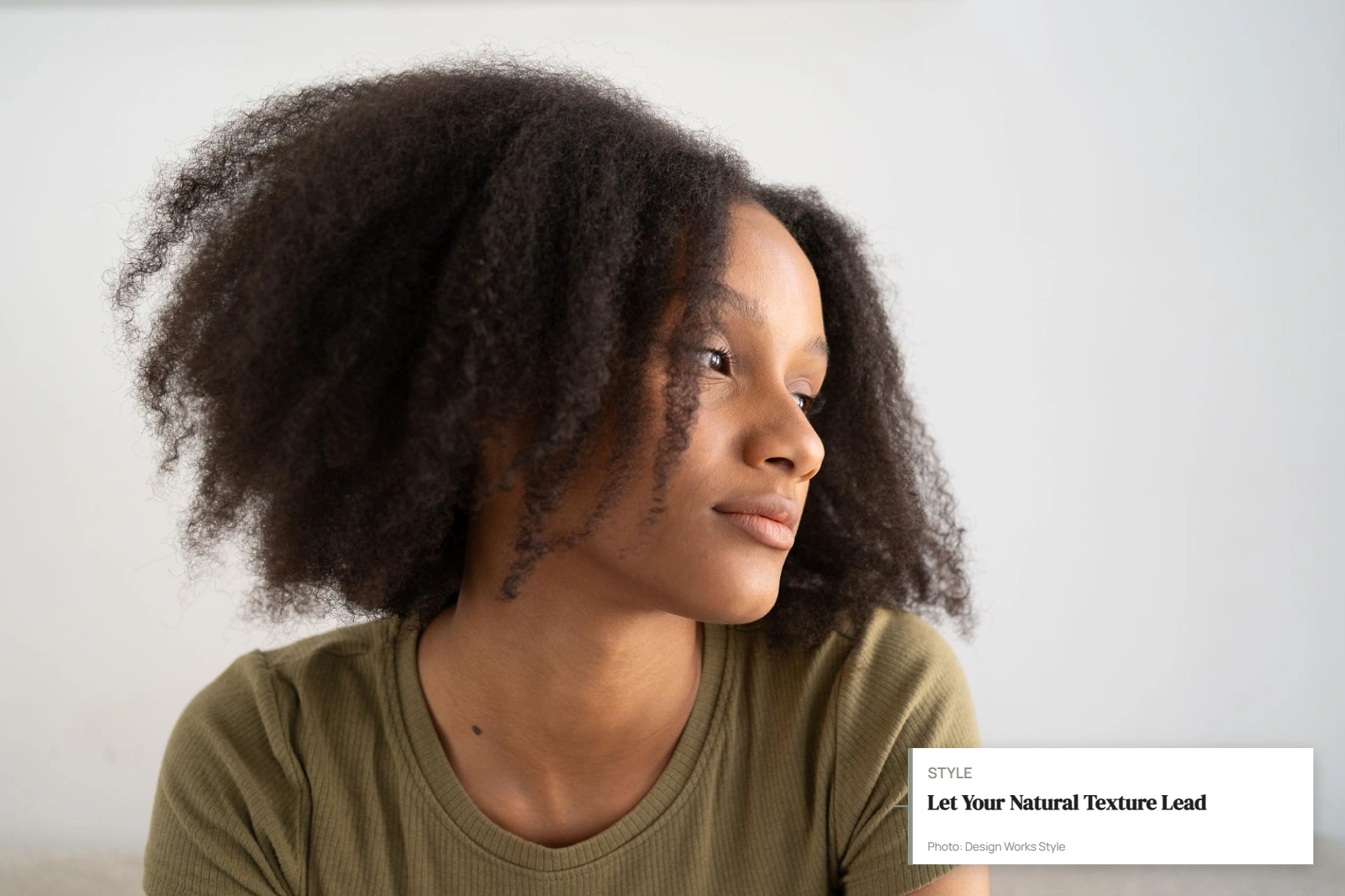
If you prefer a simple routine, hairstyles that work with your natural texture will generally give you a more repeatable starting point.
Does Your Face Shape Matter?
Yes, face shape can influence how you approach a hairstyle, but it should not determine the entire decision.
It can affect choices such as:
- Where you part your hair
- Where you place volume
- How closely hair frames your face
- The overall silhouette
- How layers or loose pieces sit around the face
For example, changing a center part to a side part can alter the visual balance of the same hairstyle without changing the haircut.
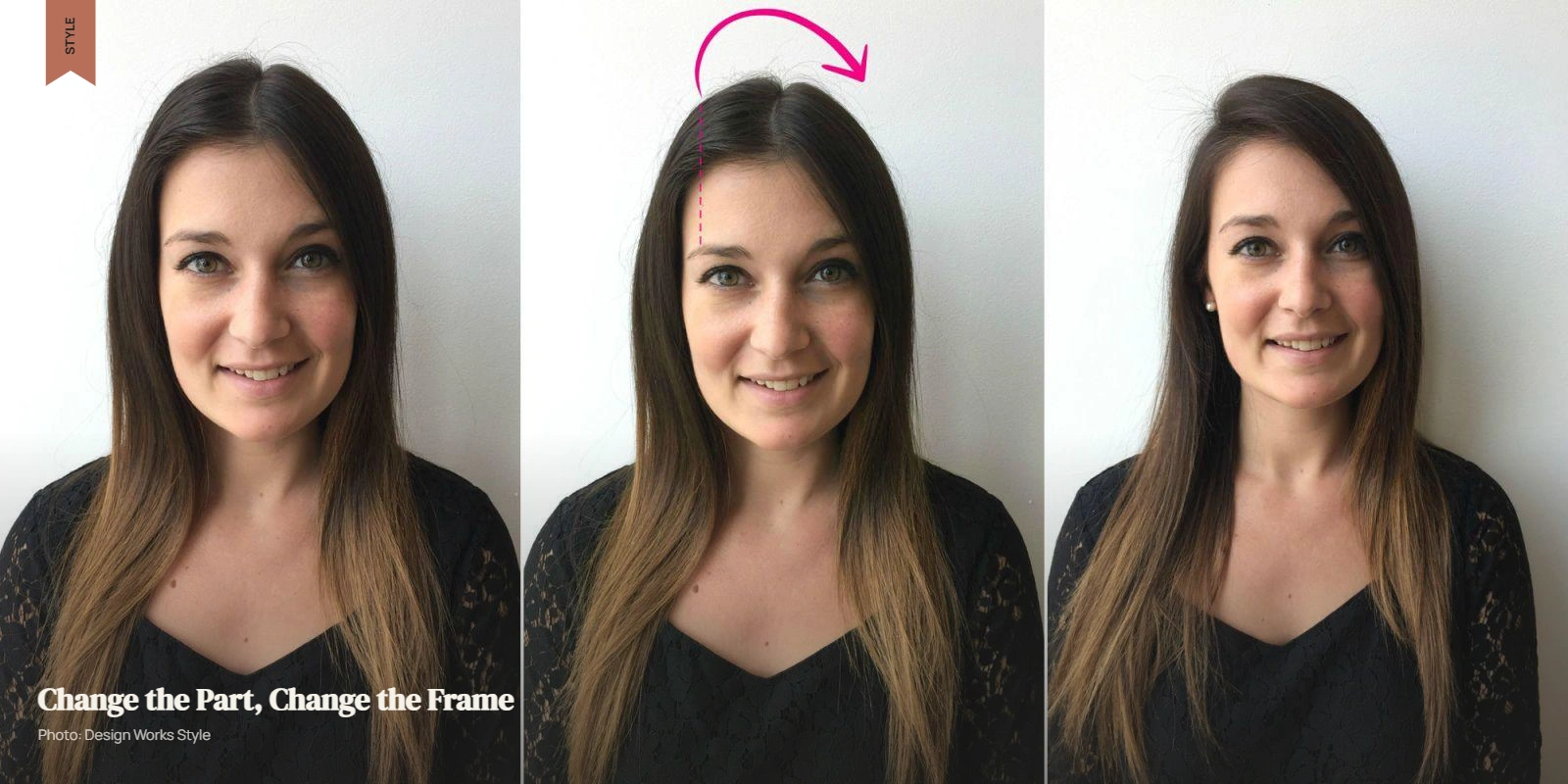
If you want more detailed guidance on how face shape relates to haircut decisions, see our Haircuts for Face Shapes guide.
That resource is specifically about choosing the underlying haircut. This page is about deciding how to wear and style your hair once you understand what you are working with.
You also do not need to identify your face shape perfectly. If two categories seem relevant, focus on the actual hairstyle characteristics you like rather than trying to force yourself into one label.
Choose a Hairstyle Based on Your Hair Texture
Your natural texture can dramatically change how the same hairstyle looks and behaves.
Straight Hair
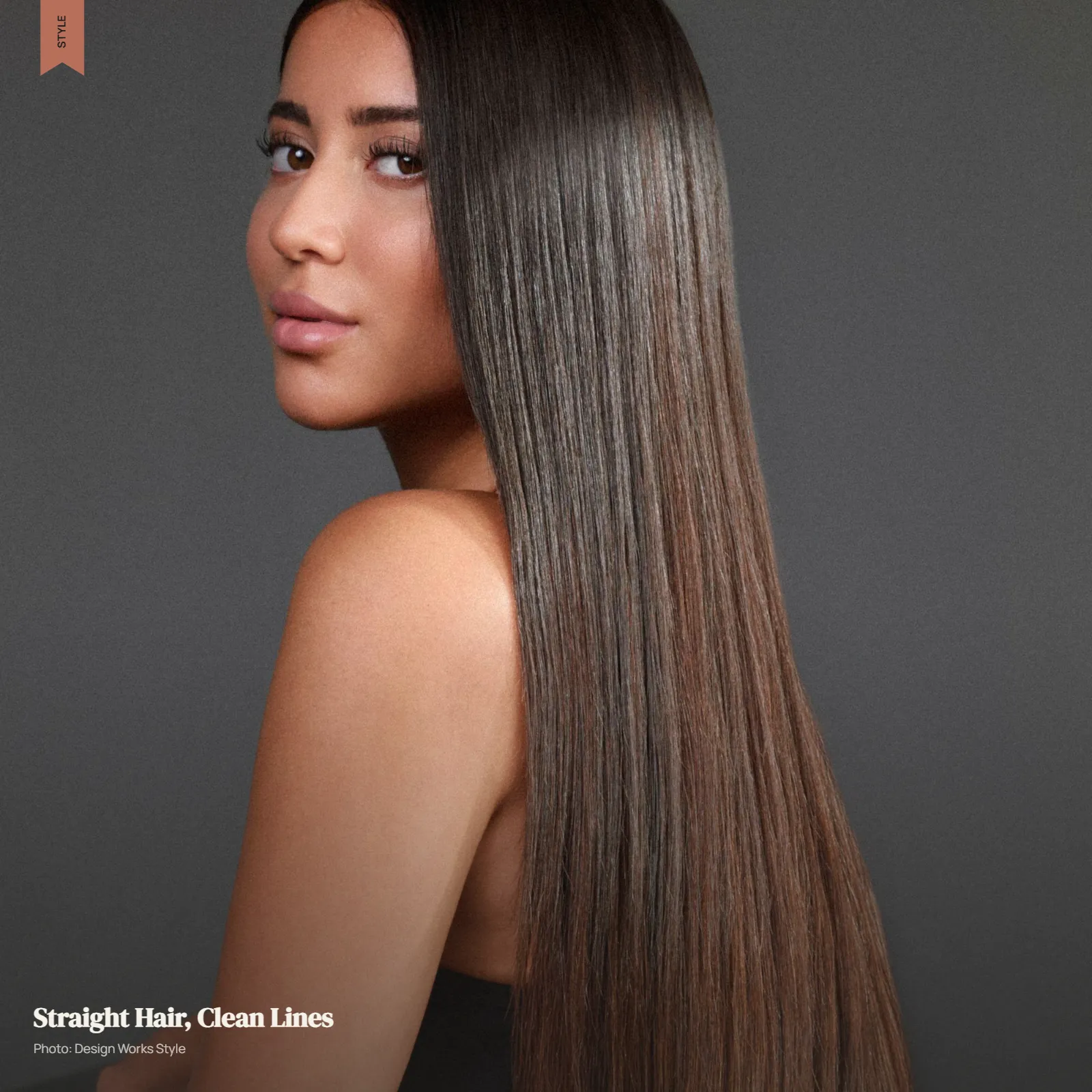
Straight hair can work well with styles that emphasize a clean, smooth finish, including:
- Sleek hair
- Smooth blowouts
- Straight ponytails
- Polished updos
- Soft bends
If your hair is naturally straight, you may need less manipulation to create these finishes.
You can also add waves or curls, but consider whether you want that extra styling step to be part of your normal routine.
Wavy Hair
Wavy hair already provides movement that can become part of the hairstyle.
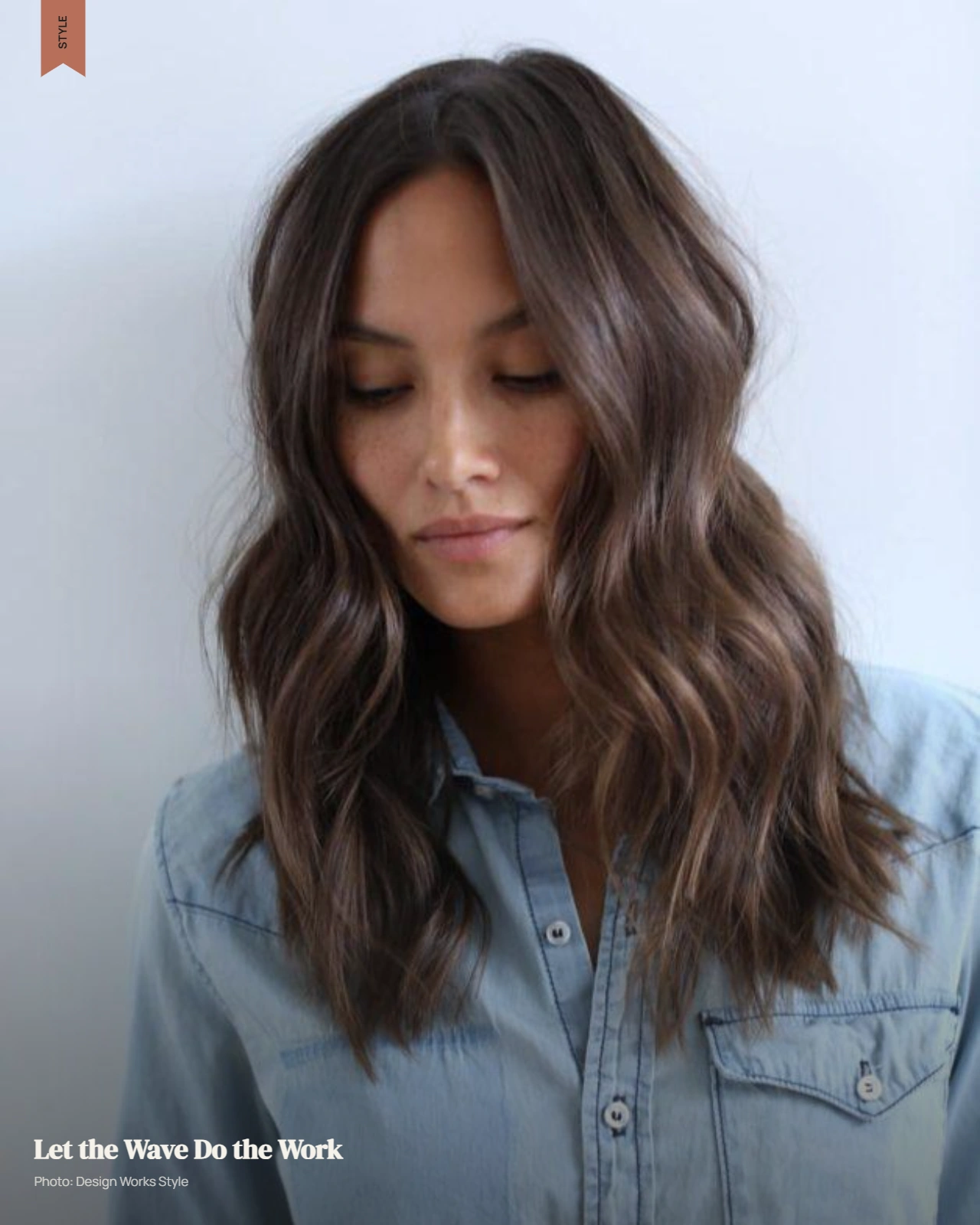
Useful options can include:
- Natural waves
- Loose textured styles
- Half-up hairstyles
- Soft ponytails
- Relaxed, undone finishes
You do not necessarily need to straighten wavy hair before styling it. Enhancing the existing wave pattern may be a simpler way to create a consistent result.
If your waves vary from day to day, choose a hairstyle that still looks intentional when the texture is not perfectly uniform.
Curly Hair
Curly hair can be styled around its natural volume and curl pattern rather than repeatedly reshaping it.
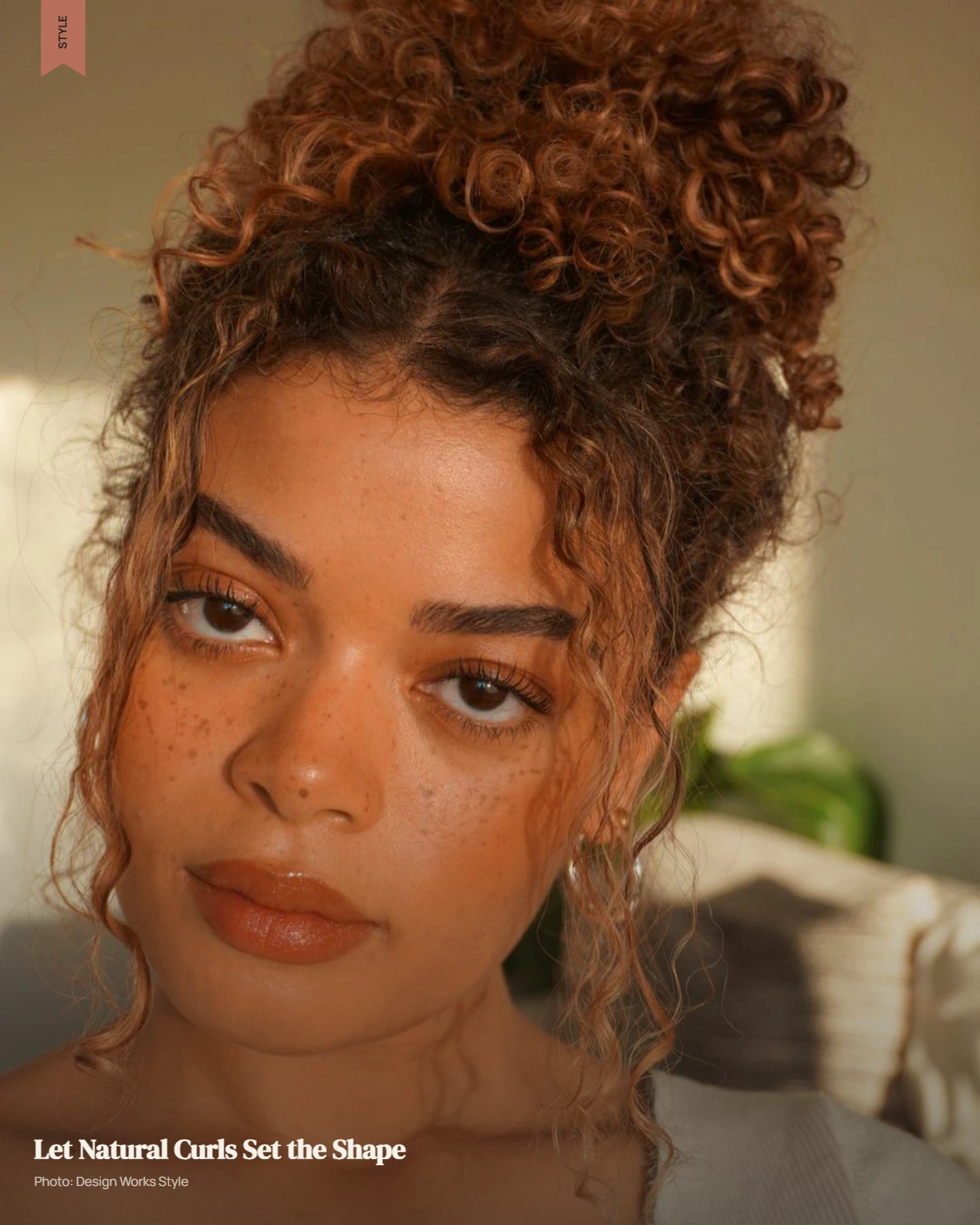
Options include:
- Defined curls
- Natural-volume styles
- Half-up hairstyles
- Curly ponytails
- Loose updos
The amount of manipulation required depends on the curl pattern and the finish you want.
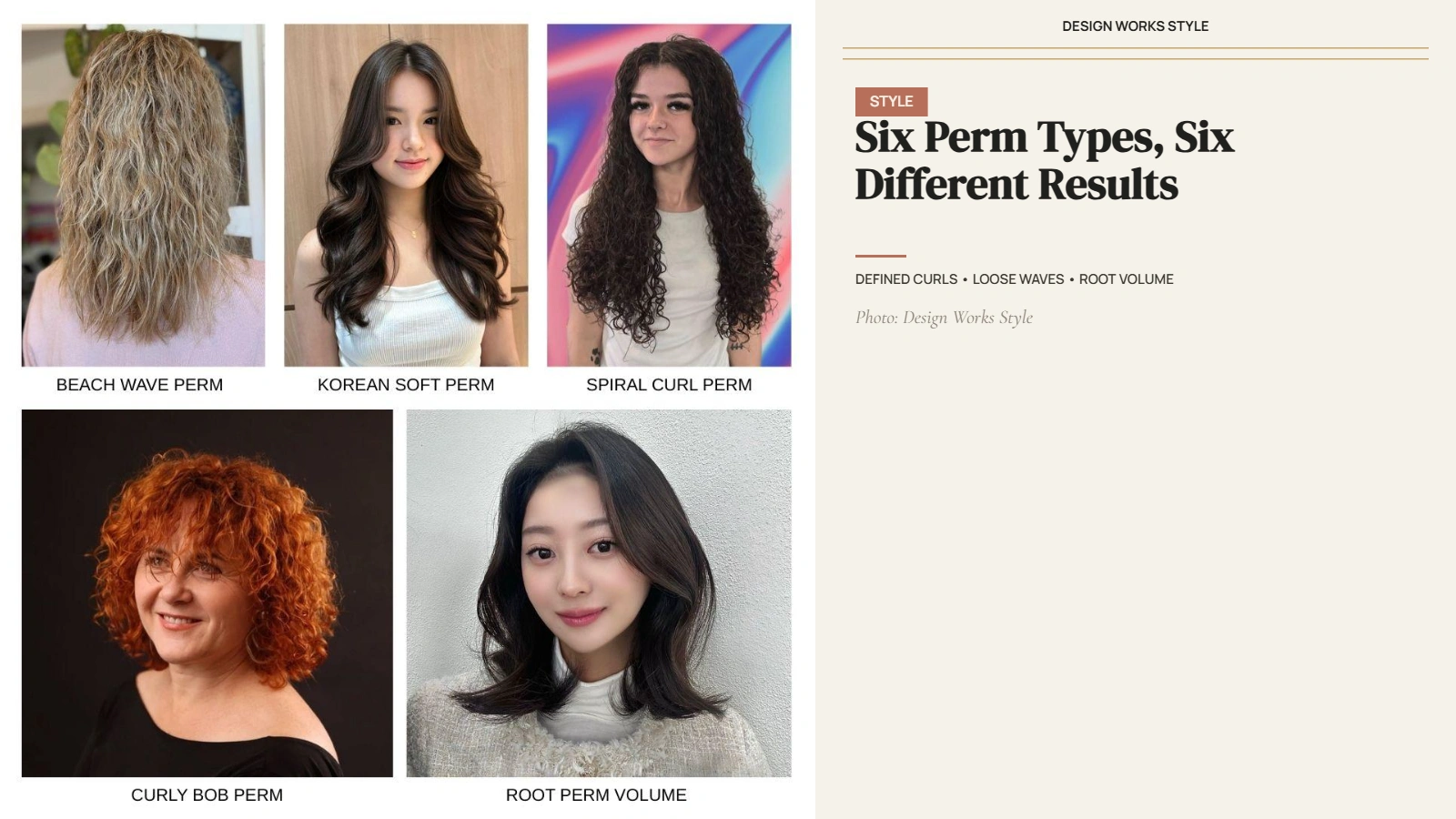
A photograph of highly defined curls may involve product, careful sectioning, and drying technique. A more natural curly hairstyle may require considerably less intervention.
Fine or Low-Density Hair
Fine hair refers to strand thickness, while low-density hair refers to how much hair is present overall. They can overlap, but they are not the same thing.
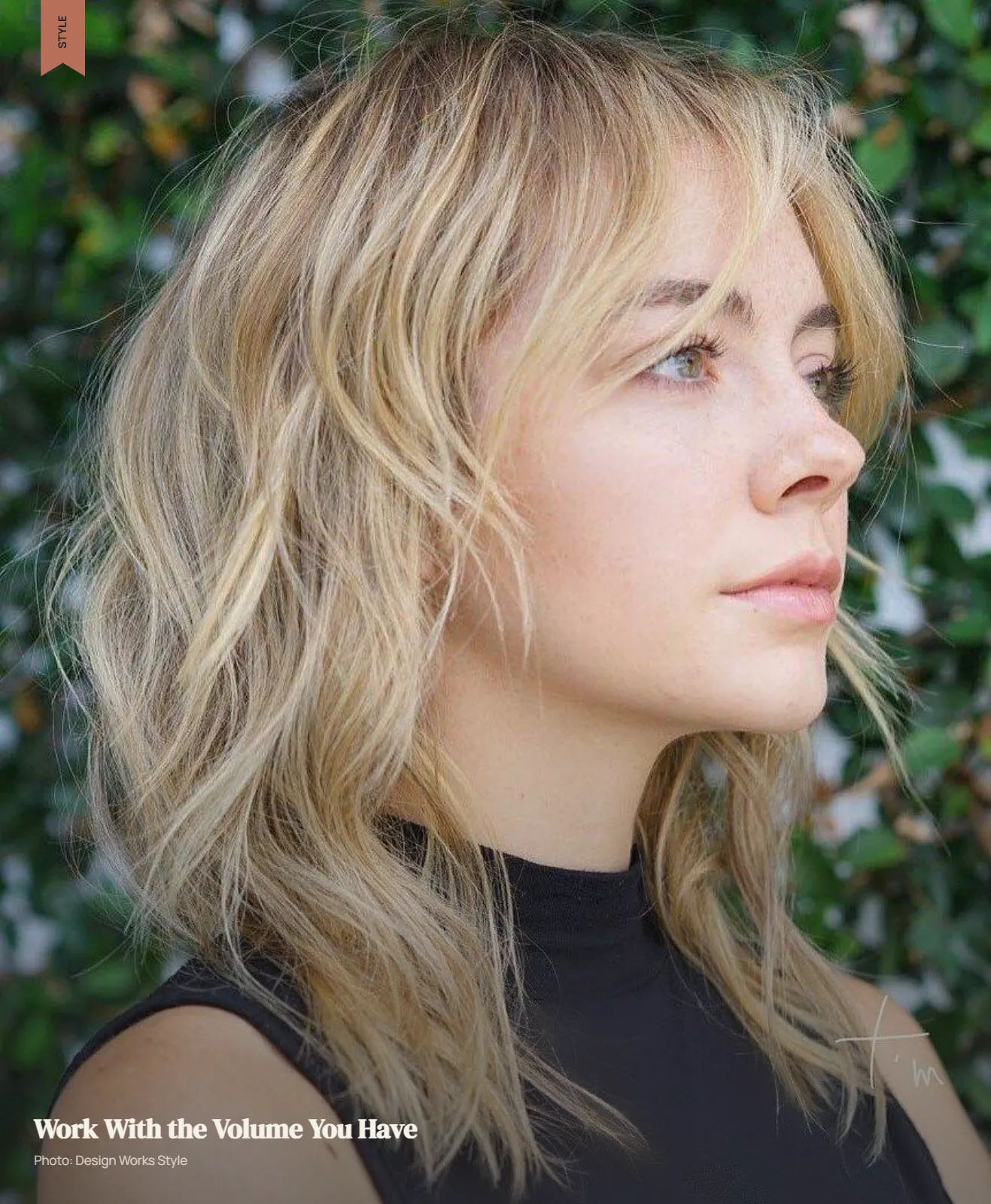
When choosing a hairstyle for finer or lower-density hair, consider:
- Controlled volume
- Lighter styling products
- Avoiding excessive product weight
- How much hair is being gathered into a style
- How the hairstyle preserves the available hair around the face
The goal is not to promise that a particular hairstyle will make hair look thicker. Instead, consider how much volume and coverage your hair naturally provides and choose styling techniques accordingly.
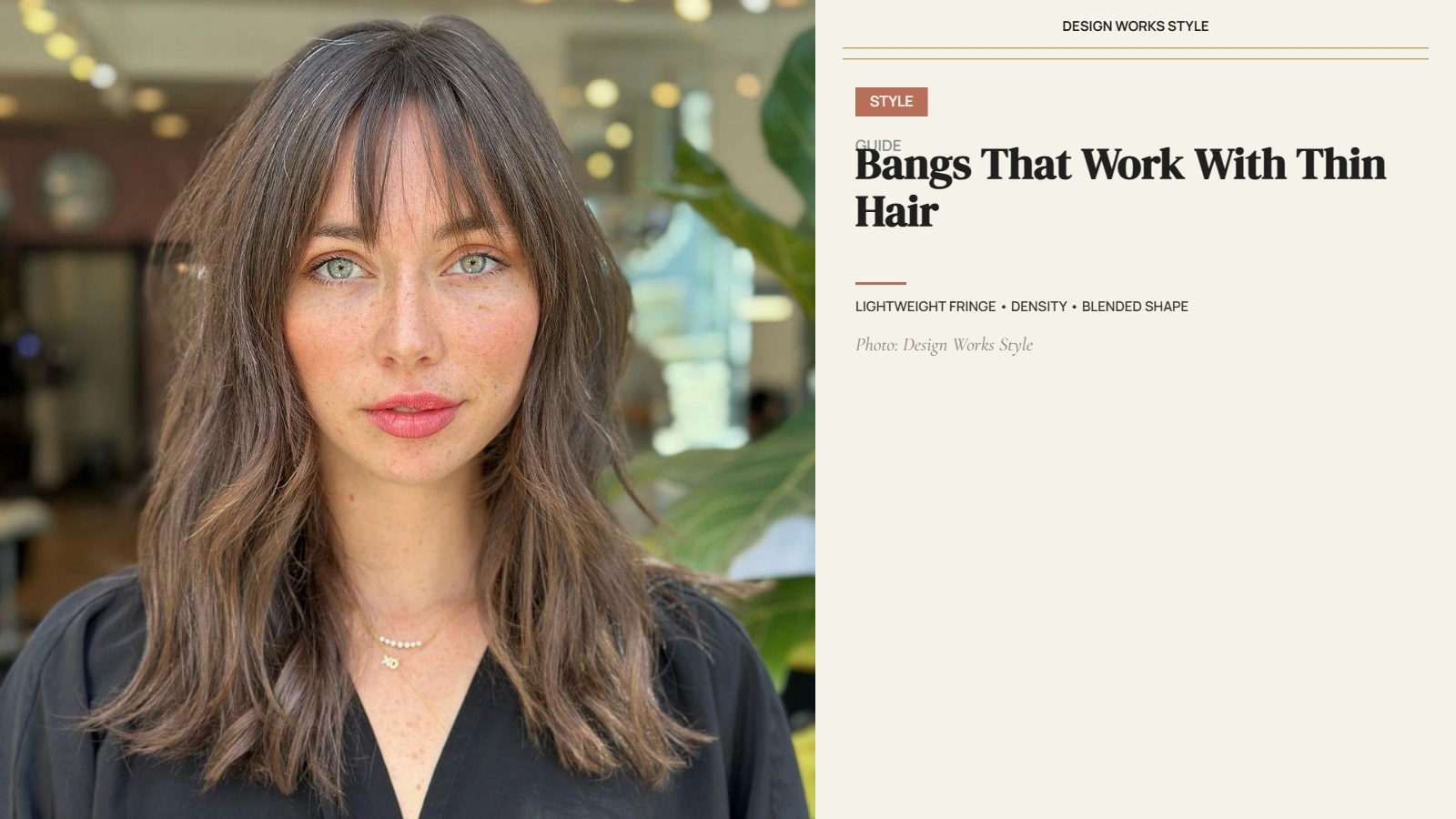
If you are specifically considering bangs with thin or lower-density hair, see our guide to Bangs for Thin Hair.
How Hair Length Changes Your Options
Length affects the range of hairstyles you can create, but it does not automatically determine which hairstyle you should choose.
The useful question is:
What can I do with the length I already have?
Short Hair
Short hair can still offer considerable styling flexibility.
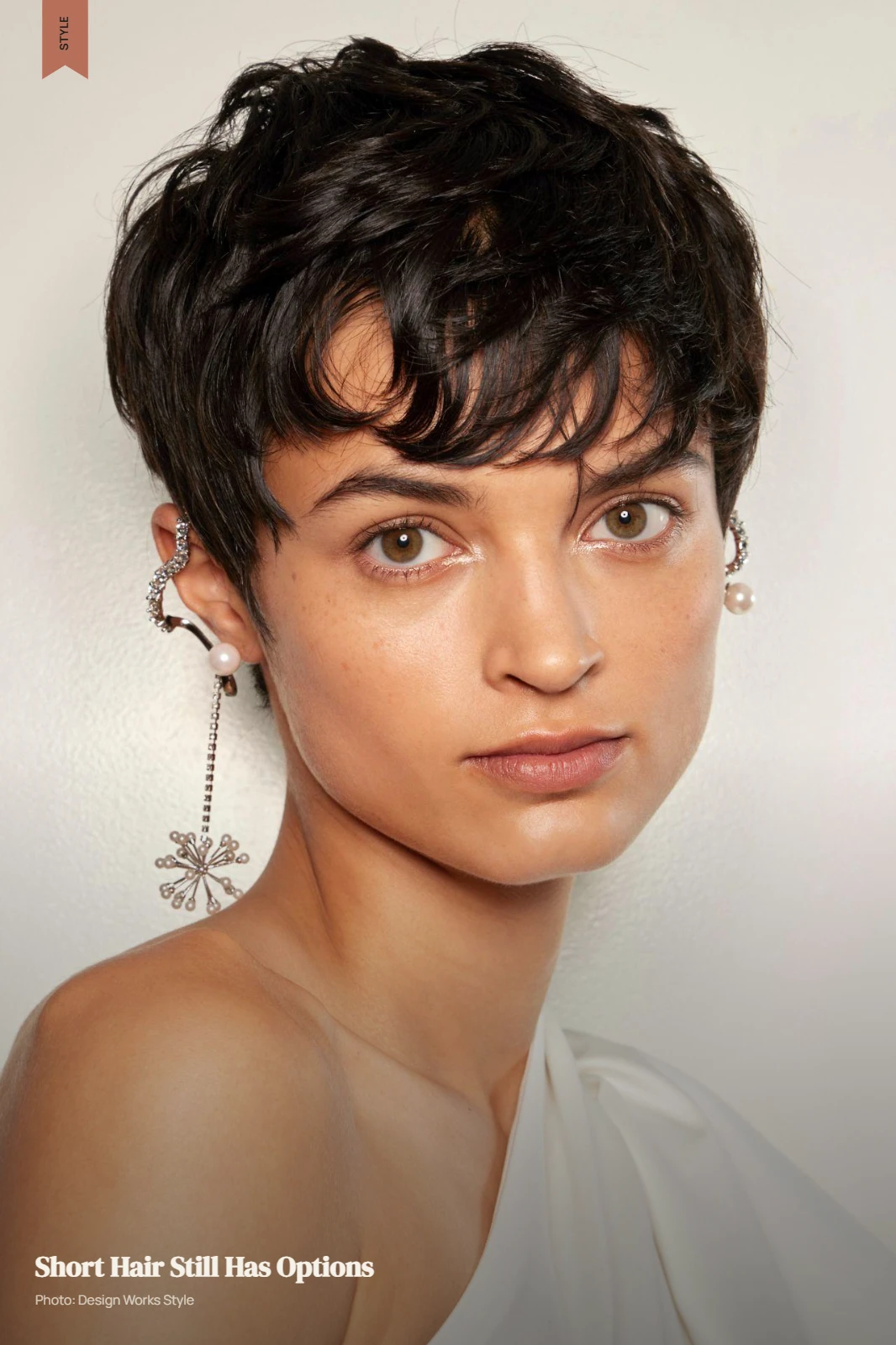
Depending on the cut, you can experiment with:
- Texture
- Directional styling
- Fringe
- Volume
- Accessories
A short haircut may be worn sleek one day and textured the next without changing the underlying cut.
If you already know you want short hair, our Short Hairstyles guide can provide broader inspiration.
Medium Hair
Medium-length hair offers a useful balance between wearing the hair down and putting it up.
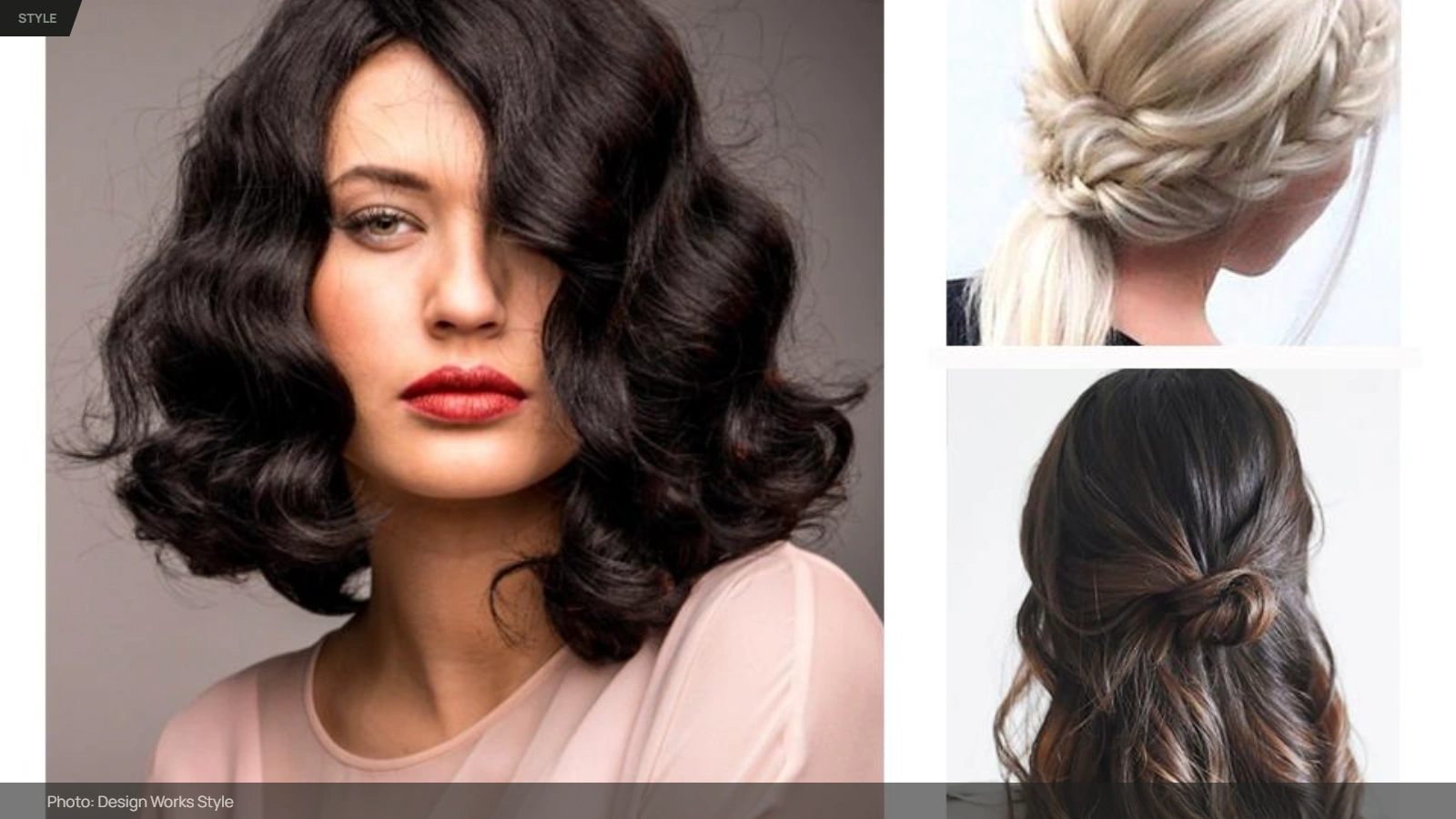
Options can include:
- Waves
- Half-up styles
- Ponytails
- Buns
- Different partings
Small changes can create noticeably different finishes. A medium-length style might be worn loose during the day and gathered into a simple bun for another occasion.
Long Hair
Long hair provides more room for styles that require gathering or securing the hair.
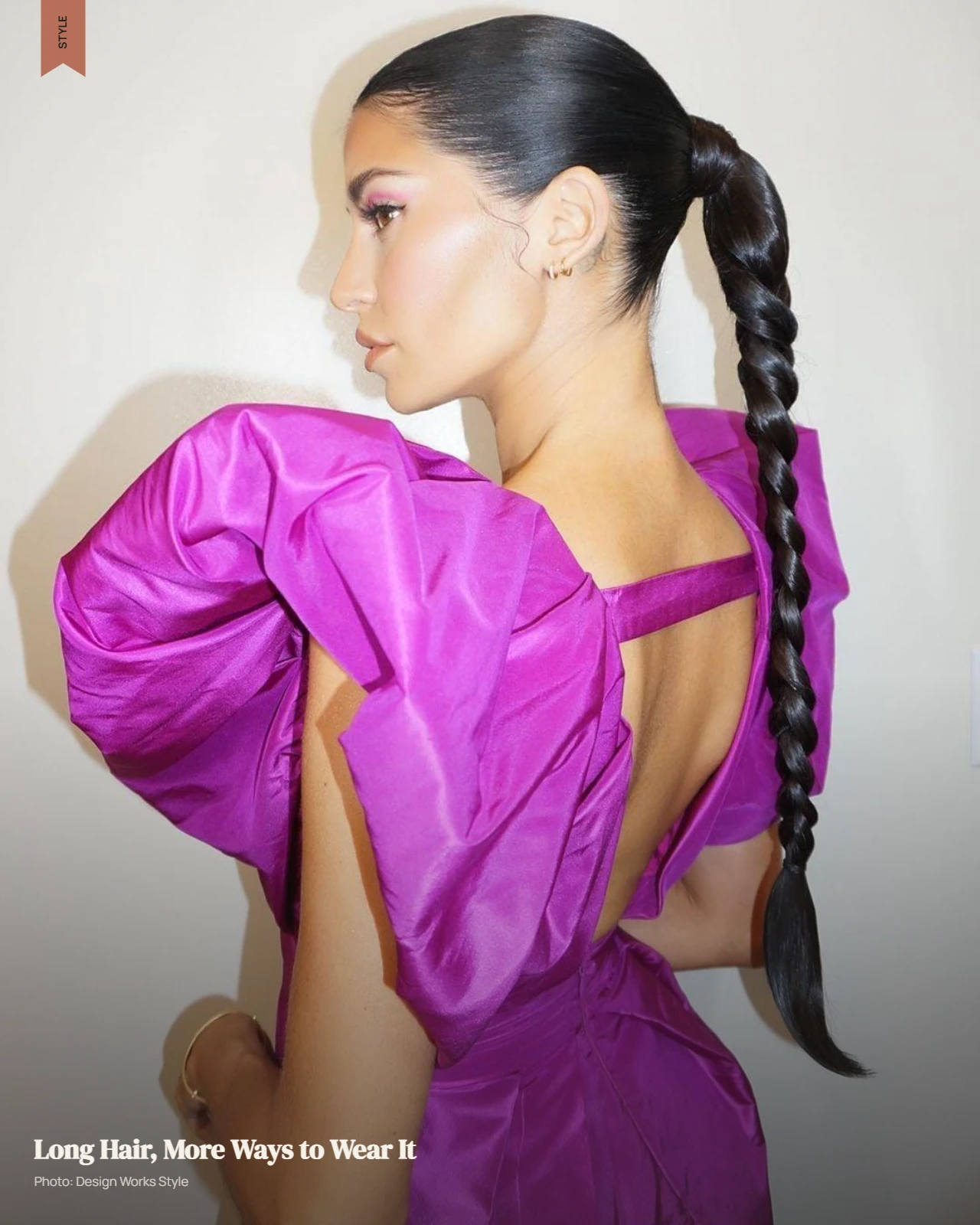
Common options include:
- Ponytails
- Braids
- Buns
- Waves
- Half-up styles
- More elaborate updos
Again, the question is not whether long hair is automatically better for a particular hairstyle. Consider which options you actually enjoy wearing and how much time you want to spend creating them.
What Hairstyle Suits Your Lifestyle?
A hairstyle can look great in a photograph and still be completely impractical for your routine.
Before choosing one, consider how much effort you realistically want to spend.
How much time do you have?
You might prefer:
- Almost no styling
- A quick everyday routine
- Regular blow-drying
- A full styling routine
There is no universally correct amount of styling time.
The important question is whether you are willing to repeat the process regularly.
A hairstyle that takes several steps every morning may be reasonable for someone who enjoys styling their hair but impractical for someone who wants to leave the house quickly.
How often do you want to use heat?
Think about how frequently you are comfortable using:
- A blow dryer
- Flat iron
- Curling iron
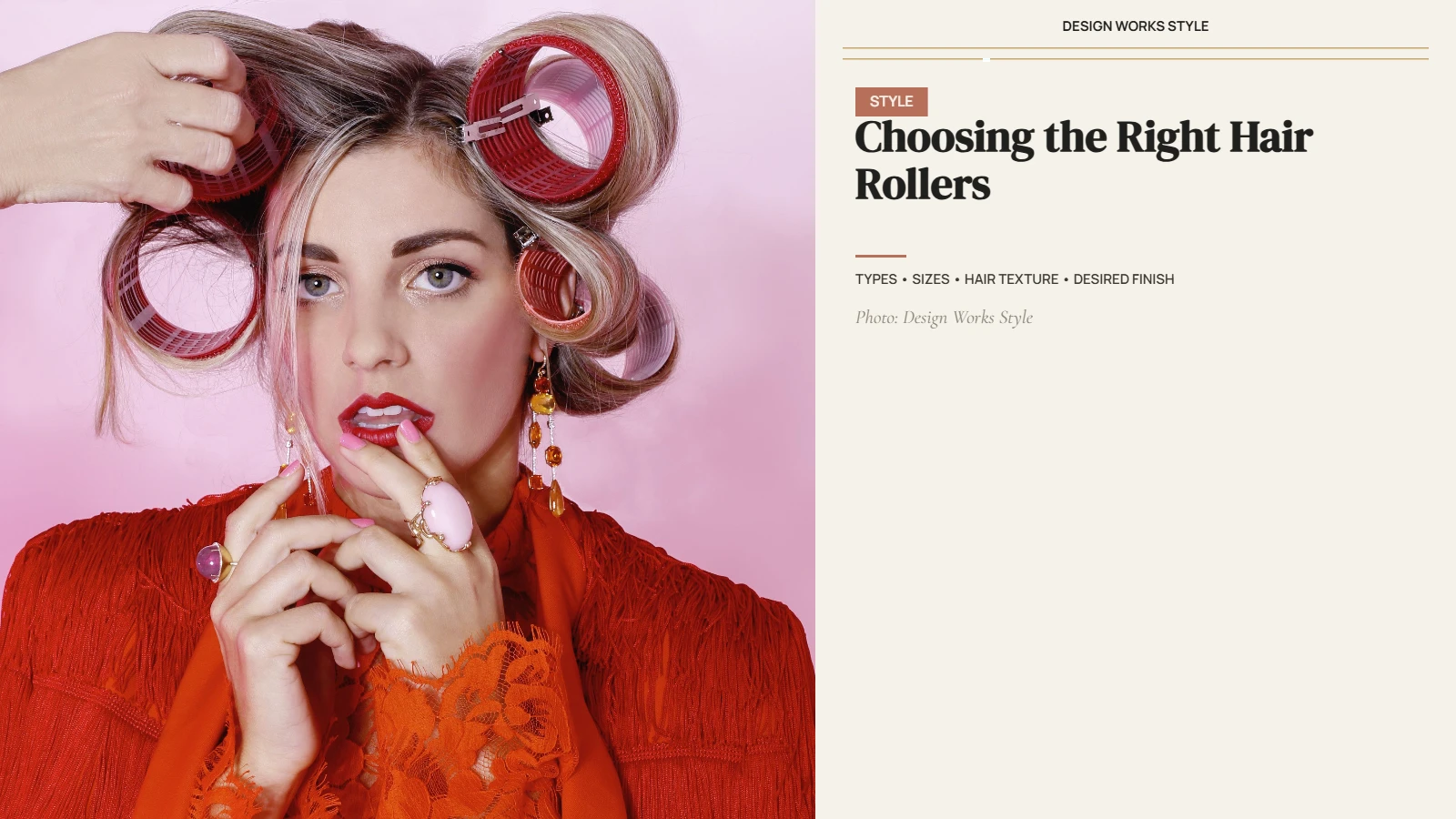
- Hot rollers
- Other heated tools
If you prefer to minimize heat, prioritize hairstyles that work with air-drying or your natural texture.
If you enjoy styling with heat, you have more options, but your routine should still account for the condition of your hair.
Do you want repeatability?
An everyday hairstyle should be something you can recreate consistently.
Ask yourself whether you can reasonably achieve the same result without professional assistance.
Do you want flexibility?
Some hairstyles can move between casual and polished with relatively small adjustments.
For example, loose waves might work for an ordinary day, while a cleaner part and more controlled finish can make the same general styling approach feel more deliberate for an event.
Choose a Hairstyle for the Occasion
The hairstyle that works for a normal day may not be the hairstyle you want for a special event.
The occasion helps determine how much structure, polish, and styling effort makes sense.
Everyday Hairstyles
For everyday wear, you might prefer:
- Natural texture
- Simple ponytails
- Loose waves
- Half-up styles
The best option depends on your routine and what you find comfortable.
A style that stays reasonably neat while allowing normal movement can be more useful than one that requires constant adjustment.
Image placement: Show a realistic everyday hairstyle rather than a heavily editorial or formal look.
Suggested alt text: Simple everyday hairstyle with natural texture
Work or Professional Settings
Depending on your workplace and personal style, you might choose:
- Controlled texture
- Polished ponytails
- Simple buns
- Neat waves
- Styles that remain practical throughout the day
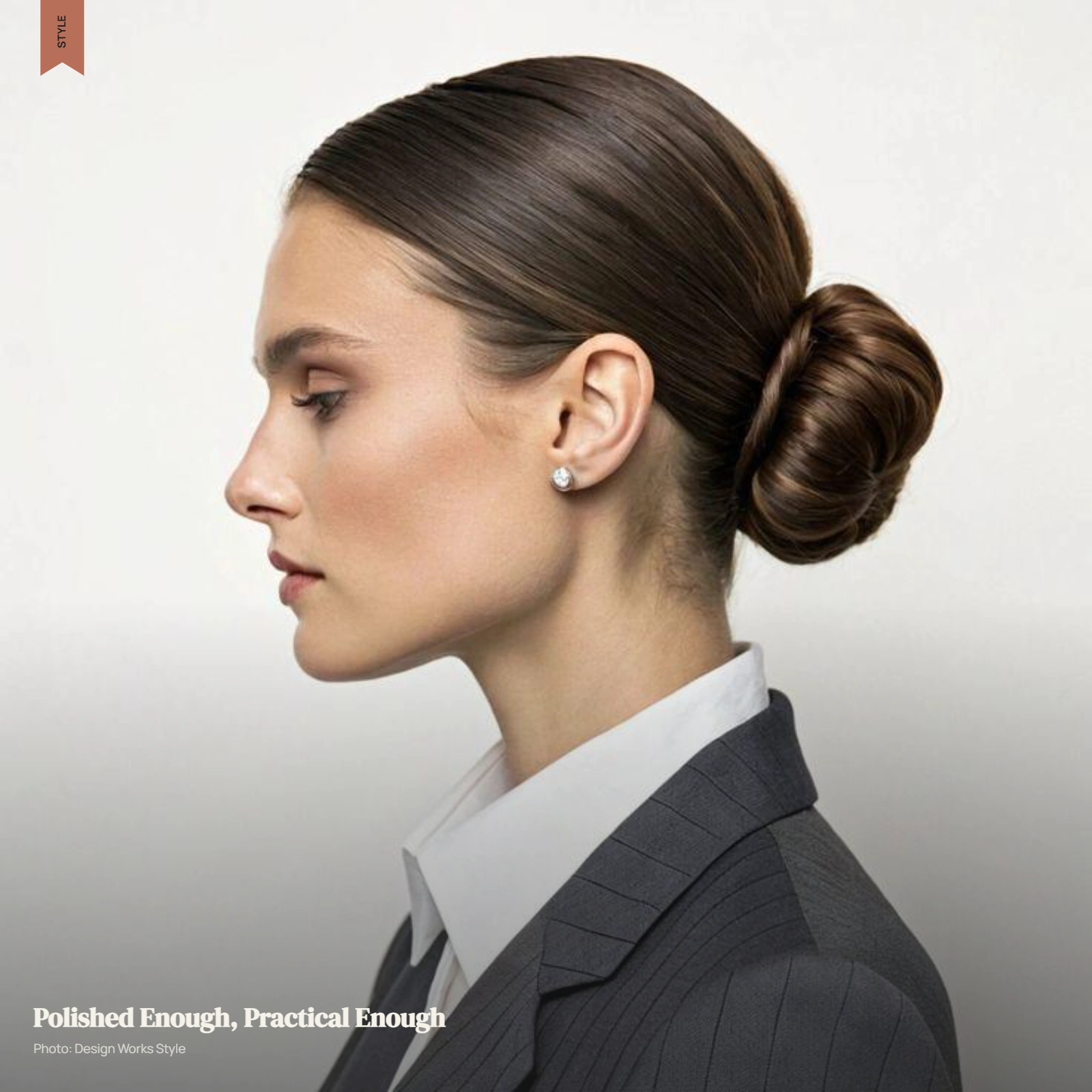
There is no single hairstyle that is universally “professional.” Workplace expectations vary, so consider the setting as well as your own preferences.
The practical question is whether the hairstyle feels appropriate to the environment and remains comfortable throughout the day.
Special Occasions
Special occasions can give you a reason to use more deliberate styling.
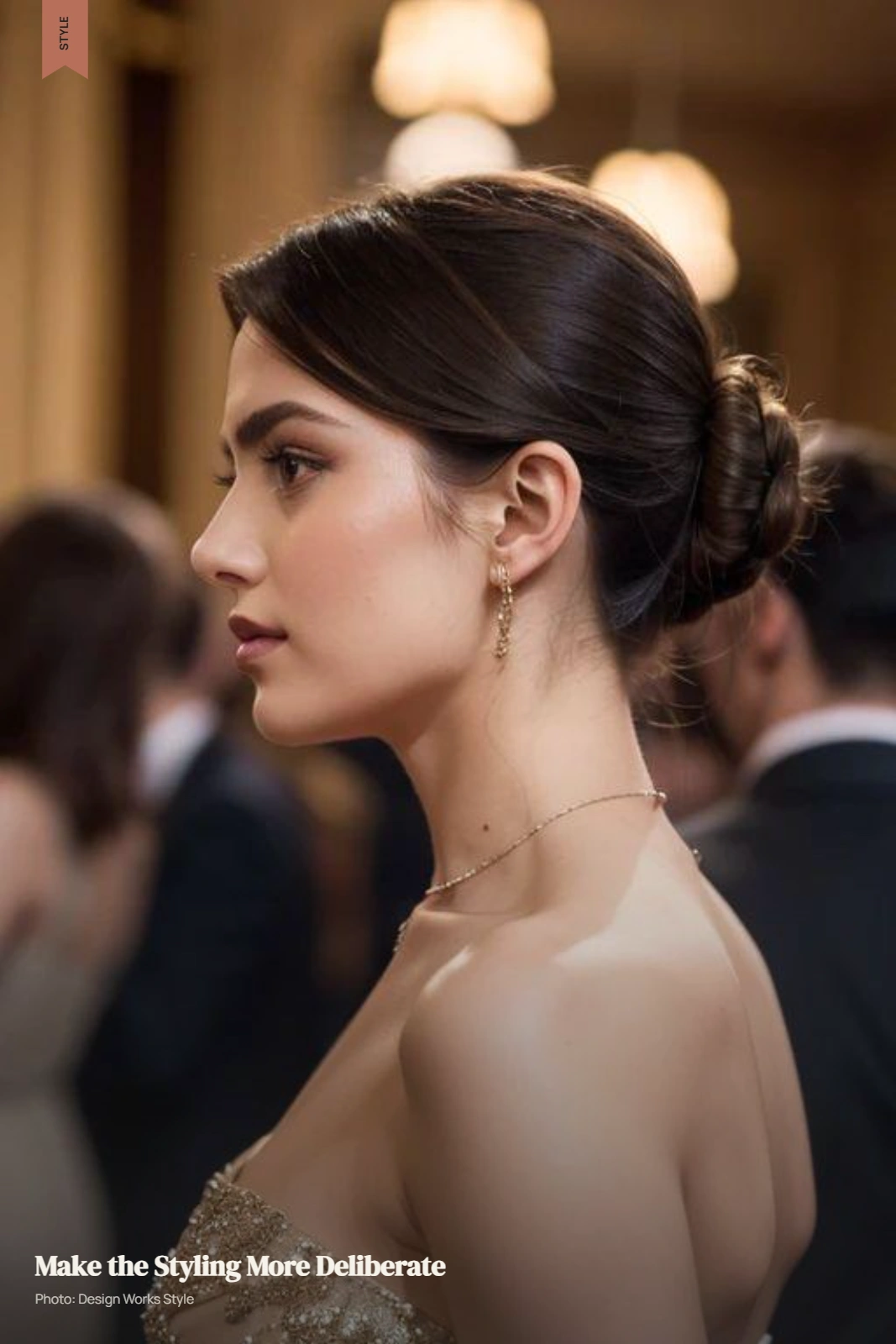
Options may include:
- Structured updos
- Polished waves
- More elaborate styling
- Accessories
This is where you might choose a hairstyle that takes more time than you would normally spend.
The key is to match the level of styling to the occasion and your own comfort.
How the Same Haircut Can Create Different Hairstyles
You do not necessarily need a different haircut every time you want a different look.
The same haircut can support several hairstyles depending on how you arrange, part, smooth, curl, or texture it.
Example 1: Bob
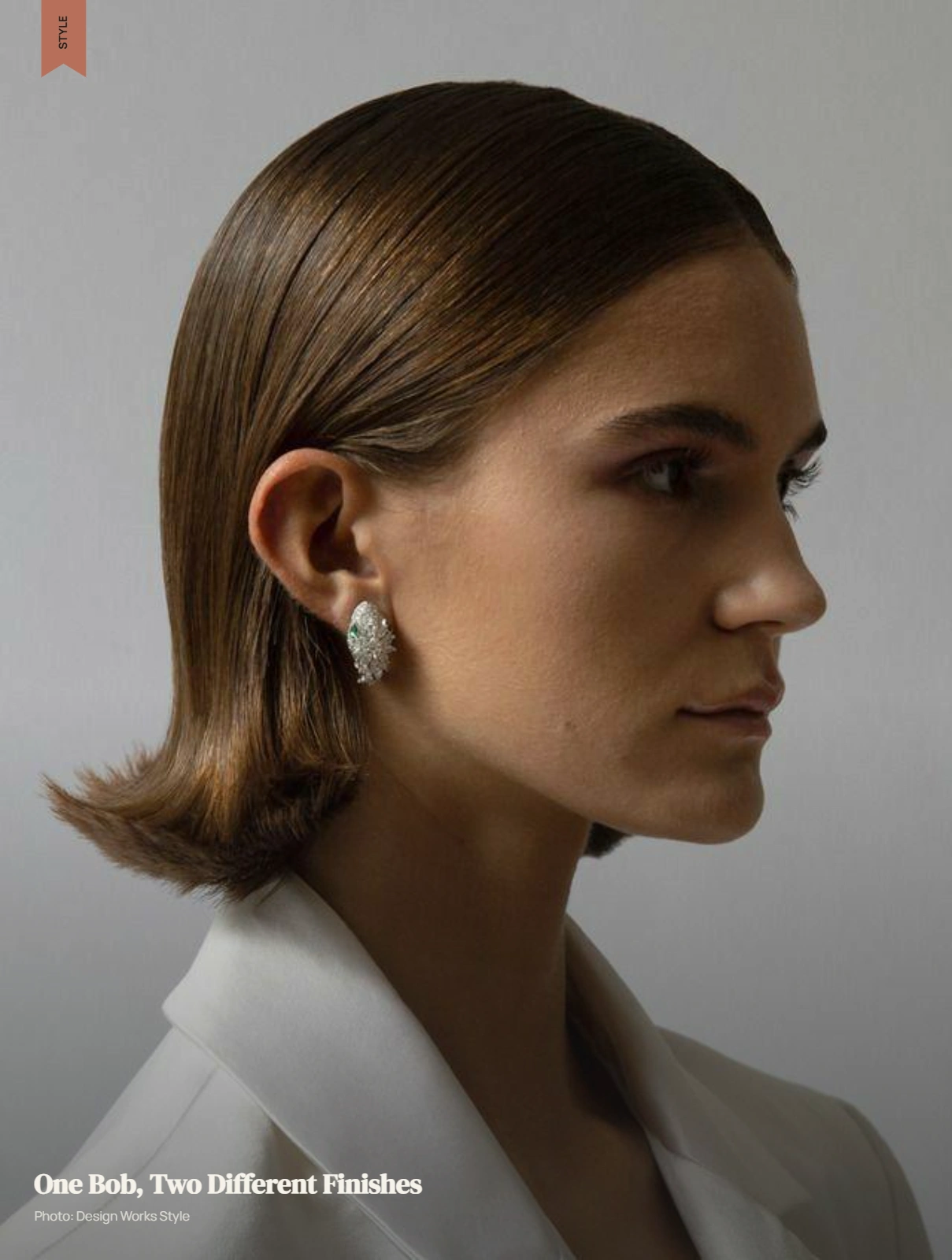
A bob can be:
- Sleek and straight
- Softly waved
- Tucked behind the ears
- Side-parted
- Textured
The haircut remains essentially the same, while the styling changes the finish.
Example 2: Long Layered Hair
Long layered hair can become:
- Loose waves
- A ponytail
- A half-up style
- A bun
- Straight, polished hair
Layers can also create different movement depending on whether the hair is worn naturally or styled.
Example 3: Short Hair
Short hair can be:
- Textured
- Sleek
- Side-swept
- Piece-y
- Naturally styled
This is why it is useful to distinguish the haircut from the hairstyle.
The haircut creates the structure. The styling creates the presentation.
If you are considering a different haircut because you feel like you have run out of styling options, first ask whether a different part, texture, finish, or arrangement could give you the change you want.
How to Choose a Low-Maintenance Hairstyle
“Low maintenance” is personal.
A hairstyle that takes only a few minutes for one person might require significantly more work for someone with a different texture or length.
Evaluate a hairstyle based on:
- Your natural texture
- Drying time
- Product requirements
- Heat requirements
- How well it survives a normal day
- How often it needs refreshing
A practical test
A hairstyle is only low maintenance for you if it works reasonably well with your natural hair and routine.
For example, a supposedly simple straight hairstyle may not be low maintenance if your naturally curly hair requires frequent heat styling to maintain it.
Likewise, an elaborate-looking natural curl style may be relatively easy for someone whose hair already forms that pattern naturally.
Choose based on the work involved in maintaining the style, not simply how simple the finished photograph appears.
Should You Work With Your Natural Texture?
There is no requirement to choose one approach.
You can:
- Embrace your natural texture
- Enhance your natural texture
- Partially alter it
- Completely restyle it temporarily
Each approach involves a different balance between effort and control.
Working with natural texture can reduce styling steps. Changing the texture can give you more control over the final appearance, but it may require more time, products, or heat.
Neither approach is automatically better.
The useful question is:
How much work am I willing to do to get the finish I want?
If you enjoy styling your hair, a more involved routine may be completely reasonable. If you want something repeatable with minimal effort, choose accordingly.
A Simple Hairstyle Decision Checklist
When you are unsure what hairstyle suits you, work through these questions.
1. What is my natural texture?
Is your hair straight, wavy, curly, coily, or somewhere between categories?
Think about how it behaves without extensive styling.
2. How much hair density do I have?
Consider how much volume and coverage your hair naturally provides.
This can affect how gathered styles, loose styles, and volume-focused techniques behave.
3. What length am I working with?
Think in terms of what your current length allows you to do.
Short, medium, and long hair each offer different styling possibilities.
4. How much time do I want to spend styling?
Decide whether you want a minimal, moderate, or more involved routine.
Be realistic. A hairstyle you love but never have time to create may not become part of your regular rotation.
5. How much heat am I comfortable using?
If you rarely use heat, prioritize styles that work naturally or with minimal manipulation.
If you enjoy heat styling, factor that into the amount of time and maintenance you are willing to accept.
6. Where am I wearing the hairstyle?
Consider whether it is for:
- Everyday life
- Work
- A casual event
- A special occasion
The same hair can be styled differently depending on where you are going.
7. What do I actually like?
Personal preference belongs in the decision.
You do not need to choose a hairstyle simply because a guide says it is appropriate for your face shape, hair type, or length.
If you like the way a style looks and are willing to do what it takes to create it, that matters.
When the Problem Is the Haircut, Not the Hairstyle
Sometimes the styling problem is actually a haircut problem.
You may be limited because:
- The desired style requires length you do not have
- The layers do not support the intended shape
- There is too much or too little weight in a particular area
- The face-framing needs changing
- The haircut does not work well with your natural texture
For example, you may want to create a certain ponytail or updo but discover that the current layers make it difficult to secure the hair. Or you may want a particular face-framing style but find that the existing haircut does not provide the right length around the face.
In these cases, changing the hairstyle alone may not solve the problem.
If you think the underlying haircut is limiting your options, see our broader Haircuts & Hairstyles guide for haircut-selection guidance.
The important distinction is:
If you dislike how you are styling the hair, try a new hairstyle. If the hair itself cannot support the shape you want, consider whether the haircut needs changing.
If You Have a Specific Concern, Start There
Sometimes “what hairstyle suits me?” is only the starting question.
Once you identify the specific issue, a more focused guide may be more useful.
If your concern is face shape
If you want to understand how face shape affects the underlying haircut, start with Haircuts for Face Shapes.
If you have a round face
If your question has become specifically about choosing a haircut for a round face, see Haircuts for Round Faces.
If you have a round face and want styling ideas
If you already have your haircut and want to understand how to wear it, our guide to Hairstyles for Round Faces is more directly relevant.
If you want short-hair ideas
If you already know that you want to wear your hair short, explore Short Hairstyles.
If you are considering bangs with thin hair
If fringe is the specific decision and you have thin or low-density hair, see Bangs for Thin Hair.
The idea is not to read every hair article. Choose the resource that matches the decision you are actually trying to make.
The Bottom Line
When you ask, “What hairstyle suits me?”, start with the hair you actually have.
Consider your texture, density, length, face shape, lifestyle, occasion, styling time, heat preferences, and personal taste. Then choose a hairstyle that fits those constraints.
You do not need to find one perfect style and wear it forever. A good haircut can support several different hairstyles, and small changes in parting, texture, volume, or arrangement can create a noticeably different look.
The most useful hairstyle is ultimately one you like and can realistically recreate.
Frequently Asked Questions
How do I choose a hairstyle that suits me?
Start with your natural texture and how much maintenance you will honestly do. Then factor in face shape and lifestyle. The best hairstyle is one you will actually style day to day.
Should I fight my natural texture?
Usually not. Working with your texture means less daily effort and better results. Most unmanageable hair is just hair styled against its nature.
How much does face shape matter?
Less than hair texture and lifestyle. Use face-shape guidance for fine-tuning, not as the starting point. Our guide to haircuts for face shapes can help with that part.
What if I want a big change?
Change one thing at a time when possible: length, color, or texture, not all three at once. Bring reference photos to a consultation before committing.