
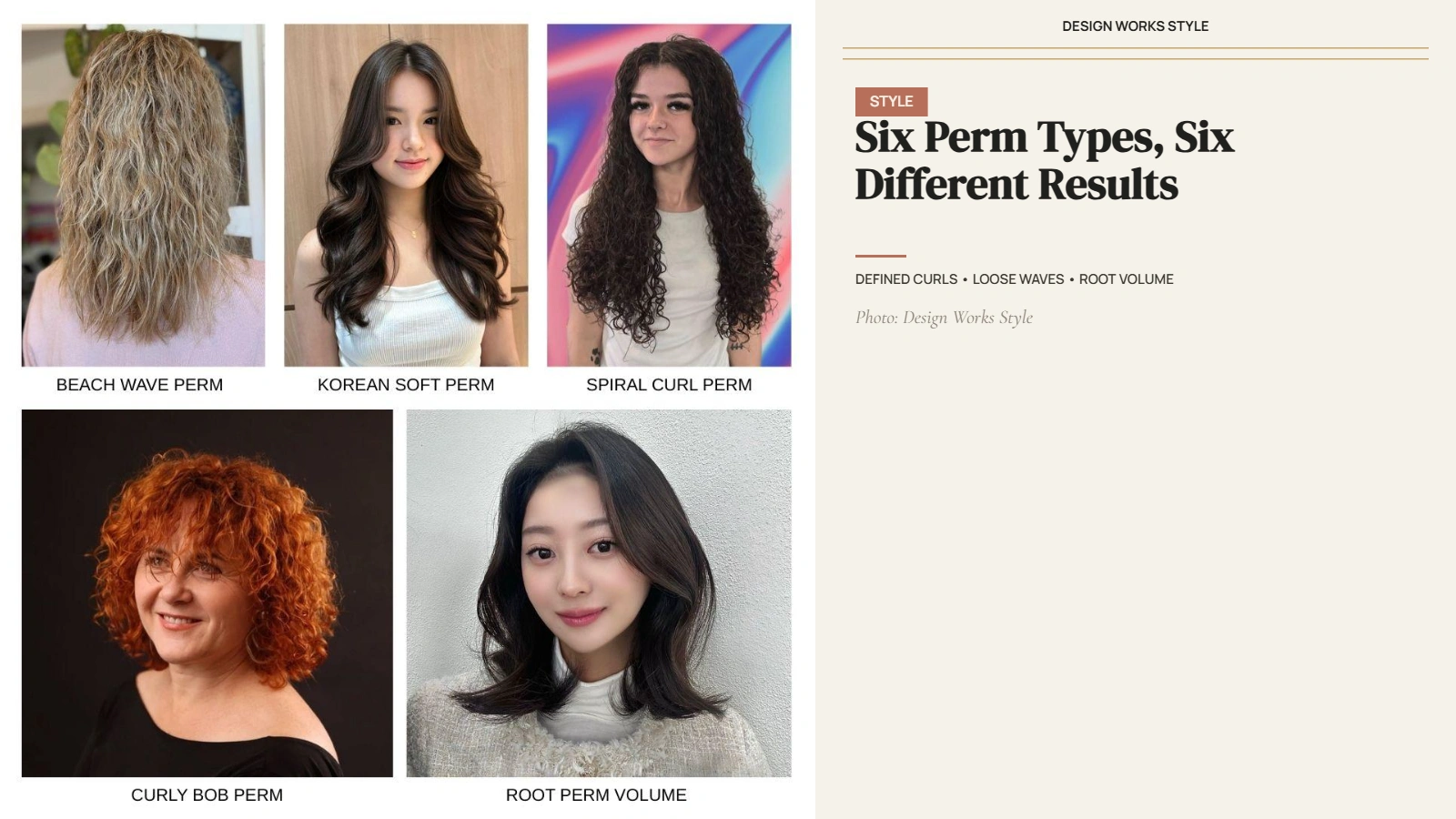
Different types of perms can create anything from loose waves and added body to defined curls. The main differences come from the curl pattern, rod or wrapping technique, use of heat, and the hair’s starting condition.
The terminology can vary between salons and regions, so the same name may not always describe exactly the same service. The most useful way to compare perms is by the result you want and the technique used to create it.
1. Cold Perm
A cold perm is a traditional chemical perm that creates curls or waves without relying on heated rods. The hair is wrapped around rods, treated with a waving solution, and then neutralized to establish the new pattern.
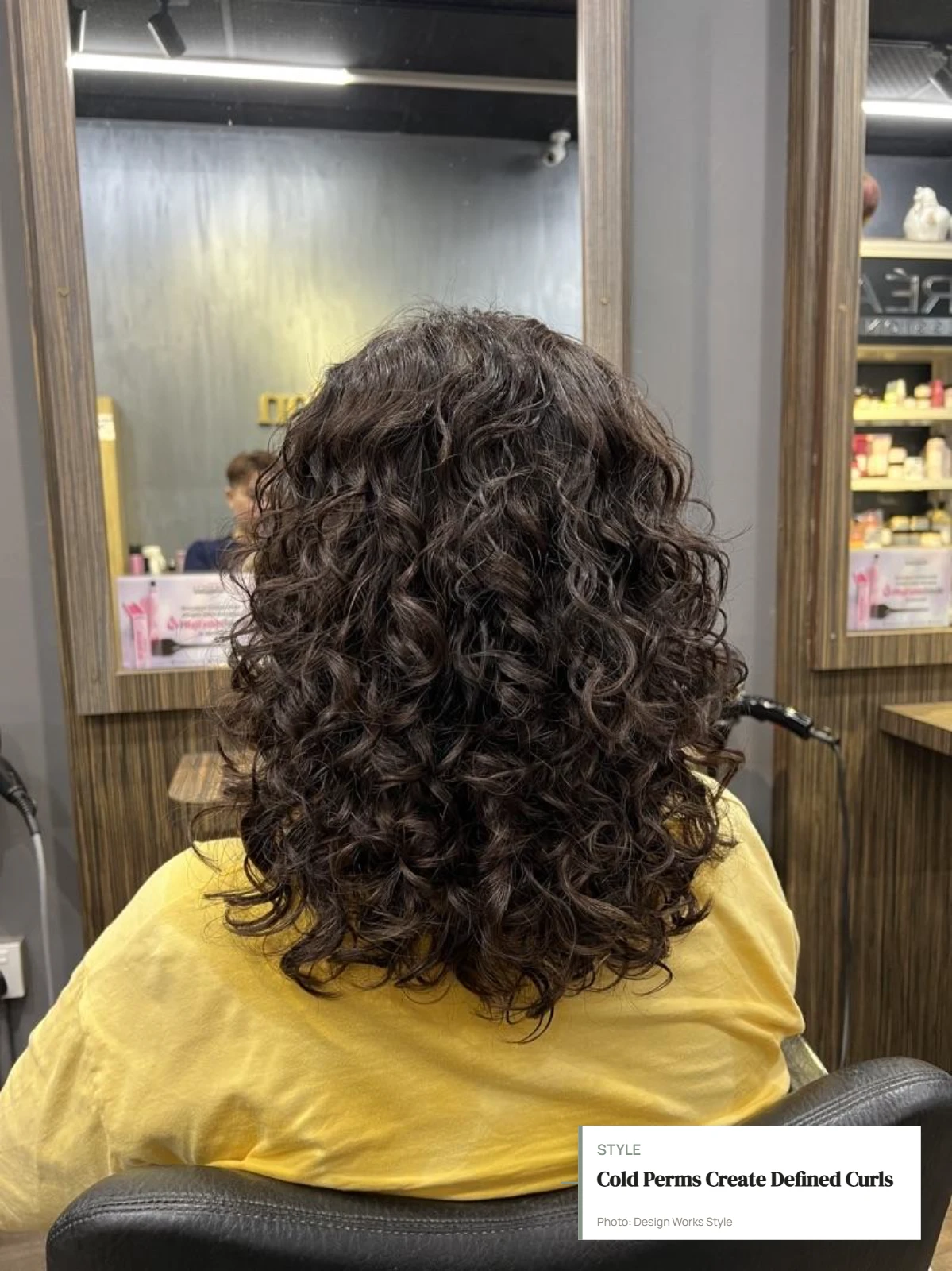
Cold perms can create relatively defined curls, although the exact result depends on rod size, wrapping technique, hair texture, and length.
Best suited to: People looking for a defined curl or wave pattern without a heated or digital perm system.
Result: Defined curls or waves
Heat: Not central to the process
Maintenance: Requires care suited to the newly permed texture
Because there is more to understand about how this technique works, see our dedicated guide to cold perms.
2. Digital or Heated Perm
A digital perm uses heated rods as part of the perming process. It is commonly associated with softer, more relaxed waves or curls, although the final result depends on the technique and the hair being treated.
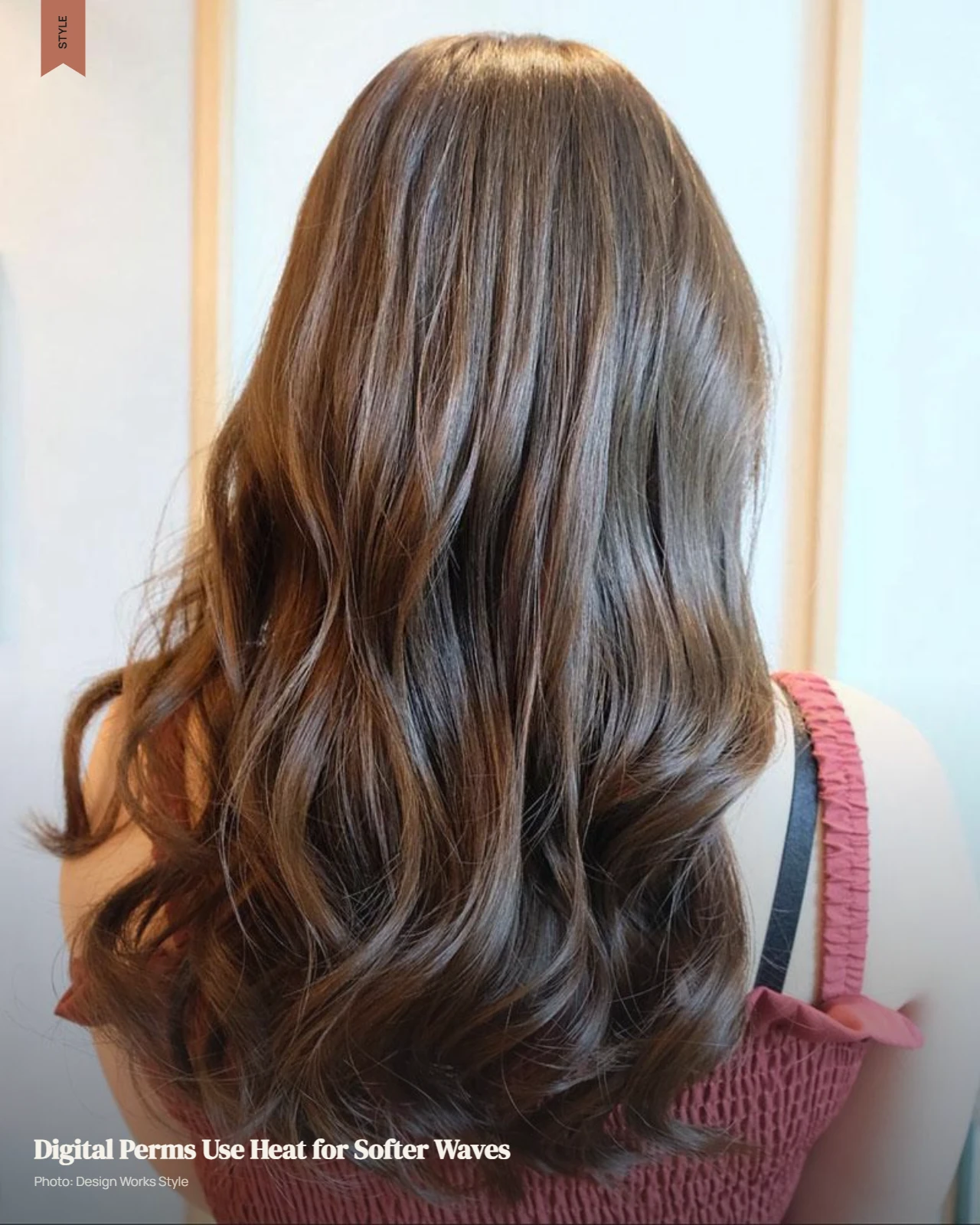
The finished hair may look different when wet compared with when it is dry and styled, which is one reason digital perms are often discussed in terms of their styling behavior.
Best suited to: People interested in softer waves or curls and a heated perming approach.
Result: Often softer waves or relaxed curls
Heat: Used as part of the system
Maintenance: Styling and drying technique can affect the finished appearance
Digital perm terminology and methods can vary between salons, so ask what specific system and result the stylist is offering.
3. Body Wave Perm
A body wave perm is designed to create softer movement and volume rather than tightly defined curls.
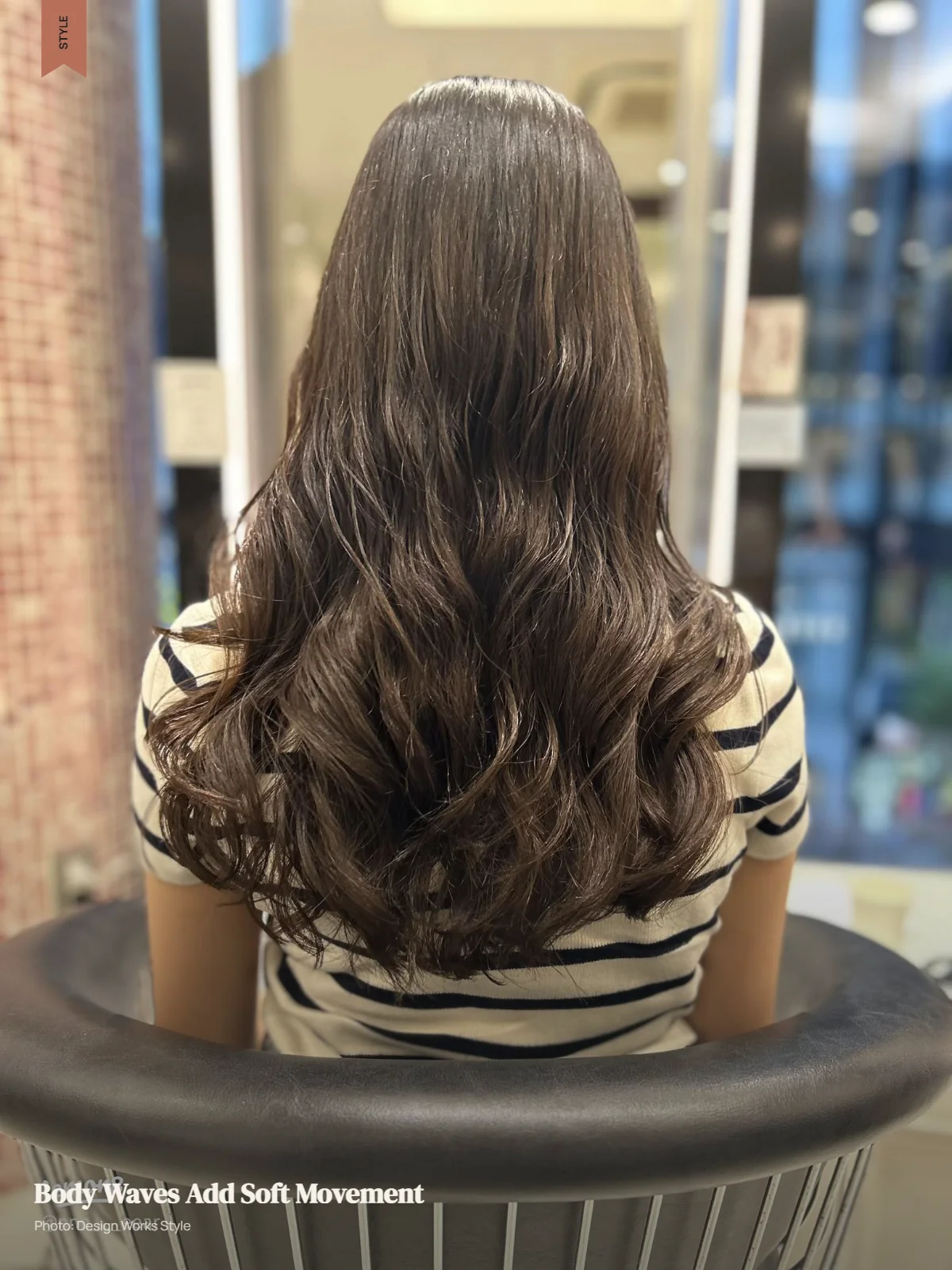
Larger rods are commonly associated with looser results, although rod size is only one factor. Hair length, density, natural texture, and wrapping technique all affect the finished shape.
Best suited to: People who want movement, body, or a softer wave rather than obvious curls.
Result: Loose waves and added movement
Heat: Depends on the perm system used
Maintenance: Generally focuses on preserving the wave pattern and keeping the hair in good condition
A body wave can be particularly useful when the goal is to add texture without creating a highly curly finish.
4. Spiral Perm
A spiral perm creates a more vertical, elongated curl pattern. The hair is wrapped around rods in a way that encourages curls to fall downward rather than forming only around the circumference of the head.
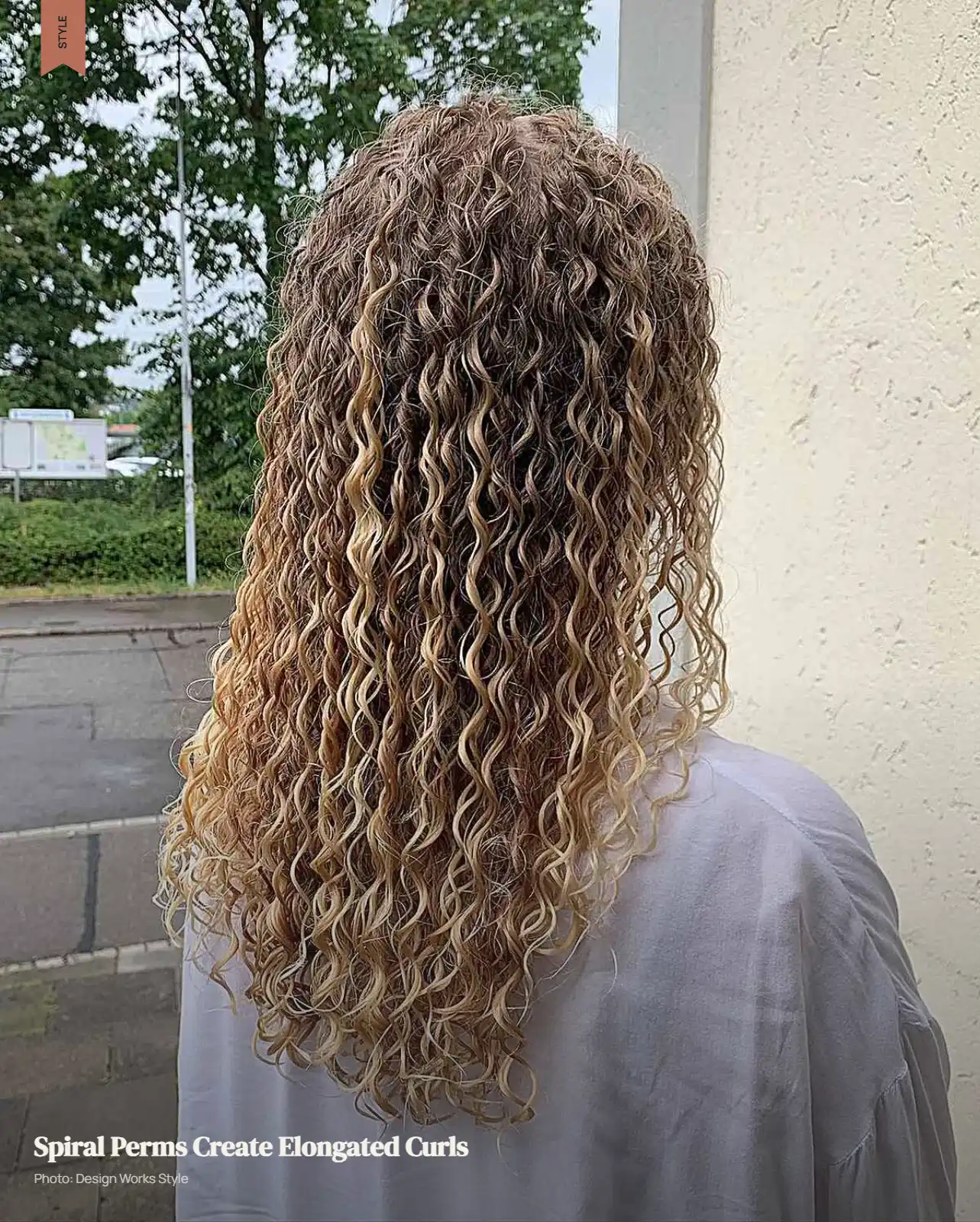
This can produce more visible, defined curls throughout longer hair.
Best suited to: People who want a more noticeable curly result and have enough length to support the technique.
Result: Defined, elongated curls
Heat: Depends on the specific perm system
Maintenance: Requires curl-friendly styling and careful handling to preserve definition
Spiral perms can create a dramatic texture change, so the starting condition and length of the hair are important considerations.
5. Beach Wave Perm
A beach wave perm aims for a relaxed, tousled wave rather than a uniform curl.
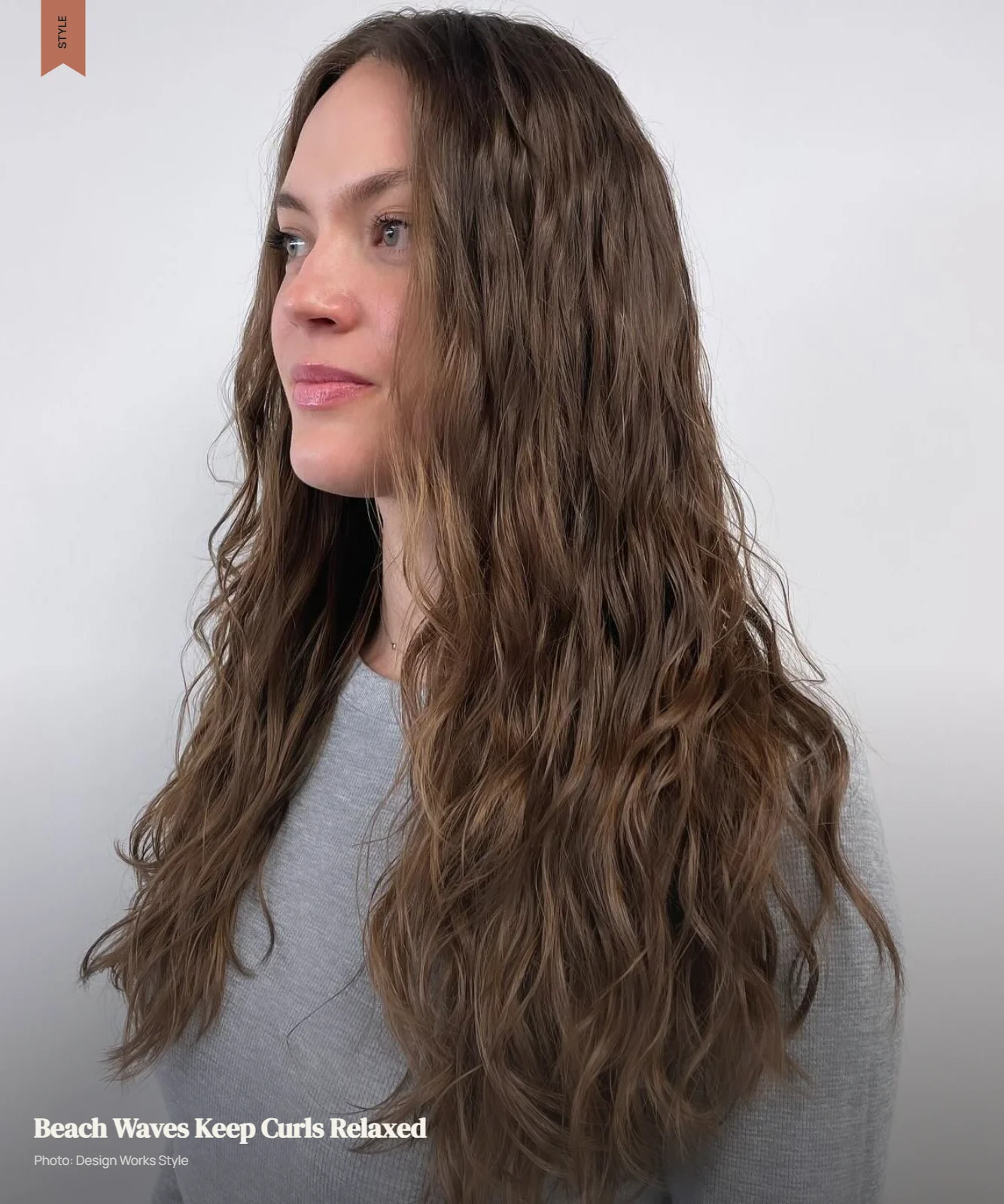
The finished result is generally intended to look less structured than a traditional curl-focused perm. The exact appearance depends on the technique, hair length, natural texture, and how the hair is styled afterward.
Best suited to: People who want relaxed movement and texture rather than defined curls.
Result: Loose, tousled waves
Heat: Depends on the system and technique
Maintenance: Usually involves maintaining texture without overworking the hair
The term “beach wave” can be used differently between salons, so reference photos are particularly helpful when requesting this style.
6. Root Perm
A root perm focuses primarily on creating lift or volume near the roots rather than changing the texture of the entire length.
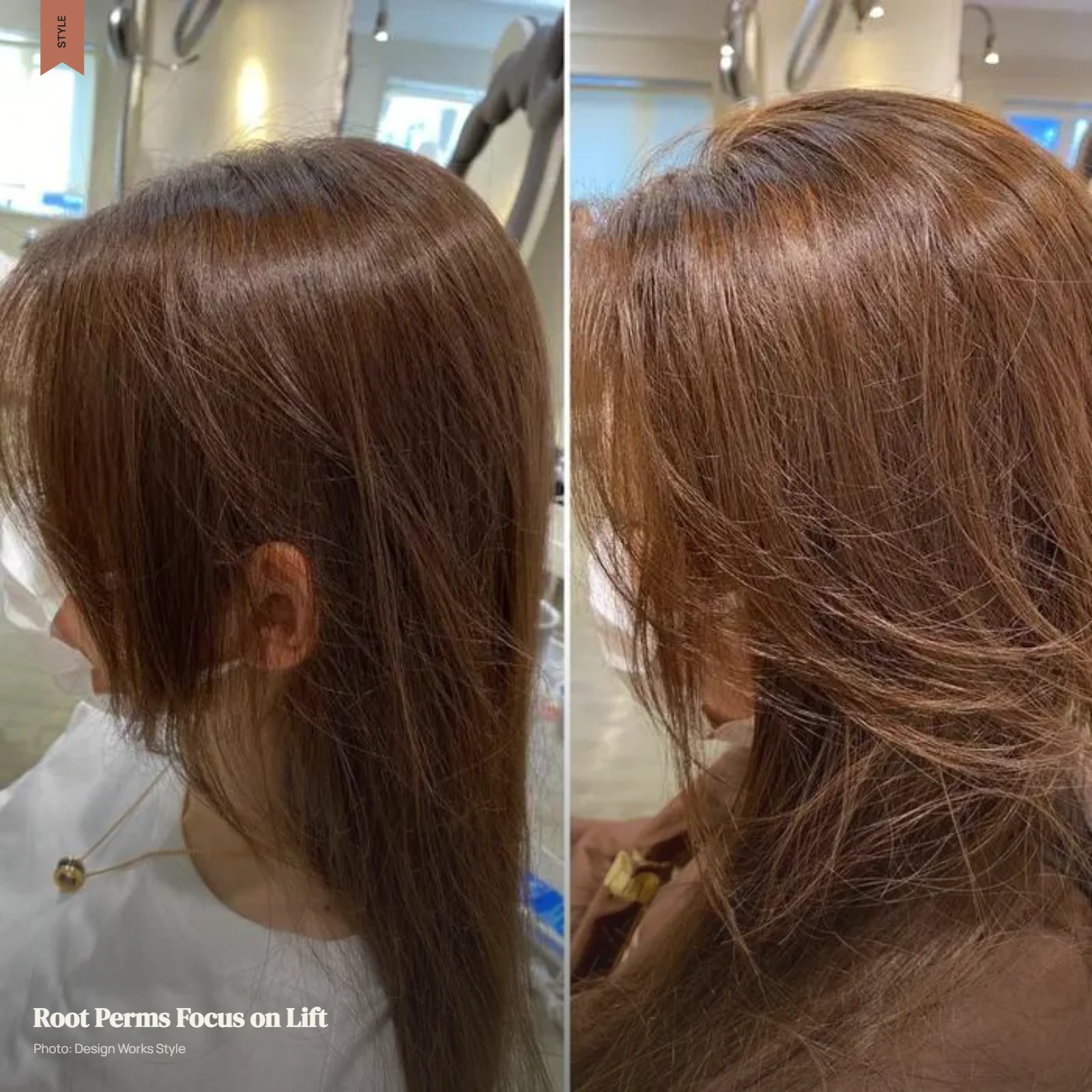
It can be considered when the main goal is more root movement or fullness while keeping the existing texture through the lengths relatively unchanged.
Best suited to: People who want additional root volume rather than an all-over curl transformation.
Result: Root lift and added volume
Heat: Depends on the technique used
Maintenance: New growth naturally returns to the original texture, so the result changes as the hair grows.
A root-focused service should be discussed carefully with a stylist, particularly if the hair has already undergone chemical processing.
Perm Types at a Glance
| Perm type | Typical visual result | Main focus | Key consideration |
|---|---|---|---|
| Cold perm | Defined curls or waves | Traditional chemical waving | Hair condition and desired curl pattern |
| Digital/heated perm | Softer waves or curls | Heat-assisted perming | Dry styling behavior and hair condition |
| Body wave | Loose movement | Body and texture | May be less defined than a curl-focused perm |
| Spiral perm | Defined elongated curls | Stronger curl pattern | Hair length and density |
| Beach wave | Relaxed, tousled waves | Texture and movement | Terminology varies between salons |
| Root perm | Root lift | Volume near the scalp | Primarily affects the root area |
These categories are useful for understanding the major approaches, but salon terminology is not completely standardized. Always ask what result and technique the salon means by a particular name.
Which Type of Perm Should You Consider?
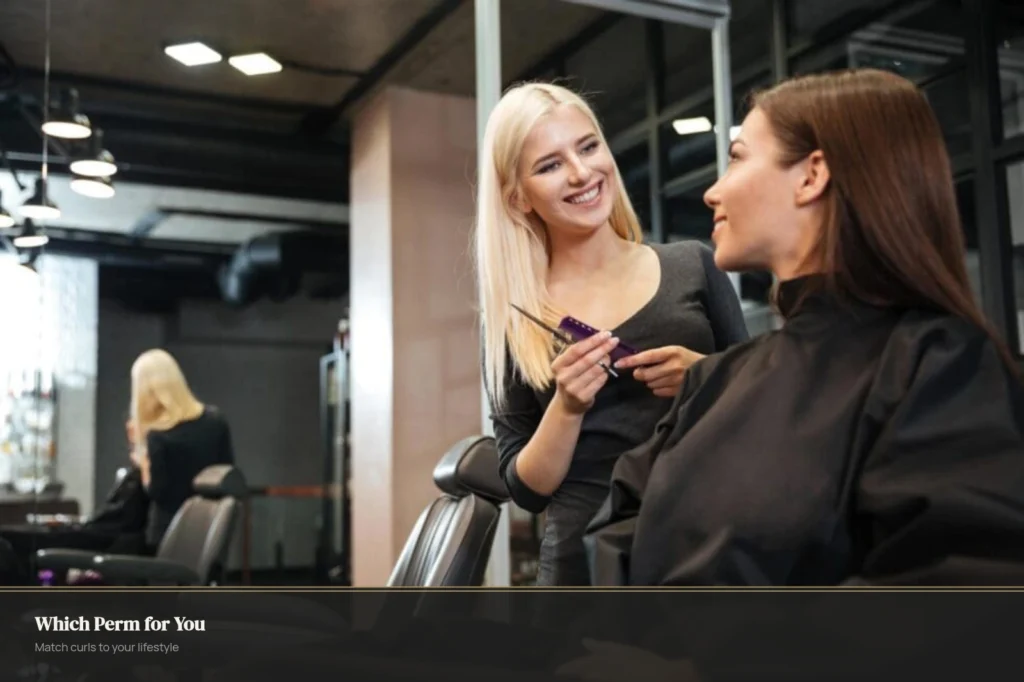
Start with the result rather than the name.
If you want defined curls
A cold perm or spiral-style approach may be worth discussing with your stylist, depending on your hair length and condition.
If you want softer waves
A body wave, beach wave, or certain digital-perm techniques may provide the type of movement you are looking for.
If you want root volume
A root perm focuses on lift rather than changing the entire head of hair.
If you want a heated perm technique
A digital or heated perm may be an option, particularly if you prefer the type of softer curl or wave commonly associated with that approach.
Remember that these are starting points, not guarantees. Your hair’s condition, length, density, texture, and previous chemical treatments can change what is realistically achievable.
How Hair Type Affects the Choice
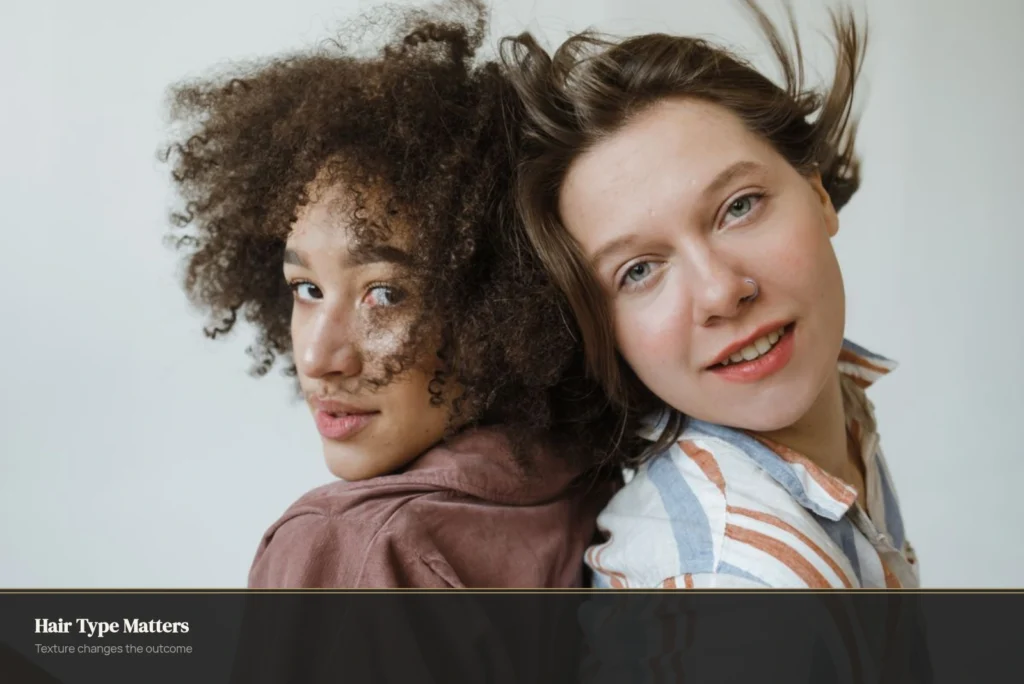
Two people can receive the same type of perm and get noticeably different results.
Fine hair: The stylist may need to consider how much processing and layering the hair can handle while still maintaining a healthy appearance.
Thick hair: Density can affect how the curls form and how much volume the finished style has.
Straight hair: The change in texture may be more noticeable because the starting pattern is relatively uniform.
Wavy hair: Existing movement can influence the final curl pattern and how the perm blends with the natural texture.
Curly hair: A perm may not always be the most appropriate way to alter an existing curl pattern. The stylist should assess the natural curl, density, and condition before recommending a technique.
Hair Condition Matters
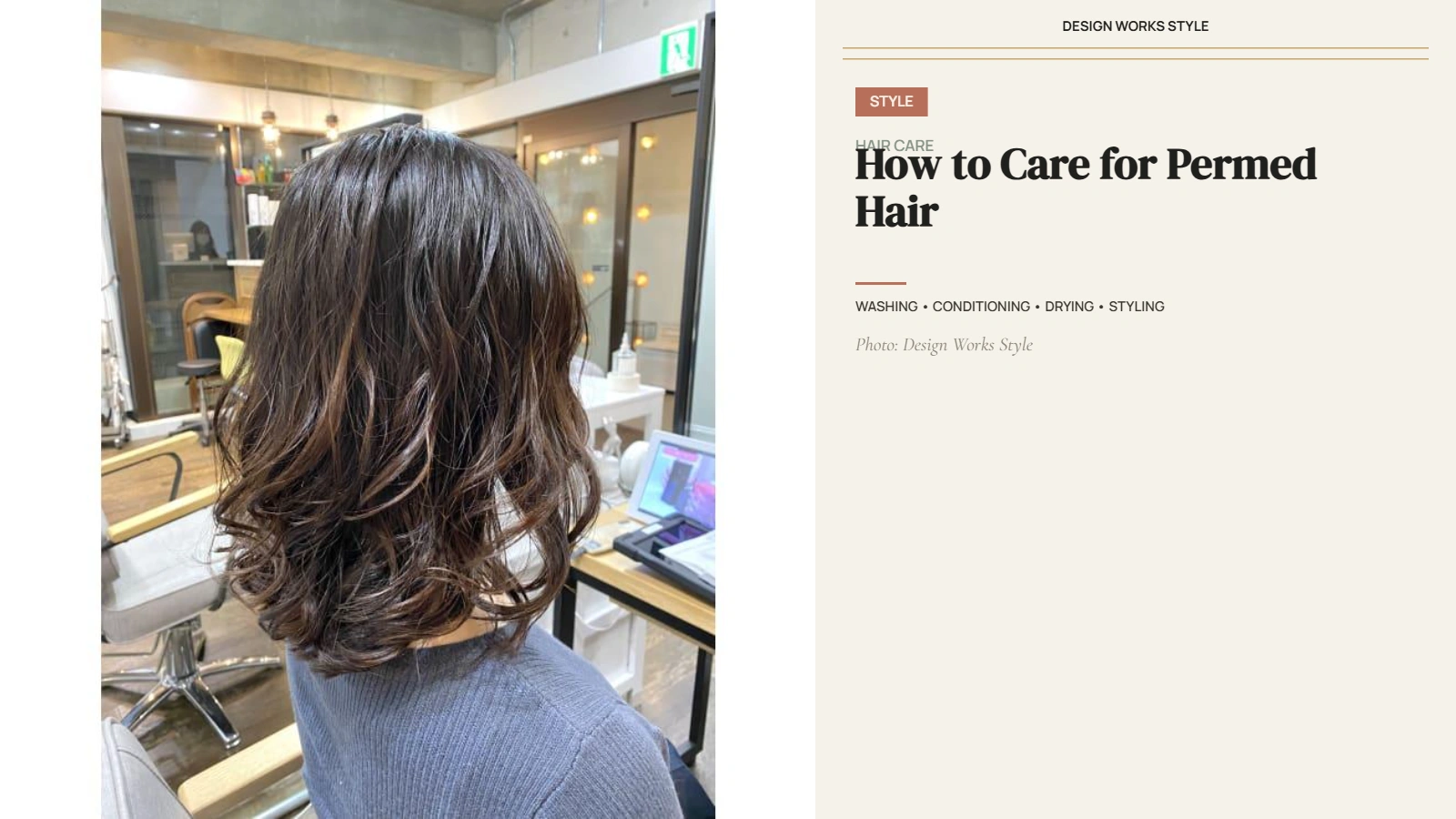
A perm is a chemical service that changes the structure of the hair. Previous bleaching, coloring, straightening, relaxing, or other chemical treatments can affect how the hair responds.
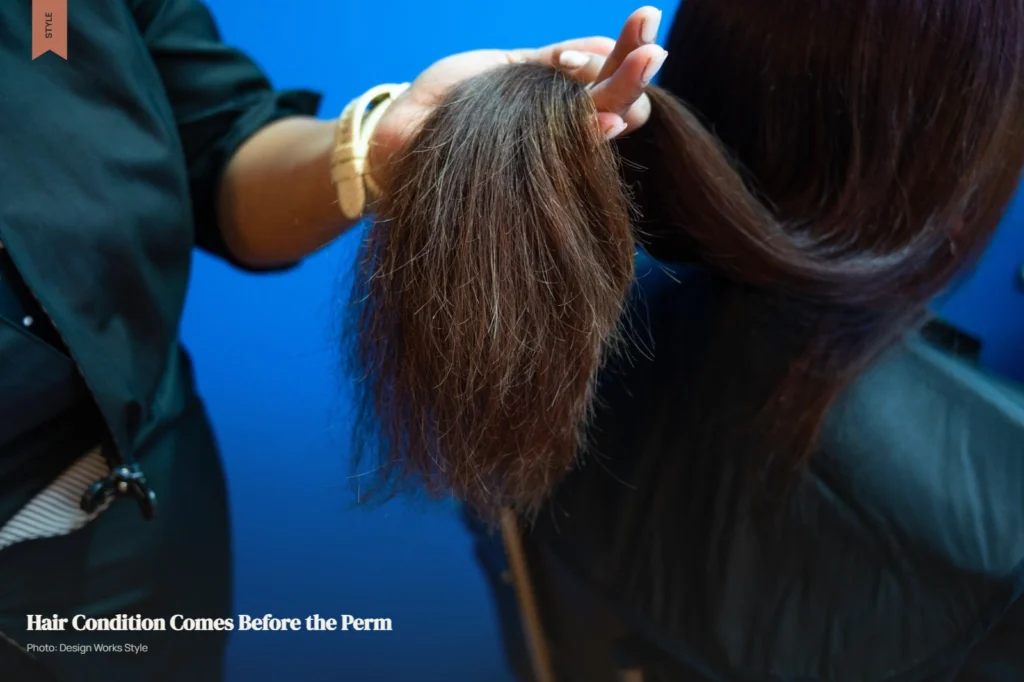
Before choosing a perm, tell your stylist about your complete recent hair history.
A professional consultation should consider:
- Previous chemical services
- Current hair condition
- Breakage or excessive dryness
- Hair density
- Natural texture
- Desired curl or wave
- Hair length
- Your normal styling routine
If the hair is already significantly compromised, a stylist may recommend improving its condition or choosing a different styling approach instead.
What to Ask at the Salon
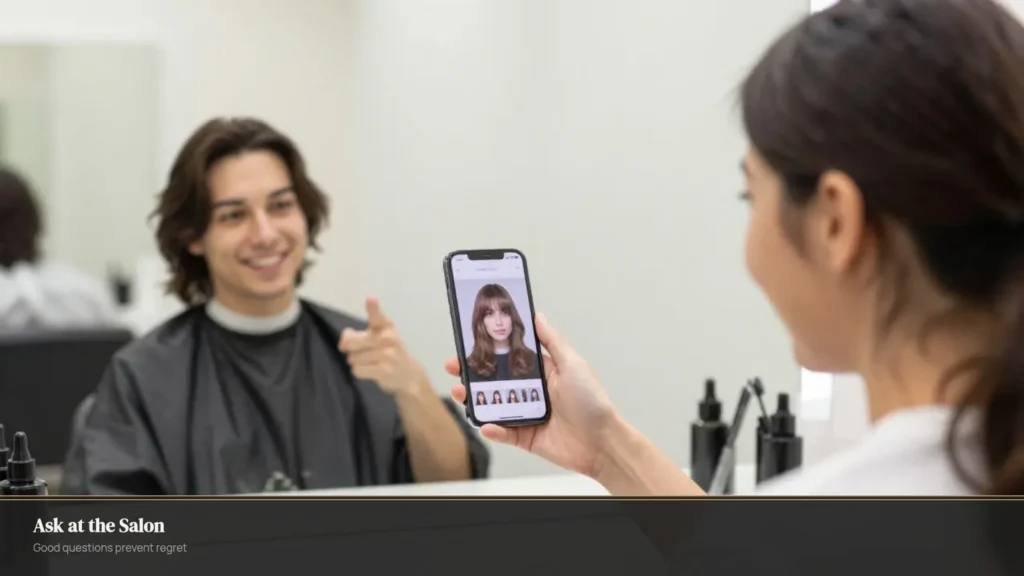
Do not rely on the name of a perm alone.
Show your stylist a few reference photos and ask:
- What type of perm would create this general pattern?
- Will the result be tighter or looser on my hair?
- How will my current haircut affect the result?
- Is my hair condition suitable for this service?
- How much styling will the finished look require?
- What happens as my natural texture grows back?
- What maintenance products or techniques will I need?
Reference photos are particularly useful because terms such as “body wave,” “beach wave,” and even “digital perm” can be interpreted differently.
Types of Perms vs. Perm Aftercare
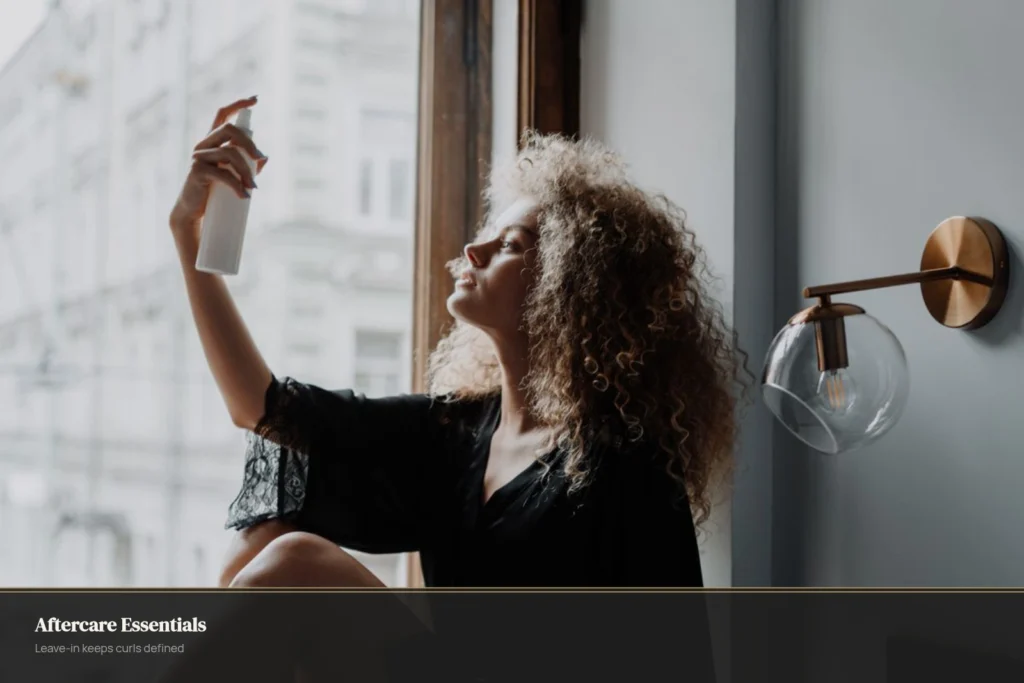
Choosing the right perm type is only the first part of the process. Once the hair has been chemically treated, the way you wash, condition, dry, and style it can affect its appearance and condition.
The exact aftercare depends on the service and your hair, so follow the recommendations provided by your stylist and the product system used.
Frequently Asked Questions
What are the main types of perms?
Commonly discussed types include cold perms, digital or heated perms, body waves, spiral perms, beach wave perms, and root perms. The terminology can vary between salons, so compare the intended result and technique rather than relying only on the name.
Which perm gives loose waves?
Body waves, beach wave services, and some digital-perm techniques can be used to create looser movement. The actual result depends on the hair, rod or wrapping technique, and the specific service.
Which perm gives tight curls?
Cold perms and spiral-style techniques can create more defined curls, depending on the rod size, wrapping method, hair characteristics, and desired result.
Is a digital perm the same as a cold perm?
No. A digital perm uses a heated system as part of the process, while a cold perm uses a traditional chemical waving method without relying on heated rods.
Can any hair type get a perm?
Not necessarily. Hair condition, previous chemical processing, density, texture, and length all affect suitability. A professional assessment is important before choosing a perm.
Which perm should I choose?
Start with the result you want: defined curls, loose waves, added body, or root volume. Then discuss your hair’s condition and history with a stylist who can determine which available technique is appropriate.
Final Takeaway
The different types of perms are mainly distinguished by the curl or wave they are designed to create and the technique used to produce it.
Cold perms can create more defined curls or waves, digital perms use heat as part of the system, body waves focus on softer movement, spiral techniques create more defined elongated curls, beach wave services aim for relaxed texture, and root perms focus primarily on volume near the scalp.
Because salon terminology and techniques vary, use the name as a starting point rather than a guarantee. Reference photos, hair condition, natural texture, and your desired result are more useful when deciding which perm to discuss with a stylist.
For broader information about getting a perm, visit our perms guide. For a closer look at one specific technique, see Cold Perm.