
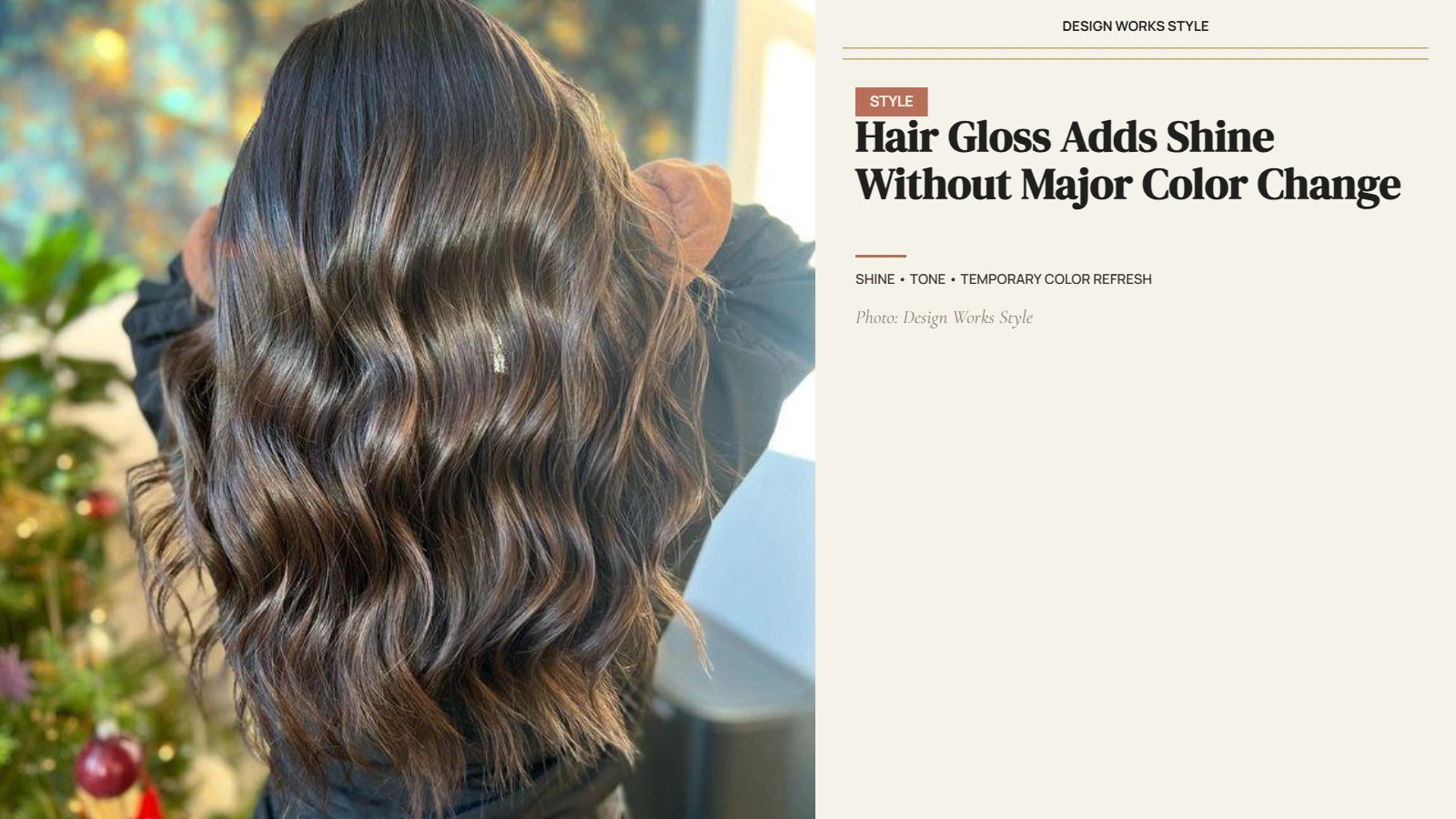
Hair gloss is a temporary treatment that can make hair look shinier while subtly refreshing or refining its color. Depending on the formula, it may add a clear shine, deposit a small amount of color, deepen an existing shade, or soften certain unwanted tones.
It is useful when hair looks dull, mildly faded, or slightly off-tone but does not need a major color change. A gloss is not a replacement for bleach, permanent color, or professional color correction.
The important detail is that hair gloss is not one standardized type of product. Formulas and salon services can work differently, so the actual product instructions and intended result matter.
What Is Hair Gloss?
Hair gloss is a temporary color or shine treatment designed to improve the appearance of existing hair.
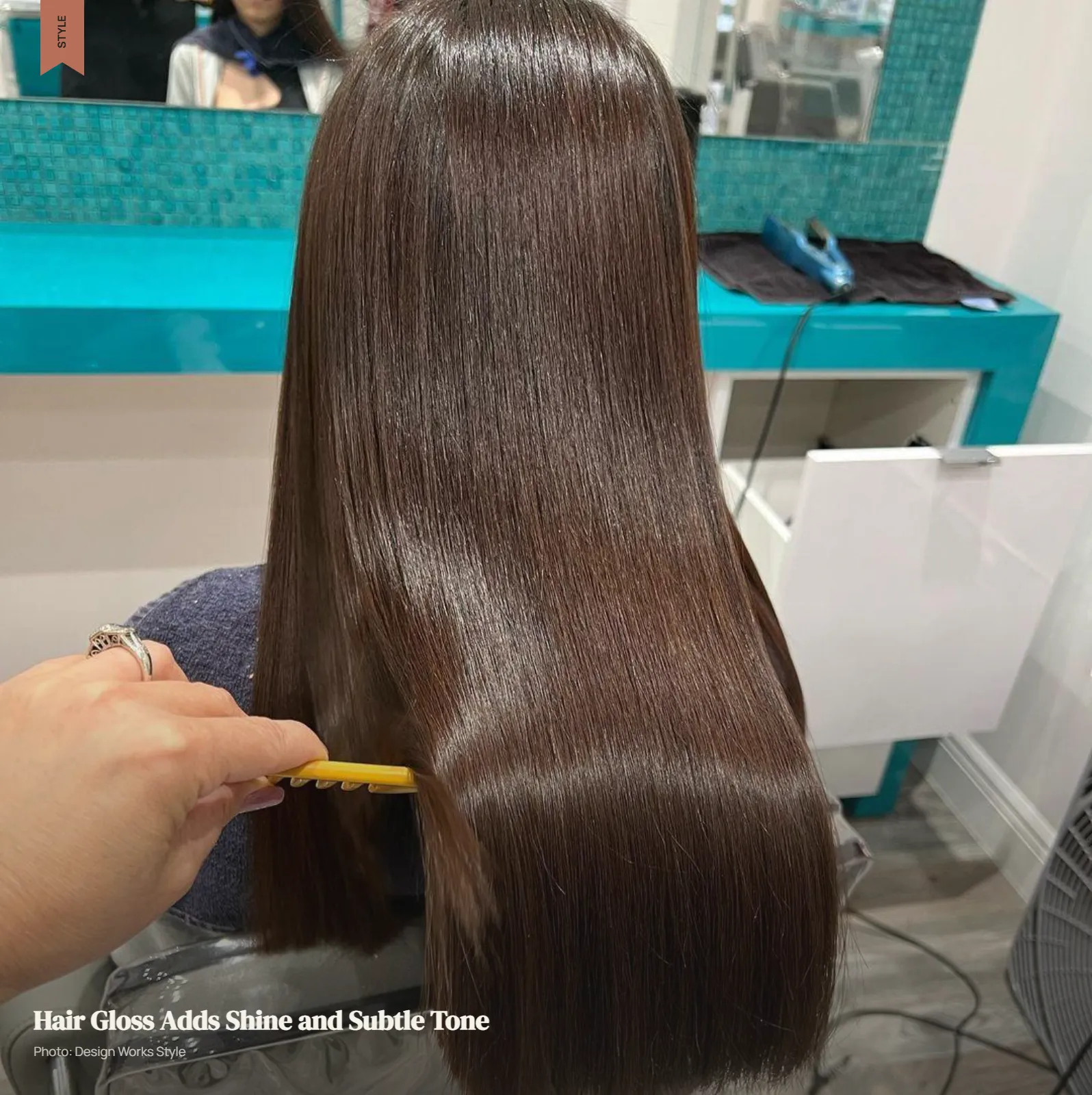
Some glosses are clear and focus primarily on shine. Others contain pigments that deposit color onto the hair, allowing them to subtly refresh, deepen, or adjust an existing shade.
You may encounter hair gloss as:
- A salon color service
- A clear shine treatment
- A tinted color-refresh treatment
- A semi-permanent or demi-permanent color product
- An in-shower consumer product
- A conditioning color-depositing treatment
The terminology can vary between salons and brands. A product marketed as a gloss by one company may not have exactly the same formula or application method as another.
That is why it is more useful to ask what a particular gloss is designed to do than to assume every gloss works in exactly the same way.
Clear Hair Gloss vs. Tinted Hair Gloss
The first decision is whether you want to change the appearance of the color or primarily add shine.
| Type | What it does | Best suited to | What it will not do |
|---|---|---|---|
| Clear gloss | Adds visible shine without intentionally changing the shade | Hair that already has the desired color but looks dull | Lighten hair or correct major color problems |
| Tinted gloss | Adds shine while depositing a subtle tone | Mild fading or a specific tonal adjustment | Create a dramatic color transformation |
If you already like your hair color but want it to look more reflective and polished, a clear gloss may be the more logical choice.
If the color has faded slightly or you want to adjust its tone, a tinted formula may be more appropriate.
The exact result depends on the formula, your existing color, hair condition, porosity, and the shade selected.
Does Hair Gloss Add Color?
Sometimes.
A clear gloss is primarily intended to improve the appearance of shine without deliberately changing the hair’s shade.
A tinted gloss can deposit pigment and subtly alter how the existing color looks. For example, a brunette gloss may make brown hair appear richer, while a copper or red formula may refresh an existing warm tone.
A blonde gloss may also be formulated to refine unwanted warmth when the selected tone is appropriate for the starting color.
The key word is existing.
A gloss generally works with the color already present rather than creating a dramatic lightening effect. It does not function like bleach, and it should not be treated as a solution for substantial color transformation.
If your hair has severe orange banding, major unevenness, or a color result that needs significant correction, repeatedly applying a gloss at home is unlikely to solve the underlying problem.
What Hair Gloss Can and Cannot Do
Understanding the limits of a gloss makes it easier to decide whether the treatment is actually appropriate.
What It Can Do
Depending on the formula and starting hair, a gloss can:
- Improve visible shine
- Make hair look more polished
- Refresh mild color fading
- Add subtle tonal depth
- Refine certain unwanted warm tones
- Refresh the appearance of color between larger services
- Help different tones appear more cohesive
These are cosmetic effects, and the result can vary between hair types.
Porosity, previous chemical processing, existing color, texture, and the specific gloss formula can all influence how the finished hair looks.
What It Cannot Reliably Do
A gloss is not designed to:
- Bleach dark hair substantially lighter
- Replace a permanent color service
- Correct every uneven color result
- Guarantee complete gray coverage
- Permanently repair split ends
- Reverse significant bleach damage
- Restore damaged hair to its original condition
A gloss may make hair look smoother, shinier, or more polished, but that does not mean it has permanently repaired the underlying hair.
Does Hair Gloss Make Hair Shinier?
Usually, yes.
Improved visible shine is one of the main reasons people choose a gloss.
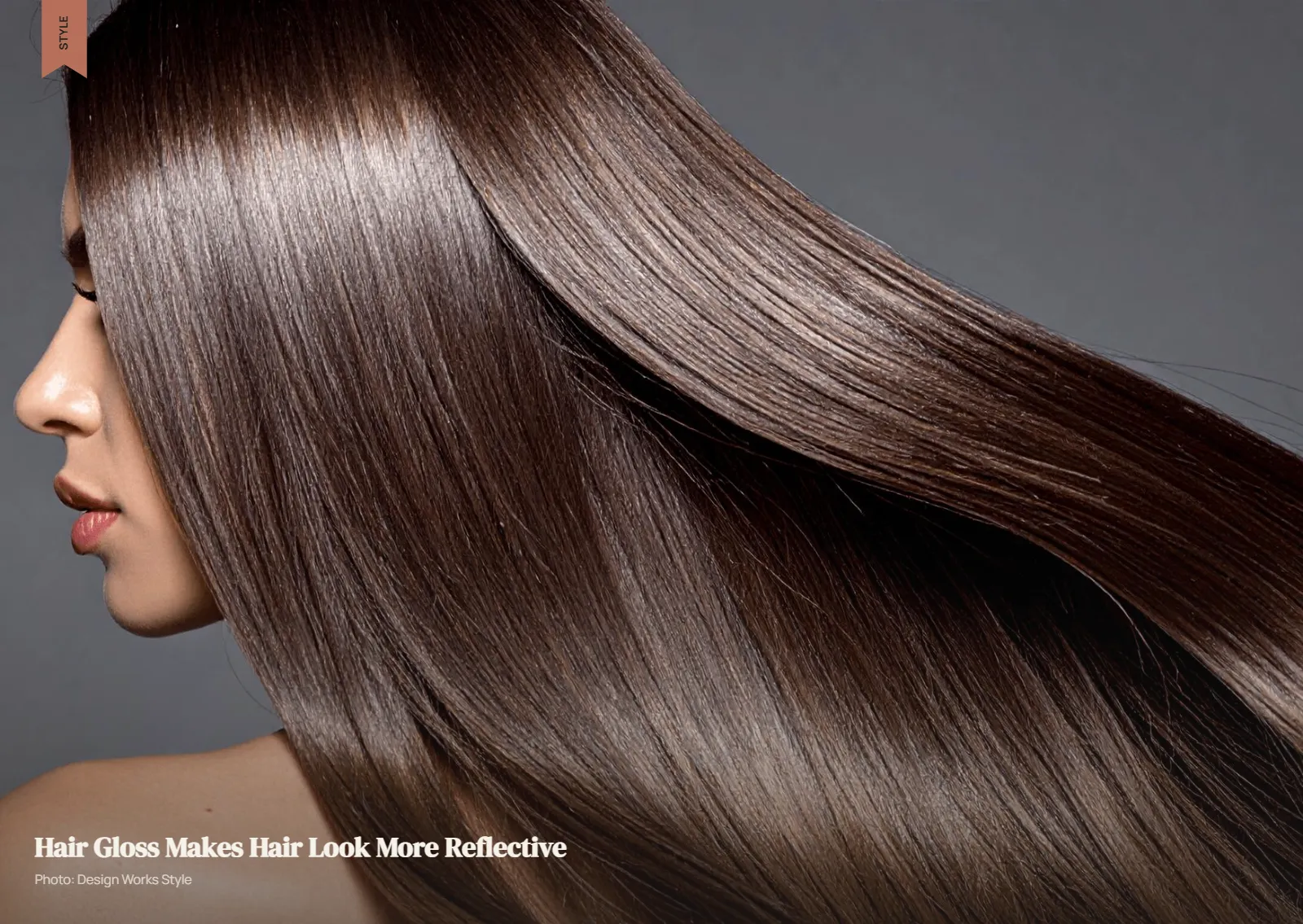
A successful treatment can make the hair appear more reflective, smoother-looking, and more polished. A tonal adjustment can also make the overall color appear more even, which may contribute to the impression of shine.
The visible effect depends on the starting condition of the hair.
Hair that is already relatively smooth may reflect light differently from highly porous or heavily processed hair. Texture, porosity, previous color services, the formula used, and aftercare can all influence the finished appearance.
A gloss should therefore be thought of as a way to improve the appearance of shine rather than a permanent structural change to the hair.
How Long Does Hair Gloss Last?
Hair gloss generally fades gradually rather than creating the same hard regrowth line associated with permanent color.
A useful general range is around 2 to 6 weeks, but the actual duration can vary considerably.
Factors that can affect how long the result remains noticeable include:
- The specific formula
- How frequently the hair is washed
- Hair porosity
- Hair condition
- Heat styling
- Environmental exposure
- The type and intensity of deposited pigment
- Aftercare
Some salon glosses may remain noticeable for several weeks, while certain at-home products are designed for a shorter color-refresh period.
There is no reliable universal number of washes or weeks that applies to every gloss.
If the shine or tonal effect has faded, the appropriate time for another treatment depends on the formula and the condition of the hair rather than an arbitrary calendar date.
Gloss vs. Permanent Hair Color
Hair gloss and permanent hair color serve different purposes.
| Feature | Hair gloss | Permanent color |
|---|---|---|
| Main purpose | Shine, tone refinement, subtle refresh | Longer-term color change |
| Color effect | Clear or subtle tonal deposit | More established color change |
| Lightening | Generally does not substantially lighten existing hair | Some permanent systems can lighten natural hair |
| Gray coverage | Limited and formula-dependent | Often used when stronger gray coverage is needed |
| Longevity | Gradually fades | Longer-lasting with visible regrowth |
| Maintenance | Refresh as the effect fades | Often requires ongoing root or color maintenance |
| Best suited to | Dullness, mild fading and tonal refinement | More substantial color changes |
The exact behavior depends on the formula, so these categories should not be treated as identical across every brand.
The practical distinction is simple: a gloss is generally about refreshing and refining what is already there, while permanent color is designed for a longer-lasting color change.
How Hair Gloss Is Applied
Hair gloss can be applied professionally in a salon or used at home with products designed for consumer application.
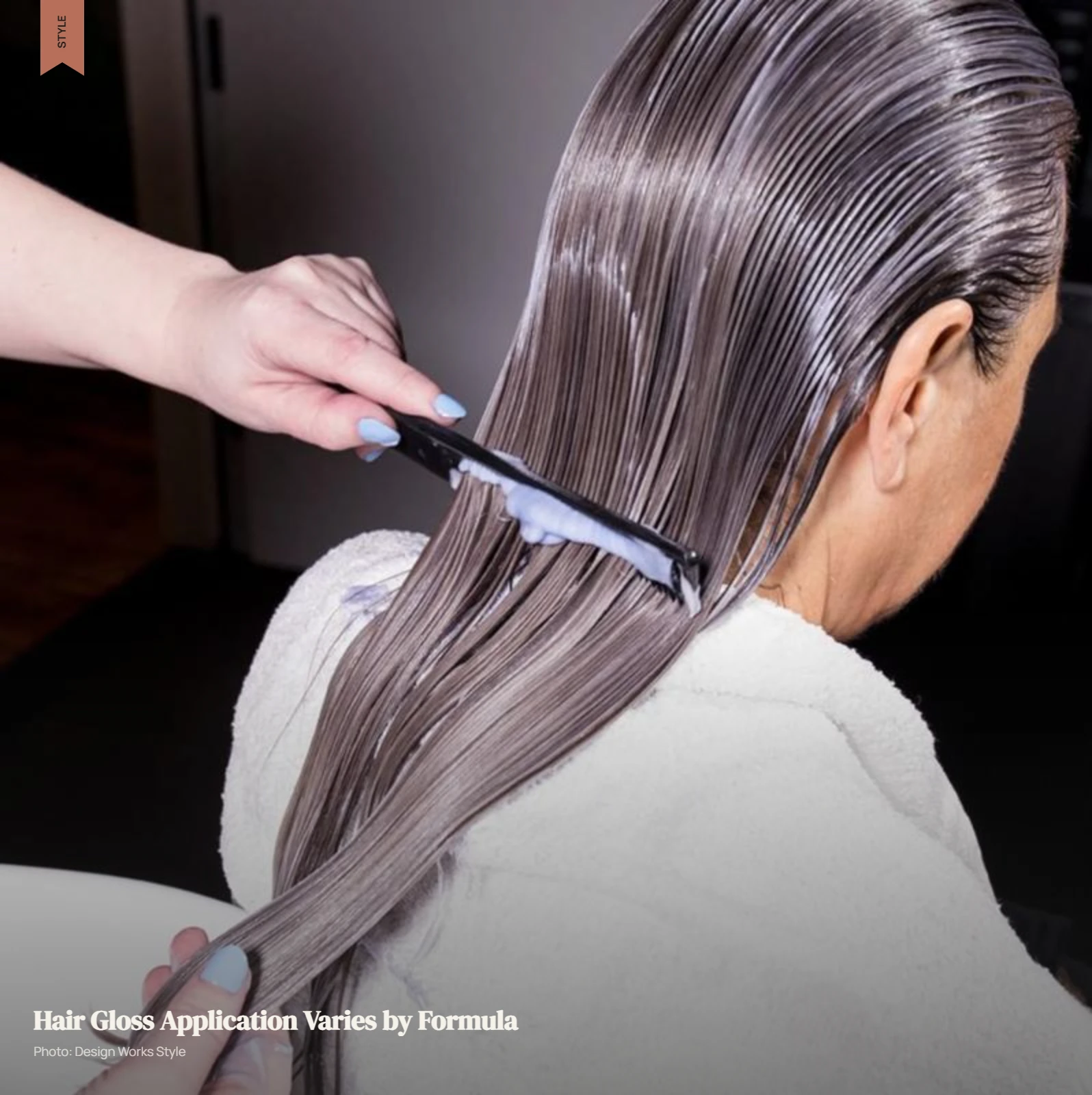
Salon services allow a colorist to assess the existing hair and choose a formula based on the starting color and desired result.
At-home products can be convenient for simpler shine or color-refresh goals, but application instructions vary considerably.
One gloss may be applied to clean, damp hair, while another may have different preparation requirements. Processing times, mixing instructions, application methods, and post-treatment steps can also vary.
For that reason, there is no single DIY recipe that should be applied to every gloss.
If you are specifically considering applying one yourself, see our guide on how to apply hair gloss at home.
Salon Hair Gloss vs. At-Home Hair Gloss
The better option depends on the complexity of the result you want.
| Option | Best suited to | Main advantage | Main limitation |
|---|---|---|---|
| Salon gloss | Custom tonal adjustment, highlights, balayage, faded or multi-tonal hair | A colorist can assess the existing hair before selecting the service | Requires an appointment and usually costs more |
| At-home gloss | Simple shine or subtle color refresh close to the existing shade | Convenient and generally less expensive | Less customization and greater risk of an unsuitable or uneven result |
An at-home gloss can make sense when the desired change is straightforward and close to the current color.
A salon service may be more appropriate when the hair has multiple tones, significant previous chemical processing, uneven color, or a result that requires more precise adjustment.
Neither option is automatically right for everyone.
Who May Benefit From Hair Gloss?
Hair gloss may be worth considering if you:
- Like your current color but find it dull
- Want to refresh mild fading
- Want more visible shine
- Want a subtle tonal adjustment
- Want a lower-commitment color refresh
- Want to maintain the appearance of a salon color between larger services
The key is identifying the actual problem.
If the issue is simply dullness, adding a heavily pigmented formula may be unnecessary.
If the issue is mild warmth, a suitable tinted formula may make more sense.
If the goal is to become several shades lighter, a gloss is not the appropriate tool.
Hair Gloss for Balayage and Highlights
Gloss can be useful for balayage and highlighted hair when the concern is mild fading, dullness, slight unwanted warmth, or a loss of tonal cohesion.
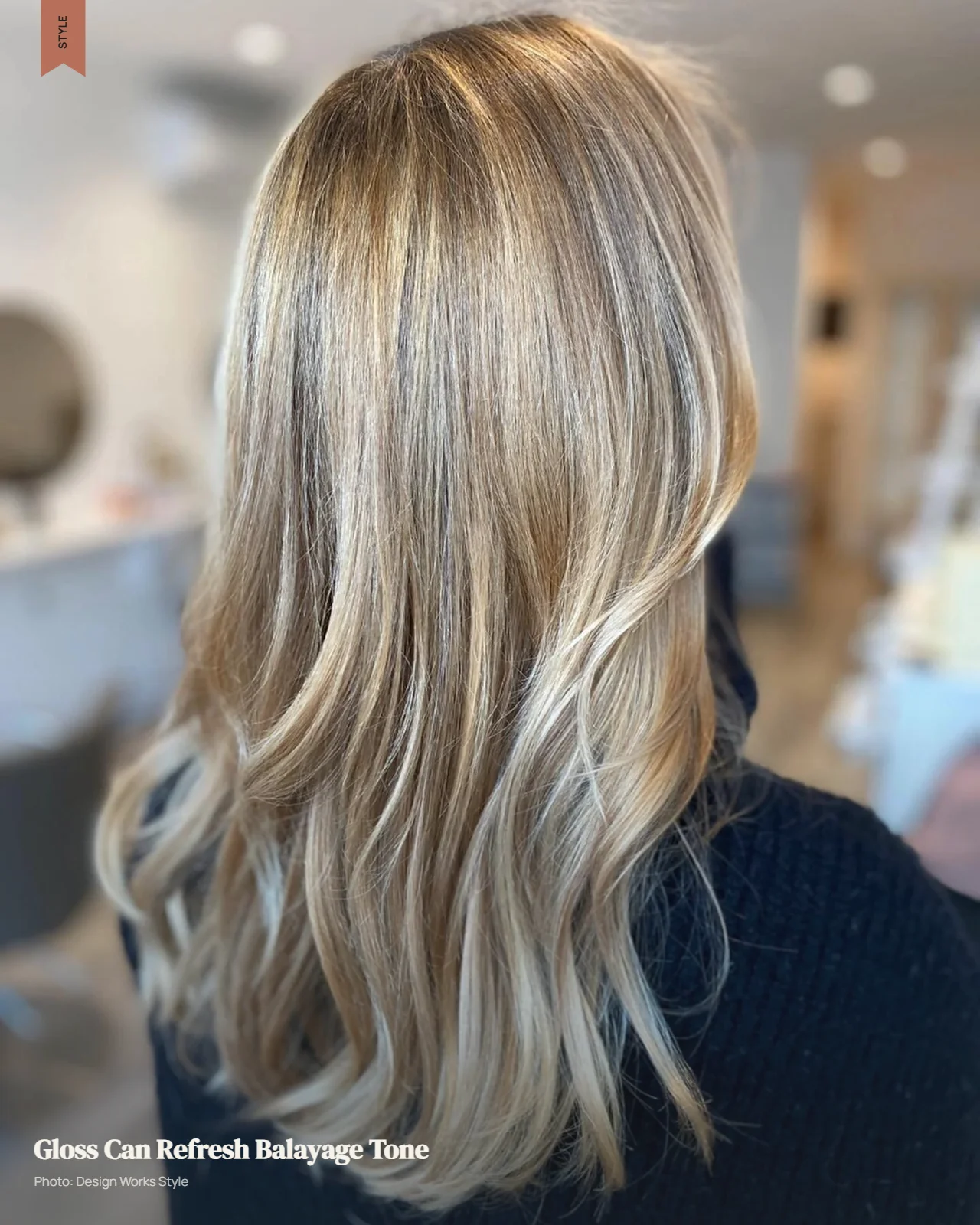
For example, a blonde balayage may look different as its tone changes over time. A suitable gloss can refresh the appearance without changing the placement of the existing highlights.
That does not mean every balayage needs regular glossing.
The appropriate treatment depends on the current color, the desired result, the condition of the lightened sections, and the specific formula.
For broader maintenance advice, see our balayage hair care routine.
If shampoo selection is the issue, our guide to shampoo for balayage hair covers everyday cleansing separately.
Hair Gloss for Different Color Goals
A gloss can be used for different color goals, but the desired result should be specific.
Brunette hair: A suitable tinted gloss can add richer-looking depth to an existing brown shade.
Red or copper hair: A matching warm formula can refresh an existing red or copper tone.
Blonde hair: A carefully selected gloss can refine the tone or soften certain unwanted warmth.
Balayage: A gloss can help refresh mild fading or create a more cohesive appearance between different sections of color.
The important distinction is between refreshing a color you like and trying to correct a color you do not like.
A gloss is better suited to the first situation and selected cases of the second. Major color corrections require a different approach.
Hair Gloss vs. Hair Glaze
The terms “gloss” and “glaze” can overlap depending on the brand or salon.
Some products marketed under these names focus primarily on shine, while others also deposit pigment or provide a temporary tonal effect.
Rather than assuming the terminology tells you exactly how a product works, check the formula, intended result, processing instructions, and expected longevity.
For a more detailed comparison, see our guide to hair gloss vs. hair glaze.
How to Maintain the Result
A gloss is part of a broader hair-care routine rather than a replacement for one.
Washing frequency, hair condition, styling habits, and environmental exposure can all influence how the result looks over time.
If you have balayage or highlights, maintaining the lightened sections may also involve choosing appropriate cleansing and conditioning products.
For general maintenance, see our broader hair care routine.
If your main concern is balayage, the dedicated balayage hair care guide goes further into washing, conditioning, heat styling, environmental exposure, toning, and salon maintenance.
When a Gloss Is Not the Right Next Step
A gloss is not the answer to every color concern.
Consider a different approach if you want to:
- Make the hair substantially lighter
- Make a major permanent color change
- Correct severe unevenness
- Fix significant banding
- Address substantial bleach-related damage
- Achieve a result that requires extensive color correction
Repeatedly layering gloss over a complicated color problem can make the final result harder to predict.
When the starting color and desired result are significantly different, professional assessment may be more appropriate than continuing to experiment with temporary color products.
The Simple Way to Think About Hair Gloss
Hair gloss is best understood as a temporary shine and tone-refreshing treatment.
If you like your existing color but want more visible shine, a clear gloss may be enough.
If your color has faded slightly or needs a subtle tonal adjustment, a tinted gloss may be appropriate.
If you want a major color change, substantial lightening, or significant correction, a gloss is unlikely to be the right tool.
The result also depends on the formula and your starting hair. There is no single gloss chemistry, application method, or longevity period that applies to every product.
The most useful question is therefore not simply, “Should I get a hair gloss?”
It is:
What do I want to change about my hair, and is a temporary shine or tone adjustment enough to achieve it?
Once you can answer that, choosing between a clear gloss, tinted gloss, salon service, or another color approach becomes much easier.
Frequently Asked Questions
What does hair gloss actually do?
Adds shine, refreshes tone, and smooths the cuticle. Clear gloss is shine only; tinted gloss deposits a sheer wash of color. It does not lift or lighten hair.
How long does hair gloss last?
Four to six weeks, fading gradually with washing. It is demi-permanent, so it washes out instead of growing out with a visible line.
Is gloss better than permanent color?
They do different jobs. Gloss refreshes and shines without commitment; permanent color covers gray and makes big changes. Many people use both for different needs.
Can I gloss my hair at home?
Yes, with a demi-permanent at-home gloss and a strand test first. For a major tone correction, a salon is the safer choice. See our at-home gloss guide for the full process.