

Choosing a Haircut: How to Pick the Right Cut for Your Face and Hair
Pick a haircut by matching three things: your face shape, your hair texture, and the time you spend on styling each morning. A cut that suits all three looks good with little effort, while a cut that fights any one of them needs work. This guide walks through face shapes, textures, upkeep, and what to say at the salon.
How Do You Figure Out Your Face Shape?
You can find your face shape with a mirror, a measuring tape, and two minutes. Pull your hair back, look straight ahead, and compare the width of your forehead, cheekbones, and jaw, plus the length of your face. The widest point and the jaw shape point to one of five common shapes.
An oval face is longer than it is wide, with a forehead slightly wider than the jaw and a softly rounded chin. A round face is about as wide as it is long, with full cheeks and a rounded jaw. A square face has a broad forehead, wide cheekbones, and a strong, angular jaw. A heart face has a wider forehead, narrower cheekbones, and a pointed chin. An oblong face is noticeably longer than it is wide, with a longer forehead and chin.
Most faces mix two shapes, so use the one that dominates. If your face reads round in the cheeks but square at the jaw, treat it as square for cut choices, since the jaw line drives most of the decision. Take a straight-on photo in even light if the mirror leaves you unsure. A photo flattens the face the way other people see it, which makes the shape easier to judge.

Which Cuts Suit Each Face Shape?
Once you know your shape, the goal is balance: add width where the face is narrow, and soften angles where the face is sharp. Layers, length, and fringe each shift how the eye reads your face. The pairings below are starting points, not rules, and a good stylist adjusts them to your hair.
Oval faces suit most cuts, from a pixie to long layers, because the proportions are already even. The main risk is hiding the shape under heavy, face-covering layers. Round faces suit longer layers, a side part, and length past the chin, which draw the eye downward. Blunt chin-length bobs tend to widen a round face, so they are a harder choice here. For more ideas, see our haircuts for round faces guide.
Square faces suit soft layers, waves, and a side-swept fringe, which ease the angles of the jaw. Avoid a blunt, straight-across fringe, which repeats the jaw line. Heart faces suit chin-length bobs, side fringe, and volume around the jaw, which balances a wider forehead. Keep volume off the crown, where a heart face is already widest. Oblong faces suit fringe, shoulder-length cuts, and waves at the sides, which add width. Extra height on top makes an oblong face look longer, so skip high-volume crown styling. For the full shape guide, see our haircuts for face shapes and haircuts for chubby faces guides.
How Does Your Hair Texture Change the Choice?
Texture decides whether a cut behaves. Fine hair needs blunt ends and light layers to look full, thick hair needs layers to remove bulk, and curly hair needs a cut that works with its curl pattern. A cut drawn for straight hair rarely transfers unchanged to curls.
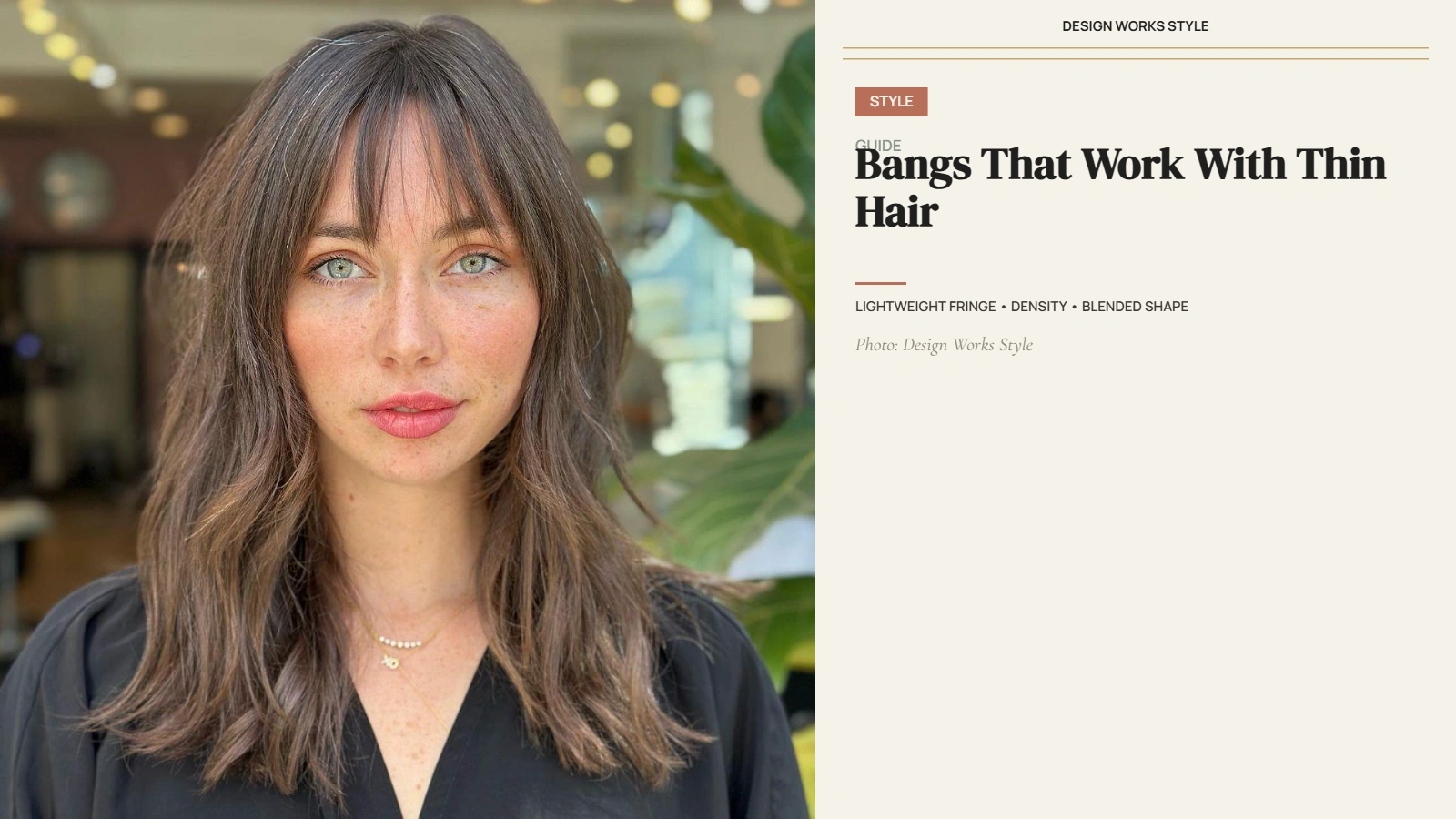
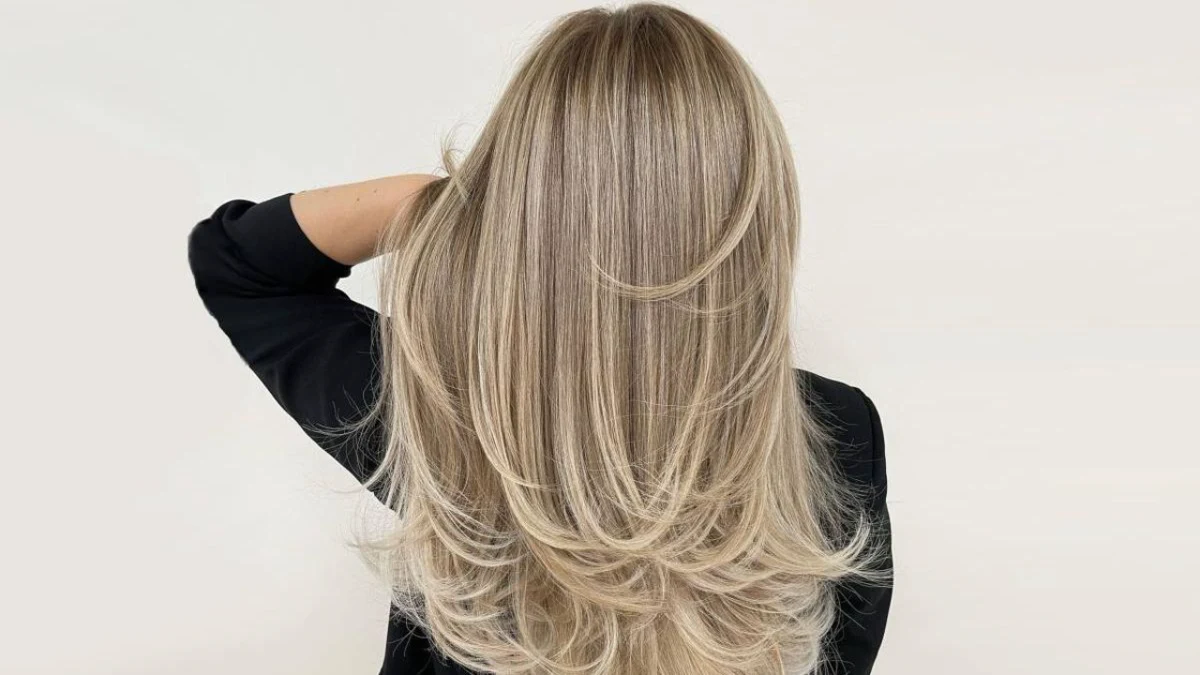
Fine hair looks fullest with blunt ends, since a blunt line makes the ends look thicker. Light, long layers add movement without thinning the ends. Avoid heavy layering through the lengths, which removes the little density fine hair has. Thick hair needs the opposite: internal layers and texturizing remove weight so the cut sits well instead of ballooning out.
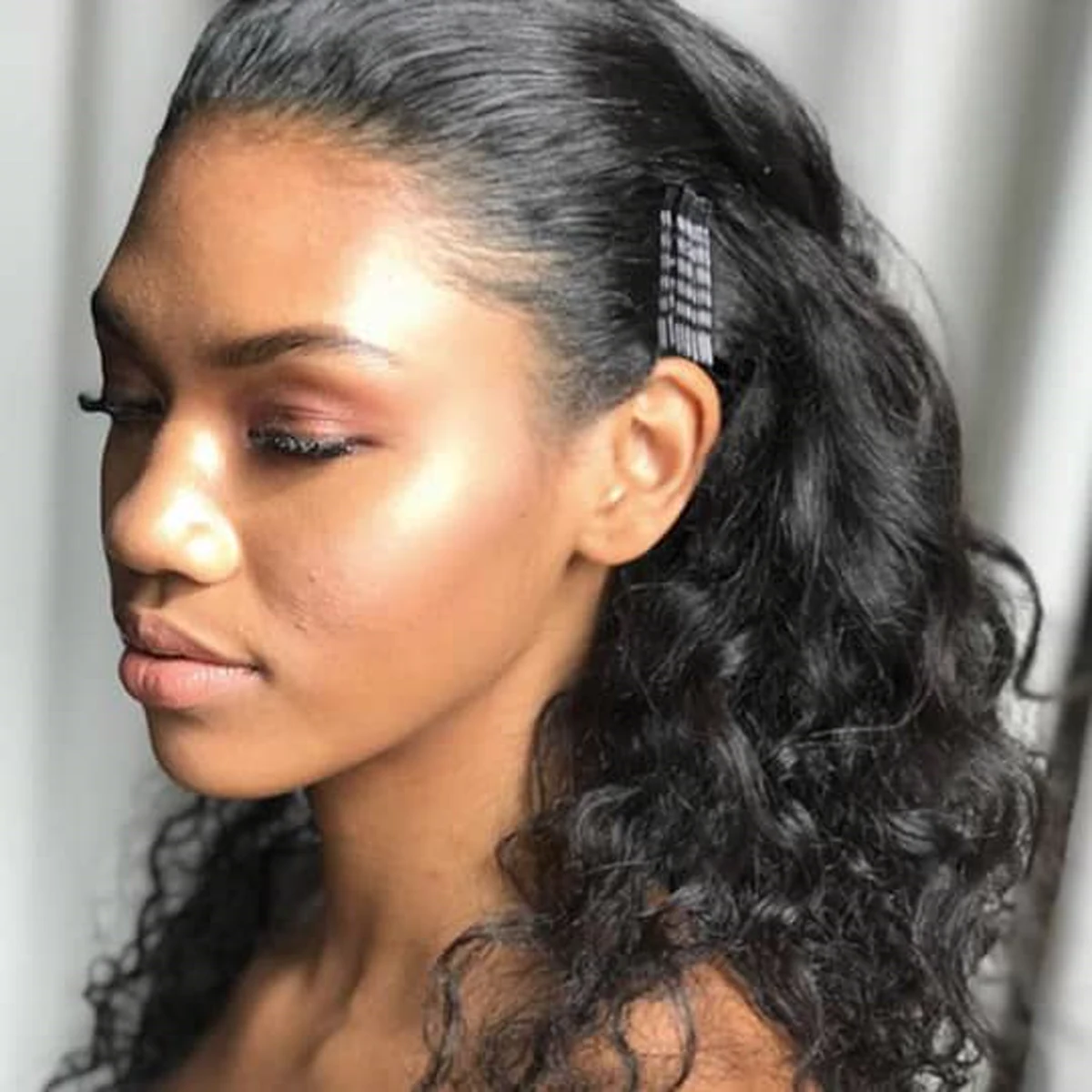
Wavy hair suits cuts that let the wave do the work, like long layers and a shoulder-length shag. Curly and coily hair need a cut shaped around the curl pattern, often cut dry so the stylist sees where each curl falls. A straight-hair cut applied to curls can shrink unevenly once dry. Straight hair shows every line of a cut, so precision matters: a blunt bob looks sharp on straight hair, and an uneven layer shows at once. For a routine matched to your texture, see our hair care routine by hair type guide.
How Much Time Are You Willing to Spend on Your Hair?
A cut only works if you will style it on a normal morning, away from the salon chair. Be honest about your routine: five minutes, fifteen minutes, or thirty. Pick a cut that looks finished inside that time, and tell your stylist the number so they can steer you right.
Five-minute routines suit long layers, a blunt lob, or a wash-and-go shag, all of which look finished with air drying and a little product. Fifteen minutes opens up textured bobs, blow-dried layers, and heatless waves set the night before. Thirty minutes covers sleek blowouts, precise bobs, and pixie cuts that need daily shaping.
Maintenance between appointments matters too. A pixie needs a trim every four to six weeks to hold its shape. Long layers can go ten to twelve weeks. If you dislike frequent salon visits, pick a cut that grows out gracefully, like long layers or a shag. Your work setting counts as well: a job with strict grooming rules may rule out very short or very bold cuts, while a creative job may welcome them.
What Should You Tell Your Stylist?
Bring photos of cuts you like, photos of cuts you do not like, and one sentence about your daily routine. Photos beat words like layered or textured, which mean different things to different people. Name the parts you want kept, and the parts you want changed.
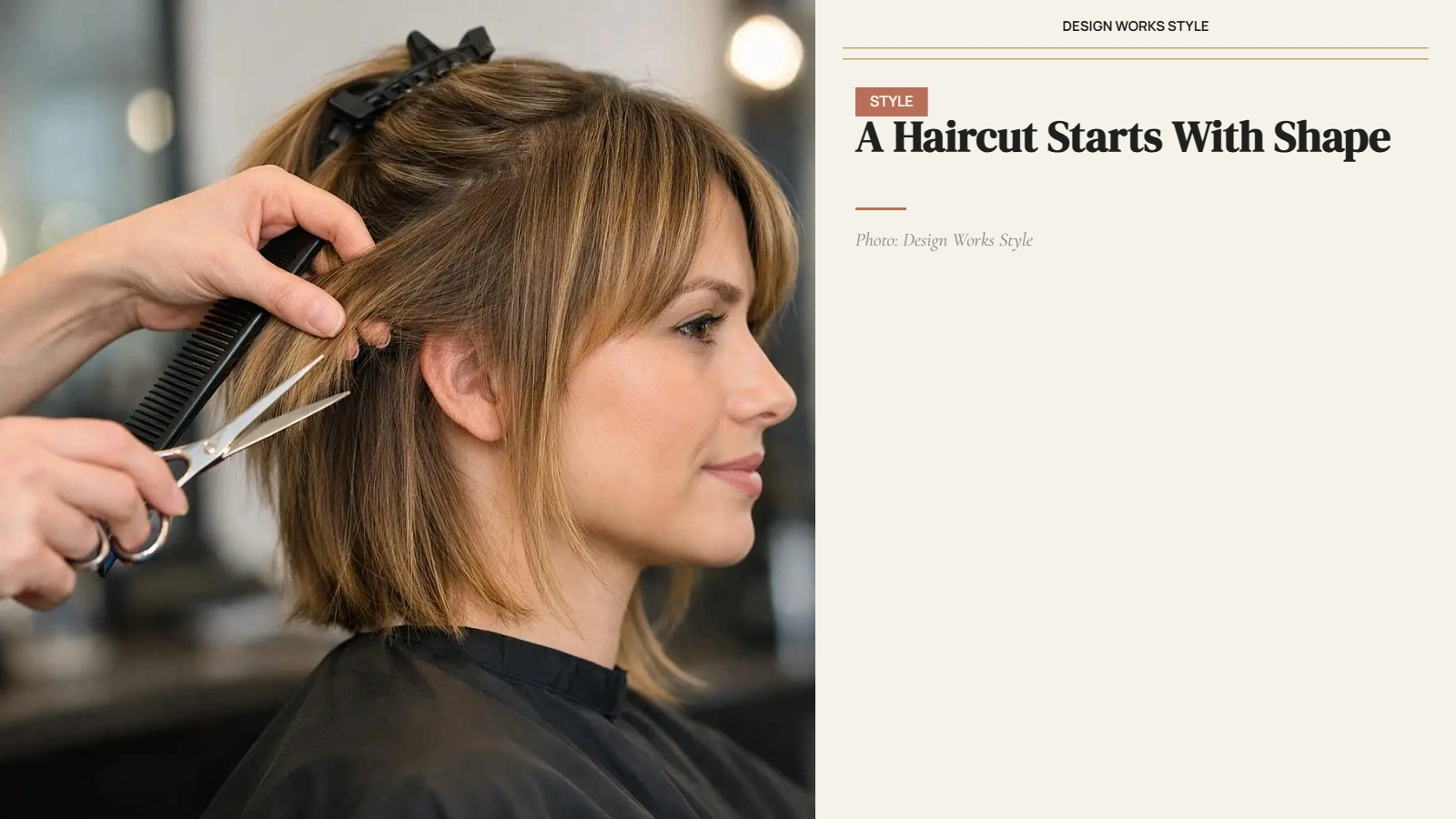
Learn a few terms before you go. Layers are shorter pieces cut into longer hair for movement. Graduation stacks shorter hair under longer hair for a rounded shape. Texturizing thins the ends for a softer edge. A fringe is the hair across the forehead, and its length and angle change the whole cut. If a term confuses you, ask the stylist to show you on your own hair before cutting.
Ask three questions during the consultation: how will this cut grow out, how often should I trim it, and what products does it need. The answers tell you the real cost of the cut in time and money. If the stylist cannot explain the upkeep, or pushes a cut that ignores your routine, that is a sign to get a second opinion. For styling methods once the cut is done, see our hair styling guide.
How Do You Grow Out a Cut You No Longer Want?
Growing out a cut takes patience and a few trims along the way, not a decision to stop cutting entirely. Regular dustings keep the shape neat while length builds, and transition styles hide the awkward stages. Expect the process to take months, and plan the stages ahead.
Growing a pixie into a bob means letting the top grow while the stylist keeps the back and sides tidy. Growing a bob into long hair means trimming the ends every eight to twelve weeks to remove splits, so length is kept instead of lost to breakage. Layers help here: as the shortest layers catch up, the cut evens out on its own.
Transition styles carry you through the awkward middle. Headbands, clips, and pins hold back uneven sections. Braids and twists hide layers that sit at different lengths. Heatless waves add texture that disguises an uneven hemline. For methods that need no hot tools, see our heatless hairstyles guide. Patience pays off: hair grows about half an inch a month, so a chin-length bob reaches the shoulders in roughly a year.
When Should You Try Something New Instead of Sticking With the Same Cut?
Try something new when your current cut no longer fits your life, your hair changed, or you feel bored every time you look in the mirror. Stick with what works when the cut still suits your face, your routine, and your hair. A small change often beats a drastic one.
Life changes are good triggers: a new job, a move to a humid climate, or a schedule that leaves less styling time. Hair changes count too: texture shifts with age, color treatments, and health changes, and a cut that suited your hair five years ago may fight it now. If styling takes longer each month, or the cut needs products you dislike, those are signs the cut no longer fits.
Start small when you are unsure. Change the parting, add a fringe, or take two inches off the length. A small change tells you whether you want more change, without a cut you regret. If you love the small change, go further next time. If you hate it, a few months of growth fixes it. For help picking a style that suits you, see our what hairstyle suits me guide and our haircuts and hairstyles gallery.
Frequently Asked Questions
How do I know my face shape if it looks like two shapes?
Use the dominant shape, judged by the widest point and the jaw line. Most faces mix shapes, so a round-cheeked face with a square jaw counts as square for cut choices. A straight-on photo in even light makes the shape easier to judge than a mirror, since it shows the face the way other people see it.
Should I bring photos to my haircut appointment?
Yes. Photos show the stylist exactly what you mean, while words like layered or textured mean different things to different people. Bring two or three photos of cuts you like, plus one photo of a cut you do not want. Tell the stylist what you like about each photo, such as the length, the fringe, or the texture.
How often should I get a haircut to keep the shape?
Short cuts like pixies need a trim every four to six weeks. Medium cuts like bobs hold for six to eight weeks. Long layers last ten to twelve weeks. These gaps assume you want the shape kept crisp. If you are growing a cut out, a light trim every eight to twelve weeks keeps the ends healthy while length builds.
Can I change my haircut if my hair is damaged?
Yes, and a good cut often helps. A trim removes split ends that make any style look ragged, and a cut with fewer layers reduces the styling that damaged hair further. Tell your stylist about the damage so they can pick a cut and products that suit recovering hair. For the full repair plan, see our hair damage repair guide.
The right cut is the one that fits your face, your texture, and your mornings. Start with your shape, check it against your texture and routine, bring photos to the salon, and give a new cut a few weeks before judging it. For shorter options to compare, browse our short hairstyles gallery.